Art history · Saylor ARTH110
Introduction to Western Art History: Pre-historic to High Gothic
In this course, we will study the history of Western art, beginning with the first objects created by prehistoric humans around 20,000 years ago and ending with the art and architecture of the High Gothic period in fourteenth-century Europe. The information presented in this course will provide you with the tools to recognize important works of art and historical styles, as well as to understand the historical context and cultural developments of Western art history through the end of the medieval period.
More about this course
Introductory readings paired with detailed lectures will provide you with a well-rounded sense of the history, art, and culture of the West up through the medieval period. At the end of this course, you will be able to identify key works of art and artistic periods in Western history. You will also be able to discuss the development of stylistic movements and relate those developments to important historical events. Completion of this course will prepare you for ARTH111, which surveys the history of Western art beginning with the early Renaissance. (Note: This course will make use of a series of lectures from Professor Heather C. McCune Bruhn at Pennsylvania State University. You may notice that the Professor frequently refers to a class textbook; please disregard these references, as we will be using a packet of various web-based materials instead.)
Upon successful completion of this course, the student will be able to:
In order to take this course, you must:
Chapter I
Art Before History
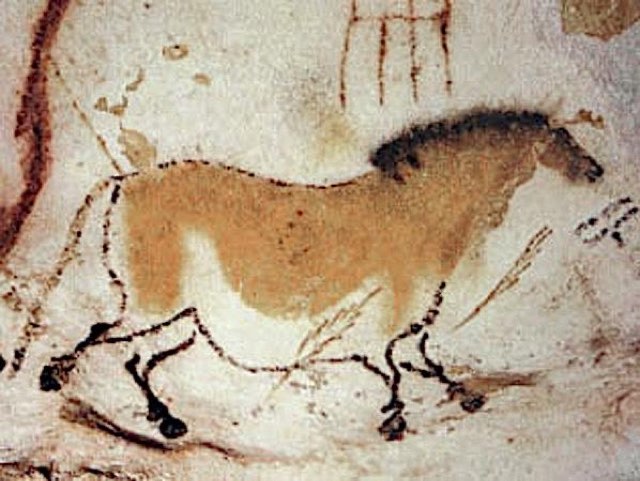
This course begins with the very first art created by humans in the Prehistoric era. As the name suggests, what we term “the Prehistoric period” encompasses the time before recorded human history, when humans had not yet developed a written language. Therefore, Prehistoric art presents something of a challenge to scholars seeking to understand the motivations of people living at this time. Nonetheless, art historians have been able to develop an understanding of the possible functions and meanings of Prehistoric art. This unit will teach you the major stylistic features and historical issues of art from this period, which serves as a foundation for the arts created later in the West.

The Earliest Art Objects
- Introduction to Prehistoric Art, 20,000-8,000 B.C.Metropolitan Museum of Art · Heilbrunn Timeline of Art History · Laura A. Tedesco · read · archived copy
- Art Before the Written WordiTunesU · Montgomery County Community College · Maggie Hobson-Baker · watch · archived copy
Cave Art in the Paleolithic and Mesolithic Periods
- Chauvet Cave (ca. 30,000 B.C.) and Metropolitan Museum of Art: Heilbrunn Timeline of Art History: Laura Anne Tedesco’s Lascaux (ca. 15,000 B.C.)Metropolitan Museum of Art · Heilbrunn Timeline of Art History · Jean Clottes’ · read · archived copy
Neolithic Europe
- StonehengeSweet Briar College · Dr. Christopher L. C. E. Witcombe · read
Neolithic Near East
- Art of the Ancient Near East and Art in Western EuropeBoundless · read
Chapter II
Art of the Ancient Near East
In this unit, you will build on what you learned in Unit 1 as we examine the settlements and art objects created between around 4000 BCE and 300 BCE in what we today call the Middle East. By the start of this period, people had abandoned the hunter-gatherer lifestyle and were living much more settled lives. The art from this period that has survived was mainly created for religious and political purposes. You will discover that the techniques and materials used in the art from this period are more sophisticated than those we observed in the previous chapter, suggesting that there was a more established niche for art objects at this time.
Sumer
- Historic Writing and Sumerians.The British Museum · read · archived copy
- SumerBoundless · read
Akkad, Lagash, and Babylon
- The Akkadian Period (ca. 2350-2150 B.C.) and The British Museum’s BabyloniansMetropolitan Museum of Art · Heilbrunn Timeline of Art History · Department of Ancient Near Eastern Art · read · archived copy
- Sumerian ArtKhan Academy’s Smart History · read
Assyria
- Assyria, 1365-609 B.C. and Metropolitan Museum of Art: Heilbrunn Timeline of Art History: Human-headed winged lion (lamassu)Metropolitan Museum of Art · Heilbrunn Timeline of Art History · Department of Ancient Near Eastern Art · read · archived copy
- Sumerian Art: Standard of UrYouTube · Khan Academy’s Smart History · watch · 15 min
- Knowledge and Power in the Neo-Assyrian EmpireCharles E. Jones’s AWOL – The Ancient World Online · read · no longer online
Neo-Babylonia
- Panel: Striding LionMetropolitan Museum of Art · Heilbrunn Timeline of Art History · Department of Ancient Near Eastern Art · read · archived copy
- Neo-BabyloniaBoundless · read
Persia
- The Achaemenid Persian Empire (550-330 B.C.)Metropolitan Museum of Art · Heilbrunn Timeline of Art History · Department of Ancient Near Eastern Art · read · archived copy
- PersiaBoundless · read · no longer online
- Museum Visit #1: The Metropolitan Museum of Art, New York CityThe Saylor Foundation · do
- Chapter 2: The Rise of Civilization: The Art of the Ancient Near East: Internet Exercises: Two Images of Mesopotamian Power Essay QuestionWadsworth Publishing’s Book Companion Website · Gardner’s Art through the Ages, 12th Edition · do
Chapter III
Art of Ancient Egypt
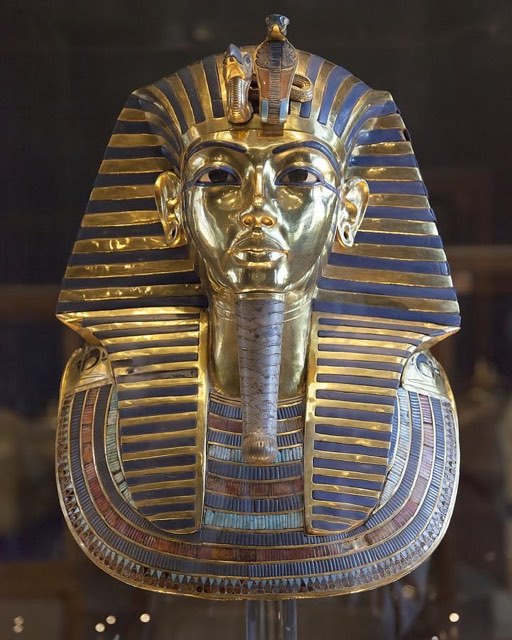
In this unit, you will learn about the art and culture of Ancient Egypt, one of the most powerful civilizations in Western history, which emerged around 2700BCE. Artistic traditions from the Ancient Near East informed the arts of Ancient Egypt, though Ancient Egyptian art and culture was largely defined by an interest in the afterworld. Magnificently decorated tombs and mortuary complexes are a testament to the culture’s belief in an afterlife as well as the tremendous wealth of those who commissioned their construction. It is important to note that Ancient Egypt was one of the first cultures to have a far-reaching and powerful kingdom; accordingly, much of Ancient Egyptian art was designed as propaganda intended to assert the power and greatness of the pharaohs.*

Early Dynastic Egypt
- Kings and Queens of EgyptMetropolitan Museum of Art · Heilbrunn Timeline of Art History · Susan Allen · read · archived copy
- NarmeriTunesU · Community College of Philadelphia · Art History Abbreviated · Sarah Iepson · watch · archived copy
Old Kingdom Egypt
- Egypt in the Old Kingdom (ca. 2649-2150 B.C.)Metropolitan Museum of Art · Heilbrunn Timeline of Art History · Catharine H. Roehrig · read · archived copy
- Architecture and the Pyramids of Giza, Sculpture, and TombsBoundless · read
Middle Kingdom Egypt
- Catharine H. Roehrig’s Egypt in the Middle Kingdom (2030-1640 B.C.) and The Tomb of WahMetropolitan Museum of Art · Heilbrunn Timeline of Art History · read · archived copy
- Architecture and the Urban Environment, Sculptures of Senusret III, Stelae, and TombsBoundless · read
New Kingdom Egypt
- Egypt in the New Kingdom (ca. 1550-1070 B.C.)Metropolitan Museum of Art · Heilbrunn Timeline of Art History · Catharine H. Roehrig · read · archived copy
- The New KingdomBoundless · read
Ramses II and Late Egyptian Art
- Chapter 3, Art of Ancient Egypt: Elements and Media: Labelling QuizPearson Education’s Companion Website · Art History, 3rd Edition · write · archived copy
Chapter IV
Ancient Art of the Classical World
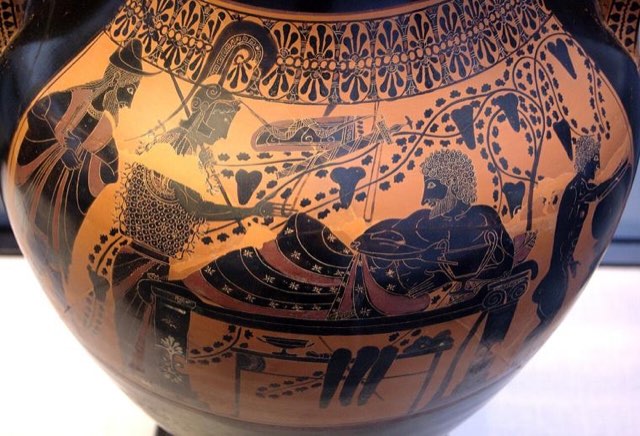
In this unit, you will learn about the classical world in the areas around the Aegean and Mediterranean seas. Much like the Ancient Egyptians, these cultures had far-reaching power, and the art and architecture they produced speaks of this power. It is in these cultures that the idea of Western civilization, as we understand it today, is rooted. For example, the Ancient Greeks were among the first people to establish a democratic society, which served as inspiration for later democratic civilizations, including the United States. Religion was also very important in the classical world, and there are abundant remains of temples and religious objects that give us a sense of the significance of religion in these societies. The artistic traditions from these different cultures were shaped by one another, and had a tremendous effect on later arts created in the West.

Minoan and Cycladic Art
- Minoan CreteMetropolitan Museum of Art · Heilbrunn Timeline of Art History · Colette Hemingway and Seán Hemingway · read · archived copy
- The Prehistoric AegeaniTunesU · Montgomery County Community College · Maggie Hobson-Baker · watch · archived copy
Mycenaean
- Mycenaean CivilizationMetropolitan Museum of Art · Heilbrunn Timeline of Art History · Colette Hemingway and Seán Hemingway · read · archived copy
The Geometric Period
- Geometric Art in Ancient GreeceMetropolitan Museum of Art · Heilbrunn Timeline of Art History · Department of Greek and Roman Art · read · archived copy
The Archaic Period
- Greek Art in the Archaic PeriodMetropolitan Museum of Art · Heilbrunn Timeline of Art History · Department of Greek and Roman Art · read · archived copy
- Part 1-Ancient GreeceiTunesU · Montgomery County Community College · Maggie Hobson-Baker · watch · archived copy
Classical Sculpture and Painting
- The Art of Classical Greece (ca. 480-323 B.C.)Metropolitan Museum of Art · Heilbrunn Timeline of Art History · Colette Hemingway and Seán Hemingway · read · archived copy
Late Classical
- Part 2-Ancient GreeceiTunesU · Montgomery County Community College · Maggie Hobson-Baker · watch · archived copy
The Hellenistic Period
- Art of the Hellenistic Age and the Hellenistic TraditionMetropolitan Museum of Art · Heilbrunn Timeline of Art History · Colette Hemingway and Seán Hemingway · read · archived copy
Etruscan Art
- The EtruscansiTunesU · Montgomery County Community College · Maggie Hobson-Baker · watch · archived copy
- Etruscan ArtMetropolitan Musem of Art · Heilbrunn Timeline of Art History · Colette Hemingway and Seán Hemingway · read · archived copy
The Roman Republic
- The Roman RepublicMetropolitan Museum of Art · Heilbrunn Timeline of Art History · Department of Greek and Roman Art · read · archived copy
- Part 1-The Roman EmpireiTunesU · Montgomery County Community College · Maggie Hobson-Baker · watch · no longer online
Augustan Rome
- Augustan Rule (27 B.C.-14 A.D.)Metropolitan Museum of Art · Heilbrunn Timeline of Art History · Department of Greek and Roman Art · read · archived copy
Art from Flavian to Trajan
- The Flavian Dynasty (69-96)Metropolitan Museum of Art · Heilbrunn Timeline of Art History · Department of Greek and Roman Art · read · archived copy
Art from Hadrian to Commodus
- The Antonine Dynasty (138-193)Metropolitan Museum of Art · Heilbrunn Timeline of Art History · Department of Greek and Roman Art · read · archived copy
- Part 2-The Roman EmpireiTunesU · Montgomery County Community College · Maggie Hobson-Baker · watch · archived copy
Pompeii
- Roman HousingMetropolitan Museum of Art · Heilbrunn Timeline of Art History · Ian Lockey · read · archived copy
Late Roman Art
- The Severan Dynasty (193-235)Metropolitan Museum of Art · Heilbrunn Timeline of Art History · Department of Greek and Roman Art · read · archived copy
- Chapter 6: Etruscan and Roman Art: Visual and Style Analysis Essay QuestionsPearson Education’s Companion Website · Art History, 3rd Edition, Combined · write · archived copy
Chapter V
Medieval Art
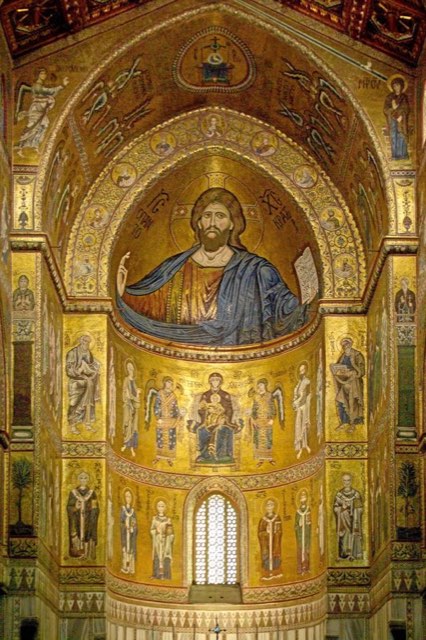
In the final unit of this course, you will look at the art of the Medieval period. There is a common misconception that Medieval culture was entirely at odds with the traditions of the classical world. In this unit, you will learn that Medieval art in fact grew out of these traditions, reshaping them according to the new demands of a post-classical world. With the fall of the Roman Empire, a new Empire centered in Constantinople, capitol of the Byzantine world, began to develop. In northern Europe, “Barbarian” and Viking art was able to flourish and supplant the cultural authority of the Romans. Christianity came to replace the Roman Empire as the great unifier of the Western world. As a result, nearly all of the art created in this period had a Christian function.

Early Christian Monuments
- Early Christian ByzantineiTunesU · Otis College of Art and Design · Dr. Jeanne Willette · watch · archived copy
Christian Art under Emperor Constantine
- Early Christian Art & Architecture After ConstantineSmartHistory · Dr. Allen Farber · read
Byzantine Art
- Byzantine EmpireThe British Museum · read · archived copy
- Sarah Brooks’ Byzantium (ca. 330-1453)Metropolitan Museum of Art · Heilbrunn Timeline of Art History · read · archived copy
- Hagia SophiaiTunesU · Community College of Philadelphia · Art History Abbreviated · Monica Hahn · watch · archived copy
Islamic Art
- The Birth of IslamMetropolitan Museum of Art · Heilbrunn Timeline of Art History · Suzan Yalman · read · archived copy
- APAH Islamic ArtYouTube · OLuAPAH · watch
Hiberno-Sazon and Viking Art
- Early Medieval EuropeiTunesU · Montgomery County Community College · Maggie Hobson-Baker · watch · archived copy
- Anglo-Saxon England and VikingsThe British Museum · read · archived copy
Carolingian Art and Medieval Spain
- Carolingian ArtMetropolitan Museum of Art · Heilbrunn Timeline of Art History · Jean Sorabella · read · archived copy
Ottonian Art
- Ottonian Art: St. Michael’s Church, Hildesheim (1001-1031)SmartHistory · Victoria Valdes · read
- Chapter 14, Early Medieval Art in Europe: Artists, Patrons and Works: Multiple Choice QuizPearson Education’s Companion Website · Art History, 3rd Edition · write · archived copy
Romanesque Europe
- Romanesque ArtMetropolitan Museum of Art · Heilbrunn Timeline of Art History · Julien Chapuis’ · read · archived copy
- Romanesque EuropeiTunesU · Montgomery County Community College · Maggie Hobson-Baker · read · archived copy
Gothic Europe
- Gothic ArchitectureThe British Museum · read
- Gothic ArtMetropolitan Museum of Art · Heilbrunn Timeline of Art History · Julien Chapius’ · read · archived copy
- Gothic EuropeiTunesU · Montgomery County Community College · Maggie Hobson-Baker · watch · archived copy
- Chapter 16, Gothic Art of the Twelfth and Thirteenth Centuries: Elements and Media: LabelingPearson Education’s Companion Website · Art History, 3rd Edition · write · archived copy
- Museum Visit #2: The Cloisters Museum and Gardens (a Part of The Metropolitan Museum of Art), New York CityThe Saylor Foundation · do
About this course
This course is Saylor Academy's ARTH110, Introduction to Western Art History: Pre-historic to High Gothic, one of the complete university courses the Saylor Foundation made free from 2008 and retired in 2015. Saylor licensed its course text under CC BY 3.0; the original is on GitHub. Here it is laid out as chapters, links that have died go to an archived copy from the Internet Archive where one exists, assessments that needed a Saylor login are left out, and people and works are linked to Kulturbase. The readings and lectures belong to their publishers and are linked, not copied. Pictures: Wikimedia Commons, credited under each picture.
All Saylor courses · Free culture courses · The Chautauqua Reading Course