Art history · Saylor ARTH111
Introduction to Western Art History: Proto-Renaissance to Contemporary Art
In this course, we will study important movements and some influential artists in Western art history. We will begin with the “Proto-Renaissance” in Italy in the 13th century and continue through to the late 20th century.
More about this course
You will become acquainted with certain regional and personal styles of art through this period, as well as a number of renowned works of art and architecture. Art forms and imagery are influenced by the surrounding world, the biography of the artist who produced the artwork, and other circumstances of artistic production. This course provides a framework for considering how and why certain artistic movements emerged in certain places at certain times. Some of the names and works we will look at might already be familiar to you, while others will be new. The ultimate goal of this course is not to provide data on individual works of art, although that is part of art history, but to act as a sort of springboard. You will gain tools for looking at and analyzing not only art by the visual world around you. Please note we will make a number of sweeping generalizations regarding styles to provide a broad foundational arc. Divisions between styles, periods, and cultures are always fluid and selected examples could be substituted with many others. The course design mirrors the scope and content of similar courses available through traditional undergraduate programs. We will move more or less chronologically, with some thematic sections. In some cases, in-depth resources on specific works and artists are assigned to suggest a broader range; in others, we will run through a number of examples briefly. To begin, review a map of modern Europe that you can compare with some historical maps we will look at. As we proceed, look up terms and supplemental images. The following links* are suggested:
General (extensive):
Art Dictionaries:
Chapter I
The Early Renaissance Outside Italy - Fifteenth Century
In this unit, we will look at stirrings of a Renaissance in Northern European (Dutch, Flemish, German regions), which remained tied to the ornamental style of earlier Northern Gothic through the 14th century. By the early 15th century, influences from Italy and new sources of patronage promoted greater interest in naturalistic representations, which integrated with the elegance of earlier style became known as “International Gothic.” In urban centers, an emerging burgher or merchant class commissioned devotional images of sacred figures in recognizable, earthly surroundings. Importance was placed on minute details that conveyed both realistic observation and symbolic meanings. We will focus on “Netherlandish” painting (which loosely includes Flemish and Dutch); however, we will also look at a few stylistic developments elsewhere (beyond Italy) and the emergence of printmaking as an art form.
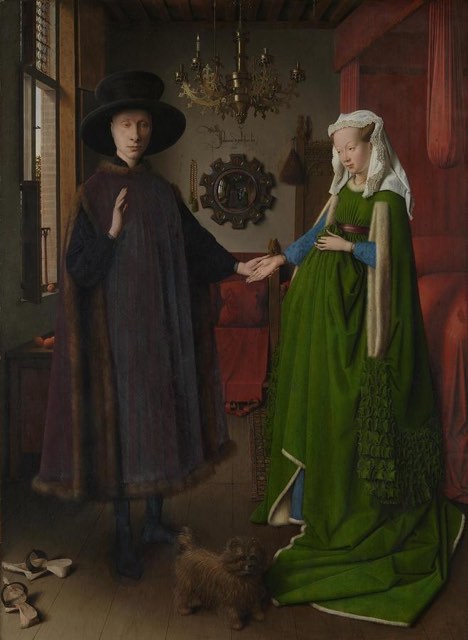

Burgundy: the Low Countries
- Les Trés Riches Heures du Duc de BerryWikipedia · watch
- The Hidden Masters of the Middle Ages: The Limbourg BrothersThe J. Paul Getty Museum’s version of · watch · archived copy
- The Well of MosesAntique Spectacles and Other Vision Aids · read
- Early Netherlandish PaintingThe Metropolitan Museum of Art’s Heilbrunn Timeline of Art History · Maryan W. Ainsworth · watch · archived copy
- Painting in Oil in the Low Countries and Its Spread to Southern EuropeThe Metropolitan Museum of Art’s Heilbrunn Timeline of Art History · Susan Jones · read · archived copy
- Hubert (?) and Jan van Eyck’s Ghent Altarpiece or The Adoration of the Mystic Lamb: Part 1 and Part 2Smarthistory · watch · no longer online
- Portinari AltarpieceWikipedia · read
France, Germany (Holy Roman Empire)
- Virgin and ChildArt and the Bible · Jean Fouquet · watch
- Tilman Riemenschneider: Master Sculptor of the Late Middle AgesNational Gallery of Art · read · archived copy
- Nuremberg ChronicleWikipedia · watch
- Martin SchongauerWikipedia · watch
- Fine Art PrintmakingEncyclopedia of Irish and World Art · watch
Chapter II
The Renaissance: Fifteenth Century Italian Art
In this unit, we will continue with the evolution of the Renaissance in Italy, starting with Florence, the epicenter of this revolution in art. Contemporary artists looked to the accomplishments of Roman art to express their own age, borrowing Classical forms for Christian subjects but also reviving mythological subjects, including nudes. Images of patrons integrated with saintly beings became prevalent in extravagant fresco cycles and altarpieces.
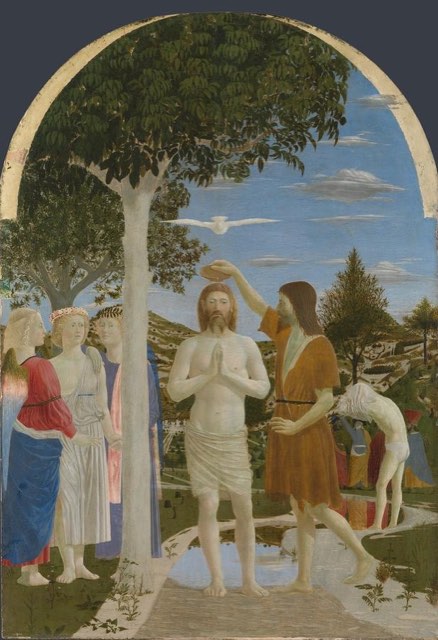

Painters and Sculptors Based in Florence
- Florence in the Early Renaissance, Linear Perspective: Brunelleschi’s Experiment, How Brunelleschi Discovered Linear Perspective, Early Applications of Linear Perspective, and The Sacrifice of IsaacSmartHistory · watch
- The Gates of Paradise: Lorenzo Ghiberti’s Renaissance Masterpiece (Exhibition, 2007)The Art Institute of Chicago · watch
- Holy TrinitySmarthistory · read · no longer online
- Donatello’s David and ContrappostoSmarthistory · read · no longer online
- Equestrian StatueWikipedia · watch
- Fra Angelico: The AnnunciationSmarthistory · watch · no longer online
- Fra Filippo Lippi, Madonna and Child, and Man and Woman at a CasementSmarthistory · watch · no longer online
- Domenico Ghirlandaio, Paolo Uccello, and Andrea del CastagnoWikipedia · watch
- Alessandro BottecelliEncyclopedia of Irish and World Art · watch
- Botticelli’s The Birth of VenusSmarthistory · watch · no longer online
Florentine Architects
- Filippo Brunelleschi and BrunelleschisDome.comWikipedia · read
- Pazzi ChapelGreat Buildings · Kevin Matthews and Artifice, Inc. · watch · archived copy
- Leone Battista AlbertiWikipedia · watch
Several Painters outside Florence
- Portrait of Federica de Montefeltro and Battista Sforza and Piero della Francesca’s Baptism of ChristSmarthistory · watch · no longer online
- Brera MadonnaWikipedia · read
- Mantegna’s Dead Christ, Mantegna’s St. Sebastian, Camera degli Sposi, and Dormition of the VirginSmarthistory · watch · no longer online
- Pietro PeruginoWikipedia · watch
Chapter III
The Later Renaissance - Sixteenth Century Italian Art
During the 16th century, the trend towards multi-talented artists in Italy was climactic in the careers of Leonardo Da Vinci (1452-1519), Michelangelo Buonarroti (1475-1564) and Rafaello (Raphael) Sanzio (1483-1520), whose works have come to define High Renaissance art. This unit will focus mainly on these artists. We will also see how the event of Martin Luther and the Reformation facilitated clerical commissions by the Catholic Church on a large scale. Rome was a major center of artistic activity and patronage in this period. We will also look at major artists in Venice. Please continue to supplement these readings and videos with a few high-quality, detailed images by searching for images discuss in this unit, and throughout the course, at the Web Gallery Index.
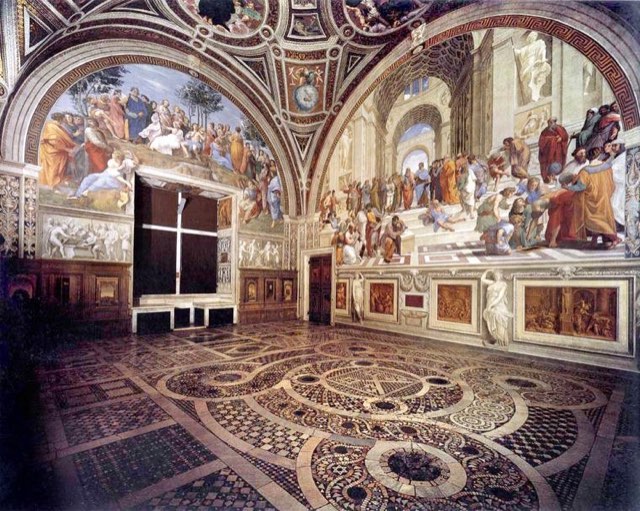

Leonardo, Michelangelo, Raphael
- Toward The High Renaissance, Leonardo da Vinci, Leonardo’s Virgin of the Rocks, Leonardo’s Last Supper, Burlington House Cartoon, and Leonardo’s Mona LisaSmarthistory · watch
- New Look at ‘Mona Lisa’ Yields Some New Secrets (9/27/2006)The New York Times · Ian Austen · read
- The Last Supper RestorationUNESCO World Heritage · Church and Dominican Convent of Santa Maria delle Grazie · watch
- Michelangelo: Sculptor, Painter, Architect, and Poet; Michelangelo’s Pietà; Michelangelo’s David; Michelangelo’s Moses; Michelangelo’s Ceiling of the Sistine Chapel; and Michelangelo’s Last JudgmentSmartHistory · watch
- The Last JudgmentVatican Museums · watch · archived copy
- Moses (Michelangelo)Wikipedia · watch
- Raphael’s Alba Madonna, Raphael’s Portrait of Pope Julius II, and Raphael’s School of AthensSmarthistory · watch · no longer online
- Saint Peter’s BasilicaSmarthistory · watch · no longer online
- Donato Bramante and San Pietro in MontorioWikipedia · watch
- 1500-1600: End of the Renaissance and the ReformationSmartHistory · read
Mannerism in Florence and Rome
- Pontormo’s Entombment, Bronzino’s Portraits, Parmigianino’s Self-Portrait in a Convex Mirror, Parmigianino’s Madonna of the Long Neck, and Cellini’s Perseus with the Head of MedusaSmarthistory · watch · no longer online
- Laurentian LibraryThe Museums of Florence · read
- Benvenuto CelliniWikipedia · watch
Venice
- San ZaccariaArtchive · watch
- Sixteenth-Century Painting in Venice and the VenetoThe Metropolitan Museum of Art’s Heilbrunn Timeline of Art History · Andrea Bayer · read · archived copy
- Titian (ca. 1488–1576)The Metropolitan Museum of Art, Heilbrunn Timeline of Art History · Department of European Paintings’ · watch · archived copy
- The Venetian Renaissance and Titian’s Bacchus and AriadneSmarthistory · watch · no longer online
- TintorettoWikipedia · read
- Villa Capra, or Villa Rotunda and San Giorgio MaggioreGreat Buildings · Andre Palladio · watch · archived copy

Chapter IV
The Seventeenth Century: Baroque Art
As the Counter Reformation picked up steam, grandiose renovations to St. Peter’s Basilica ensued. We will begin this unit by taking a look at these renovations and by taking note of the High Renaissance illusionism and aspects of Mannerism seen in Italian and Spanish Baroque painting around the same time. In this genre, artists employed dramatic lighting to emotional and theatrical effect, embedded messages of the Counter Reformation, and began to experiment with close-up realism—features that stood in contrast to the idealized harmonies and perspectival distance emphasized in Renaissance art.
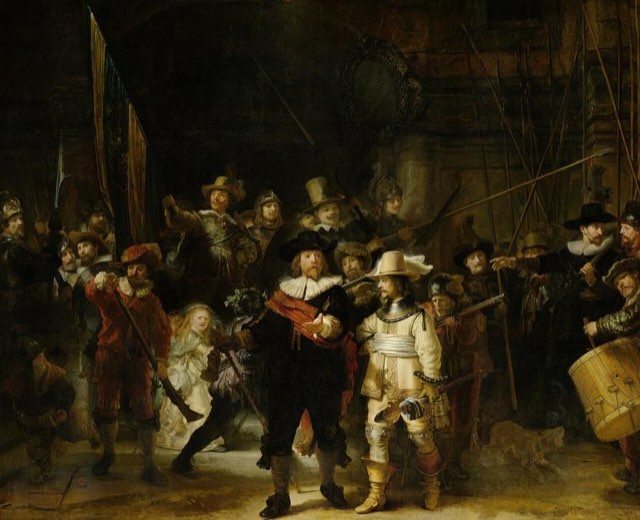

Italy
- Carlo MadernoWikipedia · read
- Bernini’s St. Peter’s Square, Cathedra Petri (Peter’s Chair), Ecstasy of St. Theresa, and DavidSmarthistory · watch · no longer online
- Borromini: San Carlo alle Quattro FontaneSmarthistory · watch
- Caravaggio’s Deposition, or Entombment, Caravaggio’s Calling of St. Matthew, and Caravaggio’s Crucifixion of St. PeterSmarthistory · watch
- Artemisia Gentileschi and Biblical Art by Artemisia GentileschiArt and the Bible · watch
- Pozzo – Sant’IgnazioCasa-in-italia.com · watch
Beyond Italy
- France 1600 - 1700, Poussin, and Claude LorraineSmarthistory · watch
- The Palace of VersaillesChateau de Versailles · watch · archived copy
- Iberian Peninsula, 1600–1800 A.D.Metropolitan Museum of Art’s Heilbrunn Timeline of Art History · read · archived copy
- Velázquez’s Las Meninas and Velázquez’s Los BorrachosSmarthistory · watch · no longer online
- Ribera’s Martyrdom of Saint PhilipSmarthistory · watch · no longer online
- Flanders: Ruben’s The Elevation of the CrossSmarthistory · read
- 1600 - 1700: The BaroqueSmartHistory · watch
- Van DyckWebmuseum Paris · watch
- Dutch Golden Age PaintingWikipedia · watch
- RembrandtWikipedia · watch
- The School of DelftJonathan Janson’s www.EssentialVermeer.com · read
- Inigo Jones’s Banqueting House and Sir Christopher Wren’s Saint Paul’s CathedralGreat Buildings · watch · archived copy
Chapter V
Eighteenth-Century Art
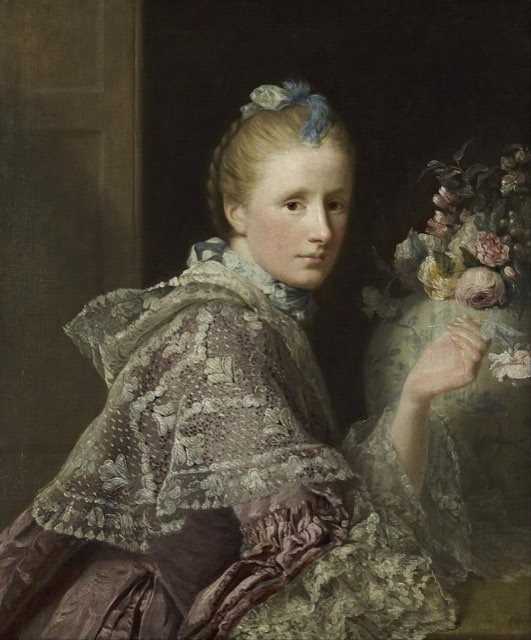
While Baroque styles continued to dominate eighteenth century artwork in many places in Europe, an outgrowth known as Rococo lightened up the dark palettes and further exaggerated excessive detail and ornament in painting and architecture. In this unit, we will look at regional and cultural nuances of this development, and note the relationship between rococo styles and royal patronage across Europe. It is important to consider this style within its social-economic context: at the time, the rise of colonial economies was generating great wealth in Europe.

Rococo
- Rococo, Fragonard’s The Meeting, Boucher’s Venus Consoling Love, Boucher’s Madame de Pompadour, and Vigée Le Brun’s Madame PerregauxSmarthistory · watch · no longer online
- The Tiepolo FamilySmartHistory · read
- The Age of Watteau, Chardin, and Fragonard ExhibitionNational Gallery of Art’s Exhibitions · watch · archived copy
- Kaisersaal (Imperial Hall)Bayerische Schlösserverwaltung’s Würzburg Residenz · read
- Johan Balthasar Neumann’s VierzehnheiligenGreat Buildings · watch · archived copy
- Bayerische Schlösserverwaltung’s Palace and Park Nymphenburg and Park Palace Amalienburgread
- Clodion (Claude Michel): Nymph and Satyr Carousing (14.40.687)Metropolitan Museum of Art’s Heilbrunn Timeline of Art History · read · archived copy
- Hogarth, The Modern Moral Series, and Marriage à la ModeTate Britain · read
- Gainsborough, ThomasWebMuseum, Paris · watch
Neoclassicism
- 1700-1800: Age of Enlightenment, Neo-Classicism, David’s Oath of the Horatii, David’s Death of Socrates, and David’s Death of MaratSmartHistory · read
- The Death of General WolfeWikipedia · watch
- Boy with a Squirrel and Watson and the SharkSmartHistory · John Singleton Copley · read · no longer online
- The Grand TourMetropolitan Museum of Art’s Heilbrunn Timeline of Art History · Jean Sorabella · read · archived copy
- Pantheon in Paris and Lord Burlington’s Chiswick HouseGreat Buildings · Jacques Germain Soufflot · watch · archived copy
- House and GardensMonticello · watch · archived copy
- Our First President in Three Dimensions February 19, 2011The Wall Street Journal · Catesby Leigh · read · no longer online
Chapter VI
Nineteenth Century
As you proceed through this unit, keep the two significant historical and social contexts in mind: first, Napoleon rose to power and crowned himself Emperor of the French Republic in 1804; second, European imperialism and colonialism throughout the world approached a climax. (There would be three more revolutionary uprisings before monarchy was definitively dissolved in France.)

Napoleonic Era and the Evolution of Romantic Painting
- David’s The Emperor Napoleon in His Study at the TuileriesSmarthistory · watch · no longer online
- Pauline BonaparteGalleria Borghese · watch · archived copy
- Jean-Auguste-Dominique Ingres and La Grande Odalisque (1814)Smarthistory · read
- Romanticism in Spain: Goya’s Third of May 1808Smarthistory · read
- The Family of Charles IV and Saturn Devouring his SonsSmarthistory · Goya · watch · no longer online
- RomanticismSmarthistory · watch · no longer online
- Romanticism in England: Constable’s The Hay Wain and Turner’s Rain, Steam, and Speed – the Great Western RailwaySmarthistory · read · no longer online
- Blake, WilliamWebMuseum, Paris · read
- Romanticism in France: Delacroix’s Liberty Leading the People and Romanticism in the United States: Thomas Cole’s The OxbowSmarthistory · read · no longer online
- Making DaguerreotypesThe J. Paul Getty Museum · watch · archived copy
Realism and Impressionism
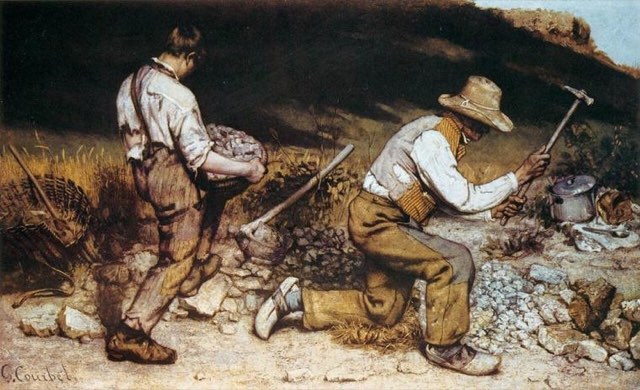
- Realism, Courbet’s Bonjour Monsieur Courbet, Stonebreakers, and The Artist’s StudioSmartHistory · Beth Gersh-Nesic · read
- Rosa BonheurSmarthistory · watch · no longer online
- L & D Noack’s Daumier Registerwatch · archived copy
- Édouard Manet (1832–1883)The Metropolitan Museum of Art’s Heilbrunn Timeline of Art History · Rebecca Rabinow · read · archived copy
- Millais’ OpheliaiTunes · Smarthistory · watch · no longer online
- Academic ArtSmarthistory · watch · no longer online
- Winslow Homer (1836–1910)The Metropolitan Museum of Art’s Heilbrunn Timeline of Art History · Barbara H. Weinberg · read · archived copy
- Eakins’s The Gross Clinic and ImpressionismSmarthistory · Meg Floryan · read · no longer online
- The First Impressionist Exhibition 1874Artchive · watch
- Monet’s Gare St. Lazare and Renoir’s Moulin de la GaletteSmartHistory · watch · no longer online
- America in the Gilded Age: Whistler, Symphony in White and Sargent’s El JaleoSmarthistory · watch
- Henry Ossawa TannerArtchive · watch
- RodinWikipedia · read
- Edgar Degas (1834–1917): Bronze SculptureThe Metropolitan Museum of Art’s Heilbrunn Timeline of Art History · Clare Vincent · watch · archived copy
- Nadar, Julie Margaret Cameron, and Timothy O’SullivanJ. Paul Getty Museum · watch
- Eadweard MuybridgeWikipedia · watch
Painting at the End of the Century (“Fin de Siècle”)
- Post-ImpressionismThe Metropolitan Museum of Art’s Heilbrunn Timeline of Art History · James Voorhies · watch · archived copy
- Post-Impressionism: Seurat’s Sunday Afternoon at La Grande Jatte, Cezanne’s Still Life with Apples, Gauguin’s Vision after the Sermon, and Gauguin’s NevermoreSmarthistory · watch · no longer online
- SymbolismThe Metropolitan Museum of Art’s Heilbrunn Timeline of Art History · Nicole Myers’ · watch · archived copy
- Edvard MunchWikipedia · watch
- Aubrey BeardsleyWikipedia · watch
Nineteenth-Century Architecture
- The Romantic ArchitectureArqhys · read · archived copy
- Henry Labrouste’s Bibliotèque Ste. GenievièveGreat Buildlings · watch · archived copy
- The Great Exhibition at the Crystal PalaceVictorian Station · read · archived copy
- Crystal PalaceGreat Buildings · Joseph Paxton · watch · archived copy
- Palais Garnier (Paris Opera)Wikipedia · read
- Origins and Construction of the Eiffel TowerTour Eiffel · watch · no longer online
- Victor HortaGreat Buildings · watch · archived copy
- Modernisme: Gaudí’s Sagrada FamiliaSmarthistory · watch · no longer online
- Marshall Field Store (Richardson) and Wainwright Building (Sullivan)Great Buildings · watch · archived copy
Chapter VII
The Twentieth Century to WWII
Early in the 20th century, “modernism” in art came to be closely associated with abstraction, although many styles remained grounded in figurative forms. As we proceed through this unit, consider the concurrent technological and social developments, such as the development of the automobile and airplane, the advent of the two world wars, the Communist Revolution in Russia, the height of European Imperialism in Africa, and the Great Depression. Note that a migration of artists and intellectuals from Europe took place as Hitler came to power. This migration shaped the course of American art and effected a shift of the center of the art world from Paris to New York.
Through WWI
- 1907-1960: Age of Global ConflictSmarthistory · watch · no longer online
- Fauvism and Matisse’s Bonheur de Vivre, Les Demoiselles d’Avignon, Picasso Early Work, Matisse’s Dance I, Expressionism: Kirchner’s Street, Dresden, Georges Braque’s The Portuguese, and Cubism & Picasso’s Still Life with Chair CaningSmarthistory · read
- Picasso Guitars 1912-1914Museum of Modern Art, New York · watch · archived copy
- Futurism and Arp’s Untitled (Collage with Squares Arranged According to the Laws of Chance)Smarthistory · watch · no longer online
- Dada Anti-Art MovementEncyclopedia of Irish and World Art · read
- Readymades of Marcel DuchampWikipedia · read
- Dada: Schwitter’s Merzbild 32A, The Cherry Picture, Dada: Klee’s Twittering Machine, and Ashcan School, George BellowsSmarthistory · watch · no longer online
- Kandinsky September 18, 2009-January 13, 2010The Guggenheim Museum · Teacher Resources · watch · archived copy
- SuprematismGuggenheim Museum · watch
- Armory ShowWikipedia · read
- De StijlWikipedia · read
- Alfred Stieglitz (1864–1946) and His CircleThe Metropolitan Museum of Art’s Heilbrunn Timeline of Art History · James Voorhies’ · read · archived copy
Between the Wars
- Neue SachlichkeitBoundless · read
- Surealism.The Metropolitan Museum of Art’s Heilbrunn Timeline of Art History · James Voorheis · watch · archived copy
- Surrealism: Giacometti’s The Palace at 4am, 1907-1960: Age of Global Conflict, and Branscusi’s Bird in SpaceSmarthistory · watch · no longer online
- BauhausArtLex · read
- BauhausWikipedia · read
- Degenerate ArtWikipedia · read
- Treasures of the World: Guernica: Testimony of WarPBS · read · archived copy
- Henry MooreTate Gallery · Past Exhibitions · watchHenry Moore on Kulturbase
- Alexander Calder 1898-1976National Gallery of Art · watch · archived copy
- Stuart DavisMuseum of Modern Art · watch · archived copy
- African American Art: The Harlem Renaissance, The New Deal, and American Scene PaintingLinks · ArtLex · read
- Regionalism, Social Realism, and American Scene PaintingArtlex · watch · archived copy
- Diego RiveraWikipedia · watch
- Le Corbusier and Villa Savoye Remembered (2007)Archinnovations · Camille Chami · read · archived copy
- Frank Lloyd WrightGreat Buildings · read · archived copy
- Early Modern PhotographySmarthistory · read
- Dorothea LangeWikipedia · watch
Chapter VIII
The Later Twentieth Century
After WWII, the art world largely relocated from Europe to the United States, where it came to be firmly centered in New York. Total abstraction in art became the norm until around 1980s, when figuration made a strong comeback in various ways. Advances in technology, such as video cameras, space travel, and finally, the Internet, as well as the new geographies of post-colonialism help open up a new pluralism in art that could not be contained in traditional stylistic overviews. Art historians and critics have often drawn on the past to find connections that facilitate engagement me continuous, challenging new art in the contemporary world.
Painting, Sculpture, Photography
- Jean Dubuffet, Alberto Giacometti, Karen Appel, and Francis BaconGuggenheim Museum · read · archived copy
- Abstract ExpressionismThe Metropolitan Museum of Art’s Heilbrunn Timeline of Art History · Stella Paul · watch · archived copy
- Abstract Expressionism: Pollock’s One: Number 31, 1950Smarthistory · watch · no longer online
- Flag, Japser JohnsMuseum of Modern Art, The Collection · read · no longer online
- Richard HamiltonWikipedia · watch
- 1960-2010: Age of Post-ColonialismSmarthistory · watch · no longer online
- Pop Art: Andy Warhol’s Gold Marilyn Pop Art: Claus Oldenburg’s Floor Cake Minimalism: Donald Judd’s Untitled Minimalism: Dan Flavin’s Untitled (To Donna) II Earth Art: Smithson’s Spiral Jetty, 1970 Photography after 1960, Sherman’s Untitled Film Still #21 Postmodernism: Robert Colescott’s Beauty is in the Eye of the BeholderSmarthistory · watch · no longer online
- Minimalism: Robert Morris’s Untitled (L-Beams), Conceptual Art: Vito Acconci’s Following Piece, Feminist Art; Kelly’s Post-Partum Document, and Post-Minimalism: Nauman’s The True Artist Helps the World by Revealing Mystic TruthsSmarthistory · read · no longer online
- Conceptual ArtMuseum of Modern Art, The Collection · watch · archived copy
- PhotorealismWikipedia · read
- Video ArtEncyclopedia of Irish and World Art · read
- Neo-ExpressionismGuggenheim Museum, Collection Online · watch
- Vietnam Veterans MemorialWikipedia · read
- Jean-Michel Basquiat’s Untitled, Christian Boltanski’s The Storehouse, David Hammons’ High Falutin’, Gary Hill’s Inasmuch as It Is Always Already Taking Place, Barbara Kruger’s Untitled (You Invest in the Divinity of the Masterpiece)Museum of Modern Art, The Collection · read · archived copy
- Jeff Koons’ New Shelton Wet/Dry Doubledecker, Sherrie Levin’s President Collage 1, Lari Pittman’s Untitled, Lorna Simpson’s Wigs (Portfolio), and Bill Viola’s StationsMuseum of Modern Art, The Collection · read · archived copy
Architecture
- Architecture: Gordon Bunshaft’s Lever HouseSmarthistory · watch · no longer online
- Glass House, Johnson, 1949, Guggenheim Museum, Wright, 1943-1959, Notre Dame du Haut, Le Corbusier, 1950-1955, Seagram Building, Van der Rohe and Johnson, Sears Tower, Skidmore, Owings and Merrill, 1974, Centre Pompidou, Rogers and Piano, 1977, Portland Building, Graves, 1980, and Guggenheim Bilbao, Gehry, 1997Great Buildings · watch · archived copy
- Postmodern ArchitectureYouTube · APArtHistory2009 · watch
About this course
This course is Saylor Academy's ARTH111, Introduction to Western Art History: Proto-Renaissance to Contemporary Art, one of the complete university courses the Saylor Foundation made free from 2008 and retired in 2015. Saylor licensed its course text under CC BY 3.0; the original is on GitHub. Here it is laid out as chapters, links that have died go to an archived copy from the Internet Archive where one exists, assessments that needed a Saylor login are left out, and people and works are linked to Kulturbase. The readings and lectures belong to their publishers and are linked, not copied. Pictures: Wikimedia Commons, credited under each picture.
All Saylor courses · Free culture courses · The Chautauqua Reading Course