Art history · Saylor ARTH202
Art of Ancient Greece and Rome
In this course, we will study the art of Classical Antiquity. The different units of the course reflect the main chronological stages in art development in Ancient Greece and Rome, from the coming together of the Greek city-state and the emergence of “geometric art” (around 900 B.C.) to the fourth century A.D. shift that took place within Roman culture and art due to the growing influence of Christianity.
More about this course
We will begin by underlining the unity of our subject matter: Rome not only conquered Greece, but it assimilated Greece’s cultural and artistic accomplishments. In fact, much of what we know of Greek art today we learned through Roman copies. We will also explore the development of Greek architecture, sculpture, and painting up to the Hellenistic period, when Greek art began to influence new parts of the globe through the conquests of Alexander the Great. We will also study the ways in which naturalism and idealism came together as Greek art developed over time. Next, we will turn our attention to Roman art, studying its development from the time of the Roman Republic, a period that overlaps with Greece’s Classical and Hellenistic periods, to the waning of the Western Roman Empire. You will learn that while Roman art was, to a large extent, inspired by Greek art, it also developed its own distinctive characteristics. The artistic traditions of Ancient Greece and Rome ultimately served as the foundation for the art of the Western world; these traditions continue to reverberate to the present day.
Upon successful completion of this course, the student will be able to:
In order to take this course, you must:
Chapter I
Greek Art: Early Classical Antiquity
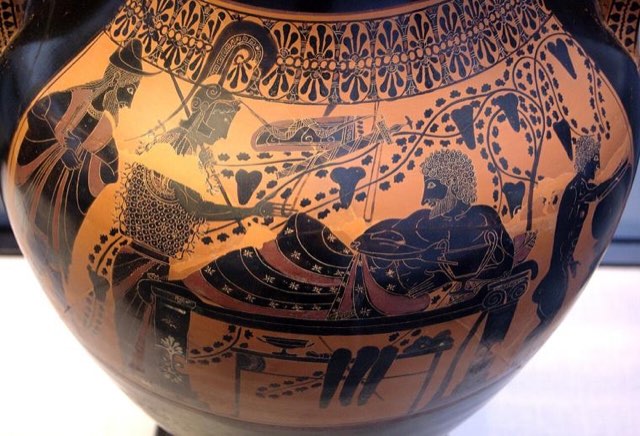
In this unit, we will study Greek art from 900 B.C. to the early 600s B.C. During this period, the area experienced an economic revival after what is sometimes referred to as the “Dark Age” of Greece. Along with enjoying renewed trade with other regions, Greece held its first Olympic Games and rich traditions in literature and the arts began to develop.

What Is Classical Antiquity?
- Ancient Greece and RomeSmartHistory.org · Dr. Beth Harris and Dr. Zucker · read
- Ancient Literature and Language: A Brief History of Early Ancient Civilization: Historical Overview of Greece and RomeUtah State University · Mark Damen · read
- Introducing the Classical World: Ancient Time and Introducing the Classical World: Ancient Places, and Introducing the Classical World: The Geography of the Classical WorldThe Open University · read · no longer online
Introduction to Greek History and Mythology
- The Ancient City of Athens: A Very Brief Outline of Greek History (to A.D. 1453)The Stoa Consortium · Kevin T. Glowacki · read
- Chapter 3: Ancient Literature and Language: An Introduction to Classical Mythology and Chapter 4: Homer and the ’Iliad’Utah State University · Mark Damen · read
The Geometric Period, 900-700 B.C.: A Cultural Rebirth
- A Comprehensive Outline of World History: Europe, 1500 to 1000 B.C.: Southern Europe and A Comprehensive Outline of World History: Europe: 1000 to 700 B.C.: Southern EuropeConnexions · Jack E. Maxfield · read
Arts in the Geometric Period
- Geometric Art in Ancient GreeceThe Metropolitan Museum of Art’s Heilbrunn Timeline of Art History · The Department of Greek and Roman Art · read · archived copy
- Lecture 3: The Geometric and The Saylor Foundation’s Gallery for Subunit 1.2.3YouTube · Santa Clara University · Professor Pafford · watch
The Archaic Period: Historical Background
- A Comprehensive Outline of World History: Europe, 700 to 601 B.C.: Southern Europe and A Comprehensive Outline of World History: Europe, 600 to 501 B.C.: Southern Europe: Eastern Mediterranean Islands, Greece, Upper BalkansConnexions · Jack E. Maxfield · read
Arts of the Archaic Period: Overview
- Greek Art in the Archaic PeriodThe Metropolitan Museum of Art’s Heilbrunn Timeline of Art History · The Department of Greek and Roman Art · watch · archived copy
What Is a Greek Temple?
- Reading Greek Temples: What Is a Greek Temple?Reed College · Ellen Millender and Alex Nice · read · archived copy
Layout and Orders
- Reading Greek Temples: Architectural StylesReed College · Ellen Millender and Alex Nice · read · archived copy
Architecture and Sculptural Ornamentation
- Reading Greek Temples: DecorationReed College · Ellen Millender and Alex Nice · read · archived copy
The Acropolis of Athens in the Archaic Era
- The Ancient City of Athens: The Acropolis, The Acropolis: General Views, and The Archaic AcropolisThe Stoa Consortium · Kevin T. Glowacki · watch
The Kouros
- Lecture 5: The Kouros: Walk Like an Egyptian, Only Naked and The Saylor Foundation’s Gallery for Subunit 1.5.1YouTube · Santa Clara University · Professor Isabelle Pafford · watch
- New York KourosSmartHistory.org · Monica Hahn and Brian Seymour · watch
The Korai
- Lecture 6: Korai, Nymphs, and Respectable Ladies and The Saylor Foundation’s Gallery for Subunit 1.5.2YouTube · Santa Clara University · Professor Isabelle Pafford · watch
Introduction to Greek Vessels
- Shapes: Introduction, Shapes: Amphorae, Shapes: Kraters, Shapes Other Vessels for Carrying Liquid, Shapes: Pouring Vessels, Shapes: Cupes and Other Drinking Vessels, Shapes: Small Closed Shapes, and Shapes: Other ShapesOxford University · Beazley Archive · read · archived copy
The Influence of the East in 7th Century Pottery
- Pottery: Techniques and Styles, OrientalizingOxford University · Beazley Archive · read · archived copy
- Classics Exhibit: Timeline: Geometric and Orientalizing Periods and Orientalizing PotteryThe University of Colorado · watch · archived copy
Black-Figure Pottery Painting
- Lecture 8: The Aesthetics of Black Figure and The Saylor Foundation’s Gallery for Sub-subunit 1.6.3YouTube · Santa Clara University · Professor Pafford · watch
- Mixing Vessel with Odysseus Escaping from the Cyclops’ CaveYouTube · SmartHistory.org · watch
Black-Figure Pottery Painting: The Corinthian Tradition
- Pottery: Techniques and Styles, Corinthian Pottery: An IntroductionOxford University · Beazley Archive · read · archived copy
The Attic Tradition: Black- and Red-Figure Pottery
- Athenian Vase Painting: Black- and Red-Figure TechniquesThe Metropolitan Museum of Art’s Heilbrunn Timeline of Art History · The Department of Greek and Roman Art · watch · archived copy
- Euphronios, Attic Calyx-KraterSmartHistory.org · Dr. Beth Harris and Dr. Steven Zucker · watch
- Treasures of Oxford-Athenian Drinking CupiTunes U · Oxford University · John Boardman · watch
- Quiz 1The Saylor Foundation · write
- Essay 1The Saylor Foundation · write
Chapter II
Greek Art: Classical Art, 480-323 B.C.
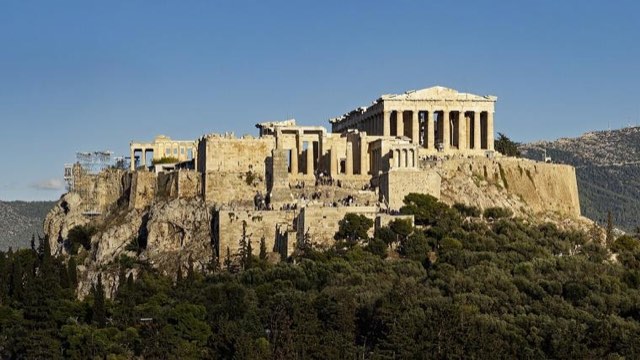
The period that produced what we now term “Greek Classical art” began around 480 B.C., with the end of the Persian invasions of Greece. A period of peace and unification followed Greek victory. By the middle of the century, the foundations of a democratic system were in place. In Athens, the statesman Pericles was an active promoter of the arts; he began to develop ambitious architectural projects for the acropolis. The fourth and fifth centuries B.C. were to become known as the “Golden Age” of Greek Art. New levels of naturalism and idealism were achieved and merged in the depiction of the human figure as well as in the construction of buildings.

Historical Background
- A Comprehensive Outline of World History: Europe, 500 to 401 B.C.: Southern Europe: Eastern Mediterranean Islands, Greece (the 2nd Center of Civilization), Upper Balkans and A Comprehensive Outline of World History: Europe, 1000 to 700 B.C.: Southern Europe: Eastern Mediterranean Islands, Greece, Upper BalkansConnexions · Jack E. Maxfield · read
The Development of Art in the Classical Period
- The Art of Classical Greece (ca. 480-323 B.C.)The Metropolitan Museum of Art’s Heilbrunn Timeline of Art History · Colette Hemingway and Séan Hemingway · read · archived copy
The Temple of Zeus at Olympia
- Temple of Zeus at OlympiaSUNY Oneonta · watch · 30 min
- Virtual OlympiaThe Powerhouse Museum · watch · archived copy
- The Sanctuary of Zeus at OlympiaiTunes U · La Trobe University · Dr. Gillian Shepherd · watch
The Charioteer of Delphi
- Charioteer of DelphiAncient-Greece.org · watch
Development of the Lost-Wax Technique
- The Technique of Bronze Statuary in Ancient GreeceThe Metropolitan Museum of Art’s Heilbrunn Timeline of Art History · Colette Hemingway and Séan Hemingway · read · archived copy
- Bronze CastingSmartHistory.org · Dr. Beth Harris and Dr. David Drogin · watch
The Acropolis of Athens: The Parthenon
- The Acropolis and the ParthenoniTunes U · The Open University · watch
- Nova Interview with Jeffrey HurwitPBS · Gary Glassman · read
- Secrets of the ParthenonYouTube · PBS · watch
- Reading Greek Temples: The Parthenon, Reading Greek Temples: Refinements, and Reading Greek Temples: DecorationReed College · Ellen Millender and Alex Nice · read · archived copy
- The Ancient City of Athens: The Acropolis—The ParthenonThe Stoa Consortium · Kevin T. Glowacki · watch · archived copy
The Acropolis of Athens: The Temple of Athena Nike
- Lecture: Illustrated Temple of Athena Nike (427-424 B.C.)Illinois State University · Dr. J · read · archived copy
- Temple of Athena NikeReading · Ancient-Greece.org · read
- The Ancient City of Athens: The Acropolis—Athena NikeThe Stoa Consortium · Kevin T. Glowacki · watch · archived copy
The Acropolis of Athens: The Erechtheum
- Lecture: Illustrated Erechtheum LectureIllinois State University · Dr. J · read · archived copy
- The Ancient City of Athens: The Acropolis—The ErechtheionThe Stoa Consortium · Kevin T. Glowacki · watch · archived copy
- Erechtheion: Caryatid and ColumnSmartHistory.org · Dr. Beth Harris and Dr. Steven Zucker · watch
- ErechtheionAncient-Greece.org · read
Classical Art: Sculpture
- Sculpture: The Classical PeriodOxford University · Beazley Archive · read · archived copy
The Parthenon and the “Phidian” Style
- Sculpture from the Parthenon’s East PedimentYouTube · SmartHistory.org · watch
- The Parthenon East MetopesiTunes U · UMBC Humanities and Social Science Forum · watch · no longer online
- Parthenon FriezeSmartHistory.org · watch
Polykleitos and Cannons
- Classical Greek SculptureSmartHistory.org · Dr. Beth Harris and Dr. Steven Zucker · watch · archived copy
- Polyclitus’s Canon and the Idea of SymmetriaSuny College at Oneonta · Dr. Allen S. Farber · read
Classical Art: Red-Figure Painting and White-Ground Painting
- Athenian Vase Painting: Black- and Red-Figure TechniquesThe Metropolitan Museum of Art’s Heilbrunn Timeline of Art History · The Department of Greek and Roman Culture · watch · archived copy
A Few Examples of Late Classical Art
- Sculpture: The Classical PeriodOxford University’s Beazley Archive · read · archived copy
- After Praxiteles, Venus (Roman Copy)SmartHistory.org · watch · archived copy
Chapter III
Greek Art: Hellenistic Art, 323-31 B.C.
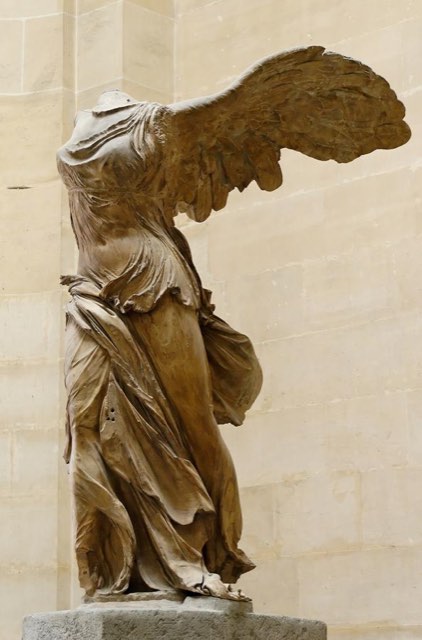
The Hellenistic period of Greece began after Alexander the Great’s conquests. His conquests spread “Hellenism,” or Greek culture, to the Mediterranean basin and beyond. A vast new geographical context acted upon and changed the Greek cultural tradition while the model of the city-state declined (and Athens’ prominence along with it). The period’s visual arts are characterized by, among other things, an ever-increasing naturalism and a focus on representing intense emotion through the human figure. Meanwhile, new trends in architecture and architectural planning reflected a new social order. By the middle of the second century B.C., Romans had conquered a large part of Greece, and the assimilation of Greek culture and art began in earnest.

The Hellenistic World
- A Comprehensive Outline of World History: Europe: 400 to 301 B.C.: Southern Europe: Eastern Mediterranean Islands, Greece, Upper Balkans, A Comprehensive Outline of World History: Europe: 300 to 201 B.C.: Southern Europe: Greece, Upper BalkansConnexions · Jack E. Maxfield · read
- A Comprehensive Outline of World History: Europe: 200 to 101 B.C.: Southern Europe: Greece, Upper Balkans, A Comprehensive Outline of World History: Europe: 100 B.C. to 0: Greece, Upper BalkansConnexions · Jack E. Maxfield · read
- A Comprehensive Outline of World History: The Near East: 400 to 301 B.C., A Comprehensive Outline of World History: The Near East: 300 to 201 B.C., A Comprehensive Outline of World History: The Near East: 200-101 B.C., and A Comprehensive Outline of World History: The Near East 100 B.C. to 0Connexions · Jack E. Jack Maxfield · read
- A Comprehensive Outline of World History: Africa: 400 to 301 B.C.; A Comprehensive Outline of World History: Africa: 300 to 201 B.C.; A Comprehensive Outline of World History: Africa: 200 to 101 B.C.; and A Comprehensive Outline of World History: Africa: 100 B.C. to 0Connexions · Jack E. Jack Maxfield · read
- Lisahistory: The Hellenistic WorldLisa M. Lane · watch · archived copy
Culture and the Arts
- Ancient Literature and Language: Hellenistic LiteratureUtah State University · Mark Damen · read
Arts in the Hellenistic Period
- Art of the Hellenistic Age and the Hellenistic TraditionThe Metropolitan Museum of Art’s Heilbrunn Timeline of Art History · Colette Hemingway and Séan Hemingway · read · archived copy
Athens during the Hellenistic Era
- The City of Athens during the Hellenistic PeriodArchaeology of the City of Athens · Charalampos Bouras’ · read · archived copy
A Remote Hellenistic City: Ai Khanoum
- Ai KhanoumWikimedia · read
- Alexandria on OxusLivius.org · watch · archived copy
- The Temple with Indented Niches at Ai Khanoum: Ethnic and Civic Identity in Hellenistic BactriaAcademia.edu · Oxford University · Rachel Mairs’ · read · no longer online

Domestic Architecture
- The Hellenistic House, with Special References to Examples at DelosWiredSpace · Rex Martienssen · read · archived copy
Sculpture
- Sculpture: Hellenistic SculptureOxford University’s Beazley Archive · read · archived copy
Portraits
- Sculpture: PortraitsOxford University · Beazley Archive · read · archived copy
Single Figures and Deities
- Dying GaulSmartHistory.org · Dr. Beth Harris and Dr. Steven Zucker · watch
- Hellenistic Period: Sculpture: DeitiesOxford University · Beazley Archive · read · archived copy
- Nike of SamothraceSmartHistory.org · Dr. Beth Harris and Dr. Steven Zucker · watch
- Hellenistic Art at the Metropolitan: Eros Sleeping and an Old Market WomanSmartHistory.org · Brian Seymour and Monica Hahn · watch · archived copy
Groups: New Compositions and Treatment of Space
- Hellenistic Period: Sculpture: Narrative GroupsOxford University · Beazley Archive · read · archived copy
Sculpture in Provinces
- Hellenistic Period: Sculpture: The Remoter KingdomsOxford University · Beazley Archive · read · archived copy
Pottery Painting
- Classics Exhibit: Hellenistic PotteryThe University of Colorado · read · archived copy
Painted Funerary Monuments
- Painted Funerary Monuments from Hellenistic AlexandriaThe Metropolitan Museum of Art’s Heilbrunn Timeline of Art History · Mark B. Abbe · read · archived copy
Mosaics
- Greek Mosaics of the Classical and Hellenistic PeriodsCardiff University · Ruth Westgate · read · archived copy
Other Arts
- Hellenistic JewelryThe Metropolitan Museum of Art’s Heilbrunn Timeline of Art History · Colette Hemingway and Séan Hemingway · read · archived copy
From Hellenistic to Roman: The Example of Cyprus
- Hellenistic and Roman CyprusThe Metropolitan Museum of Art’s Heilbrunn Timeline of Art History · The Department of Greek and Roman Art · read · archived copy
Chapter IV
Rome: Art of the Etruscans and the Roman Republic
The legendary origins of the city of Rome situate the city’s birth in the 8th century B.C., the era of “geometric art” in Greece. In the fifth century B.C., the Roman Republic was established. By this time, the Romans had gained influence over the Italian peninsula by conquering the most important civilization of its time and place: the Etruscan civilization. The Roman Republic’s art was influenced by Greek and Etruscan antecedents, but it took realism to new levels by emphasizing individual traits in the rendering of the human figure and face.
The Etruscan Civilization
- A Comprehensive Outline of World History: Europe, 1000 to 701 B.C.: Southern Europe: Italy, A Comprehensive Outline of World History: Europe, 700 to 601 B.C.: Southern Europe: Italy, A Comprehensive Outline of World History: Europe, 600 to 501 B.C.: Southern Europe: ItalyConnexions · Jack E. Maxfield · read
- The History of Ancient Rome: Etruscans and Greeks in Pre-Roman Italy, 8th to 5th Centuries B.C.E.University of Notre Dame · Professor Elizabeth Mazurek · read · archived copy
Etruscan Art
- Etruscan ArtThe Metropolitan Museum of Art’s Heilbrunn Timeline of Art History · Colette Hemingway and Séan Hemingway · read · archived copy
- The EtruscansiTunes U · Montgomery County Community College · Maggie Hobson Baker · watch · no longer online
Rome and Its Origins
- Roman Architecture: Beginnings of Urbanism in ItalyYouTube · Yale University · Diana Kleiner · watch · 1 h
Historical Background
- A Comprehensive Outline of World History: Europe, 500 to 401 B.C.: Southern Europe: Italy, A Comprehensive Outline of World History: Europe, 400 to 301 B.C.: Southern Europe: Italy, and Europe, 300 to 201 B.C.: Southern Europe: Italy.Maxfield · read
- A Comprehensive Outline of World History: Europe, 200 to 101 B.C., Europe, 100 B.C. to 0, and A Comprehensive Outline of World History: Africa, 100 B.C. to 0Connexions · Jack E. Maxfield · read
The Republic
- The History of Ancient Rome: The Early Roman Republic: The Struggle of the OrdersUniversity of Notre Dame · Professor Elizabeth Mazurek · read · archived copy
Art in the Roman Republic
- The Roman RepublicThe Metropolitan Museum of Art’s Heilbrunn Timeline of Art History · The Department of Roman and Greek Art · read · archived copy
- Republican Art and The Saylor Foundation’s Gallery for Subunit 4.3.3Internet Archive · Sacramento State University · Francesca Tronchin · watch
Greek and Etruscan Antecedents, Roman Innovations: The Temple of Portunus
- Temple of PortunusYouTube · SmartHistory.org · watch
Building Innovations
- Roman Architecture: Technology and Revolution in Roman ArchitectureYale University · Diana Kleiner · watch · 1 h
Sculpture: The Art of Portraiture
- Roman Portrait Sculpture: Republican through ConstantinianThe Metropolitan Museum of Art’s Heilbrunn Timeline of Art History · Rosemarie Trentinella · read · archived copy
The First and Second Styles of Painting
- Roman PaintingThe Metropolitan Museum of Art’s Heilbrunn Timeline of Art History · The Department of Greek and Roman Art · watch · archived copy
- Roman Architecture: Early Roman Interior DecorationYouTube · Yale University · Diana Kleiner · watch
Roman Villas and Their Art: From Republic to Empire
- Pompeii and the Roman Villa Exhibiting Art and Culture around the Bay of NaplesiTunes U · UMBC Humanities and Social Science Forum · watch
Chapter V
Rome: The Empire
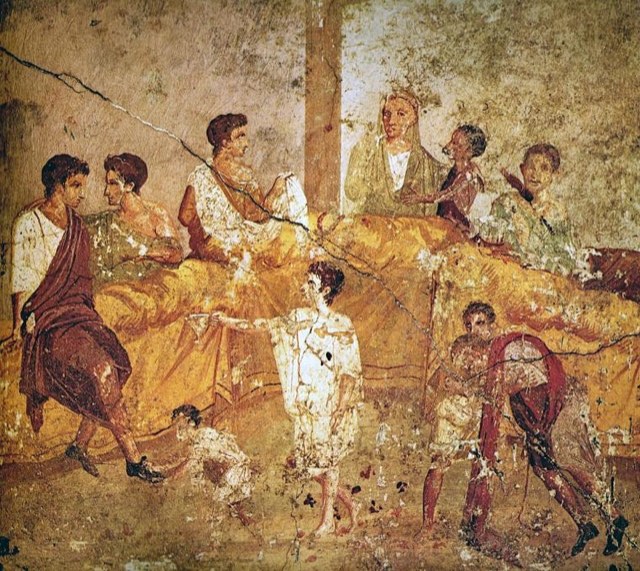
The expansion of Rome saw the emergence of new building technologies, the achievement of startling engineering feats, and notable developments in urban planning. The Art of the Empire glorified the emperor, but also the state and social structure. In the third century, the Empire was divided from within and weakened by numerous invasions. In 323, Constantine, the first Christian emperor, moved the empire’s capital to Byzantium, leaving the “Western Empire” to its decline.

The Roman Empire
- The Roman Empire: Introducing Some Key TermsThe Open University · watch · no longer online
- Lisahistory: The Roman EmpireLisa M. Lane · watch · archived copy
Art and Power: The Emperors
- The Roman Empire (27 B.C.-393 A.D.)The Metropolitan Museum of Art’s Heilbrunn Timeline of Art History · Christopher Lightfoot · read · archived copy
- Augustan Rule (27 B.C.-14 A.D.)The Metropolitan Museum of Art’s Heilbrunn Timeline of Art History · The Department of Greek and Roman Art · read · archived copy
Augustus: Rome as a Work of Art to the Glory of the Empire
- Roman Architecture: From Brick to Marble: Augustus Assembles RomeYouTube · Yale University · Diana Kleiner · watch
Architectural Theory in the Time of Augustus: Vitruvius
- Preface for Part I, Preface for Part II, Preface for Part III, Book I: Chapter I: The Education of the Architect: Section 3, Book I: Chapter 2: The Fundamental Principles of Architecture, Book I: Chapter 3: Section I, Book I: Chapter 3: Section 2, and Introductions. Note: Vitruvius’ “De architectTufts University · Perseus Projects’ version of Vitruvius’ Ten Books of Architecture · read
Vespasian and Titus’ Colosseum
- ColosseumYouTube · SmartHistory.org · watch
Emperor Hadrian’s Pantheon
- The Pantheon, RomeYouTube · SmartHistory.org · watch
Portus
- PortusHumbox · watch
Homes
- Imperial Rome and Ostia: InsulaeiTunes U · The Open University Podcasts · watch
- Sample Plan of a Roman HouseVroma.org · Barbara F McManus · watch · archived copy
- The Roman HouseThe British Museum · read · archived copy
Monuments: Symbolism through Specificity of Events and Figures
- Roman Architecture: From Brick to Marble: Augustus Assembles RomeYouTube · Yale University · Diana Kleiner · watch
- The Arch of TitusYouTube · SmartHistory.org · watch
- Column of TrajanYouTube · SmartHistory.org · watch
Equestrian Statues
- Equestrian Sculpture of Marcus AureliusYouTube · SmartHistory.org · watch
The “Augustus Prima Porta” and Imperial Sculpture
- Roman Power and Roman Imperial SculptureSuny College at Oneonta · Dr. Allen S. Farber · read
Portraiture
- Roman Portrait Sculpture: Republican through ConstantinianThe Metropolitan Museum of Art’s Heilbrunn Timeline of Art History · Rosemarie Trentinella · read · archived copy
Sarcophagi
- Roman SarcophagiThe Metropolitan Museum of Art’s Heilbrunn Timeline of Art History · Heather T. Awan · read · archived copy
Painting in the Roman Empire Before Constantine
- Roman PaintingThe Metropolitan Museum of Art’s Heilbrunn Timeline of Art History · The Department of Greek and Roman Art · read · archived copy
- The Augustan Villa at BoscotrecaseThe Metropolitan Museum of Art’s Heilbrunn Timeline of Art History · The Department of Greek and Roman Art · read · archived copy
Roman Provinces
- Art of the Roman Provinces, 1-500 A.D.The Metropolitan Museum of Art’s Heilbrunn Timeline of Art History · Jean Sorabella · read · archived copy
- Exploring a Roman-African City: ThuggaThe Open University · read · no longer online
Art of the Late Empire
- The Roman Empire (27 B.C.-393 A.D.)The Metropolitan Museum of Art’s Heilbrunn Timeline of Art History · Christopher Lightfoot · read · archived copy
- Arch of ConstantineSmartHistory.org · Valentina Follo, Dr. Beth Harris, and Dr. Steven Zucker · watch
- Roman Architecture: Rome of Constantine and a New RomeYouTube · Yale University · Diana Kleiner · watch · 1 h
About this course
This course is Saylor Academy's ARTH202, Art of Ancient Greece and Rome, one of the complete university courses the Saylor Foundation made free from 2008 and retired in 2015. Saylor licensed its course text under CC BY 3.0; the original is on GitHub. Here it is laid out as chapters, links that have died go to an archived copy from the Internet Archive where one exists, assessments that needed a Saylor login are left out, and people and works are linked to Kulturbase. The readings and lectures belong to their publishers and are linked, not copied. Pictures: Wikimedia Commons, credited under each picture.
All Saylor courses · Free culture courses · The Chautauqua Reading Course