Art history · Saylor ARTH206
The Italian Proto-Renaissance To Mannerism
In this course, we will focus on becoming “literate” in the art of the Italian Renaissance, on identifying the effects that the Renaissance had on the arts of Italy, and discovering the ways in which specific historical developments impacted those arts from the end of the thirteenth century to the end of the sixteenth century. The Renaissance, a European phenomenon that began to develop in the late thirteenth century, refers to a marked shift in the ways in which individuals perceived their world.
More about this course
A new outlook was emerging—one that was characterized by, among other things, increased humanism and a renewed interest in the cultures of Classical Antiquity (and all within a Christian framework). There is no specific date that marks the beginning of the Renaissance, but its burgeoning effects on art can be detected earlier in Italy than in other areas. The late thirteenth and fourteenth centuries in Italy are consequently referred to as the “Proto-Renaissance” and will constitute our first unit of study. In a dramatic departure from the art of their time, early Renaissance artists, such as Giotto, began to represent humanized saints that had real corporeality and visual mass. In the “quattrocento,” or Italian fifteenth century, the ideas of the Renaissance developed more fully—first in Florence, and later throughout the region. These ideals and developments, which included the use of mathematical systems to represent illusionistic space, the integration of models from Classical Antiquity, and an interest in the human body, are reflected in fifteenth-century art, the subject of our second unit of study. Then, in the early sixteenth century, Leonardo da Vinci, Michelangelo, and Raphael (the powerful forces behind what is known as “High Renaissance” art) mastered their media and respective techniques and fully achieved a correspondence between Renaissance ideals and art. Their styles were borrowed and adapted throughout the century. Mannerist art, the subject of our last unit of study, began to develop in the second quarter of the sixteenth century. Mannerism represents a response to the harmonious and structured compositions of the High Renaissance; many of its prominent artists created artworks that both used and violated Renaissance artistic ideals.
Upon successful completion of this course, the student will be able to:
In order to take this course, you must:
Chapter I
Early Renaissance: The Proto-Renaissance
In mid- to late-thirteenth century Italy, elements of a new understanding of representation began to emerge within Christian art. Though many medieval conventions survived into the fourteenth century, and the “International Gothic Style,” a decorative and “two-dimensional” form of representation, was in vogue, some artists began to incorporate their observations of physical reality and ancient Greek and Roman art into their work. The term “Proto-Renaissance” refers to this artistic period spanning the thirteenth and fourteenth centuries in Italy. In this unit, we will first study the social and historical context that served as a backdrop to these developments as well as the medieval artistic traditions within which these changes took place. We will then explore the transformations that took place in the art of the Italian fourteenth century.
Italy
- ItalyConnexions · Albert Van Helden · read
The Italian Renaissance
- The Italian RenaissanceiTunes U · Front Range Community College · Anthony J. Heideman · watch · no longer online
- Florence in the Early RenaissanceSmartHistory.org · watch
Historical Background: Timeline, the Black Death
- A Comprehensive Outline of World History: Europe: 1201 to 1300 and A Comprehensive Outline of World History: Europe: 1301 to 1400Connexions · Jack E. Maxfield · read
City-States and Courts
- The End of Europe’s Middle Ages: Italy’s City-StatesUniversity of Calgary · The Applied History Research Group · read · archived copy
The Church, Francis of Assisi, and the Mendicant Orders
- The End of Europe’s Middle Ages: The ChurchUniversity of Calgary · The Applied History Research Group · read · archived copy
- Mendicant Orders in the Medieval WorldThe Metropolitan Museum’s Heilbrunn Timeline of Art History · Annie Labatt and Charlotte Appleyard · read · archived copy
- The Rule of the Franciscan Order and Ellesmere Chaucer’s and Gioto di Bondone’s illustrations of Saint FrancisVirginia Tech · David Burr’s Translation of · watch
- First and Second Lives of Saint FrancisVirginia Tech · David Burr’s Translation of Thomas of Celano · read
- Saint Francis Cycle in the Upper Church of San Francesco at AssisiWikimedia Commons · watch
Humanism
- Humanism and the Early Italian RenaissanceRobert Baldwin’s Social History of Art · read
Art in the Proto-Renaissance: Overview
- Giotto and Trencento PaintingThe University of Melbourne · The Bernard Smith Art History Lectures · read
- Justinian: Byzantine Mosaic, Giotto’s Lamentation, Turner’s Rain, Steam, and Speed, Cimabue’s Madonna Enthroned, Arnolfo de Cambio’s Madonna in Trono Sculpture, Giotto’s Meeting at the Golden Gate, Giotto’s Kiss of Judas, Giotto’s Death of Saint Francis, Lorenzetti’s Allegory of Good Government, and Gentile da Fabriano’s Adoration of the Magi; Flickr: Niccola Pisano’s “PisaWikimedia Commons · watch
The Gothic Influence in Architecture
- Index of Art Historical Sites: Milan, Italy: Milan CathedralBluffton University · Mary Ann Sullivan · watch
The Gothic and Byzantine Influences in Painting
- Tour: Byzantine Art and Painting in Italy during the 1200s and 1300sThe National Gallery of Art · watch · archived copy
- Italian Painting of the Later Middle AgesThe Metropolitan Museum’s Heilbrunn Timeline of Art History · Jennifer Meagher · read · archived copy
The “International Gothic Style”
- Gentile da Fabriano’s ‘Adoration of the Magi’Robert Baldwin’s Social History of Art · read
- Adoration of the MagiGentile da Fabriano · watch
Transformations in Artistic Practices: Florence
- Florence and TuscanyConnexions · Albert Van Helden · read
The City
- History of Florence 12th-14th CenturyWashington University · Mary R. O’Neil · read
Architecture
- City Tours Page: FlorenceUniversity of California at Santa Cruz · Professor Allen Langdale · read · archived copy
Sculpture: Andrea Pisano
- Index of Art Historical Sites: Florence, Italy: Reliefs, South Doors, Florence BaptistryBluffton University · Mary Ann Sullivan · watch
- Andrea Pisano’s Reliefs on the Campanile in FlorenceSmartHistory.org · watch
Cimabue, Between Tradition and Innovation
- The Madonna and Child in Majesty Surrounded by AngelsThe Louvre Museum · read · archived copy
Giotto: Saints and Humanity
- 1300 - 1400 Proto-RenaissanceSmartHistory.org · watch · no longer online
- Giotto’s The LamentationSmartHistory.org · watch
- Giotto’s EpiphanySmartHistory.org · watch · archived copy
Transformations in Artistic Practices: Siena
- Sienese PaintingThe Metropolitan Museum of Art’s Heilbrunn Timeline of Art History · read · 15 min · archived copy
- BiographyThe Saylor Foundation · ducciodibuoninsegna.org · read · 15 min
- Sienese Art: Duccio, Martini, and LorenzettiSmartHistory.org · watch
- Duccio, The Rucellai Madonna, 1285 - 86SmartHistory.org · watch
- Ambrogio Lorenzetti, Presentation of Jesus in the Temple, 1342SmartHistory.org · watch
- Simone Martini, Annunciation, 1333SmartHistory.org · watch
Architecture
- Index of Art Historical Sites: Siena, Italy: The Duomo of Santa Maria dell’ AssuntaBluffton University · Mary Ann Sullivan · watch
- Index of Art Historical Sites: Siena, Italy: The Palazzo Pubblico, Piazza del CampoBluffton University · Mary Ann Sullivan · watch
Painting
- Tour: Painting in Siena in the 14th and Early 15th CenturiesThe National Gallery of Art · watch · archived copy
- Sienese PaintingThe Metropolitan Museum’s Heilbrunn Timeline of Art History · Keith Christiansen · read · archived copy
- Sienese Art: Duccio, Martini, and LorenzettiSmartHistory.org · watch
- Duccio’s Madonna and ChildSmartHistory.org · watch
- Duccio di Buoninsegna’s Madonna and ChildiTunes U · The Metropolitan Museum of Art · watch · no longer online
The Pisanos in Pisa
- Pisa, Nicola and Giovanni PisanoSmartHistory.org · watch
Chapter II
Art in the Quattrocentro
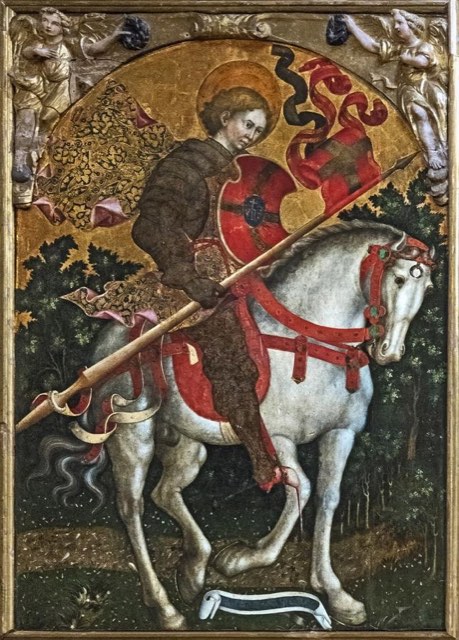
The “quattrocento” means “fifteenth century” in Italian. The word has become synonymous with the true blossoming of the Renaissance in Italy. In this unit, we will first take a look at the historical and cultural developments that shaped the material culture of this period. We will then, with special emphasis on the city of Florence, explore the ways in which Renaissance ideals became prominent in the art of fifteenth- century Italy.

The Renaissance
- World History from the Renaissance to Imperialism, Lecture NotesSam Houston State University · Lee M. Pappas and Nicholas C.J. Pappas’ · read · archived copy
Timeline of the “Quattrocento”
- A Comprehensive Outline of World History: Europe: A.D. 1401 to 1500Jack E. Maxfield · read
Antiquity in a Christian Society
- The Rediscovery of Classical AntiquityThe Metropolitan Museum’s Heilbrunn Timeline of Art History · The Department of European Paintings’ · read · archived copy
- The Great Renaissance Race: Pagan Antiquity Versus Christian ItalyiTunes U · Seton Hall University · Elizabeth Lev · watch
The City-State of Florence
- Florence in the Early RenaissanceSmartHistory.org · read
The Church
- The End of Europe’s Middle Ages: The ChurchUniversity of Calgary · The Applied History Research Group · read · archived copy
- The Papacy during the RenaissanceThe Metropolitan Museum’s Heilbrunn Timeline of Art History · Michael Norris’ · read · archived copy
Humanism and Neo-Platonic Thought
- Renaissance Neo-PlatonismHermetic.com · Washington State University · Richard Hooker · read · archived copy
Renaissance Art in Italy: An Overview
- Renaissance Art and ArchitectureThe University of Colorado · James H. Beck · read · archived copy
Linear Perspective in Art
- Brunelleschi and Linear PerspectiveSmartHistory.org · read
- How Brunelleschi ‘Discovered’ Linear Perspective and Linear Perspective, Brunelleschi’s ExperimentSmartHistory.org’s Professor Joseph Dauben · watch
- Applications of Linear Perspective in the RenaissanceSmartHistory.org · Professor Joseph Dauben · read
Brunelleschi and Alberti
- Architecture in Renaissance ItalyThe Metropolitan Museum’s Heilbrunn Timeline of Art History · read · archived copy
- Riddle of the Dome—TranscriptThe Open University · The Renaissance Secrets Team · read
- Leon Battista Alberti (1404-1472)Miami University · read · archived copy
- Architecture in Renaissance ItalyThe Metropolitan Museum of Art’s Heilbrunn Timeline of Art History · read · 15 min · archived copy
- Brunelleschi’s DomeArts and Facts’ · watch · archived copy
Michelozzo
- Michelozzo (1435-1488)Mediateca di Palazzo Medici Riccardi · read · archived copy
- Index of Art Historical Sites: Florence, Italy: Palazzo Medici-RiccardiBluffton University · Mary Ann Sullivan · watch
- Private Palaces and the Roman Republican Style: Michelozzo’s Medici Palace, Florence, 1440–60Robert Baldwin’s Social History of Art · read
- Medici Palace by MichelozzoImage Guide · watch
Brunelleschi and Ghiberti: The Sacrifice of Isaac
- Brunelleschi and Ghiberti, the Sacrifice of IsaacSmartHistory.org · watch
Donatello
- Donatello (ca. 1386-1466)The Metropolitan Museum’s Heilbrunn Timeline of Art History · James David Draper · read · archived copy
Donatello’s David
- The Medici FamilyConnexions · Albert Van Helden · read
- Donatello’s DavidSmartHistory.org · read
- ContrappostoSmartHistory.org · read
Other Florentine Sculptors
- Florentine Sculpture in the 15th Century OverviewThe National Gallery of Art · watch · archived copy
- Nanni di Banco, Four Crowned Martyrs, 1412–15Robert Baldwin’s Social History of Art · read
- Four Crowned MartyrsDaniel Philpott’s Image of Nanni di Banco · watch
Florence: Painting
- Tour: The Early Renaissance in FlorenceThe National Gallery of Art · watch · archived copy
Masaccio
- MasaccioDartmouth College · Paul Calter · read · archived copy
Masaccio’s “Tribute Money”
- Masaccio’s The Tribute Money in the Brancacci ChapelSmartHistory.org · watch
Masaccio’s “Holy Trinity”
- Masaccio’s Holy TrinitySmartHistory.org · watch
Fra Angelico
- Fra Angelico (1395/1400-1455)The Metropolitan Museum’s Heilbrunn Timeline of Art History · Ross Finocchio · read · archived copy
Fra Filippo Lippi
- Fra Filippo Lippi’s Madonna and ChildSmartHistory.org · watch
- Lippi’s Portrait of a Man and a Woman at a CasementSmartHistory.org · watch
- Fra Filippo LippiSmartHistory.org · read
Piero della Francesca
- Piero della Francesca’s Portraits of Federico da Montefeltro and of Battista SforzaSmartHistory.org · watch
Sandro Botticelli
- Botticelli’s Birth of VenusSmartHistory.org · watch
Architecture: Venice
- Palladio and the Veneto: Venetian GothicRoyal Institute of British Architects · read · archived copy
Painting: Venice
- Tour: Venetian Painting in the Early RenaissanceThe National Gallery of Art · watch · archived copy
Painting: Mantegna
- The Genius of Andrea MantegnaThe Metropolitan Museum of Art · Keith Christiansen · watch
- Camera Degli SposiSmartHistory.org · watch
- Mantegna’s Saint SebastianSmartHistory.org · watch
- Mantegna’s Dead ChristSmartHistory.org · watch
Painting: Antonello da Messina
- Antonello da Messina (1430-1479)The Metropolitan Museum’s Heilbrunn Timeline of Art History · Keith Christiansen · read · archived copy
Painting: Bellini
- Bellini’s Saint FrancisSmartHistory.org · watch
Chapter III
The High and Late Renaissance
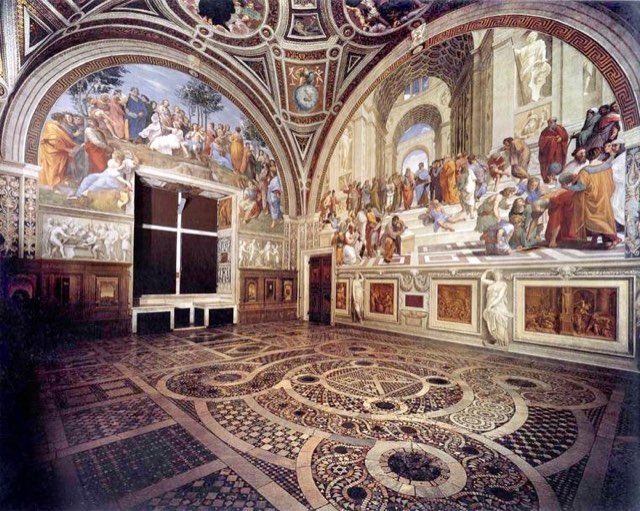
At the end of the 15th century and the beginning of the 16th century, three Italian artists epitomized the achievements of Renaissance art: Leonardo da Vinci, Michelangelo, and Raphael. In Venice, a distinctive style of painting, recognizable by its emphasis on soft, hazy effects and a strong interest in light and color, developed. Art created later in the century in the style of the Renaissance and High Renaissance is referred to as late Renaissance art. In painting and sculpture, some of its characteristics include harmonious and balanced compositions or structures, a clear sense of space, and an interest in natural settings, the human anatomy, and human psychology. The major characteristics of architecture from this period include: centralized plans, simple geometric shapes, regularity of design, and styles borrowed from Classical Antiquity.

Timeline
- A Comprehensive Outline of World History: Europe: 1501 to 1600Connexions · Jack Maxfield · read
The Age of the Reformation
- 1500-1600: The End of the Renaissance and the ReformationSmartHistory.org · read
An Age of Scientific Inquiry
- Copernican SystemConnexions · Albert Van Helden · read
- Galileo and the Art of Renaissance ScienceSmartHistory.org’s Professor Joseph Dauben · read
- The Interaction of Artists and Scientists in the RenaissanceSmartHistory.org’s Professor Joseph Dauben · read
- Anatomy in the RenaissanceThe Metropolitan Museum’s Heilbrunn Timeline of Art History · Carmen Bambach · read · archived copy
The Artist/Vasari’s “Lives of the Artists”
- Selections from Giorgio Vasari’s Lives of the Most Eminent Painters, Sculptors and Architects, Volumes 1 and 2The Saylor Foundation · read
Leonardo da Vinci
- High RenaissanceSmartHistory.org · read
Da Vinci’s Itinerary
- Leonardo’s Life: A Timeline of GeniusThe Open University · The OpenLearn Team · read
- Leonardo Da Vinci: Renaissance Artist and Leonardo da VinciSmartHistory.org · watch
- An Introduction to the Art of LeonardoRobert Baldwin’s Social History of Art · read
The “Virgin of the Rocks”
- Leonardo’s Virgin of the Rocks and Leonardo’s Virgin of the Rocks ArticleSmartHistory.org · watch
The “Mona Lisa”
- Leonardo’s Mona LisaSmartHistory.org · read
The “Last Supper”
- Leonardo’s Last Supper and Leonardo’s Last Supper ArticleSmartHistory.org · watch
“La Bella Principessa”
- La Bella Principessa: A Leonardo Discovered PodcastOxford University · Martin Kemp · watch
Michelangelo
- Medieval to Early Modern Cultural Paradigm ShiftConnexions · John Freed · read
Michelangelo: A Sculptor’s Itinerary
- Michelangelo: Sculptor, Painter, Architect and PoetSmartHistory.org · read
The “Pietà”
- Michelangelo’s Pietà and Michelangelo’s Early WorkSmartHistory.org · watch
Michelangelo’s “David”
- Michelangelo’s David and Michelangelo’s David ArticleSmartHistory.org · watch
Michelangelo’s “Moses”
- Michelangelo, Moses, ca. 1513 - 1515 and Michelangelo’s Moses ArticleSmartHistory.org · watch
The Sistine Chapel Ceiling
- Michelangelo, Ceiling of the Sistine Chapel, 1508 - 1512SmartHistory.org · watch
The “Last Judgment”
- Michelangelo, Last Judgment, Sistine Chapel Ceiling, 1628 - 1629SmartHistory.org · watch
Raphael’s Itinerary
- RaphaelThe National Gallery · read · no longer online
Raphael’s “Alba Madonna”
- Raphael, Alba Madonna, c. 1510 and Raphael’s Alba Madonna ArticleSmartHistory.org · watch
Raphael in Rome
- Raphael, Portrait of Pope Julius II, 1511SmartHistory.org · watch
Raphael’s “School of Athens”
- Papal Politics and Raphael’s Stanza della Segnatura as Papal Golden AgeRobert Baldwin’s Social History of Art · read
- Raphael’s School of AthensSmartHistory.org · watch
- Pagans in the Church: Raphael’s School of Athens and Renaissance Cross-Cultural DialogueiTunes U · Stanford University · Timothy Verdon · watch
- Disputa, 2. School of Athens, 3. ParnassusRaphael’s Stanza della Segnatura · 1. · watch
The Influence of the Masters on Sixteenth Century Art
- Sixteenth-Century Painting in LombardyThe Metropolitan Museum’s Heilbrunn Timeline of Art History · Andrea Bayer · read · archived copy
- Northern Italian Renaissance PaintingThe Metropolitan Museum’s Heilbrunn Timeline of Art History · Andrea Bayer · read · archived copy
Venetian Masters of Painting in the Sixteenth Century
- Sixteenth-Century Painting in Venice and the VenetoThe Metropolitan Museum’s Heilbrunn Timeline of Art History · Andrea Bayer · read · archived copy
- Venetian Color and Florentine DesignThe Metropolitan Museum’s Heilbrunn Timeline of Art History · Jean Sorabella · read · archived copy
Bellini
- Giovanni BelliniThe National Gallery · read
Giorgione
- GiorgioneThe National Gallery · read
- Tour: Giorgione and the High Renaissance in VeniceThe National Gallery of Art · read · archived copy
Titian
- Titian (1488-1576)The Metropolitan Museum’s Heilbrunn Timeline of Art History · The Department of European Paintings’ · read · archived copy
- Tour: Titian and the Late Renaissance in VeniceThe National Gallery of Art · read · archived copy
- Tour: Feast of the GodsThe National Gallery of Art · read · archived copy
- Bellini and Titian, Feast of the Gods, 1514 and 1529SmartHistory.org · watch
- Titian, Assumption of the Virgin, S. Maria dei Frari, 1516–18Robert Baldwin’s Social History of Art · read
- Titian’s Assumption of the Virginwatch
Veronese
- VeroneseThe National Gallery · read
Bramante
- Saint Peters Basilica, Vatican City, begun 1506, completed 1626SmartHistory.org · watch
- Index of Art Historical Sites: Rome, Italy: Tempietto, San Pietro in MontorioBluffton University · Mary Ann Sullivan · watch
Michelangelo
- Michelangelo’s Tomb of Julius IIProfessor Robert Baldwin, Associate Professor of Art History, Connecticut College, Social History of Art · read · 20 min
- Life of Michelangelo from Lives of the Most Eminent Painters, Sculptors, and ArchitectsFordham University’s Giorgio Vasari · read · 45 min · archived copy
- Michelangelo’s Baccus and Roman PietaProfessor Robert Baldwin, Associate Professor of Art History, Connecticut College, Social History of Art · read · 45 min
- Michelangelo’s DavidProfessor Robert Baldwin, Associate Professor of Art History, Connecticut College, Social History of Art · read · 15 min
- Michelangelo’s Sistine ChapelProfessor Robert Baldwin, Associate Professor of Art History, Connecticut College, Social History of Art · read · 45 min
- Michelangelo’s Last JudgmentProfessor Robert Baldwin, Associate Professor of Art History, Connecticut College, Social History of Art · read · 15 min
- Michelangelo, Laurentian Library, 1524 - 1571SmartHistory.org · watch · archived copy
- Michelangelo: A Life on PaperOxford University’s History of Art · Professor Leonard Barkin · watch · archived copy
Vignola
- Il Gesu, Rome, consecrated 1584SmartHistory.org · watch
Venetian Architecture of the Sixteenth Century
- Venetian ArchitectureRIBA’s architecture.com · read · 45 min · archived copy
Sanmicheli
- Images of Architecture Designed by Michele Sanmicheli 1 and Images of Architecture Designed by Michele Sanmicheli 2Wikimedia · watch
Sansovino
- The Myth of Venice in the Architecture of Jacopo SansovinoUniversity of Mary Washington Blog · read
Palladio
- Palladio’s Life and World: A TimelineCenter for Palladian Studies in America · read · archived copy
- Howard Burns’ “Andrea Palladio (1508-1580)Centro Internazionale di Studi di Architettura Andrea Palladio · read · archived copy
Chapter IV
Mannerism
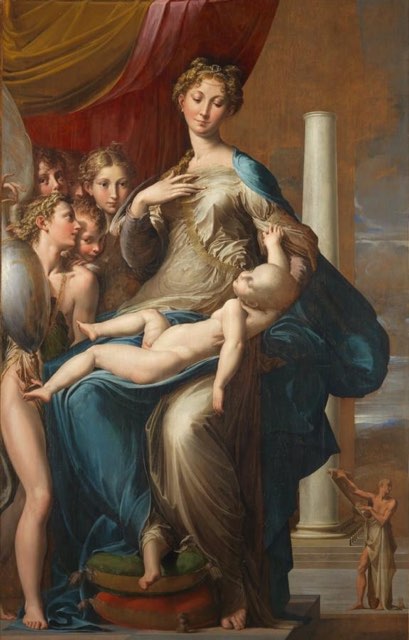
In this final unit, we will study Mannerism, a style of art that emerged during the late Renaissance and—though much influenced by the Renaissance Masters—violated Renaissance ideals. This style replaced the clarity, ideal proportion, rationality, and nature of High Renaissance art with ambiguity of content and form, distortion, and artifice.

Painting
- Renaissance Art: High Renaissance and MannerismThe University of Melbourne · The Bernard Smith Art History Lectures · watch
- Rosso’s Descent from the Cross, Parmigianino’s Madonna with the Long Neck, Michelangelo’s Last Judgment, da Vinci’s Last Supper, Tintoretto’s Last Supper, and El Greco’s Burial of Count OrgazWikimedia Commons · watch
- Mannerism: Bronzino and his ContemporariesThe Metropolitan Museum’s Heilbrunn Timeline of Art History · Ross Finocchio · read · archived copy
Parmigianino
- Parmigianino, Self-Portrait in a Convex Mirror, 1524SmartHistory.org · watch
- Parmigianino’s Madonna of the Long NeckSmartHistory.org · watch
Pontormo
- Pontormo’s EntombmentSmartHistory.org · watch
Bronzino
- Bronzino and the Mannerist PortraitSmartHistory.org · watch
Architecture
- Renaissance Art: Mannerist Architecture and BaroqueThe University of Melbourne · The Bernard Smith Art History Lectures · watch · archived copy
- Laurentian Library Vestibule and Laurentian Library Staircase; Flickr: Laurentian Library, Palazzo del Te, Painting in the Palazzo del Te, San Giorgio Maggiore, and RedentoreWikimedia Commons · watch
Michelangelo
- Michelangelo’s Laurentian Library, Mannerist TendenciesThe Saylor Foundation · Alexandra M. Korey · read
Giulio Romano
- The Palazzo del Te, Mantua (1526-34)Miami University · read · no longer online
- Palazzo del Te Virtual Reality TourWilliams College · watch
Benvenutto Cellini
- Benvenuto Cellini, Perseus with the Head of Medusa, c. 1554SmartHistory.org · watch
Giovanni Bologna
- Treasure of the Month-May 2006: Venus after her Bath, Giovanni BolognaThe Wallace Collection · read
- Images of sculpture by Giovanni BolognaWikimedia · watch
- Giambologna’s Samson and PhilistineThe Victoria and Albert Museum · Charles Avery · read · archived copy
About this course
This course is Saylor Academy's ARTH206, The Italian Proto-Renaissance To Mannerism, one of the complete university courses the Saylor Foundation made free from 2008 and retired in 2015. Saylor licensed its course text under CC BY 3.0; the original is on GitHub. Here it is laid out as chapters, links that have died go to an archived copy from the Internet Archive where one exists, assessments that needed a Saylor login are left out, and people and works are linked to Kulturbase. The readings and lectures belong to their publishers and are linked, not copied. Pictures: Wikimedia Commons, credited under each picture.
All Saylor courses · Free culture courses · The Chautauqua Reading Course