Art history · Saylor ARTH207
Baroque Art to Neoclassicism
This course will examine the history of Western art from approximately 1600 to approximately 1800—a period that bridges the gap from the Renaissance to the earliest days of the Modern era. Beginning with the Baroque in Counter-Reformation Italy and concluding with Neoclassicism in the late 18th century, we will trace the stylistic developments in Europe and America through a variety of religious, political, and philosophical movements.
More about this course
The class begins with the Baroque, which was the immediate successor to the Renaissance and to Renaissance humanism, and we will examine this period by regions (Italy and Spain, the Netherlands, and France and England). Next, the course moves on to explore the development of two opposing styles that emerged in the 18th century: Rococo and Enlightenment art. The course culminates with Neoclassical art, its development in a politically turbulent France, and its spread into other Western cultures, including Italy, England, and the United States. Crucial to this course is the emergence of characteristics (artistic, social, political, scientific, philosophical, and religious) that anticipate the issues faced by Modern society in the 18th century and after. Long-accepted institutions, such as the Catholic Church and the monarchy, reached their zenith in this environment and were ultimately challenged. Reading assignments and lectures will present an overview of this material, revealing the deep connection between a culture’s sociopolitical climate and its art. By the time you finish this course, you will be familiar with the most important art and artists of Western civilization from approximately 1600 to 1800. You will also have a greater understanding of the most important social and political debates of the time. Moreover, you will be able to explain and discuss the ways in which the themes, styles, and patronage of works of art relate to the social, political, and religious environments in which they were produced. The content covered in this course will prepare you to study Modern art in the West.
Upon successful completion of this course, the student will be able to:
In order to take this course, you must:
Chapter I
Baroque Art in Italy and Spain
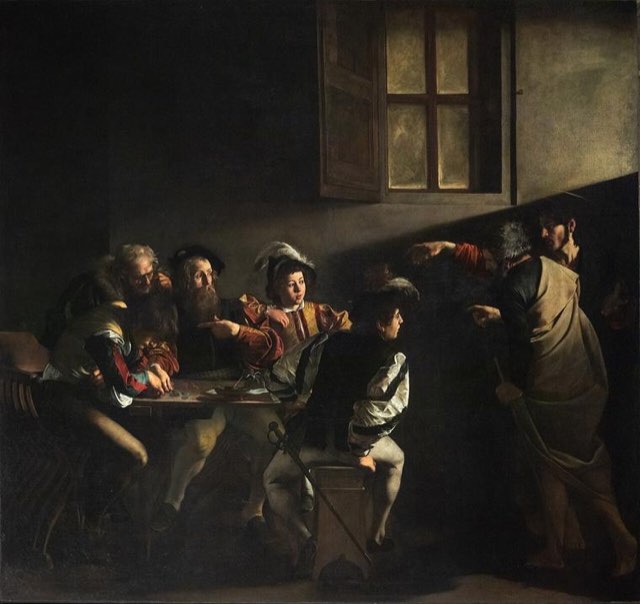
This unit will introduce students to Italian art from around 1600 as Italian art transitioned away from the ideals of the Renaissance period toward something new. Much of the art produced in Italy at this time was influenced by the crisis of the Catholic Church, as it was challenged by the Reformation. It sought to fight this challenge with its own movement, known as the Counter-Reformation. To promote its cause, the Catholic Church commissioned religious art that sought to move and inspire the masses. The young artist Caravaggio emerged in this environment and exerted enormous influence on Baroque art around Europe. Nearby Spain—also a bastion of the Counter-Reformation—dealt with similar issues as its Italian neighbors, although it was informed by its own distinct artistic heritage.

Introduction to Western Art: 1600–1800
- Baldwin Common Values Before and After 1700 and Baldwin The Counter Reformation and ArtSocial History of Art · Professor Robert Baldwin · read · archived copy
Caravaggio
- Caravaggio’s Paintings in the Contarelli Chapel, San Luigi dei Francesi, Caravaggio’s Calling of Saint Matthew, Caravaggio’s Crucifixion of Saint Peter, and Caravaggio’s Narcissus at the SourceSmarthistory · Dr. Beth Harris and Dr. Stephen Zucker · watch
- Baldwin Caravaggio’s Calling of Matthew and Conversion of Saul and Baldwin Caravaggio’s Madonna of Loreto and Smarthistory: Caravaggio’s Deposition, or Entombment and Caravaggio’s Calling of Saint MatthewSocial History of Art · Professor Robert Baldwin · read · archived copy
Artemisia Gentileschi
- Gentileschi, Artemisia, Judith Beheading Holofernes, and Self-Portrait as the Allegory of PaintingWeb Gallery of Art · read
- 4145-Artemesia Gentileschi; Smarthistory: John Machado and Denise Johnson of Iconomaniacs: Gentileschi’s Self-Portrait as the Allegory of Painting; and iTunesU: Iconomaniacs: John Machado and Denise Johnson: 15: Artemisia GentileschiiTunesU · The Brooklyn Museum · The Dinner Party · Maura Reilly · watch
Annibale Carracci
- Carracci, Annibale, Lamentation of Christ, and The Flight into Egypt and Social History of Art: Professor Robert Baldwin: Carracci’s Farnese CeilingWeb Gallery of Art · read
- Carracci’s Ceiling of the Farnese Palace and Carracci’s Crucifixion & LamentationSmarthistory · Dr. Beth Harris and Dr. David Drogin · watch · archived copy
Gianlorenzo Bernini
- Gian Lorenzo Bernini (1598–1680); Smarthistory: Bernini’s David, Bernini’s Pluto and Proserpina, and Bernini’s Ecstasy of St. Theresa; and Social History of Art: Professor Robert Baldwin: Bernini’s Ecstasy of Teresa and Bernini’s Ludovica AlbertoniThe Metropolitan Museum of Art · Heilbrunn Timeline of Art History · Veronica White · read · archived copy
- Bernini’s David, Bernini’s Pluto and Proserpina, and Bernini’s Bust of Medusa and Smarthistory: Dr. Beth Harris and Dr. Stephen Zucker: Bernini’s Apollo and Daphne, Bernini’s Ecstasy of St. Theresa, Bernini’s Saint Peter’s Square, and Bernini’s Cathedra PetriSmarthistory · watch
Architecture
- Baroque RomeThe Metropolitan Museum of Art · Heilbrunn Timeline of Art History · Jean Sorabella · read · archived copy
- Introduction to Italian Baroque ArchitectureThe Saylor Foundation · watch
Carlo Maderno
- Carlo Maderno and His ArchitectureThe Saylor Foundation · read
- Carlo Maderno and the Italian BaroqueThe Saylor Foundation · watch
Gianlorenzo Bernini
- Bernini Piazza San PietroSocial History of Art · Professor Robert Baldwin · read · archived copy
- Sant’Andrea al Quirinale and Bernini’s Saint Peter’s SquareSmarthistory · Frank Dabell, Dr. Beth Harris, and Dr. Stephen Zucker · watch · archived copy
- Gianlorenzo Bernini and Italian Baroque ArchitectureThe Saylor Foundation · watch
Francesco Borromini
- Francesco Borromini and His ArchitectureThe Saylor Foundation · read
- San Carlo alle Quattro FontaneSmarthistory · Frank Dabell, Dr. Beth Harris, and Dr. Stephen Zucker · watch
- Francesco Borromini and the Italian BaroqueThe Saylor Foundation · watch
Overview of Spanish Baroque
- History (17th Century)Web Gallery of Art · read
- The Sacred Made Real: Spanish Painting and Sculpture, 1600–1700The Guardian · watch · archived copy
Painting
- Baroque Painting: The Golden AgeWeb Gallery of Art · read
- The Sacred Made Real: Spanish Painting and Sculpture, 1600–1700: Part 2, Spanish RealismNational Gallery of Art · Behind the Scenes · Assistant Curator Xavier Bray and David Brown · watch · archived copy
Juan Sanchez Cotán
- Sanchez Cotán, Juan and Still-Life with Quince, Cabbage, Melon and CucumberWeb Gallery of Art · read
Diego Velazquez
- Art of Velázquez: Life and Art of Velázquez and Art of Velázquez: AssessmentWeb Gallery of Art · read
- Velázquez’s Las Meninas, Los Borrachos or The Triumph of Bacchus, and Vulcan’s Foge and iTunesU: The Metropolitan Museum of Art: Keith Christiansen and Michael Gallagher: Velázquez RediscoveredSmarthistory · Dr. Beth Harris and Dr. Stephen Zucker · watch
Sculpture
- Sculpture in Spain: Sculpture in the 17th CenturyWeb Gallery of Art · read
- The Sacred Made Real: Spanish Painting and Sculpture, 1600–1700: Part 1, Polychromed SculptureNational Gallery of Art · Behind the Scenes · Assistant Curator Xavier Bray and Mary Levkoff · watch · archived copy
- Gemäldegalerie in Berlin, GermanyThe Saylor Foundation · Museum Visit #1 · do
- Comparing and Contrasting Caravaggio or Velázquez to a Renaissance PaintingThe Saylor Foundation · Writing Assessment #1 · write
Chapter II
Baroque Art in the Netherlands
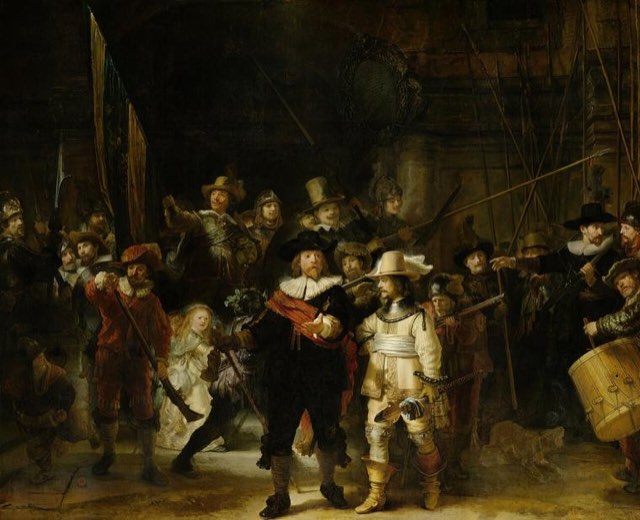
In this unit, we move on to look at Baroque art as it emerged in the Netherlands. In the Baroque period, the Netherlands was split into the Northern Netherlands (the Dutch Republic) and the Southern Netherlands (Flanders). Flanders was Catholic, whereas the Dutch Republic was Protestant; therefore, there is a sharp divide in the subject matter and styles of Baroque art in each region. Nonetheless, the two regions remained geographically and historically connected and shared an earlier Renaissance tradition that influenced the art of each region. Although Baroque art in the Netherlands has a distinctly local flair, there is clear evidence of Italian influence, suggesting the international character of Baroque art.

Overview of Baroque Art in the Netherlands
- Painting in the Low Countries: History of the Low Countries (17th Century)Web Gallery of Art · read
- 1600-1700 The BaroqueSmarthistory · Dr. Beth Harris and Dr. Stephen Zucker · watch
Peter Paul Rubens
- Flanders: Rubens’ The Elevation of the Cross and Social History of Art: Professor Robert Baldwin: Baldwin Rubens Massacre of the InnocentsSmarthistory · read
- 130. Sir Peter Paul Rubens—Constantine Investing His Son Crispus with Command of the Fleet 1622iTunesU · Art Gallery of New South Wales · Curator Insights · Richard Beresford · watch · archived copy
Anthony van Dyck
- Peter Paul Rubens (1577–1640) and Anthony van Dyck (1599–1641): Paintings and The Metropolitan Museum of Art: Heilbrunn Timeline of Art History: Michiel C. Plomp: Peter Paul Rubens (1577–1640) and Anthony van Dyck (1599–1641): Works on PaperThe Metropolitan Museum of Art · Heilbrunn Timeline of Art History · Walter Liedtke · read · archived copy
- Charles ILearn Out Loud · watch
Still Lifes
- Still-Life Painting in Northern Europe, 1600–1800The Metropolitan Museum of Art · Heilbrunn Timeline of Art History · Walter Liedtke · read · archived copy
Clara Peeters
- Artist Profile—Clara Peeters and Still Life of Fish and Cat and Kunstpedia: John Hoogsteder and Willem Jan Hoogsteder: A Hidden MarriageNational Museum of Women in the Arts · read · archived copy
- Clara Peeters and the Flemish Still LifeThe Saylor Foundation · watch
Frans Snyders
- Snyders, Frans, The Pantry, and Still-Life with Fowl and GameWeb Gallery of Art · read
- Frans Snyders and the Flemish Still LifeThe Saylor Foundation · watch
Jan de Heem
- Heem, Jan Davidsz. de, and A Table of DessertsWeb Gallery of Art · read
- Jan de Heem and the Baroque Still LifeThe Saylor Foundation · watch
Overview of Dutch Baroque
- Dutch Baroque Art and Society: An Introduction and Dutch Baroque Art: An OutlineSocial History of Art · Professor Robert Baldwin · read · archived copy
- Going Dutch: Exploring Paintings from the Netherlands, Part 1 and Going Dutch: Exploring Paintings from the Netherlands, Part 2National Gallery of Art · Behind the Scenes · Curator Arthur Wheelock and Barbara Tempchin · watch · archived copy
Genre and Portrait Painting
- Genre Painting in Northern Europe and Kunstpedia: John Hoogsteder and Willem Jan Hoogsteder: Portrait Painters in Rembrandt’s WorldThe Metropolitan Museum of Art · Heilbrunn Timeline of Art History · Jennifer Meagher · read · archived copy
Hendrick Terbrugghen
- Terbrugghen, Hendrick, Boy Playing a Recorder, The Calling of St Matthew, Bagpipe Player, and DuetWeb Gallery of Art · read
- Hendrick ter Brugghen’s Bagpipe PlayerNational Gallery of Art · Behind the Scenes · Curator Arthur Wheelock and Barbara Tempchin · watch · archived copy
Frans Hals
- Frans Hals (1582/83-1666)The Metropolitan Museum of Art of Art · Heilbrunn Timeline of Art History · Walter Liedtke · read · archived copy
- Episode Nine: July 2007iTunesU · The National Gallery, London · watch · archived copy
Judith Leyster
- Leyster, Judith, Carousing Couple, Self-Portrait, and Young Flute PlayerWeb Gallery of Art · read
- Judith Leyster, 1609–1660: Part 1, An Introduction and Judith Leyster, 1609–1660: Part 2, Leyster’s TechniqueNational Gallery of Art · Behind the Scenes · Curator Arthur Wheelock and Frima Fox Hofrichter · watch · archived copy
Introduction to Rembrandt
- Rembrandt van Rijn (1606–1669): Paintings and Nadine Orenstein: Rembrandt van Rijn (1606–1669): PrintsThe Metropolitan Museum of Art · Heilbrunn Timeline of Art History · Walter Liedtke · read · archived copy
- Age of RembrandtLecture · iTunesU · The Metropolitan Museum of Art · Walter Liedtke · watch · no longer online
Works of Art by Rembrandt
- The Dutch Landscape and Still Life PaintingSophia · Ian McConnell · watch · no longer online
- Dutch PortraitureSophia · Erin Aldana · watch · no longer online
- Rembrandt’s Self-Portrait; Smarthistory: Dr. Beth Harris and Dr. David Drogin: Rembrandt’s The Three Crosses and Rembrandt’s Self-Portraits; and Smarthistory: Pippa Couch and Rachel Ropeik: Rembrandt’s Girl at a WindowSmarthistory · Dr. Beth Harris and Dr. Stephen Zucker · watch
Jan Vermeer
- Johannes Vermeer (1632–1675) and Social History of Art: Professor Robert Baldwin: Baldwin Vermeer’s Allegory of Painting and Baldwin Vermeer Concert TrioThe Metropolitan Museum of Art · Heilbrunn Timeline of Art History · Walter Liedtke · read · archived copy
- Baroque Art in Holland: Vermeer’s Young Woman with a Water Pitcher; The Metropolitan Museum of Art Special Exhibition: Curator Walter Liedtke: Special Exhibition: Vermeer’s Masterpiece, The Milkmaid; and Art Babble: National Gallery of Art: Vermeer: Master of Light—CompilationSmarthistory · Dr. Beth Harris and Dr. Stephen Zucker · watch · archived copy
Jan Steen
- Steen, Jan, Love Sickness, The Feast of St. Nicholas, and The Bean FeastWeb Gallery of Art · read
Gerard ter Borch
- Terborch, Gerard and Social History of Art: Professor Robert Baldwin: Baldwin Ter Borch Lady at the MirrorWeb Gallery of Art · read
- The Milkmaid: Thomas P. Campbell, Walter Liedtke, and Dorothy Mahon: A Young Woman at Her Toilet with a Maid by Gerard ter Borch – 2nd LeveliTunesU · The Metropolitan Museum of Art · Vermeer’s Masterpiece · read · archived copy
Landscape and Still-Life Painting
- Dutch Baroque Landscape PaintingThe Saylor Foundation · watch
Jacob van Ruisdael
- Ruisdael, Jacob Isaackszon van, The Jewish Cemetery, The Jewish Cemetery, and View of Haarlem with Bleaching GroundsWeb Gallery of Art · read
Dutch Still Life
- Baldwin Dutch Baroque Still LifeSocial History of Art · Professor Robert Baldwin · read · archived copy
Willem Claesz (Heda)
- Willem Claesz Heda and the Dutch Baroque Still LifeThe Saylor Foundation · watch
- Pieter Claesz: Still Life with a Skull and a Writing Quill and Willem Claesz Heda: Still Life with Oysters, a Silver Tazza, and GlasswareThe Metropolitan Museum · Heilbrunn Timeline of Art History · read · archived copy
Rachel Ruysch
- Rachel Ruysch, Amsterdam’s Pallas and Minerva of the Amsterdam IJKunstpedia · John Hoogsteder and Willem Jan Hoogsteder · read · archived copy
- Women in Art: Flowers in a Glass Vase by Rachel RuyschYouTube · The Detroit Institute of Arts · In the Frame · Director Graham Beal · watch
- Rachel Ruysch and Dutch Baroque Still Life PaintingThe Saylor Foundation · watch
- The Rijksmuseum in Amsterdam, Netherlands, and The Metropolitan Museum of Art in New York CityThe Saylor Foundation · Museum Visits #2 · do
Chapter III
Baroque Art in France and England
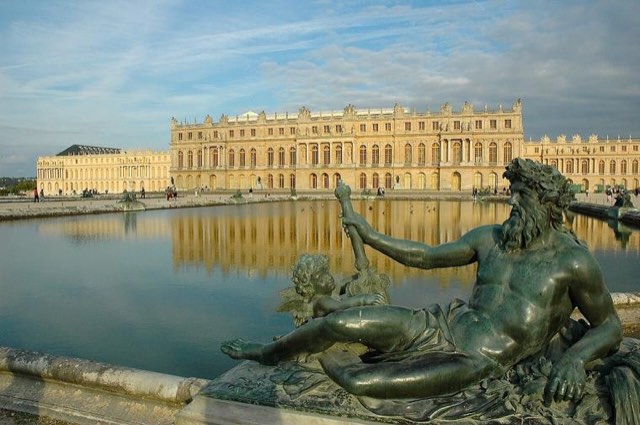
In this unit, we turn to Baroque art produced in France and England. In France, much as in the Netherlands, art is greatly influenced by Baroque art in Italy—albeit tinged with the unique social and political conditions of its own culture. The influence of Caravaggio is felt here as elsewhere, but the unique role of the monarchy resulted in a courtly style unique to France that culminated with the art and architecture produced for Louis XIV. In England, there was less of a local painting tradition and the Baroque is mainly expressed via architecture, which borrows from Italy and France to create a distinct English Baroque architecture.

French Artists in Italy
- The French Academy in RomeThe Metropolitan Museum of Art · Heilbrunn Timeline of Art History · Kathryn Calley Galitz · read · archived copy
Nicolas Poussin
- Nicolas Poussin (1594–1665) and Social History of Art: Professor Robert Baldwin: Baldwin Poussin’s Venus Lamenting Adonis and Baldwin Poussin’s Stoic LandscapeThe Metropolitan Museum of Art · Heilbrunn Timeline of Art History · Mary Sprinson de Jesús · read · archived copy
- Poussin’s Landscape with St. John and Rape of the Sabines; iTunesU: The Metropolitan Museum of Art: Keith Christiansen: Poussin and Nature: Arcadian Visions; and Canal Educatif à la Demande: History of Arts: Nicolas Poussin—The Gathering of ManaSmarthistory · Dr. Beth Harris and Dr. David Drogin · watch
Claude Lorraine
- Claude LorrainWeb Gallery of Art · read
- Claude Lorraine’s The Judgment of Paris; iTunesU: Art Gallery of New South Wales: Curator Insights: Richard Beresford: 127. Claude Lorraine—Pastoral Landscape 1636-37; and iTunesU: The Blanton Museum of Art: 22 – Pastoral Landscape by LorrainSmarthistory · watch · no longer online
- Claude Lorrain’s LandscapesThe Saylor Foundation · watch
Georges de la Tour
- The Realism of Georges de la Tour, The Penitent Magdalen, Job Mocked by His Wife, Christ in the Carpenter’s Shop, and Christ in the Carpenter’s Shop (detail)Sweet Briar College · Misty Amanda Vandergriff · read · archived copy
- Georges de la Tour and French Baroque PaintingThe Saylor Foundation · watch
Simon Vouet
- Vouet, Simon, The Fortune Teller, The Fortune Teller (detail), St Jerome and the Angel, Presentation in the Temple, and DianaWeb Gallery of Art · read
- Simon Vouet and French Baroque PaintingThe Saylor Foundation · watch
Louis XIV
- France 1600-1700; The Metropolitan Museum of Art: Heilbrunn Timeline of Art History: The Department of European Sculpture and Decorative Arts: French Decorative Arts During the Reign of Louis XIV (1654–1715); and Social History of Art: Professor Robert Baldwin: Baldwin Versailles and AbsolutismSmarthistory · read
- French Baroque under Louis XIVThe Saylor Foundation · watch
- The Palace of Versailles, FranceThe Saylor Foundation · Museum Visit #3 · do
Palladianism in England
- Palladian Britain, Palladianism, Seventeenth-Century Palladianism, Inigo Jones, Queen’s House, Greenwich, John Webb, Lord Burlington, and Chiswick HouseThe Royal Institute of British Architects · read · archived copy
- Inigo Jones and Palladianism in English Baroque ArchitectureThe Saylor Foundation · watch
Baroque Style in England
- A Tribute to Sir Christopher Wren, Christopher Wren, and The Great Court, Blenheim Palace, Woodstock, OxfordshireThe Royal Institute of British Architects · read · archived copy
- St. Paul’s Cathedral and Christopher WrenThe Royal Society · Lisa Jardine · watch · archived copy
Chapter IV
Rococo
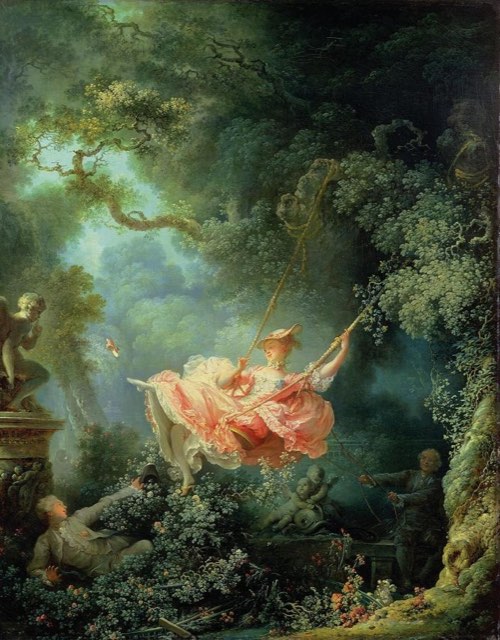
On the heels of the Baroque, a new style (the Rococo) emerged—a style that was at once more intimate and more ostentatious that the Baroque. The heart of this movement was in France, where it was produced for the personal enjoyment of the most elite patrons, although it did spread to other parts of Europe and to the American colonies. Generally speaking, Rococo art is sumptuous and decadent. Eschewing the religious and genre scenes of the Baroque, Rococo art favored subjects involving pleasure and fantasy. Although this style did enjoy popularity outside of France, it is most associated with the elite circles of the French aristocracy and was soon replaced with a more sober artistic aesthetic.

Overview of Rococo
- Rococo; Social History of Art: Professor Robert Baldwin: Baldwin Introduction to the Rococo; and The Metropolitan Museum of Art: Heilbrunn Timeline of Art History: Morrison H. Heckscher: American RococoSmarthistory · read
- Introduction to Art of the RococoThe Saylor Foundation · watch
Jean-Antoine Watteau
- Baldwin Watteau and The Metropolitan Museum of Art: Heilbrunn Timeline of Art History: Perrin Stein: Jean Antoine Watteau (1684–1721)Social History of Art · Professor Robert Baldwin · read · archived copy
- Watteau and the Contest Between Melpomene and ThaliaiTunesU · The Metropolitan Museum of Art · Georgia Cowart · watch
Francois Boucher
- Baldwin BoucherSocial History of Art · Professor Robert Baldwin · read · archived copy
- Boucher’s Venus Consoling Love and Boucher’s Madame de Pompadour and iTunesU: Art Gallery of New South Wales: Curator Insights: Richard Beresford: 126. Francois Boucher—A Young Lady Holding a Pug Dog, mid 1740sSmarthistory · watch · archived copy
Jean-Honoré Fragonard
- Jean-Honoré Fragonard (1732–1806) and Social History of Art: Professor Robert Baldwin: FragonardThe Metropolitan Museum of Art · Heilbrunn Timeline of Art History · Perrin Stein · read · archived copy
- Fragonard’s The Swing; Smarthistory: Dr. Stephen Zucker, Chad Laird, and Dr. Juliana Kreinik: Fragonard’s The Meeting; and National Gallery of Art: Behind the Scenes: Colin B. Bailey: Fragonard’s ‘Progress of Love’ at The Frick Collection: A Site-Specific Installation?Smarthistory · Dr. Beth Harris and Dr. Stephen Zucker · watch
- The Fragonard Room at The Frick Collection in New York CityThe Saylor Foundation · Museum Visit #4 · do
The Tiepolo Family
- The Tiepolo Family and The Metropolitan Museum of Art: Heilbrunn Timeline of Art History: Keith Christiansen: Giovanni Battista Tiepolo (1696–1770)Smarthistory · Jeremy Miller · read
- Comparing and Contrasting Fragonard’s The Meeting and Rembrandt’s The NightwatchThe Saylor Foundation · Writing Assessment #2 · write
- The Rococo in Italy: TiepoloThe Saylor Foundation · watch
Chapter V
The Enlightenment
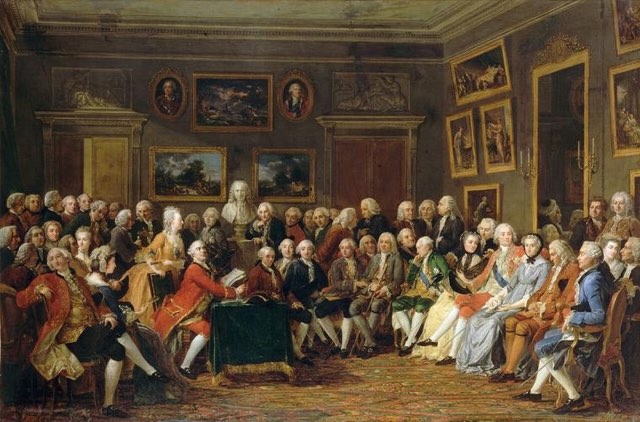
As the Rococo style enjoyed popularity in France, another, more serious-minded style was emerging in tandem with the scientific and philosophical developments of the Enlightenment. In stark contrast to the frivolity and gaiety of the Rococo, art of the Enlightenment period is sentimental, moralizing, and—at times—satirical. Mirroring the rapid political and scientific changes of the time, art of this period shows a greater interest in social concerns, morality, justice, and human progress. During the Enlightenment, the issues we often associate with the Modern era begin to emerge, and these issues are palpable in the period’s art.

France
- Baldwin Family Values in 18th Century French Art; The Metropolitan Museum of Art: Heilbrunn Timeline of Art History: Laura Auricchio: Eighteenth-Century Women Painters in France; and Smarthistory’s 1700-1800 Age of Enlightenment.Social History of Art · Professor Robert Baldwin · read · archived copy
Jean-Baptiste-Siméon Chardin
- Chardin, Jean-Baptiste-Siméon, The Ray, A ‘Lean Diet’ with Cooking Utensils, The Copper Drinking Fountain, The Provider (La Pourvoyeuse), and The Soap Bubble and Social History of Art: Professor Robert Baldwin: Baldwin ChardinWeb Gallery of Art · read
- Jean-Baptiste-Siméon ChardinThe Saylor Foundation · watch
Jean-Baptiste Greuze
- Greuze, Jean-Baptiste, L’Accordée de Village, and Epiphany (Le gâteau des rois) and Social History of Art: Professor Robert Baldwin: Baldwin GreuzeWeb Gallery of Art · read
- Jean-Baptiste GreuzeThe Saylor Foundation · watch
Louise Élisabeth Vigée Le Brun
- Vigée-LeBrun, Élisabeth, The Genius of Alexander, Self-Portrait in a Straw Hat and SUNY College at Oneonta: Images of Women in Western Art: Dr. Allen Farber: Eighteenth-Century Women Artists: Elisabeth Vigée-Lebrun and Adélaïde Labille-GuiardWeb Gallery of Art · read
- Vigée Le Brun’s Madame PerregauxSmarthistory · Dr. Beth Harris and Dr. Stephen Zucker · watch
Adélaide Labille-Guiard
- Adélaïde Labille-Guiard and Head of a Young Woman; The Metropolitan Museum of Art: Heilbrunn Timeline of Art History: Adélaïde Labille-Guiard. Self-Portrait with Two Pupils, Mademoiselle Marie Gabrielle Capet (1761–1818) and Mademoiselle Carreaux de Rosemond (died 1788)The Getty Museum · Getty Guide · read
- Adélaide Labille-GuiardThe Saylor Foundation · watch
Jean-Antoine Houdon
- Jean-Antoine Houdon (1741–1828) and Web Gallery of Art: Bust of Diderot and Robert FultonThe Metropolitan Museum of Art · Heilbrunn Timeline of Art History · Johanna Hecht · read · archived copy
- Jean-Antoine HoudonThe Saylor Foundation · watch
England and America
- Royal Academy in England and The Metropolitan Museum of Art: Heilbrunn Timeline of Art History: David Jaffee: Art and Identity in the British North American Colonies, 1700–1776Art History Unstuffed · Dr. Jeanne S. M. Willette · read
William Hogarth
- Hogarth, William, and Marriage à la Mode; Smarthistory: Sophie Harland’s Hogarth’s A Rake’s Progress; and Social History of Art: Professor Robert Baldwin: Baldwin Hogarth’s Marriage a la Mode and ActaeonWeb Gallery of Art · read
- William HogarthThe Saylor Foundation · watch
Joseph Wright of Derby
- Wright, Joseph, Experiment with the Air Pump, and A Philosopher Lecturing with a Mechanical Planetary and Social History of Art: Professor Robert Baldwin: Baldwin Wright of Derby and Vesuvius as Volcanic SublimeWeb Gallery of Art · read
- Joseph Wright of DerbyThe Saylor Foundation · watch
Thomas Gainsborough
- Gainsborough, Thomas, Mr and Mrs Andrews, and Mr and Mrs William Hallett (‘The Morning Walk’)Web Gallery of Art · read
- Thomas GainsboroughThe Saylor Foundation · watch
Sir Joshua Reynolds
- Reynolds, Sir Joshua, Lady Cockburn and Her Three Eldest Sons, and Francis Rawdon-HastingsWeb Gallery of Art · read
- Sir Joshua Reynolds’s Lady Cockburn and Her Three Eldest SonsSmarthistory · Pippa Couch and Rachel Ropeik · watch · archived copy
- Sir Joshua ReynoldsThe Saylor Foundation · watch
Benjamin West
- West, Benjamin, Edward III Crossing the Somme, The Treaty of Penn with the Indians, and The Death of General Wolfe and The Metropolitan Museum of Art: Heilbrunn Timeline of Art History: Carrie Rebora Barratt: Students of Benjamin West (1738–1820)Web Gallery of Art · read
- Benjamin WestThe Saylor Foundation · watch
Italy
- The Grand Tour and the Royal Institute of British Architects: The Grand TourThe Metropolitan Museum of Art · Heilbrunn Timeline of Art History · Jean Sorabella · read · archived copy
Canaletto
- Canaletto, Piazza San Marco, The Piazetta, Looking toward the Clock Tower, and The Riva degli SchiavoniWeb Gallery of Art · read
- Canaletto in England: A Venetian Artist Abroad 1746-1755: Ian Dejardin: In England, Modern Metropolis, Westminster Bridge, and Canaletto’s LifeThe Dulwich Picture Gallery Multimedia Channel · Past Exhibitions · watch · archived copy
- Tate Britain in London, United KingdomThe Saylor Foundation · Museum Visit #5 · do
Chapter VI
Neoclassicism
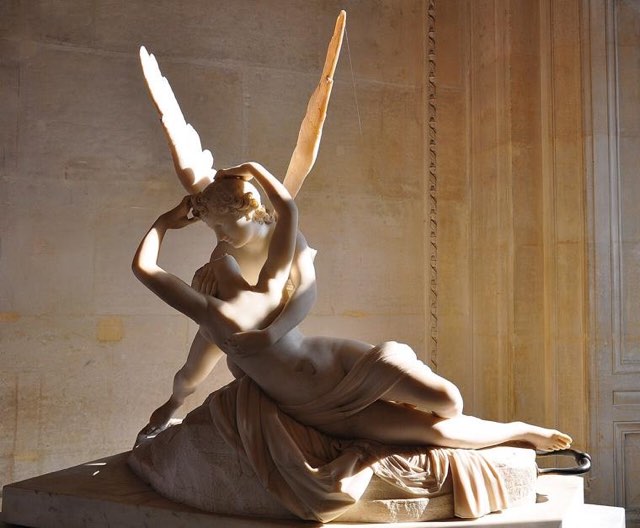
This final unit culminates with the emergence of Neoclassicism. Something of an extension of (and logical next stage of) the Age of Enlightenment, Neoclassicism coincides with several political developments and conflicts—most notably, the American and French revolutions. Looking to classical antiquity as an ideal of artistic, political, and moral virtue, artists (among others) developed a new (“neo”) classical tradition that suited the political climate of the time. Subject matter, style, medium, and genre were all borrowed from Classical antiquity but were overlaid with contemporary subjects and tastes.

Overview of Neoclassical Art
- Neoclassicism; Smarthistory: Beth Gersch-Nesic: Neo-Classicism; and Art History Unstuffed: Dr. Jeanne S. M. Willette: The Origins of NeoclassicismThe Heilbrunn Timeline of Art History · Cybele Gontar · read · archived copy
- Introduction to NeoclassicismThe Saylor Foundation · watch
Angelica Kauffmann
- Kauffmann, Angelica and Portrait of a WomanWeb Gallery of Art · read
Jacques-Louis David
- David’s Oath of the Horatii, David’s Death of Socrates, and David’s Death of Marat; Social History of Art: Professor Robert Baldwin: Baldwin David’s Death of Marat; and The Metropolitan Museum of Art: Heilbrunn Timeline of Art History: Kathryn Calley Galitz: The Legacy of Jacques-Louis David (1748–1825)Smarthistory · read
- David’s Oath of the Horatii, David’s Death of Socrates, and David’s Emperor Napoleon in His Study at the TuileriesSmarthistory · Dr. Beth Harris and Dr. Stephen Zucker · watch
Sculpture and Architecture
- French Neoclassicism: Sculpture and ArchitectureArt History Unstuffed · Dr. Jeanne S. M. Willette · read
Sculpture
- Canova, Antonio and Cupid and Psyche; Art History Unstuffed: Dr. Jeanne S. M. Willette’s The French Academy: Sculpture and Smarthistory: Ben Pollitt’s “Canova’s Paolina Borghese as Venus VictoriusWeb Gallery of Art · read
- Neoclassical Sculpture in EuropeThe Saylor Foundation · watch
Architecture, esp. Soufflot
- Neoclassical Architecture in France and Jacques-Germain SoufflotThe Saylor Foundation · read
- Neoclassical Architecture in EuropeThe Saylor Foundation · watch
United States
- Art and Identity in the British North American Colonies, 1700–1776 and Art and Society of the New Republic, 1776–1800The Metropolitan Museum of Art · Heilbrunn Timeline of Art History · David Jaffee · read · archived copy
Paintings and Drawings
- Late Eighteenth-Century American DrawingsThe Metropolitan Museum of Art · Heilbrunn Timeline of Art History · Kevin J. Avery · read · archived copy
John Singleton Copley
- John Singleton Copley (1738–1815) and Smarthistory: Meg Floryan: John Singleton Copley, Boy with a Squirrel, and Copley’s Watson and the SharkThe Metropolitan Museum of Art · Heilbrunn Timeline of Art History · Carrie Rebora Barratt · read · archived copy
Gilbert Stuart
- Gilbert Stuart (1755–1828) and Web Gallery of Art: George WashingtonThe Metropolitan Museum of Art · Heilbrunn Timeline of Art History · Carrie Rebora Barratt · read · archived copy
John Trumbull
- Jonathan Trumbull and Architect of the Capitol’s Declaration of IndependenceAmericanRevolution.org · read
Sculpture and Architecture
- American Neoclassical Sculptors Abroad; Boston College: A Digital Archive of American Architecture: Jeffery Howe: Neoclassical Architecture c. 1780-1850; Web Gallery of Art: George Washington ; and the Colonial Williamsburg Official History Site: Tracy L. Kamerer and Scott W. Nolley: “Rediscovering an American IThe Metropolitan Museum of Art · Heilbrunn Timeline of Art History · Thayer Tolles · read · archived copy
Thomas Jefferson
- Jefferson and the Politics of Architecture and Bluffton University: Digital Imaging Project: Mary Ann Sullivan: Images of Monticello: Index and Introduction, Images of the Lawn, University of Virginia, and Images of the Rotunda, University of VirginiaUniversity of Virginia · American Studies Group · Joshua Johns · read · archived copy
The U.S. Capitol Building
- Dr. William Thornton, Model Showing Dr. William Thornton’s Designs for the Capitol, and Benjamin Henry LatrobeThe Architect of the Capitol · read
- The History of the United States CapitolThe Architect of the Capitol · watch
- The Palace of Versailles, France, and Alte Nationalgalerie in Berlin, GermanyThe Saylor Foundation · Museum Visits #6 · do
- One Image as Representative of Its PeriodThe Saylor Foundation · Writing Assessment#3 · write
About this course
This course is Saylor Academy's ARTH207, Baroque Art to Neoclassicism, one of the complete university courses the Saylor Foundation made free from 2008 and retired in 2015. Saylor licensed its course text under CC BY 3.0; the original is on GitHub. Here it is laid out as chapters, links that have died go to an archived copy from the Internet Archive where one exists, assessments that needed a Saylor login are left out, and people and works are linked to Kulturbase. The readings and lectures belong to their publishers and are linked, not copied. Pictures: Wikimedia Commons, credited under each picture.
All Saylor courses · Free culture courses · The Chautauqua Reading Course