Art history · Saylor ARTH209
20th Century Art
This course explores the history of the artistic developments of the 20th century in Western Europe and the United States. The art of this period is characterized by extraordinary experimentation and innovation in styles, materials, techniques, and modes of dissemination.
More about this course
In addition to painting and sculpture, the 20th century witnessed the rise in popularity of photography, collage, montage, installations, earth art, performance, and conceptual art. Artists were sometimes inspired by the works of past masters but also often by contemporary changes in intellectual thought and social conditions. Therefore, we will examine the intellectual and cultural beliefs that this art both reflects and helped shape. Despite the great variety of artistic styles and theories that we will examine, a number of important themes consistently recur. If you keep them in mind as you progress through the course, you will find it easier to organize your thoughts and make meaningful comparisons among various artists, movements, and art works. These themes include:
Material is presented in chronological order and covers the period between 1870 and the end of the 20th century. You will be introduced to a variety of terms that art historians use to describe styles, techniques, materials, and aesthetic concepts. Use the ArtLex Art Dictionary every time you come across a new term that needs clarification. Terms of Use: Please respect the copyright and terms of use displayed on the webpage above.
Upon successful completion of this course, you will be able to:
Chapter I
The Roots of 20th-Century Modernist Art: Impressionism, Post-Impressionism, Art Nouveau and Rodin
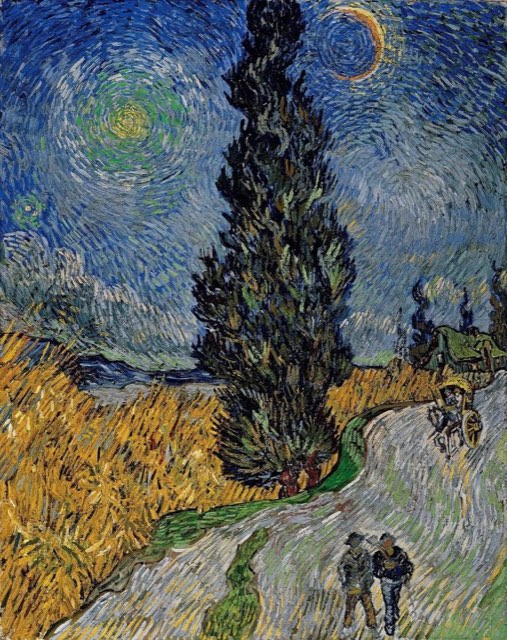
This unit presents a brief summary of major developments that occurred during the last three decades of the 19th century and paved the way for 20th-century modernist art. Art historians argue about how far back in history we see the origins of 20th-century art. Some suggest going as far back as the French Revolution of 1789; others view the 1855 Paris exhibition as the pivotal turn to modern themes; and still others consider the 1863 Salon des Refuses to be the beginning of the major changes associated with modernism. However, it is undisputable that the year 1874 marked one of the most decisive turns in the history of Western art with the emergence of the Impressionist movement, which we will adapt as a starting point in our discussion of modern art in this course.

What Is Modernism?
- Becoming ModernKhan Academy’s SmartHistory · Dr. Parme Giuntini · read · 30 min
- Podcast Episode 1: What Is ‘Modern’?arthistoryunstuffed.com · Dr. Jeanne S. M. Willette · watch · 15 min
What Is Artistic Modernism?
- Artistic Modernism: Central Themes (1860–1970)Minnesota State University Moorehead · Professor Theodore Gracyk · read · 15 min · archived copy
Impressionism
- ImpressionismKhan Academy’s SmartHistory · Beth Gersh-Nesic · read · 15 min
- The Salon and the Royal AcademyThe Metropolitan Museum of Art’s Heilbrunn Timeline of Art History · Jason Rosenfeld · read · 30 min · archived copy
- Impressionism: Art and ModernityThe Metropolitan Museum of Art’s Heilbrunn Timeline of Art History · Margaret Samu · read · 1 h · archived copy
- MonetYouTube · Art History in a Hurry · watch · 15 min
- Charles Baudelaire, Author of Modernismarthistoryunstuffed.com · Dr. Jeanne S. M. Willette · read · 30 min
- Renoir’s ‘Moulin de la Galette’Khan Academy’s SmartHistory · Dr. Beth Harris and Dr. Stephen Zucker · watch · 15 min
Post-Impressionism
- Post-ImpressionismThe Art Story · read · 2 h
- Post-ImpressionismThe Metropolitan Museum of Art’s Heilbrunn Timeline of Art History · James Voorhies’ · read · 30 min · archived copy
- Sunday on La Grande Jatte, 1884Routledge, Taylor & Francis Group · read · 15 min · archived copy
- Post-Impressionism: Seurat’s ‘A Sunday Afternoon on La Grande Jatte–1884’Khan Academy’s SmartHistory · Dr. Beth Harris and Dr. Stephen Zucker · watch · 15 min · archived copy
- Cezanne’s ‘The Large Bathers’Khan Academy’s SmartHistory · Dr. Beth Harris and Dr. Stephen Zucker · watch · 15 min
- Cezanne’s ‘Turning Road at Montgeroult’Khan Academy’s SmartHistory · Dr. Beth Harris and Dr. Stephen Zucker · read · 15 min
- Gauguin’s ‘Vision After the Sermon: Jacob Wrestling with the Angel’Khan Academy’s SmartHistory · Dr. Beth Harris and Dr. Stephen Zucker · watch · 15 min · archived copy
- Henri de Toulouse-Lautrec (1864–1901)The Metropolitan Museum of Art’s Heilbrunn Timeline of Art History · Cora Michael · read · 45 min · archived copy
- Podcast 36 Painting 2: Manet to Post-Impressionismarthistoryunstuffed.com · Dr. Jeanne S. M. Willette · watch · 15 min
Art Nouveau
- Art NouveauThe Art Story · read · 1 h
Japonisme
- JaponismeThe Metropolitan Museum of Art’s Heilbrunn Timeline of Art History · Colta Ives’ · read · 30 min · archived copy
Auguste Rodin
- Auguste Rodin, The Burghers of Calais: A Resource for EducatorsThe Metropolitan Museum of Art · read · 1 h · archived copy
- Rodin’s ‘The Gates of Hell’Khan Academy’s SmartHistory · Dr. Beth Harris and Dr. Stephen Zucker · watch · 15 min
- The Gates of HellRodin Museum · read · 30 min
Chapter II
Fauvism and Cubism
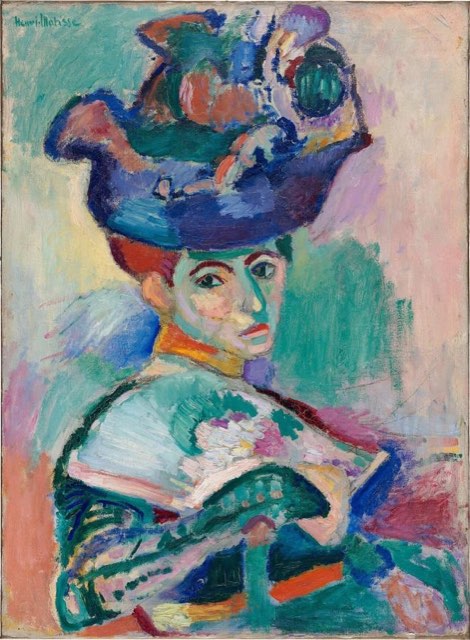
In the first decades of the 20th century, Fauvism and Cubism brought extraordinary innovation and experimentation to the visual arts. The Fauves, led by Henri Matisse and strongly influenced by the Post-Impressionists, favored vivid nonnaturalistic colors, simplified decorative lines, and flatter pictorial space. The Cubists, led by Pablo Picasso and Georges Braque, were influenced primarily by Paul Cézanne. In Cubism’s initial phase, known as Analytic Cubism, objects seemed to be shattered into geometric planes splayed across the canvas, making it difficult to recognize the subject matter and emphasizing the essentially two-dimensional nature of the canvas’s surface. In the second phase, called Synthetic Cubism, the colors became brighter and the objects more identifiable, but the emphasis on flatness remained. Picasso and Braque began to introduce nonart materials into their work as they experimented with collage and constructed, rather than carved or modeled, their sculptures. Most of the artists associated with Fauvism and Cubism were also inspired by the highly stylized sculptures of various African countries. Due to the colonizing enterprises of France, Belgium, and Germany, the artists were able to see such artifacts in public and private collections in Europe. The abstracted forms of these African objects encouraged the artists in their movement away from naturalistic representation and toward greater abstraction. It helped them realize that there were alternative artistic conventions and styles available. For many artists, these non-Western objects functioned as a new source of originality. Some artists used elements borrowed from non-Western traditions in order to critique the social and artistic conventions of modern, Western society*.

Fauvism
- FauvismThe Metropolitan Museum of Art’s Heilbrunn Timeline of Art History · Sabine Rewald · read · 30 min · archived copy
Henry Matisse
- Henri Matisse (1869–1954)The Metropolitan Museum of Art’s Heilbrunn Timeline of Art History · Magdalena Dabrowski · read · 30 min · archived copy
- Reflections on MatisseThe New Criterion · Hilton Kramer · read · 30 min · archived copy
- Fauvism & Matisse’s Bonheur de Vivre and Khan Academy’s SmartHistory: Dr. Beth Harris and Dr. Steven Zucker’s Matisse’s The Red StudioKhan Academy’s SmartHistory · watch · 15 min
- Art View; How the Spirit of Morocco Seized MatisseThe New York Times · Michael Kimmelman · read · 30 min
- Henri MatisseWikipedia · watch · 30 min
Cubism
- CubismThe Art Story · read · 1 h
- CubismThe Metropolitan Museum of Art’s Heilbrunn Timeline of Art History · Sabine Rewald · read · 45 min · archived copy
- On the Subject of Modern Paintingmariabuszek.com · Guillaume Apollinaire · read · 45 min · archived copy
African Influences in Modern Art
- African Influences in Modern ArtThe Metropolitan Museum of Art’s Heilbrunn Timeline of Art History · Denise Murrell · read · 1 h · archived copy
Pablo Picasso, the Great Innovator
- Cubism & Picasso’s Still Life with Chair Caning and Khan Academy’s SmartHistory: Dr. Beth Harris and Dr. Steven Zucker’s Picasso’s Les Demoiselles d’AvignonKhan Academy’s SmartHistory · watch · 30 min · archived copy
- Picasso’s GuitarKhan Academy’s Dr. Stephen Zucker and Salman Khan · watch · 15 min
Chapter III
Futurism, German Expressionism, and Brancusi
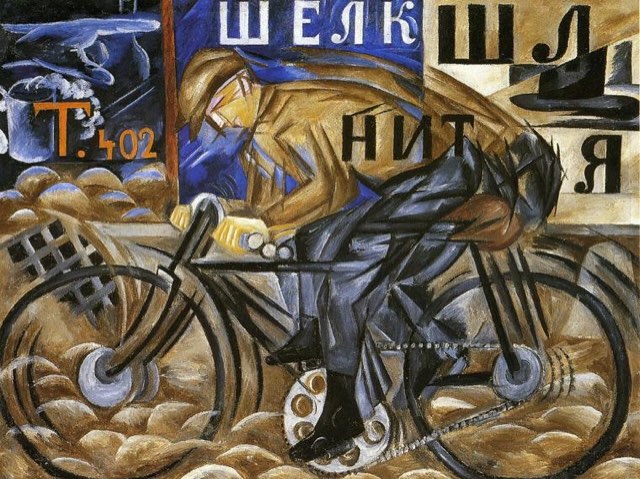
In this unit, we will explore further developments in modernist art in the 1910s. We start with Futurism, a radical avant-garde movement that emerged in Milan, Italy, in 1909. The Futurists wanted to create an art that would definitively break away from the past, one that would instead convey the speed and dynamism of modern urban and industrial life. The German Expressionists consisted of two groups: Die Brücke (The Bridge) and Der Blaue Reiter (The Blue Rider). Both groups valued the art of non-Western and premodern cultures; both used increasingly abstract styles and strong colors to emphasize the artist’s personal expressivity. The Rumanian sculptor Constantin Brancusi, working primarily in France, developed a streamlined form of abstraction that combined references to Rumanian folk art with intimations of the spiritual.

Italian Futurism
- FuturismThe Art Story · read · 2 h
- Three Futurists: Balla, Severini and BoccioniKhan Academy’s SmartHistory · Chad Laird and Dr. Beth Harris · watch · 15 min · archived copy
- The Founding and Manifesto of Futurismunknown.nu · F. T. Marinetti · read · 1 h
German Expressionism
- ExpressionismThe Art Story · read · 1 h
Die Brücke (The Bridge) Group
- Ernst Ludwig KirchnerThe Art Story · read · 30 min
- Expressionism & Kirchner’s Street, DresdenKhan Academy’s SmartHistory · Dr. Juliana Kreinik, Dr. Beth Harris, and Dr. Steven Zucker · watch · 15 min
Wassily Kandinsky and Der Blaue Reiter (The Blue Rider) Group
- Wassily KandinskyThe Art Story · read · 45 min
- Reserve Readings: Wassily Kandinsky’s Excerpts from Concerning the Spiritual in Artmariabuszek.com · Expressionism · Web · read · 30 min · archived copy
- Kandinsky’s Composition VIIKhan Academy’s SmartHistory · Dr. Juliana Kreinik, Dr. Beth Harris, and Dr. Steven Zucker · watch · 15 min · no longer online
Constantin Brancusi
- Constantin Brancusi’s The KissPhiladelphia Museum of Art · watch · 15 min · no longer online
- Brancusi’s Bird in SpaceKhan Academy’s SmartHistory · Dr. Beth Harris and Dr. Steven Zucker · watch · 15 min · no longer online
Chapter IV
Suprematism, Constructivism, and De Stijl
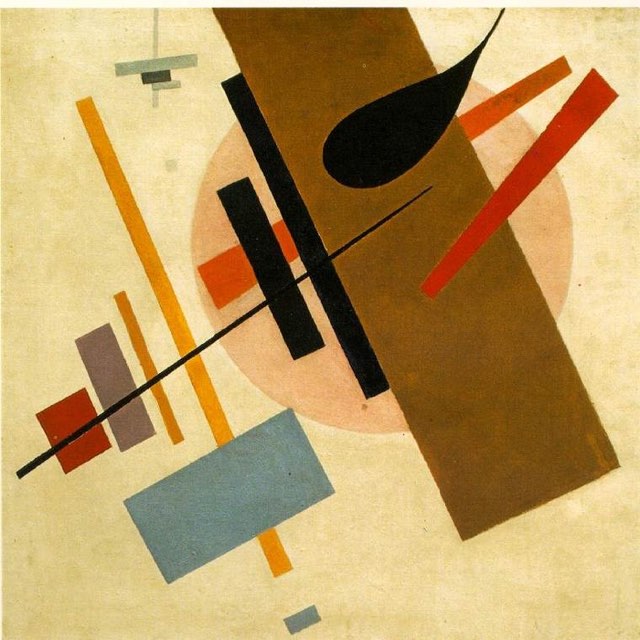
In this unit, we will explore the development of abstract art in Russia and Holland in the first decades of the 20th century. In Russia, the Bolshevik revolution of 1917 led to a flowering of modernist styles. Many Russian artists believed the revolution would lead to a better life for all Russians and were eager to show how the visual arts could help transform society. Kazimir Malevich, the founder of Suprematism, created a radically simplified style that valued simplicity and purity. Malevich wanted to break with the art of the past and create works that could convey both rationality and spirituality. The Constructivists also sought a simplified style, one that they hoped would eventually be used to mass produce aesthetically pleasing objects for everyday life. In Holland, the artists associated with De Stijl (The Style) shared the Russians’ interests in simplicity, purity, rationality, and spirituality. Like their Russian contemporaries, Dutch artists Piet Mondrian and Theo van Doesburg held the utopian belief that art could transform everyday life. The destruction caused by the first World War (1914–1918) was a major impetus for all these artists. Repulsed by the war’s carnage, they hoped to create art that would help humanity build better societies, thereby creating new and important social roles for themselves*.

Kazimir Malevich and Suprematism
- SuprematismThe Art Story · read · 1 h
- Art & Context: Monet’s Cliff Walk at Pourville and Malevich’s White on WhiteKhan Academy’s SmartHistory · Beth Harris, Sal Khan, and Steven Zucker · watch · 15 min
Russian Constructivism
- ConstructivismThe Art Story · read · 2 h
- Proun 2Philadelphia Museum of Art · El Lissitzky · watch · 10 min · archived copy
- Alexander Rodchenko and the Russian Avant-GardeYouTube · Michael Craig and Copernicus Films · watch · 15 min
De Stijl and Piet Mondrian
- De StijlThe Art Story · read · 1 h
- Piet MondrianThe Solomon R. Guggenheim Foundation · read · 45 min · archived copy
- De Stijl: Mondrian’s Composition No. II, with Red and BlueKhan Academy’s SmartHistory · Dr. Beth Harris and Dr. Steven Zucker · watch · 15 min
Chapter V
Dada and Surrealism
This unit focuses on Dada and Surrealism during the period from 1917 to
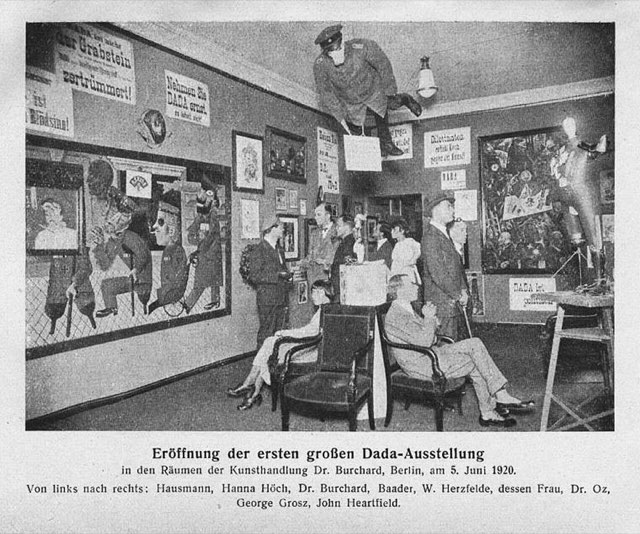

Dada
- DadaThe Art Story · read · 1 h
Marcel Duchamp
- Marcel Duchamp (1887–1968)The Metropolitan Museum of Art’s Heilbrunn Timeline of Art History · Nan Rosenthal · read · 1 h · archived copy
- The Bride Stripped by Her Bachelors, Even (The Large Glass)Philadelphia Museum of Art · * · watch · 15 min · archived copy
- Dada Duchamp and the Ready-MadesKhan Academy’s SmartHistory · Dr. Beth Harris and Dr. Steven Zucker · watch · 15 min · archived copy
Surrealism
- SurrealismThe Art Story · read · 4 h
- First Surrealist ManifestoUniversity of Alabama · André Breton · read · 2 h · archived copy
- Magritte’s ‘The Treachery of Images (Ceci n’est pas une pipe)’Khan Academy’s SmartHistory · Dr. Beth Harris and Dr. Steven Zucker · watch · 15 min
- Dali’s ‘Metamorphosis of Narcissus’Khan Academy’s SmartHistory · Dr. Beth Harris and Dr. Steven Zucker · read · 15 min
Chapter VI
The “Return to Order” in France, Germany, and the United States
We’ve see that much of the art of the early 20th century was characterized by the breakdown of forms, nonnaturalistic colors, crude drawing, asymmetrical compositions, and a move toward abstraction. Some of these works—such as those by the German Expressionists—conveyed anxiety over the rapid and radical transformations of modern life; others—such as those by the Futurists—celebrated modernity’s speed and dynamism and welcomed the destruction of the past and its traditions. After World War I, there was a shift in styles and attitudes as artists reacted to the social and political chaos caused by the conflict. Simplicity, legibility, and rational order became highly valued artistic attributes. Scholars have loosely described this as a desire for a “return to order.” In this unit, we will see how these new values appeared in France, Germany, and the United States. In France, the Purists produced paintings with clearly defined objects and stable compositions in order to evoke the same sense of harmony and balance found in classical works of art. In Germany, the artists of the Bauhaus tried to design works that would be suitable for mass production, while the New Objectivity artists focused on social and political critiques that would be easily understood by the public. In the United States, the Precisionists, Regionalists, and Urban Realists emphasized clarity of form and recognizably American subject matter. As you work through this unit, pay particular attention to the similarities and differences in the artistic styles, social goals, and motivations of these artists.
France: Purism
- The City, 1919Philadelphia Museum of Art · watch · 15 min · no longer online
- Towards a New Architecturemariabuszek.com · Excerpts from Le Corbusier · read · 30 min · archived copy
Germany: The Bauhaus and the New Objectivity
- The Theory and Organization of Bauhausmariabuszek.com · Walter Gropius · read · 45 min · archived copy
The Bauhaus
- Explore BauhausMOMA · Bauhaus Workshops for Modernity · read · 1 h · archived copy
- Feininger’s Cathedral for the BauhausKhan Academy · Dr. Steven Zucker and Dr. Juliana Kreinik · watch · 15 min
The New Objectivity
- New ObjectivityThe Museum of Modern Art, New York · read · 30 min · archived copy
- George GroszThe Museum of Modern Art, New York · Ursula Zeller · read · 30 min · archived copy
- Agitated Images: John Heartfield and German Photomontage, 1920–1938The J. Paul Getty Museum · read · 45 min
The Armory Show in New York, 1913
- The Armory ShowUniversity of Virginia · Shelly Staples’ · watch · 2 h · archived copy
Precisionism
- PrecisionismThe Metropolitan Museum of Art’s Heilbrunn Timeline of Art History · Jessica Murphy · read · 30 min · archived copy
- Charles Sheeler (1883–1965)The Metropolitan Museum of Art’s Heilbrunn Timeline of Art History · Jessica Murphy · read · 1 h · archived copy
Regionalism
- Thomas Hart Benton (1889–1975)American Studies at the University of Virginia · read · 30 min · archived copy
- Going Back to Iowa: The World of Grant WoodUniversity of Virginia · read · 30 min · archived copy
- Grant Wood’s American GothicKhan Academy’s SmartHistory · Dr. Beth Harris and Dr. Steven Zucker · watch · 15 min
Urban Realism
- Edward Hopper (1882–1967)The Metropolitan Museum of Art’s Heilbrunn Timeline of Art History · Jessica Murphy · read · 1 h · archived copy
- Hopper’s NighthawksKhan Academy’s SmartHistory · Dr. Beth Harris and Dr. Steven Zucker · watch · 15 min
Chapter VII
The 1940s and 1950s in the United States and Europe
One of the most striking developments of the 1940s and 1950s was the rise of New York City as a major artistic center. This was partly due to the large number of European modernists who fled to the United States during and after World War II. It was also fueled by the United States’s new role as a world leader. In this unit, we will explore the rise of Abstract Expressionism in the United States and the part it played in America’s new artistic prominence. We will also examine several critical approaches that have been used to interpret the art of this movement. Then we will turn our attention to Art Brut and European modernism in this period. As you work through this unit, remember to compare the works of art under discussion with earlier examples of abstract art and to look for similarities and differences in the styles, the artistic motivations, and the meanings conveyed by the works.
American Art in the 1940s
- Podcast 40: Painting 6: Art in New Yorkarthistoryunstuffed.com · Dr. Jeanne S. M. Willette · watch · 30 min
- Avant-Garde and Kitschsharecom.ca · Clement Greenberg · read · 1 h · archived copy
Abstract Expressionism
- Abstract ExpressionismThe Art Story · read · 1 h
- The American Action Painterspooter.net · Harold Rosenberg · read · 1 h · archived copy
- Clement Greenberg vs. Harold GreenbergThe Art Story’s Art Critics Comparison · read · 30 min · no longer online
- Abstract Expressionism, Weapon of the Cold WarMichigan State University · Eva Cockroft · read · 1 h
- Abstract Expressionism Pollock’s One: Number 31, 1950, Mark Rothko’s No. 3/No. 13, Newman’s Onement I, and de Kooning’s Woman IKhan Academy’s SmartHistory · Dr. Beth Harris and Dr. Steven Zucker · watch · 30 min
Jean Dubuffet and Art Brut
- Jean DubuffetThe Art Story · read · 30 min
- His WorkDubuffet Foundation · watch · 30 min · archived copy
- Mark Haddon on Jean DubuffetTate Shots · watch · 15 min
Chapter VIII
Neo-Dada and Pop Art
In the 1950s, a number of artists in the United States and Europe began to react against the abstract styles, expressive brushwork, and metaphysical meanings associated with earlier 20th-century modern art in general and Abstract Expressionism and Art Brut in particular. The artists associated with Neo-Dada and Pop Art were inspired by Marcel Duchamp’s cool, intellectual approach to art and his use of common, everyday materials. Like Duchamp, they were interested in breaking down the boundaries between the fine arts and everyday life. Neo-Dada and Pop artists also looked to American popular culture for subject matter: comic books, Hollywood films, magazines, and advertising imagery became important sources for them. In the decades immediately after World War II, the European nations that had been involved in the struggle were slow to recover from the war’s economic toll. The United States, however, experienced rapidly increasing prosperity and an explosion of growth in mass culture and consumerism. This, along with America’s newly won position as a powerful world leader, led to the exportation of American culture around the globe. The Neo-Dada and Pop artists shared a fascination with American popular culture, but the meanings evoked by their works vary greatly. As you work through this unit, consider the attitudes toward popular culture and consumerism that are conveyed. Do the works seem to embrace and celebrate pop culture? Do they seem to criticize it? Do they convey a desire to escape from materialism or a hope for transcendence? What elements in the works themselves support your views?
Neo-Dada: Jasper Johns and Robert Rauschenberg
- Jasper Johns (born 1930)The Metropolitan Museum of Art’s Heilbrunn Timeline of Art History · Nan Rosenthal · read · 45 min · archived copy
- Robert RauschenbergThe Art Story · read · 30 min
- Bed: Robert RauschenbergThe Museum of Modern Art, New York · read · 15 min · archived copy
- Robert Rauschenberg, First Landing Jump, 1961The Museum of Modern Art, New York · watch · 15 min · archived copy
Pop Art in Britain and the United States
- Pop ArtThe Art Story · read · 1 h
- Podcast 43 Painting 9: Pop Artarthistoryunstuffed.com · Dr. Jeanne S. M. Willette · watch · 15 min
Richard Hamilton
- Richard HamiltonThe Museum of Modern Art, New York · S. C. Maharaj · read · 15 min · archived copy
Andy Warhol
- Andy WarholThe Art Story · read · 1 h
- Podcast 44 Painting 10: Andy Warholarthistoryunstuffed.com · Dr. Jeanne S. M. Willette · watch · 15 min
- Camouflage Self-PortraitPhiladelphia Museum of Art · Andy Warhol · watch · 15 min · archived copy
Roy Lichtenstein
- Roy LichtensteinThe Art Story · read · 1 h
- Inside New York’s Art World: Lichtenstein and CastelliYouTube · DukeLibDigitalColl · watch · 45 min
Sculpture: Claes Oldenburg and George Segal
- Claes Oldenburg: I Am for an ArtWordPress.com Artist Statements · read · 15 min · archived copy
Claes Oldenburg
- Claes OldenburgMuseum of Modern Art · Barbara Haskell · read · 15 min · archived copy
- Claes Oldenburg’s Other Works in PhiladelphiaPennsylvania Academy of the Fine Arts · read · 15 min · archived copy
George Segal
- George SegalWikipedia · read · 15 min
- George SegalMiami Art Museum · read · 15 min · archived copy
Chapter IX
Minimalism, Process Art, and Arte Povera
Minimalism, Process Art, and Arte Povera all began in the 1960s and all of them used either nonartistic materials or nontraditional methods for making art. Minimalism—also known as ABC Art, Primary Structures, or Specific Objects—tended to favor simple geometric forms, unmodulated colors, and serial repetition. Unlike the earlier geometric abstraction of artists such as Piet Mondrian or Kasimir Malevich, Minimalist works seemed to be devoid of any utopian goals for art. Instead, the Minimalist works refer to industrial production or emphasize the formal qualities of the materials themselves. As the name implies, Process artists emphasized the processes used to create a work of art rather than the final object. The artist’s actions on the material—pouring, folding, tearing, welding, smearing, spraying, pasting, and so forth—are clearly visible. Often these artists, like the Minimalists, preferred to use nonart materials such as latex, rope, textiles, and ordinary metals. Arte Povera—literally “Poor Art”—favored commonplace materials in works that seem to reject the technology of modern times and instead evoke a pre-industrial aesthetic. As you work through this unit, compare the artists’ use of materials, methods of production, and goals for their art. What similarities and differences can you find with earlier abstract art?
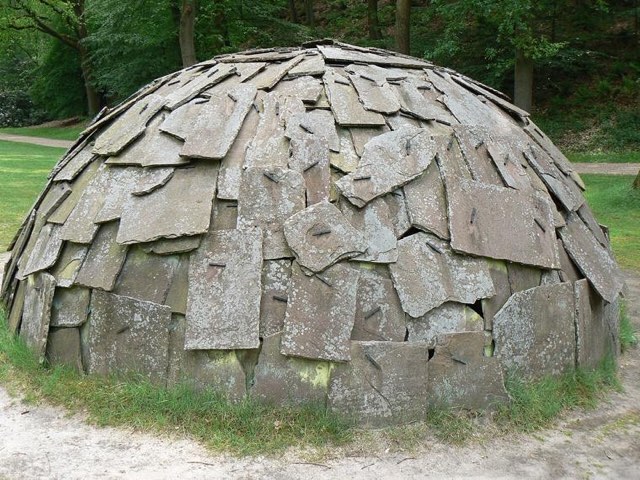

Minimalism
- MinimalismThe Art Story · read · 3 h
- Donald Judd’s UntitledKhan’s Academy’s SmartHistory · Dr Beth Harris and Dr. Shana Gallagher-Lindsay · watch · 15 min · archived copy
- Kenneth NolandThe Museum of Modern Art, New York · read · 15 min · archived copy
- Agnes MartinThe Solomon R. Guggenheim Foundation · Nancy Spector · read · 15 min
- Modernist Paintingsharecom.ca · Clement Greenberg · read · 45 min · archived copy
Process Art
- Eva HesseThe Art Story · read · 1 h
- Eva HesseSan Francisco Museum of Modern Art’s Interactive Feature · watch · 30 min · archived copy
- Robert MorrisThe Art Story · read · 1 h
- Joseph BeuysThe Art Story · read · 1 h
- Joseph Beuys with CoyoteAccidental Universe · watch · 15 min · no longer online
Arte Povera
- Arte PoveraThe Art Story · read · 1 h
- Alighiero Boetti: Game PlanTate Modern · watch · 15 min
- The Rich Legacy of Arte PoveraThe Art Newspaper · Gareth Harris · read · 30 min · archived copy
Chapter X
Conceptual, Installation, and Land Art
Conceptual, Installation, and Land Art all strove to go beyond the traditional categories of painting and sculpture. Conceptual Art, as the name implies, privileged the idea or conception of a work over the execution of a beautiful object. The emphasis was placed on intellectual activity rather than aesthetic enjoyment. Many Conceptual works incorporate language or mathematical constructs in works often made from nonartistic materials. Installation art subverted the categories of painting and sculpture by creating large-scale works that transform the viewers’ perception of a specific site or space. These works may include any combination of artistic and nonartistic materials and processes. The artists associated with Land Art, also known as Earth Art, abandoned their studio spaces and began to work outdoors. These artists used the earth itself—dirt, rocks, bodies of water, and weather—to create often monumental works that are subject to the depredations of time and climate. As you work through the material in the unit, consider these questions: How do these works relate to the spaces in which they are presented? How do they affect the relationship between the work of art and the viewer? How do they redefine the function of art and the role of the artist?
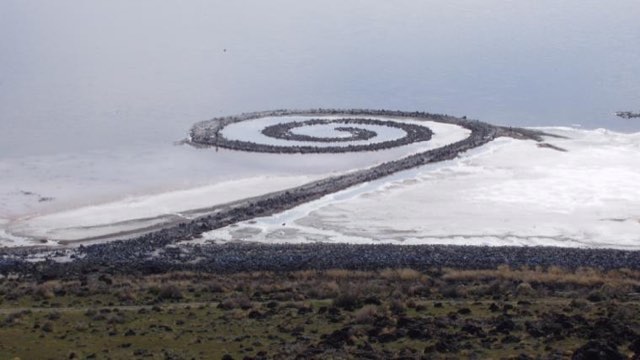

Conceptual Art
- Conceptual ArtThe Art Story · read · 2 h
- Paragraphs on Conceptual Artddooss.org · Sol LeWitt · read · 30 min · archived copy
- Nancy Spector’s “Joseph KosuthThe Solomon R. Guggenheim Foundation · read · 15 min
Installation Art
- Installation ArtWikipedia · read · 15 min
- Dossier: Site-specific Installations in GermanyGoethe Institute · Nicole Fritz · read · 30 min · archived copy
- Preservation and Presentation of Installation ArtNetherlands Institute for Cultural Heritage · read · 45 min
- ProjectsAnn Hamilton Studio · read · 30 min · archived copy
Land Art
- The Artists Behind the Gates in New YorkYouTube · LXTV · watch · 15 min · no longer online
- Land ArtWikipedia · read · 15 min
- Monumental Land ArtDaringDesigns.com · read · 1 h · archived copy
- IntroductionRobert Smithson · read · 30 min · archived copy
- Land Art: Here Today, Gone Tomorrow?The Art Newspaper · Helen Stoilas · read · 15 min · archived copy
- Christo and Jeanne-Claude in the Vogel CollectionNational Gallery of Art · read · 1 h · archived copy
Chapter XI
Postmodernism
Postmodernism is a notoriously slippery term and numerous art historians and critics have defined it in slightly different ways. Most would agree, however, that postmodernist works either revise or critique the values associated with modernism. These modernist values include originality, authenticity of expression, individuality, purity, and the fine arts’ ability to transcend the material world. Many postmodernist artists instead privilege the idea of the copy over the original; they argue that all expression is culturally determined rather than a matter of individual creativity; and they reject the hierarchy that places the fine arts above all other forms of human production.
What Is Postmodernism?
- Modern Art Theory—PostmodernismThe ArtStory · read · 15 min
- Ask an Expert: What Is the Difference between Modern and Postmodern Art?Smithsonian Magazine · Megan Gambino · read · 15 min · archived copy
Appropriation and the Pictures Generation
- The Pictures GenerationThe Metropolitan Museum of Art’s Heilbrunn Timeline of Art History · Douglas Eklund · read · 1 h · archived copy
- Sherrie Levine’s ‘Mayhem’: A Retrospective of The Original Fake at The WhitneyWYNC · read · 15 min · archived copy
- The Anxiety of Influence—Head On: A Conversation between Sherrie Levine and Jeanne SiegelAfterSherrieLevine.com · read · 30 min
- Directions: Cindy Sherman: Film StillsHirshhorn Museum · read · 15 min · archived copy
- The Death of the Author/Roland BarthesUbuWeb · read · 45 min
Chapter XII
Identity Politics: Feminism and Social Activism
In the 1960s and 1970s, European and American societies experienced a sea change. Numerous individuals and organizations reacted against patriarchal culture, that is, a culture that privileged white heterosexual males and that denigrated the productions of women and people of color. The Civil Rights Movement and the Feminist Movement sought to redress the balance and to bring the concerns of marginalized groups into the mainstream art world. The artists discussed in this unit created works that specifically address the political implications of individual gender and ethnic identity.
Feminism
- Why Have There Been No Great Women Artists?MiraCosta College · Linda Nochlin · read · 45 min · archived copy
- Feminism & Feminist ArtThe Art History Archive · read · 30 min
- The Dinner PartyBrooklyn Museum · Elizabeth A. Sackler Center for Feminist Art · read · 30 min · archived copy
- Carolee SchneemanThe ArtStory · read · 1 h
Social Activism
- Social Activism: Romare BeardenPBS · African American World · read · 15 min · archived copy
- Social Activism: Faith RinggoldPBS · African American World · read · 15 min · archived copy
- Faith RinggoldPBS · Quilts · read · 15 min · archived copy
- Life Is a Collage for Artist Betye SaarNPR · The Long View · Renee Montagne · read · 15 min
- Betye Saar: The Liberation of Aunt JemimaYouTube · The National Visionary Leadership Project · watch · 15 min
Chapter XIII
Themes in Late 20th-Century and early 21st Century Art
The art produced in the closing decades of the 20th century and the early years of the 21st century continues to emphasize many of the themes we’ve explored in this course: art’s relationship to the changes and stresses of contemporary life, the role of the artist, experimentation and innovation in materials and processes, and the desire to destroy old oppositions (such as high art versus low culture, male versus female, spiritual versus material, and objectivity versus subjectivity). This era has been characterized as one that has a more global perspective on art and culture, one that no longer privileges the art of the West over that of all the rest. This new perspective is the result of a global market economy as well as the phenomenal growth in the Internet and related technologies, such as personal websites, smart phones, and social networking sites. This unit explores a few of the major artists of this period. As you consider their works, look for similarities and differences with the art of the earlier 20th century. What connections can you find with earlier themes in modern or postmodern art? What is new in the art of the later 20th century? Does your newly gained knowledge of 20th-century art help you to interpret the art of the current moment?
Neo-Expressionism
- Neo-ExpressionismThe Art Story Foundation · Justin Wolf · read · 2 h
- Anselm Kiefer (born 1945)The Metropolitan Museum of Art’s Heilbrunn Timeline of Art History · Ian Alteveer · read · 1 h · archived copy
Gerhard Richter
- Gerhard RichterThe ArtStory · watch · 1 h
Damien Hirst
- Damien Hirst, for the Love of GodTate Modern · watch · 15 min · archived copy
Cai Guo-Qiang
- Cai Guo-QiangPBS · Art21 · watch · 30 min
Takashi Murakami
- MurakamiThe Solomon R. Guggenheim Foundation · read · 15 min · archived copy
- Featured Artist: Takashi Murakamiitsliquid · read · 15 min · archived copy
Art in the 21st Century
- Art in the 21st CenturyKhan Academy’s SmartHistory · read · 30 min · archived copy
- ARTH209 Final ExamThe Saylor Foundation · final exam · no longer online
About this course
This course is Saylor Academy's ARTH209, 20th Century Art, one of the complete university courses the Saylor Foundation made free from 2008 and retired in 2015. Saylor licensed its course text under CC BY 3.0; the original is on GitHub. Here it is laid out as chapters, links that have died go to an archived copy from the Internet Archive where one exists, assessments that needed a Saylor login are left out, and people and works are linked to Kulturbase. The readings and lectures belong to their publishers and are linked, not copied. Pictures: Wikimedia Commons, credited under each picture.
All Saylor courses · Free culture courses · The Chautauqua Reading Course