Art history · Saylor ARTH210
American Art
This course surveys art of America from the colonial era through the post-war 20th century. We will consider broad stylistic tendencies in various regions and periods and examine specific artists and works of art in historical and social contexts, with emphasis on the congruent evolution of contemporary American multi-cultural identity.
More about this course
We will move chronologically, more or less, with many overlaps and cross-chronological, thematic diversions that will help shape this overview and offer different perspectives on the notion of an “American art,” per se. Overarching issues that have interested major scholars of American art and its purview include the landscape (wilderness, Manifest Destiny, rural settlement, and urban development); the family and gender roles; the founding rhetoric of freedom and antebellum slavery; and notions of artistic modernism through the 20th century. A background in the basic concepts and terms of art history and art practice, and/or American studies in other disciplines, will be helpful in fully engaging the course material. Note: The links in the drop-down instructional boxes below will direct you to short essays with images, unless otherwise noted. Please click on all images encountered, as they will often enlarge or show details; also note the size of the artworks in descriptions, crucial to their form and their functions. Viewing original works in person is important for any study of art. Please identify a museum, gallery, or venue where you may closely view a work of American art created before 1980. A self-evaluation essay based on your choice is assigned at the end of UNIT 3. Other assignments are based on the reading. At the end of this syllabus, you will find a worksheet for general reference in studying art and a list of web resources frequently noted below, as well as several additional sites you can use to look up terms (including those bold-faced below), images, artists, and styles. To comply with all copyright laws, do not save any downloads accessed for your personal viewing through websites assigned below.
Upon successful completion of this course, the student will be able to:
In order to take this course, you must:
Chapter I
The Americas: 16th and 17th Centuries
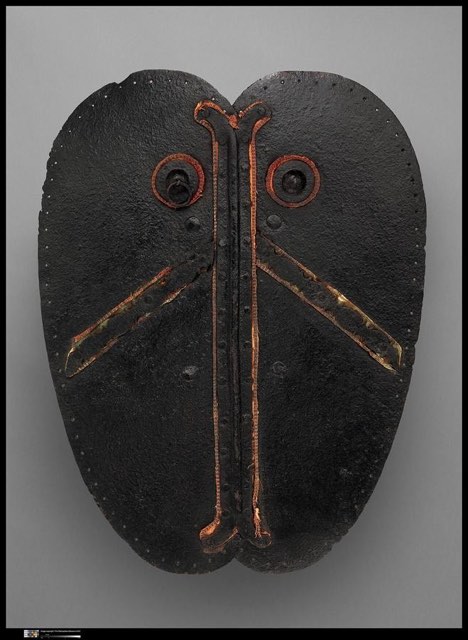
The indigenous and early Colonial culture in South and Central America as well as Native North American society have continued to resonate variously in the art and visual culture of the United States. The Spanish (funding Christopher Columbus) made the earliest Christian mark, followed by the English and Dutch, who eventually prevailed in privileging Protestantism over Catholicism in the forthcoming new nation.

Pre-Columbian Art Forms
- Aztec PagesMexicolore · watch
- The Mound Builders and Building the MoundsThe National Park Service · Indian Mounds of the Mississippi · read · archived copy
- Serpent MoundJQ Jacobs’ · watch
Early Colonial Art
- Florentine CodexThe Saylor Foundation · watch
- History and SlideshowsPatronato San Xavier · watch
- New Mexico’s Segesser Hide PaintingKNME · New Mexico History Museum · watch
- Looking with Clearer Vision: The Significance of John White’s WatercolorsHistory Is Fun · Lisa F. Heuvel · read · archived copy
Chapter II
The 18th Century
During the 18th century, threats to Native American societies began in earnest as fights over land between Europeans escalated. “Modern” history painters commemorated the action, including that of the American War of Independence, in a mix of Neoclassical and Romantic styles, following the trends at British (and to a lesser extent other European) royal academies. This century also saw the design of the capital city of Washington, D.C. and the emergence of a visual discourse (including paintings, prints, and illustrations) around the slave trade and plantation slavery system*.

The Revolutionary Era
- Great Seal of the United StatesWikipedia · read
- NeoclassicismSmartHistory · read · archived copy
- The Death of General Wolfe 1770National Gallery of Canada/Musee des Beaux-Arts du Canada · Benjamin West · watch · archived copy
- Watson and the Shark 1778National Gallery of Art · John Singleton Copley · watch
- American Civilization and Language Through Art History: Worksheet 1CATESOL Conference · Seth A. Streichler · do · archived copy
- Jane McCreaWikipedia · read
- Creating an Image of Peace: The William Penn TreatyState Museum of Pennsylvania · watch · archived copy
The First President and the National Capitol
- John Trumbull, George Washington at Trenton (1792) and John Trumbull, The Battle of Bunker’s Hill, June 17, 1775 (1786)Yale University · watch · archived copy
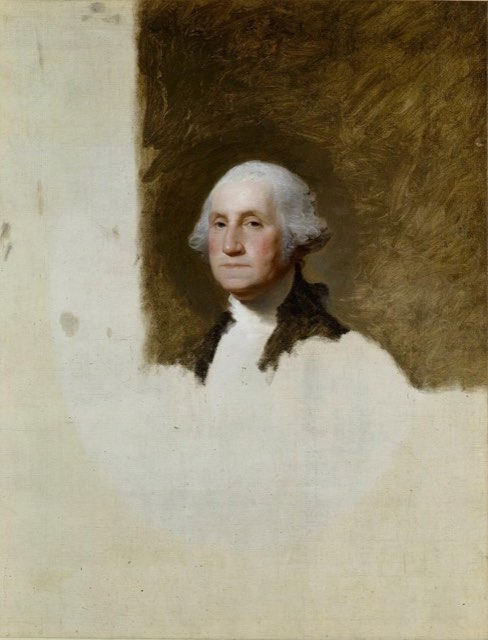
- Gilbert Stuart, George Washington (Landsdowne Portrait), 1796Smithsonian Institution · National Portrait Gallery · watch · archived copy
- House and Gardens and Plantation and SlaveryMonticello · watch · archived copy
- U.S. Capitol BuildingArchitects of the Capitol · watch
- With Needle and BrushFlorence Griswold Museum · watch · archived copy
Chapter III
1800 to Circa 1860
Portrait painting became popular from the time of Protestant infiltration of the colonies, in a shift from religious art of the earlier Catholic regime. The spread of photography in the 1840s in turn diminished demand somewhat. During this period, painter Charles Willson Peale opened the first museum opened to the public in America. Westward expansion began in earnest and the nation’s population increases dramatically. Landscape painting gained stature as well.
Developments in Portraiture
- John Singleton Copley [The Copley Family, 1776-77, National Gallery of Art; National Gallery of Art: John Singleton Copley, The Copley FamilyYale University Art Gallery · John Smibert, The Bermuda Group (Dean Berkeley and His Entourage), 1728-1739; SmartHistory · watch · archived copy
- Erastus Salisbury Field’s Portrait of a Young Woman, c. 1830 (Portland Art Museum)SmartHistory · Gerri Hayes and Floyed Sklaver · watch
- Joshua Johnson, Portrait of a Man (Possibly Abner Coker), c. 1805-1810Bowdoin College Museum of Art · watch · archived copy
- Nineteenth-Century American Folk ArtThe Metropolitan Museum of Art · Carrie Rebora Barratt · watch · archived copy
- Edward HicksNational Gallery of Art · watch · no longer online
Romantic Landscape
- The Hudson River SchoolThe Metropolitan Museum of Art · Kevin Avery · watch · archived copy
- The Hudson River SchoolNew World Encyclopedia · read
- Romanticism in the United States: Cole’s The OxbowSmartHistory · Steven Zucker and Beth Harris’ · watch · archived copy
- George Catlin and His Indian GallerySmithsonian American Art Museum · watch · archived copy
Painting Everyday Life
- American Stories: Paintings of Everyday Life, 1765-1915Metropolitan Museum of Art · watch · archived copy
- Raphaelle Peale, A Dessert (1814)National Gallery of Art · watch · archived copy
- Charles Willson Peale, Staircase Group, 1795Philadelphia Museum of Art · watch · archived copy
- Will Harnett’s, The Old Violin (1886)National Gallery of Art · watch · archived copy
History Painting: Emanuel Leutze’s “George Washington Crossing the Delaware” (1851)
- George Washington Crossing the Delaware (1851)The Metropolitan Museum of Art · Emanuel Leutze · watch · archived copy
- George Washington Crossing the DelawareNPR · Ina Jaffee · watch · archived copy
Chapter IV
The Civil War Era to the Gilded Age
The visual culture of the Civil War is extensive, with the explosion of the popular illustrated press. For the first time, the death and devastation of war was conveyed to those removed from the action through photography. Naturalistic, “realistic” styles become pervasive. The progress, hopes, and disintegration of the Reconstruction platform for African Americans was documented by and expressed through art. During the same period, the Indian Wars were brought to their devastating conclusion. Impressionism came to American late in the century, when nouveau riche industrialists began many of America’s major art collections.

The War Years
- American Stories: Paintings of Everyday Life 1765-1915Metropolitan Museum of Art · watch · archived copy
- Civil War SymbolismCarnegie Magazine Online · Nona Martin · read · archived copy
- Winslow Homer: Prisoners from the Front (22.207) [1866]The Metropolitan Museum of Art · watch · archived copy
- Stories of War and ReconciliationThe Metropolitan Museum of Art · watch · no longer online
- Thomas Waterman WoodMetropolitan Museum of Art · watch · no longer online
- The Centennial Exposition, Philadelphia, 1876: An introduction to America’s First ‘World’s Fair’University of Delaware Library Special Collections Department · watch · archived copy
- Oral Narrations by TritobiaAmerican Art from the Howard University Collection · watch · archived copy
- Women in History: Edmonia Lewis BiographyLakewood Public Library (Ohio) · read
- Edmonia LewisSmithsonian American Art Museum · watch · archived copy
- Emancipation MemorialWikipedia · read
- The Gross ClinicWikipedia · read
- August Saint-Gaudens’ Monument to Robert Gould Shaw and the Massachusetts 54th RegimentNational Gallery of Art · watch · archived copy
The Late 19th Century
- American Stories: Paintings of Everyday Life 1765-1915Metropolitan Museum of Art · watch · archived copy
American Impressionism
- ImpressionismSmartHistory · read
- American ImpressionismThe Metropolitan Museum of Art · Barbara Weinberg · watch · archived copy
The World’s Columbia Exposition, 1893 / Turn of the Century
- World’s Columbian Exposition, Chicago, 1893 and Electronic Encyclopedia of Chicago: Robert W. Rydell’s World’s Columbian ExpositionUniversity of Delaware Library Special Collections Department · read · archived copy
- Henry Ossawa TannerMark Harden’s Artchive · watch
- Artistic Light and Capturing the ImmeasurableEmerging Infectious Diseases · P. Potter · read · archived copy
- A Missing Question Mark: the Unknown Henry Ossawa TannerNineteenth-Century Art Worldwide · Will South · watch · archived copy
- Henry Ossawa Tanner: A Mystical PainterSmithsonian American Art Museum Online Exhibitions Homepage · watch · no longer online
- The Gilded Age: Treasures from the Smithsonian American Art Museum (2003)Smithsonian American Art Museum · watch · archived copy
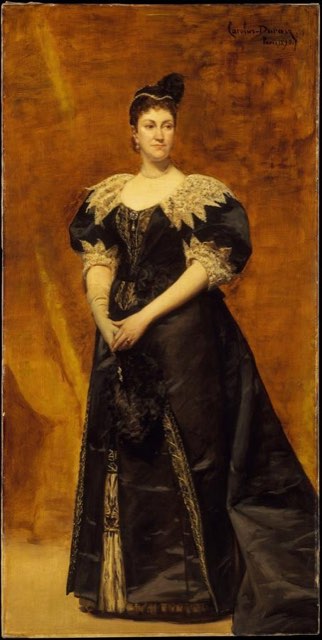
- John Singer Sargent (1856–1925)The Metropolitan Museum of Art · Barbara H. Winberg · watch · archived copy
- Louis Comfort Tiffany (1848–1933)The Metropolitan Museum of Art · Alice Cooney Frelinghuysen and Monica Obniski · watch · archived copy
Special Topics
- Keeping History: Plains Indian Ledger DrawingNational Museum of America History, Smithsonian Institution · watch · archived copy
- Introduction: The Birth of American Artist PrintmakingConnexions · Stephen Frederick · read · no longer online
Chapter V
The New Century to the Great Depression
In the early 1900s, for the first time in American history, the wealthy class in America rivaled the wealthy in Europe, and this development was reflected in portraiture and collecting. However, America also saw growing class division, facilitated by large waves of immigration. A new underclass became subjects in art. World War I brought United States directly into world affairs and alliances. The Harlem Renaissance takes shape.

The Ashcan School and Early Abstraction
- American Stories: Paintings of Everyday Life 1765-1915The Metropolitan Museum of Art · watch · archived copy
- The Ashcan SchoolThe Metropolitan Museum of Art · Barbara H. Weinberg · watch · archived copy
- Alfred Stieglitz (1864–1946) and His CircleThe Metropolitan Museum of Art · James Voorhies’ · watch · archived copy
- Barbara Haskell and Sasha Nicholas Discuss [Georgia] O’Keeffe’s Use of Abstraction over the Course of Her Career (2005)Whitney Museum of American Art · watch
- The Armory ShowUniversity of Virginia · Shelly Staples’ · watch · archived copy
Harlem Renaissance
- Rhapsodies in Black (travelling exhibition, 1997)Institute of Visual Arts and the Hayward Gallery · watch · archived copy
- Harlem RenaissancePBS’ · watch · archived copy
- Aaron DouglasWikipedia · read
- Aaron Douglas: African American Modernist (2008)Spencer Museum of Art, The University of Kansas · watch · archived copy
- James Van Der ZeeWikipedia · read
- James Van Der Zee; Cleveland Museum of Art: Van Der Zee; and Art Institute of Chicago: Archibald MotleyDetroit Institute of Art · watch · no longer online
Chapter VI
The 1930s Through WWII
The New Deal offered government employment for artists. Themes related to self-reliance, as represented in broad categorical styles best known as Regionalism and Social Realism, crossed racial lines in the art world. Public murals were a new feature of the national cultural landscape, and were largely influenced by Mexican mural painters. Documentary photography gained prominence. Artists fleeing Europe in the 1930s brought “avant-garde” art forms to America, definitively.
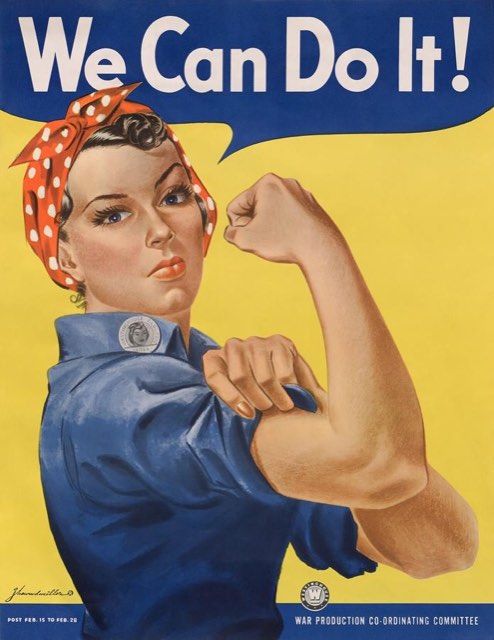

“American Scene” Painters and Documentary Photography
- Picturing the 1930sSmithsonian American Art Museum · Ann Wagner · watch · no longer online
- Scenes of American LifeSmithsonian American Art Museum · watch · archived copy
- The Murals of Thomas Hart BentonNew Britain Museum of American Art · watch
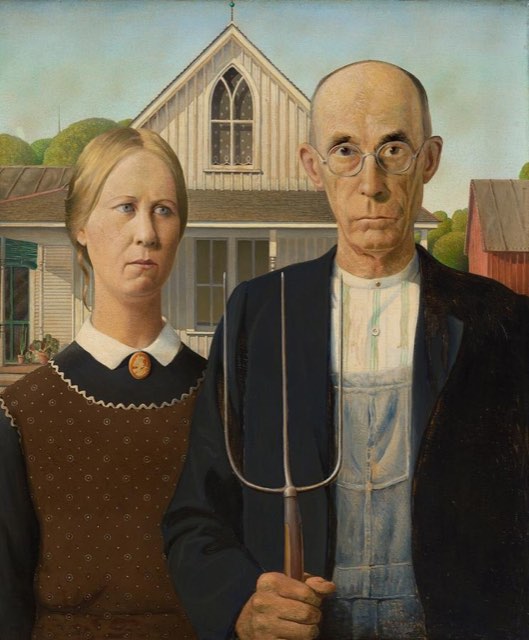
- Going Back to Iowa: The World of Grant Wood.University of Virginia American Studies Program · read · archived copy
- New Video-The Thomas Hart Benton MuralsMissouri Senate · Kids’ Page · watch · archived copy
- FSA/OWI PhotographsLibrary of Congress · watch · archived copy
- William H. JohnsonSmithsonian American Art Museum · watch
Abstraction and Surrealism
- Stuart DavisMuseum of Modern Art · watch · archived copy
- SurrealismThe Metropolitan Museum of Art · watch · archived copy
- About Joseph CornellMuseum of Modern Art · watch · archived copy
- Joseph Cornell: Navigating the Imagination (2006-2007)Smithsonian American Art Museum · watch · no longer online
- Dorothea Tanning Websitewatch
Case Study: Frank Lloyd Wright, America’s Premier Architect
- Robie HouseFrank Lloyd Wright Preservation Trust · watch · archived copy
- Frank Lloyd Wright Foundation Websitewatch
- Keeping Faith with an Idea: A Time Line of the Guggenheim Museum 1943-1959Guggenheim Museum · watch
Chapter VII
Post-War America and the Art World: Abstract Expressionism to New Political Art, Stylistic Pluralism, Diversity
In the wake of a decimated Europe, post-war America prospered. The Cold War with the Soviet Union (USSR) ensued. Abstraction triumphed as the dominant mode of picture-making, but was challenged substantially by the emergence of Pop Art, which attempted to reconnect directly with modern American life. Gradually, diverse representational forms made a come-back, influenced by “counter-cultural” politics, along with tendencies towards artistic expressions of gender and ethnic identity.
Abstract Expressionism and Minimalism
- Abstract ExpressionismEncyclopedia of Irish and World Art · read
- Mark RothkoNational Gallery of Art · watch · archived copy
- Abstract Expressionism New YorkMuseum of Modern Art · watch · archived copy
- MinimalismMuseum of Modern Art · watch · archived copy
- MinimalismGuggenheim Museum · watch · archived copy
- Finish FetishThe New Yorker · Peter Schjeldahl · watch · archived copy
Pop Art and Other Figurative Styles
- Jasper Johns (Born 1930)The Metropolitan Museum of Art · Nan Rosenthal · watch · archived copy
- Andy Warhol’s Gold Marilyn Monroe, 1962Museum of Modern Art · watch · archived copy
- Pop ArtWikipedia · read
- Andy Warhol’s Campbell’s Soup Cans, 1962Museum of Modern Art · watch · archived copy
- About Andy WarholSan Francisco Museum of Modern Art · watch · archived copy
- Roy Lichtenstein Foundation Websitewatch
- Oldenburg (collection search results)Whitney Museum of American Art · watch
- PhotorealismWikipedia · read
- Picturing America: Photorealism in the 1970sDeutsch-Guggenheim · watch · archived copy
- Picturing America: Photorealism in the 1970sYouTube · Deutschebankgroup, Vernissage · watch
Feminist, Conceptual and Earth Art
- Judy Chicago, The Dinner Party, 1974-1979Brooklyn Museum · watch · archived copy
- The Woman’s Building Websitewatch · archived copy
- Hannah Wilke Collection and Archivewatch
- Excerpts from Writingshannahwilke.com · watch
- Everybody Dies…Even the Gorgeous: Resurrecting the Work of Hannah Wilkefeldmangallery.com · Amelia Jones · read · archived copy
- Betye SaarWikipedia · read
- Conceptual ArtArtLex Art Dictionary · read
- The Panza CollectionGuggenheim Museum · watch · archived copy
- Estate of Robert Smithson Websitewatch · archived copy
Post-Modernism Pluralism
- Philip JohnsonWikipedia · read
- Faith Ringgold Websitewatch · archived copy
- Robert ColescottArthur Rogers Gallery · watch
- Art Revolution: Politics and Pop in the Robert Colescott Painting George Washington Carver Crossing the DelawareAmericana · Journal of American Popular Culture · Jody B. Cutler · read
- The Social ComedianArtnet.com · Peter Schjeldahl · watch · archived copy
- Julian SchnabelThe Broad Art Foundation · watch · archived copy
- David SalleSaatchi Gallery · watch · archived copy
- David HammonsMuseum of Modern Art · watch · archived copy
- Barbara Kruger Website and Cindy Sherman Websitewatch
- Art 21: Peon OsorioPBS · watch · archived copy
- Keith Haring Foundation Websitewatch
- BasquiatThe Brooklyn Museum · watch · archived copy
- The Aids Quilt Websitewatch · archived copy
Case Studies: Public Monuments and Sculpture
- Richard Serra’s Tilted Arc, 1981; San Francisco Museum of Modern Art: Titled Arc; Wikipedia: Tilted ArcWUST TV/PBS · watch · archived copy
- Vietnam Veteran’s Memorial; Wikipedia: Vietnam Veteran’s MemorialBluffton College · Maya Lin’s Vietnam Veterans Memorial; American Architecture · watch
About this course
This course is Saylor Academy's ARTH210, American Art, one of the complete university courses the Saylor Foundation made free from 2008 and retired in 2015. Saylor licensed its course text under CC BY 3.0; the original is on GitHub. Here it is laid out as chapters, links that have died go to an archived copy from the Internet Archive where one exists, assessments that needed a Saylor login are left out, and people and works are linked to Kulturbase. The readings and lectures belong to their publishers and are linked, not copied. Pictures: Wikimedia Commons, credited under each picture.
All Saylor courses · Free culture courses · The Chautauqua Reading Course