Art history · Saylor ARTH304
African Art
This course will introduce you to the art and architecture of the African continent from the prehistoric to the present. The objects, images, and sites featured in this course represent a small cross-section of the diverse ethnic and artistic heritage in Africa.
More about this course
This course emphasizes the role of art as manifested in the lifestyles, spiritualities, and philosophies of particular African societies, while also breaching aesthetic principles and the study and display of African art. Many works produced in Africa are used for spiritual purposes that include ritual and performance. The study of masks and ceremonies will enable you to become more familiar with the significant role art plays in the everyday lives of the citizens of African nations. For example, most traditional African art was not meant to be displayed, but rather viewed in use and in motion, especially in mixed-media masquerades. Body adornment and textiles have long been important forms of visual communication and expression in Africa, whereas painting is not a historically prevalent practice in many African regions. This course will try to recognize and consider the complex nature of African art in all its manifestations in examining and appreciating specific objects. Viewing original works in person is important for any study of art. Public museums throughout the West display examples of historical African art, secured mainly during the time spanning the height of the European slave trade through the end of the colonial era and well into the 20th century. Additionally, contemporary African art has been widely collected and exhibited throughout the world in recent decades. If at all possible, you should do the self-evaluative assignment at the end of Unit 4, in which you will be asked to write about at least one work, and preferably several, of African art that you have viewed in a museum or gallery. While viewing these works in a museum or gallery you should note that the masks were meant to be viewed in movement rather than as a form of display. You will also encounter a number of other “homework” assignments, which should serve as learning tools, helping you absorb the material and get an idea of what specialty studies of African art history entails. Lastly, note that as with most translated material, you will find slight variations in English transcriptions of African names across resources. Click on all images encountered in the websites below, as doing so will usually enlarge the image and reveal more detail in the artwork. Finally, be sure to take note of the data provided with the artwork reproductions, such as the size, medium (material), and place of origin.
Upon successful completion of this course, you will be able to:
In order to take this course, you must:
Chapter I
Orientation
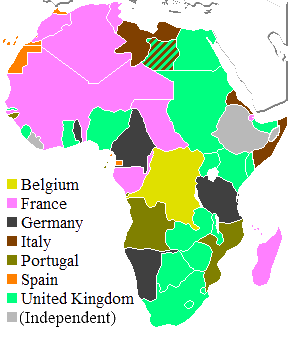
This unit will provide a foundation for the study of African art, familiarizing you with Africa’s history and geography, introducing terminology basic to cross-cultural studies, and demonstrating some of the overlaps and diversity in form and function of objects from different regions.
Geography
- Regional Map of AfricaThe Guggenheim Museum’s Africa · Art of a Continent · watch
- Pre-Colonial Map of AfricaWikimedia · watch
- The Berlin ConferenceMyra Wysinger’s Ancient Africa’s Black Kingdoms · read · archived copy
- Colonial Africa 1914 MapWikimedia · Declan Graham · watch
- The Challenge of Decolonization in AfricaThe New York Public Library, Schomburg Center for Research in Black Culture’s Africana Age · Benjamin Talton · read
- Map of AfricaWorldAtlas.com · watch · no longer online
- Africa Geophysical MapNational Geographic · watch
- Ethnic Groups in AfricaWikipedia · read

Aesthetics
- African Art: Aesthetics and Meaning – Exhibition CatalogUniversity of Virginia, Bayly Art Museum · watch · archived copy
- 5 Facts about African Masks and MasqueradesMinnesota Institute of Art · watch · no longer online
- What Is African Art?The British Museum · watch · archived copy
- African Art: Aesthetics and MeaningThe Saylor Foundation · do · 1 h · archived copy
Chapter II
The Maghreb: Northernmost Africa and the Sahara
This section studies prehistoric rock art in the Maghreb and briefly reviews the history of the region’s development and its present-day nomadic cultures. Arab culture has affected this region, particularly through the religious influence of Islam. After conquering the Phoenicians, the Romans infiltrated North Africa, and while substantial Roman architectural ruins remain, the Arabs used some of them to construct mosques. Subsequently, most mosque architecture reflects a syncretistic blend of Arab traditions and indigenous forms of building throughout Africa. Note that Muslims pray individually in an open, communal space, traditionally punctuated by a courtyard area and a minaret ascended by clergy to call the faithful to salah (daily prayers).
Engraved and Painted Rock Art and Roman Ruins
- MaghrebWikipedia · read
- African Rock Art of the Northern ZoneThe Metropolitan Museum of Art’s Heilbrunn Timeline of Art History · read · archived copy
- History and Exploration of the Libyan DesertAndrás Zboray · read
- Tassili N’ajjerUnited Nations Educational, Scientific, and Cultural Organization, World Heritage Convention · read
- LibyaRockArt.comread · no longer online
- CarthageHolly and David Hayes’ Sacred Destinations · read · archived copy
- Archeological Site of CarthageUnited Nations Educational, Scientific, and Cultural Organization, World Heritage Convention · read
- TimgadUnited Nations Educational, Scientific, and Cultural Organization, World Heritage Convention · read
- KairouanUnited Nations Educational, Scientific, and Cultural Organization, World Heritage Convention · read
Amazigh (Berber) Arts/North African Architecture
- Peoples of Africa: Berber (Amazigh)University of Iowa, School of Art History’s Art and Life in Africa Project · read · archived copy
- The Amazigh (Berber)Salim George Khalaf’s Encyclopedia Phoeniciana · read
- Ideqqi: Art of Berber WomenMusee du Quai Branly · watch · archived copy
- Antique Moroccan (Berber) CarpetsBerber-Arts · watch
- Ancient Ksour of Chinguetti, Ouadane, Oualata, and TichitNew World Encyclopedia · read
- Art of Being Tuareg: Sahara Nomads in a Modern WorldThe National Museum of African Art · read · archived copy
- The Tuareg of the Sahara: An Age Old OccupationThe Bradshaw Foundation · read
- M’zab Valley, AlgeriaTimothy Tye’s World Heritage Sites · read · archived copy
Chapter III
The Nile Valley
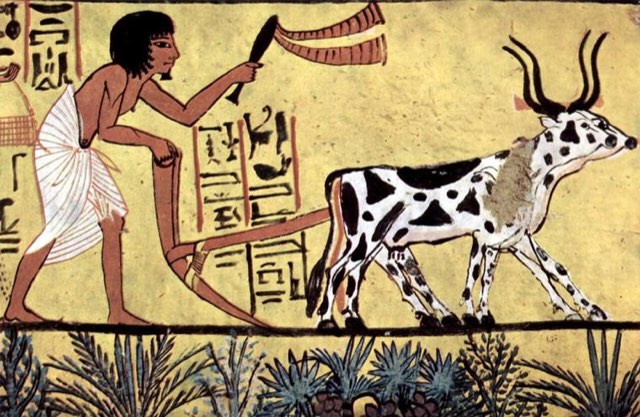
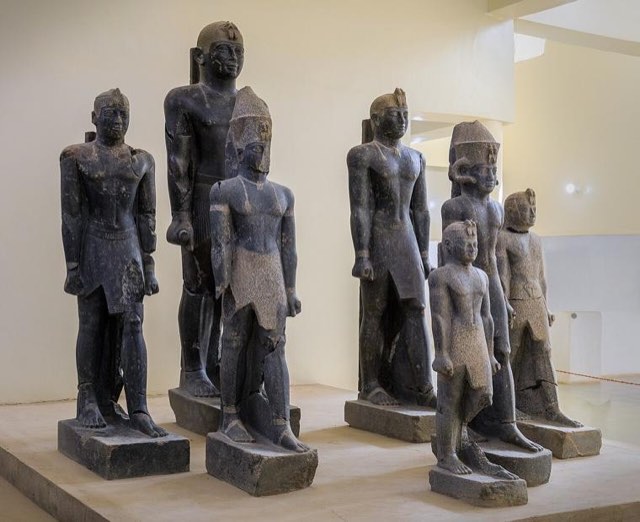
The longevity and extensive remains of ancient Egypt – a Hellenized (Greek) name for the region of Kemet – make the area crucial to the understanding of many world cultures, including those of Africa south of the Sahara, which was not always the vast desert that it is today and so did not always necessarily impede trade with regions to the south. This unit will discuss how Egyptian art emphasized the notion of the king as an extension of the divine. Egyptian religion was polytheistic, and focused on a pantheon that included composite human/animal deities. While these two Egyptian notions (divine kingship and polytheism) would prove common in later cultures throughout Africa, the ancient Egyptians’ quest for monumental permanence did not. The seat of power in Egypt shifted over time. Starting in the Northern delta, royal complexes gradually moved South into Nubia, in the modern nation of Sudan, which Egyptians settled by the end of the Dynastic period in the late first millennium BCE. From there, power shifted eastward to Abyssinia – modern Ethiopia – into the Christian period.

Ancient Egypt
- Maps of Ancient EgyptWikimedia · watch · archived copy
- Pre-Dynastic Egypt (5,500-3,100 BC)Tour Egypt · read
- Female FigureBrooklyn Museum’s Egyptian, Classical, Ancient Near Eastern Art · watch · archived copy
- Palette of King NarmerAmerican Historical Association · Jeff Kinard’s Images of Power · Art as an Historiographic Tool · watch · archived copy
- Egypt in the Old Kingdom (ca. 2649–2150 BC)Metropolitan Museum of Art’s Heilbrunn Timeline of Art History · Catherine H. Roehrig · read · archived copy
- Sculpture of Ancient EgyptThe Encyclopedia of Art · read
- The ‘Opening of the Mouth’ RitualThe British Museum · read · archived copy
- Menkaure and His QueenChristopher L.E.C. Witcomb’s Art History Resources · read
- Egypt: The Pyramids at GizaCultureFocus.com · read · archived copy
- Egypt: Valley of the KingsCultureFocus.com · read · archived copy
- Egypt: Temples for Gods and KingsCultureFocus.com · read · archived copy
- PyramidsPublic Broadcasting Service’s NOVA Online Adventure · watch
- The Pyramids at GazaNational Geographic · watch
- Egypt in the New Kingdom (ca. 1550-1070 BC)Metropolitan Museum of Art’s Heilbrunn Timeline of Art History · Catherine H. Roehrig · read · archived copy
- Sculpture TypesEgyptian Museum and Papyrus Collection Berlin · read
- NefertitiEgyptian Museum and Papyrus Collection Berlin · read
- Amarna Period of King Akhenaten in EgyptTour Egypt · read
- Tutankhamun and the Golden Age of the PharaohsThe Field Museum · read
The Kingdom of Kush and Ancient Nubia
- Sudan, 1000 BC–1 ADThe Metropolitan Museum of Art’s Heilbrunn Timeline of Art History · read · archived copy
- Introduction, Remarks on Kushite Temples, Religion, and BurialIbrahim Omer’s Ancient Sudan – Nubia · read · archived copy
- Ancient Sudan (a.k.a. Kush & Nubia): City of MeroeMyra Wysinger · watch · archived copy
- The Ancient SudanEgyptian Museum and Papyrus Collection Berlin · read
- Scholars Race to Recover a Lost Kingdom on the NileThe New York Times · John Noble Wilford · read
Ethiopia and Coptic Egypt
- Coptic ChristianityThe Metropolitan Museum of Art’s Byzantium and Islam · Age of Transition · watch · archived copy
- Obelisk of AxumWikipedia · read
- LalibelaHolly and David Hayes’ Sacred Destinations · read
- In Focus: The Lalibela ChurchesYouTube · Archaeosoup Productions’ · watch
- Debre Berhan, Gondar, EthiopiaWorld Heritage Tour · watch · no longer online
Chapter IV
The Sudan
Islamic movements into Nubia resulted in the emergence of the modern country of Sudan, a name derived from the Arabic bilad as-sudan, “land of the Blacks.” As Arabs moved westward, “Sudan” referred to a large swath of territory extending nearly to the western and southern Atlantic coasts, crossing boundaries of several modern countries and populated with diverse ethnic groups. Today the area is heavily Muslim, though many communities integrate Islam with indigenous spiritual traditions.

The Nok
- NokMemoire d’Afrique · read · archived copy
- Nok Terracottas (500 BC–200 AD)The Metropolitan Museum of Art’s Heilbrunn Timeline of Art History · read · archived copy
- Fowler Museum to Debut ‘Central Nigeria Unmasked: Arts of the Benue River Valley’University of California at Los Angeles’ Newsroom · Stacey Ravel Abarnanel · read · archived copy
- Overview of the Mambila CollectionMilwaukee Public Museum · read · archived copy
- Shrine VesselThe Annenberg Foundation’s Art Through Time · A Global View · read · archived copy
- Chamba Helmet MaskRemnants of Ritual · read · archived copy
- ChambaAfrican Art Museum · read
- Musgum Earth ArchitectureDesignboom · read · archived copy
- Chirac Exalts African Art, Legal and (Maybe) IllegalThe New York Times · Alan Riding · read
- Endangered ArtTime Magazine · Simon Robinson Kawa and Aisha Labi · read · no longer online
The Hausa and Fulani
- HausaUniversity of Iowa, School of Art History’s Art and Life in Africa Project · read · archived copy
- Friday Mosque at ZariaArchnet Digital Library · read · archived copy
- The Acipu PeopleCicipu.org · read · archived copy
- GownThe British Museum · read · no longer online
- African GownsThe British Museum · read · no longer online
- The Fulani PeopleJamtan Fulani · read · archived copy
- Art and the Fulani/Pulbe PeopleThe Metropolitan Museum of Art’s Heilbrunn Timeline of Art History · read · archived copy
- Interior Hanging (Arkilla Kereka)The Metropolitan Museum of Art · read · archived copy
- WodaabeUniversity of Iowa, School of Art History’s Art and Life in Africa Project · read · archived copy
- Tribal Beauty Pageant – for MenYouTube · National Geographic’s · watch
- Streaming Video of Ghana and Burkina FasoUniversity of Iowa, School of Art History’s Art and Life in Africa Project · watch · archived copy
Modern Mali and the Surrounding Area
- Bamana PeoplesNational Museum of African Art · read · no longer online
- Mali Empire and Djenne FiguresThe National Museum of African Art · read · archived copy
- Works of ArtThe National Museum of African Art · read · archived copy
- Djenne, MaliSacred Sites · read
- Great Mosque of DjenneYouTube · hooBariiska · watch
- Future of MuddYouTube · IcarusFilmsNY · watch
- Bamana Peoples of West AfricaThe Metropolitan Museum of Art’s Heilbrunn Timeline of Art History · read · archived copy
- Young Woman’s Wrapper, Bogolanfini (Mud Cloth)The Textile Museum’s Textile of the Month · read · archived copy
- Mud Cloth (Bogolanfini)British Museum · read · archived copy
- Bandiagara EscarpmentArchaeological Institute of America’s Archaeology Archive · read · archived copy
- Dogon, MaliSacred Sites · read
- Senufo Arts and Poro Initiation in Northern Cote d’IvoireThe Metropolitan Museum of Art · read · archived copy
- DogonThe Metropolitan Museum of Art · read · archived copy
- Bamana and Dogon Votive Structures EssayThe Saylor Foundation · do · 1 h
- African Carving: A Dogon Kanaga MaskYouTube · Documentary Educational Resources’ · watch
- A Dogon MasqueradeYouTube · Eli Newberger · read
- Senufo PeoplesNational Museum of African Art · read · no longer online
- Maternity FigureThe Metropolitan Museum of Art’s Heilbrunn Timeline of Art History · read · archived copy
- Wooden Equestrian FigureThe British Museum · read · archived copy
- The Boloi: Senufo Dance, Ivory CoastYouTube · Diby Kouame · read · no longer online
- BwaUniversity of Iowa, School of Art History’s Art and Life in Africa Project · read · archived copy
- Masks of Burkina FasoUniversity of Iowa, School of Art History’s Art and Life in Africa Project · read · archived copy
- Do in Leaves and Wood among the Bobo and BwaUniversity of Iowa, School of Art History’s Art and Life in Africa Project · Christopher D. Roy · read · archived copy
- Signs and Symbols in African ArtUniversity of Iowa, School of Art History’s Art and Life in Africa Project · Christopher D. Roy · read · archived copy
- Geography of AfricaThe Saylor Foundation · write · 30 min
- Art Analysis Based on Personal ViewingThe Saylor Foundation · do
Chapter V
The Atlantic Coastal Regions and Lower Nigeria
This unit looks at several groups that came to the West as a result of the slave trade and have formed diaspora communities. The social and spiritual structures of groups in this region are diverse, ranging from autonomous communities governed by elder societies to dynastic monarchies that are still maintained within modern nations. These differences are reflected in their respective art styles.
The Western Coast
- Afro-Portuguese IvoriesThe Metropolitan Museum of Art’s Heilbrunn Timeline of Art History · Emma George Ross’ · read · archived copy
- Nomoli Style HeadNational Museum of African Art · read · archived copy
- Nomoli Style Male FigureNational Museum of African Art · read · archived copy
- BagaThe Metropolitan Museum of Art · read · archived copy
- Mende PeopleEsther Moses’ · read
- Sierra Leone Heritage: Sowei Mask: Curator’s Notes with Bill HartYouTube · saleoneheritage · watch
- Sande Masquerades: Teaching Inner and Outer BeautyMichigan State University’s Exploring Africa · Africa in the Classroom · read · archived copy
- Annual Sowei DanceYouTube · gbakoi · watch
- The Lone Star: The Story of LiberiaPBS · Global Connections · read · archived copy
- DanThe Metropolitan Museum of Art · read · archived copy
- Dan Gunyege Runners MaskKinyago Gallery · read · archived copy
- Virtual Visit of Gorée IslandUnited Nations Educational, Scientific, and Cultural Organization · read · archived copy
- Compare and Contrast the Roles of the Poro and Sande SocietiesThe Saylor Foundation · write · 1 h
Ghana and the Surrounding Region
- Ghana: The Pre-Colonial PeriodThe Library of Congress’ Country Studies · read · archived copy
- The Baule – African Art, Western EyesNational Museum of African Art · read · archived copy
- Review of ‘Baule: African Art, Western Eyes’H-Net Online · Robert T. Soppelsa · read
- Wrapped in Pride: Ghanaian Kente and African American IdentityNational Museum of African Art · read · archived copy
- The Slave Kingdoms: WondersPBS · Henry Louis Gates, Jr.’s Wonders of the African World · read · archived copy
- Manhyia Palaceread · archived copy
- The Kings of AfricaCreative Roots · Daniel Laine · watch · archived copy
- Gold in Asante Courtly ArtsThe Metropolitan Museum of Art’s Heilbrunn Timeline of Art History · Alexander Ives Bortolot · read · archived copy
- Weights: Elephant, Bird with Body in Knot, and Bird ClawThe Metropolitan Museum of Art’s Heilbrunn Timeline of Art History · read · archived copy
- The Glassell Collection of African GoldThe Museum of Fine Arts, Houston · read · archived copy
- Asante Adinkra ClothAdire African Textiles · read · archived copy
- Fante Asafo FlagsAdire African Textiles · read · archived copy
- Akuaba FigureThe Metropolitan Museum of Art’s Heilbrunn Timeline of Art History · read · archived copy
- Akuaba Female FigureMichigan State University, Kresge Art Museum’s African Art, Western Eyes · read · archived copy
Yoruba, Fon, and Benin City
- Yoruba Art & CultureUniversity of California at Berkeley’s Phoebe A. Hearst Museum of Anthropology · Nicole Mullen · read · archived copy
- Ife Pre-Pavement and Pavement Era (800–1000 AD)The Metropolitan Museum of Art’s Heilbrunn Timeline of Art History · read · archived copy
- Dynasty and Divinity: Ife Art in Ancient NigeriaMuseum for African Art · read · archived copy
- Hidden Treasures: Inside the Kingdom of Ife ExhibitionThe Guardian · Bonnie Greer, Elliot Smith, and Henry Barnes’ · watch
- Olowe of Ise: A Yoruba Sculptor to KingsNational Museum of African Art · read · archived copy
- Olowe of Ise: Caryatid Veranda PostThe Metropolitan Museum of Art’s Heilbrunn Timeline of Art History · read · archived copy
- Ere Ibeji (Yoruba Twins)Grains of Africa · read
- Ere Ibejis: Yoruba FiguresBryn Mawr College, Art & Archeology Collections · read · archived copy
- Dance Vest with Esu Staff FiguresAnnenberg Foundation · Art through Time · A Global View · read · archived copy
- Wooden Mask for Gelede MasqueradeThe British Museum · read · archived copy
- Egungun Masquerade CostumeIndianapolis Museum of Art · read · no longer online
- Bolaji Campbell on EgungunYouTube · Art Gallery of Ontario · watch
- Bolaji Campbell on African ArtYouTube · Art Gallery of Ontario · watch
- Bolaji Campbell on the BodyYouTube · Art Gallery of Ontario · read
The Fon (Dahomey)
- Wonders: Ashanti KingdomPBS · Henry Louis Gates, Jr.’s Wonders of Africa · read · archived copy
- Kings of AbomeyThe Historical Museum of Abomey · read · archived copy
- Joyful Blues: Yoruba Indigo-Dyed ClothHenry John Drewal · read
- Origins and Empire: The Benin, Owo, and Ijebu KingdomsThe Metropolitan Museum of Art’s Heilbrunn Timeline of Art History · Alexander Ives Bortolot · read · archived copy
- Benin ChronologyThe Metropolitan Museum of Art’s Heilbrunn Timeline of Art History · Alexander Ives Bortolot · read · archived copy
- African Lost Wax Casting: Bronze, Copper, and BrassThe Metropolitan Museum of Art’s Heilbrunn Timeline of Art History · Alexander Ives Bortolot · read · archived copy
- Oba Erediauwa’s CoronationEdo-Nation · read
- Benin CraftThe British Museum · read · archived copy
- Benin and Ife Bronzes: ComparisonThe Saylor Foundation · do · 45 min
The Igbo
- Igbo ObjectsNational Museum of African Art · read · archived copy
- Igbo-Ukwu (ca. 9th Century)The Metropolitan Museum of Art’s Heilbrunn Timeline of Art History · Alice Apley · read · archived copy
- Photographs from Igbo Music, Alusi/Arunsi (Shrines), Shrine Objects, and Other Cultural ArtifactsJohn C. McCall · watch · archived copy
- IkengaWikipedia · read
- Photographic IndexesJohn C. McCall · read · archived copy
- Ijele MasqueradeUnited Nations Educational, Scientific and Cultural Organization · watch
- Honoring your AncestorsIgbo Cyber Shrine · Omenka Egwuatu Nwa-Ikenga · read · archived copy
- Mbari Houses: Photographs by Ullie BeierSt. Lawrence University, Richard F. Brush Art Gallery · read · archived copy
- The Historical Life of Objects: African Art History and the Problem of Discursive ObsolescenceThe Free Library · Sylvester Ogbechie Okwunodu · read · no longer online
- The Uli AestheticNational Museum of African Art · read · archived copy
- Igbo-UkwuBoundless · read
“Mami Wata”
- Mami Wata: Arts for Water Spirits in Africa and its DiasporasUniversity of California, Los Angeles, Fowler Museum · read
- Snake Charm: A Diva Comes HomeEmory University, Michael C. Carlos Museum · read · archived copy
Special Topics
- African Art and Authenticity: A Text with a ShadowUniversidade de Lisboa’s Artafrica · Sidney Kasfir · read · archived copy
- Ivory Coast: Faced with a Shrinking Supply of Authentic Art African Dealers Peddle the IllusionThe New York Times · read
- African Artworks in Bronze, Stone, and CeramicsMuseo d’Arte e Scienza · read · archived copy
Chapter VI
Central Africa
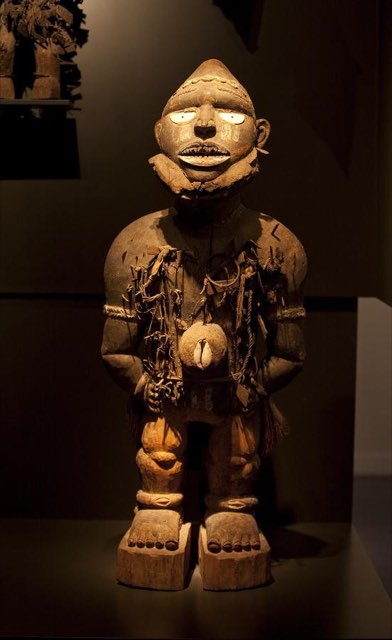
A number of groups reside across the boundaries of modern eastern Nigeria and Cameroon along the Cross River. In Cameroon, several ethnically and culturally related kingship societies nonetheless are distinct by tradition. In the colonial period, the Congo region encompassed the modern nations of the Republic of the Congo and the Democratic Republic of the Congo (DRC). The Kongo peoples (including several sub-groups) extend across the borders of these nations. This background is important to keep in mind when trying to categorize the works of the various groups this unit examines because there are not always clear differences in style or type, and there is much interaction between the two groups.

Cameroon and Gabon
- EjaghamYouTube · Cleveland Museum of Art · watch
- African Mask InteractiveCleveland Museum of Art · watch · archived copy
- Ejagham HeaddressThe Metropolitan Museum of Art’s Heilbrunn Timeline of Art History · read · archived copy
- Arts from Central AfricaMusée du Quai Branly · read · archived copy
- Intersections: Pageantry in the Palace – Bamum Kingdom, CameroonUniversity of California at Los Angeles, Fowler Museum · watch · archived copy
- Njoya and His Father’s ThroneWikimedia · read
- Trone Bamum-Musee ethnologique de BerlinWikimedia · read
- Beaded Throne, BamilekeThe Nelson-Atkins Museum of Art · read · archived copy
- African Leopard Caryatid StoolYouTube · Cleveland Museum of Art · watch
- Appropriation and Reappropriation of Exotic ArtifactsArts & Societies · Benoit de L’Estoile · read · archived copy
- Bangwa FigureThe Metropolitan Museum of Art’s Heilbrunn Timeline of Art History · read · archived copy
- BamilekeFor African Art · read · archived copy
- Bamileke (Kuosi Costume)The Dayton Art Institute · read
- A Personal Journey: Central African Art from the Lawrence Gussman CollectionNational Museum of African Art · read · archived copy
- Reliquary FigureThe Metropolitan Museum of Art’s Heilbrunn Timeline of Art History · read · archived copy
- Reliquary Head (Nlo Bieri)The Metropolitan Museum of Art’s Heilbrunn Timeline of Art History · read · archived copy
- KotaArt and Life in Africa · read · archived copy
- KotaThe Metropolitan Museum of Art · read · archived copy


The Kongo Peoples
- African Christianity in KongoThe Metropolitan Museum of Art’s Heilbrunn Timeline of Art History · Emma George Ross’ · read · archived copy
- Nail FigureArtsConnected · read · archived copy
- Power Figure (Nkisi Nkondi)The Brooklyn Museum · read · archived copy
- Power Figure (Nkisi Nkondi)Annenberg Foundation · Art Through Time · A Global View · read · archived copy
- Figure: Mother and ChildThe Metropolitan Museum of Art’s Heilbrunn Timeline of Art History · read · archived copy
- Royal Scepter: Male FigureThe Metropolitan Museum of Art’s Heilbrunn Timeline of Art History · read · archived copy
- Power Figure (Nkisi)The Metropolitan Museum of Art’s Heilbrunn Timeline of Art History · read · archived copy
The Chokwe
- Seated Chief (Mwanangara)The Metropolitan Museum of Art’s Heilbrunn Timeline of Art History · read · archived copy
- The Makishi MasqueradeUnited Nations Educational, Scientific and Cultural Organization · read
- Mwana Pwo MaskArtsConnected · read · archived copy
The Kuba
- Kingdoms of the SavannaThe Metropolitan Museum of Art’s Heilbrunn Timeline of Art History · Alexander Ives Bortolot · read · archived copy
- Kuba Yet BeltMinneapolis Institute of Arts · read · archived copy
- Female Face MaskNeuberger Museum of Art · read · archived copy
- Bwoom MaskBrooklyn Museum · read · archived copy
- Mwaash aMbogy MaskBrooklyn Museum · read · archived copy
Other Groups in the Democratic Republic of the Congo
- Stool (Luba)Annenberg Foundation · Art Through Time · A Global View · read · archived copy
- Kingdoms of the Savanna: The Luba and Lunda EmpiresThe Metropolitan Museum of Art’s Heilbrunn Timeline of Art History · Alexander Ives Bortolot · read · archived copy
- Memory Board (Lukasa)The Metropolitan Museum of Art’s Heilbrunn Timeline of Art History · Alexander Ives Bortolot · read · archived copy
- HembaAfrican Art Museum · read
- African Reflections: Art from Northeastern ZaireAmerican Museum of Natural History · read · archived copy
- Mangbetu HarpThe Metropolitan Museum of Art’s Heilbrunn Timeline of Art History · read · archived copy
- Manghetu Female Effigy VesselEmory University, Michael C. Carlos Museum · read · archived copy
Chapter VII
Eastern and Southern Africa
Swahili is an indigenous East African language and culture that has been influenced by several centuries of trade with and hegemonic infiltration by Indian and Arab Islamic culture, as seen in the region’s architecture. Note that other indigenous groups with strong ethnic identities extending west from the coast remain in the region. However, this course’s discussion of these groups is limited due to a lack of accessible examples. Note that South Africa was the last African country to maintain legal apartheid (overturned in 1994) and retain white European rule from the early colonial era. These influences took a toll on the livelihood of traditional arts crafted by the region’s people. As a result, we will focus on this area’s early art, with a few limited examples of more recent objects.
Eastern Africa
- The Swahili CoastPublic Broadcasting Service · Henry Louis Gates, Jr.’s Wonders of the African World · read · archived copy
- Great Mosque at KilwaArchNet Digital Library · read · archived copy
- Old Dispensary RestorationArchnet Digital Library · read · archived copy
- Lamu Old TownUnited Nations Educational, Scientific, and Cultural Organization, World Heritage Convention · read
- Traditional Swahili ArchitectureLamu Island Property · read · archived copy
- Burnished PotsThe British Museum · read · archived copy
- Kingdoms of Madagascar: Maroserana and MerinaThe Metropolitan Museum of Art’s Heilbrunn Timeline of Art History · Alexander Ives Bortolot · read · archived copy
- MaasaiSeattle Museum of Art · read · no longer online
- Taking on the MaasaiNational Geographic · read · archived copy
- Masai Traditional DancesYouTube · Marc Szeglat · watch
Southern Africa
- Rock Art Research InstituteThe Bradshaw Foundation · read
- Drakensberg: Barrier of Spears – San Rock Art of the DrakensbergPBS · read
- Lydenburg HeadsThe Metropolitan Museum of Art’s Heilbrunn Timeline of Art History · read · archived copy
- Mystery of Great ZimbabwePBS · Nova · Peter Tyson · read
- Inside and Outside the Dry Stone Walls: Revisiting the Material Culture of Great ZimbabweAntiquity · Shadreck Chirikure and Innocent Pikirayi · read · archived copy
- Great Zimbabwe (Ancient City) Historia Pt 1YouTube · kushking1 · watch · no longer online
- Carved Wooden HeadrestThe British Museum · read · archived copy
- ZuluUniversity of Iowa’s Life in Africa · read · archived copy
- Republic of South Africa: Beadwork of the Ndebele, Zulu, and TsongaGalerie Peter Herrmann · read
- Migration of Beadmaking and Beadwork Throughout AfricaThe National Museum of African Art · read
Chapter VIII
Contemporary African Artists
In this unit, we will learn about the spread of African art forms and contemporary African artists. These are starting points for further investigation. In discussing and analyzing contemporary African art, critics have focused on the extent to which expressions of ethnic and cultural heritage may be intended by particular artists. Pay attention to how the modern works discussed are described and contextualized through references to past art as well as to modern art of the West. Also note how the artists themselves (when applicable) and commentators describe the meanings and inspirations in these works.
Modern Art Forms and the Diaspora
- African Influences in Modern ArtThe Metropolitan Museum of Art’s Heilbrunn Timeline of Art History · Denise Murrell · read · archived copy
- Masquerade – Costumes of the Atlantic RimSt. John Historical Society · Dr. Robert W. Nicholls’ · read · archived copy
- Sacred Arts of Haitian VoodooAmerican Museum of Natural History · read · no longer online
- Conversation with Marta MassaioliDiaspora Art & Other Matters · Olu Oguibe · read · archived copy
Contemporary African Art
- Contemporary African Art CollectionJean Pigozzi · read
- Zwelethu Mthethwa: Inner ViewsThe Studio Museum in Harlem · Naomi Beckwith · read
- Resonance and Inspiration: New Works by Magdalene OdundoHood Museum of Art · read · archived copy
- Okwui Enwezor on Snap JudgementsArtKrush · read · archived copy
- Contemporary/Gallery OneNational Museum of African Art · read · archived copy
- Yinka Shonibare, MBEPBS · Art 21 · read · archived copy
- Contemporary/Gallery TwoNational Museum of African Art · read · archived copy
- Nicholas MukomberanwaArt Creations Africa · read · no longer online
- Weapons to Art - CNN - MozambiqueYouTube · Francisco Pocas’ · watch · no longer online
- Creating for Change: Creative Transformations in Willie Bester’s ArtSeema Bawa · read · archived copy
- Watts OuattaraYouTube · James Fischetti · watch
- Suzanne Ouedraogo – An artist speaks out against FGMUneven Development · Sarah Dear · read
- Comparison of Contemporary African ArtistsThe Saylor Foundation · do · 1 h
About this course
This course is Saylor Academy's ARTH304, African Art, one of the complete university courses the Saylor Foundation made free from 2008 and retired in 2015. Saylor licensed its course text under CC BY 3.0; the original is on GitHub. Here it is laid out as chapters, links that have died go to an archived copy from the Internet Archive where one exists, assessments that needed a Saylor login are left out, and people and works are linked to Kulturbase. The readings and lectures belong to their publishers and are linked, not copied. Pictures: Wikimedia Commons, credited under each picture.
All Saylor courses · Free culture courses · The Chautauqua Reading Course