Art history · Saylor ARTH307
Arts of Latin America
A chronological and thematic survey of the major themes and developments in the history of Latin American art, this course traces the evolution of visual culture over approximately four millennia. Organized into three parts, the course begins with the pre-Columbian period (1800 BC to AD 1492), moves into the years of European contact and conquest (AD 1492 to 1800), and concludes with an overview of modern and contemporary art across the Americas.
More about this course
You will learn to identify and describe works of art and discuss the broader historical and social contexts in which they were produced and circulated. The first part of the course will introduce you to the major artistic achievements and archaeological record of the ancient Mesoamerican and Andean cultures: monumental architecture, urban planning, painting, sculpture, and portable arts. The study of colonial art focuses on Mexico, Peru, and Brazil, introducing concepts of artistic hybridity and diversity, indigenous and national cultures, and transatlantic encounters and exchange. Turning finally to the nineteenth and twentieth centuries, the course considers artistic production in such avant-garde city-centers as Mexico City, Buenos Aires, and São Paulo. Throughout the course, you will consider thematic questions relating to the expression of Latin American identities, the relationships between art, religion, and politics, and the nature of “non-Western” art. Building on the foundations of the Core Program, Arts of Latin America offers a focused survey of art that is often excluded from conventional canons of the field. If you are familiar with Western Art History, this course will expose you to a fascinating, parallel history of art that challenges and enriches your knowledge of how art evolved globally over time.
Upon successful completion of this course, the student will be able to:
In order to take this course, you must:
Chapter I
The Ancient Americas
A survey of the major arts and architecture of the pre-Columbian world, this unit introduces Mesoamerican and Andean cultures from the earliest known civilizations to the time of European contact and conquest. The unit proceeds chronologically within each region, setting out “mother cultures,” the Olmec and the Chavín, then traces the continuation of artistic, ritual, social, and cultural practices in later civilizations. Seeking to debunk popular myths, from the Mayan apocalypse to the Nazca lines, the unit explores the richness of the pre-Hispanic tradition through study of such topics as the colossal Olmec heads, the monumental pyramids at Teotihuacán, and Inca stonework at Machu Picchu.
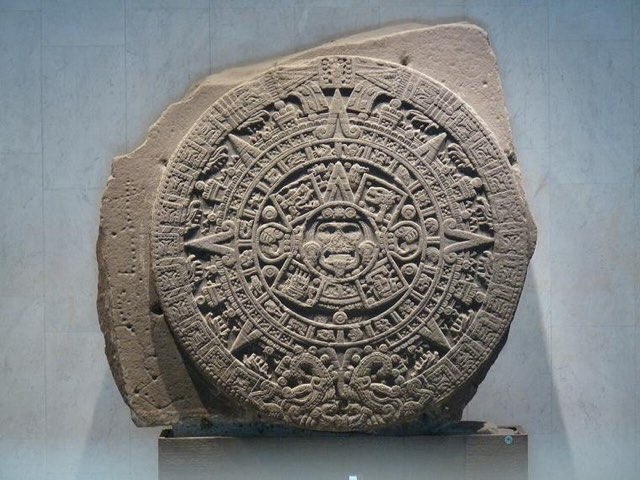

Introduction to Pre-Columbian Art
- Peopling of the New WorldMesa Community College · watch · no longer online
- Introduction and Chronologyfamsi.org · John Pohl’s Mesoamerica · read
The Olmec
- Introduction: The Origin and Development of Olmec Researchdoaks.org · Karl A. Taube’s Olmec Art at Dumbarton Oaks · read · archived copy
Teotihuacán
- TeotihuacánThe Metropolitan Museum of Art’s Heilbrunn Timeline of Art History · read · archived copy
- Pre-Hispanic City of Teotihuacánunesco.org · watch
The Maya
- Visualizing Maya Settlement: the Electronic Atlas meets Google Earthfamsi.org · Walter R. T. Witschey and Clifford T. Brown · watch
Royal Courts and Ceramics
- TikalThe Metropolitan Museum of Art’s Heilbrunn Timeline of Art History · read · archived copy
- Palenque and the Ancient Maya WorldiTunes U · National Geographic Live · watch · archived copy
- Mayan Art of the AmericasThe Metropolitan Museum of Art’s Heilbrunn Timeline of Art History · read · archived copy
Culture
- Q & A about 2012decipherment.wordpress.com · David Stuart’s Maya Decipherment · read · archived copy
- Sport, Spectacle and Political Theater: New Views of the Classic Maya Ballgamemesoweb.com · Marc Zender · read · archived copy
The Aztecs
- Touring ‘The Aztec World’ with Professor Elizabeth BrumfieliTunes U · Northwestern University · Elizabeth Brumfiel · watch · archived copy
- Aztec Art and Architecture – Text and Imagesfamsi.org · Manuel Aguilar-Moreno · read
The Andean World
- Prehistory of the Andean Peoplesjqjacobs.net · James Q. Jacobs · read
The Chavín
- Understanding Chavín and the Origins of Andean Civilizationjqjacobs.net · James Q. Jacobs · read
- Exploring Chavín de HuántarStanford University · John Rick · watch
- The Tello Obelisk a Chavín de Huántar Sculpturejqjacobs.net · James Q. Jacobs · read
Paracas & Nasca
- Paracas TextileBBC · A History of the World · read
- Lines and Geoglyphs of Nasca and Pampas de JumanaUNESCO World Heritage Centre · read
Moche
- Las Huacas del Sol y de la Lunahuacas.com · read
- ‘King of Bling’ Tomb Sheds Light on Ancient PeruNational Geographic · Kelly Hearn and Ted Chamberlain · read · archived copy
- Moche Decorated CeramicsThe Metropolitan Museum of Art’s Heilbrunn Timeline of Art History · Hélène Bernier · read · archived copy
The Inca
- Incan EmpireSUNY Oneonta · Renee Walker · watch · archived copy
- Cradle of Gold: The Story of Hiram Bingham and Machu PicchuiTunes U · National Geographic Live · watch · archived copy
Chapter II
Colonial Encounters
The “discovery” of the New World in the late fifteenth century by Spain and Portugal inaugurated an unprecedented period of cultural encounters stimulated by the arrival of Europeans and, later, Africans to the Americas. This unit examines a range of artworks – textiles and decorative arts, religious and viceregal architecture, painting and sculpture – that represent the diversity and, no less, the challenges of cross-cultural engagements. We will consider such themes as “New World,” or creole, identities, syncretism and hybridity, and colonialism and independence in artworks from Mexico, Peru, and Brazil.
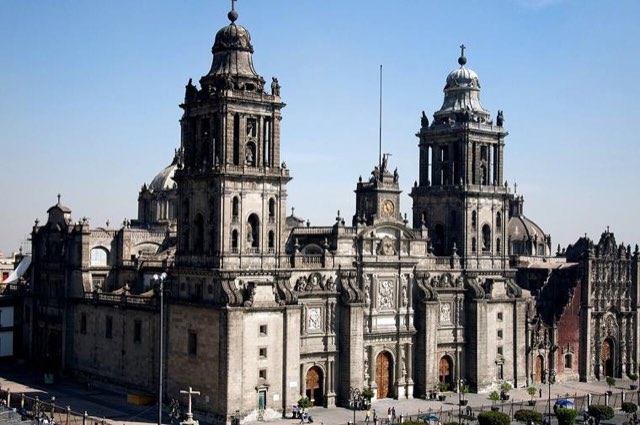

Introduction to Colonial Art
- The Colonial Heritage of Independent Latin Americavimeo.com · Steven Volk · watch
Making Sense of the Pre-Columbian
- Making Sense of the Pre-ColumbianVistas · Dana Leibsohn and Barbara Mundy · read
Reckoning with Mestizaje
- Reckoning with MestizajeVistas · Dana Leibsohn and Barbara Mundy · read
- Thinksheets: CastasSouthern Methodist University · Peter Bakewell · do · archived copy
Political Force of Images
- The Political Force of ImagesVistas · Dana Leibsohn and Barbara Mundy · read
Patterns of the Everyday
- Patterns of the EverydayVistas · Dana Leibsohn and Barbara Mundy · read
The Mechanics of an Art World
- The Mechanics of an Art WorldVistas · Dana Leibsohn and Barbara Mundy · read
- Thinksheets: Caribbean Discovery & EncounterSouthern Methodist University · Peter Bakewell · do · archived copy
Otherworldly Visions
- Otherworldly VisionsVistas · Dana Leibsohn and Barbara Mundy · read
Chapter III
The Modern Americas
The emergence of modernism defined modern Latin American art over the course of the nineteenth and twentieth centuries. Beginning with the early constructions of American identities by European “traveler-reporter” artists, modern Latin American art described changing cultural and historical landscapes from Mexico to the Southern Cone. This unit introduces Latin American avant-gardes beginning with the acclaimed Mexican muralists and continuing through modernist stirrings in Brazil and Argentina. The unit concludes with an overview of contemporary Latin American and Latino art and a reflection on broad, course-wide themes relating to the history and present-day identities of Latin American art.
Introduction to the Modern Era
- Shaping Independent Latin Americavimeo.com · Steven Volk · read
- The Odyssey of Identity: Culture and Politics in the Evolution of Latin American Nationalismhistoricaltextarchive.com · Roger P. Davis · read
- Paths to Progress in Modern Latin AmericaUniversity of Illinois · Lisa M. Edwards · read · archived copy
- Introductioniadb.org · Marta Traba’s Art of Latin America · 1900-1980 · read · archived copy
The Nineteenth Century
- Recording CivilizationCUNY · Alexander von Humboldt · From the Americas to the Cosmos · Georgia de Havenon · read · no longer online
- Modern Museum Practice in Nineteenth-Century Mexico: The Academy of San Carlos and la antigua escuela mexicanaNineteenth-Century Art Worldwide · Ray Hernández-Durán · read
- Arrieta’s PoblanasUniversity of Essex · Guy Thomson’s Arara · read · archived copy
Mexican Muralism
- Mexican Muralism: Accomplishment and Impactiadb.org · Marta Traba’s Art of Latin America · 1900-1980 · read · archived copy
- Mexican Muralists Gallery TalkYouTube · Ursula Davila-Villa · watch
Modern Avant-Gardes
- New Blood From the Avant-Gardeiadb.org · Marta Traba’s Art of Latin America · 1900-1980 · read · archived copy
- Literature and the Visual Arts: The Brazilian Roaring TwentiesUniversity of Texas · Jorge Schwartz · read
- Xul Solar: Visions of an Imaginationvimeo.com · Christopher Capozzi · watch
- El Taller Torres-GarcíaCecilia De Torres’ · read
- Frida Kahlo: Room Guidetate.org.uk · read · archived copy
Geometric Abstraction
- Decades of Changeiadb.org · Marta Traba’s Art of Latin America · 1900-1980 · read · archived copy
- Explore Artworks from The Geometry of HopeBlanton Museum · watch · archived copy
- Gego: Rigor and Creative Flightartnexus.com · Iris Peruga · read · no longer online
- Jesús Soto on Art and Lifeartnexus.com · Bélgica Rodríguez · read · no longer online
Pop, Political Art and Conceptualism
- Decades of Change and Newcomers and New TrendsReading · iadb.org · Marta Traba’s Art of Latin America · 1900-1980 · read · archived copy
- Marta Minujinartnexus.com · Victoria Verlichak · read · no longer online
- Cildo Meireles: Explore the Exhibitiontate.org.uk · read · archived copy
- León Ferrariartnexus.com · Celia Sredni de Birbragher and Ivonne Pini · read · archived copy
Postmodern Trends
- Art of Latin America: 1981-2000iadb.org · Germán Rubiano Caballero · read · archived copy
- Ana Mendieta: Earth Body, Sculptures and Performances 1972-1985artnexus.com · Joel Weinstein · read · archived copy
Latino Art
- Latino Art in TransitioniTunes U · Smithsonian American Art Museum Lectures and Symposia · watch · archived copy
Latin American Art Today
- Forum on Latin American Art Criticismartjournal.collegeart.org · Robin Adèle Greeley et al · read
- From Latin American Art to Art from Latin Americaartnexus.com · Gerardo Mosquera · read · archived copy
About this course
This course is Saylor Academy's ARTH307, Arts of Latin America, one of the complete university courses the Saylor Foundation made free from 2008 and retired in 2015. Saylor licensed its course text under CC BY 3.0; the original is on GitHub. Here it is laid out as chapters, links that have died go to an archived copy from the Internet Archive where one exists, assessments that needed a Saylor login are left out, and people and works are linked to Kulturbase. The readings and lectures belong to their publishers and are linked, not copied. Pictures: Wikimedia Commons, credited under each picture.
All Saylor courses · Free culture courses · The Chautauqua Reading Course