Art history · Saylor ARTH401
Early Christian and Byzantine Art
In this course, we will study the history of Eastern (Orthodox) Christian art. The course begins with an overview of the emergence of Christianity in the Late Antique period and the formation of the Christian visual language that grew out of the Classical tradition.
More about this course
The course then follows the development of Christian art after the fall of the Roman Empire and the emergence of a “new Rome” in the East: the Byzantine Empire. A series of reading assignments paired with lectures and virtual tours will introduce you to important works of Early Christian and Byzantine art and will also give you an understanding of the central debates of Early Christian and Byzantine art historical scholarship. By the time you finish the course, you will be able to identify the most important artworks from this period and understand how their appearances relate to the social, political, and religious environment in which they were produced. You will also be able to trace the ways in which Early Christian and Byzantine art changed over time and identify some of the proposed reasons for these changes. Further, you will gain an understanding of the unique position of the Early Christian and Byzantine worlds and the works of art and architecture produced in these cultures. An understanding of Early Christian and Byzantine Art will round out your art historical education, enhancing your knowledge of art produced by other cultures and in different historical periods.
Upon successful completion of this course, students will be able to:
In order to take this course, you must:
Chapter I
Early Christian Art
This course begins with the earliest examples of Christian art, which date back to the second century in Rome. The Christian art created during this period emerged directly out of the Classical Roman artistic tradition and is often difficult to distinguish as “Christian.” Not only were stylistic elements borrowed from Roman art but so too were subjects and themes; Roman gods like Apollo took on new significance in a Christian context, for example, and the Roman basilica assumed a new function as a Christian building. While indebted to Roman tradition, as Christian art became more confident and reached a wider and wider audience, it began to declare its Christian message with greater force and originality.
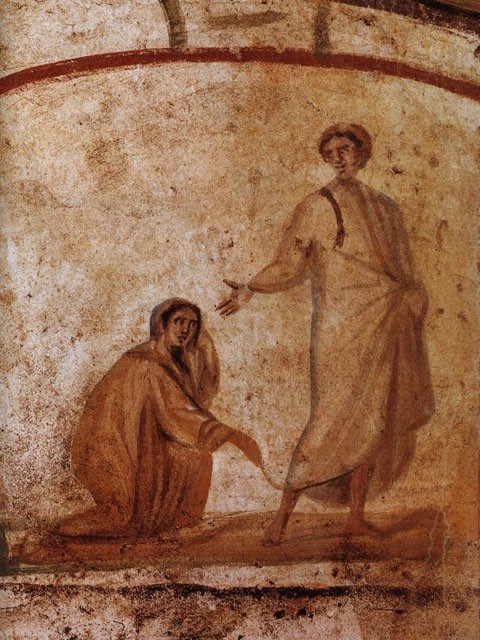

Introduction to Early Christian Art
- Early Christian Art—An Introduction and The Humbox Project: Dr. Diana Edelman’s The Bible and Art—Lecture TextSmarthistory · Dr. Allen Farber · read
- ChristianityUniversity of California, Berkeley · Professor Isabelle Pafford · watch
Catacombs
- Early Christian Art—An Introduction (Part 2) and Early Christian Art; Belmont University: Dr. Joseph Byrne’s Out of the Depths…The Christian Catacombs of Ancient Rome: An IntroductionSmarthistory · Dr. Allen Farber · read · no longer online
Sarcophagi
- Sarcophagus of Junius Bassus and Sarcophagus in the Church of Santa Maria Antiqua (Rome)Smarthistory · Dr. Allen Farber · read
Dura Europos and the Early Christian ‘House Church’
- Dura Europos and the Early Christian ‘House Church’The Saylor Foundation · read
Introduction to Christian Art in Constantine’s Rome
- Early Christian Art and Architecture after Constantine and United Methodist Women’s version of Constantine Augustus’s and Licinius Augustus’s Edict of MilanSmarthistory · Dr. Allen Farber · read
Old Saint Peter’s Basilica
- The Early Christian BasilicaSUNY College at Oneonta · History of European Medieval Art · Dr. Allen Farber · read
- St. Peter’s BasilicaColumbia University · The Medieval Architecture Online Teaching Project · Professor Dale Kinney · read · archived copy
Santa Costanza
- Santa Costanza—Rome, ItalySacred Destinations · Holly Hayes · read
- Photos: Santa Costanza, RomeSacred Destinations · watch · archived copy
Santa Sabina
- Santa Sabina—Rome, ItalySacred Destinations · Holly Hayes · read
- Santa SabinaSmarthistory · Dr. Beth Harris and Dr. Steven Zucker · watch
Santa Maria Maggiore
- Santa Maria Maggiore—Rome, ItalySacred Destinations · Holly Hayes · read
- Santa Maria MaggioreSmarthistory · Richard Bowen (Courtesy Context Travel), Beth Harris, and Steven Zucker · watch
- The Papal Basilica Santa Maria Maggiore Virtual TourThe Vatican · watch
Constantinople: Rome in the East
- LacusCurtius: Bill Thayer’s online version of J.B. Bury’s History of the Later Roman Empire, Vol. I, Chapter 3University of Chicago · read
- The Later Reign of Constantine and the Founding of ConstantinopleUniversity of California, Berkeley · Professor Isabelle Pafford · watch
- Unit 1 Writing Assignment: Comparing and Contrasting Early Christian and Roman ArtThe Saylor Foundation · write
Chapter II
Art of the Early Byzantine Period
In this unit, we will build on what we learned in Unit 1 and turn to the earliest art of the Byzantine Empire, a Christian “new Rome” in the East. This unit begins with Constantine’s founding of Constantinople in the fourth century and continues through the eighth century. In this period, Christian art, while still inextricably linked to the Classical past, began to develop more of its own unique character. The building of churches flourished in Byzantium as well as in Italy. Meanwhile, icon painting emerged with the goal of depicting the “un-seeable,” ethereal qualities of the spiritual world, and religious art took on a newfound imperial glory. By this stage, Byzantium had supplanted Rome and become the new epicenter of the “Western” world.
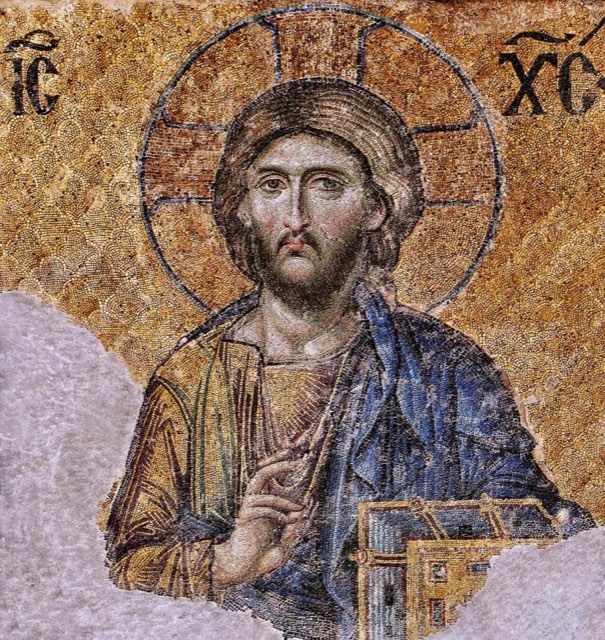

Introduction to Byzantine Art and Culture
- Byzantium (ca. 330-1453); Metropolitan Museum of Art: The Glory of Byzantium: Publications for Educators: Explore and Learn: Byzantine Art: An Introduction and The Early Byzantine Period: The ‘First Golden Age’ of Byzantium (324-730)Metropolitan Museum of Art · Heilbrunn Timeline of Art History · Sarah Brooks’ · read · archived copy
Art and Architecture under Justinian
- The Byzantine State under Justinian I (Justinian the Great)Metropolitan Museum of Art · Heilbrunn Timeline of Art History · Sarah Brooks’ · read · archived copy
- Justinianlookuparchitecture.com · A Summary of Western Architecture · Early Christian and Byzantine, The Fall of Rome and the Rise of the Worshipping Community · read · archived copy
Hagia Sophia
- Hagia Sophia, 532-37; Columbia University: The Medieval Architecture Online Teaching Project: Professor Robert Ousterhout’s Hagia Sophia; Columbia University: The Medieval Architecture Online Teaching Project’s A Description of Hagia Sophia Written in 563 by Paul the SilentiaryMetropolitan Museum of Art · Heilbrunn Timeline of Art History · Emma Wegner · read · archived copy
- Photo: Hagia Sophia, Istanbul and Smithsonian Magazine: Inside Hagia SophiaSacred Destinations · Helen Betts’ · watch · archived copy
- Hagia Sophia: An Alternative Biblical Architecture of LightApple.com · Whitney Humanities Center · Robert Nelson · watch · archived copy
Mosaics in Ravenna
- Mosaic Decoration in Byzantine RavennaThe Saylor Foundation · read
San Vitale
- San Vitale Basilica—Ravenna, Italy; SUNY College at Oneonta: History of European Medieval Art: Dr. Allen Farber’s San VitaleSacred Destinations · Holly Hayes · read
- Byzantine Art: Justinian and His AttendantsSmarthistory · Dr. Allen Farber · watch
- Photos: San Vitale Basilica, Ravenna, ItalySacred Destinations · watch · archived copy
Sant’Apollinare in Classe
- Sant’Apollinare in Classe—Ravenna, ItalySacred Destinations · Holly Hayes · read
- Sant’Apollinare in Classe, Ravenna, ItalySacred Destinations · Photos · watch · no longer online
Byzantine Icons
- Understanding Icons and Metropolitan Museum of Art: Heilbrunn Timeline of Art History: Sarah Brooks’ Icons and Iconoclasm in ByzantiumRollins College · Russian Painting · Dr. Alexander Boguslawski’s Russian Painting · Icons · read
Early Icons
- Early IconsThe Saylor Foundation · read
The Monastery of Saint Catherine at Mount Sinai
- Introduction and Belmont University: Dr. Joseph Byrne’s Sinai IconsMetropolitan Museum of Art · Byzantium · Faith and Power (1261-1557) · Publications for Educators · Explore and Learn · The Monastery of Saint Catherine · read
- Holy Image, Hallowed Ground: Icons from SinaiThe J. Paul Getty Museum · Past Exhibitions · watch
- Saint Catherine AreaPatrimonium-mundi.org · watch · archived copy
General Overview
- Byzantine Ivories and Qantara, Mediterranean Heritage: Materials and Techniques: Ivory and Bone in ByzantiumMetropolitan Museum of Art · Heilbrunn Timeline of Art History · Edmund C. Ryder · read · archived copy
Works of Art
- Ivory Panel Showing an Archangel; Louvre Museum: Collection: Curatorial Departments: Decorative Arts: Early Middle Ages: Bardoz Marie-Cécile’s Leaf of a Diptych: The Emperor Triumphant; Qantara, Mediterranean Heritage: Barberini IvoryThe British Museum · Explore · Highlights · read · archived copy
- Ivory Panel with ArchangelSmarthistory · Dr. Beth Harris and Dr. Stephen Zucker · watch
Iconoclasm
- The Byzantine Iconoclastic Controversy, Catholic Encyclopedia: Kevin Knight’s Iconoclasm; Professor Paul Stephenson: Translated Sources: Iconoclasm; Qantara, Mediterranean Heritage’s Iconoclast Decoration of Three Naxos ChurchesThe Saylor Foundation · read
- Unit 2 Writing Assessment: Formal Analysis of a Byzantine IconThe Saylor Foundation · write
Chapter III
Art of the Middle Byzantine Period (843-1204)
In this unit, we will build on what we learned in Unit 2 and turn to the Middle Byzantine Period. The Middle Byzantine Period saw a resurgence in Byzantine political and artistic power after the end of iconoclasm. During this period, churches, manuscripts, and icons were all produced in large numbers with images that would have been destroyed in the earlier iconoclastic period. The unit emphasizes the Byzantine Empire’s contact with its neighbors, which was on the rise during this period. In fact, Byzantine influence extended as far as Kiev and Lebanon at the time.
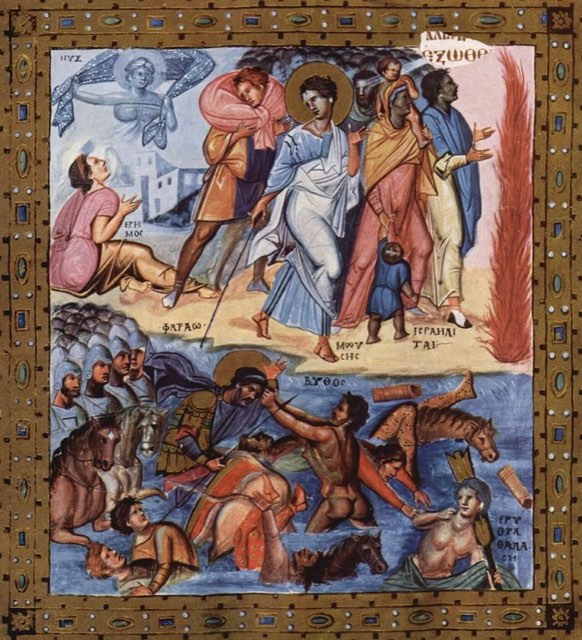

Overview of Middle Byzantine Art and Culture
- The Middle Byzantine Period: The ‘Second Golden Age’ of Byzantium (843-1261) and The Saylor Foundation’s The Schism of the Eastern and Western ChurchesMetropolitan Museum of Art · The Glory of Byzantium · Publications for Educators · Explore and Learn · read
Architecture
- Middle Byzantine Architecture; Municipality of Distomo, Greece: Archaeological Receipts Fund’s Hosios Loukas; Columbia University: The Medieval Architecture Online Teaching Project: Professor Robert Ousterhout’s Middle Byzantine Architecture; ArchNet: Bodrum MosqueThe Saylor Foundation · read
- Middle Byzantine ArchitectureThe Saylor Foundation · read
- Hosios Loukas360globe.net · watch
Painting after Iconoclasm
- Illuminated Manuscripts and Ivory Carving and PaintingBoundless · read
The Spread of Byzantine Art and Culture
- Byzantine ArtArtopos Online Cultural Center · Myriobiblos Library · Charles Diehl · read
The East
- Two-Sided IconQantara, Mediterranean Heritage · read · archived copy
- Icons in Early ArmeniaApple.com · Metropolitan Museum of Art · Sunday at the Met · Professor Thomas F. Mathews’ · watch
The West
- Byzantium and the West: Introduction; Qantara, Mediterranean Heritage: Bishop Guther’s Shroud; Professor Paul Stephenson’s Bamberger Guthertuch; Sacred Destinations: Holly Hayes’ St. Mark’s Basilica—Venice, Italy; Qantara, Mediterranean Heritage: “Mosaics in the Atrium of SProfessor Paul Stephenson, Professor Thomas E.A. Dale, and Professor Chris Lavanos · Byzantine Mellon Workshop 2003-4 · read · archived copy
- Photos: St. Mark’s Basilica, VeniceSacred Destinations · watch · archived copy
The Slavs
- A Brief History of Medieval Russia; University of Michigan: Russian Language Program’s Russian Icon Painting; A World History of Art’s History of Art: Byzantine ArtSam Houston State University · History 365 · An Orientation in Russian History to 1917 · Nicholas Pappas’ version of William Richard Morfill · read · archived copy
The Fourth Crusade
- The Crusades (1095-1291) and Fordham University’s Internet Medieval Sourcebook: Paul Halsall’s version of Nicetas Choniates’ The Sack of Constantinople (1204)Metropolitan Museum of Art · Heilbrunn Timeline of Art History · Department of Medieval Art and the Cloisters’ · read · archived copy
- The Crusades: Sacking ConstantinopleApple.com · The Institute of Catholic Culture · Professor Brendan McGuire · watch · no longer online
- Unit 3 Writing Assessment: Discussion of Byzantine Influence and InteractionThe Saylor Foundation · write
Chapter IV
Art of the Late Byzantine Period (1204-1453+)
In this final unit, we will turn to the Late Byzantine Period and its eventual demise. Like the Middle Byzantine Period, the Late Byzantine Period was a time of resurgence. After the sack of Constantinople, the empire was restored under the rule of the Paleologan Dynasty. (The period is therefore often called the “Paleologan Renaissance.”) The arts flourished both in Constantinople as well as in its many satellite regions, and especially in Russia. The period was also marked by conflict as tensions between the Western (Catholic) Church and the Byzantine (Orthodox) Church grew. The Byzantine Empire was simultaneously feeling the pressure from the Muslim East. By 1453, the empire’s position was so precarious that it could not sustain its position, and the Ottoman Turks sacked Constantinople, marking the official end of the empire. Although the Byzantine Empire ceased to exist from this date forward, its influence continued to be felt for centuries. As the Italian Renaissance was in its infancy, artists borrowed from Byzantium’s rich tradition. Further away, in the emerging Russian Empire, Byzantine art found a new home and a new culture.
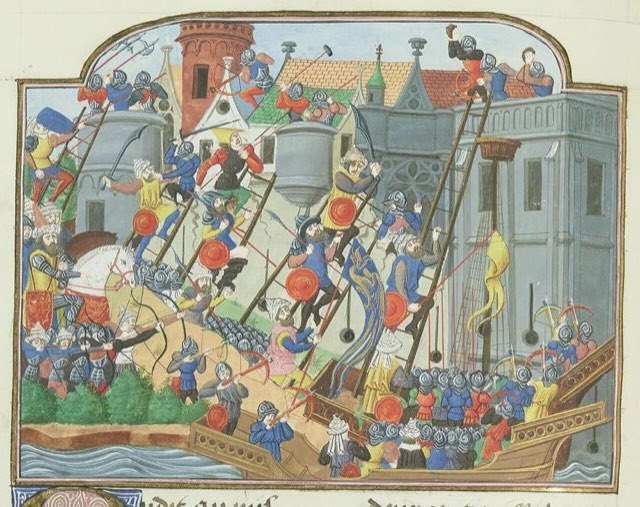

Introduction to Late Byzantine Art and History
- Byzantine ArtArtopos Online Cultural Center · Myriobiblos Library · Charles Diehl · read
- Late Byzantine ArchitectureThe Saylor Foundation · read
Late Byzantine Architecture
Painting in the Late Byzantine Period
- Visual Expressions of the Faith: Painted Icons, Metropolitan Museum of Art: Heilbrunn Timeline of Art History: Annie Labatt’s Frescoes and Wall Painting in Late Byzantine Art Qantara, Mediterranean Heritage: “Enthroned Madonna and Child (Kahn MadonnaMetropolitan Museum of Art · Byzantium · Faith and Power (1261-1557) · Publications for Educators · Explore and Learn · Themes in Late Byzantine Art · read · archived copy
- Icon of the Triumph of OrthodoxySmarthistory · Pippa Couch and Rachel Ropeik · watch
Byzantium’s Legacy
- The Splendor of ByzantiumYale University · Paul H. Freedman’s HIST 210 · The Early Middle Ages, 284 - 1000 · watch
Islam
- The Byzantine Sphere and the Islamic World and Metropolitan Museum of Art: Heilbrunn Timeline of Art History: Annie Labatt and Charlotte Appleyard’s Byzantine Art under IslamMetropolitan Museum of Art · Byzantium · Faith and Power (1261-1557) · Publications for Educators · Explore and Learn · Themes in Late Byzantine Art · read · archived copy
General Overview
- The Religious Relationship between Byzantium and the West; and Metropolitan Museum of Art: Heilbrunn Timeline of Art History: Jennifer Meagher’s Italian Painting of the Later Middle AgesMetropolitan Museum of Art · Heilbrunn Timeline of Art History · Annie Labatt · read · archived copy
Works of Art
- The CrucifixionQantara, Mediterranean Heritage · read · archived copy
- Berlinghieri’s St. Francis AltarpieceSmarthistory · Dr. Beth Harris and Dr. Steven Zucker · watch
- Tour: Byzantine Art and Painting in Italy during the 1200s and 1300sNational Gallery of Art · Collection · Paintings · Italian Painting of the 13th-14th Centuries · watch · archived copy
History
- 1453-1584: Moscow Becomes the ‘Third Rome’The New York Public Library · Russia Engage the World, 1453-1825 · History · read · archived copy
Icons
- Icon of Saint George (the ‘Black George’)Smarthistory · Pippa Couch and Rachel Ropeik · watch · archived copy
- Icon Painting and Icons: The Holy TrinityRollins College · Russian Painting · Dr. Alexander Boguslawski · read
- Unit 4 Writing Assessment: Discussion of the Fate of Byzantine ArtThe Saylor Foundation · write
About this course
This course is Saylor Academy's ARTH401, Early Christian and Byzantine Art, one of the complete university courses the Saylor Foundation made free from 2008 and retired in 2015. Saylor licensed its course text under CC BY 3.0; the original is on GitHub. Here it is laid out as chapters, links that have died go to an archived copy from the Internet Archive where one exists, assessments that needed a Saylor login are left out, and people and works are linked to Kulturbase. The readings and lectures belong to their publishers and are linked, not copied. Pictures: Wikimedia Commons, credited under each picture.
All Saylor courses · Free culture courses · The Chautauqua Reading Course