Art history · Saylor ARTH406
Buddhist Art
This course serves as an introduction to the Buddhist artistic traditions of South, Southeast, and East Asia, as well as the Himalayas. It is organized into four units based on the development of Buddhist schools and artistic traditions in Southeast Asia, the Himalayas, and China, Korea, and Japan.
More about this course
The first unit surveys the core tenets of Buddhism, Buddhist iconography, and early Buddhist art and architecture in India. The second unit reviews the development of Buddhist art and architecture in Southeast Asia, focusing on the patronage of Theravada and Mahayana Buddhism by rulers in the modern countries of Indonesia, Cambodia, Myanmar, and Thailand. Unit three examines the particular form of Vajrayana Buddhism and its artistic traditions that developed in the Himalayas. The final unit traces the spread of Mahayana Buddhist art and architecture into China and later into Korea and Japan via the Silk Roads. All four units highlight the interaction between Buddhist doctrine, art, and architecture; Buddhism’s adaptability to local contexts; and the commissioning of Buddhist art and architecture to legitimize political, social, and cultural power. After this course, you should be able to identify major Buddhist monuments and artworks of South, Southeast, and East Asia, as well as the Himalayas. Through this course, you will gain an understanding of how Buddhism and Buddhist art developed in each of these regional contexts.
Upon successful completion of this course, students will be able to:
In order to take this course you must:
Chapter I
Early Buddhist Art and Architecture in India
This unit focuses on the development of Buddhist art and architecture on the Indian subcontinent. It begins with an overview of Buddhism and Buddhist iconography. The unit then traces the development of Buddhist art and architecture from its early aniconic stage (3rd-2nd
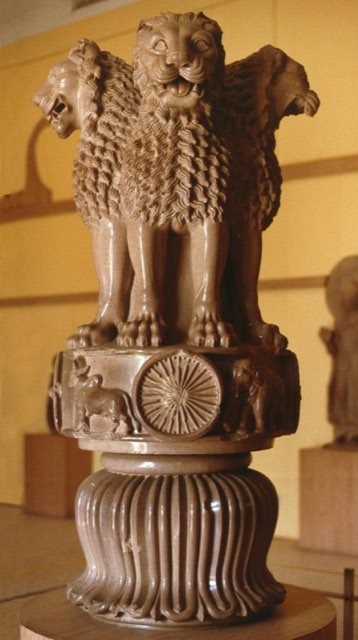

Introduction to Buddhism and Buddhist Iconography
- The Arts of South and Southeast Asia: A Resource for EducatorsThe Metropolitan Museum of Art · read · archived copy
Emperor Ashoka and Early Buddhist Art and Architecture
- Edicts of AshokaPBS · MayaVision International’s The Story of India · read · archived copy
Early Stupas
- The Arts of South and Southeast Asia: A Resource for EducatorsThe Metropolitan Museum of Art · read · archived copy
- Sanchi, Amaravati and BharhutVictoria and Albert Museum · read
- StupasBoundless · read
- The StupaYouTube · The Asian Art Museum of San Francisco · watch
- The Great Stupa at Sanchi, India. Sandstone, circa 50 BC to 50 AD.Art and Archaeology · read
Chaitya Halls
- Buddhist Art and Architecture: ChaityasB. Annapurna Sastri · read
- Bhaja & KarleVictoria and Albert Museum · read
- Bhaja Caves and Kondavane and Karle CavesYouTube · Buddhist Films · watch · archived copy
Buddhist Art of Kushan Period (c. 2nd century BCE- 3rd century CE)
- Buddhism in India, Part I and IIiTunes U · Asian Art Museum of San Francisco · Robert Brown · watch · no longer online
- Art of the Silk Road: The Kushan EmpireUniversity of Washington · Jason Neelis · read
Mathuran Sculpture
- Art of the Silk Road: The Kushan EmpireUniversity of Washington · Jason Neelis · read
- Buddhism in India Parts I and IIiTunes U · Asian Art Museum of San Francisco · Robert Brown · watch · no longer online
- Guided Observation 1: Buddhist Iconography and Kushan Buddhist SculptureThe Saylor Foundation · write
Buddhist Sculpture during the Gupta Period
- The Gupta style of the Buddha & its influence in AsiaThe Victoria and Albert Museum · read
- The Arts of South and Southeast Asia: A Resource for EducatorsThe Metropolitan Museum of Art · read · archived copy
- NalandaVictoria and Albert Museum · read
- The Intellectual QuestYouTube · Buddhist Films · watch · archived copy
Ajanta
- Ajanta CavesVictoria and Albert Museum · read
- The Caves at AjantaSmarthistory · read
- Amazing Ajanta Caves - Aurangabad - IndiaYouTube · Rechnomaniac · watch
- Masterpieces of Buddhist ArtYouTube · Buddhist Film · watch · archived copy
Ellora
- ElloraVictoria and Albert Museum · read
- Ellora Caves - India - Aurangabad - AmazingYouTube · Rechnomaniac · watch
Buddhist Art, Pilgrimage, and the Silk Roads
- Pilgrimage to Buddha’s Life SitesVictoria and Albert Museum · read
Buddhist Pilgrimage and the Art and Architecture of Buddha’s Life Sites
- Pilgrimage to Buddha’s Life SitesVictoria and Albert Museum · read
- Bodh Gaya: Center of the Buddhist WorldYouTube · Asian Art Museum · watch
Buddhist Art and the Silk Roads
- Introduction, Trade Routes, Maritime Routes, and Overland RoutesAsia Society’s Buddhist Art and the Trade Routes · read
Chapter II
Buddhist Art and Architecture in Southeast Asia
This unit examines Theravada and Mahayana Buddhist art and architecture from Southeast Asia, where Buddhism often coexisted alongside Hinduism after the sixth century. It begins with an overview of Southeast Asian Buddhism and art. Then, the unit focuses on Buddhist art and architecture created during the reigns of the Sailendra kings of Java (8th-9th century), King Jayavarman VII of Cambodia (the Khmer ruler of the late 12th and early 13th centuries), the Pagan rulers of Myanmar (11th-14th centuries), and the Ayutthaya rulers of Thailand (1351–1767). After completing this unit, you will be able to identify major Southeast Asian Buddhist monuments and artworks and the important role that Buddhist and Hindu art played in definitions of Southeast Asian kingship.
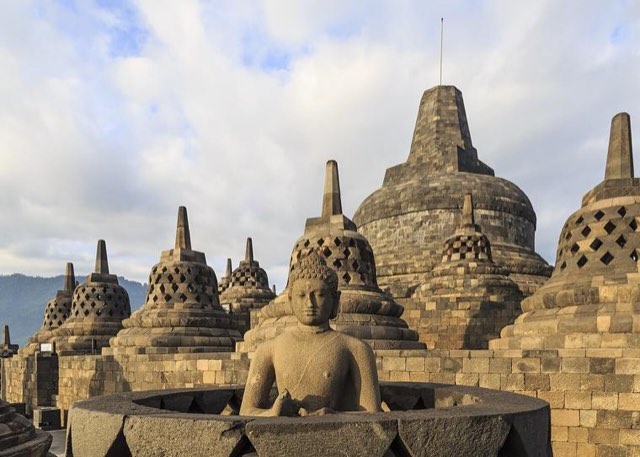

Buddhist Art and Architecture in Southeast Asia
- The Arts of South and Southeast Asia: A Resource for EducatorsThe Metropolitan Museum of Art · read · archived copy
- Introduction to the Arts of Southeast Asia Parts I and IIiTunes U · Asian Art Museum of San Francisco · Forrest McGill · watch · no longer online
Art and Architecture of the Saliendra Kings: Borobudur (8th-9th Centuries)
- Borobudur: Pathway to Enlightenment, Historical Records, Borobudur Revealed, Building Borobudur, Guide to Enlightenment, More about the Panels, The Galleries, The Hidden Panels, and The Upper TerracesPBS’s Treasures of the World · read · archived copy
- Borobudur Parts I and IIiTunes U · Asian Art Museum of San Francisco · Natahsa Reichle · watch · archived copy
- Guided Observation 2: Understanding Buddhist ArchitectureThe Saylor Foundation · write
Khmer Buddhist Sculpture
- Khmer Buddhist Sculpture during the Reign of Jayavarman VIIThe Saylor Foundation · read · no longer online
Khmer Buddhist Architecture
- Preah Khan TempleAsian Historical Architecture · read
- Ankgor Thom South GateAsian Historical Architecture · read
- Bayon TempleAsian Historical Architecture · read
The City of Pagan
- Chapter 3: The Pagan Period, Part 1: Introduction and City Plan of PaganNorthern Illinois University · Dr. Richard M. Cooler’s The Art and Culture of Burma · read · archived copy
Pagan Stupas
- Chapter 3: The Pagan Period, Part 2: General Characteristics and StupasNorthern Illinois University · Dr. Richard M. Cooler’s The Art and Culture of Burma · read · archived copy
Pagan Temples and Monasteries
- Chapter 3: The Pagan Period, Part 3: Architecture 2: Temples and MonasteriesNorthern Illinois University · Dr. Richard M. Cooler’s The Art and Culture of Burma · read · archived copy
Pagan Buddhist Art
- Chapter 3: The Pagan Period, Part 4: Sculpture, Conclusion and BibliographyNorthern Illinois University · Dr. Richard M. Cooler’s The Art and Culture of Burma · read · archived copy
- Burma: The Three Jewels of Pagan and the Ananda Temple Parts I and IIiTunes U · Asian Art Museum of San Francisco · Don Stadtner · watch · archived copy
Buddhist Art and Architecture of the Ayutthaya Kingdom (1251-1767)
- The Kingdom of Siam: The Art of Central Thailand, 1350-1800Asian Art Museum of San Francisco · read
- Experience the Ancient City of Ayutthaya, ThailandVimeo · Trekking the Planet · watch
- Aryutthaya, The Ghost Capital of ThailandMy Architectural Moleskine · read
Chapter III
Buddhist Art and Architecture in the Himalayas
Time Estimate: 2 weeks/18 hours
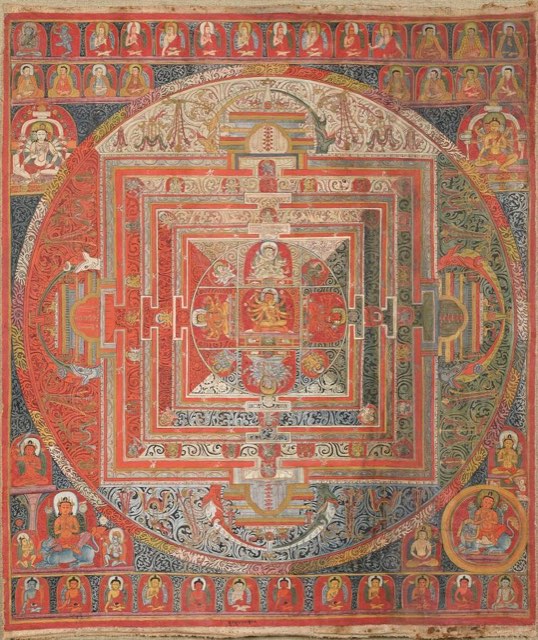

Tibetan Buddhism
- Sacred Arts of Tibet: Art from the Roof of the WorldAsian Art Museum of San Francisco · read · archived copy
Tibetan Buddhist Paintings and Mandalas
- The Tibetan Art of Thangka PaintingYouTube · Emory University · watch
Potala Palace
- Historic Ensemble of the Potala Palace, Lhasa Interactive MapWHTour.org’s and Tito Dupret · watch · no longer online
- Ritual Objects of Tibetan Buddhism Parts I and II and Terese Bartholomew’s Tibetan Art: Thangkas and Sculptures Parts I and IIiTunes U · Asian Art Museum of San Francisco · Robert Warren Clark · watch · no longer online
Newar Buddhism
- Newar BuddhismThe Saylor Foundation · read
- Image and Rituals in Newar BuddhismSociété Européenne pour l’Etude des Civilisations de l’Himalaya et de l’Asie Centrale · Anne Vergati · read · archived copy
Nepalese Buddhist Sculpture
- Nepalese SculptureThe Metropolitan Museum of Art · Heilbrunn Timeline of Art History · read · archived copy
Nepalese Buddhist Painting
- Nepalese PaintingThe Metropolitan Museum of Art · Heilbrunn Timeline of Art History · read · archived copy
Buddhist Pilgrimage Sites in Nepal
- Buddhist pilgrimage sites: NepalThe Victoria and Albert Museum · read
Chapter IV
Buddhist Art and Architecture in China, Korea, and Japan
This unit examines the development of Mahayana Buddhist art and architecture in China, Korea, and Japan, following its transmission to East Asia via the Silk Roads. We will first focus on Chinese Buddhist art and architecture from the fourth through the ninth centuries CE and then examine Buddhist art in Korea until the founding of the Chos?n dynasty in 1392. Finally, we will survey the development of Buddhist art and architecture in Japan from roughly the sixth through the sixteenth centuries. After completing this unit, you will be able to identify major Chinese, Korean, and Japanese Buddhist monuments, the types of Buddhist paintings, sculpture, and ritual objects made and used by East Asian Buddhist practitioners, and the relationship between Buddhist art and architecture from these three countries.
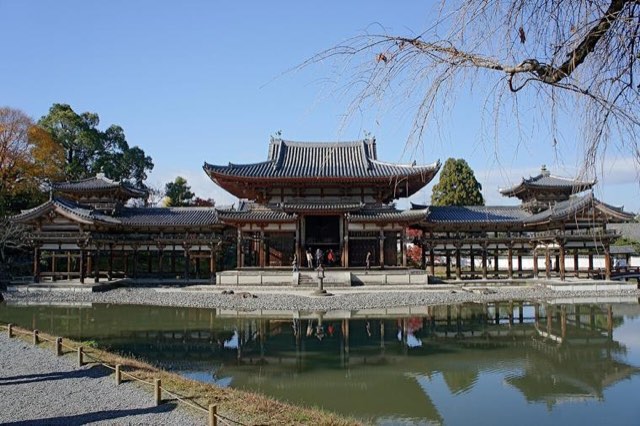

Buddhism in China: Overview
- Buddhist Arts of the Three Kingdoms and Six Dynasties Parts I and IIiTunes U · Asian Art Museum of San Francisco · Michael Knight · watch · archived copy
- Buddhism in China: A Historical OverviewThe Saylor Foundation · read
Early Buddhist Art and Architecture (4th-6th Centuries)
- Northern and Southern Dynasties, Buddha Maitreya (Mile), Altarpiece Dedicated to Buddha Maitreya (Mile), and Bodhisattva, probably Avalokiteshvara (Guanyin)The Metropolitan Museum of Art · Heilbrunn Timeline of Art History · read · archived copy
Northern Wei Cave Temples
- Chinese Buddhist Cave ShrinesYou Tube · Asian Art Museum of San Francisco · watch
- Exemplary Lives in the Buddhist caves of Northern China Part I and IIiTunes U · Asian Art Museum of San Francisco · Patricia Berger · watch · archived copy
Yungang
- Buddhist Cave TemplesUniversity of Washington · Patricia Buckley Ebrey’s A Visual Sourcebook of Chinese Civilization · read
- Yungang Grottos, Cave 20, Cave 19, West Side, Cave 18, and Cave 18Old Stones · The Monuments of Art History · Michael D. Gunther · read
- Yungang Grottoes Interactive MapWHTour.org’s and Tito Dupret · watch · no longer online
Binyang Caves
- Buddhist Pentad, Buddhist Assembly, Northern Wei Style of Buddhist Sculpture, Amida Pentad, and Amida PentadOld Stones · The Monuments of Art History · Michael D. Gunther · read
- Offering Procession of the Empress as Donor with Her Court, ca. 522 C.E.Nelson-Atkins Museum of Art · read · archived copy
Dunhuang: Pre-Tang Dynasty Caves
- Buddhist Cave TemplesUniversity of Washington · Patricia Buckley Ebrey’s A Visual Sourcebook of Chinese Civilization · read
- Facade, Maitreya, Meditating Buddha, Hunting Scene, The 500 Bandits, and Thunder GodOld Stones · The Monuments of Art History · Michael D. Gunther · read
Tang Dynasty Buddhist Sculpture
- Internationalism in the Tang Dynasty (618-906), Buddha Vairocana, Buddhist stele, and Buddha, Probably Amitabha (Amituo)Metropolitan Museum of Art · Heilbrunn Timeline of Art History · read · archived copy
Longmen
- Buddhist Cave TemplesUniversity of Washington · Patricia Buckley Ebrey’s A Visual Sourcebook of Chinese Civilization · read
- Fengxian Si, Vajrapani, Vaisravana, Bodhisattva, Vairocana, Bodhisattva and Ananda, Kanjing Si, Shakyamuni Teaching, and ArhatsOld Stones · The Monuments of Art History · Michael D. Gunther · read
Tang Dynasty Caves at Dunhuang
- Guanyin, Vimalakirti, Bodhisattva with Ananda and Lokapala, and Dancer Holding a Pipa Behind Her BackOld Stones · Monuments of Art History · Michael D. Gunther · read
- Mogao Cave 96 (Early Tang 618-705AD)Dunhuang Academy · read · no longer online
Great Goose Pagoda
- Great Goose Pagoda (Dayan Ta) and Great Goose Pagoda (Dayan Ta)Old Stones · The Monuments of Art History · Michael D. Gunther · read
Foguang Temple
- East Hall, East Hall, East Hall, Altar Sculptures, Altar Sculptures, Arhats, Vaisravana, Zushi Ta, Manjusri Hall, Manjusri Hall, and Bodhisattva ManjusriOld Stones · The Monuments of Art History · Michael D. Gunther · read
Famen Temple
- Famen Si, Kasyapa, Carved Wooden Doors with Guardians, Gold Monk’s Staff, Bodhisattva Presenting a Prayer Tablet, Reliquary Casket, Nested Reliquary Casket, Reliquary in the Form of a Model Pagoda, Censers, and Openwork BasketOld Stones · The Monuments of Art History · Michael D. Gunther · read
Buddhist Art after the Tang Dynasty
- Later Buddhist Arts Parts I and IIiTunes U · Asian Art Museum of San Francisco · Patricia Berger · watch · archived copy
Buddhism in Korea: Overview
- The Arts of Korea: A Guide for EducatorsThe Metropolitan Museum of Art · read · archived copy
Buddhist Art of the Three Kingdoms and Unified Silla (57 BCE-935 CE)
- The Arts of Korea: A Guide for EducatorsThe Metropolitan Museum of Art · read · archived copy
- Pensive BodhisattvaThe Metropolitan Museum of Art · Heilbrunn Timeline of Art History · read · archived copy
Buddhist Art and Architecture during the Kory? Dynasty (918-1392)
- A Guide for EducatorsThe Metropolitan Museum of Art’s The Arts of Korea · read · archived copy
- Treasures of KoreaVimeo · Wow! Korea Culture · watch
- Beyond Words at the Haein Monastery in Korea: An Event of Art as Writing Parts I and IIiTunes U · Asian Art Museum of San Francisco · Lewis Lancaster · watch · archived copy
Buddhism in Japan: Overview
- Introduction and Art of Zen BuddhismBoundless · read
Buddhist Art and Architecture of the Asuka and Nara Periods (538-794)
- Asuka and Nara Periods, Segment of a Daihokobutsu Kegongyo (Avatamsaka Sutra), and Miniature PagodaThe Metropolitan Museum of Art · Heilbrunn Timeline of Art History · read · archived copy
- H?ry?-jiAsian Historical Architecture · read
- T?dai-jiAsian Historical Architecture · read
- Ancient Temples of NaraYouTube · Asian Art Museum of San Francisco · watch · archived copy
- Asuka Period Photo Tour, Japanese Busshi (Sculptors), Asuka Period, and Nara Period Photo TourA to Z Photo Dictionary · Japanese Buddhist Statuary · read
- The Tamamushi ShrineThe Saylor Foundation · read
Heian and Kamakura Buddhist Art and Architecture (794-1333)
- Heian Period and Kamakura and Nanbukucho PeriodsThe Metropolitan Museum of Art · Heilbrunn Timeline of Art History · read · archived copy
- By?d?-inAsian Historical Architecture · read
- Japanese Mandalas—Under the Gaze of the Stars: Astral Mandalas in Medieval JapanThe Metropolitan Museum of Art, Japanese Mandalas Avatars and Emanations · Bernard Faure · watch · archived copy
- Heian and Kamakura Buddhist SculptureThe Saylor Foundation · read
- Heian and Kamakura Buddhist Works on PaperThe Saylor Foundation · read
Zen Buddhism
- Zen BuddhismThe Metropolitan Museum of Art · Heilbrunn Timeline of Art History · read · archived copy
- Ry?an-jiAsian Historical Architecture · read
- Where’s the Zen: Art at the Daitokuji Monastery Parts I and IIiTunes U · Asian Art Museum of San Francisco · Gregory Levine · watch · archived copy
- Zen PaintingThe Saylor Foundation · read
About this course
This course is Saylor Academy's ARTH406, Buddhist Art, one of the complete university courses the Saylor Foundation made free from 2008 and retired in 2015. Saylor licensed its course text under CC BY 3.0; the original is on GitHub. Here it is laid out as chapters, links that have died go to an archived copy from the Internet Archive where one exists, assessments that needed a Saylor login are left out, and people and works are linked to Kulturbase. The readings and lectures belong to their publishers and are linked, not copied. Pictures: Wikimedia Commons, credited under each picture.
All Saylor courses · Free culture courses · The Chautauqua Reading Course