Art history · Saylor ARTH409
Roman Architecture
In this course, we will study the architecture of Ancient Rome, beginning with its origins in the eighth century BC, and continuing through the fourth century AD with the move of the Roman capital to Constantinople. The course of lectures and readings outlined below will familiarize you with the major building methods and styles used in Roman architecture.
More about this course
In addition, interior decoration (including the very important topic of Roman wall painting) will be addressed. By the end of the course, you will be able to identify some of the most important works of Roman architecture and discuss the historical and cultural conditions that informed their production. An important theme throughout the first half of the course is the relationship between Ancient Rome and Greek and Etruscan cultures, which were highly influential in the formation of a distinctive Roman architecture. Understanding the role that Roman architecture played in the eastern and western Roman provinces is also significant to this course, as it draws Roman architecture into a broader geographical and cultural context. Roman art and culture were tremendously important for Western culture after the fall of the Roman Empire; by completing this course, you will be well-prepared for study of later Western architecture. Note: Throughout this course, you may find it useful to refer to the glossary of Ancient Rome art posted on the companion website that Wadsworth Publishing has developed for its textbook, Gardner’s Art through the Ages, 12th Edition. You may wish to bookmark this page in your browser for ease of use. Please respect the copyright and terms of use displayed on this webpage.
Upon successful completion of this course, the student will be able to:
In order to take this course, you must:
Chapter I
Architecture in Republican Rome and the Early Empire
This course begins with the earliest known architecture of the ancient city of Rome, which dates back to the eighth century BC and the founding of Rome by Romulus. Rome’s relationship to its Greek neighbors and to the Etruscans (whom they superseded in Italy) is of paramount importance to our study of this period, as Roman architecture initially borrowed from both of these cultures as it created an innovative architecture full of new motifs and technologies. In accordance with the Roman Empire’s desire to conquer vast territories, its architecture also suggests power and domination. Meanwhile, technological innovations freed the Romans from the kinds of restrictions that had previously limited architecture. Roman architecture could now take almost any shape in even the most unfavorable of settings.
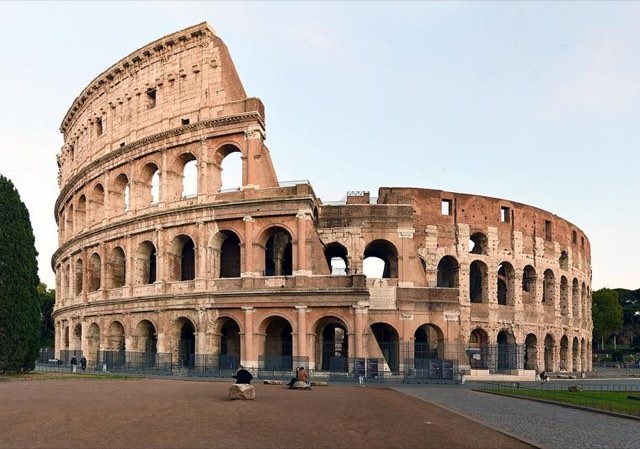

Introduction to Roman Architecture
- Roman Power / Roman ArchitectureSUNY College at Oneonta · Dr. Allen S. Farber · read
- Introduction to Roman ArchitectureYale University · Professor Diana E. E. Kleiner · watch
The Founding of Rome
- Etruscan Art and Metropolitan Museum of Art: Heilbrunn Timeline of Art History: Department of Greek and Roman Art’s The Roman RepublicMetropolitan Museum of Art · Heilbrunn Timeline of Art History · Colette Hemingway and Seán Hemingway · read · archived copy
- It Takes a City: The Founding of Rome and the Beginnings of Urbanism in ItalyYale University · Professor Diana E. E. Kleiner · watch
Innovation in Roman Architecture
- Roman Concrete and University of California, Santa Barbara: Professor Fikret Yegul’s Terraces and SubstructuresUniversity of California, Santa Barbara · Professor Fikret Yegul · read · archived copy
- Technology and Revolution in Roman ArchitectureYale University · Professor Diana E. E. Kleiner · watch
- Quiz: Early Ancient RomeThe Saylor Foundation · write
The Eruption of Mt. Vesuvius
- SMATCH’s (Scientific Methodologies Applied to Cultural Heritage, Inc.) version of Pliny the Younger’s Letters to Tacitusread · archived copy
- Civic Life Interrupted: Nightmare and Destiny on August 24, A.D. 79Yale University · Professor Diana E. E. Kleiner · watch
Houses and Villas
- Roman HousingMetropolitan Museum of Art · Heilbrunn Timeline of Art History · Ian Lockey · read · archived copy
- Lifestyles of the Rich and Famous: Houses and Villas at PompeiiYale University · Professor Diana E. E. Kleiner · watch
First and Second Style Wall Painting
- Roman PaintingMetropolitan Museum of Art · Heilbrunn Timeline of Art History · Department of Greek and Roman Art · read · archived copy
- Habitats at Herculaneum and Early Roman Interior DecorationYale University · Professor Diana E. E. Kleiner · watch
Third Style Wall Painting
- Gilding the Lily: Painting Palaces and Villas in the First Century A.D.Yale University · Professor Diana E. E. Kleiner · watch
Special Subjects in Pompeian Wall Painting
- Exploring Special Subjects on Pompeian WallsYale University · Professor Diana E. E. Kleiner · watch
- Matching Quiz: Roman Wall PaintingThe Saylor Foundation · write
Augustan Rome
- Augustan Rule (27 B.C.-14 A.D.)Metropolitan Museum of Art · Heilbrunn Timeline of Art History · Department of Greek and Roman Art · read · archived copy
- From Brick to Marble: Augustus Assembles RomeYale University · Professor Diana E. E. Kleiner · watch
Tombs
- Mausoleum of Augustus, Rome, Vatican Art’s The Pyramid of Gaius Cestius, and Livius.org: Jona Lendering’s Rome: Tomb of Eurysaces3D Visualization in the Arts Network · read
- Accessing Afterlife: Tombs of Roman Aristocrats, Freedmen, and SlavesYale University · Professor Diana E. E. Kleiner · watch
Rome under Nero
- The Julio-Claudian Dynasty (27 B.C.-68A.D.) and The Colosseum.net’s Domus AureaMetropolitan Museum of Art · Heilbrunn Timeline of Art History · Department of Greek and Roman Art‘s · read · archived copy
- Notorious Nero and His Amazing Architectural LegacyYale University · Professor Diana E. E. Kleiner · watch
The Colosseum
- ColosseumUniversity of Chicago · Encyclopaedia Romana · James Grout · read
- The Creation of an Icon: The Colosseum and Contemporary Architecture in RomeYale University · Professor Diana E. E. Kleiner · watch
Rome under Domitian
- The Flavian Dynasty (69-96) and University of Chicago: Encyclopaedia Romana: James Grout’s Arch of TitusMetropolitan Museum of Art · Heilbrunn Timeline of Art History · Department of Greek and Roman Art · read · archived copy
- The Prince and the Palace: Human Made Divine on the Palatine HillYale University · Professor Diana E. E. Kleiner · watch
- Chapter 6, Etruscan and Roman Art: Elements and Media: Labeling QuizPearson Education’s Companion Website · Art History · A View of the West, 3rd Edition · write · archived copy
Chapter II
Architecture of Later Rome and the Provinces
The second half of this course looks at later Rome, beginning with the Emperor Trajan and his many important monuments in Rome. Building on the information you learned in the first half of this course, you will follow the development of Roman architectural styles and ambitions as the Roman Empire gained power and expanded its borders. As the Empire grew, it began to build important structures in distant Roman provinces and continued to build in Rome, but on a gargantuan scale. This unit ends with the reign of Emperor Constantinople, Rome’s first Christian Emperor, a phase in Roman history that anticipates—in its history as well as in its art—the Christian Middle Ages.
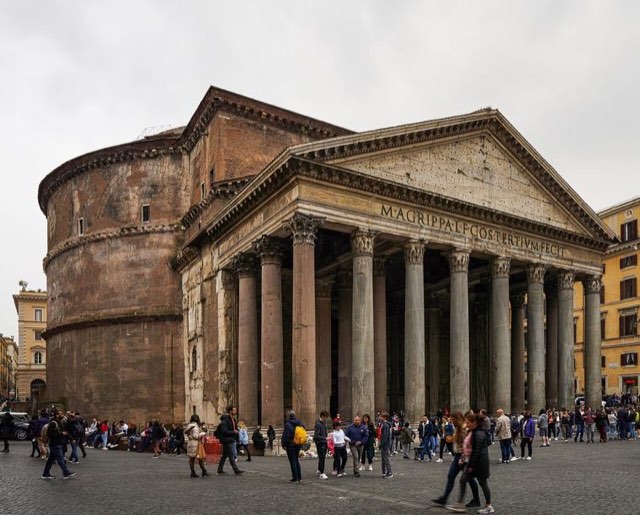

The Trajan Forum
- Introductory Essay; University of Chicago: Encyclopaedia Romana: James Grout’s The Forum of Trajan and Trajan’s MarketsThe Stoa Consortium for Electronic Publication in the Humanities · Trajan’s Column · Gretchen Umholtz et al · read · archived copy
- The Mother of All Forums: Civic Architecture in Rome under TrajanYale University · Professor Diana E. E. Kleiner · watch
Rome and Tivoli under Hadrian
- Hadrian (A.D.117-138); University of Chicago: Encyclopaedia Romana: James Grout’s Temple of Venus and Rome and PantheonDe Imperatoribus Romanis · Herbert W. Benario · read
- Rome and a Villa: Hadrian’s Pantheon and Tivoli RetreatYale University · Professor Diana E. E. Kleiner · watch
- ARTH409 Assessment 2.2The Saylor Foundation · write
Ostia, Port of Rome
- 4 Ostia’s hey-day: the second century and the Severan dynasty and University of California, Santa Barbara: Professor Fikret Yegul’s The New Utilitarian AestheticOstia-Antica.org’s · Introduction to Ostia · read · archived copy
- The Roman Way of Life and Death at Ostia, the Port of RomeYale University · Professor Diana E. E. Kleiner · watch
- Quiz: Rome through the Third CenturyThe Saylor Foundation · write
Second and Third Century Rome
- The Severan Dynasty (193-235); University of Chicago: Encyclopaedia Romana: James Grout’s Baths of Caracalla; and PBS: Nova Online’s Secrets of Lost Empires: Roman Bath: A Day at the BathsMetropolitan Museum of Art · Heilbrunn Timeline of Art History · Department of Greek and Roman Art · read · archived copy
- Bigger is Better: The Baths of Caracalla and Other Second- and Third-Century Buildings in RomeYale University · Professor Diana E. E. Kleiner · watch
Roman North Africa
- Art of the Roman Provinces, 1-500 A.D. and De Imperatoribus Romanis: Michael L. Meckler’s Septimius Severus (193-211 A.D.)Metropolitan Museum of Art · Heilbrunn Timeline of Art History · Jean Sorabella · read · archived copy
- Hometown Boy: Honoring and Emperor’s Roots in Roman North AfricaYale University · Professor Diana E. E. Kleiner · watch
Jordan, Lebanon, and Libya
- Trade between Romans and the Empires of Asia and Nabataean Kingdom and Petra; Brown University: Petra Great Temple Excavation: Professor Martha Sharp Joukowsky’s A Brief History of Petra and The Great Temple TourMetropolitan Museum of Art · Heilbrunn Timeline of Art History · Department of Ancient Near Eastern Art · read · archived copy
- Baroque Extravaganzas: Rock Tombs, Fountains, and Sanctuaries in Jordan, Lebanon, and LibyaYale University · Professor Diana E. E. Kleiner · watch
Rome in Athens
- The Library of Hadrian, University of Chicago: Encyclopaedia Romana: James Grout’s Temple of Olympian Zeus (Olympieion), and The Stoa Consortium for Electronic Publication in the Humanities: The Ancient City of Athens: Kevin T. Glowacki’s The Philopappos MonumentThe Stoa Consortium for Electronic Publication in the Humanities · The Ancient City of Athens · Kevin T. Glowacki · read · archived copy
- Roman Wine in Greek Bottles: The Rebirth of AthensYale University · Professor Diana E. E. Kleiner · watch
The Western Provinces
- Arusio (Orange), Nemausus (Nîmes), SegoviaLivius.org · Jona Lendering · read · archived copy
- Making Mini Romes on the Western FrontierYale University · Professor Diana E. E. Kleiner · watch
The Roman Tetrarchy
- Tetrarchy, and ibiblio’s Diocletian the Builder, and the Decline of ArchitectureLivius.org · Ancient Rome · Jona Lendering · read · archived copy
- Rome Redux: The Tetrarchic RenaissanceYale University · Professor Diana E. E. Kleiner · watch
- Commission a Building or Other Architectural MonumentThe Saylor Foundation · write
Rome under Constantine
- Architecture under Constantine I (312-37); University of Chicago: Encyclopaedia Romana: James Grout’s Arch of Constantine and Basilica of Constantine; and Livius.org: Jona Lendering’s Constantinople (1)School of Architecture University of Illinois at Urbana-Champaign · Professor Robert Ousterhout · read
- Rome of Constantine and a New RomeYale University · Professor Diana E. E. Kleiner · watch
About this course
This course is Saylor Academy's ARTH409, Roman Architecture, one of the complete university courses the Saylor Foundation made free from 2008 and retired in 2015. Saylor licensed its course text under CC BY 3.0; the original is on GitHub. Here it is laid out as chapters, links that have died go to an archived copy from the Internet Archive where one exists, assessments that needed a Saylor login are left out, and people and works are linked to Kulturbase. The readings and lectures belong to their publishers and are linked, not copied. Pictures: Wikimedia Commons, credited under each picture.
All Saylor courses · Free culture courses · The Chautauqua Reading Course