Literature · Saylor ENGL203
Cultural and Literary Expression in the 18th and 19th Centuries
Scholars tend to label the period between the Renaissance and the modern era as the long 18th and 19th centuries, meaning that they span from around 1680 - 1830 and 1775 - 1910, respectively, and that so many literary movements and cultural changes took place during these interim years that a narrower title is difficult to come by. In this course, we will examine these formative cultural and literary developments chronologically, dividing the course into four roughly sequential periods: The Enlightenment and Restoration Literature; The Rise of the Novel; Romanticism; and the Victorian Period.
More about this course
We will identify and contextualize the principal characteristics of each of these movements/periods, reading representative texts and examining their relationship to those texts that preceded or were contemporaneous with them. As such, this course foregrounds the movement, the changes, and the continuities from the neoclassicism of authors such as John Dryden and Alexander Pope through the emergence of the novel in the writings of Aphra Behn, Daniel Defoe, and Samuel Richardson to the Romanticism of William Blake, William Wordsworth, and John Keats to the Victorian era developments of prose and poetry by writers such as Alfred Tennyson, Charles Dickens, and Elizabeth Barrett Browning. At the same time, the course places these literary developments alongside the transformation of the English nation. Over the course of this period, the modern United Kingdom emerged. From a monarchical government, it shifted to a parliamentary democracy, as its borders expanded formally to include Scotland and as its empire grew to its height at the end of the 19th century. At the same time, the British Isles were the site of unprecedented social and economic upheaval through processes of industrialization and urbanization. Intellectually and philosophically, this era saw the emergence of modern science and the displacement, to a large extent, of Christianity and tradition as the foundations of truth. In a variety of ways, writers responded to and helped to spur and foster these changes that define modernity, and in the process of doing so, they helped to create literature as a new discipline distinct from yet parallel to religious, philosophical, and scientific pursuits.
Upon successful completion of this course, you will be able to:
In order to take this course, you must:
Chapter I
The Enlightenment and Restoration Literature
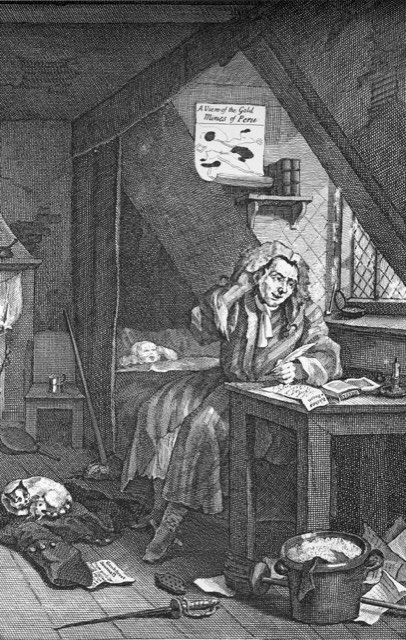
With the Restoration of the crown in 1660, a new era in English literature and politics began. While the Glorious Revolution of 1688 - 1689 firmly established Parliament’s superiority over the monarchy, writers responded to the end of Puritan rule by addressing previously proscribed materials - especially sexuality - often in increasingly secular terms. At the same time, the philosophical and scientific foundation of the Enlightenment - most notably the chartering of the Royal Society in 1662 and the writings of John Locke at the end of the century - appeared. During the century that followed, Enlightenment thinkers like Voltaire believed that one could use reason and rational thought to combat the forces of ignorance, tyranny, and repression that had come to be associated with the church and the absolutist monarchic government.
In the Great Books lists The Spectator · Gulliver's Travels · An Essay on Man · All for Love · Absalom and Achitophel

The Restoration, the Glorious Revolution, and the Emergence of Parliamentary Democracy
- The Restoration and the Eighteenth CenturyThe Saylor Foundation · read · 30 min
- Lecture 22: An Unsettled Settlement and Lecture 24: Refashioning the StateYale University · Professor Keith Wrightson · watch · 2 h
John Dryden and the Emergence of English Neoclassicism
- Neoclassicism: An IntroductionThe Victorian Web · read · 15 min
- Chapter I: DrydenThe Cambridge History of English and American Literature · A.W. Ward · read · 30 min · archived copy
- John Dryden’s Excerpts from Annus Mirabilisread · 30 min
- Mac Flecknoe and Alexander’s FeastJohn Dryden · read · 1 h
- Dryden vs. Shadwell - A Poetic DuelLibriVox · Algy Pug · read · 15 min
- Close Readings of John Dryden’s ‘Mac Flecknoe’ and ‘Alexander’s Feast’The Saylor Foundation · read · 30 min
Comedies of Manners
- William Congreve’s The Way of the Worldread · 4 h
- Chapter V: The Restoration Drama I and Charles Whibley’s Chapter VI: Restoration Drama IIThe Cambridge History of English and American Literature · Felix E. Schelling · read · 2 h · archived copy
- William Congreve’s The Way of the World and Restoration DramaThe Saylor Foundation · read · 15 min
- Comedies of MannersThe Saylor Foundation · do · 30 min
What Is Enlightenment?
- The EnlightenmentThe Open University · read · 1 h · archived copy
- What Is Enlightenment?Fordham University’s Internet Modern History Sourcebook · Immanuel Kant · read · 30 min
- Marie Jean Antoine Nicolas Caritat, Marquis de Condorcet’s The Future Progress of the Human MindFordham University’s Internet Modern History Sourcebook · read · 30 min
John Locke’s Empiricism, Political Liberalism, and the Roots of the Enlightenment in 17th-Century Thought
- The EnlightenmentWashington State University · Paul Brians · read · 30 min · archived copy
- John LockeInternet Encyclopedia of Philosophy · read · 30 min
- John Locke’s Excerpts from An Essay Concerning Human Understanding and Second Treatise of Governmentread · 1 h
The Scientific Revolution and the Concept of a Rational Universe
- Philosophy of Science and the Scientific MethodThe Saylor Foundation · read · 15 min
- The Scientific Revolution of the 17th Century and the Political Revolutions of the 18th CenturyGeorge Mason University · Professor Rose Cherubin · read · 15 min
- Discussion Questions on the EnlightenmentThe Saylor Foundation · do · 30 min
18th-Century Literature and the Development of the Public Sphere
- The Enlightenment and the Public SphereYouTube · Yale University · John Merriman · watch · 1 h
Coffee House Culture and Spectator
- Excerpt from Spectator, Volume 1 (1711)read · 30 min
- Chapter II: Steele and AddisonThe Cambridge History of English and American Literature · Harold Routh · read · 1 h · archived copy
- The First English Coffee HousesFordham University’s Internet Modern History Sourcebook · read · 15 min
Alexander Pope and the Intersection of Neoclassicism and the Enlightenment
- Alexander Pope: A Brief Biography, The Mock Epic as Genre, and Heroic Couplet: A Brief Introduction: David Cody and George Landow’s Satire; and George Landow’s Wit, Narrators, Masks, and Speakers in Satire, and The Rhetorical Organization of the Heroic CoupletThe Victorian Web · David Cody · read · 1 h
- Pope’s Sources and Influences, Alexander Pope’s ‘Essay on Criticism:’ An Introduction, and Alexander Pope’s ‘Essay on Man:’ An IntroductionThe Victorian Web · David Cody · read · 30 min
- Essay on Man, and Essay on CriticismAlexander Pope’s Rape of the Lock · read · 2 h
- Understanding Pope’s Heroic CoupletiTunes U · Montgomery County Community College · Dr. Catherine Carsley · watch · 30 min · no longer online
- Satire: Horation Roots and Enlightenment ApplicationsThe Saylor Foundation · do · 30 min
Wit and Satire in Political Writing and Print Culture
- Jonathan Swift: A Brief Biography and ‘A Modest Proposal’: An IntroductionThe Victorian Web · David Cody · read · 30 min
- A Modest ProposalJonathan Swift · read · 30 min
- Swift, Satire, and the EnlightenmentiTunes U · Montgomery County Community College · Dr. Catherine Carsley · watch · 30 min · no longer online
Samuel Johnson and Late 18th-Century Neoclassicism
- Samuel Johnson: An Introduction and Samuel Johnson: A Brief Biography, Introduction to ‘The Vanity of Human Wishes’ and An Introduction to RasselasThe Victorian Web · David Cody · read · 30 min
- The Vanity of Human WishesSamuel Johnson · read · 30 min
- Jack Lynch (ed.)’s Preface to Samuel Johnson’s A Dictionary of the English Language and The History of RasselasRutgers University · read · 4 h · archived copy
- Dr. Johnson, Professional CriticiTunes U · Montgomery County Community College · Dr. Catherine Carsley · read · 30 min · no longer online
- Short Essay on Eighteenth-Century LiteratureThe Saylor Foundation · write · 1 h
Chapter II
The Rise of the Modern Novel
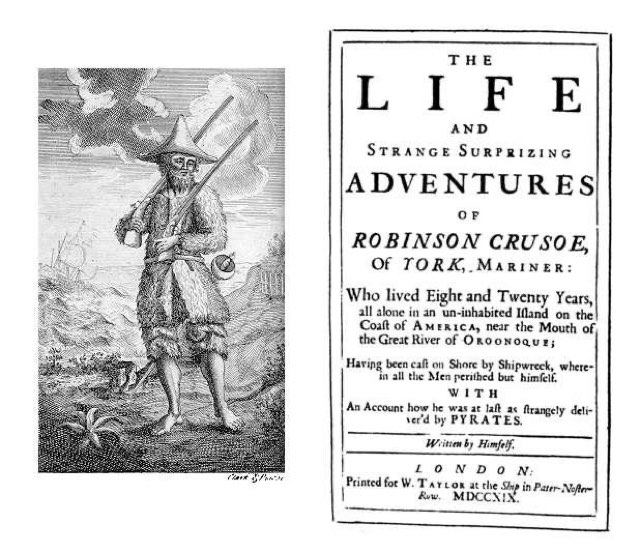
While clearly not a literary period, the rise of the novel, as we know it, took place over the course of the 18th century. Though prose fiction had existed since ancient times, the modern novel - a serious form with mass, popular appeal - was born at some point in the early 1700s. In this unit, we will trace the emergence and maturation of the novel, seeking to understand the reasons for its popularity while exploring and defining a number of its features and sub-genres.
In the Great Books lists Robinson Crusoe

Social, Cultural, and Literary Background to the Emergence of the Novel
- The NovelCUNY-Brooklyn · Dr. Lilia Melani · read · 15 min
- The Emergence of the NovelThe Saylor Foundation · read · 15 min
Romance and Empire in the Earliest English Novels
- Who Is Aphra Behn? and Aphra Behn and Political CultureGreat Writers Inspire · Dr. Abigail Williams · read · 30 min · archived copy
- Aphra Behn’s Oroonokoread · 3 h
- Aphra Behn’s Oroonoko and the English NovelThe Saylor Foundation · read · 15 min
Daniel Defoe’s Robinson Crusoe: Religion, Economics, and Genre
- Daniel Defoe’s Robinson Crusoeread · 3 h
- Daniel Defoe, Robinson Crusoe, Religion in Robinson Crusoe, and Robinson Crusoe as Economic ManCUNY-Brooklyn · Dr. Lilia Melani · read · 1 h · archived copy
- Short Essay on Robinson Crusoe and OroonokoThe Saylor Foundation · write · 1 h
Theories and Cultural Contexts of Sentiment
- Adam Smith’s Excerpts from Theory of Moral Sentimentsread · 1 h
- The EnlightenmentThe Open University · read · 15 min · archived copy
- Emotionalist Moral Philosophy: Sympathy and the Moral Theory that Overthrew KingsThe Victorian Web · George P. Landow · read · 15 min
Samuel Richardson’s Pamela
- Samuel Richardson’s Excerpts from Pamela, or Virtue Rewardedread · 3 h
- Samuel Richardson; Reputation of ClarissaCUNY-Brooklyn · Dr. Lilia Melani · read · 15 min
- Chapter I: RichardsonThe Cambridge History of English and American Literature · L. Cazamian · read · 45 min · archived copy
- Elements of Sentimentality in Richardson’s PamelaThe Saylor Foundation · do · 30 min
What Is the Gothic? Issues of Genre, Trope, and Form
- What Is the Gothic? Issues of Genre, Trope, and FormThe Saylor Foundation · read · 15 min
Antiquarianism and the Gothic Novel
- Horace Walpole’s Castle of Otrantoread · 4 h
- The Gothic Phenomenon in The Castle of Otranto: A Critical EssayThe Literary Gothic · Clifford J. Kurkowski · read · 30 min · archived copy
Theorizing the Pleasure of Terror and the Sublime
- On Pleasure Derived from Objects of TerrorAnna Aikin and John Aikin · read · 30 min
- Edmund Burke’s A Philosophical Enquiry into the Origin of Our Ideas of the Sublime and Beautifulread · 15 min
- Theorizing Terror: The Aikins on Terror and Burke on the SublimeThe Saylor Foundation · read · 15 min
The Female Gothic: Ann Radcliffe
- Ann Radcliffe’s Excerpt from The Mysteries of Udolphoread · 2 h
- The Gothic Experience and Ann RadcliffeCUNY-Brooklyn · Dr. Lilia Melani · read · 30 min
- The Female Gothic: An IntroductionUniversity of Virginia · read · 1 h · archived copy
- Short Answer Quiz on the Sentimental and the GothicThe Saylor Foundation · write · 30 min
Chapter III
Romanticism
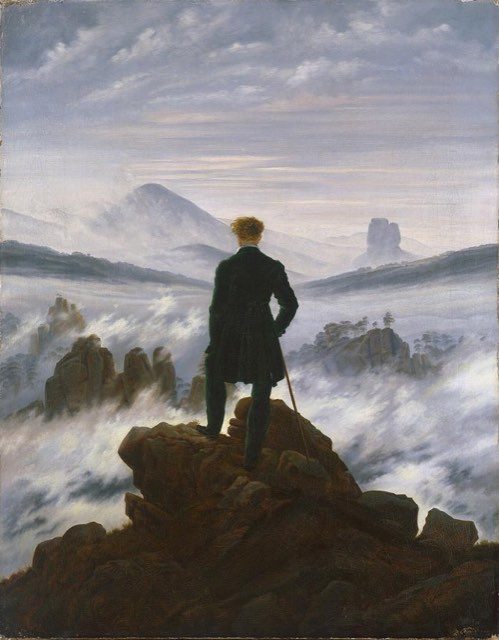
Like authors of the sentimental novel, Romantic poets and authors built on and moved beyond the Enlightenment’s emphasis on rational inquiry and critique by emphasizing the intuitive and the emotional. Romanticism emerged in late 18th-century England as well as France and Germany. Over the past century and a half, literary historians have offered various accounts of why Romanticism emerged during this period, what similarities join different strains of Romanticism together and how to understand the distinct differences - political as well as aesthetic - among Romantics. One of the most lasting and influential definitions that joins various Romantics together comes from the mid-20th century literary critic René Wellek: “imagination for the view of poetry, nature for the view of the world, and symbol and myth for poetic style.” From this perspective, what the Romantics share is an emphasis on the creative power of the individual imagination and a reliance on nature as a guide for philosophical, social, and literary truths as opposed to a neoclassical emphasis on tradition.
In the Great Books lists A Defence of Poetry · Lyrical Ballads · Biographia Literaria · Songs of Innocence and of Experience · Manfred

Defining Romanticism
- The EnlightenmentThe Open University · read · 30 min · archived copy
- RomanticismWashington State University · Paul Brians · read · 30 min
- Introduction to the Romantic Period in English PoetryVancouver Island University · Professor Ian Johnston · read · 1 h · archived copy
- Introduction to RomanticismCUNY-Brooklyn · Dr. Lilia Melani · read · 30 min
- Defining Romanticism, Part 1The Saylor Foundation · do · 30 min
Reactions and Reflections on the French Revolution
- Introduction to the French RevolutionThe Victorian Web · Professor David Cody · read · 15 min
- Edmund Burke’s Excerpts from Reflections on the Revolution in FranceFordham University’s Internet Modern History Sourcebook · read · 30 min
- Richard Price’s Excerpts from A Discourse on the Love of Our Countryread · 15 min · archived copy
- Book 9 and Book 10Bartleby · William Wordsworth’s The Prelude · read · 2 h · archived copy
- British Reactions to the French RevolutionThe Saylor Foundation · read · 45 min
The Industrial Revolution and the Emergence of the Bourgeoisie
- Industrial RevolutionsYale University · John Merriman · watch · 1 h
- The Industrial Revolution and the Romantic SpiritThe Saylor Foundation · read · 15 min
- The World is Too Much with Us and Composed upon Westminster Bridge, September 3, 1802William Wordsworth · read · 30 min
- London and The Chimney-SweeperWilliam Blake · read · 30 min
Romantic Poetics
- Lecture Notes on Wordsworth’s Preface to Lyrical BalladsUniversity of West Indies · Richard L.W. Clarke · read · 30 min · archived copy
The Poem as a “Spontaneous Overflow of Powerful Feelings”: Wordsworth’s Preface to The Lyrical Ballads
- William Wordsworth (1770 - 1850)The Saylor Foundation · read · 15 min
- Lecture Notes on Wordsworth’s Preface to Lyrical BalladsUniversity of West Indies · Richard L.W. Clarke · read · 30 min · archived copy
- Observations Prefixed to Lyrical Ballads and Lyrical BalladsWilliam Wordsworth · read · 2 h
- William Wordsworth: Radical PoeticsiTunes U · University of California, Davis · Dr. Timothy Morton · watch · 1 h · archived copy
Imagination v. Fancy: Coleridge’s Biographia Literaria
- Samuel Taylor Coleridge (1772 - 1834)The Saylor Foundation · read · 15 min
- Samuel Taylor Coleridge’s Excerpts from Biographia Literariaread · 30 min
- Rime of the Ancient Mariner; Bartleby: Samuel Taylor Coleridge’s Lyrical Ballads: The Rime of the Ancient Mariner; Poetry Foundation: Samuel Taylor Coleridge’s The Eolian Harp and This Lime-Tree Bower My PrisonThe Victorian Web · Glenn Everett · read · 3 h
- ColeridgeInternet Archive · University of California, Davis · Dr. Timothy Morton · watch · 1 h
The Poet as Unacknowledged Legislator: Shelley’s “Defence of Poetry”
- Percy Bysshe ShelleyThe Saylor Foundation · read · 15 min
- A Defence of PoetryFordham University’s Internet Modern History Sourcebook · Percy Bysshe Shelley · read · 1 h
- ‘Mont Blanc’: Reading Questions and Shelley and Religion; Bartleby: Percy Bysshe Shelley’s Mont BlancThe Victorian Web · Glenn Everett · read · 1 h
- Ozymandias, England in 1819, and Ode to the West WindPercy Bysshe Shelley · read · 1 h
- Lectures Notes on the Poetry of Percy Bysshe Shelley and Percy Bysshe Shelley ‘A Defence of Poetry’University of West Indies · Richard L.W. Clarke · read · 45 min · archived copy
- ShelleyInternet Archive · University of California, Davis · Dr. Timothy Morton · watch · 1 h
Poet as a Chosen Son or Bard
- Lecture Notes on the Poetry of William Wordsworth and The Poetry of John KeatsUniversity of West Indies · Richard L.W. Clarke · read · 30 min · archived copy
- William Wordsworth’s Excerpts from The Preluderead · 30 min
- Selections from LettersJohn Keats · read · 15 min · archived copy
Relationship between Man and Nature
- Reading Questions for ‘Tintern Abbey’; William Wordsworth’s Lines Composed a Few Miles above Tintern Abbey, On Revisiting the Banks of the Wye during a TourThe Victorian Web · Glenn Everett · read · 30 min
- Frost at Midnight and DejectionSamuel Taylor Coleridge · read · 45 min
- Reading Questions for ‘Ode to a Nightingale’; John Keats’s Ode to a NightingaleThe Victorian Web · Glenn Everett · read · 30 min
- Romanticism and NatureThe Saylor Foundation · read · 30 min
Innocence and Experience: Blake
- Lecture Notes on the Poetry of William BlakeUniversity of West Indies · Richard L.W. Clarke · read · 30 min · archived copy
- William Blake’s Songs of Innocence and Experienceread · 1 h · archived copy
- William Blake and David Higgins’s Studying William Blake in Context, parts 1 and 2OER Commons · Great Writers Inspire · David Fallon · watch · 40 min
- William Blake: The Politics of Innocence and William Blake: Are You Experienced?iTunes U · University of California, Davis · Dr. Timothy Morton · watch · 2 h · archived copy
The Figure of the Outcast in Romantic Poetry: Byron
- Lord Byron, George Gordon (1788 - 1823)The Saylor Foundation · read · 15 min
- Childe Harold’s Pilgrimage, Canto The ThirdGutenberg.org · Lord Byron · read · 15 min
- I Would I Were a Careless ChildLord Byron · read · 30 min
- Byronic HeroismThe Saylor Foundation · read · 15 min
The Familiar Essay: Review and the Rise of the Modern Periodical
- De Quincey’s Confessions of an Opium Eaterread · 1 h
- Thomas de QuinceyInternet Archive · University of California, Davis · Dr. Timothy Morton · read · 1 h
Other Selected Poets: Hemans, Barbauld, and Smith
- Life, The Rights of Women, To a Little Invisible Being Who Is Expected Soon to Become Visible, To Mr. [S.T.] C[oleridge] and Washing DayAnna Letitia Barbauld · read · 1 h
- To WordsworthFelicia Hemans · read · 15 min
- Charlotte Turner SmithThe Saylor Foundation · read · 10 min
- Sonnet: On Being Cautioned . . ., High Vapours Brood above the Clifted Shore, On the Departure of the Nightingale and Beachy HeadCharlotte Smith · read · 45 min
- Charlotte SmithInternet Archive · University of California, Davis · Dr. Timothy Morton · watch · 1.2 h
Mary Shelley’s Frankenstein
- Mary Shelley’s Frankensteinread · 9 hMary Shelley on Kulturbase
- Frankenstein: Monsters Are UsiTunes U · University of California, Davis · Dr. Timothy Morton · watch · 1 h · archived copyMary Shelley on Kulturbase
Defining Romanticism, Part 2
- Defining Romanticism, Part 2The Saylor Foundation · do · 1 h
Chapter IV
The Victorian Period
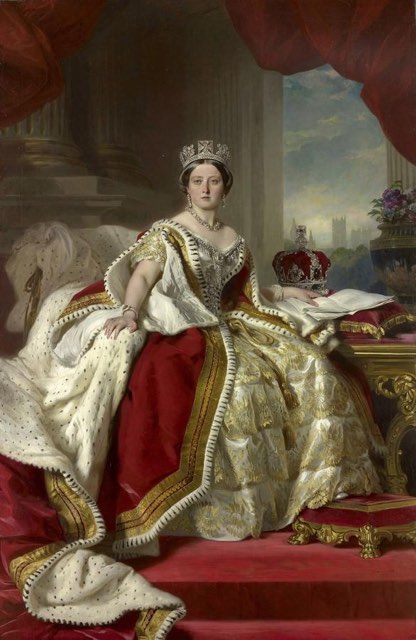
We will begin by tracing the chronological arc of the Victorian Period - from early socio-economic unrest to the height of the British Empire and on to the erosion of Victorian values at the end of the century. We will then turn to literature from the period, situating major texts within the dynamic range of attitudes that accompanied the period’s historical developments, while attempting to define some of the period’s principal characteristics. In reading authors such as Charles Dickens, Charlotte Brontë*, Elizabeth Barrett Browning, and Alfred Lord Tennyson, we will explore the socio-economic transformations brought about by the rise of industrial capitalism, shifting ideas about gender, the influence of Britain’s expanding empire, and the formal innovations and challenges these and other authors produced in responding to their age.
In the Great Books lists Jane Eyre · Great Expectations

Victorianism: The Middle Class, Chartism, and Political and Social Change
- Lecture 9: Middle Classes, Lecture 11: Why No Revolution in 1848 in Britain, and Lecture 12: Nineteenth-Century CitiesYale University · John Merriman · watch · 3 h
- Victorian and VictorianismThe Victorian Web · George P. Landow · read · 15 min
- Victorian Era, 1830-1901Masterworks of British Literature · read · 15 min · archived copy
- Thomas Carlyle’s Excerpt from Past and Presentread · 30 min · archived copy
The Expansion of the Empire and British Missionaries
- Imperialists and Boy ScoutsYale University · John Merriman · read · 1 h
- The British EmpireThe Victorian Web · David Cody · read · 15 min
- Thomas Macaulay’s Excerpt from Minute on Indian Educationread · 15 min · archived copy
- The White Man’s BurdenFordham University’s Internet Modern History Sourcebook · Rudyard Kipling · read · 15 minRudyard Kipling on Kulturbase
Religious Debate at Home: Divisions in the Church and the Rise of Science
- Victorian Science and Religion, John van Wyhe’s Evolution, Progress, and Natural Laws, Josef L. Altholz’s The Warfare of Conscience with Theology, and George P. Landow’s Introduction to Charles Darwin’s On the Origin of SpeciesThe Victorian Web · Aileen Fyfe · read · 45 min
The Role of Women in Victorian Society
- Women in Literature - A Literary OverviewThe Victorian Web · Elizabeth Lee · read · 15 min
- The Claim of Englishwomen to the Suffrage Constitutionally ConsideredHelen Taylor · read · 30 min
- A Brief Summary in Plain Language of the Most Important Laws Concerning WomenBarbara Bodichon · read · 15 min
- Eliza Lynn Linton’s Excerpt from The Girl of the Periodread · 15 min
- The Woman Question in Victorian EnglandThe Saylor Foundation · read · 15 min
- The Victorians: Gender and SexualityGresham College · Professor Sir Richard Evans · watch · 1 h · no longer online
The Serialized Novel, the “Three-Decker,” and Other Publication Contexts
- Why Read the Serialized Versions of Victorian Novels? Introduction to Charles Dickens’s Great Expectations, The Genres of Charles Dickens’s Great Expectations - Positioning the Novel and Chapter-by-Chapter Discussion Questions for Charles Dickens’s Great ExpectationsThe Victorian Web · Philip V. Allingham · read · 1 hCharles Dickens on KulturbaseLysande utsikter on Kulturbase
- Charles Dickens’s Great Expectationsread · 4 hCharles Dickens on KulturbaseLysande utsikter on Kulturbase
Depictions of Victorian Society: Class Stratification and Material Conditions
- Leading Questions for Charlotte Brontë’s Jane Eyre (1847), George P. Landow’s Genre, Plot, and Theme in Jane Eyre, Nicholas Johnson’s The Tension between Reason and Passion in Jane Eyre, and Debra G. Waller’s Angel or Vampire - The Portrayal of Women’s Morality and Sensuality in Jane Eyre as well as “Avoiding DangThe Victorian Web · Philip V. Allingham · read · 1 hCharlotte Brontë on KulturbaseJane Eyre on Kulturbase
- Charlotte Brontë’s Jane Eyreread · 5 hCharlotte Brontë on KulturbaseJane Eyre on Kulturbase
- Depictions of Victorian Society: Class Stratification and Material ConditionsThe Saylor Foundation · do · 30 min
Relationship between Romantic Poetry and Victorian Poetry: Tennyson
- Alfred, Lord Tennyson: A Brief BiographyThe Victorian Web · Glenn Everett · read · 10 min
- Arthur Henry Hallum’s Excerpt from On Some of the Characteristics of Modern Poetry, and on the Lyrical Poems of Alfred Tennysonread · 15 min
- Ulysses, Break, Break, Break, Maud, and The Charge of the Light BrigadeTennyson’s Excerpt from In Memoriam · A.H.H. · read · 2 h
- Victorianism as a Fusion of Neoclassical and Romantic Ideas and Attitudes; James R. Kincaid’s Maud, Break, break, break and Ulysses; and Philip V. Allingham’s Discussion Questions for Alfred Lord Tennyson’s ‘Ulysses’The Victorian Web · George P. Landow · read · 45 min
- Alfred Tennyson’s ‘Ulysses’University of Glasgow · Dr. Kirstie Blair and Dr. Rhian Williams · watch · 30 min
The Brownings’s Experiments in Form and Style: New Directions in Dramatic Monologues and the Sonnet
- The Life of Elizabeth Barrett Browning and Glenn Everett’s Robert Browning: A Brief BiographyThe Victorian Web · Glenn Everett and Jason B. Isaacs · read · 15 min
- Sonnet 21 (Say over again), Sonnet 22 (When our two souls), and Sonnet 43 (How do I love thee) and The Victorian Web: Philip V. Allingham’s Reading and Discussion Questions for Elizabeth Barrett Browning’s ‘Sonnet 43’Elizabeth Barrett Browning · read · 45 min · no longer online
- My Last Duchess, Porphyria’s Lover, and Fra Lippo Lippi and The Victorian Web: Philip V. Allingham’s Reading and Discussion Questions on Robert Browning’s ‘My Last Duchess’Robert Browning · read · 1 h
- Three Defining Characteristics of Browning’s Dramatic MonologuesThe Victorian Web · Glenn Everett · read · 15 min
- Lecture Notes on the Dramatic Monologues of Robert BrowningUniversity of West Indies · Richard L.W. Clarke · read · 30 min · archived copy
- Robert Browning’s ‘Porphyria’s Lover’University of Glasgow · Dr. Kirstie Blair and Dr. Rhian Williams · watch · 30 min
Pre-Raphaelite Circle: Algernon Charles Swinburne and Christina Rossetti
- Pre-Raphaelites: An IntroductionThe Victorian Web · George P. Landow · read · 15 min
- Hymn to Proserpine, Hermaphroditus, and Ave atque ValeAlgernon Charles Swinburne · read · 30 min
- An Introduction to Algernon Charles SwinburneSwinburne Project · John A. Walsh · read · 30 min · archived copy
- Goblin MarketThe Victorian Web · Christina Rossetti · read · 30 min
- The Poetry of Christina RossettiUniversity of West Indies · Richard L.W. Clarke · read · 15 min · archived copy
Questioning and Reviving Christian Faith: Matthew Arnold and Gerard Manley Hopkins
- Matthew Arnold: A Biography; George P. Landow, Arnold’s Religious Beliefs; and Julia Touche, Arnold’s ‘Dover Beach’: A Commentary; and Matthew Arnold’s Dover BeachThe Victorian Web · Stanley Kunitz · read · 30 min
- The Windhover and Spring and FallGerard Manley Hopkins · read · 15 min
- A Reading of Gerard Manley Hopkins’s ‘The Windhover,’ Daniel Block’s Hopkins’s ‘Spring and Fall,’ George P. Landow’s Gerard Manley Hopkins and the Difficulty of Victorian Poetry, and Laurann de Verteuil’s Reviving God: A Study of Matthew Arnold and Gerard Manley HopkinsThe Victorian Web · George P. Landow · read · 30 min
- ENGL203 Final ExamThe Saylor Foundation · final exam · no longer online
About this course
This course is Saylor Academy's ENGL203, Cultural and Literary Expression in the 18th and 19th Centuries, one of the complete university courses the Saylor Foundation made free from 2008 and retired in 2015. Saylor licensed its course text under CC BY 3.0; the original is on GitHub. Here it is laid out as chapters, links that have died go to an archived copy from the Internet Archive where one exists, assessments that needed a Saylor login are left out, and people and works are linked to Kulturbase. The readings and lectures belong to their publishers and are linked, not copied. Pictures: Wikimedia Commons, credited under each picture.
All Saylor courses · Free culture courses · The Chautauqua Reading Course