Literature · Saylor ENGL204
Cultural and Literary Expression in Modernity
From Friedrich Nietzsche’s shocking pronouncement in the late 1800s that “God is dead” and that “we have killed him” to Vladimir Nabokov’s convention-challenging fiction, the Modern period—spanning roughly the end of the 19th century to the present—offered a range of provocative and often cynical cultural and literary productions. In this course, we will work to develop a more nuanced understanding of the scope of cultural and literary expression in the late 19th and the first half of the 20th centuries and a working definition of what the vacuous-sounding term “modernism” might mean.
More about this course
We will attend to broad socio-historical happenings, from the birth of modernism in the late 19th century to the radical violence of the World Wars and the tragedy of the Holocaust and arrive at the post-modern moment, our post-colonial and technologically and economically globalized village. While offering this historical context, the course focuses on the cultural and literary movements from the “art for art’s sake” decadence of the late 1800s to the avant-garde experiments of the post-war period and beyond. In addition to literary “modernism,” the course will also take a brief look at the cultural production of “modernism” in art, music, architecture, cinema, philosophy, and drama. Yet, while the course will generally navigate late 19th and 20th century literature in the British tradition, framed by historical understanding and infused with an investigation of concomitant cultural production, we will end by briefly examining the increasingly global nature of postmodern culture, encountering the texts (and contexts) of Anglophone authors as diverse as India’s Arundhati Roy and Nigeria’s Chinua Achebe as well as taking a brief look at globalized, contemporary art and literature. Therefore, by the end of this course, we should have an advanced conceptualization of “modernism” and its many varied constructions, the major literary trends and cultural achievements of the late 19th and 20th centuries, and the socio-historical movements that shaped them, as well as an attentiveness to the impact that globalization currently has upon literature and cultural production.
Upon successful completion of this course, the student will be able to:
In order to take this course, you must: √ Have access to a computer.
Chapter I
The Turn of the Century
We will start by situating ourselves in the late 1800s, taking stock of the various social changes and artistic trends that were beginning to challenge predominant 19th-century assumptions, values, and social configurations. It may seem strange to begin this course in Fin-de-Siècle Paris, but, as we will see, much of the art and literature produced in late-1800s France would lay the foundation for 20th-century innovations in English poetry and literature. We will also account for those voices that continued to promote the old-guard imperialist views and Victorian values so inherent to mainstream British literature of the 1800s.
In the Great Books lists Heart of Darkness · Les Fleurs du mal · Nostromo
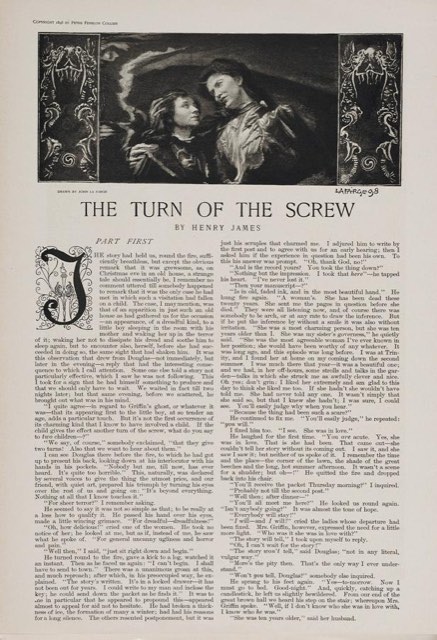

Definition of Décadence
- DegenerationArchive.org · Max Simon Nordau · read
Rejection of Middle-Class, Victorian Culture
- Literature at the Turn of the Century: 1800-1918Dr. Ruth Nestvold · read
Decadence and Eroticism in Baudelaire’s Fleurs du Mal
- Bénédiction, L’Albatros, and Élévation from his Fleurs du MalFleursdumal.org’s version of Charles Baudelaire · read
The Figure of the Flâneur in the New Urban Landscape
- The FlâneurThelemming.com · Dr. Heather Marcelle Crickenberger · read · archived copy
Introduction to Oscar Wilde and Aestheticism
- Art for Art’s Sake and the OSCHOLAR Library’s version of Dr. Megan Becker-Leckrone’s essay Oscar Wilde (1854-1900): Aesthetics and CriticismSweet Briar College · Dr. Christopher L.C.E. Whitcombe’s essay · read · archived copyOscar Wilde on Kulturbase
Self-Consciousness and Anti-Romantic Aesthetics in Oscar Wilde’s “The Critic as Artist” Essay
- The Critic as ArtistThe Corpus of Electronic Texts · Oscar Wilde · read · archived copyOscar Wilde on Kulturbase
The Figure of the Dandy
- Chapters 1 and 2Reading · J.K. Huysmans’ Against the Grain · read
Symbolism in Art
- SymbolismThe Metropolitan Museum of Art’s Heilbrunn Timeline of Art History · Nicole Myers’ · read · archived copy
Symbolism in Poetry
- Dawn, Departure, Eternity, and SleepBlackcatpoems.com · Arthur Rimbaud · read
Symbolism Migrates to the U.K.
- The Symbolism of PoetryDuisburg-Essen University’s version of W.B. Yeats’ · read
Brief History of Paris and Its Reorganization under Haussmann
- Mapping Paris: Haussmann and the New ParisMt. Holyoke College · Dr. Robert M. Schwartz · read · archived copy
Social Dynamics in the New Metropolis
- Georges HaussmannSan Jose State University · read · archived copy
Expressions of City Life in Baudelaire’s Tableaux Parisiens
- Paysage, Le Soleil, and À une passanteFleursdumal.org · Charles Baudelaire · read
Intersection of the Arts: Aubrey Beardsley’s Sketches, the Pace of Modern Urban Life, and His Relationship to Wilde
Historical Overview of British Imperialism
- The British EmpireVictorianweb.org · read
Rudyard Kipling and “The White Man’s Burden”
- The White Man’s BurdenFordham University · Professor Paul Halsall’s version of Rudyard Kipling · readRudyard Kipling on Kulturbase
Conrad and the Ethics of Empire
New Directions in Theme and Style: The Relationship between Heart of Darkness and Victorian Literature
- White Lies and Whited Sepulchres in Conrad’s Heart of DarknessVictorianweb.org · Dr. Philip V. Allingham · read
Chapter II
The Outbreak of War
In this unit, we will acquaint ourselves with the historical and social contexts of World War I and then explore the ways in which literary forms developed to make sense of the unanticipated violence and destruction of the first mass war of the 20th century as well as the seeming loss of the old European order. We will compare and contrast the varied poems of this period, identifying their affiliations with certain traditions and their experimentation with new styles and themes, paying particular attention to the ways in which poets used the genre to process the violence of war.
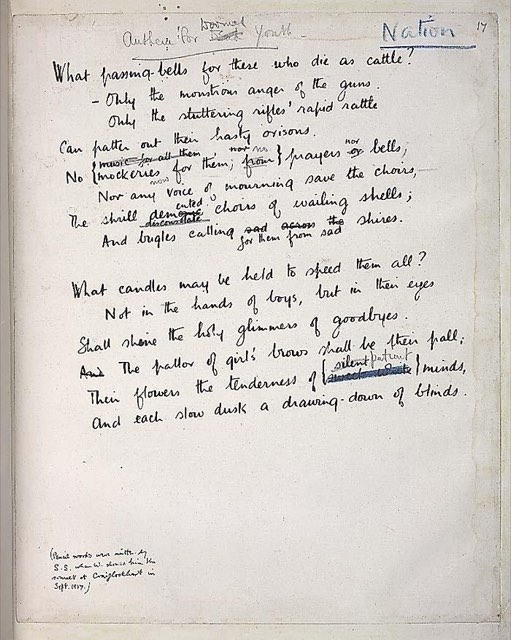

Edwardian England (1901-1910)
- Introduction: The Edwardian Era (1901-1919), Edwardian Life: Royalty and Empire, Edwardian Life: Politics, Edwardian Life: The Suffragettes, and Edwardian Life: Timeline 1905-1914PBS · read · archived copy
Georgian England (1910-1914)
- George VThe Royal Household · read · archived copy
World War I (1914-1918)
- The Origins of World War One, Dr. Stephen Badsey’s The Western Front and the Birth of Total War, Dr. Joanna Bourke’s Shell Shock During World War One, and Dr. Ruth Henig’s Versailles and PeacemakingBBC · Dr. Gary Sheffield · read
Imagism and Challenges to Conventional Modes of Representation
- Imagism and Bartleby.com: Ezra Pound’s In a Station of the MetroUniversity of Pennsylvania · Dr. Al Filreis’ · read
Introduction to Erich Auerbach’s Mimesis and Changing Conceptualizations of Reality
- Introduction to the Fiftieth Anniversary Edition [of Erich Auerbach’s Mimesis]Princeton University Press · Edward Said · read · archived copy
Ezra Pound and the Luminous Detail—Pound’s Imagist Poems
- Pound’s Life and Career and Bartleby.com: Ezra Pound’s GreekUniversity of Illinois at Urbana-Champaign · Modern American Poetry—Clive Wilmer · read · archived copy
Comparison of Imagism to Georgian Poetic Traditions (Review of Poems by Walter de la Mare)
- Poetic Modes in the Late 19th and Early 20th Century and Poetry X.com: Walter de la Mare’s The TruantsGrand Valley State University · Dr. Michael Webster · read
Wyndham Lewis and Vorticism
- Before Vorticism, About Vorticism: Introduction, and The Rebel Art Centre; Universidad de la Rioja: Introduction: Wyndham Lewis, The Listener, and the Institutions; and The Nasher Museum of Art: The Vorticists: Rebel Artists in London and New York, 1914-18Vorticism.co.uk · read · archived copy
The Horrors of Modern Trench Warfare
- In the Trenches1914-1918.net · read · archived copy
Modern Poetry and Its Relationship to Traditional Poetry
- Introduction to Modern PoetryYale University · Dr. Langdon Hammer · watch
Early WWI Poetry and the Jingoist’s Spirit: Poems of John McCrae and Rupert Brooke
- In Flanders Fields and Rupert Brooke’s Peace, The Dead, and The SoldierBartleby.com John McCrae · read · archived copy
Late WWI Poetry and the Loss of Faith in the Empire: Siegfried Sassoon and Wilfred Owen
- To Victory, A Mystic as Soldier, To His Dead Body, Arms and the Man, and Before the Battle as well as Wilfred Owen’s Arms and the Boy, Anthem for Doomed Youth, and Dulce et Decorum estBartleby.com Siegfried Sassoon · read · archived copy
Theory Capsule: Lecture on the Relationship between Poetry, War, and Memory
- World War I Poetry in EnglandYale University · Dr. Langdon Hammer’s Lecture on · watch
Explorative Lecture on Wilfred Owen
- Voices Education Project’s Excerpts from Voices in WartimeYouTube · watch
What Is the Avant-Garde?
- The Avant-Garde MovementPresbyterian College’s Introduction to · read · no longer online
BLAST and the Vorticist Legacy
- BLAST (HTML) and Brown University and the University of Tulsa: The Modernist Journals Project’s version of BLAST (No. 1)Vorticism.co.uk · read · archived copy
Filippo Marinetti and Futurism: The Intersection of Art and Politics
- The Joy of Mechanical Force and Futuristic ManifestoUniversity of Pennsylvania · Dr. Jim English’s version of Filippo Marinetti · read · archived copy
Dadaism and Its Politics
- DadaismUniversity of Pennsylvania · Dr. Jim English’s version of Tristan Tzara · read · archived copy
Cubism in the Visual Arts: Images by Pablo Picasso
- CubismRobinurton.com · Robin Urton · read
- Picasso and the Avant-Garde in ParisYouTube · Philadelphia Museum of Art · Michael Taylor · watch
Chapter III
Post-War Disillusion and “The Lost Generation”
In the post-war years, nothing seemed certain: the old stabilities of empire, religion, and shared social mores seem to have been swept away by the war. In this unit, we will trace the emergence of new literary forms and styles as authors attempted to come to terms with the seeming chaos and disorder of the 1920s, from the disorienting juxtaposition and dense allusiveness of poetry by T.S. Eliot and Ezra Pound to the intense stream-of-consciousness and temporal complexity of Virginia Woolf’s To the Lighthouse. Along the way, we will take a look at the era’s culture of excess and exile, typified by the famous expatriate circle that settled in Paris in the 1920s and included such prominent figures as Ernest Hemingway, F. Scott Fitzgerald, and Gertrude Stein.
In the Great Books lists To the Lighthouse · A Room of One's Own · The Waste Land · In Our Time
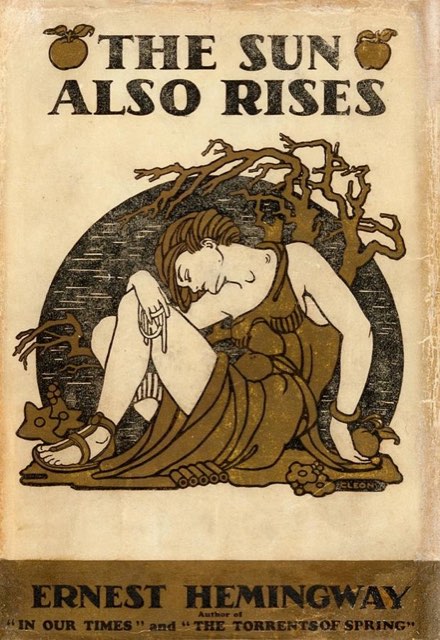

Religion in the Post-War World
- IntroductionAftermathwww1.com · Mike Roden · read · archived copy
The Decay of Culture and Aspects of Religious Doubt in T.S. Eliot’s “The Waste Land”
- The Waste LandT.S. Eliot · readT.S. Eliot on Kulturbase
Stylistic Features of T.S. Eliot’s “The Waste Land”: Juxtaposition, Allusion, and Collage
- On The Waste Land (Readings of the poem by Cleanth Brooks, Joseph Frank, Grover Smith, Stephen Spender, Eloise Knapp Hay, Michael H. Levinson, Calvin Bedient, John Xiros Cooper, Louis Menand, Carol Christ, Michael North, Margot Norris, and Tim Dean)University of Illinois at Urbana-Champaign · Modern American Poetry · read · archived copyT.S. Eliot on Kulturbase
Representations of the Modern Metropolis in T.S. Eliot’s “The Waste Land”
- On the Composition of The Waste LandUniversity of Illinois at Urbana-Champaign · Modern American Poetry’s excerpt from Jean-Michel Rabaté’s The Ghosts of Modernity in · read · archived copyT.S. Eliot on Kulturbase
The Frankfurt School on Aesthetics and Politics
- The Culture Industry: Enlightenment as Mass Deception and Soundscapes: Theodor Adorno’s Culture Industry ReconsideredMarxists.org · Theodor Adorno’s and Max Horkheimer · read
W.B. Yeats’ “The Second Coming” and the Sense of the End of an Era
- The Second ComingYeatsvision.com · W.B. Yeats’ · read · archived copy
W.H. Auden: Elements of Post-War Anxiety and Guilt
- Paysage MoraliseUniversity of Toronto · W. H. Auden · read · archived copy
An Introduction to Jazz
- What is Jazz?YouTube · Dr. Gordon Vernick of Georgia State University · Jazz Insights– · watch · archived copy
The American Expatriates: A Culture of Exile and Excess
- Lost GenerationBritish Library · read · archived copy
The Loss of Optimism and Innocence in Ernest Hemingway’s Farewell to Arms
- Ernest M. Hemingway 1899-1961Poetry Foundation · read
- A Farewell to Arms (1932)Internet Archives · watch
Ernest Hemingway on the Role of the Writer: Nobel Prize for Literature Acceptance Speech
- Ernest Hemingway’s Acceptance Speech for the Nobel Prize BanquetJohn F. Kennedy Presidential Library and Museum’s Hemingway Archive · watch · archived copyJohn F. Kennedy on Kulturbase
The Great Depression and Conditions of Economic Crisis
- About the Great DepressionUniversity of Illinois at Urbana-Champaign · Modern American Poetry · read · archived copy
Gertrude Stein’s Experimental Form in Tender Buttons
- ObjectsBartleby.com · Gertrude Stein · read · archived copy
The Relationship between Visual and Literary Arts: Stein’s Poetry and Cubist Art
- Gertrude Stein 1874-1946Poetry Foundation · read
- Gertrude Stein, 1905-6The Metropolitan Museum of Art · Heilbrunn Timeline of Art History · read · archived copy
Excerpts from David Jones’ In Parenthesis: The Blurring of Genre and the Impact of Form
- In ParenthesisBrigham Young University · Excerpts from David Jones · read
Woolf’s “A Room of One’s Own” and Women in the Early 20th Century
- A Room of One’s OwnVirginia Woolf’s essay · readVirginia Woolf on Kulturbase
The Bloomsbury Group and Elitist Literary Culture
- Archive Journeys: BloomsburyThe Tate Museum · read · archived copy
Stream of Consciousness and Stylistic Innovation in Virginia Woolf’s To the Lighthouse
- To the LighthouseUniversity of Adelaide · Virginia Woolf · read · archived copyVirginia Woolf on Kulturbase
Chapter IV
High Modernist Aesthetics
Drawing from our exposure to the high modernist techniques of Virginia Woolf’s To the Lighthouse, we will work on honing our definition of modernism and one of its most prominent iterations – High Modernism – by identifying some of its characteristic features. In this unit, we will take on one of the most revered (and feared) geniuses of the 20th century, James Joyce, studying his thematic, stylistic, and formal choices and relating them to other 20th century trends we’ve seen thus far.
In the Great Books lists Ulysses
Pastiche and Its Roots in Fin de Siècle Literature
- PasticheUniversity of Pennsylvania · Dr. Al Filreis’ · read
Self-Consciousness and Alienation of the Self
- The Two Faces of ModernismInternational Socialism · A Quarterly Journal of Socialist Theory · Chris Nineham · read · archived copy
The Search for a New Order: High Modernist Architecture and Internationalism
- The Many Contradictions of Le CorbusierGuardian.co.uk · Steve Rose · read
Difficulties of the High Modernist Text: A Lecture on T.S. Eliot
- T.S. Eliot Part 1, T.S. Eliot Part 2, and T.S. Eliot Part 3Yale University · Dr. Langdon Hammer · watchT.S. Eliot on Kulturbase
Difficulties of the High Modernist Text: A Lecture on Ezra Pound
- Ezra PoundYale University · Dr. Langdon Hammer · watch
T.S. Eliot’s “Tradition and the Individual Talent” – The Modernist’s Relationship to the Literary Canon
- Tradition and the Individual TalentBartleby.com · T.S. Eliot · read · archived copyT.S. Eliot on Kulturbase
“Make It New”: Allusion and the Relationship between the Old and the New in Ezra Pound’s The Cantos
- The Cantos and University of Illinois at Urbana-Champaign: Modern American Poetry’s On Canto IPoets.org · Ezra Pound · read
Questions of Form and Genre in “The Cantos”
- Canto XIV and T.S. Eliot’s Ezra Pound: His Metric and PoetryPoets.org · Ezra Pound · readT.S. Eliot on Kulturbase
Short Stories from “Dubliners”: Exploration of Generic and Thematic Elements and the Representation of Urban Life
- Araby and The DeadProject Gutenberg · James Joyce · read · no longer onlineJames Joyce on Kulturbase
Political and Historical Contexts of Joyce’s Dublin
- Joyce’s Dublin and Irish Virtual Research Library and Archive at University College Dublin: Joyce’s Dublin: An Exploration of ‘The Dead’ IrishCulturesandCustoms.com: Irene Togher’s Joyce’s Dublin (HTML) and Irish Virtual Research Library and Archive at University College Dublin: Joyce’s Dublin: An Exploration of ‘The Dead’IrishCulturesandCustoms.com · Irene Togher · watch · archived copy
“A Portrait of the Artist as a Young Man”: Towards a New Understanding of Art
- A Portrait of the Artist as a Young ManProject Gutenberg · James Joyce · readJames Joyce on Kulturbase
National Identity in “A Portrait of the Artist as a Young Man”
- Religion and Identity in James Joyce’s A Portrait of the Artist as a Young Man from EpiphanyUniversity of Sarajevo · Catherine Akca · read · archived copyJames Joyce on Kulturbase
Excerpts from “Ulysses” and the Stylistic Diversity of James Joyce
- James Joyce’s UlyssesProject Gutenberg · readJames Joyce on KulturbaseUlysses on Kulturbase
An Overview of Sigmund Freud and Contemporary Psychology
- Freud and FictionYale University · Dr. Paul Fry · watch
Surrealism and Its Influence in Photography
- Surrealism and the Department of Photographs’ Photography and SurrealismThe Metropolitan Museum of Art’s Heilbrunn Timeline of Art History · James Voorhies’ · read · archived copy
Post-War Traumatic Stress Disorder and Narrative
- Combat Trauma, Memory, and the World War II Veteran and Purdue University: Dr. Dino Felluga’s Module on Freud V: On Transference and TraumaWar Literature and the Arts Journal · Ron Langer · read · archived copy
Stream-of-Consciousness Narratives: Formal and Stylistic Choices in High Modernist Texts
- Stream of ConsciousnessGeorgetown University · The International Society for the Study of Narrative’s Explication of · read
The Modernist’s Focus on Epistemology
- Lecture 17 - The Frankfurt School of Critical TheoryYale University · Professor Paul Fry’s ENGL 300 · Introduction to Theory of Literature · watch
Chapter V
The Shift to Post-Modernism
Now that we have a better grasp of “modernism,” we will attempt to identify and evaluate the distinctive features of a new literary moment: the post-modern. How does “post-modernism” differ from “modernism,” and what concerns do they share? As we move through some of the most provocative and challenging works of the 20th century in this unit, we will situate the post-modernist’s poetics within the Modern Period and its ever-evolving understanding of the relationship between representation and reality.
In the Great Books lists Waiting for Godot · Lolita · Dreamtigers · Labyrinths
An Introduction to Post-Modernism
- The Postmodern Psyche and The Political UnconsciousYale University · Dr. Paul Fry · watch
What Is a Text? Re-Defining Textual Boundaries in the Post-Modern World
- The Death of the AuthorUbu.com · Roland Barthes’ · read
Some Tenets of Postmodernism
- General Introduction to the PostmodernPurdue University · Dr. Dino Felluga · read
Introduction to Postmodern Critique: Deconstruction
- Deconstruction I and Deconstruction II.Yale University · Dr. Paul Fry’s Introductory Lecture on · watch
Beckett’s “Waiting for Godot”: Re-Defining the Dramatic Genre
- Waiting for GodotSamuel-Beckett.net · Samuel Beckett · read · archived copySamuel Beckett on Kulturbase
The Relationship Between Language and Being in “Waiting for Godot”
- Language in Waiting for Godot from Journal of Beckett StudiesFlorida State University · Dr. Aspasia Velissariou · read · archived copy
Re-Conceptualizing Identity in “Waiting for Godot”
- Nihilism and Eschaton in Samuel Beckett’s Waiting for GodotUniversity of Central Florida · Florida Philosophical Review’s version of Dr. John Valentine · readSamuel Beckett on Kulturbase
Questioning the Possibility of Representation
- Chapter I: Realism and RepresentationYale University Press · Excerpt from Peter Brooks’ Realist Vision · read
The Figure of the Labyrinth and the Complexity of Structure in Borges’ Short Stories
- Biographical Sketch of Jorge Luis Borges and version of Borges’ The Library of BabelSwarthmore College · Paul Willenberg · read · archived copy
Magical Realism
- Magical Realism and Monograffi.com’s What is Magic Realism Art and Magic Realism Time CapsuleEmory University · Dr. Deepika Bahri’s Introduction to · read · archived copy
“The Death of the Author”: Roland Barthes’ Theories and the Question of Authorship in Lolita
- The Death of the AuthorRoland Barthes’ · read
- Vladimir Nabokov, Lolita (cont.)Yale University · Dr. Amy Hungerford’s Lecture on · watchVladimir Nabokov on KulturbaseLolita on Kulturbase
Lolita and Issues of Sexuality
- Excerpt from Vladimir Nabokov’s LolitaRandom House Press · read · archived copyVladimir Nabokov on KulturbaseLolita on Kulturbase
- Vladimir Nabokov, LolitaYale University · Dr. Amy Hungerford’s Lecture on · watchVladimir Nabokov on KulturbaseLolita on Kulturbase
Linguistic Play in Lolita
- Guest Lecture by Andrew GoldstoneYale University · watch
Moral Relativism and Nabokov’s Work
- On LolitaRandom House Press · Martin Amis’ · read · archived copy
Chapter VI
A Post-Colonial World and Voices From the Margins
In the 20th century, we have seen the decline of Empire and the emergence of a new, post-colonial world order. How did these sweeping changes impact the literary landscape of the Modern Period? In this unit, we will examine the legacy of colonization and the emergence of new voices capable of re-writing history and re-defining the destiny and cultural significance of English literature. In the process, we will pay particular attention to the ways in which former subjects have negotiated with English literary conventions in order to “make it new” once more.
In the Great Books lists Things Fall Apart

Brief Overview of Post-Colonial Studies
- Post-Colonial CriticismYale University · Dr. Paul Fry · watch
Derek Walcott’s Omeros: Matters of Genre, Tradition, and Perspective
- World Book Club—Harriet Gilbert’s Interview with Derek Walcott on December 16, 2008BBC · watch · archived copy
Selection from Derek Walcott’s Poetry
- Becune PointThe Poetry Foundation · Derek Walcott · read · archived copy
Defining Our Terms: “Postcolonial Literature”
- ‘Postcolonial Literature’: Problems with the TermWashington State University · Dr. Paul Brians’ · read · archived copy
Re-Contextualizing Conrad in the Post-Colonial World
- An Inglorious Enterprise: Empire, Ideology and Transformation in Heart of Darkness and A Passage to IndiaShirley Galloway ‘s · read · archived copy
Exploring the Legacy of Western Colonial Oppression in Achebe’s Things Fall Apart
- Nigerian Writer Chinua Achebe on CNN’s ‘African Voices’YouTube · Afrikanews’ · watch
A New Hybridity: The Fusion of European and Nigerian Motifs in Things Fall Apart
- Chinua Achebe’s Biography and Style and Chinua Achebe & Things Fall ApartPostcolonialweb.org · Melissa Culross’ · read
Post-Modern Terminology: Mimicry, Ambivalence and Hybridity
- Mimicry, Ambivalence and HybridityEmory University · Dr. Deepika Bahri’s Introduction to · read · archived copy
Overview of Anglo-Irish Relations
- The Anglo-Irish WarBBC · read
The Yeats Legacy: Yeats and Irish Politics
- William Butler Yeats Part 1, William Butler Yeats Part 2, and William Butler Yeats Part 3Yale University · Dr. Langdon Hammer · watchWilliam Butler Yeats on Kulturbase
The New Bard: Seamus Heaney, Irish Tradition, and Memory
- Biography: Seamus HeaneyIbiblio.org · read
- Reading, October 1, 2003Lannan.org · Seamus Heaney · watch · archived copy
Politics and Poetics: Heaney and the Place of the Poet in Modern Culture
- Seamus Heaney with Dennis O’Driscoll, Conversation, 1 October 2003Lannan.org · watch · archived copy
History of India’s Colonization
- British India and Dr. George Landow’s The British East India Company—the Company that Owned a Nation (or Two)Victorianweb.org · Dr. David Cody · read
Gandhi and Non-Violent Resistance to British Colonial Rule
- Mahatma Gandhi TalksOpen Culture · watch
Excerpts from Salman Rushdie’s Midnight’s Children: Issues of Migration, Homeland, and Post-Colonialist Tensions
- Interview with Salman Rushdie & President Lee BollingerColumbia University · Midnight’s Children Events · readSalman Rushdie on Kulturbase
Identity and Boundaries in Midnight’s Children
- The Dynamic of Representation in Salman Rushdie’s Midnight’s ChildrenPostcolonialweb.org · Sébastien Blache · readSalman Rushdie on Kulturbase
A New English: The Poetics of Arundhati Roy’s God of Small Things
- Arundhati Roy Reads from God of Small ThingsYouTube · Prague Writers’ Festival · watch
Post-Colonial Narrative and The God of Small Things
- Credence and Reality: On the Said and the Implied in Postcolonial Narratives—Roy’s The God of Small ThingsPostcolonialweb.org · Prasenjit Maiti · read
Recent Developments in the Visual Arts of India
- Recent Art of IndiaMetropolitan Museum of Art’s Heilbrunn Timeline of Art History · Atteqa Ali · read · archived copy
- Essay Prompts and Self-Grading RubricThe Saylor Foundation · write
About this course
This course is Saylor Academy's ENGL204, Cultural and Literary Expression in Modernity, one of the complete university courses the Saylor Foundation made free from 2008 and retired in 2015. Saylor licensed its course text under CC BY 3.0; the original is on GitHub. Here it is laid out as chapters, links that have died go to an archived copy from the Internet Archive where one exists, assessments that needed a Saylor login are left out, and people and works are linked to Kulturbase. The readings and lectures belong to their publishers and are linked, not copied. Pictures: Wikimedia Commons, credited under each picture.
All Saylor courses · Free culture courses · The Chautauqua Reading Course