Literature · Saylor ENGL301
Introduction to Literary Theory
This course will introduce you to the field of literary theory, a central component of contemporary studies in English and world literature. As you progress through this course, you will gain knowledge of the various premises and methods available to you as a critical reader of literature.
More about this course
You will identify and engage with key questions that have animated - and continue to animate - theoretical discussions among literary scholars and critics, including issues pertaining to ideology, cultural value, the patriarchal and colonial biases of Western culture and literature, and more. The structure of this course is historically based, arranged as a genealogy of theoretical paradigms, beginning in the early 20th century - when literary theory first developed as a formal discipline - and following the evolution of literary theory into the present day. From text-centric Russian formalism to contemporary gynocriticism and trauma theory, you will explore the basic principles and preeminent texts that have defined many of the major critical debates surrounding literature over the past hundred years.
Upon successful completion of this course, you should be able to:
In order to take this course, you must: √ have access to a computer; √ have continuous broadband internet access; √ have the ability/permission to install plug-ins or software (e.g. Adobe Reader or Flash); √ have the ability to download and save files and documents to a computer; √ have the ability to open Microsoft files and documents (.doc, .ppt, .xls, etc.); √ have competency in the English language;
Chapter I
What is Literary Theory?
The first unit of this course will introduce you to some wide-ranging questions about literary theory while situating the field within the broader scope of literary studies. This unit also will serve to introduce you to the early developments and stages of literary criticism and theory.
What Is Literary Criticism?
- What Is Literary Theory? and The Saylor Foundation’s An Introduction to Literary Theory Coursepack: An Introduction to Literary Theory and CriticismThe University of Tennessee’s Internet Encyclopedia of Philosophy · Dr. Vince Brewton · read · 1 h
- Lecture 1: IntroductionYale University’s Open Yale Courses · Introduction to Theory of Literature · Dr. Paul H. Fry · watch · 1 h
Classical Greek Conversations on the Purpose of Literature
- The Early Origins of Literary Theory: Plato and AristotleThe Massachusetts Institute of Technology’s versions of Plato’s The Republic and Aristotle’s Poetics; The Saylor Foundation’s An Introduction to Literary Theory Coursepack · read · 2.5 h
The Rise of Critical Theory in the 20th Century
- Literary Theory and Schools of Criticism TimelinePurdue University Online Writing Lab · read · 1 h · archived copy
Chapter II
Form, Structure, and Signs
In this unit you will explore, in greater detail, some of the first schools of literary thought that arose in the 20th century. These interpretive approaches are text-oriented, sharing an emphasis on literary form and textual device. According to many of the thinkers you will encounter in this unit, neither the author’s intention for a work of literary art, nor the context in which the work was written, matters when deriving meaning from that work.

Key Concepts, Practices, and Figures
- Formalism and New CriticismThe University of Tennessee’s Internet Encyclopedia of Philosophy · Dr. Vince Brewton · read · 1 h
- Lecture 7: Russian FormalismYale University’s Open Yale Courses · Introduction to Theory of Literature · Dr. Paul H. Fry · watch · 1 h
Defamiliarization: Experience and Language
- Defamiliarization; Project Gutenberg’s version of Leo Tolstoy’s The Kreutzer Sonata: Chapter 2; and Harvard University’s version of Victor Shklovsky’s Art as TechniqueThe University of Toronto · Greig E. Henderson and Christopher Brown’s Glossary of Literary Theory · read · 2 h · archived copy
Forerunners to the Movement
- Tradition and the Individual TalentBartleby.com’s version of T.S. Eliot · read · 1 h · archived copyT.S. Eliot on Kulturbase
- Lecture 14: InfluenceYale University’s Open Yale Courses · Introduction to Theory of Literature · Dr. Paul H. Fry · watch · 1 h
Development in the American Universities of the 1930s
- Formalism and New CriticismThe University of Tennessee’s Internet Encyclopedia of Philosophy · Dr. Vince Brewton · read · 30 min
Intentional and Affective Fallacies and the Triumph of Close Reading
- Affective Fallacy and Intentional Fallacy; Southern Methodist University’s version of William Wimsatt and Monroe Beardsley’s The Intentional FallacyThe University of Toronto · Greig E. Henderson and Christopher Brown’s Glossary of Literary Theory · read · 1.5 h
- Lecture 5: The Idea of the Autonomous ArtworkYale University’s Open Yale Courses · Introduction to Theory of Literature · Dr. Paul H. Fry · watch · 1 h
What Is “New” about New Criticism?
- Ode on a Grecian Urn and Mrbauld.com: Cleanth Brooks’s Keats’ Sylvan Historian: History without FootnotesBartleby.com’s version of John Keats · read · 1 h · archived copy
- Lecture 6: The New Criticism and Other Western FormalismsYale University’s Open Yale Courses · Introduction to Theory of Literature · Dr. Paul H. Fry · watch · 1 h
Structuralism: Similarities to and Differences from Formalism
- Structuralism and Poststructuralism and The Saylor Foundation’s Modernism, Formalism, and StructuralismThe University of Tennessee’s Internet Encyclopedia of Philosophy · Dr. Vince Brewton · read · 1 h
Ferdinand de Saussure and the Linguistic Sign
- Introductory Chapter: Brief Survey of the History of Linguistics and The Saylor Foundation’s An Introduction to Literary Theory Coursepack: De Saussure’s Linguistic TheoriesAthenaeum Library of Philosophy’s version of Ferdinand de Saussure’s Third Course of Lectures on General Linguistics · read · 1 h · archived copy
Chapter III
Post-Structuralisms
As denoted by the plural nature of this unit’s title, poststructuralism is a less-unified theoretical movement than its precursors. Perhaps this lack of coherence is fitting, as many of the most famous poststructuralist thinkers challenge the notion that critical discourse can be coherent - just as they question whether language can truly communicate. Shocking and self-defeating as these theories may sound, they have greatly influenced much of 20th-century literary and philosophical thinking. In this unit, you will explore these poststructuralist theories, attempting both to situate them in terms of the theories you already have examined and to identify their potential limitations.
What Are Semiotics and Semiology?
- Semiotics; Athenaeum Library of Philosophy’s version of Roland Barthes’s Elements of Semiology; and The Saylor Foundation’s An Introduction to Literary Theory Coursepack: Roland Barthes’s SemioticsThe University of Toronto · Greig E. Henderson and Christopher Brown’s Glossary of Literary Theory · read · 1.5 h
- Lecture 8: Semiotics and StructuralismYale University’s Open Yale Courses · Introduction to Theory of Literature · Dr. Paul H. Fry · watch · 1 h
Intertextuality: Semiotics and Literary Texts
- Intertextuality and Aberystwyth University: Dr. Daniel Chandler’s Semiotics for Beginners: IntertextualityThe University of Toronto · Greig E. Henderson and Christopher Brown’s Glossary of Literary Theory · read · 1 h
Key Concepts
- Introduction; The University of Vermont: Dr. Thomas Streeter’s Semiotic Terminology; and Stanford University’s Center for the Study of Language and Information: The Stanford Encyclopedia of Philosophy: Dr. Albert Atkin’s Peirce’s Theory of SignsAberystwyth University · Dr. Daniel Chandler’s Semiotics for Beginners · read · 1.5 h · archived copy
Roots in Saussurean Linguistics
- Lecture 9: Linguistics and LiteratureYale University’s Open Yale Courses · Introduction to Theory of Literature · Dr. Paul H. Fry · watch · 1 h
The Influence of American Pragmatic Philosophy and Charles Sanders Peirce
- How To Make Our Ideas Clear and William James’s What Pragmatism MeansMarxists Internet Archive’s versions of Charles Sanders Peirce · read · 1 h
Basic Concepts and Key Figures
- Deconstruction and The Saylor Foundation’s An Introduction to Literary Theory Coursepack: Derrida and DeconstructionThe University of Toronto · Greig E. Henderson and Christopher Brown’s Glossary of Literary Theory · read · 1 h
- Lecture 10: Deconstruction IYale University’s Open Yale Courses · Introduction to Theory of Literature · Dr. Paul H. Fry · watch · 1 h
Jacques Derrida, Aporia, and the Text
- Linguistics and Grammatology and Web-Books.com’s version of William Butler Yeats’s Among School ChildrenAthenaeum Library of Philosophy’s excerpt of Jacques Derrida’s Of Grammatology · read · 1.5 h · archived copyWilliam Butler Yeats on Kulturbase
- Lecture 11: Deconstruction IIYale University’s Open Yale Courses · Introduction to Theory of Literature · Dr. Paul H. Fry · watch · 1.5 h
Authorship and Discourse
- The Death of the Author and Michel Foucault’s What Is an Author?Athenaeum Library of Philosophy’s versions of Roland Barthes · read · 2 h
- Lecture 2: Introduction (Continued)Yale University’s Open Yale Courses · Introduction to Theory of Literature · Dr. Paul H. Fry · watch · 1 h
Freudian Roots of Psychoanalytic Criticism: The Psyche and the Unconscious
- Psychoanalytic Criticism; The University of Tennessee’s Internet Encyclopedia of Philosophy: Dr. Stephen P. Thornton’s Sigmund Freud; Athenaeum Library of Philosophy’s version of Sigmund Freud’s A Philosophy of Life: New Introductory Lectures on Psycho-analysis; and The Saylor Foundation’s An Introduction to Literary Theory Coursepack: “PsycWashington State University · Dr. Michael Delahoyde · read · 1.5 h · archived copy
- Lecture 12: Freud and FictionYale University’s Open Yale Courses · Introduction to Theory of Literature · Dr. Paul H. Fry · watch · 1 h
Carl Jung and the Collective Unconscious
- The Basic Postulates of Analytical PsychologyAthenaeum Library of Philosophy’s version of Carl Jung’s Modern Man in Search of a Soul · read · 1 h · archived copy
Combining Freud and Post-Structuralism: Lacan’s Imaginary, Symbolic, and Real Orders
- Jacques LacanThe University of Tennessee’s Internet Encyclopedia of Philosophy · Dr. Matthew Sharpe · read · 1 h
- Lecture 13: Jacques Lacan in TheoryYale University’s Open Yale Courses · Introduction to Theory of Literature · Dr. Paul H. Fry · watch · 1.2 h
Concepts of Self, Other, and Language
- Lacan and the Mirror StageThe Saylor Foundation’s An Introduction to Literary Theory Coursepack · read · 30 min
Chapter IV
Feminism, Gender, and Queer Theory
In this unit, you will examine various forms of feminist and gender theories, recognizing the ways in which categories of gender and sex have shaped literary expression. You will explore the deep ambivalence that many of these literary theories share when addressing basic analytic categories such as the concepts of gender, woman, and man, exploring, for example, the way in which contemporary gender theory considers such concepts to be social constructions.


First-Wave versus Second-Wave Feminism
- Approaches to Feminism and The Saylor Foundation’s An Introduction to Literary Theory Coursepack: Introduction to Feminist TheoryStanford University’s Center for the Study of Language and Information · The Stanford Encyclopedia of Philosophy · Dr. Nancy Tuana · read · 1.5 h
Feminism Migrates to Literary Theory
- Lecture 20: The Classical Feminist TraditionYale University’s Open Yale Courses · Introduction to Theory of Literature · Dr. Paul H. Fry · watch · 1 h
Elaine Showalter and Gynocriticism
- Representing Ophelia: Women, Madness, and the Responsibilities of Feminist Criticism and The New York Times: Dr. Helene Moglen’s Enter GynocriticismNanjing University’s version of Dr. Elaine Showalter · read · 1.5 h
French Feminism: Simone de Beauvoir, Luce Irigaray, Hélène Cixous, and Julia Kristeva
- Feminist Criticism; Virginia Tech’s Center for Digital Discourse and Culture: Dr. Kristin Switala’s Feminist Theory Website: Dr. Kelly Oliver’s Julia Kristeva and Bridget Holland’s Luce Irigaray; and The University of Tennessee’s Internet Encyclopedia of Philosophy: Dr. Sarah K. Donovan’s “LuceThe University of Toronto · Greig E. Henderson and Christopher Brown’s Glossary of Literary Theory · read · 2 h
Écriture Féminine
- The Laugh of the Medusa and Mary Jane Parrine’s Hélène CixousStanford University’s Presidential Lectures in the Humanities and Arts · Excerpts from Hélène Cixous · read · 1 h · archived copy
Kristeva: Freud, Semiotics, and Abjection
- Modules on Kristeva: I: On Psychosexual Development and II: On the AbjectPurdue University · Dr. Dino Felluga’s Introductory Guide to Critical Theory · read · 1 h · archived copy
Gender as Construct
- Gender Studies and Queer Theory and Dr. Aurelia Armstrong’s Foucault and FeminismThe University of Tennessee’s Internet Encyclopedia of Philosophy · Dr. Vince Brewton · read · 1 h
Bodies and Gender Practices
- General Introduction to Theories of Gender and SexPurdue University · Dr. Dino Felluga’s Introductory Guide to Critical Theory · Dr. Dino Felluga and Dr. Emily Allen · read · 2 h · archived copy
The Impact of J.L. Austin’s Performativity Theory
- Speech Act Theory and Langue/ParoleThe University of Toronto · Greig E. Henderson and Christopher Brown’s Glossary of Literary Theory · read · 1 h
Judith Butler and Gender Performativity
- Preface and Purdue University: Dr. Dino Felluga’s Introductory Guide to Critical Theory: Modules on Butler: I: On Gender and Sex and II: On PerformativityYale University’s version of Judith Butler’s Gender Trouble · read · 2 h · archived copy
Distinction between Queer Theory and Identity Politics
- Identity Politics and The Saylor Foundation’s An Introduction to Literary Theory Coursepack: Queer TheoryStanford University’s Center for the Study of Language and Information · The Stanford Encyclopedia of Philosophy · Dr. Cressida Heyes · read · 2 h
- Lecture 23: Queer Theory and Gender PerformativityYale University’s Open Yale Courses · Introduction to Theory of Literature · Dr. Paul H. Fry · watch · 1 h
Liminality, Transivity, and Gender
- Chapter 5: Proust and the Spectacle of the ClosetBoston University’s version of Eve Kosofsky Sedgwick’s Epistemology of the Closet · read · 2 h
- Honoring Eve Panel Discussion on Feminism and Queer TheoryBoston University · watch · 1.8 h
Chapter V
Marxism, Ideology, and Materialism
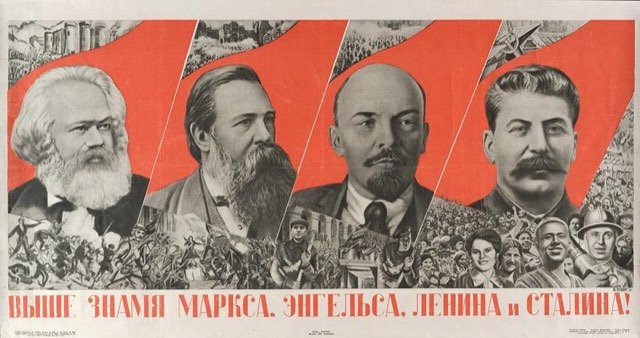
In this unit, you will examine approaches to literature that are largely sociological in nature, as many of the thinkers you are about to encounter understand works of literature as products of historical forces that are best analyzed through careful consideration of the material conditions in which they were produced. This unit will focus on literary theories that explore the historical, social, cultural, and political conditions under which literature is formed and produced.

Karl Marx and His Ideas
- Manifesto of the Communist Party and The Saylor Foundation’s An Introduction to Literary Theory Coursepack: Marxist TheoryMarxists Internet Archive’s version of Karl Marx and Friedrich Engels · read · 2 h
What Is Ideology?
- Glossary of Terms: IdeologyMarxists Internet Archive · Encyclopedia of Marxism · read · 30 min
Class and Consumption
- Modules on Marx: I: On Ideology, II: On the Stages of Economic Development, III: On Capital, and IV: On Commodity FetishismPurdue University · Dr. Dino Felluga’s Introductory Guide to Critical Theory · read · 2 h · archived copy
Dialectical Materialism
- Dialectical CriticismThe University of Toronto · Greig E. Henderson and Christopher Brown’s Glossary of Literary Theory · read · 30 min
Engels and False Consciousness
- Glossary of Terms: False Consciousness and Marx-Engels Correspondence 1893: Engels to Franz MehringMarxists Internet Archive · Encyclopedia of Marxism · read · 1 h
Theodor W. Adorno and Mass Culture
- Adorno on Film and Mass CultureJump Cut · A Review of Contemporary Media · Thomas Andrae · read · 2 h
- Lecture 17: The Frankfurt School of Critical TheoryYale University’s Open Yale Courses · Introduction to Theory of Literature · Dr. Paul H. Fry · watch · 1 h
- Walter Benjamin; Rice University Digital Scholarship Archive: The Rice University Studies 57, no. 4 (1971): Dr. René Wellek’s The Early Literary Criticism of Walter BenjaminStanford University’s Center for the Study of Language and Information · The Stanford Encyclopedia of Philosophy · Dr. Peter Osborne and Dr. Charles Matthew · read · 2 h
Terry Eagleton and Materialist Criticism
- Marxism and Critical TheoryThe University of Tennessee’s Internet Encyclopedia of Philosophy · Dr. Vince Brewton · read · 30 min
“Always Historicize:” Fredric Jameson’s Re-Writing of Marxist Thought
- On Interpretation: Literature as a Socially Symbolic Act; and The Saylor Foundation’s An Introduction to Literary Theory Coursepack: Fredric Jameson’s Post-MarxismWest Chester University’s version of Fredric Jameson’s The Political Unconscious · read · 1.5 h · archived copy
- Lecture 18: The Political UnconsciousYale University’s Open Yale Courses · Introduction to Theory of Literature · Dr. Paul H. Fry · watch · 1 h
Mikhail Bakhtin
- The Bakhtin Circle and The Saylor Foundation’s An Introduction to Literary Theory Coursepack: Bakhtin and the CarnivalesqueThe University of Tennessee’s Internet Encyclopedia of Philosophy · Dr. Craig Brandist · read · 2 h
Mikhail Bakhtin: Theories of Language and Dialogism
- The Bakhtin Circle and The University of Bucharest: Dr. Radu Surdulescu’s Mikhail Bakhtin and the Formalist TheoriesThe University of Tennessee’s Internet Encyclopedia of Philosophy · Dr. Craig Brandist · read · 2 h
The Novel and Heteroglossia
- Mikhail Bakhtin’s ‘Discourse in the Novel;’ Project Gutenberg’s version of Jane Austen’s Pride and Prejudice; and The Saylor Foundation’s An Introduction to Literary Theory Coursepack: Applying Theory to Jane Austen’s Pride and PrejudiceThe Saylor Foundation · read · 2 hJane Austen on Kulturbase
- Lecture 16: The Social Permeability of Reader and TextYale University’s Open Yale Courses · Introduction to Theory of Literature · Dr. Paul H. Fry · watch · 1 h
Chapter VI
Reader-Response Paradigms
This short unit will familiarize you with literary theories that emphasize the centrality of the reader of a literary text, including the reader’s assumptions and interpretive strategies and how these and similar influences contribute to the production of literary meaning.
Roots in Edmund Husserl’s Theories
- Phenemenology and The University of Tennessee’s Internet Encyclopedia of Philosophy: Dr. Marianne Sawicki’s Edmund HusserlThe University of Toronto · Greig E. Henderson and Christopher Brown’s Glossary of Literary Theory · read · 1 h
The Geneva School: Key Figures and Concepts
- Geneva SchoolThe University of Toronto · Greig E. Henderson and Christopher Brown’s Glossary of Literary Theory · read · 30 min
Emmanuel Lévinas
- Emmanuel LévinasStanford University’s Center for the Study of Language and Information · The Stanford Encyclopedia of Philosophy · Dr. Bettina Bergo · read · 1.5 h
An Immanent Reading of the Text
- Theodor W. Adorno; and The Marxists Internet Archive: Encyclopedia of Marxism’s Glossary of Terms: CritiqueStanford University’s Center for the Study of Language and Information · The Stanford Encyclopedia of Philosophy · Dr. Lambert Zuidervaart · read · 1.5 h
What Is Hermeneutics?
- HermeneuticsThe University of Toronto · Greig E. Henderson and Christopher Brown’s Glossary of Literary Theory · read · 30 min
- Lecture 3: Ways In and Out of the Hermeneutic CircleYale University’s Open Yale Courses · Introduction to Theory of Literature · Dr. Paul H. Fry · watch
Hermeneutics: Theories of Language and Interpretation
- Hermeneutics: Introduction and Hermeneutics: The Birth of a Discipline; David Weininger’s Hermeneutics and PhenomenologyBoston University · Dr. Wesley Wildman · read · 1.5 h
Literary Study in the Institution
- Lecture 24: The Institutional Construction of Literary StudyYale University’s Open Yale Courses · Introduction to Theory of Literature · Dr. Paul H. Fry · watch · 1 h
Louise M. Rosenblatt and the Origins of Reader-Response Theory
- The Poem as Event; and The University of Toronto: Greig E. Henderson and Christopher Brown’s Glossary of Literary Theory: Reader-Response CriticismCalifornia State University Northridge’s version of Dr. Louise M. Rosenblatt · read · 1.5 h · archived copy
Wolfgang Iser and the Dialectical Relationship between Reader and Text
- Implied ReaderThe University of Toronto · Greig E. Henderson and Christopher Brown’s Glossary of Literary Theory · read · 30 min
- Lecture 4: Configurative ReadingYale University’s Open Yale Courses · Introduction to Theory of Literature · Dr. Paul H. Fry · watch · 1 h
Chapter VII
Context, Culture, and the Other
In this unit, you will explore theoretical paradigms that propose that literary meaning is constructed only through an awareness of the cultural and historical context or situation in which it was written. You will explore concepts related to postcolonialism, examine the principles of New Historicism, and consider the critical concept of othernessin literary theory and throughout world literatures.
Basic Concepts and Practices
- New Historicism and The Saylor Foundation’s An Introduction to Literary Theory Coursepack: New HistoricismThe University of Toronto · Greig E. Henderson and Christopher Brown’s Glossary of Literary Theory · read · 1 h
- Lecture 19: The New HistoricismYale University’s Open Yale Courses · Introduction to Theory of Literature · Dr. Paul H. Fry · watch · 1 h
New Historicism versus Traditional Historicism
- New Historicism and Cultural MaterialismThe University of Tennessee’s Internet Encyclopedia of Philosophy · Dr. Vince Brewton · read · 30 min
Text, Culture, and Power Relations
- Hamlet’s Ghost: A Review ArticleProject Gutenberg’s version of William Shakespeare’s Hamlet; and The University of California Los Angeles’s version of Anthropoetics 7, no. 1 (2001) · Dr. Peter Goldman · read · 1.5 h · archived copyWilliam Shakespeare on KulturbaseHamlet on Kulturbase
Edward Said, Eurocentrism, and Imperialism
- Ethnic Studies and Postcolonial Criticism; Lehigh University: Dr. Amardeep Singh’s An Introduction to Edward Said, Orientalism, and Postcolonial Literary Studies; and Emory University: Dr. Deepika Bahri’s Introduction to Postcolonial StudiesThe University of Tennessee’s Internet Encyclopedia of Philosophy · Dr. Vince Brewton · read · 2 h
- Lecture 22: Postcolonial CriticismYale University’s Open Yale Courses · Introduction to Theory of Literature · Dr. Paul H. Fry · watch · 1 h
Alterity and the Concept of the Other in Literature
- Introduction to Postcolonial Studies and The Saylor Foundation’s An Introduction to Literary Theory Coursepack: Postcolonial TheoryEmory University · Dr. Deepika Bahri · read · 1.5 h · archived copy
Cultural Hybridity in Literature
- An Image of Africa; and The Saylor Foundation’s An Introduction to Literary Theory Coursepack: Applying Theory to Joseph Conrad’s Heart of DarknessProject Gutenberg’s version of Joseph Conrad’s Heart of Darkness (Chapters 1-3); Central Oregon Community College’s version of Chinua Achebe · read · 2.5 hJoseph Conrad on KulturbaseHeart of Darkness on Kulturbase
Approaches to Representations of Ethnic Identities in Majority Culture
- Ethnic Studies and Postcolonial CriticismThe University of Tennessee’s Internet Encyclopedia of Philosophy · Dr. Vince Brewton · read · 1 h
Traditions of Eurocentrism and Questions of Canon
- An Elegy for the Canon; Bloom’s Elegy - Part Two; and Bloom’s Elegy - ConclusionMrbauld.com’s version of Harold Bloom · read · 1.5 h
W.E.B. DuBois and the Double Consciousness Concept
- Of Our Spiritual StrivingsW.E.B. Du Bois’s The Souls of Black Folk · read · 1 h
- Lecture 21: African-American CriticismYale University’s Open Yale Courses · Introduction to Theory of Literature · Dr. Paul H. Fry · watch · 1 h
Chapter VIII
Literary Theories in the New Century and Arguments against Literary Theory
As the field of literary theory continues to advance, a plethora of new critical perspectives has come to the fore in recent years. Today, a number of cutting-edge theories that draw on the principle of the Other, earlier modes of literary theory, and/or related intellectual fields—such as philosophy, psychology, and mathematics—are continuing to shape literary studies. However, the popularization of literary theory throughout the academy over the past forty years also has led to a counter-movement amongst a number of academics who have dismissed the validity of literary theory. The final unit of this course will examine some of the more recently developed literary theories as well as present a few arguments that critique the validity of literary theory.
Ecocriticism
- Ecocriticism and EcotheoryThe Saylor Foundation’s An Introduction to Literary Theory Coursepack · read · 1 h
- The Hitchhiker’s Guide to EcocriticismPMLA 121 (2006) · Dr. Ursula K. Heise · read · 1.5 h · archived copy
Trauma Theory
- Trauma Studies and Faulkner’s Sanctuary and The Saylor Foundation’s An Introduction to Literary Theory Coursepack: Trauma TheoryGenders OnLine Journal 42 (2005) · D. Stringer · read · 1.5 h · archived copy
Chaos Theory
- Chaos Theory as Literary TheoryThe Saylor Foundation · read · 1 h
Against Theory: Arguments Opposed to Theoretical Readings
- In Theory; The Nation: William Deresiewicz’s The Business of Theory; and The Saylor Foundation’s An Introduction to Literary Theory Coursepack: Arguments against TheoryThe London Review of Books · Christopher Ricks · read · 3.5 h
The Future of Theory
- New Frontiers in Literary Theory; Canadian Review of Comparative Literature 33, no. 3-4 (2006): Dr. Andrzej Warminski’s The Future Past of Literary Theory; and Style 42, no. 2-3: Dr. Joseph Carroll’s An Evolutionary Paradigm for Literary StudyThe Saylor Foundation’s An Introduction to Literary Theory Coursepack · read · 2.5 h
- ENGL301 Final ExamThe Saylor Foundation · final exam · no longer online
About this course
This course is Saylor Academy's ENGL301, Introduction to Literary Theory, one of the complete university courses the Saylor Foundation made free from 2008 and retired in 2015. Saylor licensed its course text under CC BY 3.0; the original is on GitHub. Here it is laid out as chapters, links that have died go to an archived copy from the Internet Archive where one exists, assessments that needed a Saylor login are left out, and people and works are linked to Kulturbase. The readings and lectures belong to their publishers and are linked, not copied. Pictures: Wikimedia Commons, credited under each picture.
All Saylor courses · Free culture courses · The Chautauqua Reading Course