Literature · Saylor ENGL401
Shakespeare
Many consider William Shakespeare the greatest dramatist—even the greatest writer—of all time. His impact on Western culture and language is unmistakable, but his works have also been continuously read and performed around the world, illustrating his global significance.
More about this course
Over the course of this semester, we will attempt to determine why his works have become so widely revered, or why they seem, to quote Ben Jonson, “not for an age, but for all time.” We will begin by familiarizing ourselves with Elizabethan theatre, language, and culture—the world in which Shakespeare lived and breathed. We will then conduct close readings of a number of Shakespeare’s most acclaimed plays, progressing through his dramatic works by categorizing them in three groups: comedies, tragedies, and histories. Finally, we will turn to some of his poetry, which Shakespeare (perhaps surprisingly) considered superior to his plays. By the end of this course, you will have developed a strong understanding of Shakespeare’s works—their style, their linguistic accomplishments, their hallmarks—as well as a working knowledge of the Elizabethan Period in which he wrote.
Upon successful completion of this course, the student will be able to:
In order to take this course, you must:
Chapter I
Introductions to the Legend
Despite his celebrity, many of the details of William Shakespeare’s personal life remain a mystery. Nevertheless, we will learn what we can about who Shakespeare was by first reviewing the few facts known about him and then situating him within the broader sweep of the Renaissance and the Elizabethan Period, attending to both socio-historical trends and literary developments. By the end of this unit, we will have a better sense of the context in which Shakespeare wrote and the dramatic traditions to which he was privy. We will conclude with a brief overview of critical concepts and terms pertaining to the study of theater.
Brief Biographic Snapshot
- Shakespeare’s LifeFolger Shakespeare Library · read
Shakespeare’s Education and Extraordinary Talent with Language
- Shakespeare’s Education and Childhood and Shakespeare’s Lost YearsShakespeare-online.com · read
Shakespeare as Dramatist and Poet—Overview of His Oeuvre
- Shakespeare’s WorksBardweb.net · read · archived copy
The Legacy: Thoughts on Shakespeare’s Impact of Language, Canon,and Culture
- Excerpts from TheWestern Canon by Harold BloomBridgewater College · Dr. Alice Trupe · read · archived copy
Shakespeare on Film
- Shakespeare on FilmThe Saylor Foundation · read
Progression of the Renaissance
- RenaissanceCity University of New York (Brooklyn College) · Dr. Lilia Melani’s Introduction to the · read · archived copy
Humanism
- HumanismThe Saylor Foundation’s Introduction to · read
Utopianism
- Thomas More’s UtopiaThe Saylor Foundation · read
Recovery of Classical Antiquity
- The Discovery of Classical AntiquityThe Metropolitan Museum of Art · read · archived copy
Characteristics of Renaissance Art
- Italian Renaissance ArtYouTube · Introduction to · watch
Queen Elizabeth—Life and Legacy
- Elizabeth I: Queen of EnglandThe Saylor Foundation · Tudorhistory.org · read
The Growth of the City and City Life
- The City of LondonElizabethan.org · read
Views of the Elizabethan Monarchy
- Elizabethan Government and PowerThe Saylor Foundation · read
Social Relations in Elizabethan England
- The Structure of Elizabethan SocietyWalter Nelson · read · archived copy
Leisure in Elizabethan Times
- Elizabethan LeisureAcademic.ru’s Introduction to · read
An Expanding Globe: Explorers in the New World
- Elizabethan ExplorationUniversity of Wisconsin, Madison · Dr. Johann P. Sommerville’s Introduction to · read
Religion in the Elizabethan Period
- Religion and Spirituality in Elizabethan EnglandErasofElegance.com’s Introduction to · read
Overview of Queen Elizabeth’s Patronage and Interest in the Arts
- Queen Elizabeth: Shakespeare’s PatronShakespeare-online.com · read
Elizabethan Poetic Conventions
- Sir Philip Sidney’s Astrophil and Stella; and Sir Philip Sidney’s Defense of PoesyLuminarium’s version of Sir Philip Sidney’s Astrophil and Stella; Goucher College · Dr. Arnie Sanders’ Introduction to · read
Elizabethan Theater, Theater Companies, and Theater-Going
- Elizabethan TheatreEncyclopedia Britannica’s Introduction to · read · archived copy
The Globe
- The Old Globe Theater History; The Orange Grove: Clemson University: Karl Herbst’s Virtual Globe Virtual TourWilliam-Shakespeare.info · read
The Influence of Medieval Drama
- Renaissance English Drama: From Medieval to RenaissanceLuminarium.org · read
Relationship with and Debts to Christopher Marlowe
- In Search of Shakespeare: Christopher MarloweChristopher Marlowe’s The Tragical History of Doctor Faustus and PBS.org · read
The Masque in the Court of Queen England
- Elizabethan MasquesBen Jonson’s The Masque of Blackness and Elizabethan-era.org’s Introduction to · readBen Jonson on Kulturbase
Shakespeare’s Patrons
- King’s James I: Shakespeare’s PatronShakespeare-online.com · read
Term Toolkit: Review of Dramatic/Theatrical Jargon and Concepts
- Glossary of Drama TermsMcGraw-Hill · read
Chapter II
Comedies
In its Elizabethan usage, a “comedy” is a play that ends happily, typically moving from a situation of mistaken identities and humorous mix-ups to reconciliation and marriage. In this unit, we will examine and identify these and other Shakespearean comedic conventions while conducting close readings of two of Shakespeare’s comedies, “Twelfth Night” and “A Midsummer Night’s Dream.”
In the Great Books lists Twelfth Night · A Midsummer Night's Dream
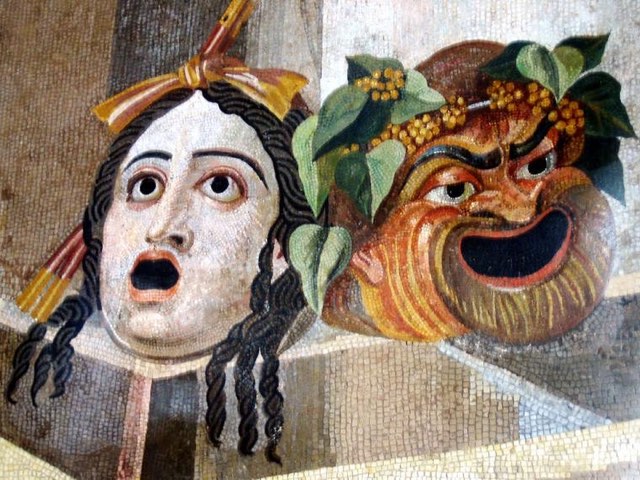

Origins of Comedy in Classic Theater
- Ancient Greek Comedy, Roman Comedy I, and Roman Comedy IIUtah State University · Mark Damen’s Classical Drama and Society · read
“All’s Well that Ends Well:” The Marriage Plot in Shakespeare’s Comedies
- William Shakespeare’s All’s Well that Ends Well and The Folger Shakespeare Library’s Introduction to the Role of Marriage in All’s Well that Ends WellThe Saylor Foundation · readWilliam Shakespeare on Kulturbase
Characteristics of Shakespearean Comedies
- Shakespeare’s Plays: ComedyCalifornia Polytechnic State University · Dr. Debora B. Schwartz · read · archived copy
Blending of Humor and Tragedy in the “Problem Plays”
- Shakespeare’s Problem PlaysThe College of Holy Cross · The Internet Shakespeare Project’s version of Daniel Colvin · read · no longer online
The Carnivalesque: Disguise, Clowning, and Identity in Twelfth Night
- Shakespeare’s The Twelfth Night – A Comedy of Carnivalesque ProportionsThe Saylor Foundation’s version of William Shakespeare’s Twelfth Night and Associated Content · readWilliam Shakespeare on Kulturbase
Sexuality in Twelfth Night
- Twelfth NightYouTube · Great Writers Inspire · Emma Smith · watch · 1 h
Introduction to A Midsummer Night’s Dream
- William Shakespeare’s A Midsummer Night’s Dream and The Folger Shakespeare Library’s Introduction to A Midsummer Night’s DreamThe Saylor Foundation · readWilliam Shakespeare on Kulturbase
Shakespeare’s Sources for A Midsummer Night’s Dream
- Midsummer Madness, Dangerous Dreams: Shakespeare’s Sources for A Midsummer Night’s DreamJoseph Lockett · read · archived copy
Matters of Language and A Midsummer Night’s Dream
- Midsummer Night’s DreamYouTube · Great Writers Inspire · Emma Smith · read · 45 min
Chapter III
Tragedies
In this unit, we will read two of Shakespeare’s most famous tragedies, analyzing their various thematic, structural, and linguistic achievements, while attempting to define for ourselves: What is a Shakespearean tragedy? How is it different from a Shakespearean comedy, or from an Aristotelian tragedy?
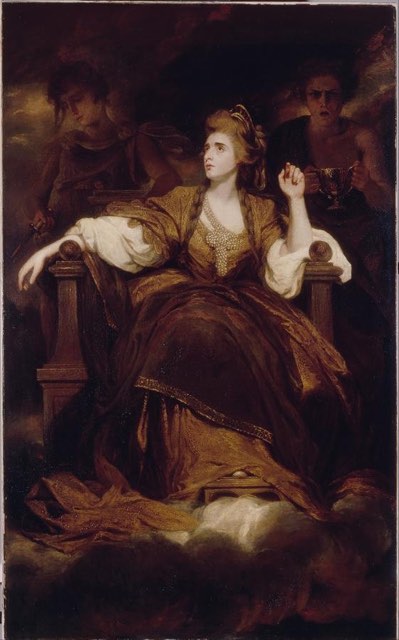

What Is Tragedy? A Review of the Tradition
- Classical Greek Tragedy I, Classical Greek Tragedy II, and Classical Greek Tragedy IIIUtah State University · Mark Damen’s Classical Drama and Society · read
The Flawed Hero and His Downfall: Aristotle’s Conceptualization of Tragedy
- Outline of Aristotle’s Theory of Tragedy in the PoeticsThe College of New Rochelle · Dr. Barbara F. McManus’ · read · archived copy
Characteristics of Elizabethan Tragedy
- TragedyCity University of New York (Brooklyn College) · Dr. Lilia Melani’s Introduction to · read · archived copy
Hallmarks of the Shakespearean Tragedy
- Shakespearean Tragedy: Lectures on Hamlet, Othello, King Lear, MacbethA. C. Bradley · read · 45 min
Power and Politics in Hamlet
- Introductory Lecture on Shakespeare’s HamletThe Saylor Foundation’s version of William Shakespeare’s Hamlet and Vancouver Island University · Dr. Ian Johnston · readWilliam Shakespeare on KulturbaseHamlet on Kulturbase
The Representation of Insanity/Madness in “Hamlet”
- The Real or Assumed Madness of HamletTheatreHistory.com · Simon Augustine Blackmore · read · archived copy
Using Psychoanalysis to Understand Hamlet
- Now, Mother, What’s the Matter? Dr. Freud’s HamletUC Santa Cruz · Hamlet Conundrums · read · archived copy
Depth of Characterization: Hamlet’s Problems
- Hamlet and His ProblemsCircle, Uncoiled · T.S. Eliot · read · archived copyT.S. Eliot on Kulturbase
Women in Hamlet
- Frailty, thy name is woman: Women in HamletUC Santa Cruz · Hamlet Conundrums’ · read · archived copy
Introducing Shakespeare’s Macbeth
- Introduction to MacbethThe Saylor Foundation’s version of William Shakespeare’s Macbeth and Vancouver Island University · Dr. Ian Johnston · readWilliam Shakespeare on KulturbaseMacbeth on Kulturbase
Witchcraft and the Role of the Supernatural
- Shakespearean Tragedy: Lectures on Hamlet, Othello, King Lear, MacbethA. C. Bradley · read · 45 min
The Representation of Lady Macbeth
- Shakespearean Tragedy: Lectures on Hamlet, Othello, King Lear, MacbethA. C. Bradley · read · 45 min
- Lady MacbethTheatre Database · Anna Jameson · read · archived copy
Chapter IV
Historical Plays
Though the first historical play we will read, Richard III, was one of Shakespeare’s earliest plays, it features remarkable rhetorical talent and brilliant characterization. Shakespeare would go on to write a number of rich historical plays (including Henry V), which together explore the decline of feudal England and the rise of the modern nation-state. In this unit, we will continue our project of closely reading Shakespeare’s most famous plays, attempting to link these plays to those we have already read in terms of form, style, and theme.
In the Great Books lists Richard III · Henry V
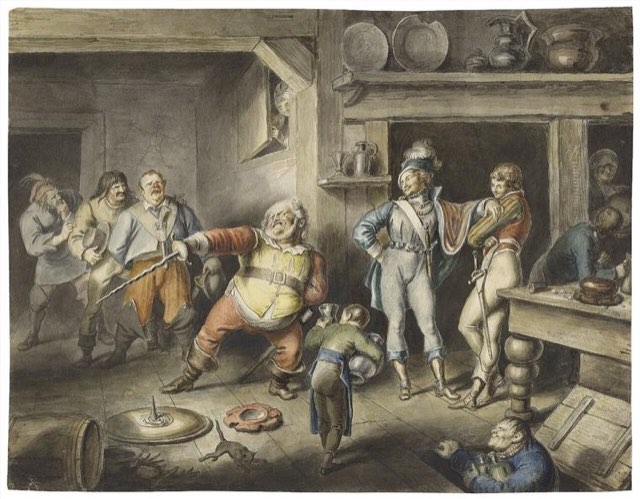

Reading Richard III
- William Shakespeare’s Richard IIIThe Saylor Foundation · readWilliam Shakespeare on KulturbaseRichard den 3. on Kulturbase
Overview of the Play’s Construction and Its Place in the First Tetralogy
- Richard III (1452—1485)BBC.com’s Historical Figures · read · archived copy
Shakespeare’s Moral Vision of English History in Richard III
- Lecture on Shakespeare’s Transformation of Medieval Tragedy and an Introduction to Richard IIIMalaspina University-College · Dr. Ian Johnston · read · archived copy
Historical Review: Who Was Henry V?
- William Shakespeare’s Henry V and The University of Puget Sound: Background Information on Henry VThe Saylor Foundation · readWilliam Shakespeare on Kulturbase
Placing Henry V in Shakespeare’s Oeuvre of History Plays
- The Ironies of Success in Politics: An Introduction to Shakespeare’s Henry VVancouver Island University · Dr. Ian Johnston · read · archived copy
War and Church in Henry V
- Holy War in Henry VCal Poly University (San Luis Obispo) · Steven Marx · read · archived copy
Study Questions for Henry V
- Henry V: Study QuestionsCalifornia Polytechnic State University · Dr. Debora B. Schwartz · read · archived copy
Chapter V
Poetry
While he is now best known for his stage dramas, William Shakespeare was also one of the most adept and gifted poets in the English language. Throughout much of his early life, Shakespeare wrote and published some of the most lyrically beautiful, stylistically clever, and psychologically insightful poems in the English language. In this unit, we will closely examine Shakespeare’s poems “Venus and Adonis,” “The Rape of Lucrece,” and all 154 of his sonnets in order to reach a greater understanding of some of his intellectual and poetic influences, personal circumstances, and thematic and poetic concerns and visions.
In the Great Books lists Shakespeare's sonnets
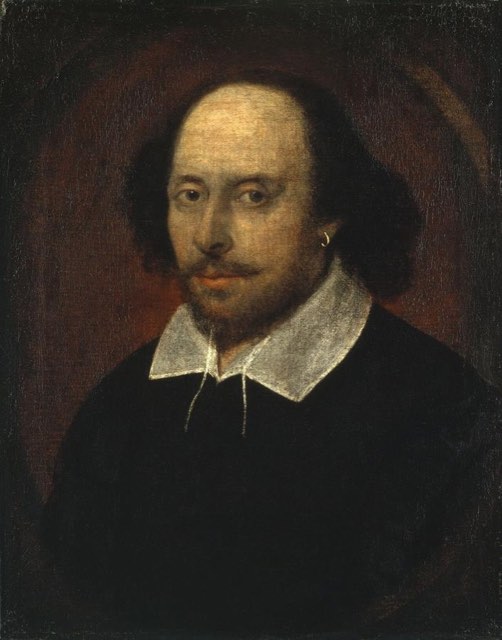

Verse in Shakespeare’s Drama
- Shakespearean Verse and ProseCalifornia Polytechnic State University · Dr. Debora B. Schwartz · read · archived copy
Introduction to Venus and Adonis
- William Shakespeare’s Venus and Adonis and The Folger Shakespeare Library: Introduction to Venus and AdonisThe Saylor Foundation · readWilliam Shakespeare on Kulturbase
Relationship to Poetic Tradition: Ties with Ovid’s Metamorphoses and Marlowe’s Hero and Leander
- The Influence of Ovid’s Metamorphoses and Marlowe’s Hero and Leander upon Shakespeare’s Venus and AdonisThe Saylor Foundation’s versions of Ovid’s Metamorphoses and Marlowe’s Hero and Leander; and The Saylor Foundation · read · no longer online
Narrative and Desire in Venus and Adonis
- Narrative and the Forms of Desire in Shakespeare’s Venus and AdonisInternet Shakespeare Editions · Gary Kuchar · read
Review of Venus and Adonis
- Shakespeare: Venus and AdonisThe Kennedy Center · watch
Rhyme Royal: Matters of Form, Rhythm, and Meter
- Commentary upon The Rape of LucreceThe Saylor Foundation’s version of William Shakespeare’s The Rape of Lucrece and Hudson Shakespeare Company’s Introduction to and · readWilliam Shakespeare on Kulturbase
Storyline and Relationship to Ovid’s Works
- The Rape of Lucrece: Synopsis and Monmouth College: Dr. Jeremy McNamara’s ‘Ovidius Naso was the Man:’ Shakespeare’s Debt to OvidHudson Shakespeare Company · read · archived copy
The Rape of Lucrece in the Context of Shakespeare’s Other Poems
- William Shakespeare PoemsWilliam-Shakespeare.info · readWilliam Shakespeare on Kulturbase
Shakespeare’s Innovation with the Form
- SonnetUPenn · Dr. Al Filreis’ Explication of the · read
Portrait of a “Fair Youth:” Sonnets 1-126
- Shakespeare and the Fair YouthThe Saylor Foundation’s version of William Shakespeare’s Sonnets 1-126 and Shakespeare Oxford Society · Charlton Ogburn, Jr. · readWilliam Shakespeare on Kulturbase
Romancing the “Dark Lady”: Sonnets 127-152
- Dark Lady SonnetsThe Saylor Foundation’s version of William Shakespeare’s Sonnets 127-152 and Hudson Shakespeare Company’s Introduction to Shakespeare · readWilliam Shakespeare on Kulturbase
Dedicated to Cupid: Sonnets 153-154
- Commentary on Sonnet 153 (CLIII)The Saylor Foundation’s version of William Shakespeare’s Sonnets 153-154 and Shakespeares-Sonnets.com · readWilliam Shakespeare on Kulturbase
Critical Debates Surrounding the Sonnets
About this course
This course is Saylor Academy's ENGL401, Shakespeare, one of the complete university courses the Saylor Foundation made free from 2008 and retired in 2015. Saylor licensed its course text under CC BY 3.0; the original is on GitHub. Here it is laid out as chapters, links that have died go to an archived copy from the Internet Archive where one exists, assessments that needed a Saylor login are left out, and people and works are linked to Kulturbase. The readings and lectures belong to their publishers and are linked, not copied. Pictures: Wikimedia Commons, credited under each picture.
All Saylor courses · Free culture courses · The Chautauqua Reading Course