Literature · Saylor ENGL403
The Gothic Novel
What makes a novel “Gothic”? Scholars have debated this question for decades: some consider “the Gothic” a literary time period, spanning from the 1760s to 1820; others view it as a set of thematic concerns; still others understand it as a literary mode, in which contemporary authors like Stephen King continue to write.
More about this course
In this course, you will explore these and other definitions as you read a number of novels (and have the option to screen a film), attempting to define for yourself the term “Gothic.” You will supplement your studies with critical literature on the Gothic novel and literary mode, critiquing and adapting the approaches and theories as you see fit. You will begin the course with an overview of approaches to the literary Gothic and an outline of its stereotypical characteristics and elements. You will then progress through the course by examining Gothic novels (and an optional film) in three thematic categories (which, as you will see, often overlap): Gothic Spaces, the Monstrous Other, and Gender and Sexuality. The Gothic novel is at one and the same time a specific English literary event and a set of literary qualities that persist in American and European novels and films to the present day. The Gothic era of English literature begins with the novelist Horace Walpole (1717-1797) and the 1765 publication of The Castle of Otranto: A Gothic Story. Some scholars suggest that the last great novel of the era is Melmoth the Wanderer by Charles Robert Maturin (1782-1824); it was published in 1820. The literary Gothic, on the other hand, refers to a set of themes and conventions, whose roots and sensibilities originate in the English Gothic novels of the late eighteenth and early nineteenth century. After 1820, books and later films are described as Gothic because their creators have adapted and expanded the plots, narrative devices, and themes of the Gothic era of English literature, bringing new life to the genre by reflecting on contemporary political, social, and economic issues. What all Gothic literature and film have in common is the exploration of contemporary taboos, creating an atmosphere of terror. The taboo subjects change over time, but the fear and trembling that they invoke do not.
Upon successful completion of the course, the student will be able to:
In order to take this course you must: √ Have access to a computer. √ Have continuous broadband Internet access. √ Have the ability/permission to install plug-ins or software (e.g., Adobe Reader or Flash). √ Have the ability to download and save files and documents to a computer. √ Have the ability to open Microsoft files and documents (.doc, .ppt, .xls, etc.). √ Be competent in the English language. √ Have read the Saylor Student Handbook.
Chapter I
An Introduction to the Gothic
Though originally maligned as a “low” literary form, not worthy of serious study, the Gothic novel has more recently come into favor among literary scholars, who see in it a wealth of subversive literary features. In this unit you will read a number of scholarly essays exploring the Gothic in order to engage with the debates surrounding the genre and to acquaint yourself with critical approaches and reading methods that you may choose to challenge or adopt for yourself. The unit will touch briefly upon the novel versus other forms of the Gothic and conclude with a review of the genre’s hallmark devices, figures, and tropes, which, as Professor Eugenia DeLamotte noted, almost became clichés before they were conventions.

Etymology of “Gothic”: From Goths to Architecture
- The Gothic Experience: Gothic Architecture, Gothic Literature, The Oxford English Dictionary Definition; University of California, Davis: David De Vore, Anne Domenic, Alexandra Kwan, and Nicole Reidy’s The Gothic Novel; The Norton Anthology of English Literature: The Gothic: OverviewBrooklyn College · Dr. Lilia Melani · read · 1 h
Gothic versus Classical Architecture and 17th- and 18th-Century Connotations
- Gothic ArchitectureBoston College · Professor Jeffery Howe’s A Digital Archive of Architecture · read · 15 min
- Gothic Art and ArchitectureInternational World History Project · Andrew Henry Robert Martindale · read · 1 h · archived copy
The Gothic as a Literary Mode
- The Gothic as a Literary ModeThe Saylor Foundation · read · 15 min
- The Gothic SublimeUniversity of Virginia · Vijay Mishra · read · archived copy
The Gothic as a Literary Time Period
- The Romantic Period; Tabula Rasa: David Carroll and Kyla Ward’s The Horror Timeline; Carson-Newman College: Dr. L. Kip Wheeler’s Literary Terms and DefinitionsThe Norton Anthology of English Literature · read · 2 h · archived copy
The Gothic as a Set of Literary Themes
- The Structure of Gothic ConventionUniversity of Virginia · Eve Kosofsky Sedgwick · read · archived copy
- The Gothic as a Set of Literary ThemesThe Saylor Foundation · read
The Gothic as a Portrait of the Fallen World
- Introduction to the Gothic TraditionUniversity of Saskatchewan · Kathy Prendergast · read · 30 min · archived copy
- The Gothic as a Portrait of the Fallen WorldThe Saylor Foundation · read · 15 min
An Overview of Alternative Approaches to the Gothic
- The Northanger Novels and The Norton Anthology of English Literature: Jane Austen, from Northanger Abbey and Thomas Love Peacock, from Nightmare AbbeyAdam Matthew Publications · Peter Otto · read · 1 h · archived copyJane Austen on Kulturbase
What Is a Novel? Matters of Form and Convention
- Form and Ideology in the Gothic NovelUniversity of Virginia · Stephen Bernstein · read · 15 min · archived copy
The Rise of the Novel
- The Novel and The Gothic Experience: The First Wave of Gothic Novels: 1765-1820, Gothic Fiction in the Nineteenth Century, Gothic Fiction in the Twentieth Century, Some ConnectionsBrooklyn College · Dr. Lilia Melani · read · 30 min
The Gothic in Drama and Poetry
- Gothic Drama; The Saylor Foundation: Percy Bysshe Shelley’s The Cenci: A Tragedy in Five Acts, Hymn to Intellectual Beauty, and Dark Spirit of the Desart Rude; Poets.org: John Keats’ Eve of St. Agnes and Lord Byron’s The GiaourUniversity of Virginia · read · 5 h · archived copy
Gothic Architecture and the Form of the Novel: Twists and Turns, Suspense, and the Labyrinth
- Techniques of TerrorUniversity of Virginia · Cannon Schmitt · read · archived copy
Decayed or Ruined Buildings
- A Glossary of Literary Gothic TermsGeorgia Southern University · Dr. Douglass H. Thomson · read
Heroes and Villains
- A Glossary of Literary Gothic Terms and University of Virginia: Hero or Villain or Hero-Villain?: Defining Masculinity in the Female GothicGeorgia Southern University · Dr. Douglass H. Thomson · read · 15 min
The Wandering Jew
- A Glossary of Literary Gothic Terms and McGill University: Carol Margaret Davison’s Gothic Cabala: The Anti-Semitic Spectropoetics of British Gothic LiteratureGeorgia Southern University · Dr. Douglass H. Thomson · read · 2 h
The Sublime
- Literary Terms and Definitions and The Victorian Web: George P. Landow’s Eighteenth-Century Theories of the SublimeCarson-Newman College · Dr. L. Kip Wheeler · read · 15 min · archived copy
Supernatural Elements
- A Glossary of Literary Gothic Terms and The Literary Gothic: Mary Shelley’s On GhostsGeorgia Southern University · Dr. Douglass H. Thomson · read · 1 hMary Shelley on Kulturbase
Gender-Bending and Sexual Deviance
- Queer Romanticisms: Past, Present, and FutureRomanticism on the Net · Michael O’Rourke and David Collings’ · read · 2 h
Others and Outsiders
- The Other and University of Virginia: Frederick R. Karl’s Gothic, Gothicism, GothicistsBrooklyn College · Dr. Lilia Melani · read · 1 h
Labyrinths
- A Brief Introduction to the Gothic NovelGothic Labyrinth · Monica Kanellis’ · read · archived copy
Psychological Disintegration
- A Brief Introduction to the Gothic NovelGothic Labyrinth · Monica Kanellis’ · read · archived copy
- Gothic Conventions QuizThe Saylor Foundation · write · 30 min
Chapter II
Gothic Spaces
The ruined castle, with its gargoyles, abandoned wings, and dark dungeons, has become a Gothic cliché. In this unit you will examine notions of space, place, and architecture as they pertain to psychology, gender relations, and questions of ownership and family inheritance in the Gothic novel.
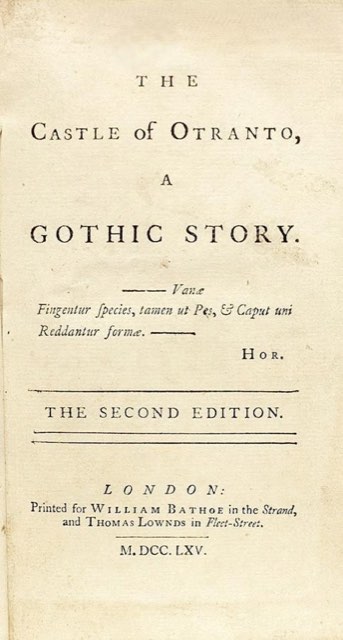
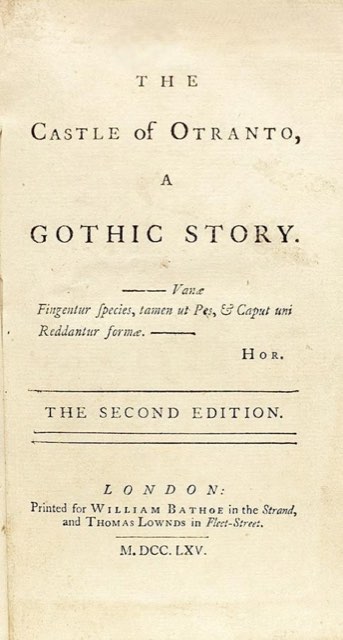
The Castle of Otranto, the Original Gothic Novel
- Horace Walpole’s The Castle of Otrantoread · 4 h
The Novel’s Self-Labeling as “Gothic”
- Gothic Fiction: IntroductionAdam Matthew Publications · Peter Otto · read · 1 h
Antiquarianism and Medievalism
- Virtual TourYale University · The Lewis Walpole Library’s Horace Walpole’s Strawberry Hill Collection · watch · 1 h · archived copy
- The Mysterious Castle and The Norton Anthology of English Literature: Strawberry HillGothic Labyrinth · Monica Kanellis’ · read · 45 min · archived copy
The Figuration of the Castle
- Mingled Measures: Gothic Parody in Tales of Wonder and Tales of TerrorRomanticism on the Net · Douglass H. Thomson · read · 15 min
Inside and Outside of the Castle: Movement, Space, and Constraint
- Faulty Towers: Reform, Radicalism and the Gothic Castle, 1760-1800Romanticism on the Net · Frances A. Chiu · read · 2 h
Fathers and Sons: Land Ownership, Inheritance, and Filial Rupture
- The Mysterious Castle and Aaborg University: Carsten Hammer Andersen’s Patriarchal Power in The Castle of OtrantoGothic Labyrinth · Monica Kanellis’ · read · 1 h · archived copy
Crisis in Romance: Genre and Plot Concerns
- Romance and the Didactic in the Eighteenth-Century Novel and Brooklyn College: Dr. Lilia Melani’s The Gothic Experience: HistoryConnotations · A Journal for Critical Debate · Brean S. Hammond · read · 1 h · archived copy
The Supernatural
- A Glossary of Literary Gothic Terms and University of Maryland’s Praxis Series: Fred Botting’s Reading MachinesGeorgia Southern University · Dr. Douglass H. Thomson · read · 30 min · archived copy
- Reading Questions: The Castle of OtrantoThe Saylor Foundation · write · 1 h
The Mysteries of Udolpho
- Ann Radcliffe and Project Gutenberg: Ann Radcliffe’s The Mysteries of UdolphoBrooklyn College · Dr. Lilia Melani · read · 12 h
The Centrality of the Castle
- Gothic PossibilitiesUniversity of Virginia · Norman N. Holland and Leona F. Sherman · read · archived copy
Homage to Walpole: Intertextual Relations between The Mysteries of Udolpho and The Castle of Otranto
- Gothic Echoes/Gothic Labyrinths and University of Pennsylvania: Robert D. Hume’s Gothic versus Romantic: A Revaluation of the Gothic NovelAdam Matthew Publications · Peter Otto · read · 2 h
- Priestley, Radcliffe, and the Gothic Grammar of AtmosphereiTunes U · University of California, Los Angeles · Dr. Jayne Lewis’ · read · 1 h · no longer online
Movement and Stasis: Traveling and Entrapment in the Novel
- On ‘Metaphysical Prisons’ and Ellen Moers’ Literary WomenUniversity of Virginia · Jacques Blondel · read · 15 min · archived copy
- The Madhouse, the Whorehouse, and the ConventUniversity of Virginia · Max Byrd · read · 15 min · archived copy
Representation of Domestic Space and Gender Relations
- The Bloody Bedchamber and Romanticism on the Net: Frances A. Chiu’s Dark and Dangerous Designs: Tales of Oppression, Dispossession, and Repossession, 1770-1800Gothic Labyrinth · Monica Kanellis’ · read · 1 h · archived copy
The Sublime
- Eighteenth-Century Theories of the SublimeUniversity of Adelaide · Immanuel Kant’s The Critique of Judgement; University of Pennsylvania · Edmund Burke’s A Philosophical Enquiry into the Origin of Our Ideas of the Sublime and Beautiful; Brown University · George P. Landow · read · 6 h · archived copy
Terror versus Horror
- On the Supernatural in Poetry and Brooklyn College: Dr. Lilia Melani’s Terror versus HorrorThe Literary Gothic · Ann Radcliffe · read · 1 h
The Swooning Heroine, Bodily Weakness, and Victimization
- A Glossary of Literary Gothic Terms and University of Virginia: Terry Castle’s The Spectralization of the Other in The Mysteries of UdolphoGeorgia Southern University · Dr. Douglass H. Thomson · read · 15 min
Mystery and the Supernatural in the Novel
- The Preceptor as Fiend: Radcliffe’s Psychology of the Gothic and University of Pennsylvania: Samuel Taylor Coleridge’s Review of Ann Radcliffe, The Mysteries of UdolphoUniversity of Alberta · Dr. David S. Miall · read · 4 h
Elements of Sensibility and Imagination versus Reason
- A Glossary of Literary Gothic TermsGeorgia Southern University · Dr. Douglass H. Thomson · read
- Reading Questions: The Mysteries of UdolphoThe Saylor Foundation · write · 1 h
Chapter III
The Monstrous Other
Frankenstein *may be the most famous of the Gothic novels; it has been adapted and reincarnated innumerable times since its initial publication in 1818. Part of the novel’s popularity relates to its figuration of the monster, an archetype that appears in a number of Gothic novels and has become something of a cultural icon in its various iterations, particularly in recent years, with the fantastic commercial success of vampire-related fiction. In this unit you will explore the representation of the monster or the “Other” in the Gothic novel, relating it to matters of gender, race, the unknown, and more.
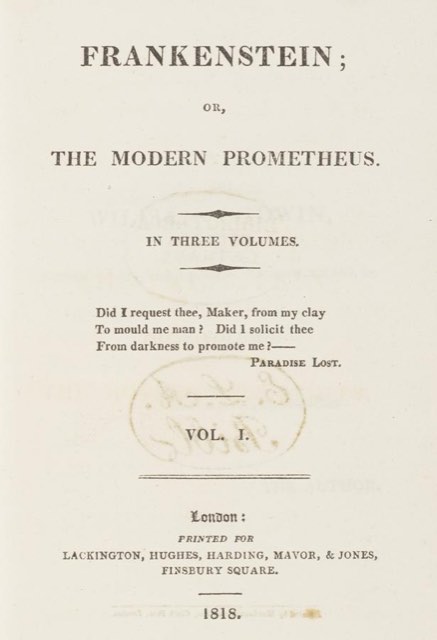

Frankenstein
- Major Themes in FrankensteinProject Gutenberg · Mary Shelley’s Frankenstein and University of Pennsylvania · Stuart Curran · read · 10 hMary Shelley on Kulturbase
The Uncanny
- The Uncanny and University of Virginia: David Morris’ Gothic SublimitySan Diego State University · Dr. Laurel Amtower · Sigmund Freud · read · 3 h · archived copy
Body Horror
- Review of The Gothic by Gilda Williams and Georgia Southern University: Dr. Douglass H. Thomson’s A Glossary of Literary Gothic TermsPopMatters · Mikita Brottman · read · 15 min · archived copy
The Terror of Technology, Simulation, and Doubles
- Dreams and Doctrines: Dual Strands in Frankenstein and University of Pennsylvania: Stuart Curran’s Themes – Doubling and Themes – KnowledgeUniversity of Virginia · Aija Ozolins’ · read · 1 h · archived copy
Madness and Mental Instability in the Novel
- Themes – MadnessUniversity of Virginia · Sandra Gilbert and Susan Gubar’s The Madwoman in the Attic · The Woman Writer and the Nineteenth-Century Literary Imagination and University of Pennsylvania · Stuart Curran · read · 30 min · archived copy
Representation of the Monstrous
- Mary Shelley’s Frankenstein: Creation, Frustration, Fragmentation, AbominationThe Victorian Web · Devon Anderson · read · 15 minMary Shelley on Kulturbase
Race and Otherness
- Elizabeth Young on Frankenstein and University of Pennsylvania: Stuart Curran’s Themes – Alienation and Themes – SolitudeMt. Holyoke College’s Questioning Authority · read · 1 h · archived copy
- Race and OthernessThe Saylor Foundation · read · 15 min
The Figure of Prometheus – Classical Roots and Its Gothic Iteration
- Science, Frankenstein, and Myth and Rutgers University: Percy Bysshe Shelley’s Preface to Prometheus UnboundUniversity of Pennsylvania · Theodore Ziolkowski · read · 1 h · no longer online
The Novel in Context: The Influence of the Industrial Revolution
- The Scientific Grounding of Frankenstein and McGill University: Monique R. Morgan’s Frankenstein’s Singular Events: Inductive Reasoning, Narrative Technique, and Generic ClassificationUniversity of Pennsylvania · Stuart Curran · read · 2 h · no longer online
- Reading Questions: FrankensteinThe Saylor Foundation · write · 1 h
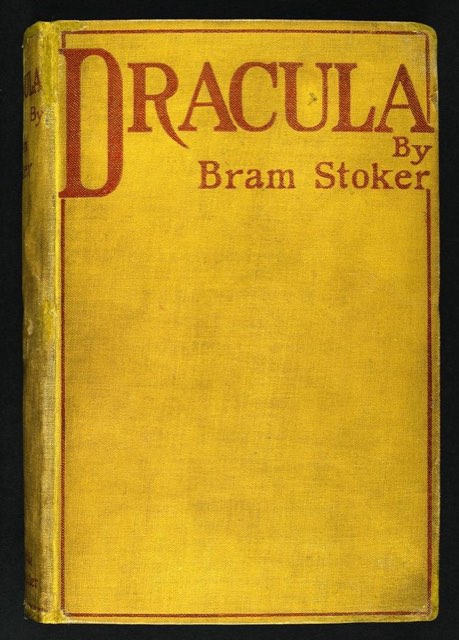
Dracula
- Bram Stoker’s DraculaProject Gutenberg · read · 10 hBram Stoker on KulturbaseDracula on KulturbaseDracula on Kulturbase
- Reading Questions: DraculaThe Saylor Foundation · write · 1 h
Outside of England: The Exotic and the Foreign in Dracula
- Coitus Interruptus: Sex, Bram Stoker, and Dracula and University of Virginia’s Sublime Anxiety: The Gothic Family and the Outsider: The VampireRomanticism on the Net · Elizabeth Miller · read · 1 hBram Stoker on KulturbaseDracula on KulturbaseDracula on Kulturbase
- Frankenstein and Dracula: Separated at Birth – and Not Dead YetUniversity of Virginia · Dr. Stephen Arata and Susan Tyler Hitchcock · watch · 1 h · archived copy
The Figure of the Vampire in 18th-Century England
- Introduction: Dracula the TextSheridan Le Fanu’s Carmilla and All Things Dracula · J. Gordon Melton · read · 2 hSheridan Le Fanu on KulturbaseCarmilla on Kulturbase
Race, Miscegenation, and Otherness
- Objectifying Anxieties: Scientific Ideologies in Bram Stoker’s Dracula and The Lair of the White Worm and Trevor Holmes’ Becoming-Other: (Dis)Embodiments of Race in Anne Rice’s Tale of the Body ThiefRomanticism on the Net · Diane Long Hoeveler · read · 2 hBram Stoker on KulturbaseDracula on KulturbaseDracula on Kulturbase
Travel and Movement in the Novel
- Victorian Imperialism and Connotations: A Journal for Critical Debate: Eleni Coundouriotis’ Dracula and the Idea of EuropeThe Norton Anthology of English Literature · read · 1 h · archived copy
Journaling, Epistolary, Inscription, and Documentation in Dracula
- Science or Séance?: Late-Victorian Science and Dracula’s Epistolary Structure and All Things Dracula: J. Gordon Melton’s Introduction: Dracula the TextThe Victorian Web · Dr. Terry Scarborough · read · 1 h
Issues of Temporality and Time
- Dracula and the Cultural Construction of EuropeConnotations · A Journal for Critical Debate · Jason Dittmer · read · 30 min · archived copy
The Unknown and the Unrepresentable
- Introduction: Dracula the TextAll Things Dracula · J. Gordon Melton · read · 30 min
The Legacy of the Vampire in Contemporary Culture
- Excerpts from Anne Rice’s The Vampire ChroniclesVampireChronicles.net · read · 15 min · archived copy
- Twilight – Official Trailer and Hulu: Buffy the Vampire SlayerYouTube · VisoTrailers’ · watch
Chapter IV
Gender and Sexuality
The field of Gothic studies is home to a number of feminist and queer theorists – and for good reason. The novels that you have already read, and especially those that you will encounter in this unit, often overtly present psycho-sexual behavior, lust and seduction, and cross-dressing and gender confusion as central themes. In this unit you will take a look at these issues, teasing them out and examining their relationship to other Gothic devices and themes.
In the Great Books lists Jane Eyre

The Monk
- Matthew Lewis’ The MonkProject Gutenberg · read · 6 h
- Reading Questions: The MonkThe Saylor Foundation · write · 1 h
Disruption of Normative Gender Patterns in The Monk
- The Gothic as Camp: Queer Aesthetics in The MonkRomanticism on the Net · Max Fincher · read · 1 h
Matricide and Family Rupture
- Sexual/Textual Politics of TerrorUniversity of Virginia · Kari Winter · read · archived copy
The Male Gothic versus the Female Gothic
- ‘Monk’ Lewis as Literary LionRomanticism on the Net · Lisa M. Wilson · read · 1 h
Titillation and Voyeurism
- Cloistered Closets: Enlightenment Pornography, The Confessional State, Homosexual Persecution and The Monk and University of Pennsylvania: Samuel Taylor Coleridge’s Review of Matthew G. Lewis, The MonkRomanticism on the Net · Clara Tuite · read · 3 h
Treatment of Religion and Social Mores
- Confessors and Penitents in M. G. Lewis’ The Monk and Ann Campbell’s Satire in The Monk: Exposure and ReformationRomanticism on the Net · Sydny M. Conger · read · 1 h
Disguise and Cross-Dressing
- The Ghost of the Counterfeit – and the Closet – in The Monk and Lauren Fitzgerald’s The Sexuality of Authorship in The MonkRomanticism on the Net · Jerrold E. Hogle · read · 1 h
Virginity in Distress
- Virgins in Distress and Demons in Disguise: Constructing the Heroine’s Identity in the Female GothicUniversity of Virginia · read · 15 min · archived copy
Jane Eyre
- Charlotte Brontë’s Jane Eyreread · 12 hCharlotte Brontë on KulturbaseJane Eyre on Kulturbase
- Reading Questions: Jane EyreThe Saylor Foundation · write · 45 min
Struggle for Sexual/Political Rights
- The Victorian Ideal: Male Characters in Jane Eyre and Villette, Dr. Andrzej Diniejko’s The New Woman Fiction, and Helena Wojtczak’s Hastings and Women’s SuffrageThe Victorian Web · Suzanne Hesse · read
Female Paranoia and Madness: The Woman in the Attic
- The Yellow Wallpaper and The Victorian Web: Joan Z. Anderson’s Angry Angels: Repression, Containment, and Deviance, in Charlotte Brontë’s Jane EyreUniversity of Virginia · Charlotte Perkins Gilman · read · 1 hCharlotte Brontë on KulturbaseJane Eyre on Kulturbase
Genre Blending: Bildungsroman Meets Gothic Meets Romance
- The Romance and the Novel and The Victorian Web: George P. Landow’s Genre, Plot, and Theme in Jane EyreBrooklyn College · Dr. Lilia Melani · read
Thornfield (and Its Attic), Gothic Space, and Gender Relations
- Place and Eros in Radcliffe, Lewis, and BrontëUniversity of Virginia · Nina da Vinci Nichols’ · read · archived copy
- Thornfield (and Its Attic), Gothic Space, and Gender RelationsThe Saylor Foundation · read · 15 min
Chapter V
The Shining (Optional)
The course concludes with an optional close “reading” of Stanley Kubrick’s The Shining, an adaptation of Stephen King’s novel of the same name, a modern treatment of the Gothic. The film features its own version of the dilapidated castle and its own version of the “monstrous other” as witnessed by the psychological disintegration of one of its inhabitants.
The Hotel as Gothic Castle
- Kubrick on The Shining and Pauline Kael’s The New Yorker Review of The ShiningThe Kubrick Site · Michel Ciment · read · 2 h
Doubles, Nightmares, and Ghosts
- Historicism in The ShiningThe Kubrick Site · Frederic Jameson · read · 1 h
Entrapment versus Escape: Psychological Decline and Space within the Film
- A Glossary of Literary Gothic Terms and Romanticism on the Net: Paolo Cherchi Usai’s Kubrick as ArchitectGeorgia Southern University · Dr. Douglass H. Thomson · read · 1 h
The Labyrinth
- The Shining and Transcendence and The Shining FAQThe Kubrick Site · Rod Munday · read · 30 min
Elements of the Supernatural
- ‘I Am Sorry to Differ With You, Sir:’ Thoughts on Reading Kubrick’s The ShiningThe Kubrick Site · Kian Bergstrom · read · 1 h
“The Shining” Itself – What Is It?
- The Shining FAQThe Kubrick Site · read · 15 min
Present, Past, and Temporal Disruption in the Film
- Reappraising Kubrick’s The ShiningThe Kubrick Site · Brian Siano · read · 1 h
About this course
This course is Saylor Academy's ENGL403, The Gothic Novel, one of the complete university courses the Saylor Foundation made free from 2008 and retired in 2015. Saylor licensed its course text under CC BY 3.0; the original is on GitHub. Here it is laid out as chapters, links that have died go to an archived copy from the Internet Archive where one exists, assessments that needed a Saylor login are left out, and people and works are linked to Kulturbase. The readings and lectures belong to their publishers and are linked, not copied. Pictures: Wikimedia Commons, credited under each picture.
All Saylor courses · Free culture courses · The Chautauqua Reading Course