Literature · Saylor ENGL404
English Romantic Poetry
The Romantic Period in England spans the decades of the 1780’s through the 1830’s. It was the age of revolutions *- a span of time that saw not only the rapid industrialization of Europe but two significant national revolutions - one in France and one in America.
More about this course
This revolutionary spirit in many ways fed and sustained the Romantic Movement in English literature; its chief practitioners believed that poetry could literally transform the world and the way in which we understand it. In this course, we will examine this revolutionary energy alongside a number of other English Romantic characteristics, including a fascination with nature and the natural world; a desire to boldly experiment, explore, and renew literature; and a focus on the individual’s capacity for imagination and vision. First, we will discuss the broader socio-historical and literary context in which English Romantic poetry thrived. Second, we will examine the three main concerns of English Romantic poets, which have been roughly divided among the three course units: the Romantic poet and the outer world, the Romantic poet and the inner world, and the poetry that bridges the gap between those two. Third, we will closely examine several of the period’s prominent poems, identifying what makes each a Romantic poem and how these poems relate to the three concerns listed above.*
Upon successful completion of this course, you will be able to:
In order to take this course, you must:
Chapter I
An Introduction to the Romantic Period and Its Poetry
The Romantic period coincided with the industrialization of Britain and dramatic popular revolutions in France and America - developments that changed the way in which people conceived of themselves and their relationships with their societies. Many awakened to the concepts of self-determination and individual rights, turning away from the Enlightenment model of subjectivity so as to include more elements of man, such as imagination and emotion. Why the era was called Romantic is heavily debated. Many scholars assert that the term Romantic comes from the criticism that writers of this era were constantly on a quest for something, often unnamed, which therefore echoed the romances of the Middle Ages. Others believe that the word roman refers to the French and German meanings of new or novel since the writers of this period set out to create art that was wholly new and unique. In this unit, we will examine these social changes and the impact they had on the development of English Romantic poetry. We will conclude with an overview of English Romanticism - its principal characteristics, practitioners, and conventions.
In the Great Books lists Lyrical Ballads
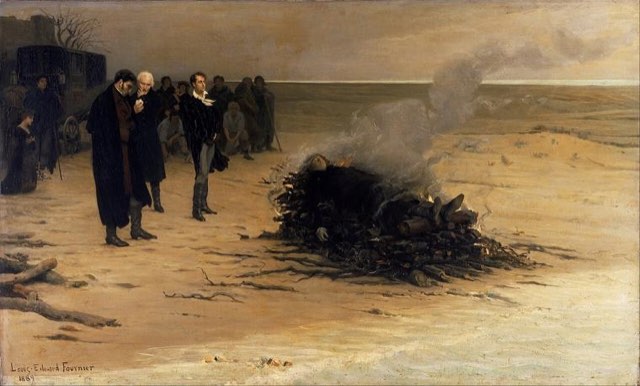

Introduction to the French Revolution
- The French Revolution Part 1Khan Academy · watch · 25 min
- French RevolutionThe Victorian Web’s Dr. David Cody’s Brief Introduction to the · read · 25 min
New Views on Society and Social Relations
- Reflections on the French Revolution and Thomas Paine’s The Rights of Man: Part One and Part TwoEdmund Burke · read · 1 h
English Politics During the Age of the French Revolution, Part I
- Lecture 14: The Language of Politics: England and the French RevolutionThe History Guide · Lectures on Modern European Intellectual History · read · 25 min · archived copy
English Politics During the Age of the French Revolution, Part II
- Introduction and Chapters 1-2The Project Gutenberg · Mary Wollstonecraft’s A Vindication of the Rights of Woman · read · 35 min
Industrialization; the Decline of Agrarian Lifestyle; and the Rise of the Urban, Working Class
- The Industrial Revolution and the Romantic SpiritThe Saylor Foundation · read · 20 min
- The Rise of the Victorian Middle ClassBBC.com · Dr. Donna Loftus’ · read · 20 min
Expansion of the Empire and the New World
- The Ruins of Empire: Nationalism, Art, and Empire in Hemans’ Modern GreeceRomantic Circles Praxis Series · Francesco Crocco · read · 25 min · archived copy
The Rise of Nationalism and National Identity
- ‘A Nation or a World’: Patriotism in ShelleyRomantic Circles Praxis Series · Matthew Borushko · read · 20 min · archived copy
German Idealism, Beauty, the Sublime, and the Imagination
- Immanuel Kant (1724-1804)Philosophy Pages · read · 10 min
- The Life, Times, and Achievements of Immanuel KantHZT4UR Wikispaces · Scott Alain · read · 10 min · no longer online
- Kant’s Aesthetics and TeleologyStanford Encyclopedia of Philosophy · Hannah Ginsborg · read · 50 min
The Rise of the Press: Freedom of Speech, Technological Advances, and Changes in Readership
- William St. Clair, The Reading Nation in the Romantic Period. Authorship, Commerce and the Public, eds. Clery, Franklin, Garside. Press, Politics and the Public Sphere, eds. Barker and Burrows. Women’s Writing, eds. Justice and TinkerRomantic Circles Reviews · Dr. Michelle Levy · read · 25 min · archived copy
Neoclassicism: Reason, Form, and Order
- Neoclassicism: An IntroductionThe Victorian Web · read · 15 min
- How to Read a PoemThe Saylor Foundation · read · 20 min
- Parts I and IIGutenberg.org · Alexander Pope’s Essay on Criticism · read · 35 min · archived copy
Major Tenets of Romanticism: A Brief Overview
- Introduction to RomanticismDr. Lilia Melani · read · 40 min
The Ethos of the Romantic Era
- Introduction to the Romantic Era in English PoetryDr. Ian Johnston · read · 1 h
Focus on Nature and the Natural World
- William BlakeThe Saylor Foundation · read · 20 min
- Introduction, The Echoing Green, The Lamb, The Blossom, and NightGutenberg.org · William Blake · read · 35 min · archived copy
- Romantic NatureThe Victorian Web · Dr. George P. Landow · read · 15 min
- The World Is Too Much With UsPoetry Foundation · William Wordsworth · read · 10 min
Immediacy of Expression
- William Wordsworth (1770–1850)The Saylor Foundation · read · 20 min
- A Night-PieceWilliam Wordsworth · read · 10 min
Drama and Heightened Sensation
- Samuel Taylor Coleridge (1772–1834)The Saylor Foundation · read · 20 min
- The Picture or the Lover’s ResolutionSamuel Taylor Coleridge · read · 25 min
A New Poetics
- Advertisement to Lyrical BalladsWilliam Wordsworth · read · 15 min
- Preface to Lyrical BalladsBritLitWiki · Kathryn Kummer · read · 15 min · archived copy
- Preface to Lyrical BalladsBritLitWiki · William Wordsworth · read · 25 min · no longer online
Roots in Folklore
- William Wordsworth’s Goody Blake and Harry Gillread · 20 min
Common Man, Common Language
- To a MouseWikipedia · Robert Burns’ · read · 15 min
Uncommon Man, Uncommon Fate
- The Romantic HeroWikispaces · StylusPapyrus’ · read · 20 min · archived copy
Chapter II
Mindscapes, Moods, and the Inner World
In Unit 1, we attended to the Romantic poet’s figuration of the outer world. We will now turn inward, discussing not only why the innermost thoughts and feelings of the individual seemed so central to Romantic poetry but we will also attend to the ways in which that inner life is represented and figured in language.
In the Great Books lists Songs of Innocence and of Experience · Manfred
Interiority and the Romantic Poet
- Romantic Interiority and Cultural ObjectsRomantic Circles Praxis Series · Dr. Theresa M. Kelley · read · 40 min · archived copy
The Legacy of the Revolution and the Romantic Subject
- Introduction, Sections 1 and 2Romantic Circles · Dr. Betty T. Bennett’s British War Poetry in the Age of Romanticism 1793–1815 · read · 40 min · archived copy
Spontaneity and Emotion
- Hymn to Intellectual BeautyPercy Bysshe Shelley · read · 20 min
- Lines Left upon a Seat in a Yew-TreeWilliam Wordsworth · read · 15 min
The Concepts of Fancy and Imagination
- To EliaJohn Clare · read · 10 min
- Peter Bell: A TaleWilliam Wordsworth · read · 35 min
A New Type of Hero: Byronic Heroism
- Byronic HeroismThe Saylor Foundation · read · 20 min
- ManfredLord Byron · read · 1 h
The Pleasures of Melancholy: Dejection and the Romantic Poet
- La Belle Dame Sans MerciJohn Keats’ · read · 10 min
The Beauty of Melancholy
- Ode on MelancholyJohn Keats’ · read · 15 min
Dejection and Solitude
- Dejection: An OdeSamuel Taylor Coleridge · read · 25 min
- Stanzas Written in Dejection Near NaplesP. B. Shelley · read · 10 min
Mourning and Loss
- The Complaint of a Forsaken Indian WomanWilliam Wordsworth · read · 15 min
Childhood: The Romantic Poet’s Invention?
- We Are Seven and Lines Written in Early SpringWilliam Wordsworth · read · 20 min
Concepts of Innocence
- Frost at MidnightSamuel Taylor Coleridge · read · 15 min
- To a Little Invisible Being Who Is Expected Soon to Become VisibleAnna Laetitia Barbauld · read · 10 min
The Language of Innocence
- Ode: Intimations of Immortality from Recollections of Early ChildhoodWilliam Wordsworth · read · 25 min
- Songs of Innocence and Songs of ExperienceWilliam Blake · read · 35 min
Legends of Innocence
- Psyche; or, the Legend of Love: Canto IPoemHunter.com · Mary Tighe · read · 35 min
Experience and Self-Formation
- William Wordsworth’s The Prelude - Book Fifthread · 35 min
- Songs of Innocence and Songs of ExperienceWilliam Blake · read · 25 min
The Function of Memory in the Poetry of William Wordsworth
- The Simplon PassWilliam Wordsworth · read · 10 min
- The Alps Deferred: Wordsworth at the Simplon PassThe University of Alberta · Dr. David S. Miall · read · 35 min
- The Ruined CottageRapGenius.com · William Wordsworth · read · 25 min
Love, Death, and Art: The Odes of John Keats
- Ode on a Grecian Urn and Ode to a Nightingale and Ode to PsycheJohn Keats’ · read · 25 min
- Suspended Satisfaction ‘Ode on a Grecian Urn’ and the Construction of ArtDr. David Collings’ · read · 35 min
Chapter III
Landscapes and the Outer World
The Romantic poet often situates his poetry in a natural setting, delighting in its beauty and its awe-inspiring strength and wildness. In this unit, we will take a more critical look at representations of the natural world and at depictions of place and setting more generally, from the cityscape to imagined exotic worlds of the past. We will conclude by exploring poems that feature movement within those spaces, discussing concepts of travel, imagination, exploration, and identity.
In the Great Books lists The Rime of the Ancient Mariner · Kubla Khan
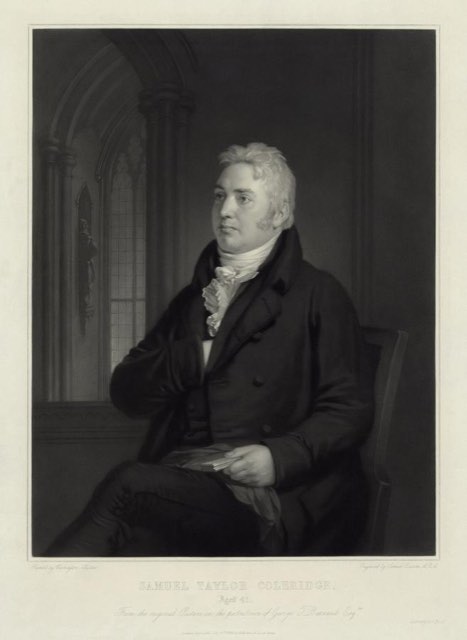

A Celebration of the Natural
- John Keats (1795 - 1821)The Saylor Foundation · read
- Ode to a Nightingale and To AutumnJohn Keats’ · read · 25 min
- A Summer Evening’s MeditationAnna Laetitia Barbauld · read · 20 min
The Riparian Muse and River Poems
- Valedictory Sonnet to the River DuddonWilliam Wordsworth · read · 10 min
Concepts of Nature: The Beautiful and the Sublime
- Beautiful, SublimeThe University of Chicago · Theories of Media · Keywords Glossary · Laura Smith · read · 25 min
Nature as a Reflection of the Ego
- Lord Byron, George Gordon (1788-1823)The Saylor Foundation · read · 15 min
- Lord Byron’s Childe Harold’s Pilgrimage, Canto The ThirdGutenberg.org · read · 15 min
- NuttingWilliam Wordsworth · read · 15 min
The Supernatural in Nature
- The Rime of the Ancient MarinerSamuel Taylor Coleridge · read · 25 min
Nature and Revolution
- Percy Bysshe Shelley (1792-1822)The Saylor Foundation · read · 15 min
- Ode to the West WindPercy Bysshe Shelley · read · 15 min
Nature and Morality: Nature as a Means to Activating the Moral Sense
- BeggarsWilliam Wordsworth · read · 10 min
Nature and the Infinite: The Limitlessness of the Natural World and Its Powers
- Mont Blanc: Lines Written in the Vale of ChamouniPercy Bysshe Shelley · read · 20 min
- ThunderReadbookonline.net · Joanna Baillie · read · 15 min · archived copy
Reading the Outer World: Nature as a System of Symbols
- She Dwelt Among the Untrodden WaysWilliam Wordsworth · read · 5 min
History Capsule: Overview of City Life and Trends in Urbanization in the Romantic Period
- Life and Letters in the CityDr. Charlotte Sussman · read · 20 min · archived copy
Rustics versus Sophisticates
- Simon Lee, the Old Huntsman and The Recluse – Part FirstWilliam Wordsworth · read · 45 min
The Press of City Life
- LondonWilliam Blake · read · 10 min
Longing for the Distant Past
- Childe Harold’s PilgrimageExcerpts from Lord George Gordon Byron · read · 1 h
Imagining a New Landscape: A Faraway Place
- Kubla KhanSamuel Taylor Coleridge · read · 20 min · no longer online
The Concept of New Worlds in a Colonial Context
- Chapter 2: Romanticism and Colonialism: Races, Places, Peoples, 1785–1800Romantic Circles · Dr. Peter J. Kitson · read · 50 min · archived copy
- The Traveller at the Source of the NileUniversity of North Carolina · Felicia Hemans’ · read · 20 min · archived copy
A Wandering Imagination: Stasis and Movement of the Mind
- Daffodils and The Prelude – Book FirstWilliam Wordsworth · read · 35 min
- Wordsworthian ChanceDr. Andrew Burkett · read · 1 h
The Byronic Hero and Adventure as Personal Development
- Childe Harold’s Pilgrimage: Canto the Second and Don Juan: DedicationLord Byron · read · 1 h
The Experience of Nature and Moral Progress
- Lines Composed a Few Miles above Tintern AbbeyVictorianWeb.org · William Wordsworth · read · 35 min
- Locating Wordsworth: ‘Tintern Abbey’ and the Community with NatureDr. David S. Miall · read · 35 min
Romanticism and the Apocalypse
- DarknessLord Byron · read · 15 min
- Ozymandius of EgyptP. B. Bysshe Shelley · read · 10 min
- Blake: The Urizen Group and William Blake’s The First Book of UrizenThe Cambridge History of English and American Literature · read · 35 min
Chapter IV
The Romantic Craft: Poesis, Innovation, and Experiment
In this unit, we will take a look at what it meant to be a writing subject in the Romantic period, examining notions of authorship, poesis, and tradition. We will consider with particular care the poet’s sense of his own role in society - something that we may find rather unfamiliar when compared to today’s understanding of the poetic craft as a less-than-urgent art form.
In the Great Books lists A Defence of Poetry
Poet as Average Man
- Wordsworth’s Balladry: Real Men WantedRomantic Circles Praxis Series · Dr. Elizabeth Fay · read · 50 min · archived copy
Poet as Spokesperson for a Nation
- Shelley’s Agenda Writ Large: Reconsidering Oedipus Tyrannus; or, Swellfoot the TyrantRomantic Circles Praxis Series · Dr. Samuel Gladden · read · 35 min · archived copy
Poet as a Revolutionary
- Prophet of the RevolutionThe Guardian · Paul O’Brien · read · 20 min
The Spontaneous Overflow of Powerful Feelings: Art as an Inward Illumination Rather than an Imitation of Life
- On Poetry in GeneralWilliam Hazlitt · read · 50 min
Inspiration and Intuition
- A Defence of PoetryPercy Bysshe Shelley · read · 50 min
The Imagination as the Primary Creative Faculty
- Tautology and Imaginative Vision in WordsworthErudit.org · Romanticism on the Net · Dr. Duncan Wu · read · 35 min
- The Saylor Foundation’s ENGL404 Final Examfinal exam · no longer online
About this course
This course is Saylor Academy's ENGL404, English Romantic Poetry, one of the complete university courses the Saylor Foundation made free from 2008 and retired in 2015. Saylor licensed its course text under CC BY 3.0; the original is on GitHub. Here it is laid out as chapters, links that have died go to an archived copy from the Internet Archive where one exists, assessments that needed a Saylor login are left out, and people and works are linked to Kulturbase. The readings and lectures belong to their publishers and are linked, not copied. Pictures: Wikimedia Commons, credited under each picture.
All Saylor courses · Free culture courses · The Chautauqua Reading Course