Literature · Saylor ENGL405
The American Renaissance
As most famously defined by F. O. Matthiessen in his groundbreaking book, The American Renaissance: Art and Expression in the Age of Emerson and Whitman (1941), the “American Renaissance” demarcates a period of tremendous literary activity between the 1830s and 1860s that marked the cultivation, for the first time, of a distinctively American literature. For Matthiessen and many other critics, its key figures—Ralph Waldo Emerson, Henry David Thoreau, Walt Whitman, Nathaniel Hawthorne, and Herman Melville—sought to define and explore the new American identity, carving out new modes of expression and self-identification.
More about this course
In the years since Matthiessen’s important work and especially in the past several decades, this characterization of the literary period has been challenged on several fronts, for overstating the innovations of these few authors, for the exclusion of women, African-American, and more popular authors from its account of the United States during a period of social and cultural upheaval and transition, and for its acceptance of a myth of American exceptionalism. We begin this course by taking a look at context: What was it in American culture and society that led to the dramatic outburst of literary creativity in this era? We then explore some of the period’s most famous works, approaching them by genre category. Finally, we attempt to define the emerging American identity represented in this literature.
Upon successful completion of this course, the student will be able to:
In order to take this course, you must:
Chapter I
The American Renaissance in Context
What was happening in society and culture that might have spurred the explosion of literary expression seen during the antebellum period of American history? (For those of you not up to speed on your U.S. history, “antebellum” refers to the period before the Civil War and is generally considered to span the years between 1781-1860, which in turn includes what is known as “The American Renaissance” period of literarature, between 1830-1860.) In this unit, we will situate the American Renaissance in its sociohistorical context. We start with a broad overview of the literary period and different ways of framing it before moving on to examine the economic, political, and social changes that were transforming the United States—industrialization and urbanization, the development of mass politics, the debate over slavery, Western expansion. Turning to American culture during this period, we then investigate the growth of literacy and the expansion of education, the religious revival sometimes called the second Great Awakening, and the emergence of urban popular culture. Finally, we look at transcendentalism, the religious-philosophical movement that gave rise to some of the most important literary figures of the period, including Ralph Waldo Emerson, Henry David Thoreau, and Margaret Fuller.
In the Great Books lists Essays: First Series · English Traits
American Renaissance: American Romanticism and Alternative Movements
- The Romantic Period, 1820-1860: Essayists and Poets from Outline of American Literature and The Saylor Foundation’s Expanding and Revising the American RenaissanceKathryn VanSpankeren · read
The American Renaissance: Individuality, Conflict, Culture
- The American Scholar and Modern History Sourcebook’s version of Sojourner Truth’s Ain’t I a Woman?Project Gutenberg’s version of Ralph Waldo Emerson · read
A General Overview of Antebellum America: Major Events in the Young Republic and the Lead Up to the Civil War
- Boisterous Sea of Liberty, Antebellum America, and The Norton Anthology of American Literature’s American Literature, 1820–1865: American Renaissance and Civil WarDigital History’s version of Professor David Brion Davis and Professor Steven Mintz’s Teaching Guide to the · read
Economic Development
- The John Quincy Adams Years and the American EconomySage American History · Henry J. Sage · read · 45 min
- Antebellum Economic Development and the Growth of ConsumerismThe Saylor Foundation · read · 15 min
Jacksonian Democracy and the Self-Made Man
- The Life of Andrew Jackson and The National Center for Public Policy Research’s version of Ralph Waldo Emerson’s Self-RelianceSage American History · Henry J. Sage · read · 1 h
- Jacksonian Democracy and the Ideal of the Self-Made ManThe Saylor Foundation · read · 15 min
Slavery: An Overview of Slavery, Its Legacy, and the Debate over Abolition
- The Slave Trade Part 1Arizona State University, Department of History · watch · 1 h · no longer online
- Resistance and AbolitionThe Saylor Foundation · read · 15 min
Manifest Destiny and the Expanding Western Frontier
- Manifest Destiny: An Introduction, Native American Displacement Amid U.S. Expansion: A Conversation with R. David Edmunds, Sam W. Haynes’ Manifest Destiny, and Robert E. May’s Manifest Destinypbs.org’s essays on Manifest Destiny from its U.S.-Mexican War website · read · archived copy
- Manifest Destinymomentsinamericanhistory.com’s presentation of Lewis and Clark College-Portland · Dr. Robert Miller · watch · archived copy
The Establishment of American Publishers and the Passage of American Copyright Laws
- Publishing in the U. S., 1820-1860 and the Association of Research Libraries’ Copyright Timeline: A History of Copyright in the United StatesThe Saylor Foundation · read
The Rise of Literacy and Public Education in the Young Republic
- The Struggle for Public Schools and StateUniversity.com’s Common School MovementDigital History · read
The Penny Press
- The Penny Press and the Emergence of Urban Mass CultureThe Saylor Foundation · read
Barnum
- Barnum’s American MuseumThe Lost Museum · read · archived copy
- Explore the MuseumThe Lost Museum · watch · archived copy
Blackface Minstrelsy
- Blackface MinstrelsyThe Saylor Foundation · read
The Great Awakening and the Revitalization of Religion
- The Second Great Awakening and TranscendentalismThe Saylor Foundation · read · 15 min
The Emergence of Transcendentalism and the Background of Colonial Religion
- Chapter VIII, Parts 1–4Harold Clark Goddard’s The Cambridge History of English and American Literature, Volume XV, Colonial and Revolutionary Literature; Early National Literature, Part I · read · 30 min
Influence of European Romanticism—Romanticism Arrives in America: Key Features and Figures of European Romanticism
- Romanticism and William Wordsworth’s The PreludeWashington State University-Pullman · Dr. Paul Brians’ · read · 1 h
The “Transcendental Club” and The Dial
- Chapter VIII, Parts 5-11Harold Clark Goddard’s The Cambridge History of English and American Literature, Volume XV, Colonial and Revolutionary Literature, Early National Literature, Part I · read · 30 min
- The Editors to the Reader and Sophia Ripley’s WomanAmerican Transcendentalism Web’s versions of Ralph Waldo Emerson · read · 30 min
Ralph Waldo Emerson, Father of the Transcendental Movement: Key Works and Concepts
- Ralph Waldo Emerson and American Transcendentalism Web’s version of Ralph Waldo Emerson’s Gnothi SeautonThe Saylor Foundation · read
Competing Visions of Reform
- Chapter VIII, Parts 10, 13, and 14; George Mason University History Matter’s version of George Ripley’s 1840 Letter to Ralph Waldo Emerson; and Emerson’s Reply as Printed in O. B. Frothingham’s George Ripley (1882)Harold Clark Goddard’s The Cambridge History of English and American Literature, Volume XV, Part I · read
- Unit 1 Reading QuestionsThe Saylor Foundation · write
Chapter II
Continuity and Change in Poetic Form
The American Renaissance explored older literary forms and developed new ones as it shaped and responded to the changing nature of American society. Following European romanticism, many American poets re-defined poetry less in terms of preconceived form than in terms of organic structure. Doing so led to some of the most important formal innovations of the time, especially those of Walt Whitman and Emily Dickinson. At the same time, debates around poetry circulated around both form and content, as exemplified by Edgar Allan Poe’s influential criticism.
In the Great Books lists Leaves of Grass · Poems (1890)
Two Competing Poetics
- The Poet; emersoncentral’s version of Ralph Waldo Emerson’s Threnody, The Rhodora, and The Snow-Storm; and The Saylor Foundation’s Ralph Waldo Emerson’s ‘The Poet’American Transcendentalism Web’s version of Ralph Waldo Emerson · read · 2 h
- Philosophy of Composition; the Poe Museum’s version of The Raven; and The Saylor Foundation’s Edgar Allan Poe’s ‘The Philosophy of Composition’The University of Virginia’s version of Edgar Allan Poe · read · 1 hEdgar Allan Poe on Kulturbase
The Question of Poetry’s Social Role
- The Witnesses and The Quadroon Girl; E Pluribus Unum Project’s version of John Whittier’s The Christian Slave; The University of Virginia’s version of Edgar Allan Poe’s Review of Longfellow’s Ballads: Ballards and Other Poems, and the Edgar Allan Poe Society’s version of Edgar Allan Poe’s Review of Longfellow’s PoemsThe Maine Historical Society’s version of Henry Wadsworth Longfellow · read · 2 hEdgar Allan Poe on Kulturbase
Walt Whitman, Free Verse, and the Poetics of Democracy
- When Lilacs Last in the Dooryard Bloom’dAnn Woodlief’s version of Walt Whitman · read · 15 min
- Free Verse and Introduction to Walt Whitman’s Leaves of GrassThe Saylor Foundation · read · 30 min
- Song of MyselfWalt Whitman · read · 3 h
- Image of Walt Whitman from 1855 Edition of Leaves of GrassWikimedia Commons’ · watch
- Walt WhitmanYouTube · University of California, Berkeley · watch

Emily Dickinson and the Personal Lyric
- Emily Dickinson’s Life, The City University of New York Brooklyn College-Brooklyn: Professor Lilia Melani’s Emily Dickinson, and her versions of Dickinson’s I’m Nobody—Who Are You?, The Soul Selects Her Own Society, I Heard a Fly Buzz When I Died, and I Felt a Funeral, in My BrainModern American Poetry’s version of Oakland University-Rochester · Professor Jane Donahue Eberwein · read · 3 h · archived copy
- There’s a Certain Slant of Light, Lynn Tomlinson’s version of Emily Dickinson’s I Heard a Fly Buzz When I Died, , and the Annenberg Foundation’s Emily DickinsonPoetryreincarnations’ version of Emily Dickinson · watch
- Unit 2 Reading QuestionsThe Saylor Foundation · write
Chapter III
The Invention of the Short Story
While most critics and writers during the period continued to view poetry as the most important literary genre, the period is now better known for its prose works. The short story, as a form, first came into its own in the United States during this period, with writers such as Poe, Nathaniel Hawthorne, Herman Melville, and others exploring the aesthetic and thematic possibilities of compact prose works of fiction.
In the Great Books lists Benito Cereno
“The Limit of One Sitting”: Concerns with Length
- The Short StoryThe Saylor Foundation · read · 15 min
- The Cask of Amontillado, Petri Liukkonen’s Nathaniel Hawthorne and Eldritch Press’s version of Nathaniel Hawthorne’s The Minister’s Black VeilThe University of Virginia’s version of Edgar Allan Poe’s review of Twice-Told Tales and · read · 2 hEdgar Allan Poe on Kulturbase
The Gothic: Suspense and the Macabre
- The Gothic and the Antebellum American Short StoryThe Saylor Foundation · read · 15 min
- The Tell-Tale Heart, Ligeia and The Imp of the Perverse; ibiblio.org’s version of Nathaniel Hawthorne’s Young Goodman Brown and Herman Melville’s Hawthorne and His MossesThe University of Virginia’s version of Edgar Allan Poe · watch · 2 hEdgar Allan Poe on Kulturbase
Building a New Genre: the Detective Story
- Rationalism and Romanticism in Detective Fiction; The University of Virginia’s version of Edgar Allan Poe’s Murders in the Rue Morgue; Books and Writers: Petri Liukkonen’s Herman Melville; and books.mirror.org: Ken Robert’s version of Herman Melville’s Benito CerenoDuke University · Tawnee Sparling · read · 4 hEdgar Allan Poe on Kulturbase
- Herman Melville’s ‘Benito Cereno’The Saylor Foundation · read
- Unit 3 Reading QuestionsThe Saylor Foundation · write
Chapter IV
The Development of the Novel and its Various Forms
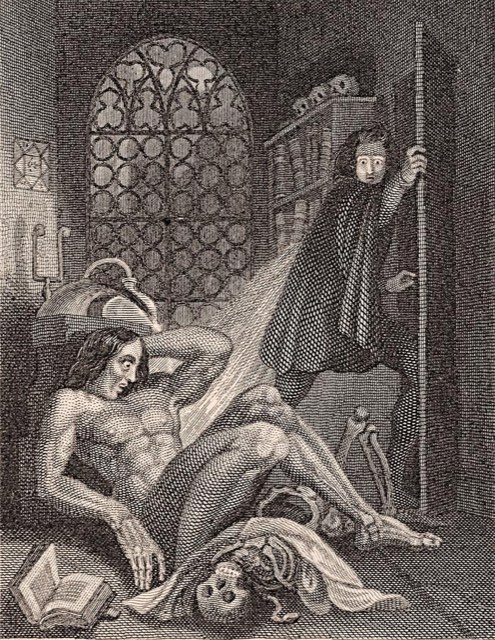
Just as the short story emerged as a new literary form due to cultural, social, and economic changes, the novel moved from being regarded as subliterary to being the most popular form by the end of the era. Works by writers such as Hawthorne continue to stand among the greatest novels in world history while those by authors such as George Thompson and Fanny Fern gained unprecedented popularity by mining sensation and sentimental sub-genres.
In the Great Books lists The Scarlet Letter

The Popularity of the Novel Form
- A Short History of the American Novel and Washington State University-Pullman: Professor Donna Campbell’s “The Early American Novel: Introductory NotesThe Saylor Foundation · read · 30 min
The Romance: Nathaniel Hawthorne
- Introductory Essay on The Scarlet Letter, Eldritch Press’s Preface to The House of Seven Gables and ibiblio.org’s The Scarlet LetterUniversity of Massachusetts-Lowell · Professor Melissa McFarland Pennell · read · archived copy
Sensationalism
- SensationalismThe Saylor Foundation · read · 15 min
- Venus in BostonProject Gutenberg’s ebook version of George Thompson · read · 3 h
Sentimentalism
- SentimentalismThe Saylor Foundation · read · 15 min
- Domestic or Sentimental Fiction, 1820–1865 and Fanny Fern’s [Sara Payson Willis] Ruth HallWashington State University-Pullman · Professor Donna M. Campbell · read · 6 h
- Unit 4 Writing AssessmentThe Saylor Foundation · write
Chapter V
Nature and Technology: Creating and Challenging American Identity
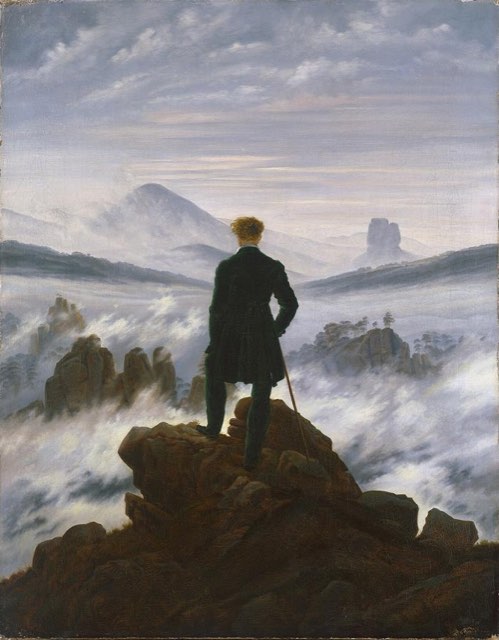
Writers in the American Renaissance sought to identify the promise and uniqueness of the American experience through various forms and genres. In this unit, we will look at ways in which these authors represented the new American identity—its voices, its landscapes, and its diversities. As often as they helped to construct long-standing ideals of the American self-made man, of upward mobility and economic progress, and of universal liberty and equality, they also criticized the ways that American society and its political and cultural institutions failed to live up to its ideals and the ways that economic and technological development came at a great price. In this and the following two units, we will look at ways in which these authors represented and questioned the new American identity and the forces and controversies transforming the young nation. Specifically in this section we will examine reactions to the industrial, economic, and technological transformation of the United States that was beginning to transform the nation from a rural, agrarian country to a modern, capitalist one.
In the Great Books lists Bartleby, the Scrivener · Walden · Civil Disobedience

Technology and Class Division
- Technology, Industrialization, and Antebellum U. S. LiteratureThe Saylor Foundation · read · 15 min
- The Laboring ClassesOrestes Brownson · read · 1 h
Melville, Capitalism, and the Limits of Sympathy
- Bartleby, the Scrivener and the University of Virginia’s version of Herman Melville’s The Paradise of Bachelors and the Tartarus of MaidsProject Gutenberg’s version of Herman Melville · read · 2 h
- Herman Melville’s ‘Bartleby, the Scrivener’The Saylor Foundation · read · 15 min
The Move Toward Realism: Davis’ “Life in the Iron-Mills”
- Rebecca Harding Davis’s ‘Life in the Iron-Mills’The Saylor Foundation · read · 15 min
- Life in the Iron-MillsProject Gutenberg’s version of Rebecca Harding Davis · read · 1 h
American Nature as Challenge to American Progress
- Henry David Thoreau and WaldenThe Saylor Foundation · read · 15 min
- Resistance to Civil GovernmentHenry David Thoreau’s Walden and · read · 3 h
- Unit 5 Reading QuestionsThe Saylor Foundation · write
Chapter VI
The Question of Women’s Place in U.S. Society
With the economic transformations sometimes called the market revolution, gender relations in the United States also changed. Where in a rural, agrarian economy, men and women often worked—even when divided along gender lines—side-by-side in the same location, the farm and the home, the move to a more professionalized, capitalist workplace more firmly established distinctions between male and female work (or for some classes at least). Alongside political changes that empowered all white men, these transformations coincided with an increasing emphasis on women’s importance in the private sphere in opposition to men’s dominance in the public realm. In this section, we examine some of the ways that the antebellum era saw the emergence of the modern feminist movement in the United States and increasing literary attention to the place of women in society.
Overview of Developments in Women’s Rights in the Young Republic
- On Women’s Right to Vote; and Academic American’s version of the Seneca Falls Declaration of Sentiments and Resolutions (1848)U.S. Department of State’s Women of Influence; The History Place’s version of Susan B. Anthony · read · 30 min · archived copy
- Women’s Sphere and the Emergence of the Women’s Rights MovementThe Saylor Foundation · read · 15 min
Margaret Fuller and Elizabeth Peabody among the Transcendentalists
- Margaret Fuller and American Transcendentalism Web’s version of Margaret Fuller’s The Great Lawsuit, Man versus Men, Woman versus WomenThe Cambridge History of English and American Literature · read · 1 h
Depictions of Women: Law, Class, Marriage
- Lemorne versus HuellProject Gutenberg · Elizabeth Stoddard · read · 1 h
Depictions of Women 2: Little Women, Sentiment, Religion, and the Power of Womanhood
- Louisa May Alcott and Little WomenThe Saylor Foundation · read · 15 min
- Little WomenThe University of Virginia Library · read
- Unit 6 Reading QuestionsThe Saylor Foundation · write
Chapter VII
The Slavery Controversy and Abolitionist Literature
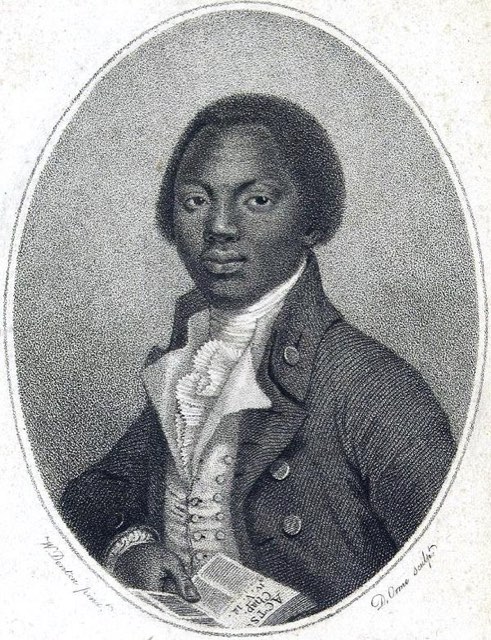
Perhaps no controversy defined the antebellum period as much as slavery. Even as politicians repeatedly attempted to find ways to paper over sectional differences and quiet the controversy, the issue became more and more divisive, eventually becoming the leading cause of the Civil War. Throughout this course we have examined texts that investigate slavery. In this section, we will focus on abolitionist literature, looking at some of the founding statements of the radical abolitionist movement as well as some of the most popular texts of the era.

Radical Abolition and The Liberator
- David Walker, William Lloyd Garrison, and the Emergence of Radical AbolitionismThe Saylor Foundation · read · 15 min
- The Liberator: To the Public and Excerpts from David Walker’s Appeal to the Colored Citizens of the WorldWilliam Lloyd Garrison · read · 30 min
- III. Abolition, Anti-Slavery Movements, and the Rise of the Sectional Controversy: Part 1 and Part 2The Library of Congress’s African American Odyssey · read · 30 min · archived copy
The Slave Narrative
- The Slave NarrativeThe Saylor Foundation · watch · 15 min
- Frederick Douglass’ Narrative of the Life of Frederick Douglass and University of Virginia’s version of Harriet Jacobs’ Incidents in the Life of a Slave GirlBerkeley Digital Library · read · 9 h
Uncle Tom’s Cabin
- Harriet Beecher Stowe’s Uncle Tom’s Cabinread
- Harriet Beecher Stowe and Uncle Tom’s CabinThe Saylor Foundation · read · 15 min
- Unit 7 Reading QuestionsThe Saylor Foundation · write
About this course
This course is Saylor Academy's ENGL405, The American Renaissance, one of the complete university courses the Saylor Foundation made free from 2008 and retired in 2015. Saylor licensed its course text under CC BY 3.0; the original is on GitHub. Here it is laid out as chapters, links that have died go to an archived copy from the Internet Archive where one exists, assessments that needed a Saylor login are left out, and people and works are linked to Kulturbase. The readings and lectures belong to their publishers and are linked, not copied. Pictures: Wikimedia Commons, credited under each picture.
All Saylor courses · Free culture courses · The Chautauqua Reading Course