Literature · Saylor ENGL407
Medieval Women Writers
Scholarship on medieval women writers is a somewhat recent phenomenon, in part because we know relatively little about men of the Middle Ages—and what we know about women from the period is even more limited. In this course, we will engage this new frontier in literary studies by examining the writings of a diverse group of medieval women—from reclusive anchoresses to aristocratic women of the court—and analyzing the perceptions of reality, both secular and religious, that they present.
More about this course
We will also read and respond to a number of critical essays concerning medieval women and the various debates that have emerged in the study of their works. We will begin the course with a unit on context, acquainting ourselves with the major socio-historical developments that shaped the period as well as the little that is known about medieval women and their roles in society. We will then take a look at some major feminist and gender/sex-related approaches to literature, making their various methods and beliefs available to us as we progress through the course. The remainder of the course has been divided into two major units: women of the Church, and women of the secular world. In each of these units, we will perform close readings of women-authored texts, examining their styles, techniques, and representations of the world around them.
Upon completion of this course, students will be able to:
In order to take this course you must: √ Have access to a computer. √ Have continuous broadband Internet access. √ Have the ability/permission to install plug-ins or software (e.g., Adobe Reader or Flash). √ Have the ability to download and save files and documents to a computer. √ Have the ability to open Microsoft files and documents (.doc, .ppt, .xls, etc.). √ Be competent in the English language. Table of Contents: You can find the course’s units at the links below.
Chapter I
Medieval Times, Medieval Women
What Are the Middle Ages?
- Medieval European HistoryMedieval-Life.Net · read
The Fall of the Roman Empire
- The Roman WithdrawalThe ORB · Online Reference Book for Medieval Studies’ version of Steven Muhlberger’s Medieval England · read · archived copy
Legacies of the Oral Tradition
- Literary Terms and Definitions: Oral Formulaic and Oral TransmissionCarson-Newman College · Dr. L. Kip Wheeler · read · archived copy
The Rise in Literacy
- Early English Society; Fordham University’s Internet Medieval History Sourcebook: Accounts of Medieval Literacy and Education, c. 1090-1530The ORB · Online Reference Book for Medieval Studies’ version of Steven Muhlberger’s Medieval England · read · archived copy
A Culture of Chivalry and Courtly Love
- Literary Terms and Definitions: Courtly LoveCarson-Newman College · Dr. L. Kip Wheeler · read · archived copy
Scholasticism and Trends in Medieval Thought
- Scholarship in Women’s Communities; New Advent Catholic Encyclopedia’s entry on ScholasticismUniversity of Southern California · Monastic Matrix’s version of Suzanne Fonay Wemple · read · archived copy
The Predominance of the Church
- The Conversion of Britain and The Age of BedeThe ORB · Online Reference Book for Medieval Studies’ version of Steven Muhlberger’s Medieval England · read · archived copy
An Introduction to Medieval Women: Widows, Wives, and Virgins
- Women in the Early European Middle AgesClark College · Anita Fisher · read · archived copy
Virginity as the Pre-eminent Virtue for Medieval Women
- Sex, Society, and Medieval Women: Sex and Society; The ORB: Online Reference Book for Medieval Studies’ version of Susan Udry’s Books of Women’s Conduct from France during the High and Late Middle Ages, 1200-1400University of Rochester Libraries’ TEAMS · N.M. Heckel · read · archived copy
Marriage and Wifely Duties
- Daily Life: Marriage and Divorce and UMILITA.net’s version of Equally in God’s Image: Women in the Middle Ages: Elizabeth M. Makowski’s The Conjugal Debt and Medieval Canon LawMinnesota State University, Mankato’s EMuseum · read
The Midwife, the Dangers of Childbirth, and Motherhood
- Daily Life: Children and SchoolingMinnesota State University, Mankato’s eMuseum · read · no longer online
Women, Land, and Property Ownership
- Chapter IV.A. Women and the Law: DowerUniversity of Houston’s Department of History · Professor Bob Elhone’s English Legal History Materials · read · archived copy
Misogyny and the Dangerous, Sinful Woman
- The Antifeminist Tradition: Introduction and Sunshine for Women: Katherine M. Rogers’ The Troublesome Helpmate: A History of Misogyny in LiteratureUniversity of Rochester Libraries’ TEAMS · Kathleen Forni’s, ed. · read · archived copy
Concepts of Medieval Masculinity: The Figure of the Chivalrous Courtier and Beyond
- Medieval Masculinities: Heroism, Sanctity, and GenderGeorgetown University Labyrinth’s version of Jeffery Jerome Cohen · read · archived copy
Literary Feminisms: A Range of Approaches
- Introduction: The Body and the BookUMILITA.net’s version of Equally in God’s Image · Women in the Middle Ages · Julia Holloway · read
Concepts of Gender & Sexuality
Recent Feminist Scholarship in Medieval Studies
- Cultural Studies/Sexual Anxiety: The Confessions of a Medieval(ist) and Medieval and Renaissance Texts and Studies: Medieval Studies Catalogue Page’s New TitlesUniversity of Windsor · Jacqueline Murray · read · archived copy
Chapter II
Women and the Church
In the Middle Ages, the Church—an institution that then enjoyed cohesive social, political, and cultural power—monopolized education; besides a few wealthy aristocrats, clergymen and clergywomen were the only members of society that learned to read and write. For this reason, a good number of female-authored works from the Middle Ages are by nuns, mystics, and other religiously-minded women. In this unit, we will perform close readings of a number of works by such individuals, examining their self-presentation, their figurations of Christ and religious experiences, and the ways in which a predominantly masculine theology may have shaped or limited their self-expression.
A Masculine Theology?
- The Vulgate Genesis and St. Jerome’s Attitudes to WomenUMILITA.net’s version of Equally in God’s Image · Women in the Middle Ages · Jane Barr · read
- Medieval Church: IntroductioniTunes U · Westminster Theological Seminary · Dr. Carl Trueman · watch · no longer online
The Church’s Control of the Press and Literacy
- Religion in Fifteenth-Century England; Metropolitan Museum of Art’s The Art of the Book in the Middle AgesThe ORB · Online Reference Book for Medieval Studies’ version of Steven Muhlberger’s Medieval England · read · archived copy
The Emergence of Religious Communities
- The Beginnings of Monasticism; Metropolitan Museum of Art’s Monasticism in Medieval ChristianityThe ORB · Online Reference Book for Medieval Studies’ version of Yuri Koszarycz’s Ecclesiology · read · archived copy
Persecution of Heretics
- The 11th to the 13th Centuries: Innocent III and the Great SchismThe ORB · Online Reference Book for Medieval Studies’ version of Yuri Koszarycz’s Ecclesiology · read · archived copy
Devotional Practices
- Private Devotion in Medieval ChristianityMetropolitan Museum of Art · read · archived copy
The Life of the Anchoress
- Literary Terms and Definitions: Anchorite, Anchoress, and Mystics ; University of Rochester Libraries’ TEAMS: Robert Hasenfratz’s, ed., version of Ancrene WisseCarson-Newman College · Dr. L. Kip Wheeler · read · archived copy
- Medieval Church 8: MysticismiTunes U · Westminster Theological Seminary · Dr. Carl Trueman · watch
Julian of Norwich
- Julian of Norwich; Christian Classics Ethereal Library’s version of Julian of Norwich’s Revelations of Divine Love: Chapters 1-3 Revelations of Divine LoveNew Advent’s Catholic Encyclopedia entry on · read
Her Presentation of Day-to-Day Life
- Julian of NorwichGloriana’s Court · Dr. Elizabeth G. Melillo · read
Independence and Physical Separation from the Church
- Julian of Norwich: A Saint for the NinetiesUniversity of Southern California · Monastic Matrix’s version of Margot H. King · read · archived copy
A Hermit’s Life: Reclusiveness or Enclosure?
- An Anchorhold of Her Own: Female Anchoritic Literature in Thirteenth-Century EnglandUMILITA.net’s version of Equally in God’s Image · Women in the Middle Ages · Elizabeth Robertson · read
Conceptualization of Love
- Mystics in LoveGloriana’s Court · Dr. Elizabeth G. Melillo · read
Maternal Figurations of God
- Julian of Norwich’s ‘Christ as Mother’ and Medieval Constructions of Gender Lecture; San Francisco State University Medieval Forum: Jennifer A. Hudson’s ‘God our Mother’: The Feminine Cosmology of Julian of Norwich and Hildegard of BingenInternet Archive · Thomas L. Long · read · archived copy
Matters of Style: Repetition, Cyclicality, and Imagery
- Georgia Ronan Crampton’s, ed., The Shewings of Julian of Norwich: IntroductionUniversity of Rochester Libraries’ TEAMS · read · archived copy
Margery Kempe
- Book I and Book IIUniversity of Rochester Libraries’ TEAMS · Lynn Staley’s, ed., The Book of Margery Kempe · read · archived copy
- Conversation between Julian and MargeryUMILITA.net · watch
Kempe’s Self-Presentation: Wife, Mother, and Mystic
- Margery KempeGloriana’s Court · read
Margery’s Unique Relationship with Her Husband
- Songs of Silence: The Affection for Bride and Body in the Rhetoric of Bernard of Clairvaux, Margery Kempe, and Teresa of Jesus: Chapter 2: Sounds of SubversionInternet Archive’s version of Claire F. Brunetti · read
Working outside the Abbey: Kempe’s Travels, Public Voice, and Reception
- Margery Kempe: A Brief History of Her LifeInternet Archive’s version of Dean Lee Evans · read · archived copy
Conceptualization of Scripture and Theology
- Mapping Margery Kempe: IntroductionCollege of the Holy Cross · read · no longer online
Illiteracy, Dictation, and the Questions of Authorship
- Mystic Self: Margery Kempe and the Mirror of NarrativeUniversity of California’s eScholarship · Julian Yates · read
“The Book of Margery Kempe” as an Early Autobiography: Questions of Genre and Selfhood
- Lynn Staley’s, ed., The Book of Margery Kempe: IntroductionUniversity of Rochester Libraries’ TEAMS · read · archived copy
Matters of Style and Form
- Margery Kempe and the Rhetoric of LaughterUniversity of Southern California · Monastic Matrix’s version of Karma Lochrie · read · archived copy
Affective Piety and Dissolution of the Self
- The Human Side of God I: Women MysticsCalifornia Polytechnic State University · Dr. Debora B. Schwartz · read · archived copy
Catherine of Siena and the Text as Body
- Catherine of Siena ; Catherine of Siena’s Letters of Catherine BenincasaNew Advent’s Catholic Encyclopedia entry on · read
Figurations of God as Lover or Courtier
- Catherine of Siena’s Letters of Catherine BenincasaProject Gutenberg · read · archived copy
What Is Hagiography?
- Literary Terms and Definitions: HagiographyCarson-Newman College · Dr. L. Kip Wheeler · read · archived copy
Hagiography as a Means to Represent Women in Different Modes
- The Ordeal of Community: Hagiography and Discipline in Merovingian ConventsUniversity of Southern California · Monastic Matrix’s version of Jo Ann McNamara · read · archived copy
The Figure of Thecla: Romance, Adventure, and Rejection of the Conventional Roles of Wife and Mother
- Sts. Thecla; Global Ministries’ version of excerpts from The Acts of Paul and TheclaNew Advent’s Catholic Encyclopedia entry on · read
Perpetua, Martyrdom, and Defiance
- Sts. Felicitas and Perpetua; Fordham University’s Internet Medieval History Sourcebook: W.H. Shewring’s translation of excerpts from The Passion of Saints Perpetua and FelicityNew Advent’s Catholic Encyclopedia entry on · read
Conceptualizations of and Qualifications for Female Sainthood
- Women and Religion in the Middle AgesClark College · Professor Anita Fisher · read · archived copy
Chapter III
Secular Female Authors in the Medieval World
Outside of the Church, education was limited to the very wealthy. In this unit, we will read a number of works by aristocratic women, examining their conceptualizations of their lives and their roles in society. Not surprisingly, these women tend to decry the misogynistic and male-centric world in which they live; many consider these authors proto-feminists. We will conclude with a section entitled “Men Writing Women,” where we will compare and contrast the ways in which men and women “wrote” the female figure.
In the Great Books lists Lais of Marie de France
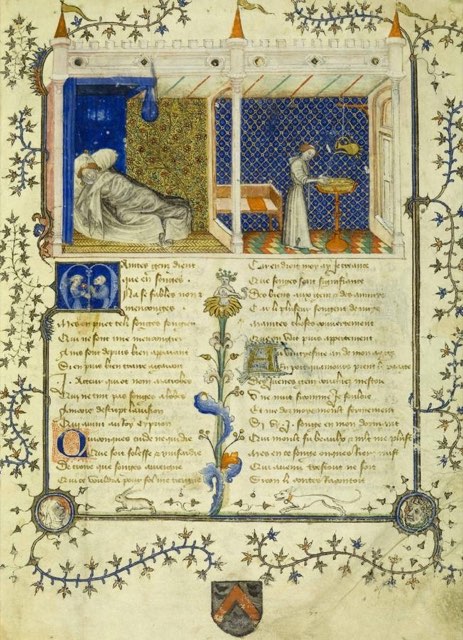

Medieval Class Structure
- Preindustrial Societies: The Birth of Inequality and The ORB: Online Reference Book for Medieval Studies’ version of Steven Muhlberger’s Medieval England: Economy and Society up to the Thirteenth CenturyBoundless · read · no longer online
The Emergence of “Class Consciousness”
- Economic Change and Social Tension in the Late Fourteenth CenturyThe ORB · Online Reference Book for Medieval Studies’ version of Steven Muhlberger’s Medieval England · read · archived copy
Women of the Aristocracy
- Royal and Aristocratic Women in the Middle AgesClark College · Professor Anita Fisher · read · archived copy
Women of the Working Class
- Women’s Contributions to the Economy of Medieval TownsClark College · Professor Anita Fisher · read · archived copy
Marie de France and the Romantic Lay
- The Lais of Marie de France Study GuideUniversity of Florida · Judith P. Shoaf’s The Lais of Marie de France; Washington State University · Dr. Paul Brian · read
Who Was Marie de France?
- Marie de FranceNew Advent’s Catholic Encyclopedia entry on · read
Aristocracy and Ties to the Royal Family
- Marie de FranceWinthrop University · Dr. Jo Koster · read
What Is a Lay?—Form, Structure, and Convention
- Notes on Middle English Romance and Carson-Newman College: Dr. L. Kip Wheeler’s Literary Terms and Definitions: LaiReading · Lightspill Poetry · Jonathan A. Glenn · read
The Female Lay: Adaptations of a Predominantly Male Form
- IntroductionUniversity of California Press E-Books Collection · Patricia Terry’s The Honeysuckle and the Hazel Tree · read
Concepts of Freedom and Escape
- Introduction; University of California eScholarship: Frederick Hodgson’s Alienation and Otherworld in Lanval, Yonec, and GuigemarUniversity of California Press E-Books Collection · Patricia Terry’s The Honeysuckle and the Hazel Tree · read
Representation of Love, Desire, Romance, and Marriage
- Introduction, Two Lovers, and HoneysuckleUniversity of California Press E-Books Collection · Patricia Terry’s The Honeysuckle and the Hazel Tree · read
Moral Elements in the Lais
- Lanval and EliducUniversity of California Press E-Books Collection · Patricia Terry’s The Honeysuckle and the Hazel Tree · read
Magic and the Supernatural
- Literary Terms and Definitions: Medieval RomanceCarson-Newman College · Dr. L. Kip Wheeler · read · archived copy
The Issue of the Dedication
- Rethinking MarieSan Francisco State University Medieval Forum · Dinah Hazell · read · archived copy
Christine de Pizan
- Christine de Pisan ; Millersville University: Bonnie Duncan’s version of Christine de Pizan’s The Book of the City of LadiesNew Advent Catholic Encyclopedia’s entry on · read
Christine’s Education and “Career” as a Writer
- Christine de PizanSunshine for Women · read · no longer online
Marriage and Widowhood
- The Life and Triumphs of Christine de Pizan; University of Rochester Libraries’ version of Christine de Pizan’s Like the Mourning Dove and I Am a Widow LoneMount Saint Mary College · Dr. Kate Lindeman · read · archived copy
A Female’s Perspective on a Woman’s Roles in Society
- Christine de Pisan: The Book of the City of Ladies (1405)Hanover College · read
Christine de Pizan’s Proto-Feminism
- The Book of the City of LadiesMount Saint Mary College · Dr. Kate Lindeman · read · archived copy
Figuring Motherhood: Reason, Justice, and Rectitude
- Christine de PizanSunshine for Women · read
Allegory, Imagery, and Imagination in The Book of the City of Ladies
- Literary Terms and Definitions: Allegory and Brown University: Allison Hutt’s Imagined WorldsCarson-Newman College · Dr. L. Kip Wheeler · read · archived copy
Voice and Female Dialogue
- Christine de Pizan: A Feminist Way to Learning; California Polytechnic State University: Dr. Debora B. Schwartz’s Christine de Pizan II: The Path of Long StudyUMILITA.net’s version of Equally in God’s Image · Women in the Middle Ages · Ester Zago · read
The Letters of Abelard and Heloise
- Introduction and Letters II-IVSacred Text’s version of The Love Letters of Abelard and Heloise · read
A Brief Introduction to Abelard and Heloise
- Peter AbelardNew Advent’s Catholic Encyclopedia entry on · read
- Abelard and HeloiseBBC’s In Our Time · watch
The Authorship Controversy: Were All the Letters Authored by Abelard?
- Heloise’s Letter to AbelardFordham University’s Internet Medieval History Sourcebook · C.K. Scott Moncrieff’s translation of · read
The Concept of Gendered Writing: Masculine and Feminine Authorship
- The Gender FallacyRutgers University · William C. Dowling · read · archived copy
The Figuration of Romantic Love
- The Letters of Peter Abelard and HeloiseMolloy College · Dr. Stephan T. Mayo · read · archived copy
Epistolary and Dialogue
- The Pen(is), Castration, and Identity: Abelard’s Negotiations of Gender; The ORB: Online Reference Book for Medieval Studies’ version of Bill East’s Medieval Philosophy: Peripateticus Palatinus: The Story of Abelard, Part IGeorgetown University Labyrinth’s version of Martin Irvine · read · archived copy
Self-Expression, Openness, and Equality
- Chapter 5: Women in the Cloister; University of California eScholarship: Carl Kelso Jr.’s Women in PowerUMILITA.net’s version of Equally in God’s Image · Women in the Middle Ages · Julia Holloway · read
The Romance of the Rose
- Guillaume de Lorris’s and Jean de Meun’s The Romance of the RoseCarson-Newman College · Dr. L. Kip Wheeler · read · archived copy
Questions of Authorship and Completion
- Literary Contexts II: The Romance of the RoseCalifornia Polytechnic State University · Dr. Debora B. Schwartz · read · archived copy
The Figuration of the Sensual Woman
- Chapter 3: Sexuality and TextualityUMILITA.net’s version of Equally in God’s Image · Women in the Middle Ages · Julia Holloway · read
Courtly Love and the Troubadour Tradition
- Troubadours and Courtly LoveMedieval-Life.Net · read
The Content of a Dream: Framing and Narrative Strategy
- Contexts 2: Romance of the RoseCalifornia Polytechnic State University · Dr. Debora B. Schwartz · read · archived copy
Names, Symbols, and Allegories
- The Romance of the Rose; California Polytechnic State University: Dr. Debora B. Schwartz’s Medieval AllegoryWashington State University · Dr. Michael Delahoyde · read
“Picking the Rose”: Concepts of Female Sexuality
- The Roman de la Rose and the Thirteenth-Century Prohibitions of Homosexuality; California Polytechnic State University: Dr. Debora B. Schwartz’s Contexts for Christine de Pizan: Romance of the RoseGeorgetown University Labyrinth’s version of Jo Ann Moran · read · archived copy
Female Critiques and Responses
- Selections from the Work of Christine de PizanUniversity of Rochester’s version of Christine de Pizan’s Lesser Treatise on the Debate on the Romance of the Rose; California Polytechnic State University · Dr. Debora B. Schwartz · read · archived copy
The Wife of Bath
- The Wife of Bath’s TaleProject Gutenberg’s version of Chaucer’s The Canterbury Tales · read · archived copy
Brief Introduction to Chaucer and Canterbury Tales
- Geoffrey Chaucer; UMILITA.net’s version of Equally in God’s Image: Women in the Middle Ages: Julia Holloway’s Convents, Courts, and Colleges: The Prioress and the Second NunNew Advent Catholic Encyclopedia’s entry on · read
Questions of Form and Framing: the Prologue versus the Tale
- The Wife of Bath’s TaleWashington State University · Dr. Michael Delahoyde · read
A Misogynist Figuration of the Wife?
- The Canterbury Tales IV: The Wife of Bath’s Prologue and TaleCalifornia Polytechnic State University · Dr. Debora B. Schwartz · read · archived copy
Alisoun’s Nonconformity to the Role of Wife
- Rachel Ann Baumgardner’s “I Alisoun, I WifeSan Francisco State University Medieval Forum · read
Female Voice by a Male Author: Questions of Self-Expression
- Chaucer and the Fictions of GenderUniversity of California Press E-Books Collection · Elaine Tuttle Hansen · read
About this course
This course is Saylor Academy's ENGL407, Medieval Women Writers, one of the complete university courses the Saylor Foundation made free from 2008 and retired in 2015. Saylor licensed its course text under CC BY 3.0; the original is on GitHub. Here it is laid out as chapters, links that have died go to an archived copy from the Internet Archive where one exists, assessments that needed a Saylor login are left out, and people and works are linked to Kulturbase. The readings and lectures belong to their publishers and are linked, not copied. Pictures: Wikimedia Commons, credited under each picture.
All Saylor courses · Free culture courses · The Chautauqua Reading Course