Literature · Saylor ENGL409
Dante
Many scholars consider Dante the ultimate Italian poet of his time. He introduced innovative stylistic techniques to the poetic tradition while also drawing from the philosophy, history, and mythology of the ancient world.
More about this course
As we will see in the course, he composed his works in the Italian vernacular, setting an important precedent in the literary world of his time, when most of his contemporaries wrote only in Latin. In this course, we will consider Dante’s literature for its stylistic and thematic contributions to the body of Medieval and Italian literature, as well as for its inventive appraisal of Christianity. Before we look at Dante’s specific literary works, we will first consider him as a writer who worked in a particular historical context and will accordingly begin by taking a look at Dante’s life as well as the culture of Medieval Italy on a broader level. We will then take a look at some of Dante’s shorter works, most notably his early philosophical treatises. We will devote the majority of the course, however, to the study of Dante’s masterpiece—The Divine Comedy. While reading the three works that comprise The Divine Comedy (The Inferno, The Purgatorio, and The Paradisio), we will also take a look at several of Dante’s more important shorter works, which established some of his novel ideas about literature and language. By the end of the course, you will have a clear idea of Dante’s contributions to the literary world, as well as some insight into his understandings of Christianity.
Upon completion of this course, students will be able to:
In order to take this course you must: √ Have access to a computer. √ Have continuous broadband Internet access. √ Have the ability/permission to install plug-ins or software (e.g., Adobe Reader or Flash). √ Have the ability to download and save files and documents to a computer. √ Have the ability to open Microsoft files and documents (.doc, .ppt, .xls, etc.). √ Be competent in the English language. √ Have read the Saylor Student Handbook.
Chapter I
Dante
We will start the course by taking a close look at Dante’s personal life. In this unit, we will learn about the influences—political, religious, and literary—that came to shape his career. Because his works were undoubtedly influenced by his personal life, we will also learn about his relationship with his love and muse Beatrice, whom many scholars consider worthy of study in her own right. This unit should provide an excellent foundation for beginning your study of Dante’s work, and will certainly be useful as you look at the more complicated themes later in the course.
In the Great Books lists The Divine Comedy
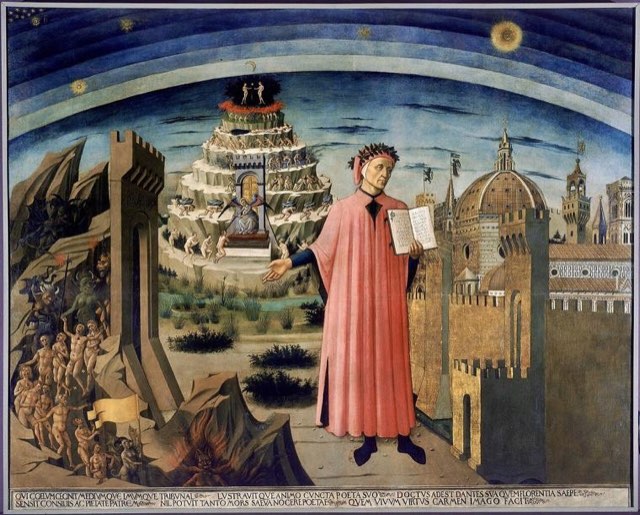

Biography
- Dante AlighieriCatholic Encyclopedia · read
Family, Education, and Politics
- Early Years and Political Life; The History Guide: Dr. Steven Kreis’s Dante AlighieriDante Circle of Friends’ · read · archived copy
Religious Life
- Aquinas and DanteThe History Guide · Dr. Steven Kreis · read · archived copy
Professional Career
- His LifeDante Alighieri on the Web · read
Exile
- ExileDante Circle of Friends’ · read · archived copy
- IntroductionYale University · Dr. Giuseppe Mazzotta · watch
Dante’s Literary Contemporaries
- The Medieval World ViewThe History Guide · Dr. Steven Kreis · read · archived copy
Beatrice’s Life
- BeatricePrinceton Dante Project · read · no longer online
Medieval Gender Issues
- GenderNorthern Virginia Community College · Diane Thompson · read
Examples of Courtly Love
- An Interpretation of Courtly LoveUniversity of Tennessee at Knoxville · Dr. Bruce MacLennan · read
Beatrice in Dante’s Vita Nuova
- Dante’s Vita NuovaPrinceton Dante Project · read · archived copy
- Vita NuovaDr. Giuseppe Mazzotta · watch
Dante, Beatrice, and Love Poetry
- Dante and Fedeli d’AmoreUniversity of Tennessee at Knoxville · Dr. Bruce MacLennan · read
Dante’s “Dolce Stil Novo”
- Sweet New StyleUniversity of Texas at Austin · Guy P. Raffa · read
Role as Dante’s Muse
- Context for the Commedia: Beatrice and the Vita NuovaCalifornia Polytechnic State University · Dr. Deborah Schwartz · read · archived copy
Medieval Political Contexts
- The Holy CrusadesThe History Guide · Dr. Steven Kreis · read · archived copy
Medieval Ideas of Religion
- Heretics, Heresies and the ChurchThe History Guide · Dr. Steven Kreis · read · archived copy
Medieval Concepts of Justice
- The 12th Century RenaissanceThe History Guide · Dr. Steven Kreis · read · archived copy
Tuscan, Occitan, and Latin Poetry
- Dante and the Lyric PastColumbia University Digital Dante Project’s version of The Cambridge Companion to Dante · Teodolinda Barolini · read · archived copy
Revolutions in Vernacular Literature
- Medieval Attitudes Towards Vernacular Literature; Northern Virginia Community College: Diane Thompson’s VernacularCalifornia Polytechnic State University · Dr. Deborah Schwartz · read · archived copy
Dante’s Ideas of Language
- Dante’s De Vulgaria EloquentiaPrinceton Dante Project · read · archived copy
Dante as the First Literary Critic and the Rise of Humanism
- HumanismCatholic Encyclopedia · read
Modern Critical Perspectives
- Auerbach and Gramsci on Dante: Criticism and IdeologyUniversity of California’s eScholarship · Betsy Emerick · read
Chapter II
The Inferno
In this unit, we will start to work closely with Dante’s The Divine Comedy. The text consists of three books, known as The Inferno, The Purgatorio, and The Paradisio, all of which were composed after his exile. Here, we will begin by studying the first section of his three-part allegorical work, which depicts the poet-narrator’s journey around Hell. We will first examine the political and religious context that inspired Dante’s thinly-veiled commentary on his world. We will also work through the text section by section in order to fully partake in Dante’s creation of a world filled with flawed historical characters as well as enrich our understanding of Dante’s often complicated thematic implications.
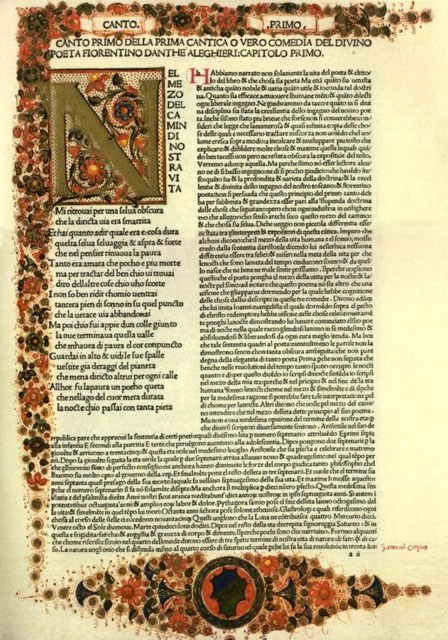

The Text as Allegory
- Allegory in DantePrinceton Dante Project · Robert Hollander · read · archived copy
Formal Structure of the Cantos
- A Poetics of Chaos and HarmonyColumbia University Digital Dante Project’s version of The Cambridge Companion to Dante · Joan Ferrante · read · archived copy
Dante’s Literary Models
- Dante’s VirgilProject Gutenberg’s version of Virgil’s The Aeneid; Princeton Dante Project · Robert Hollander · read
Italian Vernacular and Latin Literature
- The InfernoCalifornia Polytechnic State University · Dr. Deborah Schwartz · read · archived copy
Intertextuality: Mythical and Biblical Allusions
- Ulysses, Geryon and the Aeronautics of Narrative TransitionColumbia University Digital Dante Project’s Teodolinda Barolini’s The Undivine Comedy · read · archived copy
The Nine Circles
- Inferno ChartThe World of Dante · watch
The Vestibule of Hell, the Beginning of the Journey, and the Representation of Florence
- Dark Wood, Cantos 1-2 and Gate of Hell, Canto 3University of Texas at Austin · Guy P. Raffa · read
- Inferno I, II, III, IVYale University · Dr. Giuseppe Mazzotta · watch
First Circle: Limbo
- Circle 1, Canto 4University of Texas at Austin · Guy P. Raffa · read
- Inferno V, VI, VIIYale University · Dr. Giuseppe Mazzotta · watch
Second Circle: Lust
- Circle 2, Canto 5University of Texas at Austin · Guy P. Raffa · read
Third Circle: Gluttony
- Circle 3, Canto 6University of Texas at Austin · Guy P. Raffa · read
Fourth Circle: Avarice
- Circle 4, Canto 7University of Texas at Austin · Guy P. Raffa · read
Fifth Circle: Wrath
- Circle 5, Cantos 7-9University of Texas at Austin · Guy P. Raffa · read
- Inferno IX, X, XIYale University · Dr. Giuseppe Mazzotta · watch
Sixth Circle: Heresy
- Circle 6, Canto 10University of Texas at Austin · Guy P. Raffa · read
Seventh Circle: Violence
- Circle 7, Cantos 12-17University of Texas at Austin · Guy P. Raffa · read
- Inferno XII, XIII, XV, XVIYale University · Dr. Giuseppe Mazzotta · watch
Eighth Circle: Fraud
- Circle 8, Subcircles 7-10, Cantos 24-30University of Texas at Austin · Guy P. Raffa · read
- Inferno XIX, XXI, XXV, XXVIYale University · Dr. Giuseppe Mazzotta · watch
Ninth Circle: Betrayal
- Circle 9, Cantos 31-34University of Texas at Austin · Guy P. Raffa · read
Hell as a Physical Place
- HellDante Circle of Friends’ · read · archived copy
Conflict between Narrator, Reader, and Protagonist
- The Moral Situation of the Reader of InfernoPrinceton Dante Project · Robert Hollander · read · archived copy
References to the Christian Last Judgment
- Last JudgmentUniversity of Texas at Austin · Guy P. Raffa · read
Human Wisdom and Morality
- The Corrupt SocietyColumbia University Digital Dante Project’s version of Joan Ferrante’s The Political Vision of the Divine Comedy · read · archived copy
Hell as a Political Landscape
- Church and State in the ComedyColumbia University Digital Dante Project’s version of Joan Ferrante’s The Political Vision of the Divine Comedy · read · archived copy
Contrapasso: Divine Justice and Punishment
- ContrapassoUniversity of Texas at Austin · Guy P. Raffa · read
- Inferno XXVI, XXVII, XXVIIIYale University · Dr. Giuseppe Mazzotta · watch
Water, Ice, and Light Symbolism
- Inferno: HellMontclair State University · Jean Alvares · read · archived copy
The Virtue of the Storytelling Experience
- Infernal Incipits: The Poetics of the NewColumbia University Digital Dante Project’s Teodolinda Barolini’s The Undivine Comedy · read · archived copy
Questions of Tragedy and Comedy
- Inferno XXX, XXXI, XXXII, XXXIII, XXXIVYale University · Dr. Giuseppe Mazzotta · watch
Structure, Epic, and Convention
- Narrative and Style in Lower HellColumbia University Digital Dante Project’s Teodolinda Barolini’s The Undivine Comedy · read · archived copy
Circular Structure: Literal and Narrative
- Introduction to The InfernoStony Brook Dante Project · read
Chapter III
Purgatorio
We will continue our critical study of Dante by looking at the second section of The Divine Comedy, titled The Purgatorio. In The Purgatorio, Dante continues his trip through the afterlife with a journey to the top of Mount Purgatory, led by the poet Virgil. In this unit, we will consider the representation of the seven “terraces” in a specifically Christian context, which will enrich our reading of the text. In addition, we will look closely at the ways in which this section of Dante’s work reflects the growing Medieval interest in geography, science, and literature. Perhaps most importantly, we will monitor Dante’s evolving psychological concepts of sin.
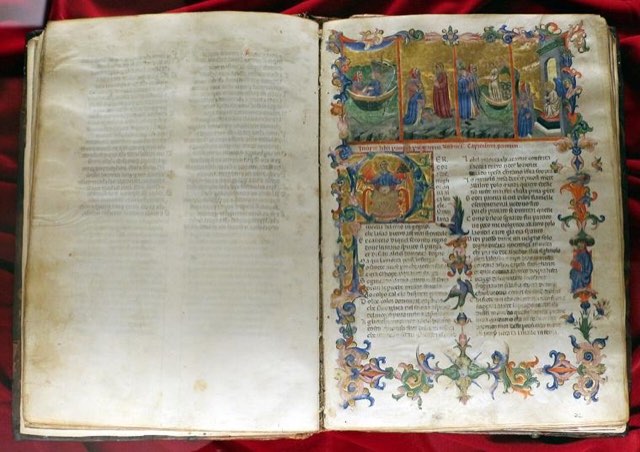

Traditional Conceptions of Purgatory
- PurgatoryCatholic Encyclopedia · read
The Location of Purgatory
- Purgatory I, IIYale University · Dr. Giuseppe Mazzotta · watch
References to Classical Myth
- Introduction to The PurgatorioStony Brook Dante Project · read
The Text as Vision Literature
- Vision LiteratureNorthern Virginia Community College · Diane Thompson · read
The Tour of the Seven Terraces
- Purgatory ChartThe World of Dante · watch
Ante-Purgatory
- Ante-Purgatory and Valley of RulersUniversity of Texas at Austin · Guy P. Raffa · read
- Purgatory V, VI, IX, XYale University · Dr. Giuseppe Mazzotta · watch
First Terrace: The Proud
- Terrace 1: PrideUniversity of Texas at Austin · Guy P. Raffa · read
Second Terrace: The Envious
- Terrace 2: EnvyUniversity of Texas at Austin · Guy P. Raffa · read
Third Terrace: The Wrathful
- Terrace 3: WrathUniversity of Texas at Austin · Guy P. Raffa · read
- Purgatory X, XI, XII, XVI, XVIIYale University · Dr. Giuseppe Mazzotta · watch
Fourth Terrace: The Slothful
- Terrace 4: SlothUniversity of Texas at Austin · Guy P. Raffa · read
- Purgatory XIX, XXI, XXIIYale University · Dr. Giuseppe Mazzotta · watch
Fifth Terrace: The Covetous
- Terrace 5: Avarice and ProdigalityUniversity of Texas at Austin · Guy P. Raffa · read
Sixth Terrace: The Gluttonous
- Terrace 6: GluttonyUniversity of Texas at Austin · Guy P. Raffa · read
Seventh Terrace: The Lustful
- Terrace 7: LustUniversity of Texas at Austin · Guy P. Raffa · read
- Purgatory XXIV, XXV, XXVIYale University · Dr. Giuseppe Mazzotta · watch
The Earthly Paradise
- Terrestrial ParadiseUniversity of Texas at Austin · Guy P. Raffa · read
- Purgatory XXX, XXXI, XXXIIIYale University · Dr. Giuseppe Mazzotta · watch
Reference to the Seven Deadly Sins and the Theological Virtues
- Virtues and SinsUniversity of Texas at Austin · Guy P. Raffa · read
The Representation of Woman as Truth
- PurgatoryDante Circle of Friends’ · read · archived copy
Reunion with Beatrice
- The Entrance of Beatrice in Dante’s Purgatorio: Revelation, Duality, and IdentityUniversity of California’s eScholarship · John Laskin · read
The Narrator as Pilgrim
- PurgatorioCalifornia Polytechnic State University · Dr. Deborah Schwartz · read · archived copy
Purgatory, Commerce, and Politics
- Exchange and Communication, Commerce and Language in the ComedyColumbia University Digital Dante Project’s version of Joan Ferrante’s The Political Vision of the Divine Comedy · read · archived copy
Dream Symbolism
- Dream of Eagle and Dream of WitchUniversity of Texas at Austin · Dante World · read
Water, Fire Symbolism
- Purgatorio: PurgatoryMontclair State University · Jean Alvares · read · archived copy
Chapter IV
Paradiso
We will conclude the course with the final section of The Divine Comedy, in which Beatrice guides the poet through spheres of heaven, each of which is associated with levels of the angelic hierarchy. As we read, we will continue to think about the text within the context of Medieval knowledge, science, and cosmology. We will consider Dante’s construction of his world through references to the planets, as well as his explicit interest in Beatrice as a muse. As we conclude our study of The Divine Comedy, we will also consider the effect of the text as a whole. We will think critically about Dante’s classification of his poem as a “Divine Comedy” in conjunction with the conclusion and address other questions of genre.
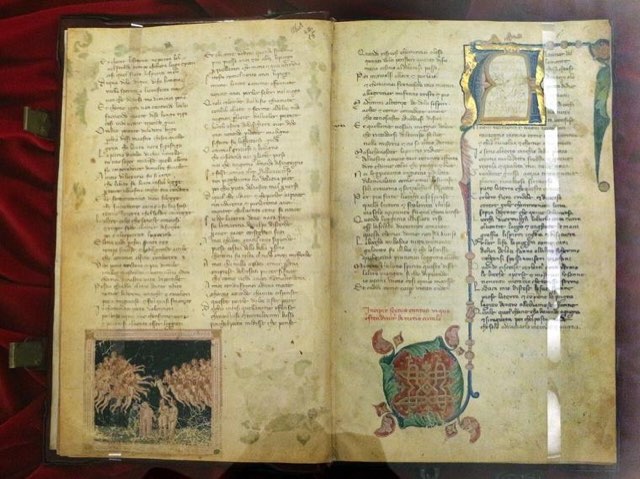

Medieval Cosmology and Astromony
- Astronomy in the Divine ComedyThe World of Dante · read
- Christian Aristotelian CosmosThe World of Dante · watch
Medieval Scientific and Spiritual Knowledge
- Paradise I, IIYale University · Dr. Giuseppe Mazzotta · watch
Christian Predestination, Angels, and Mysticism
- AngelsCatholic Encyclopedia · read
History of Paradise and Politics
- Unum SanctumPrinceton Dante Project’s version of Dante’s De Monarchia; Catholic Encyclopedia · read · archived copy
- Paradise IV, VI, XYale University · Dr. Giuseppe Mazzotta · watch
Dante’s Concept of Ascent
- Dante’s AscentUniversity of Tennessee at Knoxville · Dr. Bruce MacLennan · read
The Influence of Cicero
- Dante and CiceroDante Alighieri on the Web · read
The Dedication
- Epistle XII, Letter to Can GrandePrinceton Dante Project’s version of Dante · read · archived copy
The Spheres and Planets
- Paradise ChartThe World of Dante · watch
First Sphere: The Moon
- MoonUniversity of Texas at Austin · Guy P. Raffa · read
Second Sphere: Mercury
- MercuryUniversity of Texas at Austin · Guy P. Raffa · read
Third Sphere: Venus
- VenusUniversity of Texas at Austin · Guy P. Raffa · read
Fourth Sphere: The Sun
- SunUniversity of Texas at Austin · Guy P. Raffa · read
- Paradise XI, XIIYale University · Dr. Giuseppe Mazzotta · watch
Fifth Sphere: Mars
- MarsUniversity of Texas at Austin · Guy P. Raffa · read
- Paradise XV, XVI, XVIIYale University · Dr. Giuseppe Mazzotta · watch
Sixth Sphere: Jupiter
- JupiterUniversity of Texas at Austin · Guy P. Raffa · read
- Paradise XVIII, XIX, XXI, XXIIYale University · Dr. Giuseppe Mazzotta · watch
Seventh Sphere: Saturn
- SaturnUniversity of Texas at Austin · Guy P. Raffa · read
Eighth Sphere: The Fixed Stars
- Fixed StarsUniversity of Texas at Austin · Guy P. Raffa · read
- Paradise XXIV, XXV, XXVIYale University · Dr. Giuseppe Mazzotta · watch
Ninth Sphere: The Primum Mobile
- Primum MobileUniversity of Texas at Austin · Guy P. Raffa · read
- Paradise XXVII, XXVIII, XXIXYale University · Dr. Giuseppe Mazzotta · watch
The Empyrean
- EmpyreanUniversity of Texas at Austin · Guy P. Raffa · read
- Paradise XXX, XXXI, XXXII, XXXIIIYale University · Dr. Giuseppe Mazzotta · watch
The Representation of Beatrice in the Construction of Paradise
- ParadisoCalifornia Polytechnic State University · Dr. Deborah Schwartz · read · archived copy
Paradise as the Rejection of Sin and the Acceptance of Light
- Paradiso: ParadiseMontclair State University · Jean Alvares · read · archived copy
Configurations of Paradise: Light, Optimism, and Union
- Aquinas’ Three Levels of Divine Predication in Dante’s ParadisoUniversity of California’s eScholarship · Eileen Sweeney · read
Representations of Monarchial Order
- Law, Justice, and ProvidenceUniversity of California’s eScholarship · Kelly Craig · read
Journey and Trinity
- ParadiseDante Circle of Friends’ · read · archived copy
The Earthly Body: “Transhumanizing”
- Introduction to The ParadisoStony Brook Dante Project · read
Romance, Epic, and Vision: Questions of Genre
- Divina ComediaGreatdante.net · read
About this course
This course is Saylor Academy's ENGL409, Dante, one of the complete university courses the Saylor Foundation made free from 2008 and retired in 2015. Saylor licensed its course text under CC BY 3.0; the original is on GitHub. Here it is laid out as chapters, links that have died go to an archived copy from the Internet Archive where one exists, assessments that needed a Saylor login are left out, and people and works are linked to Kulturbase. The readings and lectures belong to their publishers and are linked, not copied. Pictures: Wikimedia Commons, credited under each picture.
All Saylor courses · Free culture courses · The Chautauqua Reading Course