Literature · Saylor ENGL410
The Victorian Novel
The Victorian Period of English history (1837-1901) witnessed a set of complex political, social, scientific, medical and philosophical developments. Such developments influenced - and were influenced by - various modes of cultural production, most specifically the Victorian Novel.
More about this course
The reciprocal relationship meant that even as discoveries fed the imaginative worlds of fiction, fictive accounts helped a reading public re imagine the language of those discoveries. As the British Empire expanded its reaches across the globe, news of new societies and cultures circulated back to the British Isles to a degree never before witnessed in English history. At home, British intellectuals began raising important questions concerning the nature of the “Woman Question,” or the proper place and role for British women in society, at home, and in the workplace. In addition, this period saw the rise of Darwinism, Marxism, and Freudian psychoanalysis - a set of theories that would forever change global society and culture. In this course, we will study the ways in which the Victorian novel came to grapple with these and other related ideas and issues, and we will track the methods by which the novels of this age represented (and intervened in) social, political, scientific, philosophical, and cultural concerns. The course has been arranged to first acquaint you with the broader socio-historical and literary context in which Victorian novels bourgeoned and flourished. In addition to this cultural context, there are ten “Case Studies in the Victorian Novel,” along with a few shorter fiction readings. The course is divided into five units that may be described briefly as: Victorian Socio-Historical Context, Conventions of the Victorian Novel, Gender and the Victorian Novel, Empire and the Victorian Novel, and Science and the Victorian Novel. You will be asked to think deeply about the ways culture influences text - but also about how novels and novelists affect their culture. Though the Victorian Age has long past, our current understanding of novels (their content and structure) owes a debt to the great novelists of the nineteenth century.
Upon successful completion of this course, you will be able to:
In order to take this course, you must:
Chapter I
Socio-historical Context: An Introduction to the Victorian Period
The Victorian period coincides, of course, with the reign of Queen Victoria. This age experienced, among other things, the rapid expansion of the British Empire, the emergence of revolutionary forms of technology and science, the birth of new theories concerning ideal social relations, widespread industrialization, and the invention of a new formation of the novel that would forever change the trajectory of narrative: the Victorian novel. In this section of the course, we will explore these and other related issues with the goal of arriving at a global view of Victorianism, identifying its principal characteristics, practitioners, and conventions.
In the Great Books lists Hard Times
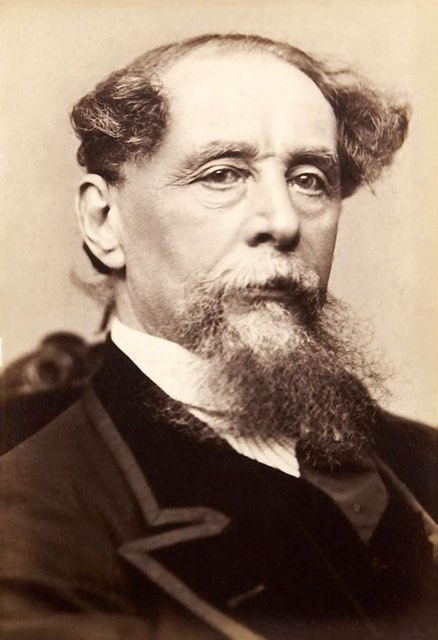

Introduction to Victorianism: Life, Work, and Vision of England
- Queen VictoriaThe Official Website of The British Monarchy · read · 20 min · archived copy
- What was the life of a typical Englishman just before Victoria ascended the throne?The Victorian Web · George P. Landow · read
English Politics during the Age of Queen Victoria
- Victorian Legislation: A TimelineThe Victorian Web · Marjie Bloy · read · 10 min
- Movements and Currents in Nineteenth-Century British ThoughtThe Victorian Web · George P. Landow · read
- The National Union of Women’s Suffrage SocietiesThe Victorian Web · Helena Wojtczak · read · 10 min
- ToryThe Victorian Web · David Cody · read · 10 min
- WhigThe Victorian Web · David Cody · read · 10 min
Industrialization, the Decline of Agrarian Lifestyle, and the Rise of the Urban, Working Class
- ‘From Hand Labour to Machine Work in agriculture’: Work and New technologies in the Victorian Era (1904)The Victorian Web · Gertrude Jekyll · read · 10 min
- Working-Class Attitudes: Stoicism and AcceptanceThe Victorian Web · John Burnett · read
Victorian Values and Victorianism
- Victorianism as a Fusion of Neoclassical and Romantic Ideas and AttitudesThe Victorian Web · Dr. George P. Landow · read
- Victorian and VictorianismThe Victorian Web · George P. Landow · read
Conflicts, an Overview
- Chapter 7: The Victorian EraSurvey of British Literature · read · no longer online
Introduction to the Working Classes
- Mayhew’s London Labour and the London PoorThe Victorian Web · Anthony S. Wohl · read
- Henry Mayhew: London Labour and the London Poor – an audio guidePodularity · watch
- The Hidden World of the Victorian Working ClassesThe Victorian Web · John Burnett · read · 15 min
- The Hierarchies of Victorian Workers: Craftsman, Semi-skilled Factory Operatives, and LaborersThe Victorian Web · George P. Landow · read · 15 min
- Victorian Working Women: Sweated LaborThe Victorian Web · John Burnett · read · 10 min
- ‘Slaves of the Needle’: The Seamstress in the 1840sThe Victorian Web · Beth Harris · read · 10 min
- Portrait of a VictorianThe Victorian Web · Dick Sullivan · read · 10 min
- The Governess and Class PrejudiceThe Victorian Web · Erin Wells · read · 10 min
- Punch and Brontë on Training the Ideal GovernessThe Victorian Web · Emily Constable · read · 10 min
- The Victorian Governess: A BibliographyThe Victorian Web · Cynthia E. Huggins’ · read · 10 min
- IntroductionThe Workhouse · Peter Higginbotham · read · 10 min
- Entering and Leaving the WorkhouseThe Workhouse · Peter Higginbotham · read · 10 min
Case Study in the Victorian Novel 1: Selected Reading in Charles Dickens’ Hard Times and Thomas Hardy’s Return of the Native
- Charles Dickens’ Hard TimesThe Project Gutenberg · Chapters IV through VI · read · archived copyCharles Dickens on Kulturbase
- Thomas Hardy’s Return of the NativeThe Project Gutenberg · Chapter 1, Part 2 · readCharles Dickens on Kulturbase
- ENGL 410 Subunit 1.2.4 Discussion ForumThe Saylor Foundation · do · 1 h · archived copyCharles Dickens on Kulturbase
Chapter II
History and Conventions of the Victorian Novel
The Victorian novel has become one of the hallmarks of our literary tradition. Though the form originated in the 18thcentury, the serialized, lengthy, triple-decker narratives of the Victorian period are often what we think of when we think of novels. This section of the course will introduce some of the types of novels in the period, as well as the literary scene and some of its most influential authors. At the end of this unit, we will read the entirety of Charles Dickens’ Bleak House; though not the earliest of the Victorian novelists, his work is representative not only in form but also in content, making plain the cultural concerns facing a steadily urbanizing Britain.

The Importance of the Press: Freedom of Speech, Technological Advances, and Changes in Readership
- Literature, Science and Print Technology; The Printed Book – The Invisible Machine; Jasper Fforde on the Relation of Information Technology and Narrative; and The History of Printing: A ChronologyThe Victorian Web · George P. Landow · read
- The complexities of book production; Movable type and stereotyping; How stereotypes were made; Altering Standing Type; Variation in printed text: the example of Thackeray; Mixing multiple impressions within single copies of a bookThe Victorian Web · Peter L. Shillingsburg · read
- The Technologies of Nineteenth-Century Illustration: Woodblock Engraving, Steel Engraving, and Other ProcessesThe Victorian Web · Philip V. Allingham · read
Types of Victorian Novels and Short Stories
- Forms of the Novel and Short StoryThe Victorian Web · watch
- BildungsromanThe Victorian Web · David Cody · read · 10 min
- Condition of England NovelsThe Victorian Web · Dr. Andrzej Diniejko · read · 10 min
- The Genre of the Political NovelThe Victorian Web · John Whalen-Bridge · read · 10 min
- The Victorian Sensation NovelThe Victorian Web · Philip V. Allingham · read
- Origins of the Gothic GenreThe Gothic Novel · read · archived copy
Approaching the Victorian Novel
- How to read a Novel – Some Places to BeginThe Victorian Web · George P. Landow · read · 10 min
- Philip V. Allingham’s “Why Read Serial Fiction of Victorian Novels?The Victorian Web · read · 10 min
Conventions of Realism in the Victorian Novel
- RealismThe Victorian Web · George P. Landow · read
- Realism and its Challenge to Institutionalized Corruption in Pickwick and Jane EyreVictorian Web · Cortney Lollar · read
- Realism and the Outer LifeVictorian Web · Harry E. Shaw · read
- Conflict in Victorian Verse and Prose: Hardy and OthersThe Victorian Web · Philip V. Allingham · read
Case Study in the Victorian Novel 2: Charles Dickens’ Bleak House
- Dickens and His ReadersThe Victorian Web · E.D.H. Johnson · readCharles Dickens on Kulturbase
- Narrative ArtThe Victorian Web · E.D.H. Johnson · readCharles Dickens on Kulturbase
- Challenging figures: Three of Charles Dickens’ Marginal WomenThe Victorian Web · Valerie Kennedy · readCharles Dickens on Kulturbase
- Charles Dickens’ Bleak HouseThe Project Gutenberg · readCharles Dickens on Kulturbase
- ENGL 410 Subunit 2.3 Discussion ForumThe Saylor Foundation · do · 1 h · archived copyCharles Dickens on Kulturbase
Chapter III
The Woman Question: Gender and the Victorian Novel
Victorian novels often represent and explore deeply complicated and interconnected social worlds. In this unit of the course, we will investigate the complexity of gender in the Victorian novel. This was a period of enormous change, and though women were granted additional rights, they lived and worked in a patriarchal society that expected them to be, primarily, wives and mothers. The marriage plot is therefore an important component of these novels, but novelists also used their work to challenge gender roles and expectations. In the following, we will look at gender and work, gender and politics, gender in the home, and gender in sensation novels. We will conclude the unit with Charlotte Bronte’s Jane Eyre and Wilkie Collins’ The Woman in White.
In the Great Books lists Jane Eyre
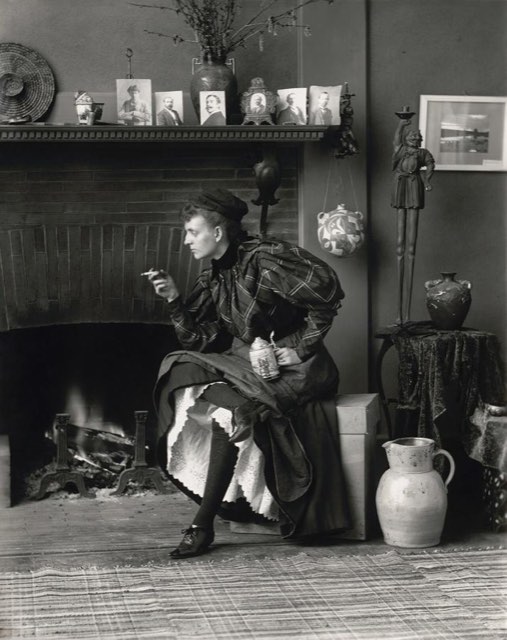

Victorian Sexuality
- Sex, Scandal, and the NovelThe Victorian Web · Dr. William A. Cohen · read
Separate Spheres
- Separate Spheres: Victorian Constructions of Gender in Great ExpectationsThe Victorian Web · Timothy Farrell · read
- Private vs. Public: Female Sexuality in Victorian CultureThe Victorian Web · Meredith Moore · read
The Governess in Victorian Fiction
- The Victorian Governess NovelThe Victorian Web · Dr. Cecilia Wadsö Lecaros’ · read · 10 min
- Desire, Class Position, and Gender in Jane Eyre and Pickwick PapersThe Victorian Web · Benjamin Grave · read
Case Study in the Victorian Novel 3: Charlotte Bronte’s Jane Eyre
- The Brontë Pseudonyms: A Woman’s Image – The Writer and Her PublicThe Victorian Web · Dr. Marianne Thormahlen · read
- Jane Eyre by Charlotte BronteThe Project Gutenberg · read
Legal Concerns
- Timeline of Legislation, Events, and Publications Crucial to the Development of Victorian FeminismThe Victorian Web · read
- Josephine ButlerThe Victorian Web · read
- Helena WojtczakThe Victorian Web · read
New Women vs “Women of England”
- The New Woman FictionThe Victorian Web · Dr. Andrzej Diniejko · read
- The Women of England: Their Social Duties and Domestic HabitsInternet Archive · Chapter 1, Sarah Stickney Ellis · read
Gender and Sensation Fiction
- The Victorian Sensation Novel, 1860–1880: Preaching to the Nerves Instead of the JudgmentThe Victoria Web · Dr. Philip V. Allingham · read
- Mary Elizabeth Braddon (1835–1915), the ‘Queen of Sensation’ – Life and WorksThe Victorian Web · Philip V. Allingham · read
Case Study in the Victorian Novel 4: Wilkie Collins Woman in White
- The Woman in White by Wilkie CollinsThe Project Gutenberg · read
- ENGL 410 Subunit 3.5 Discussion ForumThe Saylor Foundation · do · 1 h · archived copy
Chapter IV
The British Empire and the Victorian Novel
It was once said that the “sun never set” on the British Empire; this phrase (which has been attributed to several persons) appeared in 1821 in a British newspaper, the Caledonian Mercury. It meant that the territorial expansion of the 18th and 19th century gave the United Kingdom extensive land holdings around the world (notably in India). But though this empire was powerful, it was also under threat. The optimism of the early 19th century fades into a fear of collapse, decay and invasion at the end of the Victorian period. These themes necessarily capture the British imagination, and it is important to note that the Rise and Fall of the Roman Empire was also published during this time (you will have noted a reference to it in Bleak House; it is read to the Boffins by Silas Wegg!) In this unit, we will examine the theme of empire and its representation in novels of the period.

Empire and Imperialism, an Introduction
- British Empire: An IntroductionThe Victorian Web · Dr. David Cody · read
- Why did the British Empire expand so rapidly between 1870 and 1900The Victorian Web · Lara J. Barton · read
Expansion and Trade
- Nationalism and ImperialismThe Victorian Web · Dr. Derek B. Scott · read
- Ambivalence, Economy, and Empire in Victorian BritainThe Victorian Web · George B. Landow · read
- The British East India Company – the Company that Owned a Nation (or Two)The Victorian Web · George P. Landow · read
Case Study in the Victorian Novel 5: The Sign of Four by Arthur Conan Doyle
- The Sign of the Four by Sir Arthur Conan DoyleThe Project Gutenberg · readArthur Conan Doyle on KulturbaseDe fires tegn on Kulturbase
The Empire in India
- Timeline of British IndiaThe Victorian Web · Desmond Tuah · read
- Our Indian EmpireThe Victorian Web · read
Troubled Imperialism and Fears of Decay
- Britain and the New ImperialismNew World Encyclopedia · read
- The end of British rule in Ireland and Decolonization and declineNew World Encyclopedia · read
- The Industrial Revolution and the Failure of Great BritainThe Victorian Web · read
Case Study in the Victorian Novel 6: Dracula by Bram Stoker
- Dracula by Bram StokerThe Project Gutenberg · readBram Stoker on KulturbaseDracula on KulturbaseDracula on Kulturbase
- Introduction to the Victorian GothicGreat Writers Inspire · Charlotte Barrett · read · archived copyBram Stoker on Kulturbase
- George Whyte-Melville, Vampirism, and the Crimean WarThe Victorian Web · Stuart Currie · readBram Stoker on Kulturbase
- ENGL 410 Subunit 4.2.3 Discussion ForumThe Saylor Foundation · do · 1 h · archived copyBram Stoker on Kulturbase
Chapter V
Science, Psychology and the Victorian Novel
The Industrial Revolution that took place over the course of the Victorian Era meant that very rapid changes occurred in the ways and means of labor. As we learned in Unit 1, class structure and stratification were very important, and men and women had separate spheres of labor. The enormous changes of science and technology destabilized this, however; so, even as the categories for work were being defined, they were also being challenged. Some of this is evident in the technology used in the last novel, Dracula. However, there were other “revolutions” happening during this period, particularly in the natural and physical sciences and in medicine. In this Unit, we will examine how theories of natural selection, evolution, and psychology (influenced by the rise in empire and industry) affected society – and the novels that describe it. A reciprocal relationship also existed between science, psychology, and the novel. Some medical professionals even borrowed language from Charles Dickens!
In the Great Books lists On the Origin of Species · The Mayor of Casterbridge

Industrial Revolution and its Discontents
- The Industrial Revolution: An IntroductionThe Victorian Web · George P. Landow · read
Railways and Social Effects
- Railways and Victorian Literature – An IntroductionThe Victorian Web · George P. Landow · read
- The Social Effects of Victorian RailwaysThe Victorian Web Jeoffry Spence · read · archived copy
- The Signalman by Charles DickensThe Project Gutenberg · readCharles Dickens on Kulturbase
Victorian Technologies
- Technology and Leisure in Britain after 1850The Victorian Web · Stephen Hall Clark · read
- Literature, Science, and TechnologyVictorian Web · George P. Landow · read
- Science or Séance? Late-Victorian Science and Dracula’s Epistolary StructureThe Victorian Web · Terry Scarborough · read
Victorian Science and Scientific Thought
- Victorian Science: An IntroductionThe Victorian Web · John van Wyhe · read
Charles Darwin’s The Origin of Species: A Brief Introduction and Overview
- Charles DarwinThe Pennsylvania State University’s College of Earth and Mineral Sciences · read · 30 min · archived copy
- Charles Darwin (1809–1882) Gentleman NaturalistThe Victorian Web · Dr. John van Wyhe · read
- Richard Jefferies and Victorian Science FictionThe Victorian Web · Dr. Jacqueline Banerjee · read
Case Study in the Novel 7: A Journey to the Centre of the Earth by Jules Verne
- Journey to the Centre of the Earth by Jules VerneThe Project Gutenberg · readJules Verne on Kulturbase
Science of the Mind
- Victorian Science of the MindThe Victorian Web · read · 5 min
- PhrenologyThe Victorian Web · John van Wyhe · read · 20 min
- Animal MagnetismEsalen Center for Theory and Research · read · 30 min
- MonomaniaWikipedia · read · 15 min
Brief Introduction to the Life, Work, and Theories of Sigmund Freud
- Sigmund FreudPegasos · read · 20 min · archived copy
Evolution, Psychology, Criminology
- Nineteenth-Century Psychology: An IntroductionThe Victorian Web · Alvin Wee · read
- Cesare LombrosoBoundless · read · 10 min · no longer online
- Anthropological criminologyWikipedia · read
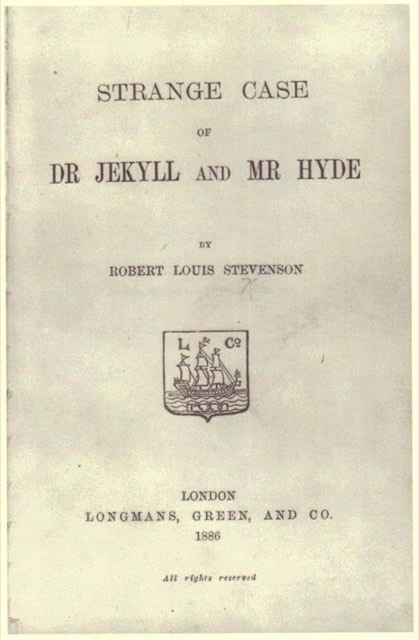
Case Study in the Novel 8: Robert Louis Stevenson’s Strange Case of Dr. Jekyll & Mr. Hyde
- Gothic Elements in The Strange Case of Dr. Jekyll and Mr. HydeGreat Writers Inspire · Charlotte Barrett · read · archived copyRobert Louis Stevenson on Kulturbase
- Strange Case of Dr. Jekyll & Mr. Hyde by Robert Louis StevensonProject Gutenberg · readRobert Louis Stevenson on Kulturbase
Evolution and Morality
- Evolution as a Guide to ConductThe Victorian Web · Terence Green · read
- ‘So it is with ourselves’ – Darwin, evolution, and moral philosophyThe Victorian Web · George P. Landow’s Darwin · read
Herbert Spencer and Social Darwinism
- Herbert Spencer’s Social DarwinismThe Victorian Web · Alvin Wee · read
- Herbert Spencer’s Anticipations of Natural SelectionThe Victorian Web · Joachim Dagg · read
Life, Work, and Ideas of Karl Marx
- Karl MarxThe Victorian Web · Robert Sullivan · read
Backlash against Social Darwinism
- Social effects of Evolutionary TheoryWikipedia · read · 30 min
- ENGL 410 Subunit 5.4.4 Discussion ForumThe Saylor Foundation · do · 1 h · archived copy
Case Study in the Victorian Novel 9: Joseph Conrad’s Journey Inward and the Rejection of Victorian Values
- Chapter 8, Section 3: Joseph Conrad (1857–1924)Survey of British Literature · readJoseph Conrad on Kulturbase
- Heart of Darkness by Joseph ConradProject Gutenberg · readJoseph Conrad on KulturbaseHeart of Darkness on Kulturbase
Case Study in the Victorian Novel 10: Thomas Hardy’s Version of Victorian Novelistic Drives
- The Novels of Thomas Hardy: An IntroductionThe Victorian Web · Philip V. Allingham · read
- ‘Phase the First: The Maiden’ from Thomas Hardy’s Tess of the D’UrbervillesProject Gutenberg · read
Victorian Novelist as Social Critic: Returning to Dickens
- Charles Dickens as Social Commentator and CriticThe Victorian Web · Dr. Andrzej Diniejko · readCharles Dickens on Kulturbase
- ENGL 410 Subunit 5.5 Discussion ForumThe Saylor Foundation · do · 1 h · archived copy
About this course
This course is Saylor Academy's ENGL410, The Victorian Novel, one of the complete university courses the Saylor Foundation made free from 2008 and retired in 2015. Saylor licensed its course text under CC BY 3.0; the original is on GitHub. Here it is laid out as chapters, links that have died go to an archived copy from the Internet Archive where one exists, assessments that needed a Saylor login are left out, and people and works are linked to Kulturbase. The readings and lectures belong to their publishers and are linked, not copied. Pictures: Wikimedia Commons, credited under each picture.
All Saylor courses · Free culture courses · The Chautauqua Reading Course