Literature · Saylor ENGL412
Restoration & Eighteenth-century Drama
This course will introduce you to the range of drama written and performed in England and Continental Europe between roughly 1660 and1800, a period often termed “the long eighteenth century.” In this course, we will refer to the “long-eighteenth century” as the period that began with the Restoration of the English monarchy with King Charles II following the English Civil War and concluded with the first years of the nineteenth century. During this period, drama flourished in England, France, and Germany.
More about this course
After quite a long period in which theater was not in vogue, the emergence of brilliant new dramatists, the development of novel forms of plays (including derivates of the Italian opera, comedy, and the musical), and the passage of laws that finally allowed women actors on stage sparked renewed interest amongst theatergoers. In this course, we will explore the major plays, players, and playhouses from this era in conjunction with a thorough and in-depth historical contextualization. This course has been arranged to first acquaint you with the broader socio-historical and literary context in which Restoration and eighteenth-century drama burgeoned and flourished. We will begin with a detailed introduction to the Restoration era, which will discuss the causes of the English Civil War, the Stuart Restoration of King Charles the II, and the social, cultural, political, and scientific dimensions of Restoration life. Once we have historicized the Restoration, we will do the same for the eighteenth-century, focusing on the English monarchy, the “Scientific Revolution,” and the Enlightenment as well as the variety of new forms of theater that emerged and developed during this dynamic and exciting age. Subsequent units of the course will focus on Restoration and eighteenth-century drama from various nationalistic perspectives (English, German, and French). Here, we will investigate—among other genres—English Restoration and Sentimental comedy, Heroic and Pathetic drama, political satire; the German “Sturm und Drang” tradition; and French Harlequin theater.
Upon completion of this course, students will be able to:
In order to take this course you must: √ Have access to a computer. √ Have continuous broadband Internet access. √ Have the ability/permission to install plug-ins or software (e.g., Adobe Reader or Flash). √ Have the ability to download and save files and documents to a computer. √ Have the ability to open Microsoft files and documents (.doc, .ppt, .xls, etc.). √ Be competent in the English language. Table of Contents: You can find the course’s units at the links below.
Chapter I
An Introduction to Restoration & Eighteenth-century History and Culture
The English Civil war erupted as a result of disputes over the proper role of the monarchy in Britain. While “Royalists” supported King Charles I, “Parliamentarians” pushed for a voice for the nobility and the people of England. Ultimately, England saw the rise of Oliver Cromwell, the murder of the king, and the emergence of England’s first Commonwealth and Parliament. The Parliamentarian victory was relatively short lived, however, as King Charles II was “restored” to the throne in 1660 and a new “Restoration Era” ensued. In this unit, we will examine the history of this period in England with a focus on the politics, science, and culture of Restoration England.
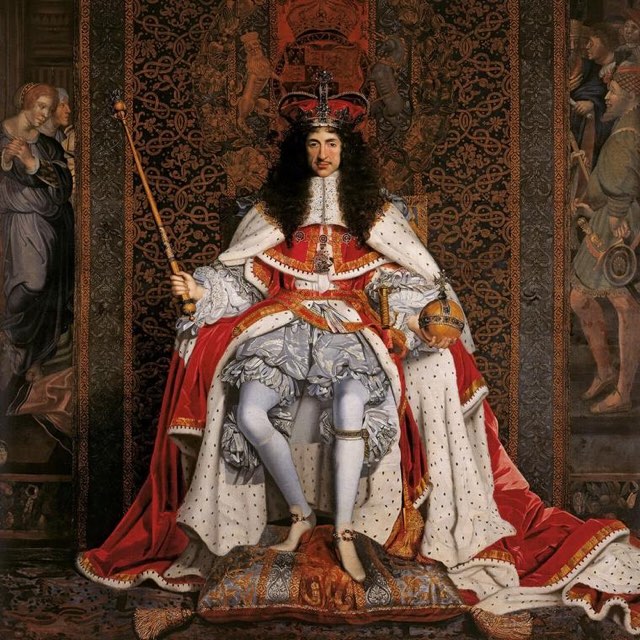

Introduction Restoration England
- Chapter V: The Stuart Restoration and Britannia.com’s Timeline of the Reformation and Restoration PeriodsThe University of Mannheim (Germany) · Professor C. H. Firth · read · archived copy
Major Historical Developments in Seventeenth-Century England
- Glorious RevolutionUnion County College · Dr. E. K. Hawthorne · read · archived copy
Restoration Politics
- Oliver Cromwell and the RestorationBritain Express · read
Restoration Gender Politics: Through the Lens of the Literary
- Love and Marriage in Three Restoration ComediesShirl’s Site · read · archived copy
Religion and Science in Seventeenth-Century/Restoration England
- Justin Champion’s Review of Religio Medici: Medicine and Religion in Seventeenth-Century England edited by Andrew Cunningham and Ole Peter GrellReviews in History · read · archived copy
Restoration and Eighteenth-Century Sexuality
- The Gay Subculture in Early Eighteenth-Century LondonRictor Norton · read
Introduction to Eighteenth-Century England
- Literature and Politics in Seventeenth Century LondonYouTube · Great Writers Inspire · Anna Beer · watch · 1 h
Eighteenth-Century Literature: An Introduction
- The Restoration and Eighteenth Century: IntroductionNorton Topics Online · The Norton Anthology of English Literature · read · archived copy
English Monarchy During the Eighteenth Century
- England’s Kings and Queens of the 18th CenturyHistory1700.com · Rick Brainard · read · archived copy
The Age of Reason in England and Europe: An Age of Revolution
- The Enlightenment Habit, Part I: Revolutionary Skepticism and The Enlightenment Habit, Part II: Many Enlightenments?enLearn LabSpace · David Roden · read · 15 min
Restoration Comedy
- Acting in Restoration Comedy with Simon Callowwatch · no longer online
Eighteenth-Century Sentimental Comedy
- Sentimental ComedyUniversity of Valencia · read · no longer online
Eighteenth-Century Domestic Tragedy
- Domestic TragedyBritannica.com · read · archived copy
Satire in the Eighteenth-Century
- A Brief Introduction to Restoration and Eighteenth Century SatireVancouver Island University · Dr. Ian Johnston · read · archived copy
Renewed Interests in Italian Opera
- 18th Century OperaVictoria and Albert Museum · read · archived copy
Musical Entertainment in Eighteenth-Century England
- Musical Background of Eighteenth Century EnglandThe University of Michigan · read · archived copy
Case Study in the Theater of the Period
- William Wycherley’s The Country WifeThe University of Western Ontario · read
Chapter II
Major Restoration & Eighteenth-century British Dramatic Movements & Dramatists
Now that we have a thorough historical account of the Restoration and Eighteenth Century, we will focus our attention on the life and work of the major British dramatists from this period. In this unit, we will examine the various new genres that emerged and took root during the Restoration and eighteenth-century. We will also study the actors of the era and the social and legal developments that pertained to the theater during this period.
In the Great Books lists The School for Scandal · She Stoops to Conquer · The History of Tom Jones, a Foundling · All for Love · Absalom and Achitophel · The Disappointment
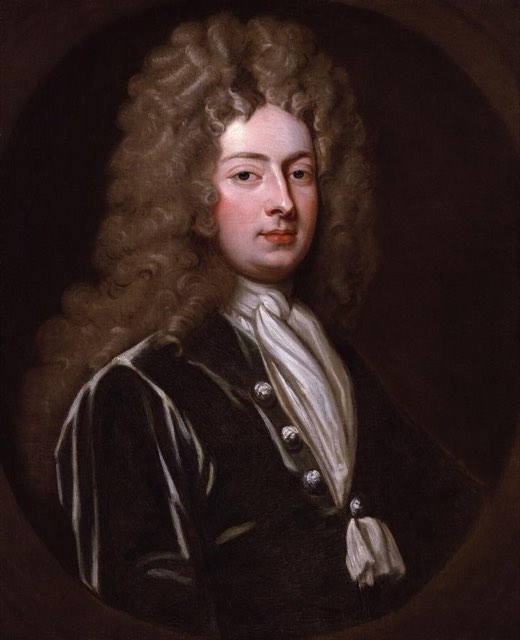

Heroic Drama: John Dryden
- All for Love by John DrydenJohn Dryden’s All for Love and History1700s.com · read
Pathetic Drama: Nicholas Rowe’s “She-Tragedy”
- Jane ShoreNicholas Rowe’s Jane Shore · A Tragedy and Luminarium.org · read
Restoration Comedy: William Congreve
- William Congreve, The Way of the WorldWilliam Congreve’s The Way of the World and Goucher College · Dr. Arnie Sander · read · archived copy
England’s First Female Dramatists: Aphra Behn
- Aphra Behn’s ‘The Rover’: Evaluating Women’s Social and Sexual OptionsAphra Behn’s The Rover and Student Pulse · Ellen Goodson · read · archived copy
Restoration Celebrity Actors and Actresses
- Women in the Theater After the Restoration and Theatre Database: W. Davenport Adams’ The Appearance of Women on the English StageLit-Arts.net · read
Restoration, Adaptation, Revival: 1660-1700
- Adaptations and Revivals in The Cambridge Companion to English Restoration TheaterCambridge University Press · Dr. Michael Dobson · read · archived copy
Restoration Theater Companies: The Major Players
- Aphra Behn and the Restoration TheatreGreat Writers Inspire · Abigail Williams and Kate O’Connor · read · archived copy
Sir Richard Steele
- Remarks (1723) by John Dennis on The Conscious Lovers by Sir Richard SteeleMcCarter Theater Center · Excerpt from Sir Richard Steele’s The Conscious Lovers and OurCivilization.com’s version of John Dennis’ · read · archived copy
Henry Fielding
- The Author’s FarceHenry Fielding’s The Author’s Farce and the University of Michigan · readHenry Fielding on Kulturbase
John Gay and the Joys of Opera in England
- The Beggar’s OperaJohn Gay’s The Beggar’s Opera and the University of Michigan · read · no longer online
The Licensing Act of 1737
- The Licensing Act of 1737Grinnell College · Eliza Hay · read · archived copy
Oliver Goldsmith
- She Stoops to Conquer or the Mistakes of a Night, A Synopsis of the Play by Oliver GoldsmithOliver Goldsmith’s She Stoops to Conquer and TheatreHistory.com · read
- Scene I from Aberdeen Arts Center’s Production of She Stoops to ConquerYouTube · watch · no longer online
Richard Brinsley Sheridan
- Teacher Resource GuideRichard Brinsley Sheridan’s The School for Scandal and The Arts Club of Vancouver · read · archived copy
Chapter III
German Drama: Sturm Und Drang & Other Developments
In the last unit, we studied English drama through a variety of lenses (cultural, political, generic, social). In this unit we will turn our attention to simultaneous developments in the theater of Germany during the long-eighteenth century. Here, we will explore the “Sturm und Drang” tradition in Germany as well as German historical drama and tragedy of the period.
In the Great Books lists Faust · On the Aesthetic Education of Man · William Tell · Minna von Barnhelm · The Education of the Human Race
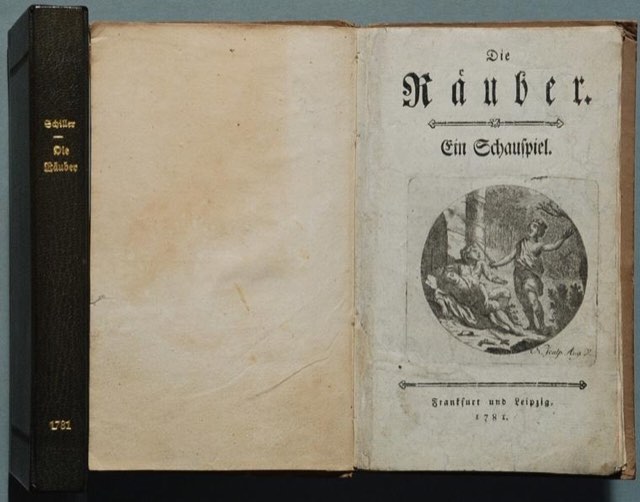

German Theater in the Eighteenth Century: Sturm und Drang
- Sturm und DrangTheatreDatabase.com · read · archived copy
Lessing’s Emilia Galotti
Enacting Lessing: Themes, Ideas, and Performance
- A Tale of Sex and Death, Stripped to its CoreThe New York Times · Jonathan Kalb · read
Biography and Historical Context of the Friedrich Schiller
- Friedrich Schiller (1759-1805)TheatreDatabase.com · read · archived copyFriedrich Schiller on Kulturbase
Friedrich Schiller’s The Death of Wallenstein
Schiller and The Death of Wallenstein in Context
- Friedrich von Schiller (1759-1805)Pegasos · read · archived copyFriedrich von Schiller on Kulturbase
The Life and Work of Johann Wolfgang von Goethe
- Introduction: Background on GoetheThe University of Tennessee, Knoxville · Dr. Bruce J. MacLennan · readJohann Wolfgang von Goethe on Kulturbase
German Tragedy in the Eighteenth Century
- A TragedyJohann Wolfgang von Goethe’s Faust · readJohann Wolfgang von Goethe on KulturbaseFaust on Kulturbase
Understanding Goethe’s Faust
- Study Guide for Goethe’s FaustWashington State University · Dr. Paul Brians’ · read · archived copy
Chapter IV
French Drama: Harlequin Comedy & Other Genres
In this unit, we will expand our nationalistic perspective on the drama of the long-eighteenth century to include work created and performed in France. In so doing, we will investigate the joys of the Harlequin comedy of Pierre de Marivaux as well as the historical and philosophic drama of Voltaire. Our course concludes, then, by rounding out the various genres that we have studied thus far by approaching theater from the stance of two of France’s most important dramatists of the period.
In the Great Books lists Letters on the English · Zadig · Candide
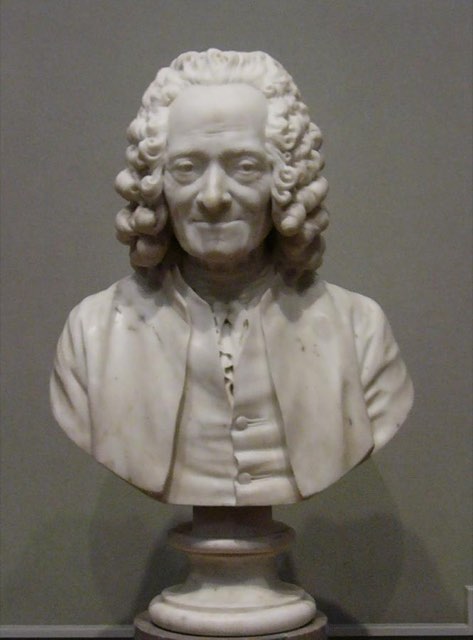

French Drama in the Eighteenth Century
- French Drama in the Eighteenth CenturyTheatreDatabase.com · read · archived copy
Harlequin Comedy: An Introduction the Work and Life of Marivaux
- Preface and Introduction to Everett Ward Olmsted’s A Selection of the Comedies of MarivauxThe · read
An Introduction to the Life and Work of Voltaire
- Introduction and Voltaire’s Early Life and WorksThe Voltaire Foundation · read · archived copy
Voltaire’s Socrates
- Voltaire’s SocratesVoltaire’s Socrates and Citizendium.org · read
About this course
This course is Saylor Academy's ENGL412, Restoration & Eighteenth-century Drama, one of the complete university courses the Saylor Foundation made free from 2008 and retired in 2015. Saylor licensed its course text under CC BY 3.0; the original is on GitHub. Here it is laid out as chapters, links that have died go to an archived copy from the Internet Archive where one exists, assessments that needed a Saylor login are left out, and people and works are linked to Kulturbase. The readings and lectures belong to their publishers and are linked, not copied. Pictures: Wikimedia Commons, credited under each picture.
All Saylor courses · Free culture courses · The Chautauqua Reading Course