History · Saylor HIST102
Early Globalizations: East Meets West (1200s-1600s)
This course will introduce you to the history of the world’s major civilizations from medieval times to the early modern era. You will learn about the pivotal political, economic, and social changes that took place in Asia, Africa, the Americas, and Europe during this period.
More about this course
The course will be structured chronologically, with each unit focusing on the expansion or decline of a particular civilization or the interactions and exchanges between civilizations. The units will include representative secondary and primary source documents that illustrate important overarching political, economic, and social themes, such as the transformation of western Europe during the Renaissance, the emergence of a more inclusive world economy, and the impact of early European exploration and colonization. By the end of the course, you will understand how many different civilizations evolved from isolated societies into expansive, interconnected empires capable of exerting global influence.
Upon completion of this course, students will be able to:
In order to take this course, you must:
Chapter I
Globalization and History
The resources in this short, introductory section will discuss some of the meanings and developments associated with the term globalization and the manner in which they have been used by historians to account for changes in the lives of peoples throughout the world over time. One of the major insights to be gained from these resources is that the cultural and political practices (laws, languages, religions, etc.) of any given society tend in some measure to reflect the effects of interactions with the larger world, whether brought about by migration, trade or conquest. Students should keep the concepts found here in mind as they progress through the course. The following units will in fact present numerous examples of the diverse forms of encounter and “interconnectedness” described in the resources below, as well as their many causes and consequences.
Globalization: Meanings and Historical Contexts
- The Worlds of Marco Polo: Towards a History of GlobalizationYouTube · Professor David Northrup · watch · 5 min
- A Quick Guide to the World History of GlobalizationUniversity of Pennsylvania · Professor David Ludden · read · 30 min · no longer online
- Globalization in the Mirror of HistoryYale Center for the Study of Globalization · Professor Nayan Chanda · watch · 30 min · archived copy
- Unit 1 Essay: GlobalizationThe Saylor Foundation · do · no longer online
- Reading Questions for Subunit 1.1The Saylor Foundation · write
Chapter II
Europe: East and West
In the wake of the collapse of the Roman Empire, two major civilizations emerged in Europe during the early medieval period. The Byzantine Empire, which encompassed territory in the Balkans, the Middle East, and the eastern Mediterranean, maintained a highly advanced political, cultural, and economical system between 500 and 1450 C.E. Orthodox Christianity defined characteristics of Byzantium and helped expand the empire’s influence in eastern Europe, Belarus, Ukraine, and Russia. Meanwhile, another form of Christianity that had no imperial center, Catholicism, developed in western and central Europe. Although areas of small kingdoms diffused in the early Middle Ages, the fiefdoms of western Europe had shared some common ground—Latin as lingua franca, the Catholic Church, and feudal society.
The Division of the Roman Empire and Collapse in the West
- The Fall of RomeBoise State University · Professor E.L.S. Knox · read · archived copy
Byzantine Society and Civilization
- Lecture 18 – The Splendor of ByzantiumYale Open Courses · HIST 210 · The Early Middle Ages, 284 -1000 · Professor Paul Freedman · watch
- Byzantine Civilization Lecture 17Dr. Steven Kreis’s The History Guide · Lectures on Ancient and Medieval European History · read · archived copy
Orthodox Christianity in Eastern Europe
- Olga, Anna and the Christianization of the RusUniversity of Oregon · Professor Robert Kimball · read
- Reading Questions for Subunit 2.1The Saylor Foundation · write
Western Europe: The Middle Ages
- What’s ‘Middle’ About the Middle Ages?California Institute of Technology · Professor Warren C. Brown · read
Charlemagne I and the Carolingians
- Charlemagne and the Carolingian Renaissance Lecture 20Dr. Steven Kreis’s The History Guide · Lectures on Ancient and Medieval European History · read · archived copy
Charlemagne, Chivalry and the Medieval Imagination
- The Hero Roland and the Question of IntentionalityVirginia Tech · Joseph J. Duggan · read
The Medieval Catholic Church
- Heretics, Heresies, and the Church Lecture 27Dr. Steven Kreis’s The History Guide · Lectures in Ancient and Medieval European History · read · archived copy
- Early Medieval Monasticism Lecture 19Dr. Steven Kreis’s The History Guide · Lectures on Ancient and Medieval European History · read · archived copy
- The Holy Crusades Lecture 25Dr. Steven Kreis’s The History Guide · Lectures on Ancient and Medieval European History · read · archived copy
Feudalism and Manorialism
- Feudalism and the Feudal Relationship Lecture 21Dr. Steven Kreis’s The History Guide · Lectures on Ancient and Medieval European History · read · archived copy
- European Agrarian Society: Manorialism Lecture 22Dr. Steven Kreis’s The History Guide · Lectures on Ancient and European History · read · archived copy
The Black Death
- Chapter 10, Multiple Choice QuizPearson Education’s World Civilizations · AP Edition · write · archived copy
- Satan Triumphant: The Black Death Lecture 29Dr. Steven Kreis’s The History Guide · Lectures on Ancient and Medieval European History · read · archived copy
- Unit 2 Essay: ChristianityThe Saylor Foundation · do · no longer online
- Reading Questions for Subunit 2.2The Saylor Foundation · write
Chapter III
The Americas: Aztecs and Incas
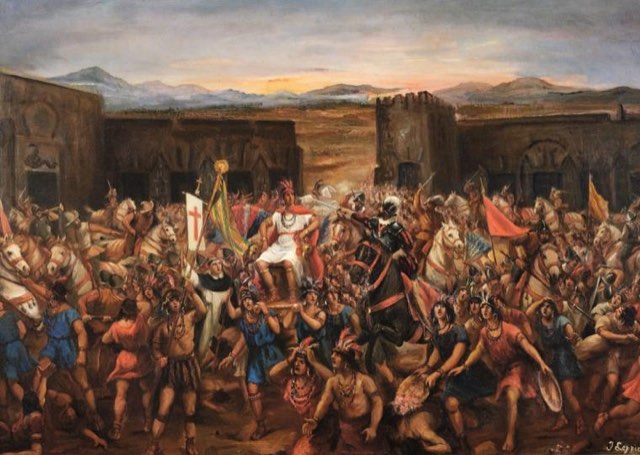
When Christopher Columbus landed in the New World in 1492, he mistakenly referred to the native inhabitants as “Indians,” thus implying that all peoples in the Americas shared the same identity. But that was not the case. During the postclassical era, also known as the medieval period, civilization in the Americas was comprised of many diverse societies that developed largely in isolation from the rest of the world. However, two major centralized civilizations emerged during this period: the Aztecs and the Incas.

Rise of the Aztecs
- TenoctitlanBoundless · read
Aztec Society and Culture
- A Comprehensive Outline of World History: America: AD 1401 - 1500Connexions · Jack E. Maxfield · read
Tenochtitlan
- TenochtitlanMetropolitan Museum of Art · Heidi King · read · archived copy
- Reading Questions for Subunit 3.1The Saylor Foundation · write
World of the Incas
- Secrets of Lost Empires: The Inca EmpirePBS NOVA · watch
Inca Society, Religion, and Expansion
- The IncasBoundless · read
The Incas and European Explorers
- Pedro de Cieza de Léon’s Chronicles of the Incas, 1540Fordham University’s Internet Modern History Sourcebook · Paul Halsall · read
- AP Edition: “Chapter 11, Multiple Choice QuizPearson Education’s World Civilizations · write · archived copy
- Unit 3 Essay: The Incan and Aztec EmpiresThe Saylor Foundation · do · no longer online
Chapter IV
China’s Golden Age
After the fall of the Han dynasty in 589 C.E., China descended into political and cultural turmoil. The bureaucracy collapsed and a “foreign” religion—Buddhism— replaced Confucianism as the primary force in cultural life. Decline was evident in most aspects of Chinese society—including in technology, the economy, and urban areas. But beginning in the latter sixth century, two successive dynasties restored the Chinese bureaucracy and economy. As we will see in this unit, the Tang and the Song reinvigorated the Chinese political system and revived the Confucian order. In fact, these influential dynasties ushered in China’s “golden age.”
The Tang: Religion, Bureaucracy, and the Scholar-Gentry
- China: Traditions and Transformations: Lecture 12: The Universal Empire: Cosmopolitan TangHarvard Extension School Distance Education · watch · archived copy
- The Saylor Foundation’s “Reading Questions for Subunit 4.1write
The Song (Sung) Dynasty
- The Song Dynasty in China.Columbia University · Asia for Educators · read · archived copy
Imperial Power and Confucian Revival
- Economic Revolution.Columbia University · Asia for Educators · The Song Dynasty in China · read · archived copy
Technological Advances
- Technical Advances during the SongColumbia University · Asia for Educators · The Song Dynasty in China · read · archived copy
Urban Life and Architecture
- CitiesColumbia University · Asia for Educators · The Song Dynasty in China · read · archived copy
Scholar-Officials and the Neo-Confucian Revival
- ConfucianismColumbia University · Asia for Educators · The Song Dynasty in China · read · archived copy
Relations with the Outside World
- Song Engagement with the Outside WorldColumbia University · Asia for Educators · The Song Dynasty in China · read · archived copy
Rise of the Scholar-Gentry
- Chapter 8: The Middle DynastiesPennsylvania State University’s East Asian History Textbooks · Topics in Pre-Modern Chinese History · read · archived copy
Changes in Government
- Chapter 8: The Middle DynastiesPennsylvania State University’s East Asian History Textbooks · Topics in Pre-Modern Chinese History · read · archived copy
Demographic Changes
- Chapter 8: The Middle DynastiesPennsylvania State University’s East Asian History Textbooks · Topics in Pre-Modern Chinese History · read · archived copy
Art and Scholarship
- Drinking Alone by MoonlightWashington State University · Arthur Waley’s version of Li Po · read · archived copy
- Chapter 12, Multiple Choice QuizPearson Education’s World Civilizations · AP Edition · write · archived copy
- Unit 4 Essay: The Golden Age of ChinaThe Saylor Foundation · do · no longer online
Chapter V
The Mongol Empire
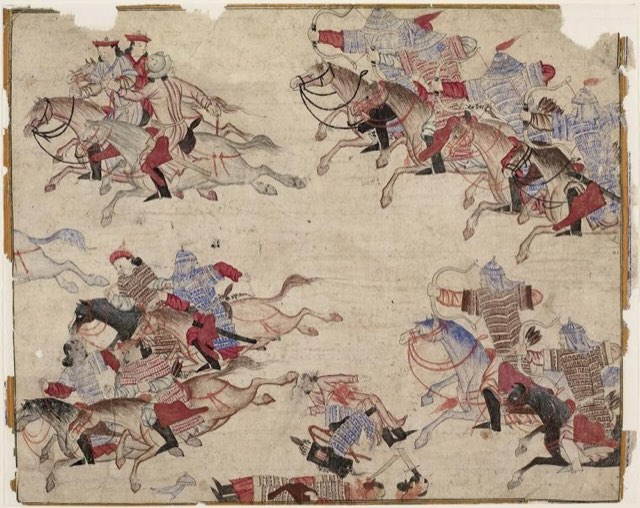
The Mongols—nomads of central Asia—dominated world history during the thirteenth century. The Mongols invaded many postclassical empires and built an extensive cultural and commercial network. Led by Chinggis Khan and his successors, the Mongols brought China, Persia, Tibet, Asia Minor, and southern Russia under their control. Often portrayed as barbarians and destructive warriors, most of the peoples conquered by the Mongols lived in relative peace, enjoyed religious tolerance, and had a unified law code. The Mongol empire also opened trade routes and communication between different regions in Asia. As will see in this unit, the Mongols presented a formidable nomadic challenge to sedentary, civilized societies throughout Asia.

The Mongols
- China: Traditions and Transformations: Lecture 17: The World Empire of the MongolsHarvard Extension School Distance Education · watch · archived copy
Reasons for Conquest
- The Mongols in World History: The Mongol Conquests: What Led to the Conquests?Columbia University · read
Chinggis Khan
- The Mongols in World History: The Mongol ConquestsSelections from Columbia University · read
Conquering a Vast Territory
- The Mongols in World History: The Mongol Conquest: How a Small Group of Mongols Conquered Such a Vast DomainColumbia University · read
The Pax Mongolica
- The Pax MongolicaSilkroad Foundation · Professor Daniel C. Waugh · read
Empire’s Collapse
- The Mongols in World History: The Mongol Conquests: The Collapse of the EmpireColumbia University · read
- Reading Questions for Subunit 5.1The Saylor Foundation · write
The Mongols’ Influence on China
- The Mongols in World History: The Mongol Conquest: What was the Mongols’ Influence on China?Columbia University · read
Kubilai Khan in China
- The Mongols in World History: The Mongol Conquest: Kubilai Khan in ChinaColumbia University · read
Life in China under Mongol Rule
- The Mongols in World History: The Mongol Conquest: Selections from Life in China under Mongol RuleColumbia University · read
Beginnings of Mongol Collapse
- The Mongols in World History: The Mongol Conquest: Selections from Beginnings of Mongol CollapseColumbia University · read
Nomads
- The Mongols in World History: The Pastoral-Nomadic Life; John Masson Smith, Jr.’s Dietary Decadence and Dynastic Decline in the Mongol Empire; and Morris Rossabi, All the Khan’s HorsesSelections from Columbia University · read
Persian Views
- Persian Perceptions of Mongols and EuropeansMichigan State University · David Morgan · read · archived copy
The Mongols and Christian Europe
- Robert Marshall’s Selections from Storm from the East: from Genghis Khan to Khubilai KhanMichigan State University · read · archived copy
- Correspondence between Roman Pope and Great KhanStetson University · read · archived copy
- Chapter 14, Multiple Choice QuizPearson Education’s World Civilizations · AP Edition · write · archived copy
- Unit 5 Essay: The Nature of Mongol RuleThe Saylor Foundation · do · no longer online
Chapter VI
A Changing World Balance
By 1400, a fundamental shift was occurring among the world’s civilizations. Chinese and Middle Eastern empires had been at the forefront of civilization for hundreds of years; sophisticated methods of governance, trade systems, and technology allowed them to exert near-global influence. But Mongol invaders from the East undermined the preeminent role of the Islamic and Chinese empires. For a time, the Ming dynasty of China attempted to fill the power vacuum that appeared when the Mongols conquered eastern Europe and Asia Minor. Meanwhile, internal and dynastic struggles continued to upset affairs in western Europe, where some states and kingdoms nevertheless experienced a rise in political and commercial power.
The Asian-Based World Economy
- Asian-based World Economy 1400-1800: A Horizontally Integrative MacrohistoryHartford Web Publishing · Andre Gunder Frank · read · archived copy
Rise of the European Economy
- Summary of Wallerstein on World System TheoryFordham University’s Internet Modern History Sourcebook · Paul Halsall · read
The Age of Discovery
- The Atlantic World, 1492-1600Concepcion Saenz-Camba · read
Reasons and Motivations
- The Age of DiscoveryDr. Steven Kreis’s The History Guide · Lectures on Early Modern European History · read · archived copy
Portuguese Traders and Explorers
- PortugalUniversity of Calgary · Applied History Research Group · The European Voyages of Exploration · read · archived copy
The Spanish
- SpainUniversity of Calgary · Applied History Project · The European Voyages of Exploration · read · archived copy
- Magellan: Missing in ActionThe Gilder Lehrman Institute of American History · Laurence Bergreen · read · archived copy
The English in the New World
- Ch. 3 British Colonial America (1588 – 1701)Connexions · James Ross-Nazzal · read
- The Atlantic World, 1492-1600Concepcion Saenz-Camba · read
The Dutch in the New World
- The Dutch EmpireBoundless · read
Native Americans and Europeans
- Englishmen and Native AmericansBoundless · read
- The Atlantic World, 1492-1600Concepcion Saenz-Camba · read
Trade and Exchange
- The Clash of CultureBoundless · read
- Trade Products in Early Modern HistoryUniversity of Minnesota’s James Ford Bell Library · Carol Urness · read · archived copy
- Chapter 16, Multiple Choice QuizPearson Education’s World Civilizations · AP Edition · write · archived copy
- The Atlantic World, 1492-1600Concepcion Saenz-Camba · read
- Reading Questions for Subunit 6.3The Saylor Foundation · write
- Unit 6 Essay: Primary and Secondary SourcesThe Saylor Foundation · do · no longer online
Chapter VII
Transformation of the West
Beginning in the fifteenth century, western Europe underwent a number of profound changes. First, Europe developed many commercial and manufacturing centers that encouraged contact with other civilizations, primarily in Asia. Second, quarrels within the Catholic Church resulted in a new division among Christians along Catholic or Protestant lines. In addition, the rise of rational scientific ideas and new political philosophies shaped European government and society.
Origins of the Renaissance
- History of the Idea of the RenaissanceBoise State University Professor E.L. S. Knox · read · archived copy
From Medieval to Renaissance
- The Medieval Synthesis and the Discovery of Man: the Renaissance Lecture 4Dr. Steven Kreis’s The History Guide · Lectures on Modern European Intellectual History · read · archived copy
Portraits of the Renaissance
- Renaissance PortraitsDr. Steven Kreis’s The History Guide · Lectures on Early Modern European History · read · archived copy
- Reading Questions for Subunit 7.1The Saylor Foundation · write
Humanism
- Humanism and the RenaissanceUniversity of Massachusetts, Lowell · Dr. Liana Cheney · read · archived copy
Renaissance Neo-Platonism
- Neo-PlatonismUniversity of Massachusetts, Lowell · Dr. Liana Cheney · read · archived copy
Pico della Mirandola
- Pico della MirandollaUniversity of Massachusetts, Lowell · Dr. Liana Cheney · read · archived copy
Niccoló Machiavelli
- Niccoló Machiavelli’s The PrinceThe Constitution Society · read · archived copy
- MachiavelliStanford University Encyclopedia of Philosophy · read
Leonardo da Vinci
- The Life of Leonardo da VinciUniversity of Rochester Library Bulletin · read
The Protestant Reformation
- The Protestant Reformation Lecture 3Dr. Steven Kreis’s The History Guide · Lectures on Early Modern European History · read · archived copy
Impact of Luther and the Radical Reformation
- Martin LutheriTunes U · Frank A. James III · watch · archived copy
- The Impact of Luther and the Radical Reformation Lecture 4Dr. Steven Kreis’s The History Guide · Lectures on Early Modern European History · read · archived copy
Catholic Counter-Reformation
- The Council of TrentBoise State University · Professor E.L. S. Knox · read · no longer online
The Early Scientific Revolution
- The Scientific Revolution, 1543-1600Dr. Steven Kreis’s The History Guide · Lectures on Early Modern European History · read · archived copy
Architecture
- Renaissance ArchitectureColumbia University · Department of Art History and Archaeology · read · archived copy
- Chapter 17, Multiple Choice QuizPearson Education’s World Civilizations · AP Edition · write · archived copy
- Unit 7 Essay: The RenaissanceThe Saylor Foundation · do · no longer online
Chapter VIII
Early Latin and South America
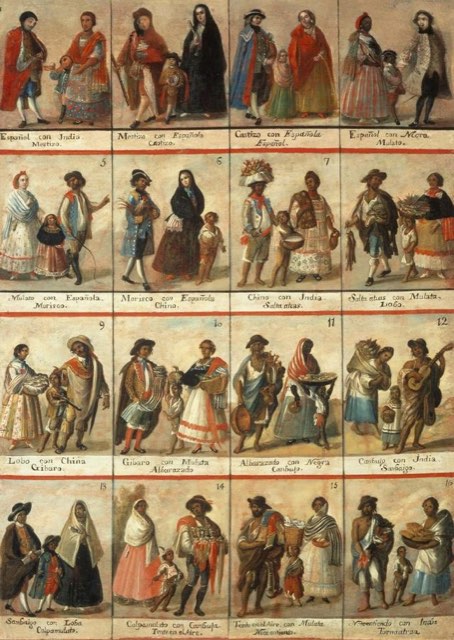
Beginning in the fifteenth century, the empires of Portugal and Spain founded large colonies in Latin America. As a result of these conquests, disease and warfare destroyed or transformed many of the native peoples who lived there. Gradually, a new syncretic civilization emerged in the Americas and became an integral part of the world market. Societies comprised of Africans, Spanish, Portuguese, and native peoples developed a sophisticated market economy driven by gold and silver mining as well as plantation agriculture. We will see how the colonial systems implemented by the Spanish and Portuguese in the New World had roots in the political and religious institutions of Europe.

The Spanish Conquest
- The Spanish Conquest (1519-1521)MexConnect · Dale Hoyt Palfrey · read
- Bernal Diaz del Castillo’s True History of the Conquest of MexicoCanadian Libraries Internet Archive · read · archived copy
The Founding of New Spain
- Mexico’s Colonial Era, Part 1MexConnect · Dale Hoyt Palfrey · read
Conversion of Indigenous Peoples
- Mexico’s Colonial Era, Part 2MexConnect · Dale Hoyt Palfrey · read · archived copy
Colonial Economy
- Mexico’s Colonial Era, Part 3MexConnect · Dale Hoyt Palfrey · read · archived copy
Encomienda
- Bartolemé de Las Casas’ Brief Account of the Devastation of the Indies (1542)Swarthmore College · read · archived copy
- Reading Questions for Subunit 8.1The Saylor Foundation · write
The Indigenous Population
- The Indigenous PopulationUS Library of Congress · Rex A. Hudson’s Brazil · A Country Study · read · archived copy
Frontier Expansion
- Dividing the Spoils: Portugal and Spain in South AmericaYale-New Haven Teachers Institute · Jeannette Gaffney · read · archived copy
- Frontier Expansion that Shaped BrazilUS Library of Congress · Rex A. Hudson’s Brazil · A Country Study · read · archived copy
Early Colonization
- Early ColonizationUS Library of Congress · Rex A. Hudson’s Brazil · A Country Study · read · archived copy
French and Dutch Incursions
- French and Dutch IncursionsUS Library of Congress · Rex A. Hudson’s Brazil · A Country Study · read · archived copy
Gold Mining and Cane Farming
- Gold Mining Displaces Cane FarmingUS Library of Congress · Rex A. Hudson’s Brazil · A Country Study · read · archived copy
- Chapter 19, Multiple Choice QuizPearson Education’s World Civilizations · AP Edition · write · archived copy
- Unit 8 Essay: Europe and the AmericasThe Saylor Foundation · do · no longer online
Chapter IX
The Muslim Empires
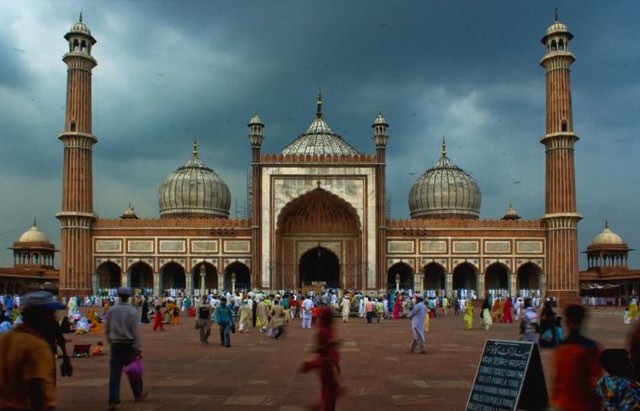
The Mongol invasions of the thirteenth and fourteenth centuries broke apart a unified Muslim world. But in the wake of these invasions, three new dynasties rose to power and paved the way for the emergence of an Islamic renaissance. The greatest of the three, the Ottoman Empire, ruled most of Asia Minor. The Safavids ruled Persia and Afghanistan, while the Mughals dominated India. All three empires originated from Turkic nomadic peoples who embraced Islam and Islamic conversion efforts.

The Ottoman Empire: Origins and Conquests
- The Ottoman EmpireUniversity of Calgary · Applied History Project · Rise of the Great Islamic Empires · read · archived copy
The Fall of Constantinople
- The Siege of ConstantinopleVirginiaTech · Bryan Gilkerson · read · archived copy
Religion and Society: Muslim and Non-Muslim Relations
- The Principles of Ottoman Rule in the BalkansMichigan State University · Steven S. Sowards’ Twenty-Five Lectures on Modern Balkan History · Lecture 3 · read
The Safavids
- The Islamic World to 1600: The Safavid EmpireSelections from The Applied History Research Group · read · archived copy
Rise and Fall of the Safavids
- History of Iran: Shapour Ghasemi’s Safavid Empire, 1502-1736Iran Chamber Society · read
- The Safavids, 1501-1722US Library of Congress · Helen Chapin Metz’s Iran · A Country Study · read · archived copy
Shi’a Islam
- Shi’a IslamUS Library of Congress · Helen Chapin Metz’s Iran · A Country Study · read · archived copy
The Mughal Empire
- The MughalsUS Library of Congress · James Heitzman’s and Robert L. Worden’s India · A Country Study · read · no longer online
Connection and Exchange
- Mughal India’s Timurid HeritageUniversity of Washington · Daniel C. Waugh · read
Mughal Art and Culture
- The Mughals and the ArtsColumbia University · Professor Frances Pritchett · read · archived copy
Mughal Religion
- Religion at Akbar’s CourtColumbia University · Professor Frances Pritchett · read · archived copy
Challenges: the Marathas and the Sikhs
- The Marathas and The SikhsUS Library of Congress · James Heitzman’s and Robert L. Worden’s India · A Country Study · read · archived copy
The Coming of the Europeans
- Paul Halsall’s version of François Bernier’s An Account of India and the Great Moghul, 1655 CEFordham University · Indian History Sourcebook · read · archived copy
- The Coming of the EuropeansUS Library of Congress · James Heitzman’s and Robert L. Worden’s India · A Country Study · read · archived copy
Decline of the Mughals
- A Century of Political Decline: 1707-1803Columbia University · Professor Frances Pritchett · read · archived copy
- Chapter 21, Multiple Choice QuizPearson Education’s World Civilizations · AP Edition · write · archived copy
- Reading Questions for Subunit 9.3The Saylor Foundation · write
- Unit 9 Essay: The Muslim EmpiresThe Saylor Foundation · do · no longer online
Chapter X
Africa, Africans, and the Atlantic Slave Trade
While much of Africa followed its own trajectory of progress in the post-medieval period, the rise of European trade and influence still had a profound impact upon African societies. Perhaps the greatest—and most horrific—effect upon Africa was the Atlantic slave trade. The forced removal of Africans to the New World was first started by the Portuguese in what is now Sierra Leone in the 1400s. Soon after, English, Dutch, Portuguese, and French traders began to enslave and sell Africans to benefit New World plantation societies. The result was an incredibly profitable system of enslavement that transformed European empires, colonial societies, and the world economy. In this unit, we will examine the impact of the many—and complex—facets of the Atlantic slave trade. We will examine how the trade came into being, who was involved, why it was so profitable and so deadly, how it affected Africa and Africans, and why it ended.
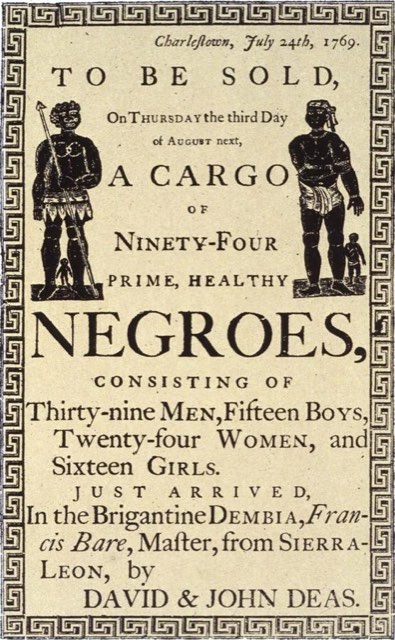

The Slave Trade
- Assignment Discovery: The Atlantic Slave TradeHowStuffWorks, Inc. · read
- The Atlantic World, 1492-1600Concepcion Saenz-Camba · read
Development of the Trade
- The Slave Trade, Part 1iTunes U · Arizona State University History Department · watch · no longer online
- The Transatlantic Slave Trade: The Development of the TradeSchomburg Center for Research in Black Culture · read
Traders and Trade
- Working the Slave Trade in the British Atlantic WorldiTunes U · University of Glasgow · Dr. Simon Newman · watch · archived copy
- The Transatlantic Slave Trade: Traders and TradeSchomburg Center for Research in Black Culture · read
- A Critique of the Slave TradeUniversity of Houston · Digital History Fray Tomas de Mercado · read · archived copy
The Middle Passage
- The Transatlantic Slave Trade: The Middle PassageSchomburg Center for Research in Black Culture · read
- The Blind African Slave, or Memoirs of Boyrereau BrinchUniversity of North Carolina · Documenting the American South · Boyrereau Brinch’s and Benjamin F. Prentiss’ (Benjamin Franklin) · read · archived copy
Resistance and Abolition
- African Migration to the New World: Resistance to Slavery, the Anti-Slavery Movement, and AbolitionUniversity of Calgary · The Applied History Research Group · read · archived copy
Impact
- African Migration to the New World: The Impact of the Slave TradeUniversity of Calgary · The Applied History Research Group · read · archived copy
- Reading Questions for Subunit 10.1The Saylor Foundation · write
African Slavery and Politics
- Africa and Africans in the Age of the Atlantic Slave TradeHistory World International · R.A. Guisepi (ed.) · read · archived copy
Capture and Enslavement
- The Transatlantic Slave Trade: Capture and EnslavementSchomburg Center for Research in Black Culture · read
The Nature of the Diaspora
- African Migration to the New World: The Nature of the African DiasporaUniversity of Calgary · The Applied History Group · read · archived copy
Africans in the Atlantic World and Beyond
- Africa and Africans in the Age of the Atlantic Slave Trade: African DiasporaHistory World International · Peter N. Stearns’, Michael Adas’ and Stuart B. Schwartz · read · archived copy
- Chapter 20, Multiple Choice QuizPearson Education’s World Civilizations · AP Edition · write · archived copy
- Unit 10 Essay: Slavery and the African DiasporaThe Saylor Foundation · do · no longer online
Chapter XI
East Asia and Its Trading World
The pre-modern world of South and East Asia was a diverse one linked together by commerce. Most politically and culturally independent Asian states, including India, China, and Japan, were only marginally affected by the arrival of European traders in the fifteenth century. Although the voyages of the Portuguese explorer Vasco de Gama had opened up the East to Europe, the power of Asian states and commerce prevented European nations from dominating lucrative trade networks. Still, the strength of European sea power allowed traders to influence many aspects of the Asian spice trade.
The Rise of the Portuguese Trading Empire
- History of the Portuguese EmpireHistory World · read
- Round Africa to India, 1497-1498 CEFordham University Modern History Sourcebook · Paul Halsall’s version of Vasco de Gama · read · archived copy
The English and the Dutch in the East
- Dr. Thomas Crump’s The Dutch East Indies Company—The First 100 YearsGresham College · watch · archived copy
- Shafaat Ahmed Khan’s The East India Trade in the XVIIth CenturyInternet Archive · read
The Ming State
- Social Policy and Social Practice in Ming and QingHarvard Extension School Distance Education · China · Traditions and Transformations · Lecture 18 · watch · archived copy
Commercial Revolution
- Chinese Trade in the Indian OceanAsia Society · read
Ming Culture: Kunqu Opera
- Introduction to ‘Peony Pavilion’YouTube · University of California · Professor Kenneth Pai · watch
Isolation and Decline
- From Ming to QingUniversity of Oregon · China · The Ming and Qing Dynasties · read
Medieval and “Warring States” Era
- Sengoku Period: Japan 1467 AD to 1615 ADJapan 101 · read · archived copy
- Medieval Japan: A Time of War: Parallels with Feudal EuropeColumbia University · Asian Topics · watch
Buddhism in Japan
- Medieval Japan: Seeking Solace in Religion: The Spread of BuddhismColumbia University · Asian Topics · watch
Zen Buddhism
- Medieval Japan: Zen BuddhismColumbia University · Asian Topics · watch
Tokugawa Japan
- Asian Topics: Tokugawa JapanColumbia University · watch
- Chapter 22, Multiple Choice QuizPearson Education’s World Civilizations · AP Edition · write · archived copy
- Reading Questions for Subunit 11.3The Saylor Foundation · write
- Unit 11 Essay: Japanese RelationsThe Saylor Foundation · do · no longer online
About this course
This course is Saylor Academy's HIST102, Early Globalizations: East Meets West (1200s-1600s), one of the complete university courses the Saylor Foundation made free from 2008 and retired in 2015. Saylor licensed its course text under CC BY 3.0; the original is on GitHub. Here it is laid out as chapters, links that have died go to an archived copy from the Internet Archive where one exists, assessments that needed a Saylor login are left out, and people and works are linked to Kulturbase. The readings and lectures belong to their publishers and are linked, not copied. Pictures: Wikimedia Commons, credited under each picture.
All Saylor courses · Free culture courses · The Chautauqua Reading Course