History · Saylor HIST103
World History in the Early Modern and Modern Eras (1600-Present)
This course will present a comparative overview of world history from the 17th century to the present era. You will examine the origins of major economic, political, social, cultural, and technological trends of the past 400 years and explore the impact of these trends on world societies.
More about this course
This course will be structured chronologically and thematically, with each unit focusing on a significant historical subject. The units will include representative primary-source documents and images that illustrate important overarching themes, such as the emergence of modern nation-states, the economic and technological interactions between Western and non-Western peoples, the changing social and cultural perceptions about religion and the state, and the development of physical and virtual networks of information exchange. This course is designed to align with a Thomas Edison State College TECEP examination. Visit the TECEP website, and click on “World History from 1600 to Present (HIS-126-TE)” to download the content guide for the exam. For more information about this partnership, and earning credit through Thomas Edison State College, go here.
Upon successful completion of this course, students will be able to:
In order to take this course you must: √ Have access to a computer. √ Have continuous broadband Internet access. √ Have the ability/permission to install plug-ins or software (e.g., Adobe Reader or Flash). √ Have the ability to download and save files and documents to a computer. √ Have the ability to open Microsoft files and documents (.doc, .ppt, .xls, etc.). √ Be competent in the English language. √ Have read the Saylor Student Handbook.
Chapter I
Global Networks of Exchange in the 1600s
By the early 17thcentury, European merchants had established maritime trade networks across the Atlantic Ocean and eastward to India and China. These networks allowed them to acquire furs, tea, sugar, spices, and other luxury commodities that were in great demand throughout Europe. In the Americas, European settlers began using large numbers of enslaved Africans to grow labor-intensive crops such as sugarcane and tobacco for export to Europe. Portuguese, and later Dutch, merchants acquired many of these slaves from trade posts on the West African coast. Once the slaves had been sold in the Americas, merchants used the proceeds to acquire local commodities to sell in Europe. This circular trade pattern dominated the Atlantic economy until the 1800s. European nations closely guarded their trade networks against rival states. The Dutch East India Company, for example, possessed its own private army and navy, which it used to defend its trade links with India and Southeast Asia.
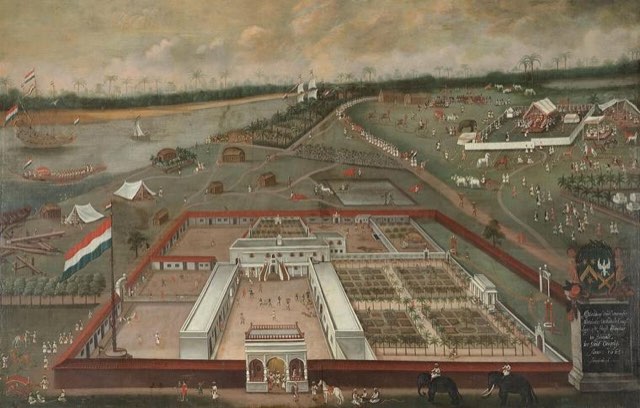

European Colonization
- The End of the Old World and the Beginning of the NewThe Saylor Foundation · read
The Slave Trade and the Expanding Atlantic Economy
- The Slave Trade Part 1iTunes U · Arizona State University’s History Department · watch · no longer online
- Pre-Colonial Africa: Society, Polity, Culture, Slave Ships and the Atlantic Crossing (Middle Passage), and New World Agriculture and Plantation LaborUniversity of Virginia Library’s The Atlantic Slave Trade and Slave Life in the Americas · A Visual Record · watch · archived copy
Demographic Shifts and Settlement Patterns
- Comparing Settlement Patterns: New Spain, New France, and British North AmericaThe Saylor Foundation · read
Spain and Portugal’s Global Connections
- The Portuguese EmpireThe Saylor Foundation · read
Trade Networks and State Monopolies
- The Dutch East Indies Company—the First 100 Years Lecture and The Dutch East Indies Company—the Second 100 YearsGresham College · Dr. Thomas Crump · watch · archived copy
Supply and Demand
- Chapter 1: The East India Trade up to 1660Shafaat Ahmed Khan’s The East India Trade in the XVIIth Century · read
Economic and Political Impact of the India Trade
- Chapter 4: The East India Trade 1680-1702Shafaat Ahmed Khan’s The East India Trade in the XVIIth Century · read
Ecological Impact
- The Columbian Exchange: Plants, Animals, and Disease between the Old and New WorldsNational Humanities Center · Professor Alfred W. Crosby · read
Changing patterns of Production and Consumption
- History Crafts, Manufacturing, and Trade in the Indian SubcontinentSouth Asian History · read
Shifting Power Balance between European States
- The History of the British EmpireThe Saylor Foundation · read
Changing Economic Relationship between East and West
- Asian-Based World Economy 1400-1800: A Horizontally Integrative MacrohistoryH-World · Professor Andre Gunder Frank · read · archived copy
- The Discovery of the New World and the End of the OldVirtual Library · Prof. Lynn Harry Nelson · read
- Chapter 16: The World Economy: Outline and Multiple Choice, True/False, and Short Answer QuizzesPearson Education’s World Civilizations AP Edition · write · archived copy
Chapter II
Conflict and Empire in the 1600s and 1700s
Nations throughout the world experienced profound military and political transformations over the course of the 17th century. Gunpowder technology gradually made its way from Asia through the Middle East to Europe between the 1300s and the 1600s. By the beginning of the 17th century, Europeans were beginning to perfect cannon technology and experiment with handheld firearms. These new military technologies altered warfare across Europe and the Middle East, and they contributed to the development of powerful, centralized states. Nations such as France, Russia, and Japan also witnessed the emergence of absolutist forms of government. Powerful kings and emperors declared themselves to be agents of God and used the military and political power at their disposal to demand total obedience from the lesser nobility and the peasantry of their kingdoms.
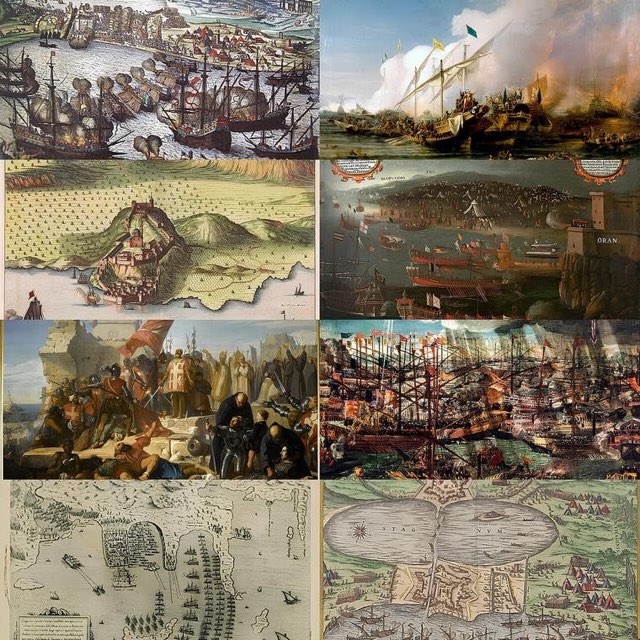

Technology Transfer
- Silk Road Trade: History of GunpowderEssortment · Esther Mitchell · read · no longer online
Gunpowder Empires
- The Gunpowder EmpiresNipissing University · Dr. Steve Muhlberger · read · archived copy
Europe
- European Absolutism and Power PoliticsInternational World History Project · read · archived copy
- On Social Order and Absolute MonarchyFordham University’s Modern History Sourcebook · Paul Halsall’s version of Ruth Kleinman’s translation of Jean Domat · read
- History Review: AbsolutismSlideshare · watch
Middle East and Asia
- The Ottomans: From Frontier Warriors to Empire BuildersInternational World History Project · Dr. Robert Guisepi · read · archived copy
- The History of the Ming DynastyChina Scientific Book Service’s Dynasties of China · read
- The Tokugawa ShogunateThe Saylor Foundation · read
- History Review: AbsolutismSlideshare · watch
Challenges to Absolutism
- Lecture 7: The English Civil WarDr. Steven Kreis’s The History Guide · Lectures on Early Modern Europe · read · archived copy
- The Case against AbsolutismInternational World History Project · Wallbank, et al. · read · archived copy
Warfare in the Americas
- Colonial WarsThe Saylor Foundation · read
Growing Economic Power of Northern Europe
- Beginnings of North European ExpansionInternational World History Project · read · archived copy
- Richard Hakluyt: London’s Role in Navigation and History Lecture and Dr. Ian Friel’s Elizabethan Merchant Ships and ShipbuildingGresham College · Anthony Payne · watch · no longer online
- Chapter 14: Crisis and Absolutism in Europe, 1550-1715: Overview and Self-Check Quizzes; Chapter 15: The Muslim Empires, 1450-1800: Overview and Self-Check Quizzes; and Chapter 16: The East Asian World, 1400-1800: Overview and Self-Check QuizzesThe McGraw-Hill Companies’ World History · write
Chapter III
Religious, Intellectual, and Political Revolutions in the 1600s-1800s
The 1600s and 1700s were a time of profound religious, intellectual, and political turmoil across the globe. In Europe, the Protestant Reformation, which challenged the religious and political power of the Catholic Church, led to the Thirty Years’ War in the early 1600s. The Thirty Years’ War devastated much of Central Europe and led to profound divisions between Catholic and Protestant political states. In Africa and Asia, Islam continued to spread southward and eastward through trade networks, population migrations, and the activities of missionaries.
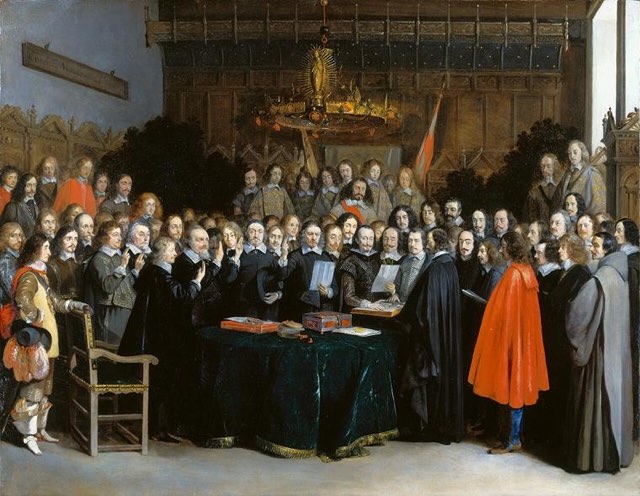

Reformation and Counter-Reformation in Europe
- The ReformationGresham College · Professor Keith Ward · watch · archived copy
Origins of the Reformation
- History of Christianity II: Martin LutheriTunes U · Dr. Frank A James III · watch · no longer online
Political Impact of the Reformation
- The Reformation: Europe’s Search for StabilityInternational World History Project · read · archived copy
The Counter-Reformation
- The Reformation and Counter-ReformationInternational World History Project · read · archived copy
- The Counter-ReformationThe Saylor Foundation · read
Spread of Islam
- Islam from the Beginning to 1300: The Coming of Islam to South Asia, The Spread of Islam to Southeast Asia, and Spread into AfricaInternational World History Project · read · archived copy
Political and Cultural Impact
- Islam from the Beginning to 1300: The Abbasids, Zenith of Islamic Civilization, The Arab Empire of the Umayyads, and From Arab to Islamic Empire: The Early Abbasid EraInternational World History Project · read · archived copy
- The Political Impact of the ReformationThe Saylor Foundation · read
Origins
- Origins of the EnlightenmentThe Saylor Foundation · read
Ideas
- The European Dream of Progress and EnlightenmentInternational World History Project’s The Age of Enlightenment · Lewis Hackett · read · archived copy
- The Jacobean Space Program—Wings, Springs, and Gunpowder: Flying to the Moon from 17th-Century EnglandGresham College · Professor Allan Chapman · read · no longer online
Political and Social Impact
- The Political and Social Impact of the EnlightenmentThe Saylor Foundation · read
- Jean-Jacques Rousseau (1712–78)The Saylor Foundation · read
- John Locke (1632-1704)The Saylor Foundation · read
Europe
- The French RevolutionInternational World History Project · read · archived copy
- Khan Academy’s “French Revolution (Part I)“watch
- French Revolution (Part 2)Khan Academy · watch
- French Revolution (Part 3)—Reign of TerrorKhan Academy · watch
- French Revolution (Part 4)—The Rise of Napoleon BonaparteKhan Academy · watch
The Americas
- The Background of Revolution, A Revolution in Minds and Hearts, and ConclusionInternational World History Project · Dr. Robert A. Guisepi, ed. The American Revolution · read · archived copy
- Section II: Of Monarchy and Hereditary SuccessionBartleby.com’s version of Thomas Paine’s Common Sense · read · archived copy
- Of Monarchy and Hereditary SuccessionProject Gutenberg’s version of Thomas Paine’s Common Sense · read
The Emergence of Liberalism and Nationalism
- Early 19th Century Revolutionary MovementsSuite101.com · Michael Streich · read · archived copy
- NationalismSpiritus-Temporis.com · read · archived copy
- Moderate Political Ideologies: Liberalism and ConservatismRegis University · Dr. Jim L. Riley · read · archived copy
- Chapter 17: Revolution and Enlightenment, 1550-1800: Overview and Self-Check Quizzes and Chapter 18: The French Revolution and Napoleon, 1789-1815: Overview and Self-Check QuizzesThe McGraw-Hill Companies’ World History · write
Chapter IV
Scientific and Industrial Revolutions of the 1600s and 1700s
The Scientific Revolution began in Europe in the 16th century, but had the greatest impact on Europe in the 17th and 18th centuries. Drawing on scientific ideas developed by the ancient Greeks and Romans, as well as Asian and Hindu-Arabic scientific and mathematical discoveries, researchers used the scientific method to develop the modern disciplines of astronomy, physics, biology, and chemistry. Discoveries by scientists challenged traditional beliefs about the nature of matter, the operation of the solar system, and the life processes of living organisms. In England, these new scientific ideas and discoveries contributed to a gradual, but profound, shift away from traditional means of agricultural and craft production to mechanical means for producing and transporting goods. The development of the steam engine in the 1700s, for example, provided an unlimited source of energy to power mechanical devices. Inventors soon developed primitive machines to spin yarn, weave textiles, and perform other basic tasks. While these early machines often produced low-quality manufactured products, they could produce much larger quantities of goods than skilled craftspeople in the same amount of time. Engineers soon developed other applications for steam power such as railroad locomotives and steamships. Over the course of the 1700s, the Industrial Revolution swept Great Britain, and the nation became a center for the industrial production of iron, textiles, and other manufactured goods. Factory towns expanded rapidly as peasants left farms for manufacturing jobs in the cities. England’s growing industrial might made it the most wealthy and powerful nation on the face of the planet by the early 19th century. In this unit, we will examine the origins of the Scientific Revolution and evaluate its social and political impact on European society. We will also look at the social, political, economic, and technological impact of the Industrial Revolution in England and throughout the world. We will see how England, and later the United States, overtook other nations industrially, economically, and militarily, and we will explore the profound implications of this power shift.
Origins
- The Beginning of the Scientific RevolutionThe European University Institute · William Gilbert · read · archived copy
- The Scientific Revolution of the 16th and 17th CenturiesiTunes U · Arizona State University’s History Department · watch · no longer online
Social Impact
- Lecture 10: The Scientific Revolution, 1543-1600Dr. Steven Kreis’s The History Guide · Lectures on Early Modern Europe · read · archived copy
Political Impact
- The Scientific Revolution of the 17th Century and the Political Revolutions of the 18th CenturyGeorge Mason University · Professor R. Cherubin · read · archived copy
Origins
- Industrialization: The First PhaseInternational World History Project’s Industrial Revolution · Lewis Hackett · read · archived copy
Social and Political Impact in Europe
- Europe TransformedInternational World History Project · Professor Lewis’s and Professor Jewsbury · read · archived copy
- The Philosophy of ManufacturersFordham University’s Modern History Sourcebook · Paul Halsall’s version of Andrew Ure · read
Global Impact
- Russia and Japan—Industrialization Outside the West and Dr. Stuart B. Schwartz’s Industrialization and Western Global HegemonyInternational World History Project · Peter N. Stearns’s, Michael Adas’s, and Dr. Stuart B. Schwatz · read · archived copy
- Chapter 17: The Transformation of the West, 1450-1750 Multiple Choice, True/False, and Short Answer Quizzes and Chapter 23: The Emergence of Industrial Society in the West, 1750-1914 Multiple Choice, True/False, and Short Answer QuizzesPearson Education’s World Civilizations · AP Edition · write · archived copy
- Chapter 19: Industrialization and Nationalism: Overview and Self-Check QuizThe McGraw-Hill Companies’ World History · write
Chapter V
New Imperialism during the Long 19th Century
The French Revolution embroiled Europe in nearly two decades of military conflict. At the 1815 Treaty of Vienna, war weary European monarchies resolved to settle their political differences and jointly suppress further outbreaks of revolutionary violence. After 1815, Europe entered an era of relative peace and prosperity that lasted until World War I. Many historians refer to this period of time from the French Revolution to World War I as the “Long 19th Century.”
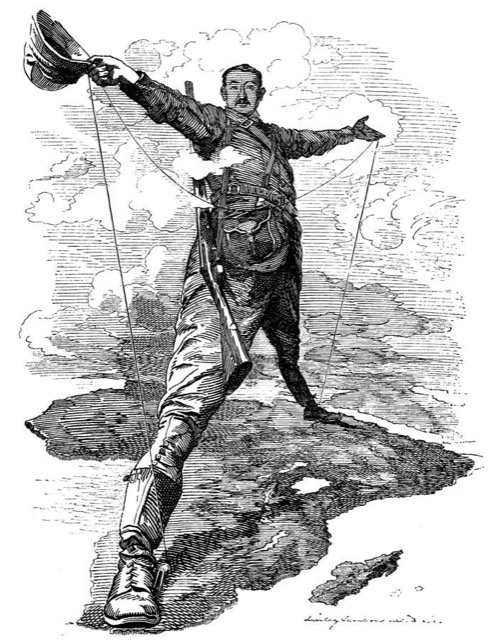

The Scramble for Colonies
- The New ImperialismiTunes U · Bethel University · Professor Christopher Gehrz · watch · no longer online
- Great Britain and the ‘Scramble for Africa’Gresham College · Professor Kathleen Burk · watch · no longer online
Imperial Rivalries
- Industrial Rivalries and the Partition of the WorldInternational World History Project’s Industrialization and Global Hegemony · Stuart B. Schwartz · read · archived copy
- Imperial Rivalry with the Russian EmpireGresham College · Professor Kathleen Burk · watch · archived copy
Racism and Social Control
- Social Darwinism: Imperialism Justified by NatureTorrey Pines High School’s version of Karl Pearson · read · archived copy
Destruction of Native Cultures
- Impact of Globalization on Indian CultureBoloji.com’s Perspective · V. Sundaram · read · archived copy
- The Benefits of British Rule, 1871Fordham University’s Modern History Sourcebook · Professor Paul Halsall’s version of Dadabhai Naoroji · read
Imposition of European Ideas and Values
- Imposition of European Ideas and ValuesThe Saylor Foundation · read
Facilitating Imperialism through Advanced Technologies
- Europe & Africa in the 19th Century Course NotesThe Saylor Foundation · West Chester University Professor Jim Jones · read
- Facilitating Imperialism through Advanced TechnologiesThe Saylor Foundation · read
Reform in the Ottoman Empire
- The Qing Dynasty of ChinaThe Saylor Foundation · read
- The Ottoman EmpireThe Saylor Foundation · read
Meiji Japan
- Japanese ImperialismThe Saylor Foundation · read
China: Opium Wars
- England and China: The Opium Wars, 1839-1860The Victorian Web · Dr. Philip V. Allingham · read
China: Taiping and Boxer Rebellions
- Introduction: The Taiping Rebellion, 1850-1871TaipingRebellion.com · read
- The Boxer Rebellion, 1900HistoryofWar.org · read
Sepoy Rebellion-India
- The 1857 Indian MutinyThe Victorian Web · Dr. George P. Landow · read
- The Epic of Race: The Indian Mutiny, 1857The Victorian Web · Desmond Kuah · read
Western Anti-Imperialist Movements
- Platform of the American Anti-Imperialist LeagueFordham University’s Modern History Sourcebook · Paul Halsall’s version of The American Anti-Imperialist League · read
- Chapter 24: Industrialization and Imperialism: The Making of the European Global Order QuizzesPearson Education’s World Civilizations · AP Edition · write · archived copy
- Global History & Geography: Imperialism QuizOswego City School District’s Regents Exam Prep Center · Regents Prep · write · archived copy
Chapter VI
World War I
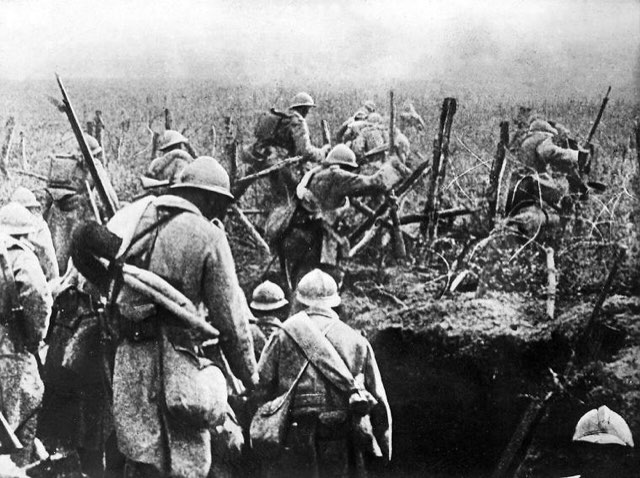
By the early 20th century, competition between European states over colonial resources began to affect the cohesion of the international community. A growing arms race between Great Britain and Germany also raised concerns about European stability. In response to these growing tensions, European nations began making secret military alliances for mutual protection in the event of war. Tensions finally came to a head in the summer of 1914, when Serbian terrorists assassinated Archduke Franz Ferdinand of Austria-Hungary. Germany and Austria-Hungary threatened to invade Serbia, but Russia elected to protect the small state. As a result, these nations declared war on each other and treaty alliances forced France and Great Britain to join the conflict. By its end in November of 1918, World War I had consumed over eight million lives and had become the most deadly and destructive conflict in world history.

Causes
- Imperialism, Capitalism, and World War I Lecture NotesSt. Mary’s University · Dr. Wallace G. Mills · read · archived copy
Military and Economic Competition among the Great Powers
- HMS Dreadnought: The Ship that Sparked an Arms RaceHubpages.com · Hovalis · read · archived copy
- Imperialism, Capitalism, and World War I Lecture NotesSt. Mary’s University · Dr. Wallace G. Mills · read · archived copy
Power Politics and the European Alliance System
- How It Began: Dr. Michael Duffy’s The Causes of World War OneFirstworldwar.com · read
The Summer of 1914
- Tragic War and Futile Peace: World War 1International World History Project’s World War I · Dr. Robert Guisepi, ed. · read · archived copy
The War in Western Europe
- The Planning of the First World WarThe Saylor Foundation · read
- Battles: Dr. Michael Duffy’s The Western Front, The Eastern Front, and The Italian FrontFirstworldwar.com · read
- America and World War IThe Saylor Foundation · read
- Animated Map: The Western Front, 1914-1918BBC History · watch
- Trench WarfareiTunes U · University of Oxford · Everett Sharp · watch
Colonial Warfare
- World Wars In-Depth: Professor David R. Woodward’s The Middle East during World War OneBBC History · read
- Battles: Dr. Michael Duffy’s The Gallipoli Front, The Palestine Front, The Mesopotamian Front, The African Wars, and The Far EastFirstworldwar.com · read
New Weapons of War
- New Weapons of WarThe Saylor Foundation · read
Devastation of Europe
- The Eclipse of the Democracies: Professor Wallbank’s and Professor Jewsbury’s Economic DisastersInternational World History Project · read · archived copy
Treaty of Versailles
- World Wars In-Depth: Dr. Ruth Henig’s Versailles and Peacemaking Link BBC History’s World Wars In-Depth: Dr. Ruth Henig’s Versailles and PeacemakingBBC History · read
- Tragic War and Futile Peace: World War I, Part 2International World History Project · Dr. Robert Guisepi · read · archived copy
- Speech on the Fourteen Points, Jan 8, 1918Fordham University’s Modern History Sourcebook · Paul Halsall’s version of Woodrow Wilson · read
The Postwar Settlement
- World Wars In-Depth: Professor Martin Kitchen’s The Ending of World War I, and the Legacy of Peace and Professor Charles Townshend’s The League of Nations and the United NationsBBC History · read
- Mandates and Trusteeships—League of Nations MandatesEncyclopedia of the New American Nation · read
- Chapter 23: War and Revolution, 1914-1919: Overview and Self-Check QuizThe McGraw-Hill Companies’ World History · write
- Chapter 28: Descent into the Abyss: World War I and the Crisis of European Global Order QuizzesPearson Education’s World Civilizations · AP Edition · write · archived copy
Chapter VII
The Rise of Totalitarian States in the 20th Century
World War I devastated Europe economically, politically, and socially. Great Britain and France blamed Germany for the conflict and imposed severe economic penalties and military restrictions on the German state. In Russia, Communist revolutionaries seized control of the government in 1917 and began to consolidate power and impose Communist rule throughout Russia. They attempted to turn Russia from an agricultural state into a powerful industrial nation that could rival the industrial states of western Europe. In Asia, Japanese leaders viewed western colonial powers with envy and began expanding the Japanese military with the goal of eventually establishing colonies throughout Asia and the Pacific.
Social and Political Impact of World War I
- Effects of the First World WarLink · The Saylor Foundation · read
- The European Economy in the Interwar PeriodThe Saylor Foundation · read
Economic Depression
- Chapter 28: Europe and the Great Depression of the 1930s: OverviewPearson Education’s The Western Heritage · read · archived copy
- Excerpts from Dr. Michael Adas’s One-Half Century of Crisis, 1914-1945International World History Project’s The Great Depression · read · archived copy
- Module 04: The End of Optimism? The Great Depression in EuropeDigital History Reader’s European History · read
Experiments with Liberal Democracy
- D1: The Treaty of Versailles, D2: Germany’s First Democratic Constitution, D3: The Republic Besieged, 1918-1923, D4: Chronology, 1920-1929, and D5: Weimar CultureColby College · Professor Raffael Scheck’s Germany and Europe, 1871-1945 · read · archived copy
The Russian Revolution, 1917
- The Russian RevolutionThe Saylor Foundation · read
- Call to PowerFordham University’s Modern History Sourcebook · Paul Halsall’s version of Lenin · read
- Lecture 19: The Romanovs and the Russian RevolutionYale University · Professor John Merriman · watch
The Bolsheviks Consolidate Power
- Lecture 7: The Aftermath of the Bolshevik RevolutionDr. Steven Kreis’s The History Guide · Lectures on Twentieth Century Europe · read · archived copy
The Rise of Stalin
- Lecture 10: The Age of Totalitarianism: Stalin and HitlerReading · Dr. Steven Kreis’s The History Guide · Lectures on Twentieth Century Europe · read · archived copy
Post-World War I
- Fascist ItalyTheCorner.org’s Totalitarianism, 1919-1939 · read · archived copy
The Rise of Mussolini
- Fascist ItalyTheCorner.org’s Totalitarianism, 1919-1939 · read · archived copy
The Origins of the Nazi Movement
- Lecture 10: The Age of Totalitarianism: Stalin and HitlerDr. Steven Kreis’s The History Guide · Lectures on Twentieth Century Europe · read · archived copy
The Rise of Hitler
- Nazi GermanyTheCorner.org’s Totalitarianism, 1919-1939 · read · archived copy
Hitler Consolidates Power
- Nazi GermanyTheCorner.org’s Totalitarianism, 1919-1939 · read · archived copy
Race in Nazi Germany
- Victims of the Nazi Era: Nazi Racial IdeologyThe United States Holocaust Memorial Museum’s Holocaust Encyclopedia · read
Nationalism and Colonialism
- Japan’s March Towards MilitarismWesleyan University · Bill Gordon · read · archived copy
Hirohito, Tojo, and Japanese Militarism
East Asian Co-Prosperity Sphere
- Greater East Asia Co-Prosperity SphereWesleyan University · Bill Gordon · read · archived copy
- Module 4: The End of Optimism? The Great Depression in EuropeDigital History Reader’s European History · write
- Chapter 29: The World in the 1920s: Challenges to European Dominance Quizzes and Chapter 30: The Great Depression and the Authoritarian Response QuizzesPearson Education’s World Civilizations · AP Edition · write · archived copy
Chapter VIII
The Second World War and the New World Order
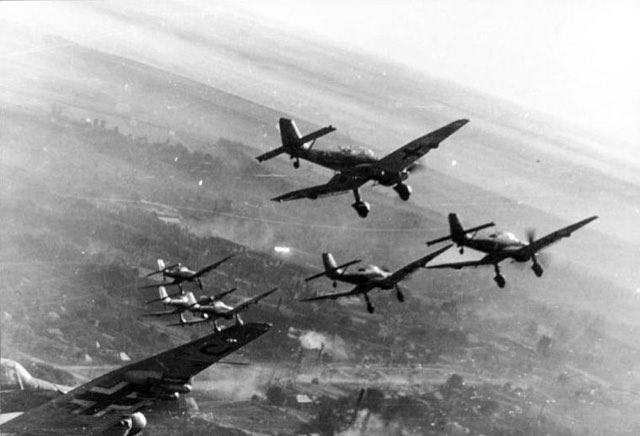
By the late 1930s, anti-democratic governments in Europe and Asia were beginning to threaten the security of surrounding states. Nazi Germany occupied parts of Czechoslovakia and Austria in 1938. Great Britain and France declined to challenge German actions, fearing that a firm stance against Germany might provoke a new European war. The following year, Germany invaded Poland and set in motion a chain of events that led to the outbreak of World War II. In the Pacific, Japanese forces continued to expand their hold on China and the military prepared invasion plans for European colonies in Southeast Asia. Meanwhile, the United States chose to remain isolated from the growing conflict, as it had done during much of World War I.

Germany Prepares for War
- The Origins of World War IIiTunes U · Bethel University · Professor Christopher Gehrz · watch · no longer online
Italian Imperialism
- Mussolini’s Invasion and the Italian OccupationLibrary of Congress’s Country Study Series · Thomas P. Ofcansky and LaVerle Berry, eds.’s Ethiopia · A Country Study · read
Japanese Imperialism
- World War II: Before the WarResearch History · read · archived copy
- The Nanking Massacre, 1937Fordham University’s Modern History Sourcebook · Prof. Paul Halsall’s version of · read
- U.S. Army Area Handbook (digitized courtesy of the University of Missouri-St. Louis), Chapter 1, Section 1.04read
Responses
- Causes of World War 22WorldWwar2.com · read
The War in Europe
- World Wars In-Depth: Dr. Gary Sheffield’s The Fall of France; Helen Cleary’s Battle of the Atlantic, 1939-1943; Laurence Rees’s Hitler’s Invasion of Russian in World War Two; and Dr. Stephen A. Hart’s Liberation of the Concentration CampsBBC History · read
- World Wars In-Depth: WW2 Movies: The Bombers and the Bombed and WW2 Movies: D-DayBBC History · watch
- The Holocaust, ‘Final Solution’: Overview, and Final Solutions: Murderous Racial Hygene, 1939-1945The United States Holocaust Memorial Museum’s Holocaust Encyclopedia · read
The War in Asia and the Pacific
The Allied Victory
- World Wars In-Depth: Professor Richard Overy’s World War Two: How the Allies Won and Professor Duncan Anderson’s Nuclear Power: The End of the War against JapanBBC History · read
Creation of the United Nations
- The Effects of the Second World WarThe Saylor Foundation · read
- The Charter of the United NationsYale Law School · The Avalon Project’s version of · read · archived copy
United States and U.S.S.R. Emerge as Global Superpowers
- The Origins of the Cold WarThe Saylor Foundation · read
Reconstruction of Western Europe
- The Reconstruction of Europe after the Second World WarThe Saylor Foundation · read
- Chapter 31: A Second Global Conflict and the End of the European Global Order QuizzesPearson Education’s World Civilizations · AP Edition · write · archived copy
- Chapter 26: World War II, 1939-1945: Overview and Self-Check QuizThe McGraw-Hill Companies’ World History · write
Chapter IX
The Cold War and Decolonization
Following World War II, many nations throughout the world began to ally themselves with either the democratic United States or the Communist Soviet Union. The resulting Cold War created profound political and economic divisions across the globe and weakened western European colonial powers, such as Great Britain and France. New international political alignments and the waning power of European colonial powers encouraged the growth of independence movements in many European colonies. Decolonization across Africa and Asia led to the emergence of new independent states. These new nations provided a battlefield for the struggle between Capitalist and Communist political ideologies. Due to their military strength, the United States and the USSR could not challenge each other directly, out of fear of mutual annihilation, but they engaged in a series of indirect conflicts in many of the young, developing nations throughout Africa and Asia.
New Political, Economic, and Military Alignments
- Europe after World War IIiTunes U · Bethel University · Professor Christopher Gehrz · read · no longer online
- The Elusive Peace: The Cold WarInternational World History Project · read · archived copy
The Marshall Plan and the Occupation of Japan
- European Economic RecoveryTheCorner.org’s Economic Cooperation, 1945-1960 · read · archived copy
- The Allied Occupation of JapanWesleyan University · Bill Gordon · read · archived copy
NATO and the Warsaw Pact
- Cold War, 1945-1960TheCorner.org · read · archived copy
- Lecture 14: The Origins of the Cold WarDr. Steven Kreis’s The History Guide · Lectures on Twentieth Century Europe · read · archived copy
“Wars of National Liberation”
- The Vietnam WarInternational World History Project · Dr. Robert Guisepi, ed. · read · archived copy
Decolonization and Nation Building
- Decolonization in the British EmpireThe Saylor Foundation · read
- Citizenship between Empire and Nation: France and French Africa, 1945-1960iTunes U · Stanford University · Dr. Frederick Cooper · watch
The Non-Aligned Nations
- The Non-Aligned Movement: Description and HistoryGovernment Communications and Information System, Republic of South Africa · read · archived copy
- Speech at the Bandung Conference Political Committee, 1955Fordham University’s Modern History Sourcebook · Paul Halsall’s version of Indian Prime Minister Jawaharlal Nehru · read
Atomic Arms Race
- A Brief HistorySelections from AtomicArchive.com’s The Cold War · read
Revolutionary Politics in the West
- Lecture 15: 1968: The Year of the BarricadesDr. Steven Kreis’s The History Guide · Lectures on Twentieth Century Europe · watch · archived copy
The Long Road to European Unity
- The Search for a Third WayiTunes U · Bethel University · Professor Christopher Gehrz · watch · no longer online
- Chapter 32: Western Society and Eastern Europe in the Decades of the Cold War Quizzes and Chapter 34: Africa, the Middle East, and Asia in the Era of Independence QuizzesPearson Education’s World Civilizations · AP Edition · write · archived copy
Chapter X
Global Society in a Post-Cold War World
The fall of the Soviet Union in 1991 ended the bipolar military, political, and economic alignments that had structured life across the globe during the Cold War. The United States emerged as the sole remaining economic and military superpower, but the growing political and economic power of the European Union and industrial nations across East Asia gradually challenged this status by the beginning of the 21stcentury. In the post-Cold War world, developing nations across Africa, Asia, and the Americas struggled under a crushing burden of international debt, lack of economic development, internecine warfare, and the social impact of infectious diseases like AIDS and malaria. Now, at the end of the first decade of the 21stcentury, the global community faces profound challenges brought about by climate change, religious violence, and economic uncertainty.
Fall of the Iron Curtin
- Lecture 16: 1989: The Walls Came Tumbling DownDr. Steven Kreis’s The History Guide · Lectures on Twentieth Century Europe · read · archived copy
Reorganizing and Realigning
- After the Cold War: The Euphoria Did Not LastAmerica.gov · Professor Walter Laqueur · read · archived copy
“Chinese Democracy?”: Tiananmen and Communist Rule in China
- Document 30-35: The AftermathThe George Washington University’s National Security Archive Electronic Briefing Book Number 16 · Professor Jeffrey T. Richelson’s and Professor Michael L. Evans’ Tiananmen Square, 1989 · The Declassified History · read · archived copy
The Asian Miracle
- Economic Development in East AsiaThe Saylor Foundation · read
Eastern Europe and the Former Soviet Republics
- History 312: Breakup of YugoslaviaiTunes U · George Mason University · Professor T. Mills Kelly · watch · no longer online
- A Contested FutureU.S. Department of State, Bureau of International Information Programs’ The Berlin Wall 20 Years Later · Professor Robert J. Leiber · read · archived copy
Population Growth and Immigration
- Stress on the Environment, Society, and Resources?GlobalIssues.org · Anup Shah · read
Economic Inequalities
- Will the US Easily Relinquish Economic and Political Power to China and India in the 21st Century?Gresham College · Professor Avinash Persaud · watch · archived copy
- Development History and its Implications for Development Theory: An Editorial Reading: Professors’ Irma Adelman and Cynthia Taft Morris, Development History and its Implications for Development Theory: An EditorialProfessors’ Irma Adelman and Cynthia Taft Morris · read · archived copy
Technology, Information Flow, Development, and Globalization
- Lessons from the Luddites from The NationFree Range Activism Website ‘Virtual Library’ · Kirkpatrick Sale · read · archived copy
- Chapter 36: Globalization and Resistance, World History, 1990-2003 QuizzesPearson Education’s World Civilizations · AP Edition · write · archived copy
- Chapter 32: Challenges and Hopes for the Future: Overview and Self-Check QuizThe McGraw-Hill Companies’ World History · write
About this course
This course is Saylor Academy's HIST103, World History in the Early Modern and Modern Eras (1600-Present), one of the complete university courses the Saylor Foundation made free from 2008 and retired in 2015. Saylor licensed its course text under CC BY 3.0; the original is on GitHub. Here it is laid out as chapters, links that have died go to an archived copy from the Internet Archive where one exists, assessments that needed a Saylor login are left out, and people and works are linked to Kulturbase. The readings and lectures belong to their publishers and are linked, not copied. Pictures: Wikimedia Commons, credited under each picture.
All Saylor courses · Free culture courses · The Chautauqua Reading Course