History · Saylor HIST202
History of Europe, 1800 to the Present
This course will introduce you to the history of Europe from 1800 to present day. You will learn about the major political, economic, and social changes that took place in Europe during this period.
More about this course
This course is structured chronologically, with each unit focusing on a particular historical event or trend. Each unit will include representative primary-source documents that illustrate important overarching political, economic, and social themes, such as the Industrial Revolution, the First and Second World Wars, imperialism, and the Cold War. By the end of this course, you will understand how nationalism, industrialization, and imperialism fueled the rise of European nation-states in the nineteenth century, as well as how world war and oppressive regimes devastated Europe during the 1900s.
Upon successful completion of this course, students will be able to:
In order to take this course, you must:
Chapter I
A Revolution in Industry
Although industrialization in Britain began in the eighteenth century, it was not until the end of the Napoleonic Wars in 1815 that its impact became apparent in the continent; but by 1850, industrialization permeated all of Europe. The development of steam power fueled the creation of railroads, new cities, and a new factory system. These advancements revolutionized Europe, reconfiguring the structure of society and the nature of the economy. Europe advanced rapidly during this period, but it did so at a cost: the factory system cheapened the labor value of workers, factory conditions were often horrible, and a rift between the working class and factory owners began to develop.
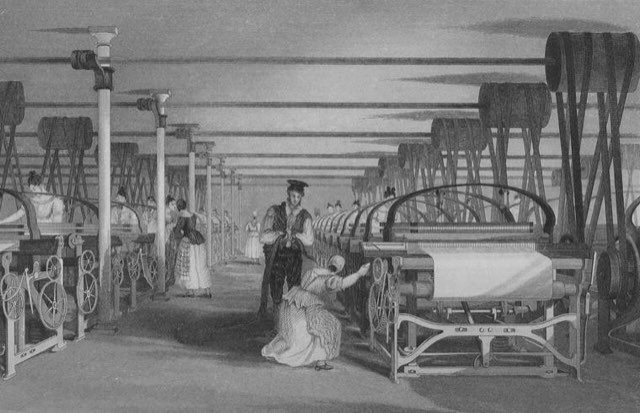

Industrial Revolution in Great Britain
- Lecture 8: Industrial RevolutionsYale University · Dr. John Merriman · watch
- The Industrial Revolution in Britain; Dr. Steven Kreis’s The History Guide: Lectures on Modern European Intellectual History: Lecture 17: The Origins of the Industrial Revolution in England; Yale-New Haven Teachers Institute: Joseph A. Montagna’s The Industrial RevolutionHistoryDoctor.net · Dr. Larry E. Gates, Jr. · read · archived copy
The Energy Problem and the Steam Engine
- On Power Looms, 1828Fordham University’s Modern History Sourcebook · Paul Halsall’s version of William Radcliffe · read
Railroads
- Spread of Railways in EuropeFordham University’s Modern History Sourcebook · Paul Halsall · watch
Mining
- Child Labor during the British Industrial RevolutionThe Economic History Association · read · archived copy
- Women Miners in the English Coal PitsFordham University’s Modern History Sourcebook · Paul Halsall’s version of · read
Industrialization in Continental Europe
- Industrialization in Continental EuropeHistoryDoctor.net · Dr. Larry E. Gates, Jr. · read · archived copy
Capital and Labor
- Capitalism and the Working ClassHistoryDoctor.net · Dr. Larry E. Gates, Jr. · read · archived copy
Working Conditions
- The Life of the Industrial Worker in Nineteenth Century EnglandThe Victorian Web · Laura Del Col’s version of the Sadler Committee · read
The Early Labor Movement
- Introduction to 19th-Century SocialismWashington State University · Professor Paul Brians’ · read · archived copy
Chapter II
An Emerging Urban Society
The industrial age resulted in a profound population shift from rural areas to cities. Millions of people relocated to burgeoning industrial towns to take up work in large factories that manufactured textiles imported from America, Africa, or India. The transition from an agricultural lifestyle to an urban one resulted in widespread social change throughout Europe. Women and children began working in factories, affecting marriage patterns and family structure. The rise of the new factory system created a stark divide between the middle and working classes. Explosive population growth in cities led to unsanitary conditions and prevalent disease. As a result of this population shift, the 19th century witnessed a rapid expansion of scientific knowledge and an increasing emphasis on realism—the depiction of subjects as they appear in everyday life, without embellishment or interpretation—in literature.
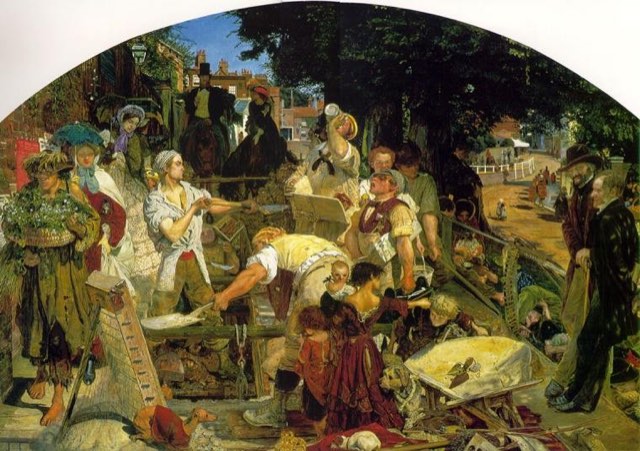

Challenges of Urbanization
- Lecture 12: Nineteenth-Century CitiesYale University · Dr. John Merriman · watch
- Urban Life on the Eve of the Twentieth CenturyHistoryDoctor.net · Dr. Larry E. Gates, Jr. · read · archived copy
Industry and the Growth of Cities
- London in the Nineteenth CenturyThe University of North Carolina at Pembroke · Robert Brown · read · archived copy
Public Health and the Bacterial Revolution
- Extension of the Germ TheoryFordham University · Modern History Sourcebook · Paul Halsall’s version of Louis Pasteur · read
Social Classes
- Rich, Poor, and Middle Class LifeHistoryDoctor.net · Dr. Larry E. Gates, Jr. · read · archived copy
The Middle Classes
- The Peterloo Massacre, 1819Fordham University’s Modern History Sourcebook · Paul Halsall’s version of Charles W. Colby’s (ed.) · read
Family
- The Changing European FamilyHistoryDoctor.net · Dr. Larry E. Gates, Jr. · read · archived copy
Science and Thought
- Late Nineteenth Century Changes in Science and ThoughtHistoryDoctor.net · Dr. Larry E. Gates, Jr. · read · archived copy
Social Science and Evolution
- Charles Darwin’s The Origin of SpeciesTalkOrigins Archive · read
Realism in Literature
- Realism and the Realist NovelUniversity of Virginia · The Institute for Advanced Technology in the Humanities’ · read · archived copy
Chapter III
War, Ideologies, and Upheavals, 1800-1856
The nineteenth century saw drastic political changes that had been initiated by the Napoleonic Wars and the subsequent reorganization of the political map of Europe via the Congress of Vienna in 1815. Interestingly, the Vienna Settlement was intended to restore stability to the European state system; however, the first half of the nineteenth century was characterized by widespread social and political unrest. The era later became known as the “Age of Revolutions.” Still, different nation-states reacted in different ways to the revolutionary fervor that pervaded Europe. Britain, Austria, and ultra-royalist France responded with conservative nationalism. In Greece and Serbia, radical independence movements emerged. In 1848, a revolution in France quickly spread throughout most of Europe, resulting in a bloody contest between nobles and the discontented middle and working classes. This unit ends with an analysis of the Crimean War and why it is considered to be the first “modern” war in history.
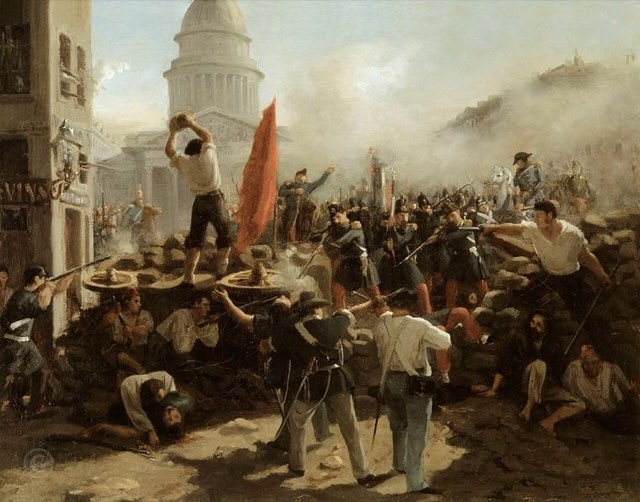

The Napoleonic Wars
- Lecture 7: NapoleonYale University · Professor John Merriman · watch
- Napoleon and the Wars of the First and Second CoalitionsKhan Academy · watch
- Napoleon and the War of the Third CoalitionKhan Academy · watch
- Napoleon and the War of the Fourth CoalitionKhan Academy · watch
- Napoleon’s Peninsular CampaignsKhan Academy · watch
- French Invasion of RussiaKhan Academy · watch
- Napoleon Forced to AbdicateKhan Academy · watch
Post-Napoleonic Europe
- Post-Napoleonic EuropeHistoryDoctor.net · Dr. Larry E. Gates, Jr. · read · archived copy
Metternich and Conservatism
- ConservatismSt. Mary’s University · Professor Wallace Mills · read · archived copy
Radical Ideas and Early Socialism
- Liberalism, Nationalism, and SocialismHistoryDoctor.net · Dr. Larry E. Gates, Jr. · read · archived copy
Liberalism
- On LibertyJohn Stuart Mill · read
Nationalism
- Lecture 13: NationalismYale University · Dr. John Merriman · watch
- Voltaire’s PatrieFordham University’s Modern History Sourcebook · Paul Halsall · read
Socialism
- Lecture 14: RadicalsYale University · Dr. John Merriman · watch
- Lecture 21: The Utopian Socialists: Charles Fourier and Lecture 22: The Utopian Socialists: Robert Owen and Saint-SimonDr. Steven Kreis’s The History Guide · Lectures on Modern European Intellectual History · read · archived copy
The Birth of Marxism
- Lecture 24: The Age of Ideologies: Reflections on Karl MarxDr. Steven Kreis’s The History Guide · Lectures on Modern European Intellectual History · read · archived copy
The Romantic Movement
- Lecture 16: The Romantic Era and HistoryDoctor.net: Dr Larry E. Gates, Jr.’s RomanticismDr. Steven Kreis’s The History Guide · Lectures on Modern European Intellectual History · read · archived copy
Romanticism Defined
- Introduction to RomanticismCUNY-Brooklyn · read · archived copy
Romanticism in Literature
- Thomas de Quincey, Confessions of an English Opium EaterSchaffer Library of Drug Policy · read · archived copy
Romanticism in Art and Music
- The Music of the Romantic EraConnexions · Catherine Schmidt-Jones · read · archived copy
- Images of Romantic ArtHanover College · Professor Frank Luttmer · watch
Reforms and Revolutions
- Reform and RevolutionHistoryDoctor.net · Dr. Larry E. Gates, Jr. · read · archived copy
Liberation in Greece
- The Treaty of London for Greek IndependenceFordham University’s Modern History Sourcebook · Paul Halsall’s version of · read
Reform in Britain
- Speech on the Reform Bill of 1832Fordham University’s Modern History Sourcebook · Paul Halsall’s version of Thomas Babington Macaulay · read
The Great Famine in Ireland
- Interpreting the Irish Famine, 1846-1850Web.archive.org · Liz Szabo · read · archived copy
Revolution of 1830 in France
- Condition of the July Monarchy, 1830-1848Fordham University’s Modern History Sourcebook · Paul Halsall’s version of François Guizot · read
The Revolutions of 1848
- The Revolutions of 1848 and Eastern Michigan University: Jonathan Richard Hill’s The Revolutions of 1848 in Germany, Italy, and FranceHistoryDoctor.net · Dr. Larry E. Gates, Jr. · read · archived copy
Britain and 1848
- Lecture 11: Why No Revolution in 1848 in BritainYale University · Dr. John Merriman · watch
Italy, 1848-1849
- Encyclopedia of 1848 Revolutions: Peasant Agitation in Italy, Popular Participation, Italy, 1848-1849, War in Northern Italy, and Constitutions and Parliaments, Italy 1848-1849Ohio State University · read · archived copy
Realpolitik
- 2b. German Unification: The Age of BismarckBeyond Books · read · archived copy
The Crimean War
- A Short History of Wars: Chapter 5 – The Emergence of Modern WarAir University · Professor Richard A. Gabriel and Karen S. Metz · read · archived copy
- British Battles: The Crimean War, Before Balaklava,’ The Battle of Balaklava, The Charge of the Light Brigade, and After BalaklavaThe National Archives’ Project · read · archived copy
Chapter IV
Age of Nationalism, 1850-1914
Despite the widespread violence and chaos unleashed by the Revolutions of 1848, European nations implemented few reforms. As a result, the revolutions were largely deemed failures. However, the revolutionary moment did succeed in motivating many European leaders (most famously Bismarck of Prussia and Cavour of Italy) to create unified and bureaucratic nation-states. The Concert of Europe—the balance of power among European countries that had been created in 1815—dissolved into independent states that were buttressed by fierce nationalistic sentiment and emerged in competition with one another. By the 1870s, the European great power system had been transformed from a network of royalist states to a set of independent countries energized by a common commitment to liberal reform and a national identity.
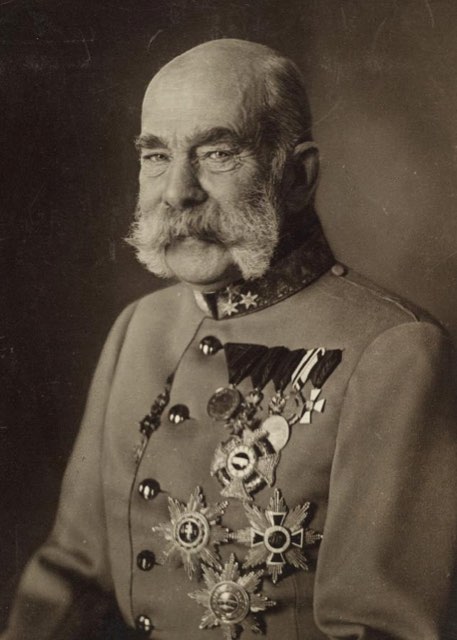

France and Italy
- France under Napoleon III and Nation Building in ItalyHistoryDoctor.net · Dr. Larry E. Gates, Jr. · read · archived copy
Garibaldi and Cavour
- On Nationality, 1852Fordham University’s Modern History Sourcebook · Paul Halsall’s version of Giuseppe Mazzini · read
German Unification
- The Road to National Unification and The Second Empire until 1914; and Fordham University’s Modern History Sourcebook: Paul Halsall’s version of Documents of German UnificationColby College · Raffael Scheck · read · archived copy
The Modernization of Russia
- The Modernization of RussiaHistoryDoctor.net · Dr. Larry E. Gates, Jr. · read · archived copy
The Revolution of 1905
- Revolution and Counterrevolution, 1905-07Library of Congress Country Studies · read · archived copy
Nation-States, 1871-1914
- The Modern Nation StateHistoryDoctor.net · Dr. Larry E. Gates, Jr. · read · archived copy
Characteristics
- What Is a Nation-State?Towson University · Mike Lauletta · read · archived copy
The Jewish State
- On the Jewish State, 1896Fordham University’s Modern History Sourcebook · Paul Halsall’s version of Theodore Herzl · read
Chapter V
Europe and the World
During the latter half of the nineteenth century, European powers (as well as Japan) held unprecedented colonial control over regions in Africa, China, and India. Known as “New Imperialism,” this era was unlike other periods of international competition in that empire-building in the latter part of the 19th century monopolized all aspects of European political, economic, and social life.
Industrialization and the World Economy
- Industrialization and the World EconomyHistoryDoctor.net · Dr. Larry E. Gates · read · archived copy
The Opening of China and Japan
- Letter to Queen Victoria, 1839Fordham University’s Modern History Sourcebook · Paul Halsall’s version of Commissioner Lin · read
Europeans in Egypt
- Why Britain Acquired Egypt in 1882Fordham University’s Modern History Sourcebook · Paul Halsall’s version of The Earl of Cromer · read
European Migration and Imperialism
- Lecture 15: Imperialists and Boy ScoutsYale University · Dr. John Merriman · watch
- European Migration and ImperialismHistoryDoctor.net · Dr. Larry E. Gates, Jr. · read · archived copy
The New Imperialism
- The White Man’s BurdenRudyard Kipling · read · archived copyRudyard Kipling on Kulturbase
- Modern History Sourcebook: The Earl of Cromer: Why Britain Acquired Egypt in 1882, (1908)Fordham University · Paul Halsall · read
- Lecture 12 - French ImperialismOpen Yale Courses · Charles Keith · watch
The Scramble for Africa
Imperialism in Asia
- Colonialism and Nationalism in South East AsiaNorthern Illinois University, Center for Southeast Asian Studies · Dr. Constance Wilson and Rey Ty · read · archived copy
Critics of Imperialism
- The Black Man’s BurdenEdward Morel · read · archived copy
Responses to Western Imperialism
- Responses to European ImperialismHistoryDoctor.net · Dr. Larry E. Gates, Jr. · read · archived copy
India under British Control
- British IndiaUniversity of California, Los Angeles · Dr. Vinay Lal · read · archived copy
The Rise of Imperial Japan
- Modern History Sourcebook: Lt. Tadayoshi Sakurai: The Attack upon Port Arthur, 1905Fordham University · Paul Halsall · read
- Modern History Sourcebook: Okuma: From Fifty Years of New Japan, 1907-08Fordham University · Paul Halsall · read
Rebellion and Unrest in China
- From Reform to Revolution, 1842-1911Columbia University’s Asia for Educators · read
Chapter VI
The Great War
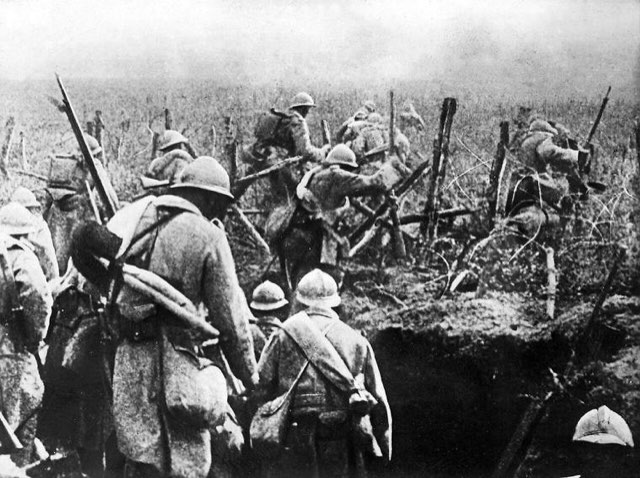
In the late nineteenth century, a new alliance system developed in Europe. In the 1890s, the Triple Alliance was formed between Austria, Germany, and Italy. Meanwhile, Britain became an ally of Japan in 1902, formed the Entente Cordiale with France in 1904, and drew up a similar agreement with Russia in 1907. In the early 1900s, these two alliances had a major focus: the Balkans. Russia and Austria both vied for the region; a crisis broke out when an Austrian heir was assassinated at Sarajevo in June of 1914. The Balkan calamity became the immediate cause of the Great War, a conflict that involved 30 countries and left over 30 million people dead. Trench warfare in Europe and the use of modern weapons, such as the machine gun and poison gas, made World War I the deadliest in history.

The Outbreak of War
- Lecture 16: The Coming of the Great WarYale University · Dr. John Merriman · watch
- The Outbreak of World War OneHistoryDoctor.net · Dr. Larry E. Gates, Jr. · read · archived copy
The Course of the War
- Lecture 17: War in the TrenchesYale University · Dr. John Merriman · watch
- Background to the War Nobody Won: World War I, 1914-1918Collin County Community College · Prof. Kyle Wilkinson · read · archived copy
Western Front
- All Quiet on the Western FrontClinch Valley College’s version of Erich Maria Remarque · read · archived copy
Eastern Front
- Typhus Fever on the Eastern Front in World War IUniversity of Montana · Dr. David W. Tschanz · read · archived copy
Home Front
- Women on the Home Front in World War OneBBC’s British History In-depth · Professor Joanna Bourke · read
The Russian Revolution of 1917
- Lecture 19: The Romanovs and the Russian RevolutionYale University · Dr. John Merriman · watch
- Revolutions and Civil War and The February Revolution, The Period of Dual Power and The Bolshevik Revolution, and Civil War and War CommunismLibrary of Congress Country Studies · read · archived copy
Lenin and Trotsky
- What Is to Be Done, 1902Fordham University · Professor Paul Halsall’s version of V.I. Lenin · read
Peace Settlement, 1918-1919
- The Peace SettlementHistoryDoctor.net · Dr. Larry E. Gates, Jr. · read · archived copy
Treaty of Versailles
- Treaty of Versaillesread · archived copy
Chapter VII
Age of Anxiety
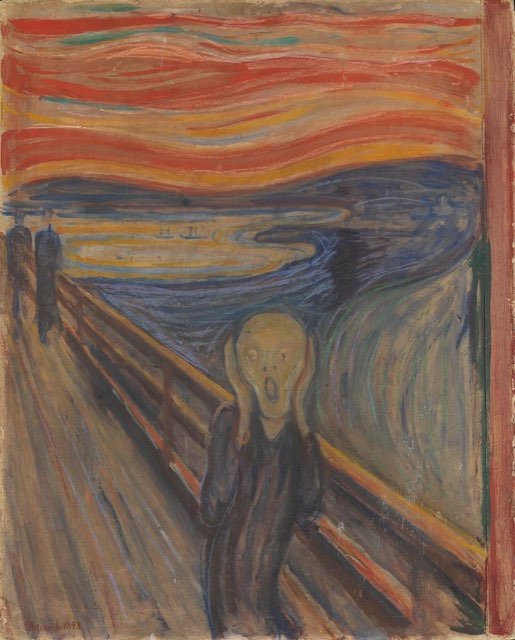
The 1919 Treaty of Versailles was intended to repair a war-weary Europe, but it actually became the leading cause of conflict in the postwar era. Germany was humiliated by the reparations demanded by the Entente powers. The newly established eastern European states did not accept the boundaries created for them. The European world was so shaken by the war that many efforts at stabilization or organization were met with skepticism or violence. In order to make sense of the new postwar landscape, writers, scientists, religious leaders, and philosophers developed new theories and ideas that were radically different from those that had dominated Europe before the war.

Uncertainty in Modern Thought
- The Age of Anxiety, 1919-1939; Dr. Steven Kreis’s The History Guide: Lectures on Twentieth Century Europe: Lecture 8: The Age of Anxiety: Europe in the 1920sHarvard University · Prof. Ernest R. May · read · archived copy
Modernism
- Modernism—A Working DefinitionCUNY, The College of Staten Island · Professor Catherine Lavender · read · archived copy
Literature
- The Love Song of J. Alfred PrufrockPoetry Foundation · T.S. Eliot · readT.S. Eliot on Kulturbase
Modern Art and Music
- Modern Art and Music and Corcoran Gallery of Art’s Modernism: Designing a New World, 1914-1939HistoryDoctor.net · Dr. Larry E. Gates, Jr. · read · archived copy
The Search for Peace and Stability
- The Search for Peace and StabilityHistoryDoctor.net · Dr. Larry E. Gates, Jr. · read · archived copy
Eastern Europe
- Lecture 20: Successor States of Eastern EuropeYale University · Dr. John Merriman · watch
The Great Depression
- About the Great Depression, The Depression in the United States – An Overview, About The Dust Bowl, and A Depression Photo EssayUniversity of Illinois at Urbana-Champaign · Prof. Cary Nelson · read · archived copy
Mass Unemployment
- an excerpt from George Orwell’s The Road to Wigan PierClinch Valley College · read · archived copyGeorge Orwell on Kulturbase
- Dorothea Lange’s ‘Migrant Mother’ in the Farm Security Administration Collection: An OverviewLibrary of Congress · watch
Chapter VIII
Dictatorships and the Second World War
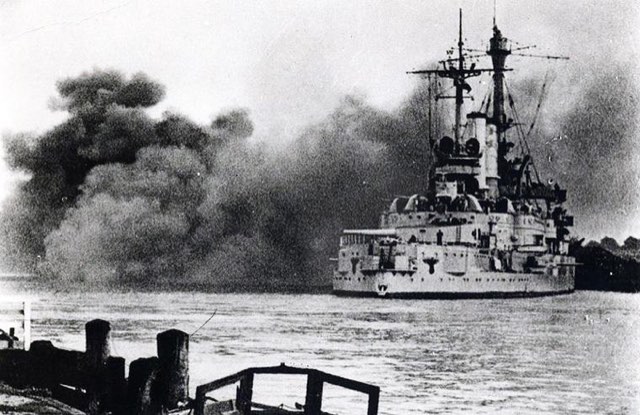
World War I had mobilized centralized state power on an unprecedented scale. Such an incredible exertion of power had seemed necessary in order to muster all available state resources in an atmosphere of “total war.” But this trend of centralized power continued in postwar Europe, and when combined with fervent nationalism, led to the rise of several totalitarian or authoritarian regimes. Stalin’s Russia, Franco’s Spain, Mussolini’s Fascist Italy, and Hitler’s Nazi Germany all used oppressive rule to restore order and prosperity to nations wracked by war. It was the alliance of these three regimes that eventually resulted in the outbreak of World War II in 1939. Hitler’s invasion of Poland and France ignited a war that would last five years, span five continents, and claim millions of lives.

Authoritarian States
Radical Totalitarian Dictatorships
- Lecture 10: The Age of Totalitarianism: Stalin and HitlerDr. Steven Kreis’s The History Guide · Lectures on Twentieth Century Europe · read · archived copy
Stalin’s Soviet Union
- Lecture 21: StalinismYale University · Dr. John Merriman · watch
- The Soviet Union under StalinHistoryDoctor.net · Dr. Larry E. Gates, Jr. · read · archived copy
Stalinist Terror and the Great Purges
- Stalin’s PurgesFordham University’s Modern History Sourcebook · Paul Halsall’s version of · read
Mussolini and Fascism in Italy
- Benito Mussolini and Fascist ItalyHistoryDoctor.net · Dr. Larry E. Gates, Jr. · read · archived copy
Fascism Defined
- What Is Fascism?Fordham University’s Modern History Sourcebook · Paul Halsall’s version of Benito Mussolini · read
The Spanish Civil War and General Franco’s Dictatorship
- The Spanish Civil WarHistory World International · read · archived copy
- The Spanish Civil WarUniversity of Pennsylvania · Professor Al Filreis’ · read
Spain under Franco
- The Franco YearsLibrary of Congress Country Studies · Eric Solsten’s (ed.) Spain · A Country Study · read
Hitler and Nazism in Germany
- Lecture 22: FascistsYale University · Dr. John Merriman · watch
- Hitler and National SocialismHistoryDoctor.net · Dr. Larry E. Gates, Jr. · read · archived copy
National Socialism and Adolf Hitler
- Speech of April 12, 1921Hanover College’s version of Adolf Hitler · readAdolf Hitler on Kulturbase
World War II
- Lecture 23: Collaboration and Resistance in World War IIYale University · Dr. John Merriman · watch
- The Consolidation of Power and Foreign Policy and The Outbreak of World War II and Total mobilization, Resistance, and the Holocaust, and DefeatLibrary of Congress Country Studies · read · archived copy
The Holocaust
- The Holocaust ; Fordham University’s Modern History Sourcebook: Paul Halsall’s version of Hermann Friedrich Graebe’s Account of Holocaust Mass ShootingUnited States Holocaust Memorial Museum · read
- Testimony Excerpts: Christa M.Yale University Library · Fortunoff Video Archive for Holocaust Testimonies’ · watch · archived copy
The Changing Tide of Battle, 1939-1945
- Reaction to the German Invasion of 1941Fordham University’s Modern History Sourcebook · Paul Halsall’s version of Vyacheslav Molotov · read
Chapter IX
Cold War Conflicts and Social Transformations, 1945-1985
By 1945, a second world war and European global domination were over. This created a power vacuum, and the United States and the Union of Soviet Socialist Republics (USSR) moved from reluctant wartime allies to deadly adversaries. In this East versus West contest, Communist USSR and Soviet-controlled eastern Europe were pitted against the democratic United States and western Europe. Although these two factions never clashed on the battlefield, the conflict was evident in military coalitions, a nuclear arms race, espionage, proxy wars, propaganda, and technological competition, such as the Space Race. For these reasons, the forty year period following World War II is known as the “Cold War.”
The Cold War
- The Cold WarHistoryDoctor.net · Dr. Larry E. Gates, Jr. · read · archived copy
Origins of the Cold War
- The Cold War and Dr. Steven Kreis’s The History Guide: Lectures on Twentieth Century Europe: Lecture 14: The Origins of the Cold WarSuffolk Community College · History Department · read · archived copy
- Iron Curtain Speech and Josef Stalin’s Reply to ChurchillFordham University’s Modern History Sourcebook · Paul Halsall’s versions of Winston Churchill · readWinston Churchill on Kulturbase
The Soviet Union and the Eastern Bloc
- The Prague Spring, 1968Library of Congress Country Studies · read · archived copy
Communism in the Far East
- The Korean WarWheeling Jesuit University · Classroom of the Future Project · read
Postwar Social Transformations
- Social Transformation in Europe after World War II and Dr. Steven Kreis’s The History Guide: Lectures on Twentieth Century Europe: Lecture 15: 1968: The Year of the BarricadesHistoryDoctor.net · Dr. Larry E. Gates, Jr. · read · archived copy
New Roles for Youth and Women
- The New Woman and Marxist.org’s version of Simone de Beauvoir’s The Second Sex: Introduction: Woman as OtherCollege of Staten Island · Professor Catherine Lavender · read · archived copy
The Cold War and Decolonization
- Decolonization and DisorderLibrary of Congress · Dr. Dane Kennedy · watch · archived copy
The Collapse of Communism
- The Collapse of Communism in Eastern Europe and Dr. Steven Kreis’s The History Guide: Lectures on Twentieth Century Europe: Lecture 16: 1989: The Walls Came Tumbling DownHistoryDoctor.net · Dr. Larry E. Gates, Jr. · read · archived copy
The Gorbachev Era
- The Gorbachev Era, Gorbachev’s First Year and New Thinking: Foreign Policy under Gorbachev, Gorbachev’s Reform Dilemma, Nationality Ferment, and The August Coup and Its AftermathLibrary of Congress Country Studies · read · archived copy
Revolutions of 1989
- 1989 Revolutions of Eastern EuropeGeorge Mason University · Roy Rosenzweig Center for History and New Media · read · archived copy
- Lecture 24: The Collapse of Communism and Global ChallengesYale University · Dr. John Merriman · watch
The Legacy of the Cold War
- Cold War Legacies and Contemporary DilemmasFORA.TV · Dr. Melvyn Leffler · read · archived copy
- History 312: Breakup of YugoslaviaiTunes U · George Mason University · Professor T. Mills Kelly · watch · no longer online
- A Contested FutureU.S. Department of State, Bureau of International Information Programs’ The Berlin Wall 20 Years Later · Professor Robert J. Leiber · read · archived copy
Chapter X
The European Integration
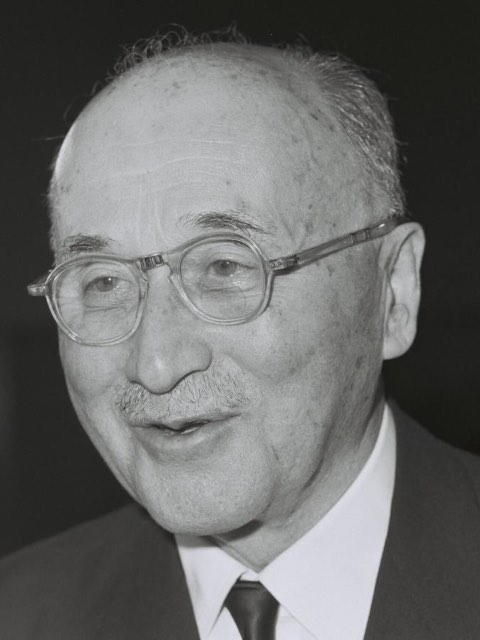
In 1946, Winston Churchill called for a “United States of Europe” in a speech given at University of Zurich, but it was not until 1950 that the formation of an integrated Europe began to develop when France, Italy, Germany, Belgium, the Netherlands, and Luxembourg joined together to try to find ways to prevent another world war. In these early days of European integration, the focus was on common trade policies for coal, steel, and agriculture. Thus, the first Europe-wide organization was dubbed the European Coal and Steel Community. As this collective grew and expanded, it transformed first into the European Economic Community

History of the European Integration
- The Search for a Third WayiTunes U · Bethel University · Professor Christopher Gehrz · watch · no longer online
- The History of the European UnionEuropa · read · archived copy
Institutions of the European Union
- EU Institutions and Other BodiesEuropa · read · archived copy
The Economic and Monetary Union
- Economic and Monetary Union (EMU) and the EuroEuropa · read
- What Is the European Monetary Union?The University of Iowa Center for International Finance and Development · read · archived copy
The Future of the Union
- The Future of the European UnionGlobalChange · Dr. Patrick Dixon · read
- The Future of the European Union: Managing GlobalizationEuropa · Benita Ferrero-Waldner · read
About this course
This course is Saylor Academy's HIST202, History of Europe, 1800 to the Present, one of the complete university courses the Saylor Foundation made free from 2008 and retired in 2015. Saylor licensed its course text under CC BY 3.0; the original is on GitHub. Here it is laid out as chapters, links that have died go to an archived copy from the Internet Archive where one exists, assessments that needed a Saylor login are left out, and people and works are linked to Kulturbase. The readings and lectures belong to their publishers and are linked, not copied. Pictures: Wikimedia Commons, credited under each picture.
All Saylor courses · Free culture courses · The Chautauqua Reading Course