History · Saylor HIST211
Introduction to United States History: Colonial Period to Reconstruction
This course will introduce you to United States history from the colonial period to the Civil War and Reconstruction. You will learn about the major political, economic, and social changes that took place in America during this 250-year period.
More about this course
The course will be structured chronologically, with each unit focusing on a significant historical subject in early American history. The units will include representative primary-source documents that illustrate important overarching political, economic, and social themes, such as the development of British America, the founding of the American republic, and the crisis of the federal union that led to the Civil War. By the end of the course, you will understand how the American federal union was founded, expanded, and tested from 1776 to its collapse in 1861.
Upon successful completion of this course, you will be able to:
In order to take this course, you must:
Chapter I
Creating British America
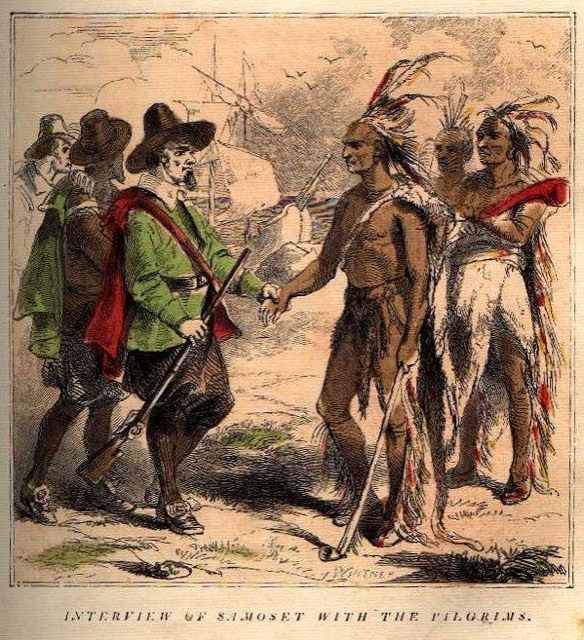
That North America eventually became British America was not a given. During the 16th and 17th centuries, several European powers – including the Netherlands, France, Spain, and England – struggled with Native Americans and with each other for control of the land that lay between what is now Canada and the Caribbean. Settlement boundaries were constantly drawn and redrawn as a result of conflicts in the New World and wars in Europe. Additionally, the cultures and customs of diverse native peoples helped shape the nature of European settlements in the New World but were ultimately destroyed by European war and settlement.

New World Encounters
- Chapter 1: Early AmericaAmerica.gov Archive · Outline of U.S. History · read · 1 h
- The Atlantic World, 1492–1600Concepcion Saenz-Camba · read · 15 min
- Exploring the Early AmericasUnited States Library of Congress’ Jay I. Kislak Collection · watch · 1 h
The Native Americans
- Civilizations under Siege: The European Conquest of the AmericasUniversity of Groningen · George M. Welling’s American History, from Revolution to Reconstruction · Edward J. Dodson · read · 30 min · archived copy
- Native American Culture: The Pre-History of AmericaHenry J. Sage’s Sage American History · read · 30 min · no longer online
- Christopher Columbus: Extracts from JournalFordham University · Paul Halsall’s Medieval Sourcebook · read · 1 h · no longer online
- A Brief Account of the Destruction of the IndiesProject Gutenberg · Bartolomé de las Casas’ · read · 2 h · no longer online
- Lesson 1: Discovery and Settlement of the New World – Pre-Columbian EraUniversity of California · UC College Prep’s U.S. History · watch · 30 min · archived copy
- Lesson 1: Discovery and Settlement of the New World – Christopher Columbus, Cortés Defeats the AztecsUniversity of California · UC College Prep’s U.S. History · watch · 30 min · archived copy
- Ancient Architects of the MississippiUnited States National Park Service · read · 1 h · no longer online
New France
- Lesson 3: Spanish and French Exploration – French ExplorersUniversity of California · UC College Prep’s U.S. History · watch · 30 min · archived copy
- France in AmericaThe United States Library of Congress and the National Library of France · read · 1 h · archived copy
New Spain
- Lesson 3: Spanish and French Exploration – Spanish Explorers, Mission SystemUniversity of California · UC College Prep’s U.S. History · watch · 30 min · archived copy
- Chapter 4William H. Prescott’s History of the Conquest of Mexico · read · 1 h · no longer online
New Netherland
- Lesson 6: The Middle, Chesapeake, and Southern Colonies – New York and New JerseyUniversity of California · UC College Prep’s U.S. History · watch · 30 min · archived copy
The English in North America
- Chapter 3: British Colonial America (1588–1701)James Ross-Nazzal’s U.S. History to 1877 · read · 1 h · no longer online
- John Smith’s A Description of New EnglandThe Berkeley Electronic Press · read · 2 h
- Chapter 4University of Michigan, MLibrary Digital Collections · The Making of America · George Bancroft’s History of the United States of America, from the Discovery of the American Continent · read · 2 h
- Lesson 4: The First English Settlements – The Jamestown Colony, The Plymouth ColonyUniversity of California · UC College Prep’s U.S. History · watch · 45 min · archived copy
- Virginia: The London CompanyHenry J. Sage’s Sage American History · read · 1 h · no longer online
The English Civil War
- Appendix to the Colonial HistoryUniversity of Michigan, MLibrary Digital Collections · The Making of America · Marcius Willson’s American History · read · 2 h
- The English Bill of RightsThe Constitution Society · read · 30 min · no longer online
New England and the Puritans
- Chapters 2–5University of Michigan, MLibrary Digital Collections · The Making of America · Marcius Willson’s American History · read · 2 h
- John Winthrop’s A Modell of Christian CharityHanover College Historical Texts Project · read · 1 h · no longer online
- The Puritans of New England and New England Expands to New ColoniesHenry J. Sage’s Sage American History · read · 2 h · no longer online
- Lesson 5: The New England ColoniesUniversity of California · UC College Prep’s U.S. History · watch · 1 h · archived copy
The Middle Colonies
- The Middle & Southern ColoniesHenry J. Sage’s Sage American History · read · 1 h · no longer online
- Lesson 6: The Middle, Chesapeake, and Southern Colonies – Pennsylvania and Delaware; Maryland, Carolina, and GeorgiaUniversity of California College Prep’s U.S. History · watch · 1 h · archived copy
The Lower Colonies
- Chapter 8 and Chapters 10-12University of Michigan’s MLibrarty Digital Collections · Marcius Willson’s American History · read · 1 h
Geography and Population of the Original Thirteen Colonies
- Thirteen ColoniesWikipedia · read · 30 min
The British Empire and Provincial Government
- Chapter 10: Colonial GovernmentHenry William Elson’s History of the United States of America · read · 30 min
- America and the British EmpireHenry J. Sage’s Sage American History · read · 30 min · no longer online
Labor Systems
- Colonial Life: Work, Family, FaithHenry J. Sage’s Sage American History · read · 1 h · no longer online
- Slavery and Indentured Servitude in the American ColoniesThe Saylor Foundation · David Toye · read · 15 min
- Leah and RachelVirtual Jamestown · John Hammond’s First Hand Accounts of Virginia, 1575–1705 · read · 1 h · no longer online
The African Slave Trade
- Africa before the Transatlantic Slave Trade and Participants and ProfitabilityAnti-Slavery International’s Breaking the Silence · read · 1 h · archived copy
- Economics and Organization and The Middle PassageAnti-Slavery International’s Breaking the Silence · read · 1 h · archived copy
- Intellectual Origins of RacismSociety for U.S. Intellectual History · Lauren Kientz Anderson · read · 15 min · no longer online
Colonial Society
- Being a British Colonist and Being a British AmericaniTunes U · Open Yale Courses · Joanne B. Freeman’s HIST-116 The American Revolution · watch · 2 h · archived copy
The Enlightenment: Europe and British America
- The Enlightenment in AmericaHenry J. Sage’s Sage American History · read · 15 min · no longer online
- Lesson 8: Scientific and Religious TransformationsUniversity of California · UC College Prep’s U.S. History · watch · 1 h · archived copy
The Seven Years’ War
- The Second Hundred Years’ WarHenry J. Sage’s Sage American History · read · 30 min · no longer online
- Lesson 9: The French and Indian WarUniversity of California College Prep’s U.S. History · watch · 45 min · archived copy
Chapter II
A New Nation Forms
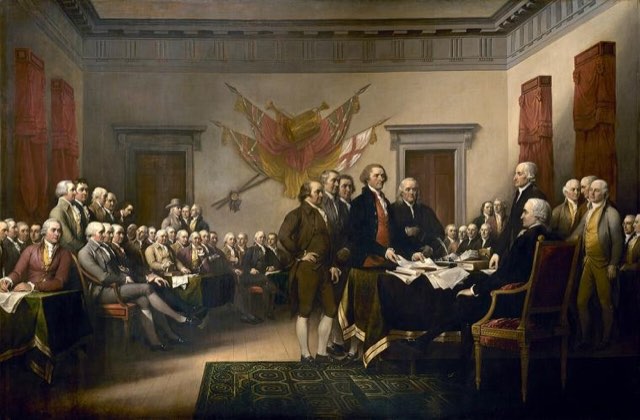
In the wake of the Seven Years’ War, Britain imposed new taxes and restrictions upon the British American colonies to help pay for the war. The colonies balked at these measures and argued that the British Parliament was not authorized to regulate trade or impose duties and that these matters could only be handled by provincial assemblies. Although many colonists protested the new imperial taxes, few believed it warranted their secession from Britain. It was not until 1775, after George III failed to address the grievances of the colonists, that a break with Britain seemed legitimate and necessary.

Imperial Reforms
- Outraged Colonials: The Stamp Act Crisis, Resistance or Rebellion, and Being a RevolutionaryiTunes U · Open Yale Courses · Joanne B. Freeman’s HIST-116 The American Revolution · watch · 3 h · archived copy
- British Reforms and Colonial Resistance, 1763–1766United States Library of Congress’ American Memory · read · 15 min · no longer online
Colonial Resistance
- The Logic of ResistanceiTunes U · Open Yale Courses · Joanne B. Freeman’s HIST-116 The American Revolution · watch · 1 h · archived copy
- British Reforms and Colonial Resistance, 1767–1772 and The Colonies Move Toward Open Rebellion, 1773–1774United States Library of Congress’ American Memory · read · 30 min · no longer online
- The Rights of the ColonistsSamuel Adams’ · read · 30 min
- The American Revolution: 1763–1800: Background Events, 1761–1775Henry J. Sage’s Sage American History · read · 30 min · no longer online
Reconciliation or Independence?
- Thomas Paine’s Common Sense, Part IIIread · 1 h
- Letter to Horatio Gates, May 3, 1775Thomas Johnson, Jr. · read
Beginning of the Revolution
- The American Revolution 1775–1777Henry J. Sage’s Sage American History · read · 1 h · no longer online
Declaring Independence
- Common Sense, Independence, and Civil WariTunes U · Open Yale Courses · Joanne B. Freeman’s HIST-116 The American Revolution · watch · 3 h · archived copy
- Declaring Independence: Drafting the Documents and Jefferson’s ‘original Rough draught’ of the Declaration of IndependenceUnited States Library of Congress · read · 30 min · no longer online
- The Declaration of Independenceread · 30 min
The War
- The Importance of George Washington, The Logic of a Campaign, and Fighting the Revolution: The Big PictureiTunes U · Open Yale Courses · Joanne B. Freeman’s HIST-116 The American Revolution · watch · 3 h · archived copy
- The American Revolution, 1778–1783Henry J. Sage’s Sage American History · read · 30 min · no longer online
Loyalists
- Who Were the Loyalists?, and Heroes and VillainsiTunes U · Open Yale Courses · Joanne B. Freeman’s HIST-116 The American Revolution · watch · 2 h · archived copy
Revolution and Society
- Letter to John Adams, March 31, 1776Ashland University’s TeachingAmericanHistory.org · Abigail Adams’ · read · 30 min · archived copy
- Letter to Thomas Jefferson, August 19, 1791PBS · Africans in America · Benjamin Banneker · read · 30 min · archived copy
- War and SocietyiTunes U · Open Yale Courses · Joanne B. Freeman’s HIST-116 The American Revolution · watch · 1 h · archived copy
Postwar Uncertainties: The Articles of Confederation
- Articles of Confederation, Constitution of North Carolina, and Constitution of New Yorkread · 2 h · no longer online
- Identifying Defects in the ConfederationUnited States Library of Congress’ American Memory · read · 15 min · no longer online
- A Union Without PoweriTunes U · Open Yale Courses · Joanne B. Freeman’s HIST-116 The American Revolution · watch · 1 h · archived copy
- America under the Articles of Confederation: 1783–1789Henry J. Sage’s Sage American History · read · 30 min · no longer online
The Federal Constitution
- Constitutional GovernmentHenry J. Sage’s Sage American History · read · 1 h · no longer online
- The Road to the Constitutional Convention, Creating a Constitution, and Creating a NationiTunes U · Open Yale Courses · Joanne B. Freeman’s HIST-116 The American Revolution · watch · 3 h · archived copy
Federalists and Anti-Federalists
- The Federalist Papers: America’s Political ClassicThe Forum at the Online Library of Liberty · Quentin Taylor · read · 30 min · no longer online
- Federalist No. 10The Online Library of Liberty · James Madison · read · 30 min · no longer online
- Letter I: October 8, 1787The Online Library of Liberty · Richard Henry Lee’s Empire and Nation · Letters from a Federal Farmer · read · 30 min · no longer online
- Origins of a System and Jefferson and Madison Create a PartyUniversity of Groningen · George M. Welling’s American History, from Revolution to Reconstruction · Lisa Marie DeCarolis’ A Biography of Alexander Hamilton (1755–1804) · read · 30 min · archived copy
The Turbulent 1790s
- Lesson 18: Development of the Two-Party SystemUniversity of California · UC College Prep’s U.S. History · watch · 1 h · archived copy
- The New Republic: The United States, 1789–1800, Part 1 and The New Republic: The United States, 1789–1800, Part 2: The Adams AdministrationHenry J. Sage’s Sage American History · read · 30 min · no longer online
Chapter III
The Early Republic
The Early American Republic emerged amidst a period of modernization, expansion, and international conflict. The fragile new nation faced a number of threats that challenged its strength and stability, including the emergence of factionalism, divisive political parties, international crises, and the new pressures brought about by westward expansion. The Louisiana Purchase, the War of 1812, slavery, and new agricultural and commercial developments forced Americans to rethink the nature of their union.
Jefferson’s “Revolution”
- First Inaugural AddressYale Law School · Thomas Jefferson · read · 30 min · no longer online
- The Jeffersonian Republic: The United States 1800–1828Henry J. Sage’s Sage American History · read · 1 h · no longer online
- Lesson 19: John AdamsUniversity of California · UC College Prep’s U.S. History · watch · 1 h · archived copy
The Louisiana Purchase
- Instructions for Meriwether LewisUnited States Library of Congress · Thomas Jefferson · read · 30 min · no longer online
- Lesson 20: Jefferson as PresidentUniversity of California · UC College Prep’s U.S. History · watch · 2 h · no longer online
War and Embargo
- The War of 1812: The ‘Forgotten War’Henry J. Sage’s Sage American History · read · 30 min · no longer online
- Lesson 21: The War of 1812University of California College Prep’s U.S. History · watch · 1 h · no longer online
Party Tensions
- Amendments to the Constitution Proposed by the Hartford Convention: 1814Yale Law School, Lillian Goldman Law Library’s Avalon Project · read · 15 min · no longer online
Internal Improvements
- We Have Met the Market Revolution, and It Is Us!H-Net · Tom Downey · read · 30 min
Expansion West
- Rise of the New West, 1819–1829Frederick Jackson Turner · read · 1 h · no longer online
- Lesson 24: The Transportation RevolutionUniversity of California · UC College Prep’s U.S. History · watch · 30 min · no longer online
The Cotton Gin
- Cotton GinEconomic History Association · William H. Phillips’ · read · 30 min · archived copy
Monroe as President
- James Monroe and the Era of Good FeelingsHenry J. Sage’s Sage American History · read · 1 h · no longer online
Sectional Issues
- Rise of the New West, 1819–1829Frederick Jackson Turner · read · 45 min · no longer online
- Murray N. Rothbard’s The Panic of 1819: Reactions and PoliciesLudwig von Mises Institute · read · 15 min · no longer online
- Chapter 22: James MonroeUniversity of California · UC College Prep’s U.S. History · watch · 1 h · no longer online
The Monroe Doctrine
- Monroe Doctrine; December 2 1823Yale Law School, Lillian Goldman Law Library’s Avalon Project · read · 15 min · archived copy
The Marshall Court
- Dartmouth College v. Woodward, 1819 and McCulloch v. MarylandUniversity of Groningen · George M. Welling’s American History, from Revolution to Reconstruction · John Marshall · read · 30 min · archived copy
Chapter IV
Democracy in America
In the 1820s and 1830s, all signs seemed to point toward the rise of a mature democratic nation: the period saw record-high voter turnouts at elections, a number of new reform agendas, and unprecedented economic growth, which fostered optimism about the future of the new nation. Still, the emergence of Jacksonian Democracy did not obscure growing rifts in the American people, as Northerners and Southerners perceived equality differently, and slavery and federal Indian removal policies threatened to undermine what appeared to be a more democratic America.

Andrew Jackson and Populist Politics
- The Age of JacksonHenry J. Sage’s Sage American History · read · 30 min · no longer online
The Election of 1828
- Andrew Jackson, 1767–1845, A Brief Biography: The 1828 ElectionUniversity of Groningen · George M. Welling’s American History, from Revolution to Reconstruction · Hal Morris’ · read · 15 min · archived copy
Jacksonian Democracy
- Lesson 26: Democracy and the Common ManUniversity of California · UC College Prep’s U.S. History · watch · 45 min · archived copy
- Why Democratic Nations Show a More Ardent and Enduring Love of Equality than of LibertyUniversity of Virginia · Alexis de Tocqueville’s Democracy in America · read · 30 min · no longer online
The Whig Party
- The American Whig Party (1834–1856)University of Groningen · George M. Welling’s American History, from Revolution to Reconstruction · Hal Morris’ · read · 15 min · archived copy
Indian Removal
- Lesson 29: Indian RemovalUniversity of California · UC College Prep’s U.S. History · watch · 45 min · archived copy
- Indian Removal ActUnited States Library of Congress · Statutes at Large, 21st Congress, 1st Session · read · 15 min · no longer online
Nullification Crisis
- Letter to Martin Van Buren discussing the Nullification Crisis, 13 January 1833United States Library of Congress · Andrew Jackson · read · 15 min · archived copy
- Letters and Times of the TylersTufts Univesity · J. William Jones’ Southern Historical Society Papers, Volume 14 · Judge Wm. Archer Cocke · read · 30 min · no longer online
Bank War
- A Bank on Parnassus: Nicholas Biddle and the Beauty of BankingJeffrey Sklansky’s Common-Place · read · 45 min
The American System
- In Defense of the American SystemUnited States Library of Congress · Henry Clay · read · 2 h · no longer online
- Review Essay of The Rise and Fall of the American Whig Party: Jacksonian Politics and the Onset of the Civil War by Michael HoltUniversity of Michigan, MLibrary Digital Collections’ The Making of America · Allen C. Guelzo · read · 45 min · archived copy
Chapter V
North and South
The new democratic spirit of the early 19th century was also threatened by growing sectional differences and ideologies: Northerners believed that their society was characterized by antislavery beliefs, a system of wage labor, and efficient urban factories, while Southerners, by contrast, thought that their society was premised on the “positive good” of slavery, a system of enslaved labor, and a profitable plantation network.
Yankee Society
- Lecture 4: A Northern World View: Yankee Society, Anti-slavery Ideology, and the Abolition MovementYouTube · Open Yale Courses · David Blight’s HIST119 · The Civil War and Reconstruction Era · watch · 1 h
Anti-Slavery Thought
- Lesson 31: Reform Crusades – AbolitionismUniversity of California College Prep’s U.S. History · watch · 30 min · archived copy
- ColonizationUnited States Library of Congress’ African-American Mosaic · read · 30 min · no longer online
- Appeal to the Coloured Citizens of the WorldUncle Tom’s Cabin and American Culture · David Walker · read · 30 min · archived copy
Wage Labor
- A Description of Factory Life by an Associationist, 1846read · 30 min · no longer online
Factories and Cities
- American Economic Growth, 1820 –1860Henry J. Sage’s Sage America History · read · 30 min · no longer online
Southern Society
- Lecture 3: A Southern World View: The Old South and Pro-slavery IdeologyYouTube · Open Yale Courses · David Blight’s HIST119 · The Civil War and Reconstruction Era · watch · 1 h
Pro-Slavery Thought
- The Ante-Bellum South: Life on the PlantationHenry J. Sage’s Sage American History · read · 30 min · no longer online
Slave Labor and the Domestic Slave Trade
- The American Slave Code in Theory and PracticeUniversity of Michigan, MLibrary Digital Collections’ The Making of America · William Goodell · read · 1 h · archived copy
- Life on the PlantationsAnti-Slavery International’s Breaking the Silence · read · archived copy
- Interview with W.L. Bost, Ex-SlaveUnited States Library of Congress’ American Memory · read · 45 min · archived copy
The Plantation South
- Lecture 2: Southern Society: Slavery, King Cotton and Antebellum America’s ‘Peculiar’ RegionYouTube · Open Yale Courses · David Blight’s HIST119 · The Civil War and Reconstruction Era · watch · 1 h
Chapter VI
An Age of Reform and Resistance
The antebellum years were a period of rapid social change in America. Many distinct groups – including religious sects, slaves, free blacks, and women – asserted their claim to equal rights in a democratic nation. Perceiving that American society was in need of reform, these groups either sought to change existing institutions or to forge new ones. Evangelicals (particularly in the South) as well as Shakers and Mormons sought to restore an earlier, more primitive form of Christianity to America. And in order to solve the problem of Southern slavery and Northern free blacks, many anti-slavery reformers devised plans to colonize blacks in Africa. Other bleak aspects of American society, including the prison system and the prevalence of alcoholic beverages, spurred the formation of the Temperance Movement and prison reform movement. Meanwhile, Southern slaves planned or carried out revolts in Virginia and South Carolina in an attempt to resist enslavement and gain their freedom.
The Second Great Awakening
- Lesson 31: Reform CrusadesUniversity of California · UC College Prep’s U.S. History · watch · 45 min · archived copy
- Social and Cultural Issues in the Antebellum PeriodHenry J. Sage’s Sage American History · read · 30 min · no longer online
- What a Revival Religion IsAshland University’s TeachingAmericanHistory.org · Charles Finney · read · 1 h · archived copy
Religious Pluralism
- Lesson 30: Transcendentalism, Religion, and Utopian MovementsUniversity of California · UC College Prep’s U.S. History · watch · 15 min · archived copy
- The Second Awakening and Antebellum Reform, Part 1 and Part 2YouTube · The Saylor Foundation · David Blight · watch · 1 h
African Americans and Religion
- African American Churches of Beacon HillNational Park Service · read · 30 min · no longer online
Anti-Slavery: Moral and Social Reform
- ‘I Will be Heard!’: Prominent AbolitionistsCornell University’s Carl A. Kroch Library · read · 30 min
- AbolitionUnited States Library of Congress’ African-American Mosaic · read · 30 min · archived copy
- Anti-Slavery Movements Part 1YouTube · The Saylor Foundation · David Blight · watch · 45 min
Colonization and Liberia
- ColonizationUnited States Library of Congress’ African-American Mosaic · read · 30 min · no longer online
Reform Associations
- The Second Awakening and Antebellum Reform, Part 3YouTube · The Saylor Foundation · David Blight · watch · 30 min
Crime and Punishment
- Dorothea Dix’s Advocacy for the Mentally Ill in North CarolinaUniversity of North Carolina at Chapel Hill’s University Libraries · Documenting the American South · read · 15 min · no longer online
The Temperance Movement
- Common Sense for the Young Man on the Subject of TemperanceUniversity of Michigan, MLibrary Digital Collections’ The Making of America · Henry Ward Beecher · read · 1 h
Utopianism and Transcendentalism
- Lesson 30: Transcendentalism, Religion, and Utopian Movements – Transcendentalism, Utopian MovementsUniversity of California College Prep’s U.S. History · read · 30 min · archived copy
- Ralph Waldo Emerson (1803–1882)Texas A&M; University · The Web of American Transcendentalism · Ann Woodlief · read · 15 min · archived copy
- NatureTexas A&M; University · American Transcendentalism Web · Ralph Waldo Emerson · read · 2 h · archived copy
Public Education
- Horace MannUnitarian Universalist History and Heritage Society’s Dictionary of Unitarian and Universalist Biography · Susan Ritchie · read · 15 min · archived copy
Women’s Rights
- For What Is a Mother Responsible?University of North Carolina at Chapel Hill’s Learn NC · Carolina Watchman · read · 15 min · archived copy
- The Declaration of Sentiments, Seneca Falls Conference, 1848Fordham University · Paul Halsall’s Internet Modern History Sourcebook · read · 30 min · no longer online
- Anti-Slavery Movements Part 2YouTube · The Saylor Foundation · David Blight · watch · 30 min
Slave Resistance
- Lesson 33: Decade of Crisis – Slave ResistanceUniversity of California · UC College Prep’s U.S. History · watch · 15 min · no longer online
Nat Turner’s Rebellion
- The Confessions of Nat Turner, the Leader of the Late Insurrection in Southampton, VAUniversity of North Carolina at Chapel Hill’s University Libraries · Documenting the American South · Nat Turner · read · 1 h · no longer online
Chapter VII
Westward Expansion
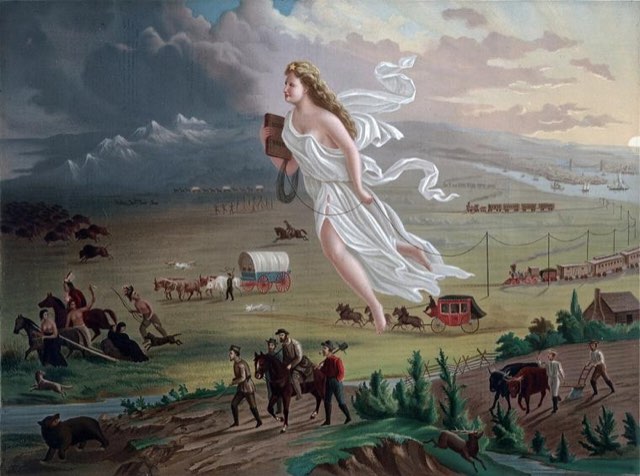
John L. O’Sullivan, editor of the influential United States Magazine and Democratic Review, gave the expansionist movement now referred to as Manifest Destiny its name in 1845, when he wrote that it was ”the fulfillment of our manifest destiny to overspread the continent allotted by Providence for the free development of our yearly multiplying millions.” Manifest Destiny was an ideology of expansion stimulated by nationalism and an idealistic vision of American progress. Many believed that it was America’s providential duty to extend the blessings of liberty and equality across the continent. But, according to its 19th century proponents, Manifest Destiny was a vision reserved for white Americans alone; black slaves, Native American tribes, and other “foreigners” were displaced and exploited.

Pioneers and Travelers
- Chapter 5: Westward Expansion and Regional DifferencesAmerica.gov Archive’s Outline of U.S. History · read · 30 min
The Idea of Manifest Destiny
- John L. O’Sullivan on Manifest Destiny, 1839Mount Holyoke College · Vincent Ferraro’s Documents Relating to American Foreign Policy · read · 15 min · no longer online
The U.S.-Canadian Border
- American Foreign Relations in the Tyler YearsHenry J. Sage’s Sage American History · read · 30 min · no longer online
“Fifty-four Forty or Fight!”
- Lesson 32: Manifest Destiny – California GoldUniversity of California:UC College Prep’s U.S. History · watch · 15 min · no longer online
Forty-Niners
- Lesson 32: Manifest Destiny – California GoldUniversity of California College Prep’s U.S. History · watch · 15 min · no longer online
The Republic of Texas
- The Texas Declaration of Independence (March 2, 1836)Lone Star Junction · read · 15 min · no longer online
- A Brief History of Texas from American Settlement to Annexation, 1820–1845Henry J. Sage’s Sage American History · read · 30 min · archived copy
The Mexican War
- Manifest Destiny and MexicoHenry J. Sage’s Sage American History · read · 30 min · no longer online
The Wilmot Proviso
- Lesson 32: Manifest Destiny – The Mexican-American WarUniversity of California · UC College Prep’s U.S. History · watch · 15 min · no longer online
Chapter VIII
Impending Crisis
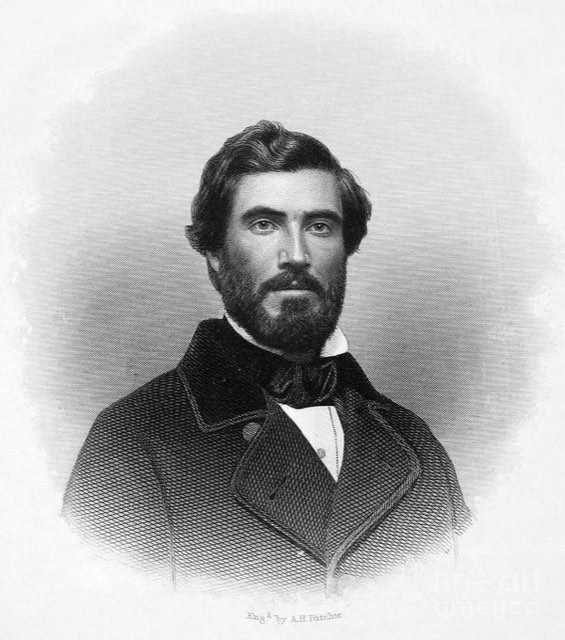
In the 1850s, the “slavery question” fomented sectional crises that threatened to destroy the very existence of the federal union. Two main questions manifested themselves in sectional disputes: The first was whether or not slavery should exist in new territories and new states; the second was whether or not the federal government had a legislative role in the formation of new western states. These questions were never fully resolved during the 1850s, despite the adoption of the idea of popular sovereignty, the Compromise of 1850, and the Kansas-Nebraska Act.

The Question of Slavery
- Lecture 6: Expansion and Slavery: Legacies of the Mexican War and the Compromise of 1850YouTube · Open Yale Courses · David Blight’s HIST119 · The Civil War and Reconstruction Era · watch · 1 h
The Slave Power
- The Economics of the Civil WarEconomic History Association · Roger Ransom · read · 45 min · no longer online
Fugitive Slaves
- Lesson 33: Decade of Crisis – The Compromise of 1850University of California · UC College Prep’s U.S. History · watch · 30 min · no longer online
- Lecture 5: Telling a Free Story: Fugitive Slaves and the Underground Railroad in Myth and RealityYouTube · Open Yale Courses · David Blight’s HIST119 · The Civil War and Reconstruction Era · watch · 1 h
- Anti-Slavery Movements, Part 3YouTube · The Saylor Foundation · David Blight · watch · 30 min
The Compromise of 1850
- The Compromise of 1850—Trying to Save the UnionHenry J. Sage’s Sage American History · read · 30 min · archived copy
- Lecture 7: ‘A Hell of a Storm’: The Kansas-Nebraska Act and the Birth of the Republican Party, 1854–55YouTube · Open Yale Courses · David Blight’s HIST119 · The Civil War and Reconstruction Era · watch · 1 h
Nativism and the Know Nothing Party
- Know NothingWikipedia · read · 30 min · no longer online
The Kansas-Nebraska Act and the Issue of Popular Sovereignty
- Lesson 34: The Approaching WarUniversity of California · UC College Prep’s U.S. History · watch · 30 min · no longer online
- Lecture 8: Dred Scott, Bleeding Kansas, and the Impending Crisis of the Union, 1855–58YouTube · Open Yale Courses · David Blight’s HIST119 · The Civil War and Reconstruction Era · watch · 1 h
The Election of 1856
- Republican Party Platform of 1856read · 15 min · no longer online
- Chapter 8: Testimonies of Living WitnessesHinton Rowan Helper’s Compendium of the Impending Crisis of the South · read · 1 h · no longer online
- Principles and Purposes of the Republican PartyJohn B. Alley · read · 30 min · no longer online
The Dred Scott Decision
- Lesson 34: The Approaching War – Dredd Scott DecisionUniversity of California · UC College Prep’s U.S. History · watch · 30 min · no longer online
- Abraham Lincoln and FederalismUniversity of Michigan’s MLibrary Digital Collections’ The Making of America · Michael Les Benedict · read · 1 h · no longer online
The Lincoln-Douglas Debates of 1858
- The House Dividing, 1857-1860: The Rise of Abraham LincolnHenry J. Sage’s Sage American History · read · 30 min · archived copy
John Brown’s Raid
- Lesson 34: The Approaching War – John Brown’s RaidUniversity of California · UC College Prep’s U.S. History · watch · 30 min · no longer online
Chapter IX
Secession
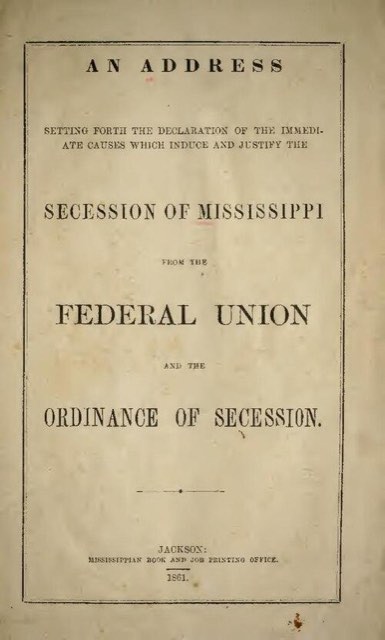
In 1860, it was by no means clear that the South would secede or that civil war would be unleashed between two rival sections of the same nation. Instead, most Americans, though wearied by a decade of sectional disputes, were still in favor of preserving the federal union. But following Abraham Lincoln’s election to the presidency, the skirmish at Fort Sumter, and Lincoln’s order of federal troops into the Southern states, Southern states began to secede from the union.
The Election of 1860
- Lecture 10: The Election of 1860 and the Secession CrisisYouTube · Open Yale Courses · David Blight’s HIST119 · The Civil War and Reconstruction Era · watch · 1 h
- Lesson 35: Secession – The Election of 1860University of California · UC College Prep’s U.S. History · watch · 30 min · no longer online
Secession
- The Confederate States of America and The Secession of the Southern StatesShotgun’s Home of the American Civil War · read · 30 min · archived copy
- Confederate States of America: Declaration of the Immediate Causes Which Induce and Justify the Secession of South Carolina from the Federal UnionYale Law School, Lillian Goldman Law Library’s Avalon Project · read · 30 min · no longer online
Compromises
- Amendments Proposed by the Peace Conference, February 8–27, 1861Yale Law School, Lillian Goldman Law Library’s Avalon Project · read · 15 min · no longer online
Fort Sumter
- Lecture 12: ‘And the War Came,’ 1861: The Sumter Crisis, Comparative StrategiesYouTube · Open Yale Courses · David Blight’s HIST119 · The Civil War and Reconstruction Era · watch · 1 h
- North and South in 1861University of North Carolina at Chapel Hill’s Learn NC · United States Army Center of Military History · read · 15 min · no longer online
- Europe: A.D. 1801-1900Connexions · Jack E. Maxfield · read · 1 h · no longer online
Chapter X
The Civil War
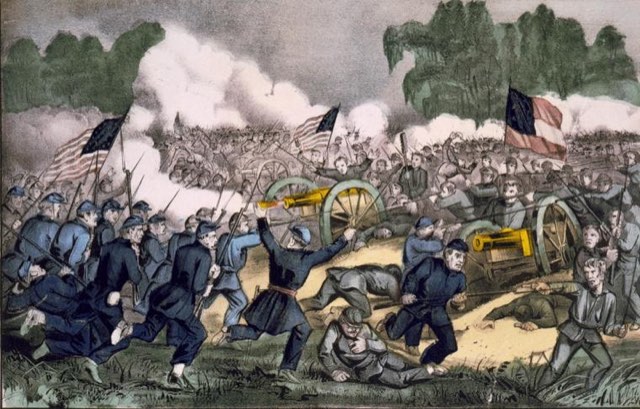
The outbreak of a civil war between the Union and the Confederacy marked the collapse of the federal union created by the Founders in

What Caused the Civil War?
- Lecture 11: Slavery and States Rights, Economies, and Ways of Life: What Caused the Civil War?YouTube · Open Yale Courses · David Blight’s HIST119 · The Civil War and Reconstruction Era · watch · 1 h
Confederate Ascendancy
- Lecture 13: Terrible Swift Sword: The Period of Confederate AscendancyYouTube · Open Yale Courses · David Blight’s HIST119 · The Civil War and Reconstruction Era · watch · 1 h
Bull Run
- First Battle of Bull Run/Manassas. July 21, 1861Henry J. Sage’s Sage American History · read · 30 min · no longer online
Lincoln and Race
- Lecture 15: Lincoln, Leadership, and Race: Emancipation as PolicyYouTube · Open Yale Courses · David Blight’s HIST119 · The Civil War and Reconstruction Era · watch · 1 h
Emancipation Proclamation
- The Emancipation ProclamationU.S. National Archives and Records Administration’s Featured Documents · read · 30 min · no longer online
Impact and Meanings of the Emancipation Proclamation
- Lecture 16: Days of Jubilee: The Meanings of Emancipation and Total WarYouTube · Open Yale Courses · David Blight’s HIST119 · The Civil War and Reconstruction Era · watch · 1 h
Black Soldiers
- Black Soldiers in the Civil WarIIP Digital · Joyce Hansen · read · 30 min · no longer online
Confederate Ascendancy, 1861–2
- Lecture 14: Never Call Retreat: Military and Political Turning Points in 1863YouTube · Open Yale Courses · David Blight’s HIST119 · The Civil War and Reconstruction Era · watch · 1 h
- Lesson 36: The Civil WarUniversity of California · UC College Prep’s U.S. History · watch · 1 h · archived copy
Turning Points in 1863: Gettysburg and Vicksburg
- The Civil War Part 2: Gettysburg to AppomattoxHenry J. Sage’s Sage American History · read · 30 min · no longer online
- Lecture 18: ‘War So Terrible’: Why the Union Won and the Confederacy LostYouTube · Open Yale Courses · David Blight’s HIST119 · The Civil War and Reconstruction Era · watch · 1 h
- Gettysburg AddressOurDocuments.gov · Abraham Lincoln · read · 15 min
1864: Toward the End of the War
- Lecture 19: To Appomattox and Beyond: The End of the War and a Search for MeaningsYouTube · Open Yale Courses · David Blight’s HIST119 · The Civil War and Reconstruction Era · watch · 1 h
Lincoln’s Re-Election and Appomattox
- Lecture 20: Wartime Reconstruction: Imagining the Aftermath and a Second American RepublicYouTube · Open Yale Courses · David Blight’s HIST119 · The Civil War and Reconstruction Era · watch · 1 h
- Lesson 38: Ramifications of the Civil WarUniversity of California · UC College Prep’s U.S. History · watch · 45 min · no longer online
Social Impact of the War
- Reminiscences of My Life in Camp with the 33rd United States Colored TroopsSusie King Taylor · read · 1 h
- Lecture 17: Homefronts and Battlefronts: ‘Hard War’ and the Social Impact of the Civil WarYouTube · Open Yale Courses · David Blight’s HIST119 · The Civil War and Reconstruction Era · watch · 1 h
Lincoln’s Assassination
- Appomattox Court House and Lincoln’s AssassinationYouTube · Khan Academy’s United States History · watch · 15 min
Chapter XI
Reconstruction
Even before the last shots of the Civil War had been fired, President Lincoln and members of Congress faced serious questions about how to rebuild and reunite the war-torn United States and provide for nearly four million former slaves. The way in which the government responded to these questions shaped and defined the period now known as Reconstruction (the 12-year period following the Civil War from 1865 to 1877). Reconstruction was a time of significant political and social change in the United States. In this unit, we will take a look at the controversial origins of Reconstruction and evaluate its successes and failures. We will also examine how former slaves struggled against prejudice and political repression in the American South as they attempted to build new lives for themselves and their families. Finally, we will ask why Reconstruction came to an abrupt end in 1877 and evaluate its political and social legacy in the United States.
The Politics of Reconstruction
- The Civil War and ReconstructionAmerica.gov Archive’s Outline of U.S. History · read
- US History Overview 2 – Reconstruction to the Great DepressionKhan Academy’s United States History · watch · 15 min
Presidential Reconstruction
- Lesson 39: Presidential and Congressional Reconstruction PlansUniversity of California · UC College Prep’s U.S. History · watch · 45 min · no longer online
- Proclamation Declaring the Insurrection at an EndFordham University · Paul Halsall’s Internet Modern History Sourcebook · President Andrew Johnson · read · 30 min · no longer online
Radical (Congressional) Reconstruction
- Lesson 39: Presidential and Congressional Reconstruction PlansUniversity of California · UC College Prep’s U.S. History · watch · 45 min · archived copy
- Report of the Joint Committee on ReconstructionUniversity of Groningen · George M. Welling’s American History, from Revolution to Reconstruction and Beyond · United States Congress’ · read · 30 min · archived copy
The Impeachment of President Andrew Johnson
- Lesson 40: The End of Reconstruction – Impeachment of JohnsonUniversity of California · UC College Prep’s U.S. History · watch · 30 min · archived copy
Opportunities and Obstacles
- Lesson 40: The End of Reconstruction – Reconstruction of the SouthUniversity of California · UC College Prep’s U.S. History · watch · 45 min · archived copy
- Appeal to Congress for Impartial SuffrageFrederick Douglass’ · read · 45 min · no longer online
Oppression and Exodus
- Lesson 39: Presidential and Congressional Reconstruction Plans – The Black CodesUniversity of California · UC College Prep’s U.S. History · watch · 30 min · archived copy
- Reconstruction and Its AftermathUnited States Library of Congress’ African American Odyssey · read · 30 min · no longer online
The Election of 1876
- Lesson 40: The End of Reconstruction – Reconstruction EndsUniversity of California · UC College Prep’s U.S. History · watch · 45 min · archived copy
- Politics in the Gilded AgeHenry J. Sage’s Sage American History · read · 30 min · no longer online
The End of Reconstruction
- The Successes and Failures of ReconstructionYouTube · The Saylor Foundation · watch · 30 min
The “New South”: Southern Redemption and Racial Injustice
- Lesson 41: The New South – Race Relations in the New SouthUniversity of California · UC College Prep’s U.S. History · watch · 45 min · archived copy
- Smithsonian National Museum of American History, Behring Center’s Separate Is Not Equal, Brown v. Board of Educationread · 30 min · no longer online
- Opinion of the Court: Plessy v. FergusonCornell University Law School, Legal Information Institute · The United States Supreme Court, Justice Brown · read · 1 h
About this course
This course is Saylor Academy's HIST211, Introduction to United States History: Colonial Period to Reconstruction, one of the complete university courses the Saylor Foundation made free from 2008 and retired in 2015. Saylor licensed its course text under CC BY 3.0; the original is on GitHub. Here it is laid out as chapters, links that have died go to an archived copy from the Internet Archive where one exists, assessments that needed a Saylor login are left out, and people and works are linked to Kulturbase. The readings and lectures belong to their publishers and are linked, not copied. Pictures: Wikimedia Commons, credited under each picture.
All Saylor courses · Free culture courses · The Chautauqua Reading Course