History · Saylor HIST212
Introduction to United States History: Reconstruction to the Present
This course will introduce you to United States history from the end of the Civil War in 1865 through the first decade of the twenty-first century. You will learn about the major political, economic, and social changes that took place in America during this nearly 150-year period.
More about this course
The course will be structured chronologically, with each unit focusing on a significant historical subject. The units will include representative primary-source documents that illustrate important overarching political, economic, and social themes, such as the growth and expansion of political representation and civil rights in America, industrial development and economic change, race and ethnicity in American society, and cultural change over time. These primary documents offer you insights into the thinking of people who directly witnessed and experienced these historical developments. By the end of the course, you will understand how the United States grew from a relatively weak and divided agricultural nation into a cohesive military and industrial superpower by the beginning of the twenty-first century.
Upon successful completion of this course, you will be able to:
In order to take this course, you must:
Chapter I
Reconstruction
Even before the last shots of the Civil War had been fired, President Lincoln and members of Congress faced serious questions about how to rebuild and reunite the war-torn United States and provide for nearly four million former slaves. The way in which the government responded to these questions shaped and defined the period now known as Reconstruction, the 12-year period following the Civil War from 1865 to 1877.
Presidential Reconstruction
- Lesson 39 – Presidential and Congressional Reconstruction Plans, Presidential ReconstructionUniversity of California · UC College Prep’s US History · watch · 30 min · no longer online
- Proclamation Declaring the Insurrection at an EndFordham University · Modern History Sourcebook · Paul Halsall’s version of President Andrew Johnson · read · 20 min
Radical (Congressional) Reconstruction
- Lesson 39 – Presidential and Congressional Reconstruction Plans, Congressional ReconstructionUniversity of California · UC College Prep’s US History · watch · 30 min · no longer online
- Report of the Joint Committee on ReconstructionUniversity of Groningen · American History · From Revolution to Reconstruction · US Congress’ · read · 20 min · archived copy
The Impeachment of President Andrew Johnson
- Lesson 40 – The End of Reconstruction, Impeachment of JohnsonUniversity of California · UC College Prep’s US History · watch · 20 min · archived copy
Opportunities and Obstacles
- Lesson 40 - The End of ReconstructionUniversity of California · UC College Prep’s US History · watch · 30 min · archived copy
- Appeal to Congress for Impartial SuffrageUniversity of Oklahoma College of Law · A Chronology of US Historical Documents · Frederick Douglass’ · read · 45 min
Oppression and Exodus
- Lesson 39 – Presidential and Congressional Reconstruction PlansUniversity of California · UC College Prep’s US History · watch · 30 min · no longer online
- Reconstruction and Its AftermathUnited States Library of Congress · African American Odyssey · read · 30 min · archived copy
The Election of 1876
- Lesson 40 – The End of ReconstructionUniversity of California · UC College Prep’s US History · watch · 45 min · archived copy
The End of Reconstruction
- The Successes and Failures of ReconstructionYouTube · The Saylor Foundation · watch · 30 min
The “New South”: Southern Redemption and Racial Injustice
- Lesson 41 - The New South, Race Relations in the New SouthUniversity of California · UC College Prep’s US History · watch · 45 min · archived copy
- Segregated America and The Battleground: Separate and Unequal EducationSmithsonian National Museum of American History · Separate is Not Equal · Brown v. Board of Education · read · 30 min · archived copy
- Opinion of the Court: Plessy v. FergusonCornell University Law School · Legal Information Institute · The United States Supreme Court, Justice Brown · read
- ReconstructionThe Saylor Foundation · write · 1 h
Chapter II
American Industrialization
The Civil War devastated the southern economy, but it encouraged the rapid growth and expansion of new industries such as steel and textile manufacturing in the North. In the decades immediately following this war, growing numbers of immigrants from Central and Eastern Europe provided much of the manpower for these new factories. Meanwhile, native-born Americans tended to find well-paid jobs as supervisors and managers. This economic disparity resulted in workplace violence and led to unionization efforts in many industries. In this unit, you will explore the ways in which industrialization changed the character of many American cities and had a profound impact on economic, political, and social life during this “Gilded Age” (c. 1876-1900).
The Second Industrial Revolution
- The Impact of the Second Industrial RevolutionYouTube · The Saylor Foundation · watch · 20 min
Industrial Expansion
- Lesson 47 – Consumer CultureUniversity of California · UC College Prep’s US History · watch · 1 h · no longer online
- The Gilded Age in America: The Industrial Revolution in AmericaSage American History · Henry J. Sage · read · archived copy
Scientific Management and Industrial Efficiency
- Biography of Frederick W. TaylorMarxists Internet Archives · read
- Chapter One: Fundamentals of Scientific ManagementMarxists Internet Archive · Classics of Political Economy · Andy Blunden’s version of Frederick W. Taylor’s The Principles of Scientific Management · read · 50 min
Machine Politics, Robber Barons, and Gilded Age Corruption
- Unit 6: New Frontiers, Chapter 15: Gilded Age, Lesson 46 – Gilded Age Scandal and CorruptionUniversity of California College Prep’s US History Course · watch · no longer online
Immigration and Migration
- The Gilded Age in the East and the WestYouTube · The Saylor Foundation · watch · 30 min
Causes of Immigration and Migration
- Unit 6: New Frontiers, Chapter 16: Urban Nation, Lesson 49 – Growth of CitiesUniversity of California College Prep’s US History Course · watch · 1 h · no longer online
Impact of Immigration and Migration
- The Immigration QuestionUnited States Library of Congress · American Memory, The Nineteenth Century in Print · Periodicals’ · read · 10 min · no longer online
- The Gilded Age: The War Between Capital and LaborSage American History · Henry J. Sage · read · 15 min
- History of Immigration to the United StatesWikipedia · read · 10 min
Immigrant Life in the United States
- Chapters 1-3Making of America · Louise C. Odencrantz’s Italian Women in Industry · A Study of Conditions in New York City · read · 2 h · archived copy
- Chapter 3: The Mixed Crowd and Chapter 4: The Down Town Back-AlleysBartleby.com’s version of Jacob A. Riis’ How The Other Half Lives · read · 1 h
Worker Unrest
- Unit 6: New Frontiers, Chapter 15: Gilded Age, Lesson 48 – Rise of UnionsUniversity of California College Prep’s US History Course · watch · 1 h · no longer online
- The Gilded Age: The War Between Capital and LaborSage American History · Henry J. Sage · read · 1 h
Unionization Efforts
- Biography of Samuel Gompers and Making of America: George A. Stevens’ New York Typographical Union #6: Study of a Modern Trade Union and its PredecessorMarxist Internet Archive · read · 35 min
Urbanization
- Unit 6: New Frontiers, Chapter 15: Gilded Age, Lesson 50 – Life in the CityUniversity of California College Prep’s US History Course · watch · 1 h · no longer online
Building Up and Out: Technology and the American City
- Chapters X-XIIIMaking of America · James Blaine Walker’s Fifty Years of Rapid Transit, 1864 -1917 · read · 2 h
- Sky-Scrapers and The Tenement DwellersMaking of America · John Charles Van Dyke’s The New New York; A Commentary on the Place and the People · read · 45 min · archived copy
Life at Work and Play in the Cities
- America at Work and America at LeisureThe Library of Congress’s America at Work/America at Leisure, 1894-1915 · read · 20 min
- American IndustrializationThe Saylor Foundation · write · 1 h
Chapter III
Expanding Frontiers
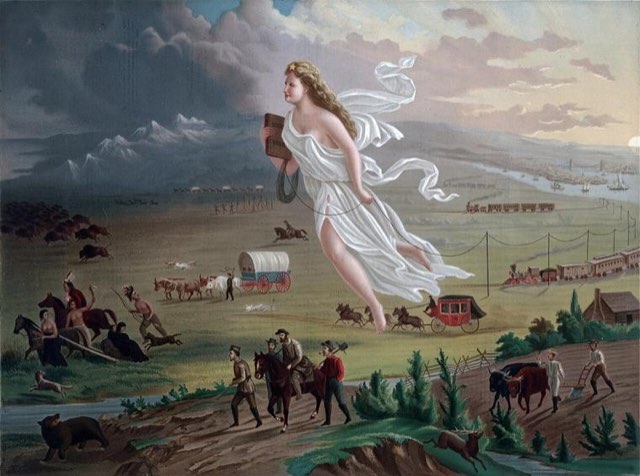
American explorers and settlers had pushed steadily westward across the North American continent since the earliest days of the Republic. In the process, they displaced many Native-American inhabitants, often through coercion and violence. After the end of the Civil War, the U.S. Government took an active role in promoting settlement of the Trans-Mississippi West and suppressing Native-American resistance through military force. In this unit, we will take a look at how Americans settled the West and examine their encounters with Native-American inhabitants across the western frontier. We will then learn that, at the end of the nineteenth century, many Americans turned their attention from the western frontier to the international frontier. A short and successful war with Spain in 1898 led to the U.S. occupation of Cuba and the Philippine Islands. The U.S. also began to flex its military might elsewhere in Latin America and across the Pacific Ocean. We will examine how America emerged as a world power by the early twentieth century and explore the parallels between western settlement and international expansion.

Developing the West: Big Government and Big Business
- Unit 6: New Frontiers, Chapter 14: Changing Landscape, Lesson 42 – Focus on the WestUniversity of California College Prep’s US History Course · watch · 1 h · no longer online
- The Gilded Age in America: The Industrial Revolution in AmericaSage American History · Henry J. Sage · read · 15 min · archived copy
Indian Wars and Cultural Genocide
- Unit 6: New Frontiers, Chapter 14: Changing Landscape, Lesson 43 – Confrontations with Native AmericansUniversity of California College Prep’s US History Course · watch · 1 h · no longer online
Ranching, Farming, and Industry
- Unit 6: New Frontiers, Chapter 14: Changing Landscape, Lesson 44—Cattle, Frontiers, and FarmingUniversity of California College Prep’s US History Course · watch · no longer online
Ethnic and Racial Tensions in the West
- Chinese Immigration: the Social, Moral, and Political Effects of Chinese ImmigrationMaking of America · Proceedings of the California Senate · read · 1 h
End of an Era
- Unit 6: New Frontiers, Chapter 14: Changing Landscape, Lesson 45—End of the FrontierUniversity of California College Prep’s US History Course · watch · 1 h · no longer online
- Chapter 1: The Significance of the Frontier in American HistoryThe University of Virginia, Department of English · Michael W. Kidd’s version of Frederick Jackson Turner’s The Frontier in American History · read · 1 h
American Imperialism
- The Spanish-American War and American ImperialismYouTube · The Saylor Foundation · watch · 15 min
The Spanish-American War
- Unit 6: New Frontiers, Chapter 18: Imperialism, Lesson 54—McKinley and RooseveltUniversity of California College Prep’s US History Course · watch · 1 h · no longer online
- Growth and TransformationAmerica.gov’s Outline of American History · Chapter 8 · read · 20 min
The Philippine Occupation
- Platform of the American Anti-Imperialist LeagueFordham University’s Modern History Sourcebook · Paul Halsall’s version of the American Anti-Imperialist League · read · 20 min
Theodore Roosevelt and American Internationalism
- Theodore Roosevelt and the Modern PresidencyClassic Liberal · Thomas E. Woods’ · read · 1 h · archived copy
- Expanding FrontiersThe Saylor Foundation · write · 1 h
Chapter IV
Political and Social Reform Movements
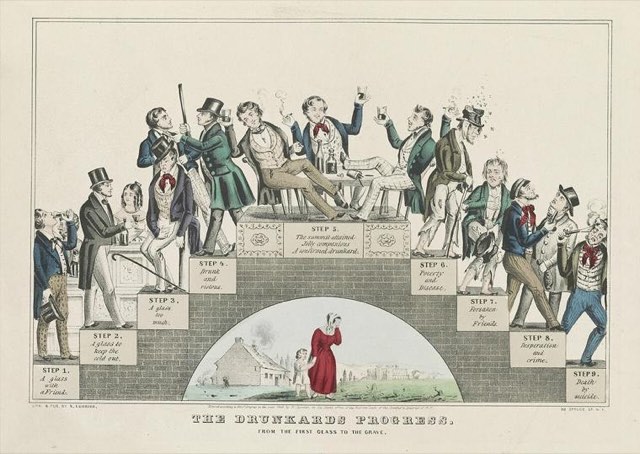
The 1890s and early 1900s witnessed a profound social and political reaction to the Gilded Age, the period between the early 1870s and late 1890s, characterized by its excesses and corruption. In the Midwest, farmers and workers organized political movements to reign in the power of corrupt corporations that dominated local economies and controlled access to credit and transportation resources. Populists demanded greater political democracy and increased access to economic resources for poor and middle-class Americans. In American cities, middle-class reformers organized political movements to address crime, pollution, urban decay, and other unintended consequences of industrialization. The Progressives also tried to “Americanize” immigrants and promote responsible, middle-class lifestyles by organizing settlement houses for immigrants and campaigning against alcohol consumption. We will examine how both of these political and social movements reformed the structure of American democracy and altered the character and appearance of American cities at the turn of the twentieth century.

The Populist Movement
- The Populist and Progressive Reform MovementsYouTube · The Saylor Foundation · watch · 25 min
Origins: Agrarian Discontent
- Unit 7: Isolationist to World Power, Chapter 17: Reform, Lesson 51—Agrarian RevoltUniversity of California College Prep’s US History Course · watch · 15 min · no longer online
Political, Economic, and Social Objectives
- Politics in the Gilded AgeSage American History · Henry J. Sage · read · 15 min
- Chapter XV: Presidential Election of 1892Making of America · Davis Rich Dewey’s National Problems, 1885 -1897 · read · 45 min
- Chapters XXV-XXVIIIMaking of America · Henry Clews’ The Wall Street Point of View · read · 2 h
Regional and National Impact
- Unit 7: Isolationist to World Power, Chapter 17: Reform, Lesson 51—Agrarian RevoltUniversity of California College Prep’s US History Course · watch · 1 h · no longer online
- Chapter XVI, Maintenance of the Gold Standard (1893 -1896), and Chapter XX, Campaign for Free Coinage (1896)Making of America · Davis Rich Dewey’s National Problems, 1885 -1897 · read · 1 h
Origins: Educated, Middle-Class Reformers
- Unit 7: Isolationist to World Power, Chapter 17: Reform, Lesson 52—The Progressive ImpulseUniversity of California College Prep’s US History Course · watch · 25 min · archived copy
- Biography of Edward BellamyMarxists Internet Archives’ · read · 5 min
- Chapter 1 and Chapter 5University of Virginia’s Looking Backward · read · 45 min · archived copy
Evolution of the Progressive Movement
- Unit 7: Isolationist to World Power, Chapter 17: Reform, Lesson 52—The Progressive ImpulseUniversity of California College Prep’s US History Course · watch · 15 min · archived copy
Progressive Objectives: “Muckrakers” and “Trust-Busters” and “Suffragists”
- Unit 7: Isolationist to World Power, Chapter 17: Reform, Lesson 52—The Progressive ImpulseUniversity of California College Prep’s US History Course · watch · 45 min · archived copy
National Progressivism
- Unit 7: Isolationist to World Power, Chapter 17: Reform, Lesson 53—The Progressive PresidentsUniversity of California College Prep’s US History Course · watch · no longer online
- The Woman of ThirtyFordham University’s Modern History Sourcebook · Paul Halsall’s version of The New York Times’ · read · 20 min
The City Beautiful
- The City Beautiful Movement, The 1901 Plan for Washington D.C., and Washington, D.C. and BeyondUniversity of Virginia American Studies Program · Julie K. Rose’s The City Beautiful · The 1901 Plan for Washington, D.C. · read · 30 min · archived copy
- Political and Social Reform MovementsThe Saylor Foundation · write · 1 h
Chapter V
World War I and the 1920s
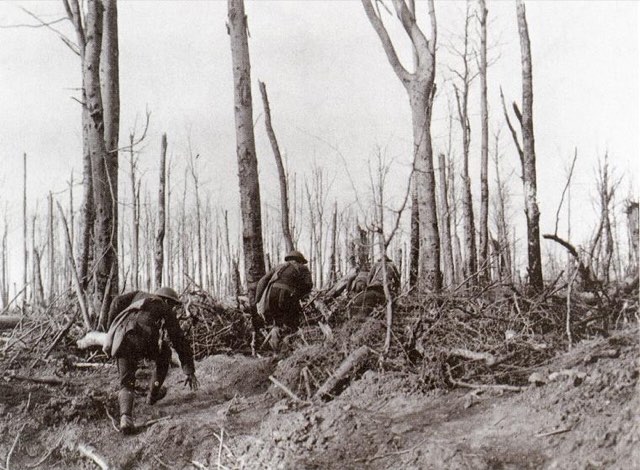
When the nations of Europe declared war on each other in the summer of 1914, few observers expected the conflict to last more than a few months. President Woodrow Wilson declared American neutrality and attempted to keep the nation isolated from the violent conflict. As the war gradually expanded throughout much of the world, both sides suffered millions of casualties. Wilson continued to champion American neutrality and won reelection in 1916 on an anti-war platform, but less than a year later, German attacks on American shipping convinced him to declare war on the Central Powers. Fresh American soldiers joined weary English and French troops along the Western Front and eventually forced Germany to declare an armistice on November 11, 1918. In this unit, we will discuss how the war affected the United States and examine why Woodrow Wilson’s plans for a League of Nations failed to receive Congressional approval. In the decade following this war, many Americans feared foreign influences that could, in their view, undermine the American way of life, and this period witnessed a “Red Scare,” a resurgence of nativism and race riots. We will also examine how Americans lived, worked, and played during this decade of economic and technological abundance.

Origins of the Conflict
- The Coming of the Great WarYouTube · Open Yale Courses · HIST 202 · Professor John Merriman · watch · 1 h
American Neutrality
- Unit 8: The U.S. at War, Chapter 19: World War One and the Roaring 20s, Lesson 56—US Entry into WWIUniversity of California College Prep’s US History Course · watch · 45 min · archived copy
Declaring War: Making the World “Safe for Democracy”
- Unit 8: The U.S. at War, Chapter 19: World War One and the Roaring 20s, Lesson 56—US Entry into WWIUniversity of California College Prep’s US History Course · watch · 45 min · archived copy
- War Message to CongressBrigham Young University Library’s The World War I Document Archive · Woodrow Wilson · read · 30 min
The War in Europe
- War in the TrenchesYouTube · Open Yale Courses · HIST 202 · Professor John Merriman · watch · 1 h
- Fighting at Home and Abroad and Theodore Roosevelt’s Address to the Circle for Negro War ReliefUnited States Library of Congress · African American Odyssey · read · 30 min · archived copy
The Home Front
- Handbook of War Facts and Peace ProblemsBrigham Young University Library’s The World War I Document Archive · Arthur L. Frothingham · read · 45 min · archived copy
- America and World War ISage American History · Henry J. Sage · read · 15 min · archived copy
Failure at Versailles
- World War I’s Domestic LegacyYouTube · The Saylor Foundation · watch · 20 min
The Versailles Negotiations
- Unit 8: The U.S. at War, Chapter 19: World War One and the Roaring 20s, Lesson 57—Peace ConferencesUniversity of California College Prep’s US History Course · watch · 30 min · no longer online
The Versailles Treaty
- Unit 8: The U.S. at War, Chapter 19: World War One and the Roaring 20s, Lesson 57—Peace ConferencesUniversity of California College Prep’s US History Course · watch · 30 min · no longer online
Wilson’s Agenda Fails
- Unit 8: The U.S. at War, Chapter 19: World War One and the Roaring 20s, Lesson 57—Peace ConferencesUniversity of California College Prep’s US History Course · watch · 30 min · no longer online
Prelude to Future Conflict
- FascistsYouTube · Open Yale Courses · HIST 202 · Professor John Merriman · watch · 1 h
The “Roaring Twenties”
- American Society in the 1920sYouTube · The Saylor Foundation · watch · 25 min
The Red Scare and Labor Turmoil
- Unit 8: The U.S. at War, Chapter 19: World War One and the Roaring 20s, Lesson 58—Social TensionsUniversity of California College Prep’s US History Course · watch · 20 min · no longer online
Political Conservatism—Republican Domination
- The Roaring TwentiesSage American History · Henry J. Sage · read · 30 min · no longer online
- Unit 8: The U.S. at War, Chapter 19: World War One and the Roaring 20s, Lesson 58—Social TensionsUniversity of California College Prep’s US History Course · watch · 25 min · no longer online
Social and Cultural Tensions: Race, Ethnicity, and Religion
- Unit 8: The U.S. at War, Chapter 19: World War One and the Roaring 20s, Lesson 58—Social TensionsUniversity of California College Prep’s US History Course · watch · no longer online
Mass Production and Mass Consumption
- The Great Gatsby and the Roaring Twenties, Pt. 1 and The Great Gatsby and the Roaring Twenties, Pt. 2YouTube · TheEnglishfaculty.org · University of Leeds · Andrew Warnes’ · watch · 20 min
- Henry Ford and the Advent of Mass ProductionMIT Open Course Ware · Science, Technology, and Society · read · 10 min
Mass Culture
- Unit 8: The U.S. at War, Chapter 19: World War One and the Roaring 20s, Lesson 58—Social TensionsUniversity of California College Prep’s US History Course · watch · 50 min · no longer online
- The Flapper and Going to the MoviesLearn NC · read · 45 min · archived copy
Minority Cultural Expressions: The Great Migration and the Harlem Renaissance
- The Harlem Renaissance and the Flowering of CreativityThe Library of Congress’s African American Odyssey · read · 15 min · archived copy
- World War I and the 1920sThe Saylor Foundation · write · 2 h
Chapter VI
The Great Depression and World War II
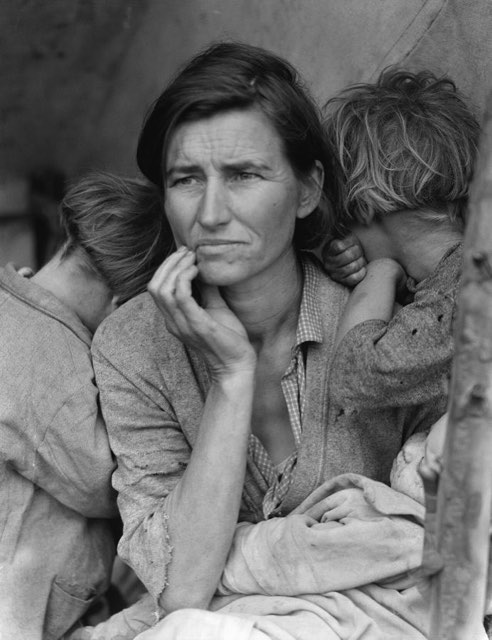
A stock market crash that began in September of 1929 and continued through November signaled the end of the Roaring Twenties. Falling stock prices throughout the world triggered an economic panic that rippled throughout the entire U.S. economy. While only a small percentage of Americans owned stocks, commercial banks with large stock investments failed and soon pulled down other financial institutions, as investors rushed to withdraw their money from failing banks, which in turn led to further bank failures. Unemployment rates rose as worldwide consumption of manufactured goods fell and many companies laid off workers or went out of business. This stock market crash was the final devastating blow to an economy already weakened by stagnating business profits and wages. President Herbert Hoover tried to reassure the nation but refused to take drastic measures to prop up the U.S. economy and end the Great Depression. Hoover lost the 1932 presidential election to Democrat Franklin Roosevelt who promised through his “New Deal” to use every means available to put Americans back to work and end the Great Depression.

The Great Depression
- Origins of the Great DepressionYouTube · The Saylor Foundation · watch · 20 min
Economic and Political Origins
- Unit 8: The U.S. at War, Chapter 20: Great Depression, Lesson 59—Causes and ConsequencesUniversity of California College Prep’s US History Course · watch · no longer online
- The Crash of 1929 and the DepressionSage American History · Henry J. Sage · read · 20 min · archived copy
Government Indecision
- Herbert Hoover, Father of the New DealCato Institute · Steven Horwitz · read · 40 min
The Downward Spiral
- The Depression and New Deal Years, 1929 -1939Sage American History · Henry J. Sage · read · 10 min · no longer online
- Herbert Hoover and the Great Depression and The Bonus ArmyLearn NC · read · 30 min · archived copy
Roosevelt and the New Deal
- The First and Second New DealsYouTube · The Saylor Foundation · watch · 25 min
“Happy Days Are Here Again”: The Election of 1932
- Unit 8: The U.S. at War, Chapter 20: Great Depression, Lesson 60—The New DealUniversity of California College Prep’s US History Course · watch · 45 min · no longer online
- Address at the Democratic National ConventionGerhard Peters and John T. Woolley’s The American Presidency Project · Franklin D. Roosevelt · read · 50 min
The First New Deal (1933-1935)
- Unit 8: The U.S. at War, Chapter 20: Great Depression, Lesson 60—The New DealUniversity of California College Prep’s US History Course · watch · 50 min · no longer online
- The Depression and New Deal Years, 1929 -1939Sage American History · Henry J. Sage · read · 20 min · no longer online
- The Banking Crisis and The Economics of Recovery and ReformLearn NC · watch · 30 min · archived copy
- Voices from the Dust BowlThe Library of Congress’s Charles L. Todd and Robert Sonkin Migrant Worker Collection · watch · 20 min · archived copy
The Second New Deal (1935-1937)
- The Depression and New Deal Years, 1929 -1939Sage American History · Henry J. Sage · read · 30 min · no longer online
- Relief, Recovery and ReformLearn NC · read · 30 min · archived copy
The New Deal’s Legacy
- Unit 8: The U.S. at War, Chapter 20: Great Depression, Lesson 60—The New DealUniversity of California College Prep’s US History Course · watch · no longer online
The Rise of Totalitarianism Abroad
- World War II and the United StatesYouTube · The Saylor Foundation · watch · 25 min
- US History Overview 3—WWII to VietnamYouTube · Khan Academy · watch · 15 min
Domestic Responses to Foreign Militarism in the 1930s
- Unit 8: The U.S. at War, Chapter 21: World War II, Lesson 61 - The Failures of DiplomacyUniversity of California College Prep’s US History Course · watch · 1 h · no longer online
American Isolationism and the Pending Global Conflict
- Unit 8: The U.S. at War, Chapter 21: World War II, Lesson 61—The Failures of DiplomacyUniversity of California College Prep’s US History Course · watch · no longer online
- Address to the America First CommitteeThe Public Broadcasting Service and WGBH Boston’s The American Experience · Lindbergh · Charles Lindbergh · read · 30 min
America Enters the Global Conflict
- Unit 8: The U.S. at War, Chapter 21: World War II, Lesson 62—The Second World WarUniversity of California College Prep’s US History Course · watch · 2 h · archived copy
The Home Front
- Unit 8: The U.S. at War, Chapter 21: World War II, Lesson 63 - The Home FrontUniversity of California College Prep’s US History Course · watch · 1 h · no longer online
- The United States in World War IISage American History · Henry J. Sage · read · 15 min
- World War II Home Front on Puget SoundHistoryLink.org · James R. Warren · read · 30 min
- Japanese-American InternmentYouTube · United States Government · watch · 10 min
The War Abroad
- Unit 8: The U.S. at War, Chapter 21: World War II, Lesson 64—Wartime DiplomacyUniversity of California College Prep’s US History Course · watch · 1 h · no longer online
- Important Battles of World War II: the Pacific TheaterSage American History · Henry J. Sage · read · 45 min · archived copy
- Important Battles of World War II: the European TheaterSage American History · Henry J. Sage · read · 15 min · archived copy
- The United States in World War II (continued)Sage American History · Henry J. Sage · read · 15 min
Forging a New World Order
- The U.S. and the Postwar WorldYouTube · The Saylor Foundation · watch · 25 min
- Unit 8: The U.S. at War, Chapter 21: World War II, Lesson 64—Wartime DiplomacyUniversity of California College Prep’s US History Course · watch · no longer online
- The United States in World War IISage American History · Henry J. Sage · read · 10 min
- The Great Depression and World War IIThe Saylor Foundation · write · 1 h
Chapter VII
The Cold War
The economic destruction and loss of life caused by World War II devastated Great Britain, Germany, France, and much of Eastern Europe and Asia. Only the democratic United States and the totalitarian Soviet Union emerged from the war as strong international superpowers. Mutual distrust, fear, and hostility in both nations led to decades of military, economic, and political conflict throughout the globe. Both nations possessed powerful military arsenals and could not take one another on directly without fear of mutual destruction. Instead, they engaged in indirect conflicts as the Soviet Union tried to support Communist revolutionaries in many developing nations and the U.S. tried to keep anti-communist forces in control of these countries.
Defending the “Free World”
- Cold War AmericaYouTube · The Saylor Foundation · watch · 30 min
Postwar America
- Unit 9: The Cold War, Chapter 22: HST and IKE, Lesson 65—End of WarUniversity of California College Prep’s US History Course · watch · 1 h · no longer online
The Marshall Plan and the Truman Doctrine
- Unit 9: The Cold War, Chapter 22: HST and IKE, Lesson 66—ContainmentUniversity of California College Prep’s US History Course · watch · 50 min · no longer online
- The Truman DoctrineYale Law School · Lillian Goldman Law Library’s version of · read · 25 min
Containment of Communism
- Unit 9: The Cold War, Chapter 22: HST and IKE, Lesson 66—ContainmentUniversity of California College Prep’s US History Course · watch · 45 min · no longer online
The Cold War Goes Nuclear
- Origins of the Cold War (1946 -1950)Authentichistory.com · read · 30 min
- Postwar World, The Debate, and The Development of the Hydrogen BombLos Alamos National Laboratory’s A History of National Security · read · 30 min
- Radio News Report: The Execution of the RosenbergsAuthentichistory.com · watch · 3 min · archived copy
The Korean War
- Unit 9: The Cold War, Chapter 22: HST and IKE, Lesson 67—Conflict in AsiaUniversity of California College Prep’s US History Course · watch · 1 h · no longer online
- America and the Cold War: The Truman, Eisenhower, and Kennedy YearsSage American History · Henry J. Sage · read · 15 min
- Korean War OverviewYouTube · Khan Academy · watch · 20 min
World’s Policeman
- Message to Congress January 5, 1957Dwight D. Eisenhower · read · 20 min
- America and the Cold War: The Truman, Eisenhower, and Kennedy YearsSage American History · Henry J. Sage · read · 30 min
Postwar Red Scare
- Unit 9: The Cold War, Chapter 22: HST and IKE, Lesson 68—Red Scare—AgainUniversity of California College Prep’s US History Course · watch · 25 min · no longer online
Exposing “Un-American” Activities
- Unit 9: The Cold War, Chapter 22: HST and IKE, Lesson 68—Red Scare—AgainUniversity of California College Prep’s US History Course · watch · 25 min · no longer online
McCarthyism
- Unit 9: The Cold War, Chapter 22: HST and IKE, Lesson 68—Red Scare—AgainUniversity of California College Prep’s US History Course · watch · 20 min
The 1950s: Cold War Conformity
- 1950s AmericaYouTube · The Saylor Foundation · watch · 25 min
Birth of the “Baby Boom” Generation
- Unit 10: Turbulent Decades, Chapter 25: Rock and Roll Is Here to Stay, Lesson 73—Baby BoomUniversity of California College Prep’s US History Course · watch · 1 h · archived copy
- In the Suburbs (1957)YouTube · Archive.org · watch · 25 min
Dwight D. Eisenhower and American Foreign Policy in the 1950s
- Unit 9: The Cold War, Chapter 23: Eisenhower, Lesson 70—Foreign PolicyUniversity of California College Prep’s US History Course · watch · 1 h · no longer online
Eisenhower’s America
- Unit 9: The Cold War, Chapter 23: Eisenhower, Lesson 69—Internal Improvements Presentation and Unit 10: Turbulent Decades, Chapter 25: Rock and Roll Is Here to Stay, Lesson 74—Material CultureUniversity of California College Prep’s US History Course · watch · 2 h · no longer online
- The Cold WarThe Saylor Foundation · write · 1 h
Chapter VIII
The Civil Rights Movement
Reconstruction offered African-Americans a chance to participate in the American political process and exercise their civil rights, but this opportunity was short-lived in many southern states. Once Reconstruction ended in 1877, African-Americans faced harassment, violence, and intimidation at the polling booth. Jim Crow laws segregated African-Americans from white society and denied them equal rights and protections. Lynch mobs killed blacks that challenged white rule. African-American leaders in the North organized political campaigns to challenge segregation and discrimination and expose lynch-mob justice. By the end of the Second World War, this burgeoning civil rights movement began to have an impact on American society. In 1954, the U.S. Supreme Court overturned the “separate but equal” doctrine from the 1896 Plessy v. Ferguson decision in the landmark Brown v. Board decision. This decision spurred civil rights organizers to push for voter rights legislation and challenge racist southern political leaders who refused to integrate public facilities.
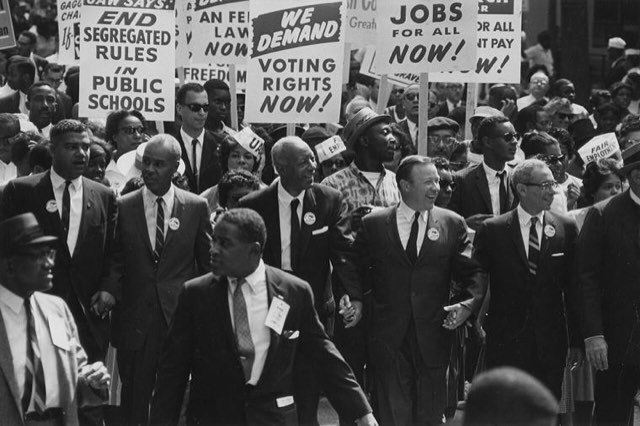

The Formation of a Mass Movement
- The Roots of the Modern Civil Rights MovementYouTube · The Saylor Foundation · watch · 34 min
Brown v. Board of Education
- Unit 10: Turbulent Decades, Chapter 24: Civil Rights Movement, Lesson 71—Challenging Jim CrowUniversity of California College Prep’s US History Course · watch · 25 min · no longer online
- Majority Opinion, Brown v. Board of Education of Topeka, Kansas, 1954Chief Justice Earl Warren · read · 20 min
Montgomery and Grassroots Protests
- Unit 10: Turbulent Decades, Chapter 24: Civil Rights Movement, Lesson 71—Challenging Jim CrowUniversity of California College Prep’s US History Course · watch · 25 min · no longer online
Youth Revolt: Freedom Rides
- Freedom Riders end Racial Segregation in Southern U.S. Public Transit, 1961Swarthmore College · Global Nonviolent Action Database · read · 30 min
Birmingham and Martin Luther King
- African Americans Campaign for Equal Accommodations, Birmingham, Alabama, USA, 1963Swarthmore College · Global Nonviolent Action Database · read · 20 min
The March on Washington
- Unit 10: Turbulent Decades, Chapter 24: Civil Rights Movement, Lesson 71—Challenging Jim CrowUniversity of California College Prep’s US History Course · watch · 30 min · no longer online
The 1964 Civil Rights Act and the 1965 Voting Rights Act
- Unit 10: Turbulent Decades, Chapter 24: Civil Rights Movement, Lesson 72—Consequences of the Civil Rights MovementUniversity of California College Prep’s US History Course · watch · 25 min · no longer online
Radical Separatism and the Fragmentation of the Civil Rights Movement
- The Civil Rights Movement: Integration and SegregationYouTube · The Saylor Foundation · watch · 30 min
The Black Power Movement
- Unit 10: Turbulent Decades, Chapter 24: Civil Rights Movement, Lesson 72—Consequences of the Civil Rights MovementUniversity of California College Prep’s US History Course · watch · 25 min · no longer online
- Activism ChoicesUniversity of Notre Dame, OpenCourseWare · African American History II · Richard B. Pierce · read · 25 min · archived copy
- Malcolm X Explains Black NationalismYouTube · Malcolm X · watch · 5 min · no longer online
White Backlash
- The ‘Frustrated Hawks’, Tet 1968, and the Transformation of American PoliticsEuropean Journal of American Studies · Patrick Hagopian · read · 15 min
Keeping the Dream Alive
- Clayborne Carson’s African American History: The Modern Freedom StruggleiTunes U · Stanford University · watch · 1 h · archived copy
Women’s Rights
- The Women’s MovementLearn NC · L. Maren Wood · read · 30 min · archived copy
Gay Rights
- The Gay SixtiesUS Intellectual History · Andrew Hartman · read · 30 min
Latino and Native-American Rights
- A Day without ImmigrantsEuropean Journal of American Studies · Benita Heiskanen · read · 45 min
- The Chicano Movement: Dead or Alive?Connexions · José Ángel Gutiérrez · read · 30 min
- Fort Lawton Military Police Clash with Native American and other Protesters in the Future Discovery Park on March 8, 1970HistoryLink.org · Patrick McRoberts and Kit Oldham · read · 15 min
- American Indian MovementLeonard Peltier Defense Offense Committee · read · 30 min · archived copy
Chapter IX
The Vietnam Era
During the 1950s and 1960s, many American officials firmly believed in the Domino Theory, which held that a Communist revolution in one nation would eventually lead to Communist revolutions in surrounding countries, meaning that an entire region would fall to the Soviet Union like a row of dominos. Guided by this theory, the U.S. government sent troops to South Vietnam, a small Southeast Asian nation involved in a guerrilla war with North Vietnam, its Communist neighbor. Direct U.S. military involvement in Vietnam began when President Dwight Eisenhower sent small numbers of military advisors to aid the South Vietnamese military in the 1950s. By the mid-1960s, President Lyndon Johnson made the decision to escalate America’s involvement in this conflict and sent a large number of U.S. combat troops to the area. Between 1965 and 1973, American troops engaged in a bloody jungle war against Viet Cong guerillas and North Vietnamese Army troops across much of South Vietnam as well as in the neighboring countries of Laos and Cambodia. We will now examine how the U.S. became involved in the Vietnam War and why the country finally chose to withdraw troops in 1972. We will also look at the impact of the war on American society and examine the activities of the vocal Anti-War Movement that developed in the United States during the conflict. Our study of the Vietnam Era will show that the war had a profound and lasting effect on the United States.
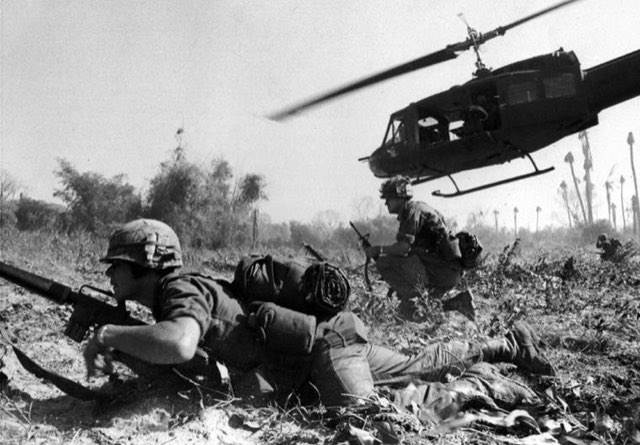

Kennedy: Cold Warrior
- The Vietnam Era: International ImpactYouTube · The Saylor Foundation · watch · 35 min
Foreign Policy
- Unit 11: Toward a New Century, Chapter 26: Imperial Presidency, Lesson 75—JFKUniversity of California College Prep’s US History Course · watch · 1 h · archived copy
The Bay of Pigs and the Cuban Missile Crisis
- Bay of Pigs InvasionYouTube · Khan Academy · watch · 15 min
- Cuban Missile CrisisYouTube · Khan Academy · watch · 30 min
- The Kennedy YearsSage American History · Henry J. Sage · read · 10 min
Vietnam
- Cold War in Asia: The American Experience in VietnamSage American History · Henry J. Sage · read · 25 min · archived copy
- Vietnam WarYouTube · Khan Academy · watch · 30 min
Johnson’s Domestic Agenda
- Unit 11: Toward a New Century, Chapter 26: Imperial Presidency, Lesson 76—LBJUniversity of California College Prep’s US History Course · watch · 1 h · archived copy
American Intervention in Vietnam
- Cold War in Asia: The American Experience in VietnamSage American History · Henry J. Sage · read · 15 min · archived copy
- Message to CongressAshbook Center for Public Affairs at Ashland University’s TeachingAmericanHistory.org · Lyndon Johnson · read · 15 min · archived copy
- Pattern of US Cold War InterventionsYouTube · Khan Academy · watch · 15 min
The Fighting on the Ground
- Something He Couldn’t Write About: Telling My Daddy’s Story of Vietnam and A Soldier’s Experience in Vietnam: Herbert RhodesLearn NC · Sharon Raynor · read · 1 h · archived copy
Military Stalemate and the War at Home
- The Vietnam Era: Domestic ImpactYouTube · The Saylor Foundation · watch · 30 min
The Tet Offensive
- 1968 Revolution Rewind Moment – Tet OffensiveArchive.org · watch · 5 min · no longer online
The Counterculture and the Anti-War Movement
- Unit 11: Toward a New Century, Chapter 26: Imperial Presidency, Lesson 76—LBJUniversity of California College Prep’s US History Course · watch · 25 min · archived copy
1968: A Year of Chaos
- The ‘Frustrated Hawks’, Tet 1968, and the Transformation of American PoliticsEuropean Journal of American Studies · Patrick Hagopian · read · 30 min
Election
- Unit 11: Toward a New Century, Chapter 26: Imperial Presidency, Lesson 77—Nixon and Foreign PolicyUniversity of California College Prep’s US History Course · watch · 30 min · archived copy
Expansion of the War and Withdrawal
- Unit 11: Toward a New Century, Chapter 26: Imperial Presidency, Lesson 77—Nixon and Foreign Policy Presentation University of California College Prep’s US History Course: Unit 11: Toward a New Century, Chapter 26: Imperial Presidency, Lesson 77—Nixon and Foreign Policy Presentation (Flash)University of California College Prep’s US History Course · watch · 30 min · archived copy
Fall of South Vietnam and the War’s Toll
- Fall of Saigon to Communists Troops Marks the End of the Vietnam War on April 30, 1975Historylink.org · David Wilma · read · 15 min
The 1970s
- The 1970s: An Age of CrisisYouTube · The Saylor Foundation · watch · 40 min
Nixon and American International Relations
- Unit 11: Toward a New Century, Chapter 26: Imperial Presidency, Lesson 77—Nixon and Foreign PolicyUniversity of California College Prep’s US History Course · watch · 20 min · archived copy
Nixon’s Domestic Agenda and the Watergate Scandal
- Unit 11: Toward a New Century, Chapter 26: Imperial Presidency, Lesson 78—Nixon and Domestic IssuesUniversity of California College Prep’s US History Course · watch · 1 h · archived copy
- Watergate Scandal TimelineAuthentic History · read · 30 min · archived copy
Gerald Fords Presidency
- Unit 11: Toward a New Century, Chapter 26: Imperial Presidency, Lesson 79—Ford, Carter, and ReaganUniversity of California College Prep’s US History Course · watch · 20 min · archived copy
- The Civil Rights Movement and the Vietnam EraThe Saylor Foundation · write · 1 h
Chapter X
The Conservative Ascendancy - The “Reagan Revolution”
America’s defeat in the Vietnam War and Richard Nixon’s resignation due to the Watergate Scandal plunged the nation into a period of popular discontent with political institution and leaders. Gerald Ford, Nixon’s Republican successor, did little to alleviate this discontent and voters elected Southern Democrat Jimmy Carter to replace him in 1976. Carter won voters with his folksy personality and his “outside the Beltway” credentials, but his popularity faded as an oil crisis, economic stagnation, and rampant inflation plunged the nation into an economic recession. In 1980, frustrated voters elected Ronald Reagan, the former Governor of California, president. Reagan’s optimism and his moderate-conservative political views appealed to many Americans. Reagan also promoted an aggressive foreign agenda and called for renewed U.S. military strength in the ongoing Cold War with the Soviets. Under Reagan’s administration, the U.S. economy improved and his firm stance with the Soviet Union led to unexpected diplomatic opportunities. * In this unit, we will evaluate the Carter and Reagan years and examine Reagan’s economic and political legacy. We will also look at the role his policies may have played in the bringing about the downfall of the Soviet Union in 1991.
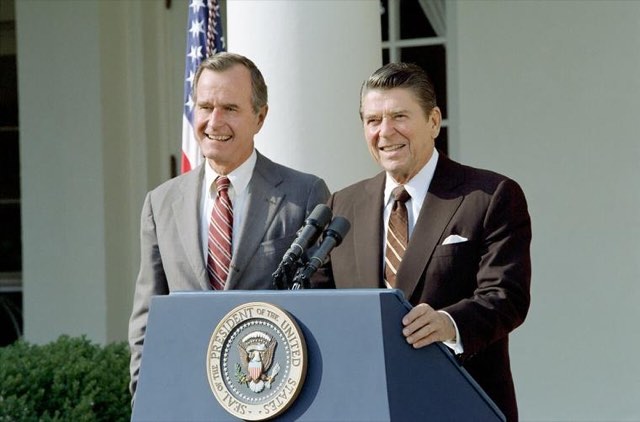

Economic Crisis at Home
- Unit 11: Toward a New Century, Chapter 26: Imperial Presidency, Lesson 79—Ford, Carter, and ReaganUniversity of California College Prep’s US History Course · watch · 30 min · archived copy
Diplomatic Crisis Abroad
- Beyond Watergate: The Ford, Carter, Reagan, Bush, and Clinton Years, America 1974 - 2001Sage American History · Henry J. Sage · read · 15 min
The Reagan Revolution
- The 1980s: The Reagan EraYouTube · The Saylor Foundation · watch · 35 min
Rebirth of American Conservatism
- Unit 11: Toward a New Century, Chapter 26: Imperial Presidency, Lesson 79—Ford, Carter, and ReaganUniversity of California College Prep’s US History Course · watch · 30 min · archived copy
Reagan: Domestic Policies
- Beyond Watergate: The Ford, Carter, Reagan, Bush, and Clinton Years, America 1974 - 2001Sage American History · Henry J. Sage · read · 15 min
Reagan: International Agenda
- The Rebellion of Ronald Reagan: A History of the End of the Cold WarPlayer.FM · New Books in Foreign Policy · James Mann · watch · 1 h
- Tear Down this Wall SpeechThe History Place · Ronald Reagan · read · 15 min
The Reagan Legacy
- Don’t Credit Reagan for Ending the Cold WarForeign Policy in Focus · Stephen Zunes’ · read · 15 min · archived copy
- The Conservative AscendancyThe Saylor Foundation · write · 1 h
Chapter XI
New World Disorder
Our final unit will evaluate trends in U.S. history during the 1990s and early 2000s. Following the collapse of the Soviet Union, the United States no longer had a powerful international adversary. Instead, America provided support for the reconstruction and reunification of Germany and much of Eastern Europe. With NATO and European Union allies, U.S. forces assisted with military and humanitarian efforts in the former Yugoslavian republics and Somalia. At home, economic prosperity pushed the stock market to new levels and some Americans began to speak of permanent economic prosperity. At the same time, warning signs of a growing threat from Islamist extremists began to appear abroad. Embassy bombings and attacks on U.S. forces in the late 1990s preceded the 9-11 terrorist attacks in which Al Qaeda targeted New York City and Washington, DC. These attacks resulted in the U.S. engaging in long military struggles in Afghanistan (beginning in 2001) and Iraq (beginning in 2003). By late 2008, the economic bubble that had been growing since early 2002 finally burst, plunging the U.S. stock market into the worst circumstances since the Great Depression and initiating a steep economic decline. In response to these problems, voters elected Barack Obama president based on his message of change and renewal. We will examine these contemporary political, economic, and social trends within the context of the past century of American history.
The 1990s
- The Walls Fall: The US in the Post-Cold War WorldYouTube · The Saylor Foundation · watch · 35 min
George H.W. Bush
- Unit 11: Toward a New Century, Chapter 26: Imperial Presidency, Lesson 80—Moving into a New MillenniumUniversity of California College Prep’s US History Course · watch · 30 min · archived copy
Bill Clinton
- Unit 11: Toward a New Century, Chapter 26: Imperial Presidency, Lesson 80—Moving into a New MillenniumUniversity of California College Prep’s US History Course · watch · 30 min · archived copy
- Beyond Watergate: The Ford, Carter, Reagan, Bush, and Clinton Years, America 1974 - 2001Sage American History · Henry J. Sage · read · 20 min
The Election of 2000
- The Voting Wars: From Florida 2000 to the Next Election MeltdownUniversity of California Irvine · Richard Hasen · watch · 50 min · no longer online
George W. Bush
- Unit 11: Toward a New Century, Chapter 26: Imperial Presidency, Lesson 80—Moving into a New MillenniumUniversity of California College Prep’s US History Course · watch · 30 min · archived copy
- Beyond Watergate: The Ford, Carter, Reagan, Bush, and Clinton Years, America 1974 - 2001Sage American History · Henry J. Sage · read · 10 min
9-11 and the War on Terror
- The September 11 Attacks and AftermathAuthentic History · watch · 30 min · archived copy
A Changing Society
- Unit 11: Toward a New Century, Chapter 26: Imperial Presidency, Lesson 80—Moving into a New MillenniumUniversity of California College Prep’s US History Course · watch · 25 min · archived copy
A Great Recession
- A Critical Analysis of the US Causes of the Global Financial Crisis of 2007-2008Political Affairs · Ross Morrow · read · 45 min · archived copy
- What Made the Financial Crisis Systemic?Cato Institute · Patric Hendershott and Kevin Villani · read · 1 h
The Election of Barack Obama
- Unchaining History: Barack Obama Elected President of the United StatesDemocracy Now · watch · 25 min
- New World DisorderThe Saylor Foundation · write · 1 h
About this course
This course is Saylor Academy's HIST212, Introduction to United States History: Reconstruction to the Present, one of the complete university courses the Saylor Foundation made free from 2008 and retired in 2015. Saylor licensed its course text under CC BY 3.0; the original is on GitHub. Here it is laid out as chapters, links that have died go to an archived copy from the Internet Archive where one exists, assessments that needed a Saylor login are left out, and people and works are linked to Kulturbase. The readings and lectures belong to their publishers and are linked, not copied. Pictures: Wikimedia Commons, credited under each picture.
All Saylor courses · Free culture courses · The Chautauqua Reading Course