History · Saylor HIST221
Colonial Latin and South America
This course will introduce you to the history of Latin and South America from the year in which European explorers first discovered and began to colonize the region to the early 19th century, when many Latin and South American colonies declared their independence from European rule. You will learn about the major political, economic, and social changes that took place throughout Latin and South America during this 400-year period.
More about this course
The course will be structured chronologically. Each unit will include representative primary-source documents that illustrate important overarching political, economic, and social themes, such as the conquest of native peoples by European explorers, colonial settlement patterns and trade networks, social and cultural exchanges between native peoples and Europeans, and the emergence of independence movements across Latin and South America at the end of the 18th century. By the end of the course, you will understand how the interaction between native peoples and European settlers created diverse and complex colonial societies throughout Latin and South America, and why the colonies of the region eventually declared their independence from European political control.
Upon successful completion of this course, student will be able to:
In order to take this course, you must:
Chapter I
The Atlantic World in the Late 15th Century
The late 15th century was a time of great political, military, and economic activity across the Iberian Peninsula, the geographical region that now encompasses the modern-day nations of Spain and Portugal. The marriage of Ferdinand of Aragon and Isabella of Castile in 1479 united the two major Spanish kingdoms of the peninsula and allowed both states to pool their resources in order to conquer the remaining Muslim strongholds in southern Spain in the early 1490s. In the kingdom of Portugal, Prince Henry the Navigator developed sophisticated navigation equipment that enabled Portuguese mariners to explore coastal Africa and establish a trade route across the Indian Ocean to the East Indies in the later 15th century. In 1492, Ferdinand and Isabella funded the Christopher Columbus’ expedition to find a western trade route to the East Indies that would cross the Atlantic Ocean. Columbus’ expedition led to the first European contact with the native peoples of the Western Hemisphere and established the kingdom of Spain’s claim to all the land in this vast, unexplored territory. In this unit, we will evaluate the political, economic, and social contexts of Iberian exploration in the Atlantic Ocean in the late 15th century and examine the civilizations that Spanish and Portuguese explorers encountered in Africa and the Americas.
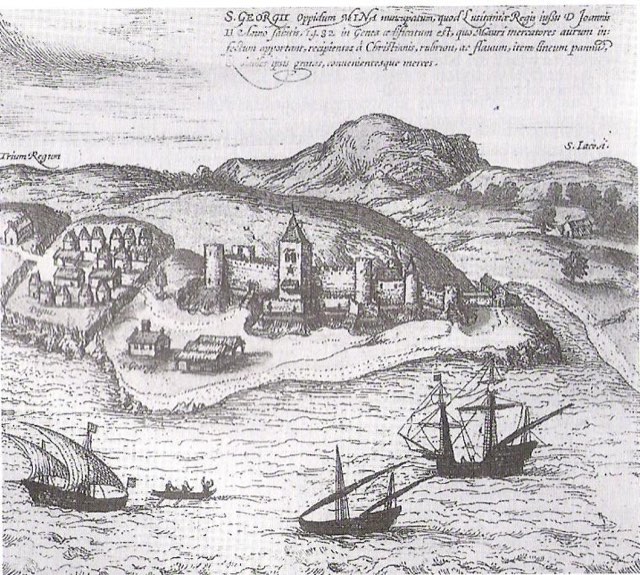

Iberia
- The Atlantic World, 1492-1600Concepcion Saenz-Camba · read
The Reconquista of Spain and Portugal
- The Spanish and Portuguese Reconquest, 1095-1492The Library of Iberian Resources Online’s version of Charles Julian Bishko · read · archived copy
Revolution in Maritime Technology
- Technical Advances in Shipbuilding and NavigationUniversity of Calgary’s Multimedia History Tutorials · watch · archived copy
Movements West
- The Age of DiscoveryDr. Steven Kreis’s The History Guide · Lectures on Early Modern European History · read · archived copy
- Christopher ColumbusUC College Prep · watch · archived copy
- Letter to the King and Queen of SpainFordham University’s Internet Medieval Sourcebook · Paul Halsall’s version of Christopher Columbus’ · read
- Study Questions: Christopher ColumbusThe Saylor Foundation · write
Africa
- The European Voyages of Exploration: AfricaUniversity of Calgary’s Multimedia History Tutorials · watch · archived copy
Religion and Trade
- Trade and the Spread of Islam in AfricaThe Metropolitan Museum of Art · Department of Arts of Africa, Oceania, and the Americas’ · read · archived copy
European Trade and Colonization
- Prince Henry the Navigator: The Lure of TradeUniversity of Calgary’s Multimedia History Tutorials · watch · archived copy
Development of Slave Trade
- American History: The African Slave TradeHowStuffWorks, Inc. · watch
The Americas
- Pre-Columbian EraUC College Prep · watch · archived copy
Amerindian Civilizations
- Amerindian CivilizationsThe Saylor Foundation · read
Initial Encounters With European Explorers
- Native American Discoveries of EuropeThe Gilder Lehrman Institute of American History · Daniel Richter · read · archived copy
Chapter II
Conquest of the Americas
Spanish explorers established the first permanent settlements in the Americas on the Caribbean island of Hispanola in the early 1500s. Over the next half-century, Spanish conquistadors, or conquerors, used these early settlements as jumping off points for expeditions along the coasts of North, Central, and South America. In 1519, Spanish explorer Hernán Cortés landed on the east coast of modern-day Mexico with a small contingent of about 600 soldiers and sailors and began a two-year military campaign against the mighty Aztec Empire. In 1521, Cortés’ Spanish forces, with the aid of a large number of Indian warriors, overthrew Aztec Emperor Moctezuma and took control of the Aztec capital of Tenochtitlan. The Spanish established Mexico City on the ruins of Tenochtitlan. This new city became the heart of their growing colonial empire in the Americas. In this unit, we will learn how Spanish conquistadors conquered native peoples across the Americas over the course of the 16th century and expanded Spanish domination of the Western Hemisphere. We will also look at how Spanish contact with American natives led to technological and agricultural exchanges as well as the spread of new diseases among both groups. The so-called “Columbian Exchange” led to unexpected consequences for each side and profoundly altered life in Europe and the Americas during the 1500s.
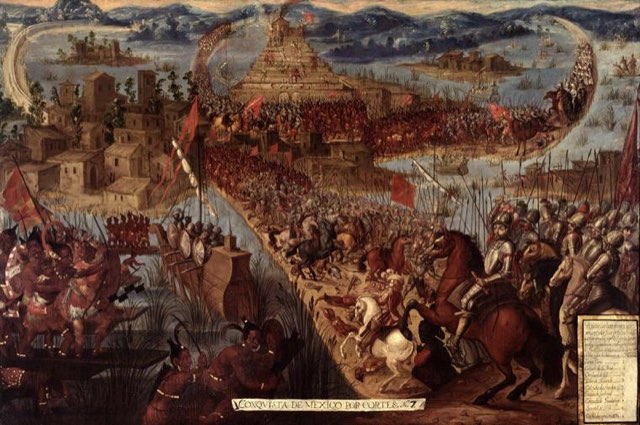

Conquest of Mexico
- The Spanish Conquest (1519-1521)MexConnect · Dale Hoyt Palfrey · read
- Bernal Diaz del Castillo’s True History of the Conquest of MexicoCanadian Libraries Internet Archive · read
- Bernal Díaz del Castillo’s True History of the Conquest of New SpainThe Saylor Foundation · write
Hernán Cortés
- Hernán CortésThe Mariners’ Museum · read · archived copy
Aztec Encounters
- Hernán Cortés: from Second Letter to Charles V, 1520 and An Aztec Account of the Conquest of MexicoFordham University’s Internet Modern History Sourcebook · Oliver J. Thatcher’s version of · read
- Study Questions for Hernan Cortes’ ‘Second Letter to Charles V, 1520’ and ‘An Aztec Account of the Conquest of Mexico’The Saylor Foundation · write
March to Tenochtitlan
- Cortés Defeats the AztecsUC College Prep · watch · archived copy
Conquest of Peru
- Conquest of the Aztec EmpireYouTube · The Saylor Foundation · watch
Francisco Pizarro
- The Conquest of the Inca Empire: Francisco PizarroUniversity of Calgary’s Multimedia History Tutorials · watch · archived copy
Incan Encounters
- Hernando Pizarro on the Conquest of the IncasSeton Hall University · Prof. Nicholas C.J. Pappas’ version of · read · archived copy
- Chronicles of the Incas, 1540Fordham University’s Internet Modern History Sourcebook · Paul Halsall’s version of Pedro de Cieza de Léon · read
- Study Questions for ‘Hernando Pizarro on the Conquest of the Incas’ and Pedro de Cieza de Leon’s ‘Chronicles of the Incas, 1540’The Saylor Foundation · write
Spanish Victory
- Encounter at CajamarcaJuanita College · David Sowell · read · archived copy
Spanish Exploration of North America
- The Atlantic World, 1492-1600Concepcion Saenz-Camba · read
- Spanish and French ExplorationUC College Prep · watch · archived copy
- Conquest of the Inca EmpireYouTube · The Saylor Foundation · watch
Hernando de Soto
- History of Florida: Spanish Exploration and Conquest of Native AmericaDonald E. Sheppard · read · archived copy
Juan Ponce de León
- Exploring Florida: Ponce de León: Florida’s First Spanish ExplorerUniversity of South Florida, College of Education · read
Limits of Exploration
- Chapter III: Early American ColoniesThe University of New Mexico · Lectures in American History · read
The Columbian Exchange
- CommerceUC College Prep · watch · archived copy
- The Atlantic World, 1492-1600Concepcion Saenz-Camba · read
Agriculture
- The Columbian ExchangeThe Gilder Lehrman Institute of American Slavery · Professor Alfred Crosby · read · archived copy
Technology
- Technological FactorsUC College Prep · watch · archived copy
Disease
- DiseasesGettysburg College · Prof. Timothy J. Shannon · read · archived copy
- The Columbian Exchange: DiseaseOberlin College · Professor Steven Volk · watch
Consequences of the Exchange
- ExchangesUC College Prep · watch · archived copy
Chapter III
Colonization and Settlement
As conquistadors gradually established Spanish military control over the Americas in the 16th and early 17th centuries, the Spanish government struggled to impose civil order on its growing overseas empire. Royal governors were appointed to administer the major settlements in Central and South America. These officials attempted to replicate traditional Spanish civil and religious institutions in the New World. The Catholic Church also played a major role in the colonization and settlement of Spanish America. Church officials in the Americas challenged the mistreatment and virtual enslavement that native peoples suffered at the hands of the conquistadors and other powerful settlers using the royal system of labor to force Indians to work on their plantations without compensation. Disease and mistreatment significantly reduced native populations in many parts of Central and South American during the 16th century and some settlers began employing African slave labor to replace Indians. The presence of Europeans, Indians, and Africans in the Spanish colonies gradually led to the emergence of a diverse, mixed-race society in many parts of the Spanish Empire by the 17th century. In this unit, we will examine efforts by Spanish colonial administrators and Catholic Church officials to establish political, economic, social, and religious order in Spain’s American colonies. We will also learn about the new creole society that began to emerge across the Spanish Empire, discussing the impact that it had on Spain’s efforts to administer its expanding colonies.
Imperial Organization
- The Encomienda and The MitaOberlin College · Professor Steven Volk · watch
Imperial Administration
- Mexico’s Colonial Era, Part 1MexConnect · Dale Hoyt Palfrey · read
- Government and Law in Spanish Colonial AmericaHistorical Text Archive · Donald J. Mabry · read
The Church in the Colonies
- Mexico’s Colonial Era, Part 2MexConnect · Dale Hoyt Palfrey · read · archived copy
Civilizing Missions and Missionaries
- The Mission SystemUC College Prep · watch · archived copy
The Church and Native Peoples
- The New Laws of the Indies, 1542Fordham University’s Modern History Sourcebook · Henry Steven’s edition of · read
- A Short Account of the Destruction of the IndiesClinch Valley College’s Internet Archive · Bartolome de las Casas’ · read · archived copy
- Study Questions for ‘The New Laws of the Indies, 1542’ and Bartolome de Las Casas’s ‘A Short Account of the Destruction of the Indies’The Saylor Foundation · write
Population Changes
- Surveying MestizajeSmith College · Visual Culture in Spanish America Project · read
Replicating Iberian Communities
- Conquest and Settlement Patterns and Early Attempts to Organize an EmpireHistorical Text Archive · Donald J. Mabry · read
Emergence of a Creole Society
- A New World and the Emergence of a New RaceYale-New Haven Teachers Institute · Francisco Cintrón · read · archived copy
Chapter IV
Colonial Economy and Trade Networks
The promise of gold and silver treasures lured early Spanish explorers and settlers to the Americas, but few colonists found easy riches. Instead, many Spanish settlers turned to mining and agriculture production as a source of revenue. Native Americans, and later African slaves, provided much of the labor for the gold and silver mines of South America and the sugar plantations of the Caribbean. The Spanish crown tightly regulated colonial trade and forced Spanish colonists to only conduct business with Spanish merchants in Spain. These colonial regulations frustrated many colonists and encouraged smuggling and illicit trade partnerships with English and Dutch merchants. Spain attempted to defend her colonies and prevent trade with other European nations, but in many ways this was a losing battle. In this unit, we will look at the evolution of the Spanish colonial economy and examine how systems of production and trade altered the structure of colonial society. We will also learn how Spanish mercantile trade practices hindered colonial development and led to conflicts with other European powers.
Colonial Production
- Early Colonial Economic ActivityBerkeley University · Professor William Taylor · read · archived copy
Mining
- Mexico’s Colonial Era, Part 3MexConnect · Dale Hoyt Palfrey · read · archived copy
Agriculture
- Landed Systems in the Spanish American ColoniesOberlin College · Professor Steven Volk · watch
Slavery
- Spain’s Slavery ContractPortCities Bristol · read
- The Atlantic World, 1492-1600Concepcion Saenz-Camba · read
Indian Slave Labor
- Bartolome De Las Casas (1484-1566)Oregon State University · Professor Bill Uzgalis’ · read · archived copy
African Slave Labor
- A Brief Overview of the Trans-Atlantic Slave Trade: The Enslavement of AfricansEmory University · Dr. David Eltis · read
Emergence of the Trans-Atlantic Slave Trade
- Iberian Roots of the Transatlantic Slave Trade, 1440-1640The Gilder Lehrman Institute of American Slavery · Dr. David Wheat · read · no longer online
- The European Voyages of Exploration: The Atlantic Islands, Africa, Brazil, The Caribbean: First ContactUniversity of Calgary · Applied History Research Group · read · archived copy
- Documenting the American South: Boyrereau Brinch’s and Benjamin F. Prentiss’s (Benjamin Franklin’s) The Blind African Slave, or Memoirs of Boyrereau Brinch, Nick-named Jeffrey BraceUniversity of North Carolina Library · read
- Study Questions for Brinch and Prentiss’s ‘The Blind African Slave, or Memoirs of Boyreau Brinch, Nicknamed Jeffrey Brace’The Saylor Foundation · write
Spanish Regulation of Trade
- Royal Instructions for the Viceroy Mendoza, 1535Southern Methodist University, Professor Peter Bakewell’s transcription of Charles V of Spain · read · archived copy
Trade Networks
- Teaching with Historic Places Lesson Plans: The Spanish Treasure Fleet SystemU.S. Department of the Interior · read · archived copy
Challenging the System
- The Beginning of Piracy, 1450-1600Gettysburg College · Prof. Timothy Shannon · read · archived copy
Defending the Empire
- Voyages and TravelBartleby.com · Professor W.A. Neilson’s Lectures on the Harvard Classics · read · archived copy
Chapter V
Colonial Society
Caste and social standing structured Spanish colonial society in the Americas. Clear social distinctions existed between European settlers, native-born colonists, people of mixed ancestry, and Indian and African natives. People of mixed ancestry and Criollos (people of Spanish ancestry born in the colonies) had fewer political and legal rights than Peninsulares (individuals that had been born in Spain and immigrated to the colonies). Peninsulares dominated colonial society and held important civil and religious positions. This strict caste system bred resentment among Criollos and native people.
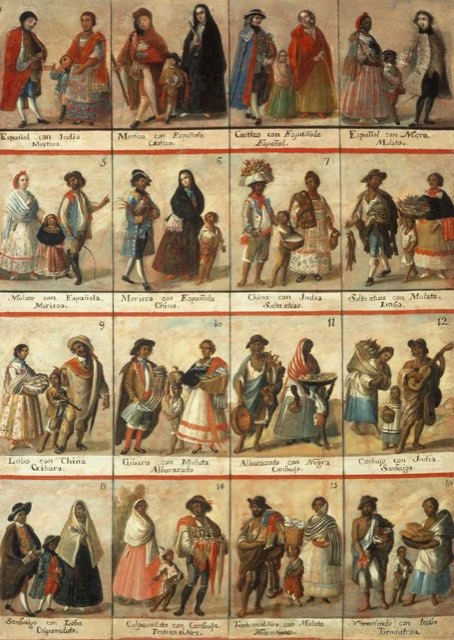

Caste, Class, and Social Distinctions
- Teaching the History of Race in Latin AmericaAmerican Historical Association · Julio Cesar Pino · read · archived copy
Africans and Indians
- Indian Slavery in the AmericasThe Gilder Lehrman Institute of American Slavery · Alan Gallay · read · archived copy
- African Migration to the New World: The Impact of the Slave Trade – Demographic Impact, Economic Impact, and Cultural ImpactUniversity of Calgary · The Applied History Research Group · read · archived copy
The Family
- The Construction of Hispanic PatriarchyOberlin College · Professor Steven Volk · watch
The Role of the Family in Colonial Society
Women
- Women in Colonial Latin AmericaMichigan State University, Professor David W. Walker · read
- Women in World History: Dr. Nora Jaffary’s Gender and Race in Colonial Latin AmericaGeorge Mason University · read
Chapter VI
Trans-Atlantic Empires
Spanish and Portuguese colonies in the Americas formed part of a broader global empire administered by the Spanish and Portuguese states. Consequently, wars and political conflicts in Europe often had a significant impact on political and economic life in the colonies. During the 16th and 17th centuries, the Hapsburg monarchy controlled Spain and expanded its military and political influence throughout much of western and central Europe. Gold and silver production in the colonies funded Spanish military victories and provided ample financial resources for the Spanish state. By the end of the 17th century, though, a series of weak Hapsburg rulers and poor management of the royal treasury had brought Spain to the brink of political collapse. The War of Spanish Succession ended Hapsburg control of Spain and brought the French Bourbon family to the Spanish throne. Bourbon rulers instituted a number of major political and economic reforms in the colonies in an attempt to restore colonial stability and profitability. Despite these efforts, Spanish colonies faced increasing military threats from English and Dutch settlements in the Americas over the course of the 18th century. In this unit, we will examine how the transition from Hapsburg to Bourbon rule in Spain altered political, economic, and social life in Spain’s colonies. We will also look at the political relationship between Spain and Portugal and discuss how this relationship shaped colonization and settlement patterns in Brazil. Finally, we will discuss how Spanish and Portuguese colonies fit into the broader Atlantic World economy at the end of the 18th century.
The Reign of Charles V (Charles I of Spain)
- Hapsburg Rule in SpainOberlin College · Professor Steven Volk · watch
Philip II Expands Spanish Domination
- The City of Nombre de Dios to the Crown, May 14, 1573Southern Methodist University, Peter Bakewell’s transcription of · read · archived copy
Spanish Power in Europe and the Americas
- The Empire where the sun never sets: Philip III.E.S. Isaac Albéniz · read · archived copyIsaac Albéniz on Kulturbase
Decline of Spain at the End of the 17th Century
- The Decline of SpainUniversity of Wisconsin Madison · Professor Johann P. Sommerville · read
War of Spanish Succession
- Bourbon Spain and War of the Spanish SuccessionLibrary of Congress Country Studies · Eric Solsten’s (ed.) Spain · A Country Study · read
Rise of the Bourbon Monarchy in Spain
- The EnlightenmentLibrary of Congress Country Studies · Eric Solsten’s (ed.) Spain · A Country Study · read
The Bourbons and the American Empire
- Bourbon Reforms–New Administrative ApproachesOberlin College · Professor Steven Volk · watch
Imperial Control and Rebellion
- The Great Rebellions of the Andes, 1720-1790Oberlin College · Professor Steven Volk · watch
Portugal and Brazil
- The Indigenous PopulationLibrary of Congress Country Studies · Rex A. Hudson’s (ed.) Brazil · A Country Study · read · archived copy
- Frontier Expansion that Shaped BrazilLibrary of Congress Country Studies · Rex A. Hudson’s (ed.) Brazil · A Country Study · read
Portuguese Settlements
- Early ColonizationLibrary of Congress Country Studies · Rex A. Hudson’s (ed.) Brazil · A Country Study · read
Spanish and Portuguese Alliances and Conflicts in Brazil
- A Short History of Spain and PortugalStanford University · G.O.M. Jameson · read
Consolidating Control
- French and Dutch IncursionsLibrary of Congress Country Studies · Rex A. Hudson’s (ed.) Brazil · A Country Study · read · archived copy
English, French, and Dutch Challenges to Spanish Mercantile Power
- Famous PiratesElizabethan-era.org · Linda Alchin · read
The Slave Trade in the Americas
- Arrival in the AmericasLiverpool Museums’ International Slavery Museum · read
- The Floating Dungeon: A History of a Slave ShipLiverpool Museums · Dr. Marcus Rediker · watch · archived copy
- The Slave Trade, Part 1iTunes U · Arizona State University History Department · watch · no longer online
- The Trans-Atlantic Slave Trade Database Voyages: Introductory MapsEmory University · Digital Library Research Initiative · watch
Incursions on the Periphery
- The Dutch Settle in Guyana and British Take OverLibrary of Congress Country Studies · read
The Colonies at the End of the 18th Century
- eHerodotus: Spanish and Portuguese Settlements in America at the end of the 18th CenturyBronx Community College · Digital Library Initiative · watch · no longer online
Chapter VII
Crisis and Revolution
The French Revolution and the resulting European political and military crisis of the 1790s and 1800s had a profound impact on Spanish and Portuguese colonies in the Americas. Under military pressure from Napoleon, Spain secretly transferred control of its vast Louisiana Territory to France in 1800. Napoleon then sold the territory to the United States three years later. In 1808, Napoleon invaded Spain and Portugal and declared his brother Joseph the new king. The Portuguese court fled to Brazil and declared the colony to be the new capitol of the Portuguese Empire. The sudden fall of Spain created a power vacuum in the Spanish colonies and led many local officials to assume control over colonial governments. In 1808, a poorly planned attempt by the British to seize military control of the Spanish colonies along the Rio de la Plata, the waterway that separates modern-day Argentina and Uruguay, sparked a powerful resistance movement in the region that inspired a number of revolutionaries to organize independence movements across Central and South America. Over the next few years, these revolutionaries challenged Spanish military forces and fought for self-rule in the Spanish colonies. In this unit, we will examine how the French Revolution and the Napoleonic Wars ended Spanish control over its colonial possessions and discuss how the conflict contributed to the growth of colonial independence movements throughout the Americas.
The French Revolution
- The French RevolutionAcademic Earth · University of California Los Angeles · Professor Lynn Hunt · watch · archived copy
- French Revolution (Part I)Khan Academy · watch · 15 min
- French Revolution (Part 2)Khan Academy · watch · 15 min
- French Revolution (Part 3) – Reign of TerrorKhan Academy · watch · 30 min
The Napoleonic Wars
- NapoleonYouTube · Yale University · Professor John Merriman · watch
- French Revolution (Part 4) – The Rise of Napoleon BonaparteKhan Academy · watch · 15 min
- Napoleon and the Wars of the First and Second CoalitionsKhan Academy · watch · 15 min
- Napoleon and the War of the Third CoalitionKhan Academy · watch · 30 min
- Napoleon and the War of the Fourth CoalitionKhan Academy · watch · 15 min
- French Invasion of RussiaKhan Academy · watch · 15 min
- Napoleon Forced to AbdicateKhan Academy · watch · 15 min
French Control of Iberia
- Napoleon’s Peninsular CampaignsKhan Academy · watch · 30 min
- The Napoleonic EraLibrary of Congress Country Studies · Eric Solsten’s (ed.) Spain · A Country Study · read
Iberian Colonies in an Age of Revolution
- History of the Spanish Empire: Independence MovementsHistoryworld.net · Bamber Gascoigne · read
Resistance and Rebellion in the Colonies
- Period of Imperial Crises and Causation and the Spanish American Independence MovementsHistorical Text Archive · Donald J. Mabry · read
The Rise of Bolivar, San Martin, and O’Higgins
- History of the Spanish Empire Bolívar and San MartínHistoryworld.net · Bamber Gascoigne · read
- Message to the Congress of Angostura, 1819Fordham University’s Internet Modern History Sourcebook · Professor J. S. Arkenberg’s version of Simón de Bolívar · read
- BolivarThe Saylor Foundation · write
Chapter VIII
The End of an Empire
By the second decade of the 19th century, Spain had lost political control of its vast colonial empire in the Americas. Only the Caribbean islands of Cuba and Puerto Rico remained under Spanish possession. In 1821, Brazil’s monarch declared independence from the Portuguese crown and Portugal lost control of its only major American colony. Meanwhile, the independence movements across Central and South America resulted in the creation of numerous independent nations. While many of these nations retained social and economic ties to Spain, they exercised their new independence by forming regional political alliances with other former Spanish colonies. In this final unit, we will examine how independence movements reshaped Central and South America and led to new economic ties with the United States and England. We will also look at how these new connections played a profound role in shaping the development of these young nations in the 19th and early 20th centuries.
Independent States
- Shaping Latin American Independence: Force and the StateOberlin College · Professor Steven Volk · watch
Consolidating Control
- The View from Below. Indians in the New Independent OrderOberlin College · Professor Steven Volk · watch
Spanish Weakness
- The World of 1898: The Spanish American WarLibrary of Congress’s Hispanic Division · read
The United Kingdom
- Brazil: The Transformation to Kingdom StatusLibrary of Congress Country Studies · read · archived copy
Separation and Independence from Portugal
- Emperor Dom Pedro I of BrazilLibrary of Congress Country Studies · read · archived copy
- Brazil: From Independence to OrderOberlin College · Professor Steven Volk · watch
Spanish Possessions in the Caribbean
- Spanish-American WarGoogle Videos · Stan Zimmerman, Pierian Spring Academy, icollege lecture · watch · archived copy
Mexican Independence
- Hidalgo: Mexico and Military ChieftainsTexas A&M; University · Fay Robinson · read · archived copy
Decline of Spanish Influence
- The Colonial Heritage of Independent Latin AmericaOberlin College · Professor Steven Volk · watch
The Era of Independence
- Paths to Progress in Modern Latin AmericaUniversity of Illinois · WHC Project · Lisa M. Edwards · read · archived copy
Trade Relations
- Pan-Americanism to 1850Encyclopedia of the New American Nation · read
The United States and Latin America in the 19th Century
- The Mexican American WarIllinois University · Dr. Drew VandeCreek · read · archived copy
About this course
This course is Saylor Academy's HIST221, Colonial Latin and South America, one of the complete university courses the Saylor Foundation made free from 2008 and retired in 2015. Saylor licensed its course text under CC BY 3.0; the original is on GitHub. Here it is laid out as chapters, links that have died go to an archived copy from the Internet Archive where one exists, assessments that needed a Saylor login are left out, and people and works are linked to Kulturbase. The readings and lectures belong to their publishers and are linked, not copied. Pictures: Wikimedia Commons, credited under each picture.
All Saylor courses · Free culture courses · The Chautauqua Reading Course