History · Saylor HIST222
Modern Latin America
This course will introduce you to the history of Latin America from the early 19th century, when many Latin American colonies declared their independence from European rule (predominately Spain and Portugal), to the present day. This course fulfills one of the required six geographical concentration courses for the History major.
More about this course
This course also fulfills one of the requirements for the History minor. In this course, you will learn about the major political, economic, and social changes that took place throughout Latin America during this crucial 200-year period of nation-state formation and engagement with the rest of the world. The units in the course are set up chronologically, but at the same time the units address the development and history of specific Latin American regions, including Mexico, Central America, and South America, and nation-states. Each unit includes representative primary-source documents that illustrate important overarching political, economic, and social themes, such as efforts by independent Latin American nations to create stable economies in the 19th century in the face of colonial and mercantile systems, the political and economic conflicts among independent states and European imperial powers, the emergence of often extreme left-wing and right-wing political and social movements in the 20th century, the developmental challenges that many Latin American nations face today, and the recent ascendance of certain Latin American nations economically, politically, and socially. By the end of the course, you will understand how the countries of the region have overcome significant social, economic, and political problems as they have grown from weak former colonies into modern nation-states. You will be able to think critically about the history of Latin and South America from the 19th century to the present.
Upon successful completion of this course, you will be able to:
In order to take this course, you must:
Chapter I
Independence amidst Imperialism
During the first three decades of the 19th century, every Spanish and Portuguese colony in the Western Hemisphere, with the exception of Cuba and Puerto Rico, achieved political independence. Freedom from European rule represented only the first step in a long and arduous process of nation-building. Over the course of the 19th century, Latin American political leaders gradually organized national governments, developed local economies, and attempted to resolve regional conflicts through negotiations and military force. Local elites of European decent controlled political life in most Latin American nations. Poor inhabitants of mixed ancestry, who comprised the majority of the population, held little political power. In many nations, disputes between contending factions of the political elite led to periodic coups and revolutions throughout the 19th century. Typically, poor inhabitants were caught in the middle of these broader political and military struggles and suffered dreadful consequences. While the nations of Latin America gained political independence in the 19th century, most countries remained tethered to former colonial powers by economic bonds. Spanish and Portuguese investors controlled many local businesses and served as sources of capital for economic development. British investors also began to organize local companies in many Latin American nations and used their economic power to influence political affairs in these nations. European economic imperialism had a profound influence over the economic and political development of the nations of Latin America. In this unit, you will examine how independent Latin American nations grew economically, politically, and socially over the course of the 19th century. You will evaluate the ways in which European imperialism shaped political and economic life in Latin American countries. You will also look at the regional military conflicts that shaped the modern-day boundaries of these nations and explore the consequences of these conflicts for the former Spanish and Portuguese colonies.
Nation-Building
- Pan-Americanism in the Wake of Latin American IndependenceConnexions · Ana Maria Seglie · read · 15 min · no longer online
Class Conflict and Politics
- Wilson Whitman’s (ed.) Jefferson’s Lettersread · 15 min
Social Challenges in Latin America at the Time of Independence
Rebuilding National Economies
- Lecture 17: Independence and Change in 19th Century Latin AmericaMIT · Professor James Howe’s The Conquest of the Americas · read · 45 min
The Economic Costs of Independence
- The Economic Costs of IndependenceThe Saylor Foundation · read · 30 min
European Economic Imperialism
- America: A.D. 1801 to 1900Connexions · Jack E. Maxfield · read · 45 min
Military Conflict
- The Treaty of the Triple AllianceBrigham Young University Library · read · 30 min
The Paraguayan Setting for the War of the Triple Alliance
- Dictatorship and War and Francisco Solano LópezUS Library of Congress · Dennis M. Hanratty and Sandra W. Meditz’s (ed.) Paraguay · A Country Study · read · 30 min
The War of the Triple Alliance
- The War of the Triple AllianceUS Library of Congress · Dennis M. Hanratty and Sandra W. Meditz’s (ed.) Paraguay · A Country Study · read · 15 min
Collapse of Gran Colombia
- The Gran ColombiaUS Library of Congress · Dennis M. Hanratty and Sandra W. Meditz’s (ed.) Colombia · A Country Study · read · 15 min
Establishing Modern-Day National Boundaries and Foreign Interventions
- Establishing Modern-Day National Boundaries and Foreign InterventionsThe Saylor Foundation · read · 30 min
Chapter II
Latin America and the United States
In the late 19th and early 20th centuries, the United States began to exert significant economic, political, and military influence over Latin American nations. In 1898, American military forces invaded and occupied Cuba and Puerto Rico as part of a broader war against Spain. As a result of the Spanish-American War, Puerto Rico became a US protectorate and Cuba gained its independence, although the United States maintained a close watch over Cuban political affairs. By the early 20th century, American corporations, such as the powerful United Fruit Company, owned vast tracts of lands throughout the Caribbean and South America. These firms commonly used bribery and intimidation to influence political affairs in the so-called Banana Republicsof Latin America. The United States government backed American corporations with military force; American political leaders such as President Theodore Roosevelt expressed a clear willingness to intervene in the internal affairs of independent nations in order to protect American and European investments. In 1904, the US government also became involved in the massive project to build a sea-level canal across the Isthmus of Panama. When the Panama Canal was completed 10 years later, it allowed the United States to exert tremendous economic and military influence throughout the region. In this unit, you will examine the relationship between the United States and the nations of Latin America in the 19th and early 20th centuries. You will also evaluate how America’s involvement in Latin American affairs influenced (for better or worse) the economic and political development of Latin American nations during this time period, especially in the years leading up to World War II.
Creating Banana Republics
- Creating Banana RepublicsThe Saylor Foundation · read · 30 min
Filibustering and Private Military Expeditions
- Lincoln’s Worldwide AudienceJournal of the Abraham Lincoln Association · Daniel Walker Howe · read · archived copy
- William the ConquerorCharles Congdon’s Tribune Essays · Leading Articles Contributing to the New York Tribune from 1857 to 1863 · read · 15 min
The Spanish-American War
- The Spanish-American War, 1898US Department of State · read · 30 min
- US Recognition of Cuban Independence, 1898Fordham University’s Internet Modern History Sourcebook · read · 15 min
The Treaty of Paris of 1898
- Treaty of Peace between the United States and Spain, 1898Yale Law School, Lillian Goldman Law Library · The Avalon Project · read · 30 min
Roosevelt’s Corollary and Taft’s Dollar Diplomacy
- Third Annual Message to Congress, December 6, 1904Theodore Roosevelt · read · 30 min
- The Progressive Era (Part II)Connexions · Dr. James Ross-Nazzal · read · 45 min
Early Canal Projects
- The Uncompleted French CanalUS Library of Congress · Sandra W. Meditz and Dennis M. Hanratty’s (ed.) Panama · A Country Study · read · 15 min
The Panamanian Revolution
- The Spillover from Colombia’s Civil Strife, The 1903 Treaty and Qualified Independence, and Organizing the New RepublicUS Library of Congress · Sandra W. Meditz and Dennis M. Hanratty’s (ed.) Panama · A Country Study · read · 30 min
The US Government Takes Over the Canal Project
- Convention between the US and Panama (Panama Canal), 1903Fordham University’s Internet Modern History Sourcebook · read · 45 min
American Military Interventions and Occupations
- Chapter 9: United States Foreign Policy in Latin America, 1898 to 1945Wikibooks · IB History of the Americas · read · 15 min
- US Involvement in Latin America, Rubric for US Involvement in Latin America, and Sample Essay for US Involvement in Latin AmericaThe Saylor Foundation · write · 3 h
Chapter III
The Mexican Revolution, 1910–1920
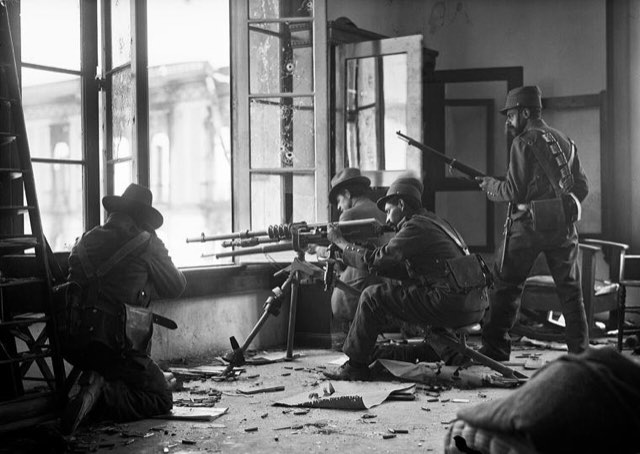
The Mexican Revolution, which lasted from 1910 through the early 1920s, played a significant role in reshaping political and social life in Mexico, and it had profound implications for the broader political culture of Latin America during the first half of the 20th century. The revolution began as a reaction against the 30-year rule of autocratic Mexican President Porfirio Diaz. As president, Diaz had favored the landed elites in Mexico and encouraged Europe and the United States to invest in the Mexican economy. Diaz’s policies did little to help poor workers and farmers, who made up much of the Mexican population. In 1910, Diaz blocked the election of opposition candidate Francisco Madero by briefly throwing him in jail and forcing him to flee Mexico. Madero responded by issuing the “Plan of San Luis Potosi,” a revolutionary manifesto asking the people of Mexico to rise up against Diaz. In the military conflict that followed, Madero received help from a broad coalition of supporters that included indigenous peoples, poor farmers, urban workers, and political radicals. With their help, Diaz was removed from office and Madero was elected president in 1911. Madero’s rule as president was short-lived, as his policies managed to offend both radical and conservative supporters. In 1913, conservative military officer Victoriano Huerta staged a coup and removed Madero from office. Madero was assassinated a few months later. His assassination destabilized Mexico and led to renewed fighting between Huerta’s forces and opposition leaders, including radical populists Poncho Villa and Emiliano Zapata and moderate Venustiano Carranza. Huerta fell from power and Carranza took control of the government in 1914. He was driven from power by the combined forces of Villa and Zapata in 1915 but later elected present in the democratic election of 1917. He held the office of the president until his death in 1920. Following Carranza’s death, Mexico remained politically unstable until the early 1930s, when Lazaro Cardenas took power and implemented many of the social reforms that Carranza had originally suggested when he was in office. In this unit, you will examine the origins of the Mexican Revolution and will learn about the political and social objectives of its various participants. You will also look at how the revolution drastically altered political culture in Mexico and eventually led to social and economic reforms that granted more power to the lower and middle classes. Finally, you will evaluate how the Mexican Revolution inspired radicals throughout Latin America to challenge conservative political regimes in the second half of the 20th century.

Origins
- The Mexican RevolutionUniversity of Kent at Canterbury Center for Social Anthropology · read · 1 h · archived copy
Mexican Democracy in the 19th Century
- The Restoration, 1867–76US Library of Congress · Tim L. Merrill and Ramón Miró’s (ed.) Mexico · A Country Study · read · 15 min
Class Conflict and Economic Development in Mexico
- Problems and Progress in MexicoFordham University’s Internet Modern History Sourcebook · Alexander Von Humboldt · read · 30 min
The Corruption of the Diaz Regime
- The Porfiriato, 1876–1910, Porfirian Modernization, and Society under the PorfiriatoUS Library of Congress · Tim L. Merrill and Ramón Miró’s (ed.) Mexico · A Country Study · read · 30 min
Revolutionary Undercurrents
- The Revolution, 1910–20US Library of Congress · Tim L. Merrill and Ramón Miró’s (ed.) Mexico · A Country Study · read · 15 min
The Liberal-Democratic Revolution
- The Plan of San Luis Potosi, November 20, 1910Fordham University’s Internet Modern History Sourcebook · Francisco Madero · read · 15 min
Downfall of the Diaz Regime – Madero’s New Government
- Madero’s GovernmentUS Library of Congress · Tim L. Merrill and Ramón Miró’s (ed.) Mexico · A Country Study · read · 15 min
Agrarian Revolutionaries – Zapata and Villa
- Pancho VillaCompassionate Action Network · read · 30 min · archived copy
Huerta’s Coup d’etat
- The Huerta DictatorshipUS Library of Congress · Tim L. Merrill and Ramón Miró’s (ed.) Mexico · A Country Study · read
American Complicity and Opposition
- The Constitution of 1917US Library of Congress · Tim L. Merrill and Ramón Miró’s (ed.) Mexico · A Country Study · read · 15 min
Carranza and the Constitutionalists
- CarranzaUS Library of Congress · Tim L. Merrill and Ramón Miró’s (ed.) Mexico · A Country Study · read · 15 min
The Carranza and Obregon Regimes
- The Obregón Presidency, 1920–24US Library of Congress · Tim L. Merrill and Ramón Miró’s (ed.) Mexico · A Country Study · read · 15 min
Revolutionary Consequences
- Historical Notes on Mexico’s Land ReformUniversity of Kent at Canterbury, Center for Social Anthropology and Computing · read · 30 min · archived copy
The Catholic Church and the Revolution
- The Catholic Church and the Mexican Revolution (1910–1920)The Saylor Foundation · read · 30 min
The Cardenas Regime and the Gradual Fulfillment of the Revolution
- Cardenismo and the Revolution Rekindled, 1934–40US Library of Congress · Tim L. Merrill and Ramón Miró’s (ed.) Mexico · A Country Study · read · 15 min
Liberal Democracy and One-Party Rule
- Institutional Revolutionary Party (PRI)US Library of Congress · Tim L. Merrill and Ramón Miró’s (ed.) Mexico · A Country Study · read · 30 min
Broader Consequences for Latin American Nations
- A Danger for All Latin American Countries, Letters from Venustiano CarranzaGeorge Mason University’s History Matters · read · 30 min · archived copy
- Key People and Events of the Mexican Revolution and Answer GuideThe Saylor Foundation · write · 2 h
Chapter IV
Latin America in the Global Economy
From the postcolonial era to the present day, the nations of Latin America have played a significant role in the global economy. Under colonial rule, these nations primarily produced agricultural commodities for export to Europe and served as markets for goods manufactured in Spain and Portugal. In the postcolonial era, the economic situation remained similar. Newly independent Latin American nations had few resources for internal economic development and industrialization. Instead, they continued to grow and export major agricultural commodities such as coffee, sugar, and livestock to Europe. These monoculture export economies placed Latin American nations at the mercy of the global economy. When commodity prices were high, growers reaped handsome profits. When commodity prices fell, growers went out of business or defaulted on loans. European and American investors provided much of the capital for business development in the region. Similarly, Europeans and Americans served as technical experts for development projects such as railroads, factories, and other high-skill industries. Consequently, outsiders exercised great control over local and regional markets and transportation systems. The slow rate of industrialization and outside control of local industries proved to be a major source of political tension in the region. Populist political parties agitated against European and American influence in various Latin American nations. These groups argued that Latin American nations needed to develop their own internal technical experts through the creation of institutions of higher education and grow their own economies through the diversification of agricultural and industrial production. In this unit, you will study the ways in which the politics of economic development shaped the nations of Latin America in the 19th and early 20th centuries, and you will examine some of the development projects that took place across the region. You will also look at export industries such as coffee and sugar production and see how these global industries shaped working and living conditions for Latin Americans.
Coffee and Labor in Brazil
- Pierre Denis’s Excerpt from The Coffee Fazenda of Brazil, 1911Fordham University’s Internet Modern History Sourcebook · read · 15 min
Agriculture, Biodiversity, and Biotechnology in Latin America
- Chico Mendes in His Own WordsChico Mendes’s Excerpts from Fight for the Forest · read · 15 min
- Biotechnology in Latin America: High Activity, Low International VisibilityElectronic Journal of Biotechnology · Enrique Galindo · read · 15 min
Mining
- Mining and Resistance in Latin AmericaWar Resistors International · César Padilla · read · 30 min
Economic Development and Institutional Change in Latin America
- Institutional Change in Latin AmericaJournal of Politics in Latin America, Volume 1, No 1 · Kurt Weyland · read · 1.5 h
- Primary Source Analysis: The Brazilian Coffee IndustryThe Saylor Foundation · write · 2 h
Chapter V
Social and Cultural Agents in the 19th and 20th Centuries
Social and cultural agents helped shape distinct regional and national identities across Latin America in the 19th and 20th centuries. The Catholic Church was by far the most significant of these agents. The church played a major role in Latin American society, both as an agent of conservative control and revolutionary change. In the 19th century, elites used the conservative influence of the church to promote national unity and acceptance of social and class distinctions. On the other hand, in the 20th century, radical priests used church institutions to champion social justice and attack corrupt political leaders across the region. Along with church institutions, artists and writers shaped the regional and national identities through their work. Nobel Prize winners in Literature from Latin America, like Gabriela Mistral, Pablo Neruda, Gabriel Garcia Marques, Octavio Paz, and Jose Sarmago, examined local history and regional cultures and highlighted the unique blend of European and indigenous identities and cultural values in countries like Colombia, Venezuela, Chile, Brazil, and Mexico. In this unit, you will look at how specific social and cultural agents shaped distinct identities in Latin American nations. You will also examine how these cultural agents have been exported throughout the world during the 20th century.
Liberation Theology: The Catholic Church as a Revolutionary Agent
- From Theology and Philosophy to the Politics of LiberationVimeo · Professor Enrique Dussel · watch · 2 h
- Populorum ProgressioVatican Library · Pope Paul VI · read · 2 h
- Thoughts on Liberation TheologyCamilo Torres Restrepo · read · 15 min
- The Catholic Church as a Revolutionary Agent in Latin America and Answer GuideThe Saylor Foundation · write · 2 h
Mexican National Development
- Weetman Pearson and Mexican National Development 1889–1919History Spot · Paul Garner · watch · 1.5 h · archived copy
European Immigration of the Late 19th Century
- Immigrant Wealth, 1883Internet Archive · Letters Magazine · read · 15 min · archived copy
Literary and Artistic Expressions
- Little Remains of Pre-Colombian Art in BrazilArtQuest · read · 15 min · archived copy
- World Literature LecturesNew Jersey Institute of Technology · Dr. Norbert Elliot · watch · 1.8 h · archived copy
Exporting Latin American Culture
- New Perspectives on Latin AmericaUniversity of Cambridge · Francisco Valdez · read · 15 min
Chapter VI
Gender and Race in Modern Latin America
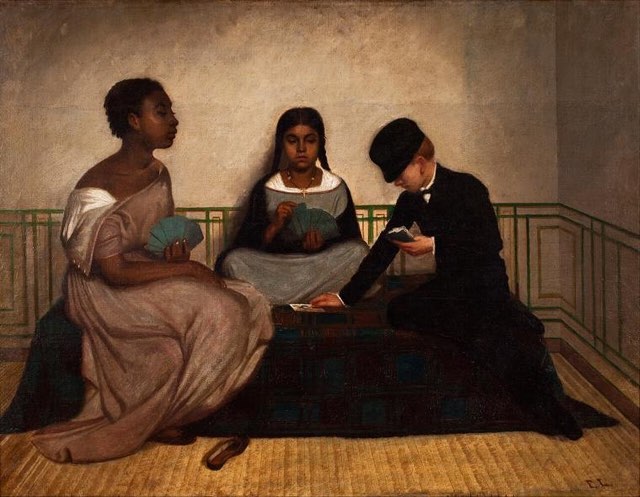
Since the colonial period, gender and race have played an important role in shaping Latin American society. In the postcolonial era, women began to demand a greater role in national life. After they achieved independence at the beginning of the 19th century, some Latin American nations granted women the right to vote. On the other hand, many public institutions continued to discriminate against women. In the late 19th century, feminists in nations such as Argentina began advocating for women to be admitted to institutions of higher education. They also agitated for new laws regarding women’s rights to their own bodies and their legal rights in marriage and divorce. Indigenous peoples and Latin Americans of African descent also became more assertive about their political and economic rights in the 20th century. Both groups also demanded recognition of their ethnic heritage and cultural values by dominant elites of European ancestry. In this unit, you will look at different ways that women and people of indigenous and African ancestry challenged the power and dominance of white male authorities throughout Latin America. You will also look at how these groups created unique cultural expressions of their backgrounds.

Women in Latin American Society
- The Emancipation of Women, 1876Maria Eugenia Echenique’s Excerpt from · read · 15 min
Indigenous Peoples and Contemporary Indigenous Rights Movements
- Two Decades of Indigenous Women’s Leadership in Latin AmericaAssociation for Women’s Rights in Development · Gabriela De Cicco · read · 30 min · archived copy
- Five Hundred Years of Sacrifice before Alien GodsRigoberta Menchu Tum · read · 45 min
- Primary Source Analysis: Rigoberta Menchu Tum and Answer GuideThe Saylor Foundation · write · 2 h
The History of Afro-Latinos in Latin America
- The Childhood Memoirs of Carolina Maria de JesusCarolina Maria de Jesus’s Excerpt from Bitita’s Diary · read · 15 min
Cultural Contributions of Afro-Latinos
- Afro-Latinos in Latin America and Considerations for US PolicyFederation of American Scientists, Congressional Research Service Reports on Foreign Policy and Regional Affairs · Clare Ribando Seelke · read · 1.5 h
Chapter VII
Dictatorships and Revolutions of the Mid-20th Century
The 1940s through 1960s were a time of significant political instability throughout Latin America. Electoral chaos in the 1920s and 1930s and growing political conflicts between radical populists and conservative elites led to the emergence of military dictatorships, or conservative political regimes backed by the military, in many Latin American states in the 1940s. These conservative rulers feared the growing influence of Socialist and Communist political movements among the factory workers and farmers who made up the majority of the population in many countries. As left-wing political movements grew in strength, many conservative rulers attempted to suppress them through military force or political intimidation. By the 1950s, elite rulers could no longer hold back revolutionary armies in a number of Latin American nations, including Bolivia and Cuba. In a few states, conservative leaders such as Argentinean Juan Peron attempted to implement moderate social reforms while maintaining strict control over political affairs. In other states, radical leaders were elected to political office and attempted to implement major economic and social reforms. Often, these reform efforts led to broader social chaos and prompted conservative military leaders to stage coups in order to restore social order. In this unit, you will examine the political chaos of the 1940s–1960s and will look at how radical and conservative forces vied for control over many Latin American nations. You will also examine some of the economic and social reforms that radicals attempted, such as the redistribution of farmland and the nationalization of foreign businesses. Finally, you will study how the political struggles in Latin America fit into the broader Cold War struggle between the United States and the Soviet Union.
Military Dictatorship of the 1930s–1940s
- Eva Duarte de Perón’s Excerpt from History of Perónism, 1951Fordham University’s Internet Modern History Sourcebook · read · 15 min
An Overview of Argentine Politics in the 20th Century
- Argentina: HistoryThe Encyclopedia of Earth · read · 15 min · archived copy
Coups and Counter-Coups of the 1960s
- History of ArgentinaWikipedia · read · 15 min
Left-Wing and Right-Wing Political Extremism
- History of Argentina (1966–1973)PediaView · read · 30 min · no longer online
Agrarian Populism versus Elite Rule
- The ‘Sexenio,’ 1946–52US Library of Congress · Rex A. Hudson and Dennis M. Hanratty’s (ed.) Bolivia · A Country Study · read · 15 min
Rise of the Revolutionary Nationalist Movement in the 1950s
- The Bolivian National Revolution, 1952–64: Radical Reforms and The Unfinished RevolutionUS Library of Congress · Rex A. Hudson and Dennis M. Hanratty’s (ed.) Bolivia · A Country Study · read · 30 min
Military Rule in the 1960s
- Military Rule, 1964–82: The Presidency of BarrientosUS Library of Congress · Rex A. Hudson and Dennis M. Hanratty’s (ed.) Bolivia · A Country Study · read · 15 min
Stability versus Political Freedom
- Revolutionary Nationalism: Ovando and Torres and The Banzer RegimeUS Library of Congress · Rex A. Hudson and Dennis M. Hanratty’s (ed.) Bolivia · A Country Study · read · 30 min
Dictatorships and Economic Development in the 1930s–1950s
- The Era of Getúlio Vargas, 1930–54US Library of Congress · Rex A. Hudson’s (ed.) Brazil · A Country Study · read · 30 min
Brazil and World War II
- Brazil at WarInternet Archive · Office of the Coordinator of Inter-American Affairs’ · watch · 30 min
Populism and Political Control in the 1950s–1960s
- The Post-Vargas Republic, 1954–64US Library of Congress · Rex A. Hudson’s (ed.) Brazil · A Country Study · read · 30 min
Chile
- Parliamentary Republic, 1891–1925, Urbanization, and Arturo Alessandri’s Reformist Presidency, 1920–25US Library of Congress · Rex A. Hudson’s (ed.) Chile · A Country Study · read · 30 min
Military Rule and Political Instability in the 1930s
- Military Interventions, 1925–32 and Carlos Ibáñez’s First Presidency, 1927–31US Library of Congress · Rex A. Hudson’s (ed.) Chile · A Country Study · read · 30 min
Right-Wing and Left-Wing Politics in Chile
- Mass Democracy, 1932–73, Alessandri’s Second Presidency, 1932–38, and Popular Front Rule, 1938–41US Library of Congress · Rex A. Hudson’s (ed.) Chile · A Country Study · read · 30 min
Radical Party Rule in the 1940s–1950s
- Juan Antonio Ríos’s Presidency, 1942–46 and Gabriel González Videla’s Presidency, 1946–52US Library of Congress · Rex A. Hudson’s (ed.) Chile · A Country Study · read · 30 min
Social and Economic Reforms of the 1950s and 1960s
- Ibáñez’s Second Presidency, 1952–58 and Jorge Alessandri’s Rightist Term, 1958–64US Library of Congress · Rex A. Hudson’s (ed.) Chile · A Country Study · read · 30 min
Growing Conservative Opposition to Reform Efforts
- Eduardo Frei’s Christian Democracy, 1964–70US Library of Congress · Rex A. Hudson’s (ed.) Chile · A Country Study · read · 15 min
Cuba
- The RepublicUS Library of Congress · Rex A. Hudson’s (ed.) Cuba · A Country Study · read · 1 h · archived copy
Castro and the Origins of the Cuban Revolution
- The Cuban RevolutionUS Library of Congress · Rex A. Hudson’s (ed.) Cuba · A Country Study · read · 1 h · archived copy
Communist Rule and Castro’s Reform Agenda
- Second Declaration of Havana, 1962Fordham University’s Internet Modern History Sourcebook · Fidel Castro · read · 15 min
Cuba in the Cold War
- United Nations: Cuban Missile Crisis Debate, 1962Fordham University’s Internet Modern History Sourcebook · read · 30 min
Caribbean Republics
- Political Traditions, Social and Economic Developments, 1800–1960, Political Independence, and Social and Cultural CharacteristicsUS Library of Congress · Rex A. Hudson’s (ed.) Caribbean · A Country Study · read · 45 min
The Dominican Republic
- Occupation by the United States, 1916–24 and The Era of TrujilloUS Library of Congress · Rex A. Hudson’s (ed.) Dominican Republic · A Country Study · read · 30 min
Trujillo in His Own Words
- Interview with General Rafael TrujilloInternet Archive · Central Intelligence Agency · watch · 1 h
Senator Fulbright Discusses the Dominican Crisis from the US Perspective
- Appraisal of US Policy in the Dominican Crisis, September 15, 1965Fordham University’s Internet Modern History Sourcebook · Senator Fulbright · read · 30 min
- Comparing Revolutions and Dictatorships in 20th Century Latin America, Essay Rubric, and OverviewsThe Saylor Foundation · write · 3 h
Chapter VIII
Authoritarianism in the 1970s and 1980s
The political chaos of the 1950s and 1960s - particularly the emergence of organized Socialist and Communist parties in industrializing nations such as Chile, Argentina, Uruguay, and Brazil - led to major political crackdowns by conservative military leaders in the 1970s and 1980s. Often, these ruthless political leaders received covert - and at times overt - support from American officials, who viewed Latin America as a new front in the international war against Communism and the Soviet Union. In Chile, Socialist Salvador Allende was elected president in 1970. As he began to nationalize foreign-owned business and reorganize the Chilean economy, the US government and the Central Intelligence Agency began encouraging Chilean military officials to stage a coup. The coup took place in 1973, Allende committed suicide, and military leaders took control of the nation, rounding up opposition supporters and having them disappear, often through torture and secret executions. Similar crackdowns on leftist political movements took place in Argentina, Brazil, and Uruguay during the same time period. By the end of the 1970s, authoritarian military leaders with US backing had seized control of many of the nations of Latin America in order to keep them free from Socialist or Communist political influences. In this unit, you will learn how military forces took control of major Latin American nations in the 1970s and look at the social and economic consequences of authoritarian rule in the region. You will also study the ways in which civil rights abuses and political repression by military regimes influenced social and cultural life in the region and led to resistance campaigns in some nations.
Argentinian Political Crisis
- Argentina 30 Years after the CoupInternational Relations Center · Marie Trigona · read · 30 min · archived copy
The Falklands Crisis
- The Falklands War – 1, The Falklands War – 2, and The Falklands War – 3Open Writing · Derek Hudson · read · 1 h · archived copy
Return to Democratic Rule in the Mid-1980s
- Argentina: Celebrating DemocracyOpen Democracy · Celia Szusterman · read · 30 min
Truth Commissions and Recovering the Past
- Prosecuting International Crimes at National Level: Lessons from the Argentine ‘Truth-Finding Trials’Utrecht Law Review · Elena Maculan · read · 1 h · archived copy
Election of Salvador Allende in 1970
- Salvador Allende’s Leftist Regime, 1970–73US Library of Congress · Rex A. Hudson’s (ed.) Chile · A Country Study · read · 15 min
- Report of CIA: Chilean Task Force Activities, 15 September to 3 November 1970Central Intelligence Agency · read · 1 h · archived copy
Consequences of Allende’s Radical Reform Agenda
- Chile 30 Years LaterLe Journal des Alternatives · James D. Cockcroft · read · 30 min · no longer online
1973 Military Coup and the Rise of Augusto Pinochet
- Military Rule, 1973–90US Library of Congress · Dennis M. Hanratty and Sandra W. Meditz’s (ed.) Chile · A Country Study · read · 15 min
Political Repression and Authoritarian Rule under Pinochet in the 1980s
- Neoliberal Economics, The 1980 Constitution, and The Crisis of 1982 and the Erosion of Military RuleUS Library of Congress · Dennis M. Hanratty and Sandra W. Meditz’s (ed.) Chile · A Country Study · read · 30 min
Return to Democratic Rule in the 1990s
- The Return to Democracy, 1990US Library of Congress · Dennis M. Hanratty and Sandra W. Meditz’s (ed.) Chile · A Country Study · read · 15 min
Democracy and Economic Prosperity in the 1950s–1960s
- Decline of the Economy and the Colorado Party, 1951–58 and Economic Crisis and Decline, The Blanco Administrations, 1959–67US Library of Congress · Rex A. Hudson and Sandra W. Meditz’s (ed.) Uruguay · A Country Study · read · 15 min
Emergence of the Tupamaro Urban Guerrilla Movement in the 1960s
- Pachequism, 1967–72 and The Emergence of Militarism, 1972–73US Library of Congress · Rex A. Hudson and Sandra W. Meditz’s (ed.) Uruguay · A Country Study · read · 15 min
State of Emergency and Military Rule in the 1970s
- The Military Government, 1973–85 and The Military’s Economic RecordUS Library of Congress · Rex A. Hudson and Sandra W. Meditz’s (ed.) Uruguay · A Country Study · read · 30 min
Return to Democratic Rule in the 1980s
- The Opposition and the Reemergence of Parties, 1980–84 and The Transition to Democracy, 1984–85US Library of Congress · Rex A. Hudson and Sandra W. Meditz’s (ed.) Uruguay · A Country Study · read · 15 min
Central America and the Caribbean during the Cold War
- 1962 SpeechJuan Bosch’s Excerpt from · read · 15 min
Nicaraguan Civil War
- End of the Anastasio Somoza Debayle Era, The Sandinista Revolution, and The Sandinista Years, 1979–90US Library of Congress · Tim Merrill’s (ed.) Nicaragua · A Country Study · read · 30 min
Haiti
- François Duvalier, 1957–71 and Jean-Claude Duvalier, 1971–1986US Library of Congress · Richard A. Haggerty’s (ed.) Haiti · A Country Study · read · 30 min
Grenada
- Grenada: Foreign RelationsUS Library of Congress · Sandra W. Meditz and Dennis M. Hanratty’s (ed.) Caribbean Islands · A Country Study · read · 15 min
Colombia
- The National Front, 1958–74, Instituting the Coalition Government, Opposition to the National Front, Dismantling the Coalition Apparatus, The Post-National Front Period, 1974–82, and The Liberal TenureUS Library of Congress · Sandra W. Meditz and Dennis M. Hanratty’s (ed.) Colombia · A Country Study · read · 1 h
The Brazilian Military Republic
- The Military Republic, 1964–85US Library of Congress · Rex A. Hudson’s (ed.) Brazil · A Country Study · read · 15 min
Return to Elected Civilian Rule in 1990s
- The Presidential Election of 1989, Congressional and State Elections, 1990, and Collor de Mello’s Presidency, 1990–92US Library of Congress · Rex A. Hudson’s (ed.) Brazil · A Country Study · read · 15 min
Chapter IX
Latin America in the 21st Century
By the late 1980s, many Latin Americans had grown weary of military rule. The fall of the Soviet Union and the diminishing threat of international Communism prompted demands for democratic elections and a return to civilian rule across the region. By the early 1990s, democratically elected leaders had taken charge of most of the major nations in Latin America. Nevertheless, the region continued to face severe economic and social challenges in the 1990s and 2000s. Many Latin American countries struggled under the weight of generations of failed economic development projects. They owed large debts to American and European investors and did not have the money to expand domestic economies. The region also suffered from chronic problems resulting from the unequal distribution of wealth. Many poor people turned to the illicit drug trade for income and nations like Colombia and Nicaragua became centers for illegal drug production and distribution. Frustration over the uneven distribution of wealth also led to the emergence of anti-neoliberal political movements in countries like Mexico and Venezuela. These political movements championed the political and economic rights of poor, often indigenous people and challenged the political power of large corporations and the supposed benefits of free-market, global trade for developing nations. In this final unit, you will study contemporary political, economic, and social movements across Latin America and examine how post-colonial development in the region has led to profound criticisms of globalization and free-market capitalism. You will also explore the ways in which certain Latin American nations, such as Brazil, have emerged as regional and international powers and evaluate what the future may hold for the other nations of the region.
Gradual Social Reform Measures
- Latin America’s 21st Century Socialism in Historical PerspectiveVoltaire Network · James Petras · read · 1.5 h
Compromise and Political Moderation
- Declaration of Caracas – XVIII Meeting of the Forum of São PauloForo de São Paulo · read · 30 min · archived copy
Rise of Anti-Neoliberal Political Movements in Venezuela, Bolivia, and Mexico
- The Chiapas Uprising and the Future of Class Struggle in the New World OrderRIFF-RAFF Magazine · Harry Cleaver · read · 1 h
Foreign Debt
- The Effects of the Global Economic Crisis in Latin AmericaRevista de Economia Politica · Arturo Guillén · read · 1 h
Austerity Policies
- Austerity and Its Aftermath: Neoliberalism and Labour in ArgentinaSocialist Studies · Ruth Felder · read · 1.5 h · archived copy
- IMF ‘Rescue’ Won’t Help Latin AmericaCenter for Economic and Policy Research · Mark Weisbrot · read · 15 min · archived copy
Unequal Distribution of Wealth
- From Marx to Metrics in Latin America’s Economic HistoryHistory Spot · John Coatsworth · watch · 1 h · archived copy
Globalization and Economic Policies
- Neoliberalism and Economic GlobalizationShare the World’s Resources · Rajesh Makwana · read · 1 h · archived copy
The Lost Half-Decade: 1997–2002
- Argentina’s Lost Half-DecadeThe Saylor Foundation · read · 30 min
Regaining Economic Prosperity
- Latin America: Crises, Upheavals, Roads to 21st Century Capitalist DevelopmentTranscend Media Service · Professor James Petras · read · 45 min
- Latin America and Globalization and Answer GuideThe Saylor Foundation · write · 2 h
The War on Drugs
- Latin America and the Caribbean: Illicit Drug Trafficking and US Counterdrug ProgramsFederation of American Scientists, Congressional Research Service Reports on Foreign Policy and Regional Affairs · read · 1.5 h
- Introduction: Damaging Side Effects – The War on DrugsTransnational Institute · Martin Jelsma · read · 1 h · archived copy
Population Growth
- PopulationUS Library of Congress · Rex A. Hudson’s (ed.) Brazil · A Country Study · read · 15 min
Investments in Green Technology
- The EnvironmentUS Library of Congress · Rex A. Hudson’s (ed.) Brazil · A Country Study · read · 15 min
Expanding Economy
- Brazil’s Economic Success: An Incomplete ProjectThe South African Civil Society Information Service · Alexandre Luis Schultz Bier · read · 30 min
Social and Cultural Identity
- Race and Ethnicity and Cultural Unity and DiversityUS Library of Congress · Rex A. Hudson’s (ed.) Brazil · A Country Study · read · 15 min
Recognition on the World Stage
- Multilateral RelationsUS Library of Congress · Rex A. Hudson’s (ed.) Brazil · A Country Study · read · 15 min
The Future of Latin America
- What Future for Latin America?The World Bank · read · 15 min
- Competing Visions for Latin America’s FuturePinpoint Politics · Scott Edwards · read · 30 min
- HIST222 Final ExamThe Saylor Foundation · final exam · no longer online
About this course
This course is Saylor Academy's HIST222, Modern Latin America, one of the complete university courses the Saylor Foundation made free from 2008 and retired in 2015. Saylor licensed its course text under CC BY 3.0; the original is on GitHub. Here it is laid out as chapters, links that have died go to an archived copy from the Internet Archive where one exists, assessments that needed a Saylor login are left out, and people and works are linked to Kulturbase. The readings and lectures belong to their publishers and are linked, not copied. Pictures: Wikimedia Commons, credited under each picture.
All Saylor courses · Free culture courses · The Chautauqua Reading Course