History · Saylor HIST231
Empire and States in the Middle East and Southwest Asia
This course will introduce you to the history of the Middle East and Southwest Asia from the pre-Islamic period to the end of World War I. You will learn about the major political, economic, and social changes that took place. The course will be structured chronologically.
More about this course
Most units will include representative primary-source documents that illustrate important overarching political, economic, and social themes, such as the formation of ancient empires in the second and first millennia BCE, the political and social influence of Islam on the region in the first millennium CE, the growth and expansion of Muslim states in the second millennium CE, and the impact of European imperialism on the region in the 18th and 19th centuries. By the end of the course, you will understand how the Middle East and Southwest Asia developed politically, economically, and socially prior to World War One and recognize the critical role that the region played in the broader development of European and Asian societies.
Upon successful completion of this course, the student will be able to:
In order to take this course, you must:
Chapter I
Pre-Islamic Peoples and Civilizations of the Middle East and Southeast Asia
The Middle East is a truly ancient and complex region. The oldest civilizations in recorded history originated in the Middle East and Southwest Asia in roughly the fourth millennium BCE. By the first millennium BCE, major centers of urban civilization had developed in modern-day Iraq, Iran, Syria, and Egypt. Warfare and trade competition between these competing urban centers shaped the economic and social growth of the region. Outside factors, including Greek and Roman invasions at the end of the first millennium BCE, also had a powerful influence on the development of the region. In this unit, you will examine the history of the peoples and civilizations of the Middle East and Southwest Asia prior to the rise of Islam in the 7th century CE. You will look at how political, social, and cultural influences from both the East and the West led to the development of complex and diverse societies throughout the region and influenced the growth and expansion of new empires at the beginning of the first millennium CE.
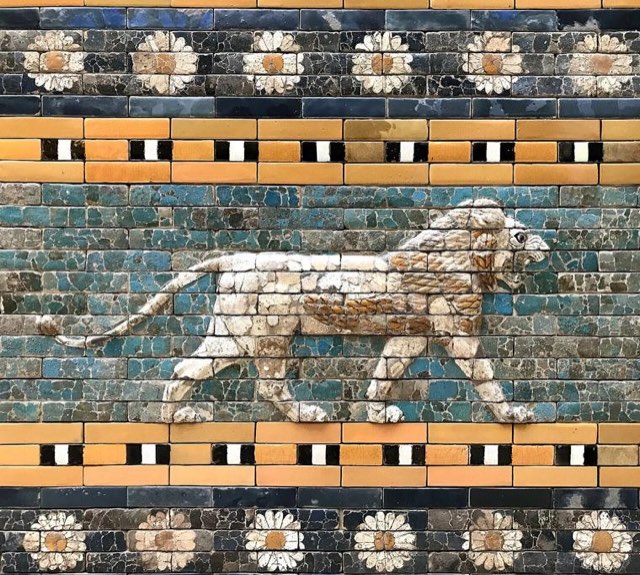

Ancient Civilizations
- Selections from Herodotus’s The History of the Persian Wars, 450 BCEFordham University’s Ancient History Sourcebook · Paul Halsall · read · 1.5 h
Sumerians
- Sumerian MythGrand Valley State University · Michael Webster · read · 1.5 h
Hittites
- The HittitesInternational World History Project · Robert A. Guisepi · read · 1.2 h · archived copy
- The Hittites: The King of Kings, The Written Word, and Above All WarriorsSmithsonian Channel · watch · 15 min · archived copy
Hebrews
- Civilization of the HebrewsInternational World History Project · Robert A. Guisepi · read · 1 h · archived copy
Assyrians
- AssyriaLivius · Jona Lendering · read · 1 h · archived copy
Egyptians
- Dr. Joyce Tyldesley’s “Ancient Egypt and the Modern WorldBBC · read · 1 h
Babylonians
- Babylonian CultureTravis’ Ancient History · read · 1 h · archived copy
Phoenicians
- Origins of the Phoenician EmpirePhoenicia.org · Sanford Holst · read · 1 h
Persians
- A Brief History of Persian EmpirePars Times’ · read · 1.5 h
Alexander the Great
- Alexander the GreatThe History Channel · read · 3 h
- AlexanderMIT · Plutarch · read
Rise of the Byzantine Empire
- Chris Butler’s “The Byzantine Empire: c. 500-1025Flow of History · read · 1.5 h · archived copy
Decline of the Byzantine Empire
- Decline and Fall of the Byzantine Empire: 1025-1453Flow of History · Chris Butler · read · 1 h · archived copy
The Sassanid Empire
- The Sassanid EmpireIran Chamber Society · read · 2 h
Pre-Islamic Arabia
- Ancient Civilizations of the Middle East and Southwest AsiaThe Saylor Foundation · write · 3 h
- Ancient Accounts of Arabia, 430 BCE-550 CEFordham University’s Ancient History Sourcebook · Paul Halsall’s version of · read
Chapter II
Islam and the Emergence of the Muslim State
The emergence of Islam in Arabia during the 7th century CE had a significant social and political impact on the development of the Middle East and Southwest Asia. Muhammad, the founder of the Muslim faith, began preaching to his fellow tribesmen in Mecca and later Medina in the early 600s. By the time of his death in 632, he had united the warring tribes of the Arabian Peninsula into a single religious and political community. Later caliphs (religious successors to Muhammad) conquered surrounding kingdoms and rapidly spread Islam throughout Southwest Asia and the Mediterranean Basin. In this unit, you will examine the origins of Islam and look at its broader political and social influence on the region. You will also explore how Islam evolved from a regional religious faith into a powerful socio-political force that had a lasting impact on the peoples and cultures of the Middle East and Southwest Asia.
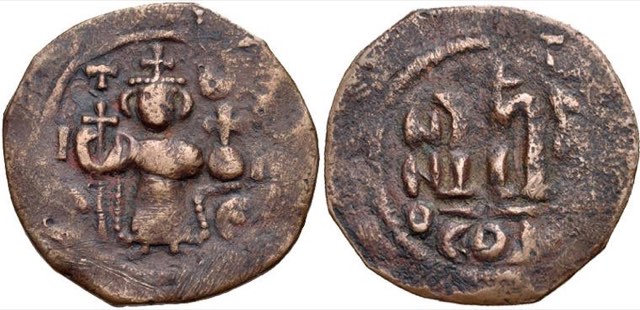

Muhammad
- Muhammad: The Messenger of GodHarvard University · The Pluralism Project’s version of · read · 30 min · archived copy
- Ibn Ishaq’s Selections from The Life of MuhammadFordham University’s Internet Medieval Sourcebook · Paul Halsall · read · 30 min
Early Islam and Islamic Conquests
- The Early Islamic ConquestsFordham University’s Internet Islamic History Sourcebook · Paul Halsall’s version of Fred Donner · read
- How Islam BeganYouTube · The University of Chicago · Fred Donner · watch · 1.5 h
Succession Struggle after Muhammad’s Death
- Medieval Period of ExpansionUniversity of Notre Dame · read · 1 h · archived copy
- The Rightly Guided CaliphsIslamic Web · read · 2 h
Origins of the Sunni-Shi’a Split
- Sunni and Shi’aBBC · read · 2 h
- The Origins of the Shia-Sunni SplitNPR · Mike Shuster · read · 1 h
Comparisons of the Sunni and Shi’a
- Islam and the Emergence of the Muslim StatesThe Saylor Foundation · write · 3 h
- Comparison of Sunni and Shia IslamReligion Facts’ · watch · archived copy
Chapter III
The Umayyad and Abbasid Empires
After the period called “Rightly Guided Caliphs,” the Umayyad Caliphate emerged in the mid-600s CE following a succession struggle among the descendants of Muhammad. In less than 50 years, the Umayyad Dynasty’s military forces secured political control of a vast region stretching from the Punjab region of India westward across the Middle East and North Africa to Spain. Umayyad leaders eventually moved their seat of power from Arabia to Damascus (in modern-day Syria). The Umayyads did not force conquered peoples to convert to Islam, but they did tax non-Muslim peoples heavily to provide revenues for the state. In the mid-700s, growing discontent with Umayyad rule led to a revolt that brought the Abbasid family to power. The Abbasid Dynasty shifted political power from Damascus to Baghdad and attempted to develop bureaucratic institutions to consolidate and manage their vast empire. In this unit, you will study the formation of the Umayyad Empire and its impact on the peoples and cultures of the Middle East and Southwest Asia. You will also look at the differences between Umayyad and the Abbasid imperial administrations and the major challenges that both dynasties faced as they attempted to govern a vast and complex political-religious empire.
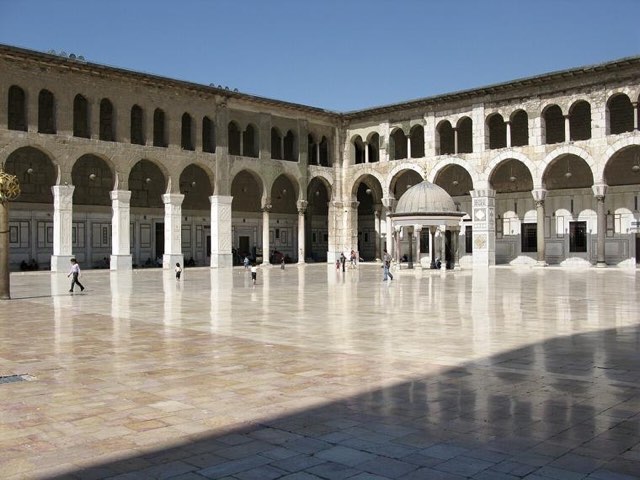

Rise of the Umayyad Empire
- Medieval Period of ExpansionUniversity of Notre Dame · read · 1 h · archived copy
- Ceremonial and Art at the Umayyad CourtFordham University’s Internet History Sourcebook · Oleg Grabar · read · 2 h
Conquest of Spain
- Muslim SpainBBC · read · 2 h
- The Islamic Conquest of Spain Link Fordham University’s Internet Medieval Sourcebook: Peter Halsall’s version of Ibn Abd-el-Hakem’s The Islamic Conquest of SpainFordham University’s Internet Medieval Sourcebook · Peter Halsall’s version of Ibn Abd-el-Hakem · read · 1.5 h
- Muslim SpainBBC · watch · 2 h
Collapse of the Umayyad Empire
- The Collapse of the Umayyad DynastyUniversity of Calgary · The Applied History Research Group · read · archived copy
Shifting Power Base from Damascus to Baghdad
- The Umayyad and the Abbasid EmpiresThe Saylor Foundation · write · 3 h
- Baghdad under the Abbasids, ca. 1000 CEFordham University’s Internet Medieval Sourcebook · Paul Halsall’s version of Yakut · read · 1.5 h
- Abbasid CaliphsBBC · watch · 2 h
Chapter IV
The Social and Cultural Impact of Islam
Islam had a powerful social and cultural impact on the Middle East and Southwest Asia. It served as an overarching social and cultural institution uniting the diverse peoples of the regions conquered by Muslim rulers beginning in the mid-600s CE. Islam promoted strict religious and ethical values and offered specific guidelines for behavioral and social norms. It also promoted the unity of religious and political institutions. With the assent of the Abbasid Dynasty in the mid-700s, the Middle East entered the Islamic Golden Age. Over the next 400 years, Muslim scholars and scientists made significant advances in agricultural production, applied mathematics, chemistry, and other fields. As Islamic cities grew more crowded, water and sewer systems were added and other means were used to promote cleanliness and public health. In this unit, you will examine the social and cultural impact of Islam on the regions conquered by Muslim rulers during the last three centuries of the first millennium CE and take a look at the scientific and humanistic advances of the Islamic Golden Age.
In the Great Books lists Qur’an
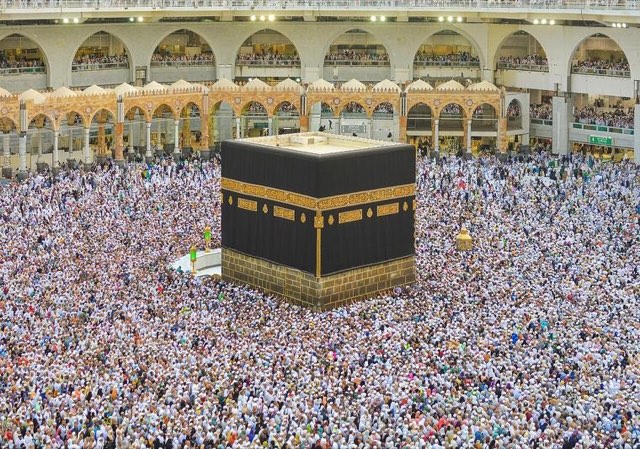

Islamic Theology and Law
- Islamic Law and Its OriginsBBC · Melvyn Bragg · watch · 2 h
Quran as the Original Source
- The KoranQuran.org · Sachiko Murata and William C. Chittick · read · archived copy
Religious Law
- The Islam Project’s “What Is Shariah? Major Sources and Principles of Islamic Lawread · archived copy
The Sunni Tradition
- Schools of JurisprudencePhiltar’s Overview of World Religions · Sunni Tradition · read · 1 h
The Shi’a Tradition
- Shi’a IslamPhiltar’s Overview of World Religions · read · 1 h
Science and Technology
- Science and Civilization in IslamFordham University’s Internet History Sourcebook · Seyyed Hosein Nasr · read
- Muslims’ Contribution to SciencesClassical Islam · watch
- On Medicine, ca. 1020 CEFordham University’s Internet Medieval Sourcebook · Paul Halsall’s version of Ibn Sina · read · 1 h
Chapter V
The Middle East and Southwest Asia in the Middle Ages
Outside forces began to destabilize the expansive Abbasid Empire by the beginning of the second millennium CE. In 1063, Pope Alexander II gave his papal blessing to Christian efforts to drive Abbasid conquerors out of Spain. Then, in response to pleas for aid from the head of the Christian Byzantine Empire, Pope Gregory VII began promoting a holy war against Muslims who had taken control of Jerusalem and the Holy Land in 1095. Over the next two centuries, the Crusades brought Christians and Muslims into direct military conflict over control of the Middle East and Eastern Mediterranean. In the East, the Abbasids faced a growing threat from Mongol invaders. In 1258, the Mongols sacked Baghdad and killed the Abbasid caliph. As a result, central rule in the Abbasid Empire collapsed and political power shifted to new regional bases in Egypt and Turkey. In this unit, you will examine how European and Mongol invaders destabilized the Abbasid Empire during the Middle Ages. You will also look at how the Christian Byzantine Empire (the remnant of the once-vast Roman Empire) attempted to maintain its independence and exert political control over Asia Minor despite threats from Muslim and Western European foes.
The Crusades
- The CrusadesUniversity of Wisconsin-Green Bay · Steven Dutch · read · 2 h · archived copy
The Crusader States in Decline
- Weakness of the Crusader StatesAll Empires · Riders’ · read · 1 h · archived copy
Fall of Jerusalem
- First Crusade - East at the End of the 11th CenturyEdukalife · read · 30 min
Mongol Invasion of the 1200s
- The MongolsUniversity of Wisconsin-Green Bay · Steven Dutch · read · 2 h · archived copy
- On the Tartars, ca. 1220-1221 CEFordham University’s Internet Medieval Sourcebook · Paul Halsall’s version of Ibn al-Athir · read · 2 h
Rise of the Turks
- Chapter IX: The Turkish IrruptionFordham University’s Internet History Sourcebook · J.J. Sounders’ A History of Medieval Islam · read · 3 h
- The Seljuk EmpireAll Empires · Ihsan · read · 2 h · archived copy
Chapter VI
The Ottoman Empire
The collapse of the Abbasid Empire at the end of the 13th century enabled Turkish rulers in eastern Asia Minor to consolidate political power in the region. Over the course of the 14th and 15th centuries, Ottoman Turks chipped away at the Byzantine Empire and established control over territories in the Balkans. In 1453, the Ottomans captured the Byzantine capitol of Constantinople and the Turkish sultanate quickly emerged as a major world power. The Ottoman Empire continued to expand into Eastern Europe and the Mediterranean Basin during the 1500s, but gradually became overextended in the East and the West. During the next three centuries, the Ottomans attempted to consolidate their far-flung political and military holdings while dealing with new threats along the periphery of their empire. During this time period, the Empire also entered a period of economic and cultural decline, and, by the mid-19th century, it had lost much of the economic and political power it had once possessed. Nationalist movements threatened the integrity of the Empire and the Ottomans became dependent on Western European banks for funding to finance modernization projects. Consequently, the Empire was no longer in a position to resist encroachments by imperialist European powers. In this unit, you will look at the rapid expansion and gradual decline of the Ottoman Empire from the 1300s through the end of the 19th century. You will examine the administrative structure of the Ottoman state and consider why central authorities failed to implement important social, cultural, and economic reforms in the 18th and 19th centuries. Finally, you will examine how European nations began to undercut the economic and political power of the Empire at the beginning of the 19th century.
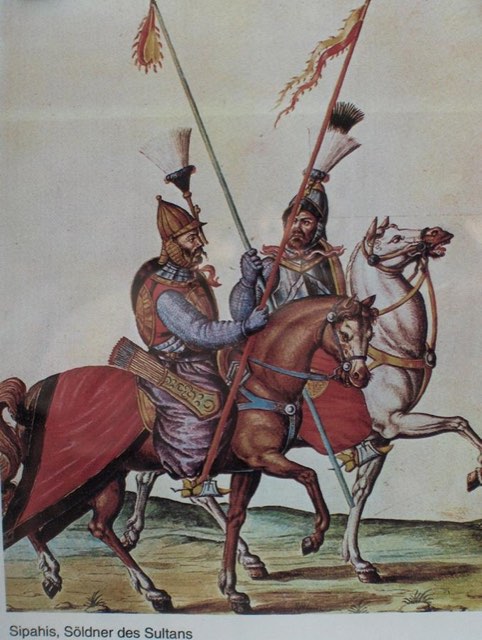

Origins of the Ottoman Empire
- The Origins of the Ottoman EmpireHistory of Islam · Dr. Nazeer Ahmed · read · 1 h · archived copy
- The Question of the Emergence of the Ottoman StateMichigan State University · Halil Inalcik · read · 2 h · archived copy
Fall of Constantinople in 1453
- The Fall of Constantinople, 1453Hellenic Electronic Center’s Professor Dionysios Hatzopoulos’ version of Nicolo Barbaro · read
Ottoman Social, Political, and Military Institutions
- Ottoman InstitutionsLibrary of Congress’s Country Studies · Helen Chapin Metz · read · 1 h
- A Visit to the Wife of Suleiman the MagnificentFordham University’s Internet Modern History Sourcebook · Paul Halsall’s version of · read
Decline of the Ottomans
- The DeclineNaqshbandi · read · 2 h · archived copy
Chapter VII
Persia Under the Safavid Empire and Beyond
The Shi’a Safavid Empire presented a major threat to the Sunni Ottoman Empire. The two empires vied for power especially in Mesopotamia. Although both were Islamic empires, they were political rivals and economic competitors. The Safavids established the Twelver school of Shi’a Islam as the official religion of their empire. Soon after its formation, this Shi’a empire cultivated trade and political relations with the Western powers, especially with Great Britain. These relations mark the beginnings of European intervention in Iran. In this unit, you will learn about the political, artistic, and cultural accomplishments of this empire and its relations with the neighboring Ottoman Empire. In addition to two major dynasties—the Safavids and the Qajars— that ruled Persia between the 16th to the 20th centuries, you will learn about the European involvement in the region.
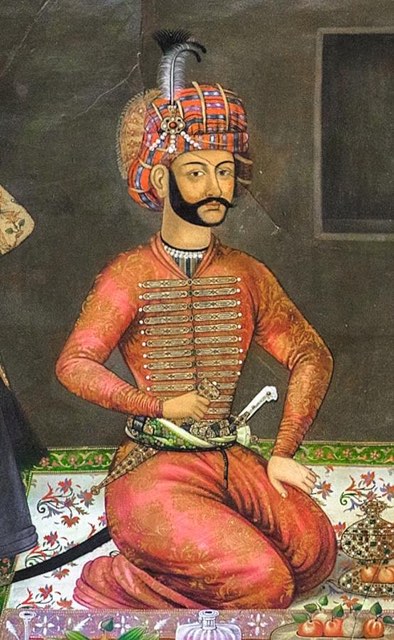

Rise and Decline of the Safavids
- Safavid Empire 1502 – 1736Iran Chamber Society · Shapour Ghasemi · read
- Safavid DynastyiTunes · BBC’s Melvyn Bragg · watch · 2 h · archived copy
Ottoman-Persia Relations
- Ottoman Persian Relations: Afsharid and Zand PeriodsIranica Online · Ernest Tucker’s version of · read · 2 h
The Qajar Period in Persia
- The Qajar DynastyIran Chamber Society · read · 2 h
Safavid Painting
- The Safavids, 1502-1737Art Arena · K. Kianush · read · 1 h · archived copy
Women in Safavid History and Art
- Women in the Safavid EraIran Chamber Society · read · 1 h
The Qajar Art and Culture
- Persia under the Safavid Empire and BeyondThe Saylor Foundation · write · 3 h
- Cultural Improvements in Iran during the Qajar Period and the WestIran Chamber Society · Mahshid Modares’ · read
Chapter VIII
European Imperialism and the Middle East
By the beginning of the 19th century, European imperialist states began to play a direct role in the political affairs and economic development of the Middle East and Southwest Asia. Napoleon invaded Egypt in 1798, but British and Ottoman troops drove French forces out three years later. Anarchy followed until Muhammad Ali took control of the Egyptian government. Once in power, Ali expanded Egyptian control of the region and challenged the power of the Ottoman regime. He and his descendants also engaged in a modernization campaign in Egypt with the assistance of European powers. Egypt fell into debt to French and British investors, who gained effective control of the government. Elsewhere in the region, Russian forces challenged Ottoman control of the Caucasus region and forced the Ottomans to open the Black Sea to international shipping. Russian and British forces also challenged Iranian control of the Caspian Sea region and forced concessions from the Iranian government. By the late 19th century, the Ottoman Empire had lost political control over many of its territories outside Asia Minor. Internal modernization and developments efforts funded by European investors had put the Empire in debt to European nations and reduced its political independence. In the early 1900s, the Empire became increasingly unstable as political movements challenged the power of the sultan inside Turkey. In this unit, you will examine how European imperialism altered Middle Eastern politics, economic affairs, and social life during the 19th and early 20th centuries. You will also evaluate how European nations gained de facto control over many of the states of the region and how they used this power to enrich European investors. Finally, you will look at how Ottoman alliances with Germany and Austria-Hungary in World War I led to the downfall of the Empire following the conflict.
Napoleon and French Imperialism
- Napoleon and the Wars of the First and Second CoalitionsKhan Academy · watch
- French Invasion of Egypt: 1798-1801History of War · J. Rickard · read · 4 h
Greek Nationalism and the Ottoman Empire
- The Greek Revolution and the Greek StateMichigan State University · Steven W. Sowards’ · read · 2 h
The Tanzimat (Reorganization) Period
- Redefining TraditionMichigan State University’s Electronic Middle East Sourcebook · read · 2 h · no longer online
Tanzimat Decree of 1856
- Rescript of ReformWeb Site of the Turkish Constitutional Law · Kemal Gozler’s version of Islahat Fermani · read · 2 h
Constitutional Monarchy in the Ottoman Empire
- The Ottoman ConstitutionWeb Site of the Turkish Constitutional Law · Kemal Gozler’s version of · read
Arab Nationalism
- Documents of Western Betrayal and Arab Opposition (1915-1919)University of Michigan · William Cleveland’s Selection of · read · 3 h · no longer online
The Sykes Picot Agreement of 1916
- The Sykes-Picot AgreementBBC · read · 1 h
- The Sykes Picot Agreement TextUnited Nations Information System on the Question of Palestine (UNISPAL) · read · archived copy
Middle East beyond World War I
- European Imperialism and the Middle EastThe Saylor Foundation · write · 3 h
- The Middle East and the West: WWI and BeyondNPR · watch · 1 h
About this course
This course is Saylor Academy's HIST231, Empire and States in the Middle East and Southwest Asia, one of the complete university courses the Saylor Foundation made free from 2008 and retired in 2015. Saylor licensed its course text under CC BY 3.0; the original is on GitHub. Here it is laid out as chapters, links that have died go to an archived copy from the Internet Archive where one exists, assessments that needed a Saylor login are left out, and people and works are linked to Kulturbase. The readings and lectures belong to their publishers and are linked, not copied. Pictures: Wikimedia Commons, credited under each picture.
All Saylor courses · Free culture courses · The Chautauqua Reading Course