History · Saylor HIST232
Modern Middle East and Southwest Asia
This course will introduce you to the history of the nations and peoples of the Middle East and Southwest Asia from 1919 to the present.You will learn about the major political, economic, and social changes that took place throughout the region during this 100-year period.This course will have a chronological structure.Each unit will include representative primary source documents that illustrate important overarching political, economic, and social themes, such as the emergence of nationalist movements following World War I, European political and economic imperialism during the first half of the 20th century, the creation of the nation of Israel, regional economic development, and the impact of secular and religious trends on Middle Eastern society and culture during the second half of the 20th century.By the end of this course, you will understand how the countries of the region have overcome significant social, economic, and political problems as they have grown from weak former colonies into modern nation-states, and you will recognize the challenges that these nations currently face as they struggle with issues of economic development as well as social and political unrest.
More about this course
This course will introduce you to the history of the nations and peoples of the Middle East and Southwest Asia from 1919 to the present.You will learn about the major political, economic, and social changes that took place throughout the region during this 100-year period.This course will have a chronological structure.Each unit will include representative primary source documents that illustrate important overarching political, economic, and social themes, such as the emergence of nationalist movements following World War I, European political and economic imperialism during the first half of the 20th century, the creation of the nation of Israel, regional economic development, and the impact of secular and religious trends on Middle Eastern society and culture during the second half of the 20th century.By the end of this course, you will understand how the countries of the region have overcome significant social, economic, and political problems as they have grown from weak former colonies into modern nation-states, and you will recognize the challenges that these nations currently face as they struggle with issues of economic development as well as social and political unrest.
Upon successful completion of this course, the student will be able to:
Chapter I
Imperialism and Indpendence
In this unit, we will examine how European nations exercised political control over the former Ottoman territories and shaped the political and social development of these states as part of their broader empires. We will also look at how the inhabitants of these states responded to European imperial rule and how the growth of independence movements in the Middle East and Southwest Asia threatened European control over the region. At the end of World War I, Great Britain and France oversaw the dismantling of the defeated Ottoman Empire. The covenant of the new League of Nations mandated that Britain and France administer and advise the former Ottoman territories in the Middle East “until such time as they are able to stand alone.” In practice, these “mandate territories” became extensions of the colonial empires of Britain and France. During the 1920s and 1930s, colonial administrators controlled the internal political affairs of Lebanon, Syria, Iraq, Palestine, Transjordan, Egypt, and Libya. Only Turkey and Iran exercised significant political independence from European domination.
The Mandate System
- League of Nations MandateWikipedia · read
Formal Breakup of the Ottoman Empire at the End of World War I
- Formal Breakup of the Ottoman Empire at the End of World War IThe Saylor Foundation · read
League of Nations’ Class A Mandate Status
- The Covenant of the League of Nations, December 1924Yale Law School · Lillian Goldman Law Library’s version of · read
British and French Administration of Former Ottoman Territories
- Lecture 16: The Time Between WarsiTunes U · Columbia University · Richard Bulliet’s W3719 History of the Modern Middle East · watch · no longer online
Lebanon and Syria
- French Mandate of Syria and LebanonWikipedia · read
- World War I and The French MandateUS Library of Congress · Thomas Collelo, ed.’s Syria · A Country Study · read
Iraq
- “British Mandate of MesopotamiaWikipedia · read
- The British Mandate in Iraq, 1914-1932Gale/Cengage Learning · Dr. Toby Dodge · read · archived copy
- Iraqi Society, 1914-1974Gale/Cengage Learning · Tareq Ismael · read · archived copy
- The Kurdish Question in Iraq, 1914-1974Gale/Cengage Learning · Dr. Gareth Stansfield · read · archived copy
Palestine and Transjordan
- Lecture 17: Palestine and ZionismiTunes U · Columbia University · Richard Bulliet’s W3719 History of the Modern Middle East · watch · no longer online
Egyptian Nationalism and Independence
- From Occupation to Nominal Independence: 1882-1923, Economy and Society under Occupation, Egypt under the Protectorate and the 1919 Revolution, and The Era of Liberal Constitutionalism and Party PoliticsUS Library of Congress · Helen Chapin Metz, ed.’s Egypt · A Country Study · read
Anglo-Egyptian Sudan
- The Anglo-Egyptian Condominium, 1899-1955 and Britain’s Southern PolicyUS Library of Congress · Helen Chapin Metz, ed.’s Sudan · A Country Study · read
Italian Administration of Libya
- Colony of Italy, Italy and Arab Resistance, The Second Italo-Sanusi War, and The Fourth ShoreUS Library of Congress · Helen Chapin Metz, ed.’s Libya · A Country Study · read
The Turkish Republic
- The Young Turks, World War I, and Atatürk and the Turkish NationUS Library of Congress · Helen Chapin Metz, ed.’s Turkey · A Country Study · read
Iran
- The Constitutional Revolution, World War I, and The Era of Reza ShahUS Library of Congress · Helen Chapin Metz, ed.’s Iran · A Country Study · read
Afghanistan
- The Reign of King Habibullah, 1901-1919, The Reign of King Amanullah, 1919-29, Reform, Popular Reaction, and Forced Abdication, Tajik Rule, January-October 1929, and Muhammad Nadir Shah, 1929-1933US Library of Congress · Peter R. Blood, ed.’s Afghanistan · A Country Study · read
Iran and Soviet Central Asia
- Russian Control and In the Soviet UnionUS Library of Congress · Glenn E. Curtis, ed.’s Kazakstan · A Country Study · read
- Russian Control and The Soviet Union and Recent HistoryUS Library of Congress · Glenn E. Curtis, ed.’s Kyrgyzstan · A Country Study · read
- The Revolutionary Era, Impact of the Civil War and The BasmachiUS Library of Congress · Glenn E. Curtis, ed.’s Tajikistan · A Country Study · read
- Entering the Twentieth Century, The Jadidists and the Basmachis, and The Stalinist PeriodUS Library of Congress · Glenn E. Curtis, ed.’s Uzbekistan · A Country Study · read
Arabia
- The Rise of Abd Al Aziz and The Rule of Abd Al AzizUS Library of Congress · Helen Chapin Metz, ed.’s Saudi Arabia · A Country Study · read
Chapter II
Economic Devlopment
In this unit, we will examine how the Middle East and Southwest Asia developed economically during the Interwar Period and how European economic imperialism left a lasting impression on the economic structure of the region. We will also examine the economic and political impact of World War II on the Middle East and how the war eventually led to independence for many of the mandate territories. In addition to administering political affairs in the mandate territories of the Middle East, Europeans played a major role in the region’s economic development prior to World War II. European firms established subsidiary corporations throughout the region to explore for oil and other natural resources. The mandate territories also served as markets for European manufactured goods. European investors were responsible for road and railroad construction projects as well as many other internal improvements. European control of the local economy bred resentment in many states because local businesses could not compete with powerful European subsidiaries. This growing resentment contributed to the emergence of nationalist movements in many of the mandate territories by the beginning of World War II.
European Economic Imperialism
- World War I and the Continuity of Control in the Middle EastInfinitesque · John L. Clark · read · 15 min
Economic Development and Modernization
- Modern Period: The Rise of Colonial Interests in the Middle East and Pennsylvania State University: Karen Hagemeier Jensen’s EGEE120: Oil: International Evolution Fifty-Fifty: The New Deal in OilUniversity of Notre Dame · Professor Asma Afsaruddin’s Islamic Societies of the Middle East and North Africa · Religion, History, and Culture · read · 1 h · archived copy
Oil Development
- History of Oil DiscoveryQatar Embassy · read · archived copy
Impact of World War II
- The Western Tradition: 48. The Second World WarWGBH Boston · Eugen Weber · watch · archived copy
- Middle East Theatre of World War IIWikipedia · read
Military Conflict in Libya and Egypt
- The Desert WarUS Library of Congress · Helen Chapin Metz, ed.’s Libya · A Country Study · read
- Egypt during the War, 1939-45US Library of Congress · Helen Chapin Metz, ed.’s Egypt · A Country Study · read
British and Soviet Co-Occupation of Iran
- Anglo-Soviet Invasion of IranWikipedia · read
- Cascon Case SOI: Soviet-Iran 1945-46MIT · Lincoln P. Bloomfield and Allen Moulton · read
Expanding Transportation Resources
- Expanding Transportation Resourcesread · no longer online
Unrest and Growing Nationalist Movements in Region
- Rise of Arab nationalism - Ottoman EmpireNew Zealand History Online · read · 30 min · archived copy
Independence of Libya and Syria Following War
- World War II and Independence and Independent LibyaUS Library of Congress · Helen Chapin Metz, ed.’s Libya · A Country Study · read
- World War II and Independence and After IndependenceUS Library of Congress · Thomas Collelo, ed.’s Syria · A Country Study · read
Chapter III
Zionism and the Creation of Israel
In this unit, we will examine the origins and the development of the State of Israel and look at the uneasy relationship between Israel and its Arab neighbors. We will also ask how the creation of Israel impacted the lives of Palestinian inhabitants in the region and forced many to flee Israel and take up residence in massive refugee camps in surrounding nations. The Zionist movement began in the late 19th century as a response to extreme anti-Semitism in Europe. Zionist leaders promoted the creation of a Jewish state in Palestine, the traditional homeland of the Jewish people. Near the end of World War I, the British government publicly supported this plan in what became known as the Balfour Declaration. During the 1920s and 1930s, Jewish immigrants began settling in Palestine and purchasing property for local landlords. As their numbers began to swell, tensions arose with local Arab inhabitants. British colonial administrators attempted to maintain peace in Palestine and impose limits on Jewish immigration, but the policy was only partially successful. At the end of World War II, a massive wave of Jewish settlers—many of them Holocaust victims—began arriving in Palestine. By 1947, the United Nations recommended that part of Palestine become a Jewish state. The following year, Jewish leaders announced the creation of the State of Israel. They immediately faced an invasion by the armies of the Arab nations surrounding Israel.
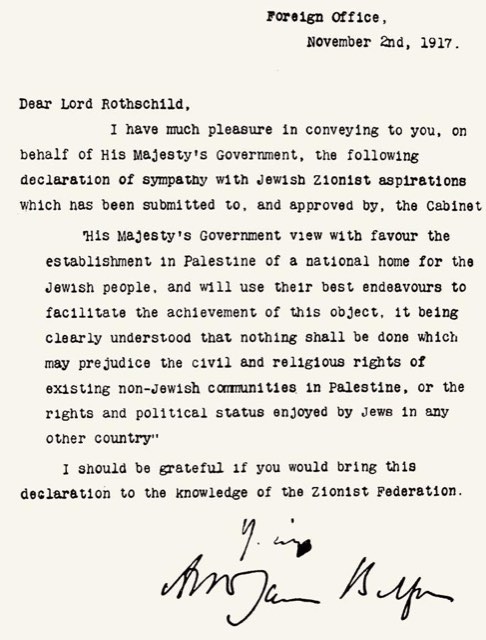

Zionism in Europe
- History of ZionismWikipedia · read
The Balfour Declaration
- The Middle: A Century of Conflict: The Balfour Declaration and the British MandateNPR · Mike Shuster · watch · archived copy
- The Balfour Declaration, 1917Fordham University’s Internet Modern History Sourcebook · Professor Paul Halsall’s version of · read
Palestine during the Interwar Years
- Palestine during the Interwar YearsThe Saylor Foundation · read
Israel
- The Middle: A Century of Conflict: Partition, War and IndependenceNPR · Mike Shuster · watch · archived copy
- The Politics of Displaced Persons in Post-War Europe, 1945-1950Gale/Cengage Learning · Dr. Arich Kochavi · read · archived copy
- Displaced Persons, 1945-1950: The Social and Cultural PerspectiveGale/Cengage Learning · Dr. Angelika Konigseder and Dr. Juliane Wetzel · read · archived copy
1947 United Nations Recommendation for Jewish State in Palestine
- Prelude to Statehood, Problems of the New State,1948-67, and Ingathering of the Exiles Readings: US Library of Congress: Helen Chapin Metz, ed.’s Israel: A Country Study: Prelude to Statehood, Problems of the New State,1948-67, and Ingathering of the ExilesUS Library of Congress · Helen Chapin Metz, ed.’s Israel · A Country Study · read
Creation of Jordan
- Hashemite Kingdom of JordanUS Library of Congress · Helen Chapin Metz, ed.’s Jordan · A Country Study · read
Chapter IV
The Cold War in the Middle East
In this unit, we will examine how the Cold War shaped political and economic development in the Middle East and Southwest Asia during the 1950s and early 1960s. We will also look at how the nations of the region attempted to create stable governments and economic systems in the postcolonial period. Following World War II, all the former mandate territories of the Middle East and Southwest Asia gained their political independence. While these states were no longer under direct European political control, they continued to struggle under the economic, political, and social legacy of European imperialism. Some states, such as Egypt, attempted to nationalize European corporations in order to gain economic control of these companies. In 1956, Egypt’s efforts to nationalize the Suez Canal Corporation led to an armed conflict with Britain and France. The growing Cold War between the United States and the Soviet Union also had a profound impact on the region. The Americans and the Soviets used economic and military aid to secure friendships and political alliances with nations in the region. The United States supported Israel and other pro-Western states, while the USSR provided aid to Israel’s Arab enemies.
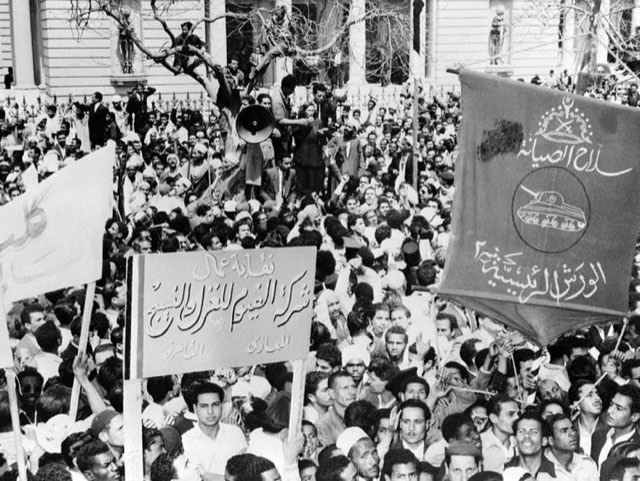

U.S. Military and Economic Support of Israel, Iran, and Saudi Arabia
- The Eisenhower Doctrine on the Middle East, A Message to Congress, January 5, 1957Fordham University’s Internet Modern History Sourcebook · Professor Paul Halsall’s version of · read
Soviet Military and Economic Support of Egypt, Syria, and Jordan
- On the Threshold of Revolution, The Revolution and the Early Years of the New Government: 1952-56, Egypt and the Arab World, and Nasser and Arab SocialismUS Library of Congress · Helen Chapin Metz, ed.’s Egypt · A Country Study · read
- Shishakli Dictatorship, Radical Political Influence, and United Arab RepublicUS Library of Congress · Thomas Collelo, ed.’s Syria · A Country Study · read
- Hussein’s Early Reign and Crisis and RealignmentUS Library of Congress · Helen Chapin Metz, ed.’s Jordan · A Country Study · read
Soviet Central Asia and the Middle East
- RashidovUS Library of Congress · Glenn E. Curtis, ed.’s Uzbekistan · A Country Study · read
- Russian Control and In the Soviet UnionUS Library of Congress · Glenn E. Curtis, ed.’s Kazakstan · A Country Study · read
- The Soviet Union and Recent HistoryUS Library of Congress · Glenn E. Curtis, ed.’s Kyrgyzstan · A Country Study · read
- Creation of Tajikistan, Collectivization, The Purges, and The Postwar PeriodUS Library of Congress · Glenn E. Curtis, ed.’s Tajikistan · A Country Study · read
Challenging European Imperialism
- NasserismWikipedia · read
- Mohammad MosaddeghWikipedia · read
Political Development
- After Authoritarianism: State Development and National Identity in the Middle EastGlobal Politics · Quinn Coffey · read · 45 min · archived copy
Chapter V
Political, Economic, and Social Tensions in the 1960s and 1970s
This unit will look at the sources of political, economic, and social tensions in the Middle East and Southwest Asia during the 1960s and 1970s and examine how these tensions shaped the development of countries in the region. We will also analyze the results of modernization campaigns in these nations and look at how these campaigns altered the place of women and religious minorities in Middle Eastern society. The 1960s and 1970s were an era of political, economic, and social instability for many nations in the Middle East and Southwest Asia. Nations such as Turkey, Egypt, Iraq, Syria, and Lebanon experimented with elected governments during this time period, but military officials and autocratic leaders seized power in many of these countries after electoral chaos and violence threatened social and political stability. Libya, Iraq, Iran, and the Arabian states profited from oil production, but unstable oil prices prevented them from earning consistent revenues. In 1965, these Middle Eastern states, along with nations in South America, Africa, and Asia, formed the Organization of Petroleum Exporting Countries (OPEC) to control oil production and stabilize international oil prices. Over the course of the 1970s, OPEC began to exert greater power internationally. Some Middle Eastern OPEC nations also used oil as an economic weapon when they embargoed oil shipments to the United States after it supported Israel in the 1973 Yom Kippur War.
Turkey
- Turkey after Atatürk, and Crisis in Turkish DemocracyUS Library of Congress · Helen Chapin Metz, ed.’s Turkey · A Country Study · read
Egypt
- Egypt, the Arabs, and Israel, The June 1967 War, The Aftermath of the War: Internal Relations, External Relations, Nasser’s Legacy, Anwar as Sadat, October 1973 War, Political Developments, 1971-78, Egypt’s New Direction, Peace with Israel, and The Aftermath of Camp David and the Assassination of SadatUS Library of Congress · Helen Chapin Metz, ed.’s Egypt · A Country Study · read
Gamal Abdel Nasser and Egyptian Power in the Middle East
- Denouncement of the Proposal for a Canal Users’ Association, 1956Fordham University’s Internet Modern History Sourcebook · Professor Paul Halsall’s version of Gamal Abdel Nasser · read
The United Arab Republic
- United Arab RepublicWikipedia · read
Libya
- The September 1969 Coup, Qadhafi, Socialist People’s Libyan Arab Jamahiriya, Politics of Oil, Libya and Arab Unity, Libyan Ventures in Sub-Saharan Africa, and Relations with the United StatesUS Library of Congress · Helen Chapin Metz, ed.’s Libya · A Country Study · read
Lebanon and Syria
- The Franjiyah Era, The Civil War, and The Sarkis AdministrationUS Library of Congress · Thomas Collelo, ed.’s Lebanon · A Country Study · read
- Coups and Countercoups, 1961-70, Neo-Baath Dominance, 1963-66, The Baath Redirections of 1966 and 1970, and The Assad EraUS Library of Congress · Thomas Collelo, ed.’s Syria · A Country Study · read
Assad and Political Control
- Hafiz al-AssadEncyclopedia Britannica · read · archived copy
Iraq
- The Iraqi Community Party, 1934-1979Gale/Cengage Learning · Professor Peter Sluglett · read · archived copy
- Republican Iraq, Coups, Coup Attempts, and Foreign Policy, and The Emergence of Saddam Husayn, 1968-79US Library of Congress · Helen Chapin Metz, ed.’s Iraq · A Country Study · read
The Arabian States
- Introduction to the Geographical and Historical Background of the Middle East and Pennsylvania State University: Karen Hagemeier Jensen’s EGEE120: Oil: International Evolution ’Old Mossy’ and the Struggle for IranUniversity of Notre Dame · Professor Asma Afsaruddin’s Islamic Societies of the Middle East and North Africa · Religion, History, and Culture · read · 1 h · archived copy
The Creation of OPEC
- Lecture 21: Oil and the StateiTunes U · Columbia University · Richard Bulliet’s W3719 History of the Modern Middle East · watch · no longer online
- Lecture 16: The Oil Shocks and the Rise of the Middle EastUC Berkeley · Daniel Sargent’s 130B The United States and the World Since 1945 · watch · archived copy
- OPEC 50 Years LaterCNN Money · watch
Chapter VI
The Iranian Revolution
In this unit, we will examine the origins of the Islamic Revolution and then take a look at social and political life in Iran under Ayatollah Khomeini’s rule. We will also discuss how the Iranian Revolution destabilized the nations of the Middle East and Southwest Asia and led to religious and political turmoil throughout the region in the following decades. Following World War I, Iran attempted to maintain political independence from European imperial authority, but British investments in Iran’s oil industry gave Great Britain significant control over Iran’s economy and politics. After World War II, Iranian voters elected Mohammed Mossadegh as prime minister. Once in power, Mossadegh began nationalizing Iran’s oil industry. In response, the British and American governments instigated Mossadegh’s overthrow and placed autocratic ruler Shah Mohammad Reza Pahlavi in charge of the country. The Shah supported modernization and secularization of Iranian society and brutally suppressed political and religious opponents. In 1978, strikes and demonstrations against the Shah’s rule led to the Iranian Revolution. The Shah fled Iran, and a theocratic council appointed Ayatollah Ruhollah Khomeini as the new supreme religious leader of the Islamic Republic of Iran.
Origins of the Revolution
- The Shah’s White Revolution, State and Society, 1964-74, Khomeini and Renewed Opposition, and The Coming of the RevolutionUS Library of Congress · Helen Chapin Metz, ed.’s Iran · A Country Study · read
- The ShahC-SPAN Video Library/World Affairs Council of Northern California · watch
- Lecture 23. Iran under the ShahsiTunes U · Columbia University · Richard Bulliet’s W3719 History of the Modern Middle East · watch · no longer online
British and American Imperialism in the 1950s
- The U.S. and Iran: A Difficult HistoryC-SPAN Video Library/National Cathedral’s Center for Global Justice and Reconciliation · read
The Islamic Revolution
- The Bakhtiar Government, The Revolution, The New Constitution, and The Bani Sadr PresidencyUS Library of Congress · Helen Chapin Metz, ed.’s Iran · A Country Study · read
Collapse of the Pahlavi Dynasty
- The Uprising of Khurdad 15, 1979Fordham University’s Internet Modern History Sourcebook · Professor Paul Halsall’s version of Ayatollah Ruhollah Khomeini · read
American Embassy Hostage Crisis
- Iran Hostage CrisisC-SPAN Video Library/Hofstra University · watch · no longer online
Ayatollah Ruhollah Khomeini Appointed Supreme Leader
- Lecture 24: The Islamic Republic of IraniTunes U · Columbia University · Richard Bulliet’s W3719 History of the Modern Middle East · watch · no longer online
Consolidating the Revolution
- Terror and Repression and Consolidation of the RevolutionUS Library of Congress · Helen Chapin Metz, ed.’s Iran · A Country Study · read
Chapter VII
Secular and Religious Tensions in the 1980s and 1990s
In this unit, we will examine how the major conflicts of the 1980s and early 1990s destabilized the nations of the Middle East and contributed to the emergence of militant Islamic fundamentalist movements that objected to western influences in the region and supported a return to strict theocratic Islamic rule. A series of military and political struggles shaped the economic and political development of the Middle East and Southwest Asia in the 1980s and 1990s. In 1979, Soviet military forces swept across the border of Afghanistan and seized political control of the country. Afghani resistance fighters backed by the United States and other Middle Eastern nations gradually began to chip away at the Soviet military forces and eventually forced the USSR to withdraw its forces from Afghanistan in 1988. A year after the Soviet invasion of Afghanistan, Iraqi leader Saddam Hussein took advantage of the chaos of the Iranian Revolution and attacked western Iran. The Iran-Iraq War, which ended the same year as the Soviet withdrawal from Afghanistan, cost the lives of nearly a million Iranians and half a million Iraqis. During this same time period, Israel faced domestic terrorist attacks by members of the Palestine Liberation Organization, a political movement that supported an independent Palestinian state. Finally, in 1990, the United States became directly involved in a military conflict in Iraq and Kuwait after Saddam Hussein invaded the latter country.
Iran-Iraq War
- The Iran-Iraq ConflictUS Library of Congress · Helen Chapin Metz, ed.’s Iraq · A Country Study · read
Consequences of Conflict for Iran and Iraq
- Thirty Years After the Iran-Iraq War: Lessons of Counterproliferation and WMD DeploymentJames Martin Center for Nonproliferation Studies (Monterey Institute)/Dr. Ibrahim al-Marashi · watch · no longer online
Afghanistan
- Early Links with the Soviet Union, Experiment with Liberalized Politics, Daoud as Prime Minister, 1953-63, The King Reigns: The Last Decade of the Monarchy, 1963-73, Daoud’s Republic, July 1973-April 1978, and Communism, Rebellion, and Soviet InterventionUS Library of Congress · Peter R. Blood, ed.’s Afghanistan · A Country Study · read
Soviet Invasion
- Charlie Wilson’s WarC-SPAN BookTV · watch · no longer online
American and Regional Opposition
- Charlie Wilson’s WarC-SPAN BookTV · watch · no longer online
Israel
- 1967 and Afterward, The War of Attrition, The October 1973 War, The Decline of the Labor Party, Oriental Jews, The Begin Era, The Peace Process, The Occupied Territories, and Israel in LebanonUS Library of Congress · Helen Chapin Metz, ed.’s Israel · A Country Study · read
The Palestine Liberation Organization
- The PLO and the Palestinian Armed StruggleGale/Cengage Learning · Yezid Sayigh · read · archived copy
Palestinian Self-Rule
- Israel-Palestine Liberation Organization Agreement, 1993Yale Law School · Lillian Goldman Law Library · read
Collapse of the Soviet Union
- The End of the Cold WarBoundless · read · 30 min · no longer online
The First Gulf War
- Gulf WarWikipedia · read
- The Gulf WarUS Department of State · United States · A Country Study · read
Emergence of Militant Islamic Fundamentalism
- Emergence of Militant Islamic FundamentalismThe Saylor Foundation · read
Religion and Politics
- Religion and PoliticsThe Saylor Foundation · read
Political, Religious, and Social Objectives
- Political, Religious, and Social ObjectivesThe Saylor Foundation · read
Militarism and Terrorism
- TerrorismUniversity of Notre Dame · Professor George Lopez’s Introduction to Peace Studies · read · 40 min · archived copy
Regional Impact in the 1990s
- Events Leading Up to the 2003 Invasion of IraqHistory Commons · read · 1 h · archived copy
International Impact in the 1990s
- The War on Terror and the Presidency of George W. BushU.S. Department of State · Recent North Carolina · read · 30 min · archived copy
Chapter VIII
The Middle East and Southwest Asia in the 21st Century
In this final unit, we will examine some of the key developmental challenges that nations in the Middle East and Southwest Asia face today. We will also look at the growing tensions between secular Islamic states and supporters of Islamic fundamentalism. Finally, we will examine the role that such external political agents as the United States and the European Union continue to play in the development of the region. Middle Eastern and Southwest Asian nations continue to struggle with political, economic, and social problems in the 21st century. Many of these nations remain economically underdeveloped and continue to depend on oil revenues as their major source of income. American military involvement in Iraq and Afghanistan has further inflamed regional tension and has encouraged militant Islamic fundamentalist movements, such as al-Qaeda, to plot terrorist attacks on American allies in the region. In Iran, conflicts between political moderates and extremists boiled over during the aftermath of the 2009 presidential elections. For nations with a tradition of democratic rule, such as Israel and Turkey, the first decade of the 21st century has been a period of economic success tempered by internal ethnic and social unrest.
Oil and Economic Development
- Oil and Economic Developmentread · no longer online
American Hegemony
- American Hegemonyread · no longer online
War in Afghanistan
- War in Afghanistan (2001-Present)Wikipedia · read
War in Iraq
- Invasion of IraqThe Saylor Foundation · read
Al-Qaeda
- After Words with Peter BergenC-SPAN Video Library · watch
- Osama Bin LadenC-SPAN Video Library · watch
Terrorism and Islamic Fundamentalism
- Lecture 25: A New Era of ViolenceiTunes U · Columbia University · Richard Bulliet’s W3719 History of the Modern Middle East · watch · no longer online
Iran
- Iran Country ProfileBBC News · read
- After Words with Hooman MajdC-SPAN Video Library · watch
The 2009 Election and Internal Power Struggles
- Clashes Show Unresolved Iran CrisisBBC News · Jim Muir · read
Israel
- Israelread · no longer online
Turkey
- Turkeyread · no longer online
The Modernization Challenge
- The Modernization Challengeread · no longer online
About this course
This course is Saylor Academy's HIST232, Modern Middle East and Southwest Asia, one of the complete university courses the Saylor Foundation made free from 2008 and retired in 2015. Saylor licensed its course text under CC BY 3.0; the original is on GitHub. Here it is laid out as chapters, links that have died go to an archived copy from the Internet Archive where one exists, assessments that needed a Saylor login are left out, and people and works are linked to Kulturbase. The readings and lectures belong to their publishers and are linked, not copied. Pictures: Wikimedia Commons, credited under each picture.
All Saylor courses · Free culture courses · The Chautauqua Reading Course