History · Saylor HIST242
Modern Northeast Asia
Only 150 years ago, the empires and states of Northeast Asia—for many centuries far more developed than their contemporaries in most of Asia, and all of Europe, the Americas and Africa—found themselves powerless in the face of the military, technological and economic might of the European imperialist powers and the United States. Yet, today, most of these states have once again become key players in the contemporary world order: economically, politically, culturally, and, in many instances, militarily.
More about this course
In this course, we will study how and why the ‘modern’ transformation of Northeast Asia came about, examining both the indigenous and foreign ideas and institutions on which the transformations were based, and comparing how change manifested in different times and places. We will analyze many of the problems faced both domestically and internationally during this transformation, and will evaluate the prospects for the region in the 21st century. In order to do so, we will trace the political, economic and cultural development of Northeast Asia from late imperial times (the eighteenth-nineteenth centuries) to the present. In particular, we will analyze tensions within and between countries over power, status and resources, assess the challenges of preserving ‘tradition’ while attaining ‘modernity’, and distinguish competing concepts of ‘modernization’ and ideas about how it should be accomplished. We will also assess the importance of ideas and ideologies (such as nationalism, imperialism, communism, capitalism), and the ways in which they affected—and continue to affect—the domestic political, economic and social development of individual countries, and shape their relations with other states within and beyond the region. Using both primary sources (such as government documents, speeches and writings by major political, intellectual, and cultural figures of the time, artifacts of everyday life, still and moving images) and secondary sources (such as lectures and readings), we will attempt to understand and evaluate some of the past and present dynamics of this most dynamic region both from ‘within’ and from ‘without’.
Subject-Specific Learning Objectives
Upon successful completion of this course, the student will be able to:
Chapter I
The Early Modern Era
In this unit, we will first ask some important questions about the origins of the modern period and the very concept of ‘modern’ itself. We will then survey the histories of Tokugawa Japan, Qing China and Chos?n (Joseon) Korea during the time-frame variously known as the ‘late imperial’, ‘early modern’, or ‘late traditional’ period; that is, the eighteenth-mid-nineteenth centuries. Examining broad economic, political, intellectual and social trends during this period, we will evaluate the extent to which they can be considered ‘traditional’, ‘modern’ or precursors of modern developments. Last, but by no means least, we will assess the degree to which Japan, Korea and China were isolated from the outside world by ‘closed door’ or ‘seclusion’ policies designed to keep the local population in and foreigners out.
Introduction: Locating the Modern Era
- China and Europe 1500-2000 and Beyond: What is Modern?Columbia University · Asia for Educators’ · read · 1.5 h
Tokugawa Japan
- Tokugawa JapanColumbia University · Asia for Educators’ · watch · 1.2 h
- Onna daigaku (Greater Learning for Women)George Mason University · Ekiken Kaibara · read · 15 min
- Codes of Merchant Houses: Codes of the Okaya HouseColumbia University · Asia for Educators’ · read · 15 min
- The Will of the ShogunPBS’ · watch
Late Qing China
- Achievements and Limits of Manchu RuleHarvard Extension School · watch · 30 min · no longer online
- China and Europe 1500-2000 and Beyond: What is Modern?Columbia University · Asia for Educators’ · read · 1.2 h
Late Chos?n Korea
- History of Korea Part IThe Korea Society · Charles Armstrong · watch · 35 min · archived copy
- Korea: The Choson (Yi) Dynasty 1392-1910Columbia University · Asia for Educators’ · read · 10 min
- On Abolishing SlaveryColumbia University · Asia for Educators’ Excerpts from the Pangye Surok · Yu Hy?ngw?n · read · 20 min
- Excerpts from the Y?yudang Ch?ns?: Ch?ng Yagyong on the Roots of Royal AuthorityColumbia University · Asia for Educators’ · read · 20 min
Seclusion: Fact or Fiction?
- Closed Country Edict, 1635 and Exclusion of the Portuguese, 1639Wake Forest University · Sara Watt’s Version of Tokugawa Iemitsu · read · 10 min
- The Reception of the First English Ambassador to China, 1792Fordham University · Paul Halsall’s Version of · read · 10 min
- Qianlong: Letter to King George III, 1793Fordham University · Paul Halsall’s Version of · read · 10 min
- Korea 1800-1860: Intellectual and Social Reactions to Western ContactsThe Korea Society · Bonnie S. Kim · read · 30 min · archived copy
- Rise and Fall of the Canton Trade System: Parts I, II, and IIIMIT Visualizing Cultures · Peter Perdue · read · 2 h · archived copy
Chapter II
The Barbarians Are Coming
Since the discovery of new sea-lanes to Asia in the sixteenth century, commerce between Asia and Europe had accelerated rapidly. Following the industrial revolution, European traders gradually expanded their commercial interests in Asia, interests later supported by their governments with political and military action, leading eventually to conquest and colonization of many Asian states and societies.
Barbarians
- On Sinifying the Western BarbariansColumbia University · Asia for Educators · Yi Hangn? · read · 10 min
- The Barbarians’ NatureColumbia University · Asia for Educators · Aizawa Seishisai · read · 20 min
The First Opium War
- The Rise and Fall of the Canton Trade System Part IIIMIT Visualizing Cultures · Peter Perdue · read · 40 min · archived copy
- Opium and the Opium WarsHarvard Extension School · watch · 1 h · archived copy
- Letter to Queen VictoriaBrooklyn College CUNY · Paul Halsall’s Version of Lin Zexu · read · 40 min · archived copy
- Treaty of NanjingUSC US-China Institute · read · 20 min · archived copy
Domestic Rebellions in Qing China
- Christianity and Chinese SalvationHarvard Extension School · watch · 1 h · no longer online
- The Land System of the Heavenly KingdomBrooklyn College CUNY · Paul Halsall’s version of Hong Xiuquan · read · 45 min · archived copy
The Opening of Japan
- Black Ships and SamuraiMIT · Visualizing Cultures · John Dower · read · 1.5 h · archived copy
- When we landed in JapanFordham University · Paul Halsall’s Version of Admiral Perry · read · 30 min
- The President’s LetterFordham University · Townsend Harris’ · read · 15 min
Chos?n: ‘The Hermit Kingdom’
- Primary Sources Related to Early Contact between Korea and the United StatesThe Korea Society · read · 30 min · archived copy
Chapter III
Reform and Resistance
Despite the widespread view of Europeans and Americans as barbarians, it was quickly recognized that the weapons and technologies which had allowed them easily to vanquish the dominant Asian power, Qing China, might be worth studying if Asia were to be able to resist continued foreign incursions and humiliations, as well as to defeat various rebellious uprisings that had erupted on home-soil (largely unrelated to the Western intrusion).
Japan
- The Meiji Restoration and ModernizationColumbia University · Asia for Educators’ · read · 15 min
- Throwing off Asia IReading · MIT Visualizing Cultures · John Dower · read · 1.8 h
- The Charter Oath (1868) and Japan’s 1889 ConstitutionColumbia University · Asia for Educators · read · 1 h
The Fall of the Tokugawa
- Introduction to China’s Modern HistoryColumbia University · Asia for Educators’ · read · 15 min · archived copy
China
- Introduction to China’s Modern HistoryColumbia University · Asia for Educators’ · read · 15 min
Korea
- History of Korea Part IIKorea Society · Charles Armstrong · watch · 30 min · archived copy
Tonghak
- Learning Truth and Twelve Reforms Proclaimed by the Tonghak Overseer’s OfficeAsia for Educators · Primary Source Documents · Ch’oe Cheu · read · 45 min
Attitudes to ‘Western’ Knowledge: Acceptance, Resistance, Adaptation
- On the Adoption of Western Learning; Excerpts from Yan Fu’s Learning from the West; Excerpts from Liang Qichao’s Observations on a Trip to AmericaColumbia University · Asia for Educators’ Excerpts from Feng Guifen · read · 1 h
Iwakura Mission
- The Chinese Educational MissionChinese Educational Mission Connections 1872-1881 · read · 1 h · archived copy
Chapter IV
Redrawing the Map: The Changing Balance of Power in Northeast Asia
This unit examines the rise of Japan as the dominant economic and military power in the region from the late nineteenth century until World War II. We will look at why Japan engaged in imperialist expansion and how its expansionist efforts brought it into conflict over territory and resources with existing Asian powers (China) and rising ones (Russia and the US). We will also examine domestic developments in Japan from the late Meiji through the Taish? period and into the early Sh?wa period (until the mid-1930s), and the ways in which they not only shaped Japanese society, but also supported its foreign exploits. (See Unit 6 for details of Japanese colonial rule.)
Japan Becomes an Imperialist Power
- Okuma: from Fifty Years of New JapanFordham University · Paul Halsall’s version of · read · 20 min
- Engagement between Japan and China Respecting Formosa 1874Taiwan Documents Project · read · 15 min
The Sino-Japanese War
- Throwing off Asia IIMIT Visualizing Cultures · John Dower · read · 1.5 h · archived copy
Outcome of the War: Treaty of Shimonoseki, Cession of Taiwan
- Treaty of Shimonoseki 1895Taiwan Documents Project · read · 30 min
Russia in Korea
- Russia’s Imperial Destiny, 1891Fordham University:Paul Halsall’s Version of Prince Ukhtomskii · read · 20 min
The Russo-Japanese War
- Asia RisingMIT Visualizing Cultures · John Dower · read · 1.5 h · archived copy
- Paul Halsall’s Version of Lt. Tadayoshi Sakurai ‘The Attack upon Port ArthurFordham University · read · 15 min
Japan and Russia Scramble over Mongolia and Manchuria
- Documents regarding the negotiations between Japan and ChinaHathi Trust · read · 1 h
Japan Pressures China
- Japan and China: A Study of the Recent Problems between Japan and China (1918)Hathi Trust · Secretary of the Eastanian, Yu Ledbetter Lee · read · 1 h · no longer online
Developments in the Japanese Home Islands
- Social Protest in Imperial Japan: The Hibiya Riot of 1905MIT Visualizing Cultures · Andrew Gordon · read · 1.5 h
- Illusions of the White Race (1921)Columbia University · Asia for Educators’ Okuma Shigenobu · read · 15 min
- Foreign Policy of JapanMarxists.org · Katayama Sen · read · 30 min
Taish? Democracy
- War and SocietyLecture and Reading · University of Nottingham · Susan Townsend · read · 45 min · archived copy
Chapter V
China: From Reform to Revolution
By the late nineteenth century, it was clear that Self-Strengthening was not enough to keep Europe or the US at bay. Furthermore, Japan was rapidly modernizing and Chinese students were flocking there to study the ‘ways of the West’ in the hope that they might be able to ‘save China’. In the process, many of them transformed from reformist to revolutionary modernizers, and when they returned to China promoted their ideas to the public through the newly burgeoning newspaper industry. Following humiliating and devastating defeat in the 1894-1895 War with Japan, the revolutionaries’ ideas gained traction, and despite a last-ditch effort by the Qing to enact widespread reforms that would establish a constitutional monarchy, it was too little too late, and the Imperial system was swept away in the 1911 Revolution.
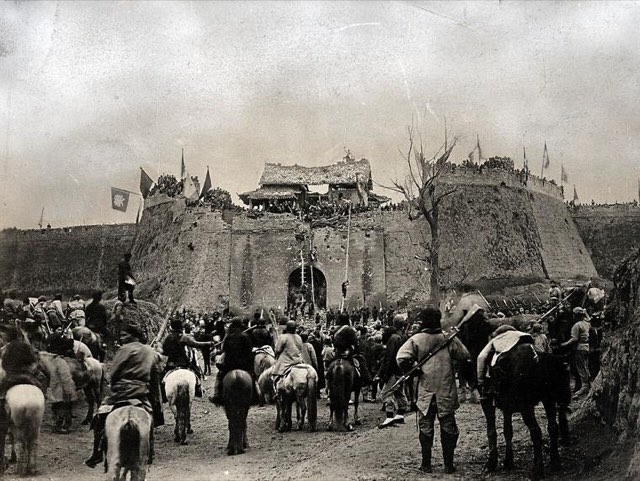

The Hundred Days Reform
- The End of Imperial Rule and Foreign Models for a Chinese RepublicHarvard Extension School · watch · 1.8 h · archived copy
The Boxer Rebellion
- The Boxer Rebellion, 1900, Paul Halsall’s Version of Yao Chen-Yuan’s My Adventures During the Boxer War, 1900 and Paul Halsall’s Version of Pierre Loti’s When the Allies Entered Peking, 1900Fordham University · Paul Halsall’s Version of Fei Ch’i Hao · read · 1.2 h
- The Boxer Protocol100jia.net · read · 30 min
The 1911 Revolution
- The Revolutionary ArmyIUP · Zou Rong · read · no longer online
- Proclamation of the Abdication of the Manchus, 1912Fordham University · J. S. Arkenberg’s Version of · read · 10 min
- Fundamentals of National ReconstructionCUNY · Paul Halsall’s Version of Sun Yat-sen · read · 30 min · archived copy
The May 4th Movement
- Chinese Civilization vis-à-vis Eastern and Western Philosophies, Hu Shi’s Our Attitude Towards Modern Western Civilization, Chen Duxiu’s The True Meaning of Life 1917 and Our Final Awakening 1916Columbia University · Asia for Educators’ Liang Shuming · read · 1 h · archived copy
The New Life Movement
- Essentials of a New Life MovementColumbia University · Asia for Educators · Chiang Kai-shek · read · 20 min · archived copy
The Chinese Communist Party
- A Party Member’s Personal Interests Must be Unconditionally Surrendered to the Interests of the PartyMarxists.org · Liu Shaoqi’s How to be a Good Communist · Section VI · read · 30 min
The Long March
- The Long MarchColumbia University · Asia for Educators’ · read · 30 min
Chapter VI
Japanese Colonial Rule in Taiwan and Korea
Japan acquired its first colony, Taiwan, in 1895, and its second, Korea, in 1910.
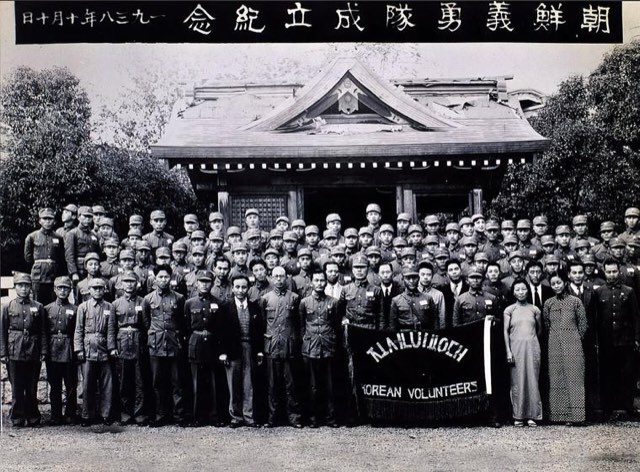

Historical Background (Taiwan’s status)
- The Island of Formosa 1869Reed College · H.W. Bates’ · read · 15 min · archived copy
Qing Cession of Taiwan and Taiwan’s ‘Declaration of Independence’
- Official Declaration of Independence of the Republic of Formosa 1895Wikipedia · read · 15 min
Korea
- History of Korea Part IIKorea Society · Charles Armstrong · watch · 30 min · archived copy
- The Old People and the New GovernmentColumbia University · Asia for Educators’ Komatsu Midori · read · 20 min
March 1st Movement
- Declaration of Independence (March 1, 1919)Columbia University · Asia for Educator · read · 30 min
Koreans in the Japanese Military: Soldiers and ‘Comfort Women’
- Oral Histories of the Colonial Era and Oral Histories of the ‘Comfort Women’Columbia University · Asia for Educators’ Primary Source Documents · read · 30 min
Colonialism and Development
- Did it Really Help to be a Japanese Colony? East Asian Economic Performance in Historical Perspective (1)Japan Focus · Anne Booth · read · 1 h · archived copy
Chapter VII
Social and Cultural Change in the Early Twentieth Century
Despite the initial efforts of the traditional elite to adopt little more from the Western barbarians than advanced industrial and military technologies, a market for translations of foreign writings quickly emerged, exposing the literate classes to a wide range of ideas, many of which challenged the traditional social and political order. Likewise, ever-growing numbers of students traveled to Europe and the USA where they studied far more than mere ‘techniques’. When they returned, they often promoted radical political and social ideas, in both political writings and activities, and through art forms, such as literature, film and theater. As cities expanded and the numbers of educated urbanites grew, a consumer culture began to emerge.
Vernacular Literature
- Literature of a Revolutionary PeriodMarxists.org · Lu Xun · read · 30 min
Consumer Culture
- Selling Shiseido I and Selling Shiseido IIMIT Visualizing Cultures · Gennifer Weisenfeld · read · 1.5 h · archived copy
- Commercial AdvertisementWashington University’s A Visual Sourcebook of Chinese Civilization · watch · 30 min
Social Movements
- The Labor Movement in JapanMarxists.org · Katayama Sen · read · 45 min
- The Eta MovementMarxists.org · Katayama Sen · read · 30 min
- Miss Chao’s SuicideMarxists.org · Mao Zedong · read · 10 min
- March 1 and May 4, 1919 in Korea, China and Japan: Toward an International History of East Asian Independence MovementsJapan Focus · Nishi Masayuki · read · 30 min · archived copy
Chapter VIII
Hot and Cold Wars
The tensions in Northeast Asia and Japan’s intensifying expansionist ambitions led ultimately to the outbreak of war in 1937. While the Japanese had imagined a swift conquest of China would be possible, and quickly overran the industrialized eastern heartland, the western half of the country proved much more inaccessible. Japan became bogged down in a long conflict, while simultaneously expanding into Southeast Asia and taking on the US. Despite spreading its resources so thinly, Japan was able to wage a long and often successful campaign, but finally surrendered after the US dropped two atomic bombs on Hiroshima and Nagasaki in August 1945.
WWII in Northeast Asia
- The United States and China in War and RevolutionHarvard Extension School · watch · 1 h · archived copy
- Japanese Ambassador Hiroshi Saito on the Conflict in the Far EastColumbia University · Asia for Educators’ · read · 15 min
- The Nanking Massacre, 1937Fordham University · Paul Halsall’s Version of · read · 15 min
- Boycott Japanese GoodsWikimedia · Madam Chiang · watch · 10 min
The Greater East Asian Co-Prosperity Sphere
- Map of Japanese Empire in 1942Wikipedia · watch
- Greater East Asia Co-Prosperity SphereUniversity of Nottingham · Susan Townsend · watch · 50 min · archived copy
- Propaganda Poster from Manchukuo and Froginawell.net: Alan Baumler’s Raise high the flag, whatever it stands forWikipedia · watch · 10 min


The Fall of Japan
- The End of Empires: Japanese and ColonialHarvard Extension School · Charles S. Maier’s World War II History · An Open Harvard Course · watch · 35 min · archived copy
Fire-bombings
- The Night Hell Fell from the Sky and Victor Fic’s US Firebombed Tokyo as Last Option: A Response to David McNeillJapan Focus · David McNeill · read · 30 min · archived copy
Atomic Bombs
- Ground Zero 1945: A Schoolboy’s StoryMIT Visualizing Cultures’ · watch · 1 h
- A Tale of Two CitiesUS War Department · watch · 30 min · archived copy
The End of Empire
- Surrender Rescript to Japanese Troops Aug. 17 1945, Surrender Rescript of Emperor Hirohito Sept. 2, 1945, Instrument of Surrender, Sept 2, 1945, SCAP General Order no.1,’ Surrender Order of the Imperial General Headquarters of Japan Sept 2 1945, and Act of Surrender (China Theatre)Taiwan Documents Project · Emperor Hirohito · read · 1.2 h
The Korean War
- History of Korea Part IIThe Korea Society · Charles Armstrong · watch · 20 min · archived copy
- Army in Action Episode X: The Cobra Strikes.Youtube · Public.Resource.org · USA Department of Defense · watch · 40 min
- Order to the Chinese People’s Volunteers, Comment on Hearing of Mao Anying’s Death, and The Chinese People’s Volunteers Should Cherish Every Hill, Every River, Every Tree, and Every Blade of Grass in KoreaMarxists.org · Mao Zedong · read · 30 min
Chapter IX
Japan: Out of the Ashes
This unit studies the history of Japan from the end of WWII to the 1990s. It explores the impact of the US occupation and the Cold War, and the formulation of a new constitution on subsequent political and economic development. It also addresses the question of war responsibility and guilt (a topic to which we will return in the final unit in the context of regional relations), and the ways in which this has affected Japan’s self-identity as a ‘Peace State’.
US Occupation
- American OccupationUniv. of Nottingham · Susan Townsend · read · 1 h · archived copy
1946 Constitution
- Text of Japanese ConstitutionHanover College · Primary Source Document · read · 1 h
Life under US Occupation—SCAP
- Doing Photography and Research in the Allied Occupation of Japan 1948-1951Ohio State University · John W. Bennett · watch · 1.5 h · archived copy
Japan’s Economic Miracle
- From Apocalypse to MiracleUniversity of Nottingham · Susan Townsend · read · 1 h · archived copy
- The Poisoning of MinamataUniversity of Minnesota · Douglas Allchin · read · 30 min · archived copy
Japanese Politics and the Dominance of the LDP
- The Japanese Bureaucracy, Factions in Japanese Politics and Interest Groups in Japanese PoliticsColumbia University · Asia for Educators’ · watch · 45 min
Japan as ‘Peace State’
- Treaty of Peace with Japan 1951Taiwan Documents Project · read · 1 h
- US-Japan Security Treaty 1951Columbia University · Asia for Educators’ · read · 20 min
Contemporary Japanese Society
- Japanese Society and Education and WorkColumbia University · Asia for Educators’ · watch · 30 min
Chapter X
The Asian Tigers
After WWII, Japan quickly rebounded. It was economically booming by the 1960s, and was one of the richest countries in the world from the 1970s onwards. The Japanese ‘miracle’, was soon followed by spectacular economic growth in the “Four Little Tigers”: Hong Kong, Singapore, South Korea and Taiwan. In this unit, we will explore the origins of this growth (excluding Singapore), as well as some of the domestic and international political factors and social and cultural matrices that may have catalyzed or obstructed it along the way. We will also examine the ways in which economic success was deployed by authoritarian regimes to stave off calls for democratization, and assess whether indeed authoritarian rule was a necessary condition for development (an argument China uses today, as we will see in Unit 13).
Economic Growth
- Hong Kong: Chapter 4: Industrial Growth and Growing PainsHathi Trust · Gene Gleason · read · 1 h
Taiwan
- Memorandum on the Situation in Taiwan April 1947Taiwan Documents Project · John Leighton Stuart · read · 1.2 h
- Inscription on the 228 Massacre MonumentTaiwan Documents Project · read · 15 min
Economic Development
- The United States and the Third World Since 1945 Chapter 10: Nick Cullather: Fuel for the Good Dragon: The United States and Industrial Policy in Taiwan 1950-1965Ohio State Press · Peter L. Hahn and Mary Ann Heiss eds’ · read · 1 h · archived copy
South Korea
- Population Change and Development in KoreaAsia Society · read · 30 min
- The Park Chung Hee Era: The Transformation of South KoreaThe Korea Society · Ezra Vogel and Charles Armstrong · watch · 1.5 h · archived copy
Anti-Communism as State Raison d’Être
- South Korean Propaganda LeafletWikimedia Commons’ · watch · 5 min

Chapter XI
Communism in Northeast Asia
With the success of the Bolshevik Revolution in 1917, communism gained a rapid foothold in Northeast Asia. Social reformers were attracted by the message of equality, nationalists by the fact that Russia—a largely agrarian, barely industrialized society like their own—could bypass the historical materialist stage of capitalism (represented by Europe and the United States) to reach the ‘higher’ evolutionary stage of socialism. Mongolia, long a target of Tsarist Russian designs, but still under de jure Chinese sovereignty, found its independence movement quickly taken over by communists, and was thus able to maintain its de facto independence from China (achieved in 1921) with support from the USSR, forming the Mongolian People’s Republic in 1924.
Proto-nationalism
- Nomads and Commisars: Mongolia RevisitedHathi Trust · Owen Lattimore · read · 30 min
Formation of Mongolian People’s Republic
- Nomads and Commisars: Mongolia RevisitedHathi Trust · Owen Lattimore · read · 1.2 h
Mongolia after WWII
- Nomads and Commisars: Mongolia RevisitedHathi Trust · Owen Lattimore · read · 45 min
Formation of the Democratic People’s Republic of Korea
- On the Establishment of the Workers’ Party of North Korea and the Question of Founding the Workers’ Party of South KoreaMarxists.org · Kim Il Sung · read · 45 min
Aftermath of Civil War
- The Destruction and Reconstruction of North Korea 1950-1960Asia-Pacific Journal · Charles Armstrong · read · 30 min · archived copy
Chuch’e (Juche) Ideology
- The Political Philosophy of JucheStanford Journal of East Asian Affairs · Grace Lee · read · 45 min · archived copy
The PRC under Mao
- Communist Liberation and China’s Leap Forward to CommunismHarvard Extension School · watch · 2 h · archived copy
Formation of the People’s Republic of China
- The Chinese People Have Stood Up and Proclamation of the Central People’s Government of the PRCMarxists.org · Mao Zedong · read · 30 min
Minority Policies
- Telegram to Xinjiang Political and Military Authorities and On the Peaceful Liberation of TibetMarxists.org · Zhu De · read · 15 min
Cultural Revolution
- Red Guards Destroy the Old and Establish the NewMarxists.org · Peking Review · read · 15 min
- Witness: Chinese Cultural RevolutioniTunes podcasts · Witness Archive 2011 · watch · archived copy
- Morning SunHarvard Extension School · watch · 1 h · archived copy
Relations with USSR and Eastern Bloc
- The Soviet Leading Clique is a Mere Dust HeapMarxists.org · Mao Zedong · read · 15 min
China as ‘Leader’ of Third World and International Socialist Movement
- The People of Asia, Africa and Latin America Should Unite and Drive American Imperialism back to where It Came fromMarxists.org · Mao Zedong · read · 15 min
Chapter XII
Democratization in South Korea, Taiwan and Mongolia
Despite (or perhaps because of) economic success in South Korea and Taiwan, long championed by the state as a justification for continued authoritarian rule, the clamor for democracy did not cease. In the face of growing domestic and international pressure, the regimes in both countries finally relented and began to implement democratic reforms, first at the local, then at the national level. Since the 1990s, both countries have had vibrant representative democracy and an entirely free (and frequently highly partisan) press. Mongolia, meanwhile, democratized following the adoption of the perestroikaand glasnostpolicies in the USSR. As in the USSR, the reforms were soon not felt to have gone far enough, and following massive demonstrations in early 1990, multiparty democracy was introduced and direct election of the president authorized.
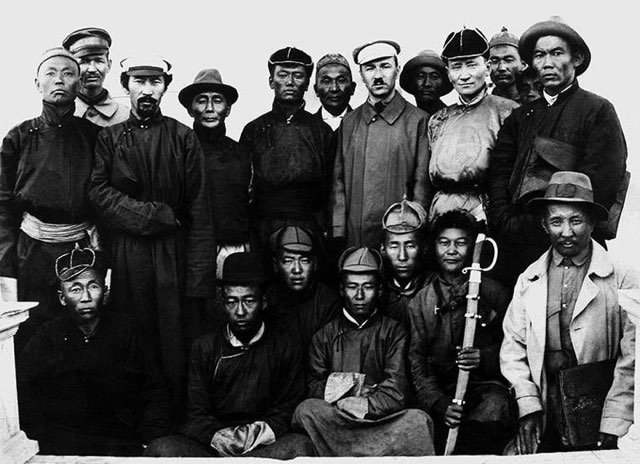

Democratization
- Constitution of the Republic of MongoliaMongolian Ministry of Foreign Affairs and Trade · read · no longer online
- Stabilized Democracy in Mongolia in 2005Nautilus Institute · Jeong-Jin Lee · read · 1 h
Old Friends, New Alliances?
- Concept of Foreign PolicyMongolian Ministry of Foreign Affairs and Trade · read · no longer online
Challenges to State Authority 1970s-1980s
- May 18 Democratic UprisingThe May 18 Memorial Foundation · read · 1 h · archived copy
Democratization
- Democracy and Peace in Korea Twenty Years after 1987: Where Are We Now and Where Do We Go from Here?Japan Focus · Paik Nak-Chung · read · 1 h · archived copy
Taiwan
- Taiwan’s Civil Society and the Blue-Green Deadlock 1986-2007 (podcast) and Taiwan’s Civil Society and the Blue-Green Deadlock 1986-2007 (lecture notes)iTunesU · UCLA · Wu Jieh-min · watch · 1.5 h · archived copy
Chapter XIII
China’s Re-emergence as a Global Power
With the death of Mao Zedong, the hated ‘Gang of Four’ was arrested and after a brief two-year transition phase, power handed over to Deng Xiaoping. Under Deng, China embarked on a path of domestic reform and opening to foreign trade, modern technologies and knowledge it had once scorned as ‘bourgeois’, replacing ‘red’ bureaucrats with ‘expert’ technocrats in an effort to effect rapid modernization.
End of an Era
- China’s Re-birth in the 1970sHarvard Extension School · watch · 1 h · archived copy
Reform and Opening
- The Chinese Reassessment of Socialism 1976-1992CUNY · Sun Y. Y. · read · 45 min · archived copy
Limits of Reform
- Chronology and Tian’anmen Square Interactive TourPBS’s The Gate of Heavenly Peace · watch · 30 min
Democracy Wall
- Wei JingshengPBS’s The Gate of Heavenly Peace · read · 15 min
Tian’anmen Square Demonstrations
- Beijing Days, Beijing Nights, The Night of June 3-4 and The Truth about the TurmoilPBS’s The Gate of Heavenly Peace · watch · 1 h
China in the 1990s: ‘Socialism with Chinese Characteristics’
- China’s Gilded AgeAtlantic Monthly · Yin Xiao-huang · read · 30 min · archived copy
Social Change
- The Quest for Moral Values in Contemporary Popular Chinese ThoughtiTunesU · UCLA Center for Chinese Studies · Perry Link · watch · 1 h · archived copy
Emergence of Civil Society Movements
- HIV/AIDS NGOs and Their Relationship with the GovernmentiTunesU · UCLA Center for Chinese Studies · Wan Yanhai · watch · 40 min
- The Power of the Internet in China: Citizen Activism OnlineiTunesU · UCLA Center for Chinese Studies · Guobin Yang · watch · 50 min
Xinjiang
- Revolt in China’s Muslim NorthwestiTunes · Asia Society Podcasts · The Asia Society in Collaboration with the Far Eastern Economic Review · watch · 10 min · archived copy
China in the World
- China’s RiseCenter for Strategic and International Studies’ · watch · 45 min
Chapter XIV
Regional Problems and Prospects for the 21st Century
In the preceding units, we have learned a great deal about the resurgence of the Northeast Asian region after the humiliation and debacle at the hands of Western barbarians in the mid-nineteenth century. Today, the states of the region are once again dominant economic powers. In this final unit, we look at some of the consequences and corollaries of the region’s late twentieth century dynamism and assess some of the problems that have arisen along the way so as better to evaluate the prospects for the region going forward.
Aging Populations
- Who is Korean? Migration, Immigration and the Challenge of Multiculturalism in Homogeneous SocietiesJapan Focus · Timothy Lim · read · 45 min · archived copy
Environmental Degradation
- Japan’s Green Energy PushAsia-Pacific Journal · Matthew Penney · read · 15 min · archived copy
- China: From Red to Green?PBS documentary · watch · 30 min
Rising Socio-economic Inequalities
- Small Islands – Big Problem: Senkaku/Diaoyu and the Weight of History and Geography in China-Japan RelationsJapan Focus · Gavan McCormack · read · 30 min · archived copy
- South Korea-Japan Dokdo/Takeshima Dispute: Toward ConfrontationJapan Focus · Michael Weinstein · read · 20 min · archived copy
Territorial Disputes
- Welcome to North KoreaYouTube · Peter Tetteroo and Raymond Feddema · watch · 1 h
- Sunshine, Containment, War: Korean OptionsJapan Focus · Gavan McCormack · read · 30 min · archived copy
Cross-Straits Relations
- The Origins of the Taiwan QuestionHarvard Extension School · watch · 1 h · archived copy
- Cross-Straits RelationsROC Government Information Office · read · no longer online
Japan-US
- Emerging from the Shadow of the Black ShipsJapan Focus · Funabashi Yoichi · read · 15 min · archived copy
China-Korea
- The Contested Heritage of Koguryo/Gaogouli and China-Korea ConflictJapan Focus · Yonson Ahn · read · 30 min · archived copy
The History Problem in Regional Relations
- Averting War in Northeast Asia: A ProposalJapan Focus · Mel Gurtov · read · 20 min · archived copy
- Maritime Asia and the Future of a Northeast Asia CommunityJapan Focus · Wada Haruki · read · 20 min · archived copy
- Nation, Region and the Global in East Asia: Conflict and CooperationJapan Focus · Mark Selden · read · 1.2 h · archived copy
About this course
This course is Saylor Academy's HIST242, Modern Northeast Asia, one of the complete university courses the Saylor Foundation made free from 2008 and retired in 2015. Saylor licensed its course text under CC BY 3.0; the original is on GitHub. Here it is laid out as chapters, links that have died go to an archived copy from the Internet Archive where one exists, assessments that needed a Saylor login are left out, and people and works are linked to Kulturbase. The readings and lectures belong to their publishers and are linked, not copied. Pictures: Wikimedia Commons, credited under each picture.
All Saylor courses · Free culture courses · The Chautauqua Reading Course