History · Saylor HIST252
Modern Africa
This course will introduce you to the major events and dynamics of three distinct periods in African history, namely (1) the colonial period, (2) the era of decolonization, and (3) the post-colonial period. We will survey African history from the “Scramble for Africa” in the late nineteenth century and the establishment of colonial rule to the challenges of independence spanning roughly the last five decades, learning about the major political, economic, and social changes that took place in Africa during these periods.
More about this course
In exploring the dominant trends and patterns in African history during these time periods, we will focus primarily on sub-Saharan Africa. While the northern African states of Morocco, Algeria, Tunisia, Libya, and Egypt share many of the same experiences with sub-Saharan Africa, the histories between northern Africa and sub-Saharan Africa (as exemplified by the strong Arab influence in northern Africa and the natural dividing line of the Sahara desert) are significantly different to warrant this separation. Nonetheless, an occasional reference to events in northern Africa will assist our exploration of sub-Saharan Africa. The course will be chronologically and thematically structured. Each unit will include representative primary-source documents that illustrate important overarching political, economic, and social themes in modern African history, such as the effects of World War I and World War II, the rise of African nationalism, decolonization and wars for independence, the influence of the Cold War, the problems of development, and the causes and consequences of the civil wars that have plagued African countries in the latter twentieth century. By the end of the course, you will understand the historical origins of the challenges faced today by independent African states.
Upon successful completion of this course, the student will be able to:
In order to take this course, you must:
Chapter I
Background Information for History of Africa from 1880 to the Present
This brief introductory unit is designed to introduce you to the discipline of African history and to provide background information that will serve as reference points throughout the course. Specifically, the relative ‘novelty’ of African history compels us to consider the origin and state of African history as a legitimate field of academic inquiry. Understanding the (at worst) dismissal and (at best) marginalization of African history in historiographies is critical to our reading and interpretation of historical texts. Not only is it essential to recognize and pay attention to the source of the material, but an appreciation for the perceptions of African history by historians and practitioners alike permits us to engage the material in a more thorough and critical manner.
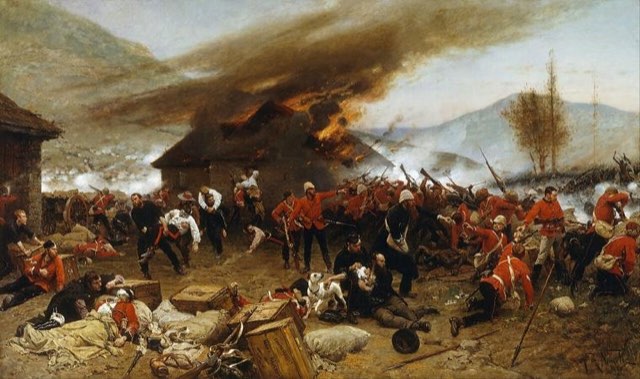

What Is ‘African’ History?
- What Is ‘African’ History?The Saylor Foundation · read
Major Periods in African History
- Major Periods in African HistoryThe Saylor Foundation · read
Key Elements of Africa’s Geographic Landscape and Climate Patterns
- Key Elements of Africa’s Geographic Landscape and Climate PatternsThe Saylor Foundation · read
Political Map
- AfricaUniversity of Texas · Perry-Casta?eda Library Map Collections’ 2008 Political Map of · watch

Physical Maps
- Unit 2: Studying Africa through the Social Studies: Module 6, The Geography of Africa: The Physical Map of Africa and University of Texas: Perry-Casta?eda Library Map Collections’ 1986 Africa Natural VegetationMichigan State University’s Exploring Africa · watch · archived copy
Reference Map
- AfricaUniversity of Texas · Perry-Casta?eda Library Map Collections’ 2011 Reference Map of · watch
Map Exercises
- Map Exercises Items to be Identified, Map Exercise 1, Map Exercise 2, Map for Map Exercise 1, Map for Exercise 2, Map Exercise 1 Answer Key, and Map Exercise 2 Answer KeyThe Saylor Foundation · write
Historical African Place Names
- Historical African Place NamesThe Saylor Foundation · read
Chapter II
The Partition of Africa
The partition of Africa, also referred to as the scramble for Africa, between 1880 and 1914 resulted in the annexation or occupation of African lands by European powers. By the outbreak of World War I, only two countries—Ethiopia and Liberia—on a continent comprising 11.7 million square miles remained independent of European rule. The immediate cause of this race for African territory was heightened by tension between competing European empires. To avoid war, European countries negotiated the partition of Africa at the Berlin Conference. This “New Imperialism” was justified by an appeal to the “three C’s”: Christianity, Commerce, and Civilization. Missionaries urged European powers to intervene in Africa to create an environment in which missionaries could safely spread the Christian religion and suppress slavery. Businessmen called on European governments to protect and expand their economic interests on the continent. Finally, Europeans justified intervention in Africa through the idea of a “civilizing mission” to improve Africa, a concept rooted in scientific racism and social Darwinism, ideologies that viewed Africans as inferior peoples. Africans resisted the political and religious pressure of European occupation, but could often do little to prevent annexation and invasion.
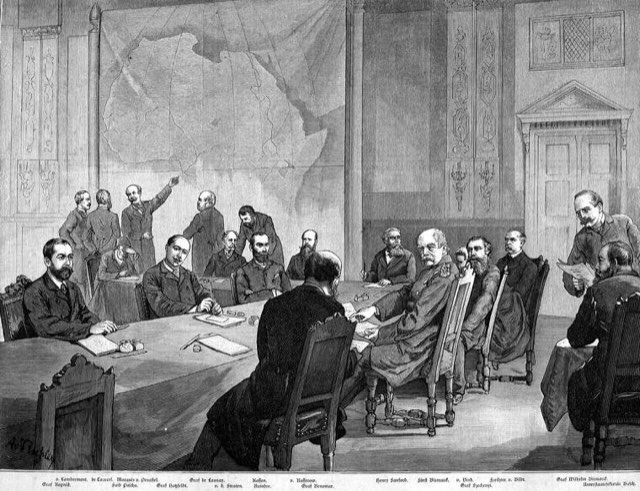

Before the Scramble
- The Story of Africa: Part 17: Africa on the Eve of ColonialismBBC World Service · watch
Christianity
- Unit 3: Studying Africa through the Humanities: Module 14, Religion in Africa and St. Mary’s University: Dr. Wallace G. Mills’ The Role of Missionaries in ConquestMichigan State University’s Exploring Africa · read · archived copy
Overseas Markets
- John A. Hobson’s Imperialism, Part 1, Chapter VMarxists Internet Archive · read
Medicinal and Technological Advances
- Medicinal and Technological AdvancesSaylor Foundation · read
Scientific Racism
- Racism and Social DarwinismSt. Mary’s University · Dr. Wallace G. Mills’ · read
Berlin Conference of 1984/85
- African Political Entities before the ScramblePine Crest School · Dan Snyder’s version of Jeffrey Gaydish · watch · archived copy
- Dr. Jim Jones’s Overview of ‘The Congress of Berlin (1884-1885) and St. Clair County Community College: Bob Hunckler’s The Berlin ConferenceWest Chester University · read · archived copy
Why did Europe Colonize Africa?
- Why Did Europe Colonize Africa?The Saylor Foundation · read
African Responses to Colonization
- African Resistance to Colonial Rule and St. Mary’s University: Dr. Wallace G. Mills’ African Responses to European IntrusionsSchomburg Center for Research in Black Culture · Benjamin Talton · read
- Unit 2 Reading QuestionsThe Saylor Foundation · write
Chapter III
The Colonial Powers
The colonization of the African continent was carried out by a small number of European countries. The two primary colonizing powers were France and Great Britain; the other colonizers were Portugal, Spain, Germany, and Belgium. These countries’ relative geopolitical significance within Europe at the end of the nineteenth century accounts for their momentous pursuit of territory and control in Africa at this point in time. Whereas the previous unit explored the rationale for European powers’ colonization of Africa, this unit is concerned with the individual colonizers and the ways in which they established their colonial empires on the continent. Specifically, this unit draws on different source materials to illuminate the paths of conquest and objectives of colonization. You will learn that each European power followed a similar yet distinct approach to establishing colonial control in Africa. Additionally, this unit begins to expose the consequences of colonialism for African societies; this theme will be continued in subsequent units. Finally, you will take an in-depth look at Ethiopia and Liberia—the two African countries that remained independent throughout the era of colonialism. How and why did they manage to escape Europe’s colonial fervor?
Western Africa
- The British in West AfricaWest Chester University · Dr. Jim Jones · read · archived copy
Eastern Africa
- East Africa in the 19th CenturyWest Chester University · Dr. Jim Jones · read · archived copy
- Captain F.D. Lugard’s Excerpt from The Rise of Our East African EmpireThe Saylor Foundation · read
Southern Africa
- Zambia: Early British Colonialism (1899 – 1945) and Zimbabwe: British South Africa Company Rule (1890 – 1923)Electoral Institute for the Sustainability of Democracy in Africa · read · archived copy
Western Africa
- The French in West AfricaWest Chester University · Dr. Jim Jones · read · archived copy
- Saint-Louis: Religious Pluralism in the Heart of SenegalMichigan State University · Diversity & Tolerance in the Islam of West Africa · read
Southern Africa
- Madagascar: Late Merina Kingdom (1828-1896) and “Madagascar: Early French Colonialism (1896 – 1945)Electoral Institute for the Sustainability of Democracy in Africa · read · archived copy
Congo Free State and Belgian Congo
- Belgian Colonial PolicySt. Mary’s University · Dr. Wallace G. Mills’ · read
- Peter Bates’ Congo: White King, Red Rubber, Black DeathFreeDocumentaries.org · watch · no longer online
Ruanda-Urundi
- History of RwandaHistoryWorld · Bamber Gascoigne · read
Western Africa
- The Portuguese in Africa in the 19th CenturyWest Chester University · Dr. Jim Jones · read · archived copy
Southern Africa
- Mozambique: The Slave Trade and Early Colonialism (1700 – 1926)Electoral Institute for the Sustainability of Democracy in Africa · read · archived copy
Spain in Africa
- History of Equatorial GuineaHistoryWorld · Bamber Gascoigne · read
- Western Sahara: OverviewUniversity of Oxford’s Department of International Development’s Refugee Studies Centre · Forced Migration Online · read · archived copy
Western Africa
- Booker T. Washington, Tuskegee Institute, and the German Empire: Race and Cotton in the Black AtlanticGerman Historical Institute Bulletin no. 43 · Andrew Zimmerman · read · archived copy
Eastern Africa
- Tanzania: Colonial Partition (1884–1916)Electoral Institute for the Sustainability of Democracy in Africa · read · archived copy
Ethiopia
- The Battle of Adwa (Adowa), 1896BlackPast.org · Professor Jonas Ray · read · archived copy
- The Battle of Adwa PaintingThe Anglo-Ethiopian Society and Contributors’ version of · watch
Liberia
- Unit 3: Module 15: Activity 6: The Return to Sierra Leone & LiberiaMichigan State University’s Exploring Africa · read · archived copy
Chapter IV
Colonial Rule
Power, prestige, natural resources, overseas markets and missionary fervor were forceful aspects of the European colonization of Africa. Once territory and people had been conquered, the European powers began to establish colonial administrations that were geared towards the maintenance of order and the economic exploitation of resources and people. Colonial rule took different forms in the colonies; the British adhered to an administrative system termed ‘indirect rule’ while the French, Germans and Portuguese practiced ‘direct rule.’ A third variant referred to as ‘company rule’ completes the primary forms of colonial rule. In this unit you will learn about the key differences between these types of colonial rule and simultaneously explore the ramifications of colonialism. Specifically, colonialism proved devastating for African societies. It had sweeping impacts on African political, economic, and social structures as European powers simply imposed their foreign ideas of governance and social customs without respect for African indigenous practices and structures. The persistent undermining of African norms and ideals, in conjunction with the imposition of artificial boundaries (both between peoples and territories) was accompanied by continuous activism on the part of Africans in resistance to colonialism. Here, you will explore resistance movements that were based in political and religious principles.
Indirect Rule
- British Colonial PoliciesSt. Mary’s University · Dr. Wallace G. Mills’ · read
- Unit 2: Studying Africa through the Social Studies: Module 7B, African History, the Era of Global EncroachmentMichigan State University’s Exploring Africa · read · archived copy
Direct Rule
- French Approaches in Colonial PolicySt. Mary’s University · Dr. Wallace G. Mills’ · read
Company Rule
- Chapter 11 – Modern Chartered CompaniesBrigham Young University · Eugene Staley’s War and the Private Investor · read · archived copy
Settler Rule
- White Settlers in British ColoniesSt. Mary’s University · Dr. Wallace G. Mills’ · read
Population Growth and Urbanization
- Unit 2: Studying Africa through the Social Studies: Module 7B, African History, the Era of Global EncroachmentMichigan State University’s Exploring Africa · read · archived copy
Education and Christianity
- Unit 2: Studying Africa through the Social Studies: Module 7B, African History, the Era of Global EncroachmentMichigan State University’s Exploring Africa · read · archived copy
Creation of Economic Zones
- Creation of Economic Zones in Colonial AfricaThe Saylor Foundation · read
Infrastructure
- Globalization Implications of Africa’s Transportation InfrastructureTransportation Research Forum · Ambe J. Njoh · read · no longer online
(Under)Development?
- Economic Development and the Anatomy of Crisis in Africa: From Colonialism through Structural AdjustmentCentre of African Studies, University of Copenhagen · Dr. Howard Stein · read · archived copy
- Chapter 6: Colonialism as a System for Underdeveloping AfricaMarxists Internet Archive · Dr. Walter Rodney’s How Europe Underdeveloped Africa · read
Religious Resistance
- The Story of Africa: Religious Conversion and ResistanceBBC World Service · read
- Mahdist Revolution (1881-1898) and Alys Beverton’s Maji Maji Uprising (1905-1907)BlackPast.org · Ryan Hurst · read · archived copy
- The War in the SoudanWikimedia Commons’ version of The Strobridge Lith Co. · watch

Political Resistance
- The Story of Africa: Tax and Trade Wars and Peace Pledge Union’s Talking about Genocide: Namibia, 1904BBC World Service · read
- The Herero MassacreVimeo’s version of the BBC · watch
Supporters
- British Rule in Africa and The Saylor Foundation’s version of Rudyard Kipling’s The White Man’s BurdenThe Saylor Foundation’s version of Theodore Roosevelt’s (et al.) African and European Addresses · readRudyard Kipling on Kulturbase
Critics
- The Ethic of the Colonial PolicyMilestone Documents · Excerpt from Edmund Dene (E.D.) Morel’s The Black Man’s Burden and Marxists Internet Archive · Karl Kautsky’s Socialism and Colonial Policy · read · archived copy
- Units 3 and 4 Reading QuestionsThe Saylor Foundation · write
Chapter V
Africa and World War I & II
World War I began as a European struggle between the Triple Entente (France, Great Britain, and the Russian Empire) and the Central Powers (the German Empire, the Austro-Hungarian Empire, the Kingdom of Bulgaria, and the Ottoman Empire). Many Europeans thought that the war would be over within six months, but instead, the war escalated into a world-wide conflict that claimed millions of lives over the course of five years. Because Africa was dominated by the warring European alliances, conflict also spread to that continent. The British and their allies clashed with German forces in German Togoland and Kamerun, in German Southwest Africa, and in German East Africa. Africans were recruited—some voluntarily, many by force—to carry supplies for military campaigns in Africa and even to fight on European soil. In this unit, you will examine how seemingly isolated conflicts among European countries both in Europe and in Africa spiraled into world war.
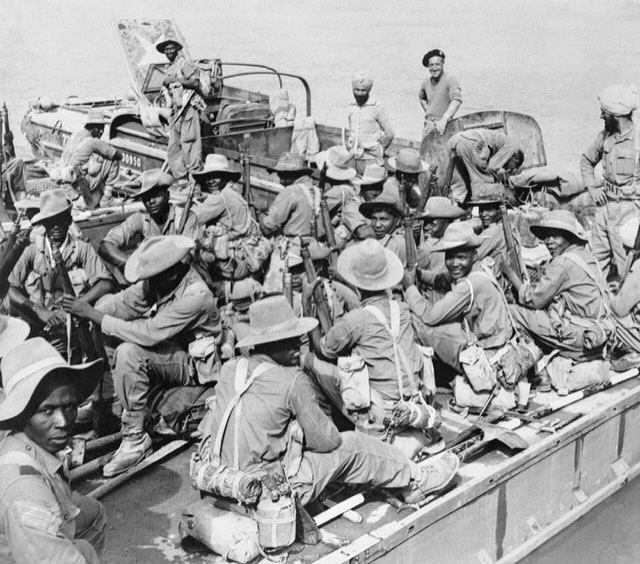

Fashoda Incident
- The Fashoda IncidentWest Chester University · Dr. Jim Jones · read · archived copy
Morocco (Agadir) Crisis
- The Morocco Crisis of 1911 and The New York Times: More Warships for MoroccoMt. Holyoke University · Dr. Vincent Ferraro · read · archived copy
Manifestations of World War I in Africa
- The Story of Africa: World War I and The Aftermath; St. Mary’s University: Dr. Wallace G. Mills’ World War I and Its EffectsBBC World Services’ · read
- World War I in East Africa and Wikipedia’s Lettow’s SurrenderWikimedia Commons’ version of Mehmet Berker · watch

Africans in World War I
- Tirailleurs Senegalais and World War I Document Archive: Emmott J. Scott’s The American Negro in the World War: Chapter XBlackPast.org · Ali Bilow · read · archived copy
Treaty of Versailles
- Treaty of Versailles, Article 22Yale Law School’s Lillian Goldman Law Library · The Avalon Project’s version of the · read
- Post-WWI Africa, 1920University of South Florida · Florida Center for Instructional Technology · watch
Nationalism
- The Story of Africa: The Aftermath and Nationalism and VisionBBC World Service · read
- Du Bois: The Activist Life: Resolutions (page 1) and Notes for Du Bois’ SpeechUniversity of Massachusetts · Special Collections and University Archives’ · watch · archived copy
Pan-Africanism
- African Responses to ColonialismSt. Mary’s University · Dr. Wallace G. Mills’ · read
Négritude
- NégritudeYouTube · Professor Abiola Irele · watch
- NégritudeSt. Mary’s University · Dr. Wallace G. Mills’ · read
Trade Unionism and Economic Protest
- Business: Burnt CocoaTime · read · archived copy
- The Story of Africa: Nationalism and VisionBBC World Service · watch
Socialism
- Kwame Nkrumah, George Padmore, and W.E.B. Du BoisMichigan State University · African e-Journal Project · Institute of African Studies Research Review Vol. 7, No. 1-2 (1991) · Kwadwo Afan-Gyan · read · archived copy
- The Story of Africa: SocialismBBC World Service · watch
Nationalism
- Emergence of Nigerian NationalismCountry Studies US · Helen Chapin Metz’s (ed.) Nigeria · A Country Study · read
The War in Africa
- Benito Mussolini and His Troops Invade Ethiopia and The National Archives: World War II: Mediterranean & North Africa 1940-1945 Interactive MapCriticalPast.org · watch · archived copy
Africans in World War II
- World War II and Africa’s Forgotten SoldiersBBC World Service’s The Story of Africa · watch
Social Change
- Citizenship between Empire and Nation: France and French Africa 1945-60iTunes U · Stanford University · Frederick Cooper · watch · archived copy
Economic Change
- Tout Travail Doit Nourrir Son Homme: The Dakar-Niger Railroad and the 1947-1948 Strike in the Political and Labor History of SenegalSchool for International Training · Digital Collections · Julia Coyner Robinson · read
World War II and the Road to Independence
- WWII and the Road to IndependenceThe Saylor Foundation · read
Chapter VI
White Settlement in South Africa
European colonialism in Africa took two general forms. So far, this class has focused on the first type, colonial rule without settlement. Under this kind of colonialism, European powers exploited the natural and human resources of Africa but did so through relatively small groups of European government, military, and business officials. This form of colonial rule was most common in West and East Africa, where tropical climates and diseases made immigration an unattractive proposition.
Native Inhabitants
- The Story of Africa: Southern Africa: Oppression of Khoikhoi and XhosaBBC World Service · read
Dutch Settlement
- Governance and Politics: A Land Dispossession HistorySouth African History Online · read
Frontier Wars
- Colonization and Land Supremacy: Frontier or Xhosa Wars, 1779 to 1879South African History Online · read
Zulu Expansion and the Mfecane
- Background to the Mfecane and Shaka and the Rise of the Zulu StateUS Country Studies · Rita M. Byrnes’ (ed.) South Africa · a Country Study · read
- Sotho and Nguni Migrations into Central Africa, 1820-1840Simon and Schuster’s and HieroGraphics Online’s version of Edward W. Crosby’s Your History Online · watch
Great Britain and Afrikaners
- Colonization and Land Supremacy: Great Trek and St. Mary’s University: Dr. Wallace G. Mills’ version of Piet Retief’s Manifesto of the Emigrant FarmersSouth African History Online · read
The Mineral Revolution
- The Voortrekker Republics and British Policies, The Mineral Revolution, and Africans and IndustrializationUS Country Studies · Rita M. Byrnes’ (ed.) South Africa · A Country Study · read
- Mineral Resources in Southern AfricaMichigan State University’s Exploring Africa · watch · archived copy
The Boer War and its Aftermath
- British Imperialism and the AfrikanersUS Country Studies · Rita M. Byrnes’ (ed.) South Africa · a Country Study · read
Afrikaner Political Supremacy
- Formation of the Union of South Africa 1910US Country Studies · Rita M. Byrnes’ (ed.) South Africa · a Country Study · read
Legislative Discrimination
- Governance and Politics: A Land Dispossession History and Project Gutenberg’s version of Sol Plaatje’s Native Life in South Africa: Chapter 3: The Natives Land ActSouth African History Online · read
- Making Social Worlds: South African Passbooks, Classifying Races, Held Hostage to a Passbook, and Finding Work PodcastsThe Open University · watch
Resistance to Racism
- Unit 4: Protest and Resistance through the Rivonia Trial (1964)Michigan State University’s South Africa · Overcoming Apartheid · read · archived copy
Chapter VII
Decolonization and Independence
Between 1956 and 1975, more than forty new countries replaced the French, British, Belgian, Portuguese, and Spanish Empires in Africa. Unwilling and unable to give Africans the political rights and economic progress which African leaders demanded, European powers rapidly abandoned their colonies. Seventeen former French colonies gained independence in 1960 alone. Some of these transitions from foreign to home rule went smoothly; some were rushed and chaotic. Still more were plagued by violence, and in Southern Africa, the stubborn Portuguese regime fought independence movements until 1975. Leaders of these new African states struggled with daunting problems of political disunity and economic underdevelopment as they tried to find a place on the global stage. A new factor—the Cold War between the US and the Soviet Union and their respective allies—had a huge impact on the path to independence as well as on the task of constructing new nation and states.
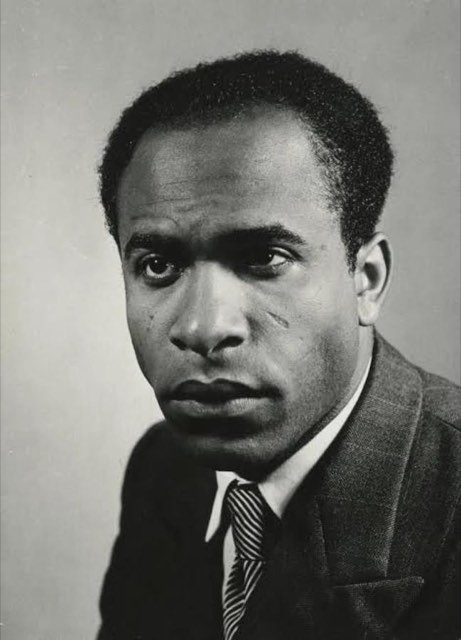

Dates of Independence
- Unit 2: Studying Africa through the Social Studies: Module 10, African Politics and Government: African IndependenceMichigan State University’s Exploring Africa · watch · archived copy
Kwame Nkrumah and Ghana
- The Story of Africa: Part 22: IndependenceBBC World Service · watch
- The Story of Africa: Gold Coast to Ghana and Fordham University’s Internet Modern History Sourcebook: Paul Halsall’s version of Kwame Nkrumah’s I Speak of Freedom, 1961 SpeechBBC World Service · read
Sékou Touré and Guinea
- Top Down or Bottom Up? Nationalist Mobilization Reconsidered, with Special Reference to Guinea (French West Africa)History Cooperative · The American Historical Review, Vol. 110, No. 4 (2005) · Elizabeth Schmidt · read
Mau Mau and Kenya
- Kenya: Struggle for IndependenceGlobal Literacy Project · read · archived copy
- Itungati: the Mau Mau StoryYouTube · watch
- The Kenya Africa Union Is Not the Mau Mau, 1952 SpeechFordham University’s Internet African History Sourcebook · Paul Halsall’s version of Jomo Kenyatta · read
Superpowers and Angola
- Rise of African Nationalism, Angolan Insurgency, Coalition, Transitional Government, and Civil War, and Independence and the Rise of the MPLA GovernmentUS Country Studies · Thomas Collelo’s (ed.) Angola · A Country Study · read
- Foreign Policy: The Battle over Angola and Woodrow Wilson International Center for Scholars: Cold War International History Project: Virtual Archive’s Soviet Ambassador to the People’s Republic of Angola E.I. Afanasenko, Memorandum of Conversation with President of the Movement for the Popular Liberation of Angola Agostinho NetoTIME · read · archived copy
Modernization Theory in the Developing World
- Four Main Theories of Development: Modernization, Dependency, World-Systems, and Globalization; Institute of Developing Economies: The Developing Economies, Vol. 12, No. 1 (March 1974): Ichir? Inukai’s African Socialism and Agricultural Development Strategy: A Comparative Study of Kenya and TanzaniaUniversity of Guadalajara · Sincronía, Winter 2001 · Giovanni E. Reyes · read · archived copy
Foreign Aid and Neocolonialism
- African Development and Foreign Aid, Speech of March 18, 1966 and Marxists Internet Archive: Kwame Nkrumah’s Neo-Colonialism: the Highest Stage of Imperialism: The Mechanics of Neo-ColonialismFordham University’s Internet Modern History Sourcebook · Paul Halsall’s version of President Kenneth Kaunda of Zambia · read
Political Legacy of Colonialism
- Political Identity, Citizenship and Ethnicity in Post-Colonial Africa and BBC News: Biyi Bandele’s Africans on Africa: ColonialismWorld Bank · Mahmood Mamdani · read · no longer online
External Influence in Congo/Zaire
- Congo Civil War (1960-1964), Tunde Adeleke’s Lumumba, Patrice Emery 1925-1961, and Patrice Lumumba’s National Radio Address (1960); HistoryMatters.org: Interim Report: Alleged Assassination Plots Involving Foreign Leaders: Chapter 3: Assassination Planning and the Plots: A. CongoBlackPast.org · Ryan Hurst · read · archived copy
Internal Instability in Uganda
- Despotism and Dictatorship in the Twentieth Century: The Case of Uganda under AminiTunes U · University of Western Australia · Institute of Advanced Studies · Jeremy Marten · watch · archived copy
- Units 6 and 7 Reading QuestionsThe Saylor Foundation · write
Chapter VIII
Africa in the Late Twentieth Century
Leaders of African independence movements hoped to build strong states and bring growth and development to their new states in the second half of the twentieth century. But in the 1980s and 1990s, many Africans saw their standards of living decline dramatically. The causes of this reversal of fortune varied from country to country. In some states, growing debts and failed attempts at reform weakened the ability of Africans to earn income. In other states, political instability hampered growth; patronage and corruption allowed privileged elites to siphon off wealth and encouraged political rivals to battle for control over the state and its valuable natural resources. Finally, social and environmental problems took a severe toll: the HIV/AIDS epidemic killed millions of Africans in the 1980s and 1990s, while drought, deforestation, and desertification limited the ability of Africans to produce sufficient food.
The Debt Crisis
- Global Debt and Third World DevelopmentMt. Holyoke College · Vincent Ferraro’s and Melissa Rosser · read · archived copy
Structural Adjustment
- The Fabric of Reform (1998)International Monetary Fund’s West Africa · watch · archived copy
- A Survey of the Impacts of IMF Structural Adjustment in Africa: Growth, Social Spending, and Debt ReliefCenter for Economic and Policy Research · Robert Naiman’s and Neil Watkins’ · read · archived copy
End of the Cold War
- After the Cold War: Views from Africa; Stranded by Superpowers, Africa Seeks an IdentityNew York Times · Jane Perlez · read
End of Apartheid in South Africa
- Unit 5: Reigniting the Struggle: The 1970s through the Release of Nelson Mandela and Unit 6: The End of Apartheid and the Birth of DemocracyMichigan State University · South Africa · Overcoming Apartheid · watch · archived copy
Global Migration
- Contemporary African Immigrants to the United StatesÌrìnkèrindò · A Journal of African Migration, No. 2 (2003) · Joseph Takougang · read · archived copy
Ethnic Conflict
- Chapter 2: Pre-Colonial Period - Ethnicity in Pre-Colonial Rwanda and Chapter 5: April 1994 and Its Aftermath; University of Pennsylvania’s African Studies Center: David Wiley’s Using ‘Tribe’ and ‘Tribalism’ Categories to Misunderstand AfricaUSAID · Joint Evaluation of Emergency Assistance to Rwanda · The International Response to Conflict and Genocide · Lessons from the Rwanda Experience · read
- Rwanda ChronologyPBS’s Frontline · watch
Failed States
- Towards an Understanding of Contemporary Armed Conflicts in AfricaInstitute for Security Studies · Monograph No. 36 – Whither Peacekeeping in Africa? · Tom Lodge · read · archived copy
- War, Intervention, and Development PodcastThe Open University · Environment, Development, and International Studies · watch
Problems of Reform
- Report on Children; iTunes U: Boston University’s African Studies Center: Walter Rodney Lectures: Theodore Trefon’s Reform Failure in Congo; National Public Radio (NPR): Jason Beaubien’s Rebuilding Congo’s RailroadUNICEF · Democratic Republic of Congo · Martin Bell · watch · archived copy
HIV/AIDS in Africa
- Securing our Future – Ch.1: HIV and AIDS the Issues for Africa and Securing our Future – Ch. 2: the Challenge to Governance and Development (chapter at a glance)United Nations Economic Commission for Africa · Commission on HIV/AIDS and Governance in Africa · read · archived copy
- Fact Sheet: sub-Saharan AfricaUNAIDS’ · read · archived copy
Environmental Problems in Africa
- Unit 8 Review EssayThe Saylor Foundation · write
- Addressing Environmental Problems in AfricaThe Africa Society · read · archived copy
About this course
This course is Saylor Academy's HIST252, Modern Africa, one of the complete university courses the Saylor Foundation made free from 2008 and retired in 2015. Saylor licensed its course text under CC BY 3.0; the original is on GitHub. Here it is laid out as chapters, links that have died go to an archived copy from the Internet Archive where one exists, assessments that needed a Saylor login are left out, and people and works are linked to Kulturbase. The readings and lectures belong to their publishers and are linked, not copied. Pictures: Wikimedia Commons, credited under each picture.
All Saylor courses · Free culture courses · The Chautauqua Reading Course