History · Saylor HIST301
Greece, the Roman Republic, and the Roman Empire
This course will focus on the history of Greek and Roman civilizations beginning with the origins of ancient Greek culture in the Aegean Bronze Age (c. 3000–1100 BCE) through the period of the Roman Empire at the height of its greatest extent and prosperity (c. 31 BCE–235 CE). We will focus on the political, economic, and social factors that shaped the development and maturation of these two influential Mediterranean civilizations.
More about this course
The course will be structured chronologically. Each unit will include representative primary source documents that illustrate important overarching themes, such as the emergence and development of Greek civilization from the Aegean Bronze Age through the Greek Archaic period (c.700–500 BCE), the contrast between democratic and oligarchic forms of government in Greek city-states of the classical era (c. 500–350 BCE), the decline of the Greek city-states, the rise of Macedon and the spread of Greek culture to the eastern Mediterranean and western Asia in the Hellenistic period (c. 350–31 BCE), the evolution of the Roman Republic (c. 508–287 BCE), and the transformation of this Roman Republic into a vast Roman Empire encompassing all the lands bordering the Mediterranean Sea (c. 133 BCE–235 CE). By the end of the course, you will understand how these ancient Mediterranean civilizations developed and recognize their lasting influences on European culture.
Upon successful completion of this course, you will be able to:
In order to take this course, you must:
Chapter I
Bronze Age Civilization in Greece (c. 3000–1100 BCE)
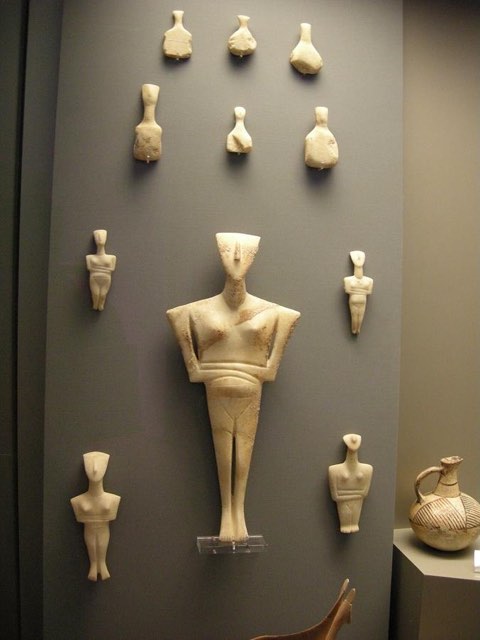
Complex, agricultural societies emerged in mainland Greece and the coastlands and islands of the Aegean Sea during the Early Bronze Age (beginning approximately 3000 BCE). The cultures of the region eventually developed written languages, monumental architecture, and distinct styles of artistic expression. Extensive trade networks linked the peoples of the region. On the island of Crete, the Minoan civilization built labyrinthine palaces and exerted considerable political and economic influence over this area. Around 1600 BCE, Minoan civilization collapsed due, probably, to an invasion by mainland Greek peoples collectively known as Mycenaean, who incorporated Minoan culture and technology into their society and flourished until the collapse of their civilization at the close of the Bronze Age. In this unit, you will examine the development of these Aegean civilizations during the Bronze Age. You will also look at Bronze Age art and architecture and discuss how archaeologists and historians have used this art and architecture to learn more about the peoples of Greece and the Aegean region.

Introduction to Bronze Age Greece (3300–1100 BCE)
- Introduction to Early Ancient Greek HistoryThe Saylor Foundation · read · 15 min
- Early Greece: Prehistoric Greece and the Beginning of the Bronze AgeThe Saylor Foundation · read · 15 min
Early Bronze Age Greece
- The Emergence of Complex Societies in the Aegean Bronze AgeThe Saylor Foundation · read · 30 min
Early Helladic Greece
- Lesson 3: The Eutresis and Korakou Cultures of Early Helladic I-IIDartmouth College · Aegean Prehistoric Archaeology · Jeremy B. Rutter and JoAnn Gonzalez-Major · read · 1 h · archived copy
The Cyclades and Western Anatolia in the Early Bronze Age
- Lesson 4: The Early Cycladic Period and Lesson 7: Western Anatolia and the Eastern Aegean in the early Bronze AgeDartmouth College · Aegean Prehistoric Archaeology · Jeremy B. Rutter and JoAnn Gonzalez-Major · read · 2 h · archived copy
Early to the Middle Bronze Age
- Lesson 8: The ‘Lefkandi I’ and Tiryns Cultures of the Early Hellaadic IIB and Early Helladic III PeriodsDartmouth College · Aegean Prehistoric Archaeology · Jeremy B. Rutter and JoAnn Gonzalez-Major · read · 30 min · archived copy
Middle Bronze Age Greece
- Lesson 9: Middle Helladic GreeceDartmouth College · Aegean Prehistoric Archaeology · Jeremy B. Rutter and JoAnn Gonzalez-Major · read · 45 min · archived copy
Minoan Civilization (c. 3000–400 BCE)
- History of Minoan CreteThe Saylor Foundation · read · 30 min
The Early Minoan Period
- Lesson 5: The Early Minoan Period: The Settlements and Lesson 6: The Early Minoan Period: The TombsDartmouth College · Aegean Prehistoric Archaeology · Jeremy B. Rutter and JoAnn Gonzalez-Major · read · 1 h · archived copy
The Middle Minoan Period
- Lesson 10: Middle Minoan CreteDartmouth College · Aegean Prehistoric Archaeology · Jeremy B. Rutter and JoAnn Gonzalez-Major · read · 1 h · archived copy
Minoan Places
- Lesson 11: The First Palaces in the Aegean and Lesson 12: Minoan Architecture: The PalacesDartmouth College · Aegean Prehistoric Archaeology · Jeremy B. Rutter and JoAnn Gonzalez-Major · read · 1 h · archived copy
Minoan Material Culture
- Lesson 13: Minoan Domestic and Funerary Architecture of the Neopalatial and Post-Palatial PeriodsDartmouth College · Aegean Prehistoric Archaeology · Jeremy B. Rutter and JoAnn Gonzalez-Major · read · 30 min · archived copy
Minoan Art
- Minoan ArtThe Saylor Foundation · read · 15 min
- Late Minoan Painting and Other Representational Art: Pottery, Frescoes, Steatite Vases, Ivories, and BronzesDartmouth College · Aegean Prehistoric Archaeology · Jeremy B. Rutter and JoAnn Gonzalez-Major · read · 30 min · archived copy
Minoan Region
- Minoan ReligionDartmouth College · Aegean Prehistoric Archaeology · Jeremy B. Rutter and JoAnn Gonzalez-Major · read · 1 h · archived copy
The Collapse of Minoan Culture
- Lesson 17: Akrotiri on Thera, the Santorini Volcano and the Middle and Late Cycladic Periods in the Central Aegean IslandsDartmouth College · Aegean Prehistoric Archaeology · Jeremy B. Rutter and JoAnn Gonzalez-Major · read · 30 min · archived copy
- Lesson 18: The Nature and Extent of Neopalatial Minoan Influence in the Aegean and Eastern Mediterranean WorldsDartmouth College · Aegean Prehistoric Archaeology · Jeremy B. Rutter and JoAnn Gonzalez-Major · read · 1 h · archived copy
Mycenaean Civilization (1700–1100 BCE)
- Mycenaean Civilization: The Culture of Bronze Age GreeceThe Saylor Foundation · read · 15 min
Mycenaean Settlement Patterns and Centers of Power
- Lesson 20: Mycenaean Residential Architecture: Palaces and Ordinary HousingDartmouth College · Aegean Prehistoric Archaeology · Jeremy B. Rutter and JoAnn Gonzalez-Major · read · 30 min · archived copy
Mycenaean Social and Political Organization
- Lesson 25: The Linear B Tablets and Mycenaean Social, Political, and Economic OrganizationDartmouth College · Aegean Prehistoric Archaeology · Jeremy B. Rutter and JoAnn Gonzalez-Major · read · 30 min · archived copy
The Mycenaean Economy
- Lesson 22: Aspects of Mycenaean TradeDartmouth College · Aegean Prehistoric Archaeology · Jeremy B. Rutter and JoAnn Gonzalez-Major · read · 45 min · archived copy
Mycenaean Arts and Material Culture
- Lesson 21: Mycenaean Public and Funerary Architecture: Fortifications, Drainage Projects, Roads, and Chamber Tombs and Lesson 24: Mycenaean Pictorial Art and PotteryDartmouth College · Aegean Prehistoric Archaeology · Jeremy B. Rutter and JoAnn Gonzalez-Major · read · 1 h · archived copy
Mycenaean Achievements and Legacies
- Lesson 26: Mycenaean and Late Cycladic Religion and Religious Architecture and Lesson 27: Troy VII and the Historicity of the Trojan WarDartmouth College · Aegean Prehistoric Archaeology · Jeremy B. Rutter and JoAnn Gonzalez-Major · read · 1 h · archived copy
- HIST301 Discussion ForumThe Saylor Foundation · do · 30 min · archived copy
Chapter II
The Greek Dark Ages and the 8th-Century Renaissance (c. 1100–700 BCE)
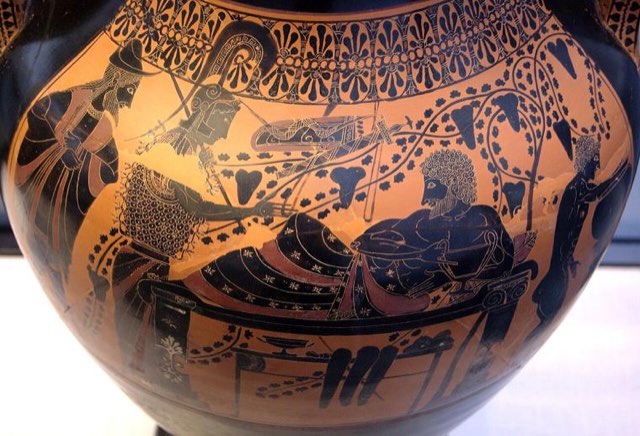
The end of the Bronze Age witnessed the destruction of the great Mycenaean palaces and archaeological evidence, and the testimony of ancient Greek historians indicates that this period was marked by wars and migrations. In the era that followed, the Greek Dark Ages (c.1100–800 BCE), literacy disappeared along with the immense palaces, in which scribes had used the Mycenaean Linear B script for record keeping. In this period the Greek mainland and the Aegean region were much less populated than in the preceding Bronze Age, and long distance trade with the Near East declined considerably. Beginning c. 800 BCE, Greece experienced a renaissance, or rebirth, of complex culture with archaeological evidence indicating a large population increase as well as the revival of monumental architecture and trade with the Near East. This era most notably experienced the emergence of the Polisor Greek city-state, which would serve as the center for Greek political and economic life through the classical period. During this renaissance, literacy also revived with the Greek adoption and adaptation of the Phoenician alphabet. This new Greek alphabet was employed at this time to record the epic poetry of Homer and Hesiod, which would shape Greek culture for centuries. In this unit you will examine the Greek Dark Ages, this Greek Renaissance, and the epic poetry of Homer and Hesiod.
In the Great Books lists Odyssey · Iliad · Works and Days

The Collapse of Mycenaean Greece
- Lesson 28: The Collapse of Mycenaean Palatial Civilization and the Coming of the Dorians and Lesson 29: Post-Palatial Twilight: The Aegean in the Twelfth Century B.C.Dartmouth College · Aegean Prehistoric Archaeology · Jeremy B. Rutter and JoAnn Gonzalez-Major · read · 30 min · archived copy
- Lecture 2: The Dark AgesYouTube · Yale University · Professor Donald Kagan’s CLCV 205 · Introduction to Ancient Greek History · watch · 1 h
The Dark Ages
- The Greek Dark AgesThe Saylor Foundation · read · 15 min
- Lecture 3: The Dark Ages (cont.)YouTube · Yale University · Professor Donald Kagan’s CLCV 205 · Introduction to Ancient Greek History · watch · 1 h
The Greek Renaissance (c. 800–700 BCE)
- Lecture 4: The Rise of the PolisYouTube · Yale University · Professor Donald Kagan’s CLCV 205 · Introduction to Ancient Greek History · watch · 1 h
Economic, Social, and Political Change in the Greek Renaissance
- Lecture 5: The Rise of the Polis (cont.)YouTube · Yale University · Professor Donald Kagan’s CLCV 205 · Introduction to Ancient Greek History · watch · 1 h
The Greek Hoplite and the Concept of Citizenship
- Lecture 6: The Greek ‘Renaissance’–Colonization and TyrannyYouTube · Yale University · Professor Donald Kagan’s CLCV 205 · Introduction to Ancient Greek History · watch · 1 h
Trade and Colonization in the Greek Renaissance
- Lecture 7: The Greek ‘Renaissance’–Colonization and Tyranny (cont.)YouTube · Yale University · Professor Donald Kagan’s CLCV 205 · Introduction to Ancient Greek History · watch · 1 h
- Colonies and EmporiaUniversity of Oregon’s Mapping History · watch · 30 min
The Greek Alphabet
- Greek AlphabetUniversity of North Carolina, Greensboro · read · 15 min · archived copy
Homer and Hesiod
- OdysseyTufts University’s Perseus Project · A. T. Murray’s translation of Homer · read · 1 h
- HIST301 Discussion ForumThe Saylor Foundation · do · 30 min · archived copy
- IliadTufts University’s Perseus Project · A. T. Murray’s translation of Homer · read · 1 h
- HIST301 Discussion ForumThe Saylor Foundation · do · 30 min · archived copy
- TheogonyTufts University’s Perseus Project · Hugh G. Evelyn-White’s translation of Hesiod · read · 2 h
- HIST301 Discussion ForumThe Saylor Foundation · read · 30 min · archived copy
Chapter III
The Archaic Period: The Rise of the Polis (c.700–500 BCE)
During the Archaic period, Greece experienced rapid population growth, and the economy expanded as trade with the Near East and the Western Mediterranean blossomed. Land-hungry Greeks migrated from the Greek mainland and islands and coastlands of the Aegean and established colonies along the Black Sea as well as in North Africa, Southern France, and especially Italy. Wars for land in Greece between rival city-states provided an opportunity for successful military leaders to achieve monarchal power in their cities as tyrants, often with the political support of the common citizens who comprised the heavy infantry in these wars and were dissatisfied with the traditional leadership of the aristocratic elites. Two city-states, Athens and Sparta, in this period developed two very different and unique political systems to govern their cities. By 500 BCE, Athens had emerged as a democracy in which all Athenian-born adult males actively participated as citizens in the task of running the city, whereas in Sparta, citizenship was restricted to the members of its elite, highly trained military force, which had conquered and enslaved Sparta’s neighbors. In the Archaic period, poetry took a new direction with the lyric poets whose verses often treated subjects and expressed views that were unknown in epic poetry, while philosophers by the end of this period were challenging the world view of the epics of Homer and Hesiod. In this unit you will be examining the rise of tyrannies, the political development of Athens and Sparta, and the lyric poets and Pre-Socratic philosophers.
Social and Economic Change during the Archaic Period and the Rise of Tyrannies
- Archaic Greece (ca. 700–480 BCE)The Saylor Foundation · read · 30 min
- Economy and Society in Classical GreeceThe International World History Project · Robert A. Guisepi · read · 45 min · archived copy
- Lecture 8: SpartaYouTube · Yale University · Professor Donald Kagan’s CLCV 205 · Introduction to Ancient Greek History · watch · 1 h
- The Invention of Politics in Archaic GreeceNipissing University · Professor Steve Muhlberger · read · 30 min · archived copy
Archaic Sparta
- Chapter 4: SpartaOxford University Press · Sarah B. Pomeroy, Stanley M. Burstein, Walter Donlan, and Jennifer Tolbert Roberts’s A Brief History of Ancient Greece · Politics, Society and Culture · read · 30 min
The Rise of Sparta
- Lecture 9: Sparta (cont.)YouTube · Yale University · Professor Donald Kagan’s CLCV 205 · Introduction to Ancient Greek History · watch · 1 h
The Spartan Constitution
- Lecture 10: The Rise of AthensYouTube · Yale University · Professor Donald Kagan’s CLCV 205 · Introduction to Ancient Greek History · watch · 45 min
- The HistoriesTufts University’s Perseus Project · A. D. Godley’s translation of Herodotus · read · 7 h
Archaic Athens
- Lecture 10: The Rise of AthensYouTube · Yale University · Professor Donald Kagan’s CLCV 205 · Introduction to Ancient Greek History · watch · 45 min
Solon
- Solon and the Early Athenian GovernmentThe Saylor Foundation · read · 15 min
- Lecture 11: The Rise of Athens (cont.)YouTube · Yale University · Professor Donald Kagan’s CLCV 205 · Introduction to Ancient Greek History · watch · 1 h
Reforms of Cleisthenes and the Rise of Athenian Democracy
- Lecture 12: The Persian WarsYouTube · Yale University · Professor Donald Kagan’s CLCV 205 · Introduction to Ancient Greek History · watch · 1 h
- The Development of Athenian Democracy*: Cleisthenes, Democracy, and PersiaThe Stoa Consortium · *Dēmos · Classical Athenian Democracy · Christopher W. Blackwell · read · 30 min · archived copy
- The HistoriesTufts University’s Perseus Project · A. D. Godley’s translation of Herodotus · read · 3 h
Archaic Era Art, Poetry, and Culture
- Archaic Greek Art (700–480 BCE)The Saylor Foundation · read · 30 min
- Mary R. Lefkowitz and Maureen B. Fant’s Women’s Life in Greece and Rome: A Sourcebook in Translation: Translations of Sappho’s PoemsThe Stoa Consortium’s Diotima · read · 15 min · archived copy
- Everything Is Full of Gods: ThalesKing’s College London · History of Philosophy without Any Gaps · Professor Peter Adamson · watch · 30 min
- Created in Our Image: Xenophanes Against Greek ReligionKing’s College London · History of Philosophy without Any Gaps · Professor Peter Adamson · watch · 30 min
- Units 1–3 AssessmentThe Saylor Foundation · write · 1 h
Chapter IV
The Classical Age (c. 500–350 BCE)
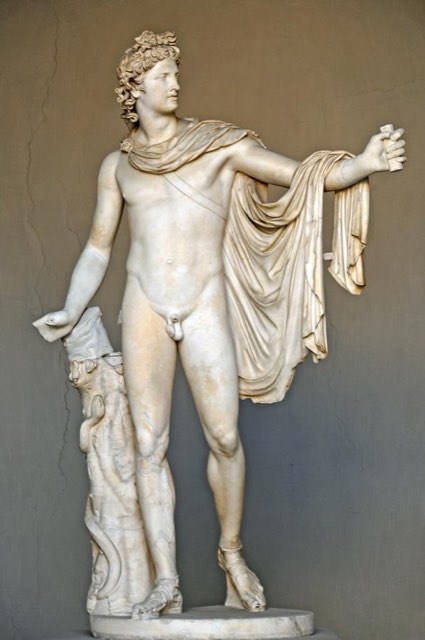
The classical period saw the production of some of the greatest artistic and literary masterpieces of Western Civilization, featuring iconic works by sculptors, architects, dramatists, historians, and philosophers. Athens emerged as the home of many of these intellectual and artistic achievements. But this same era witnessed frequent wars and revolutions as the rival city-states, including Athens, struggled with one another for hegemony while factions did battle within these cities to establish democratic or oligarchic regimes. The period began with many Greek city-states joining together under the leadership of Athens and Sparta to defend themselves from invasion by the Persian Empire during the Persian Wars (480–479 BCE), a story recounted by the historian Herodotus. Athens emerged from this war with a powerful navy which came to dominate the Aegean Sea by the mid-5th century BCE. This new Athenian Empire challenged the traditional hegemony of Sparta, which soon went to war against Athens. The rivalry between the two cities culminated in the Peloponnesian War (431–404 BCE), which was chronicled by the Athenian historian Thucydides. This war ended with the defeat of Athens and the dissolution of its empire, but the high-handed actions of Sparta after this victory resulted in decades of war as the other Greek city-states joined forces to liberate themselves from Spartan domination. For a brief period (371–362 BCE) another city-state, Thebes, eclipsed both Athens and Sparta as the hegemonic power in Greece. By the mid-4th century BCE, the Greek city-states were exhausted from years of constant war, leaving them vulnerable to aggression from a rising foreign power to the north, Macedon. In this unit you will study the Persian Wars, the rise of the Athenian Empire, the Peloponnesian War, the struggle for hegemony in the 4th century BCE, and the artistic and literary achievements of this era.
In the Great Books lists History of the Peloponnesian War

The Persian Wars (490, 480–479 BCE)
- Chapter 5: The Growth of Athens and the Persian WarsOxford University Press · Dr. Sarah B. Pomeroy, et al.’s A Brief History of Ancient Greece · Politics, Society, and Culture · read · 30 min
Marathon (490 BCE)
- Lecture 13: The Athenian EmpireYouTube · Yale University · Professor Donald Kagan’s CLCV 205 · Introduction to Ancient Greek History · read · 1 h
Thermopylae, Salamis, Plataea, and the Formation of the Delian League
- Lecture 14: The Athenian Empire and The Athenian Empire (cont.)YouTube · Yale University · Professor Donald Kagan’s CLCV 205 · Introduction to Ancient Greek History · watch · 1 h
- 11th Brittanica: Delian LeagueFordham University · Paul Halsall’s Internet Ancient History Sourcebook · read · 1 h
- The HistoriesTufts University’s Perseus Project · A. D. Godley’s translation of Herodotus · read · 6 h
- HIST301 Discussion ForumThe Saylor Foundation · do · 30 min · archived copy
Classical Athens: Empire and Democracy
- Lecture 15: Athenian Democracy and Lecture 16: Athenian Democracy (cont.)YouTube · Yale University · Professor Donald Kagan’s CLCV 205 · Introduction to Ancient Greek History · read · 2 h
The Peloponnesian War
- Peloponnesian LeagueJona Lendering’s Livius.org · read · 30 min · archived copy
- Peloponnesian WarJona Lendering’s Livius.org · read · 45 min · archived copy
The Pentecontaetia
- Lecture 17: The Peloponnesian War, Part I and Lecture 18: The Peloponnesian War, Part I (cont.)YouTube · Yale University · Professor Donald Kagan’s CLCV 205 · Introduction to Ancient Greek History · watch · 2 h
Pericles and Athens
- PericlesJona Lendering’s Livius.org · read · 45 min · archived copy
- 11th Brittanica: PericlesFordham University · Paul Halsall’s Internet Ancient History Sourcebook · read · 1 h
The War Begins
- Lecture 19: The Peloponnesian War, Part II and Lecture 20: The Peloponnesian War, Part II (cont.)YouTube · Yale University · Professor Donald Kagan’s CLCV 205 · Introduction to Ancient Greek History · watch · 2 h
- Book 1Tufts University’s Perseus Project · Benjamin Jowett’s translation of Thucydides’ History of the Peloponnesian War · read · 6 h · archived copy
- HIST301 Discussion ForumThe Saylor Foundation · do · 30 min · archived copy
The Fall of the Athenian Empire
- Book 2Tufts University’s Perseus Project · Benjamin Jowett’s translation of Thucydides’ History of the Peloponnesian War · read · 5 h · archived copy
- Book 6 and Book 7Tufts University’s Perseus Project · Benjamin Jowett’s translation of Thucydides’ History of the Peloponnesian War · read · 9 h · archived copy
- HIST301 Discussion ForumThe Saylor Foundation · do · 30 min · archived copy
Spartan Hegemony
- Lecture 21: The Struggle for Hegemony in Fourth and Lecture 22: The Struggle for Hegemony in Fourth (cont.)YouTube · Yale University · Professor Donald Kagan’s CLCV 205 · Introduction to Ancient Greek History · read · 2 h
Theban Hegemony
- Lecture 23: Twilight of the PolisYouTube · Yale University · Professor Donald Kagan’s CLCV 205 · Introduction to Ancient Greek History · watch · 1 h
Intellectual Life in Greece
- Chapter 9: The Fourth Century: Changing Ideas, Continuing WarfareOxford University Press · Dr. Sarah B. Pomeroy, et al.’s A Brief History of Ancient Greece · Politics, Society, and Culture · read · 30 min
- In Dialogue: the Life and Works of PlatoKing’s College London · History of Philosophy without Any Gaps · Professor Peter Adamson · watch · 30 min
- ApologyUniversity of Missouri-Kansas · Douglas Linder’s Famous Trials · Benjamin Jowett’s translation of Plato · read · 1 h · archived copy
Chapter V
The Rise of Macedon and the Hellenistic Period (c. 350–31 BCE)
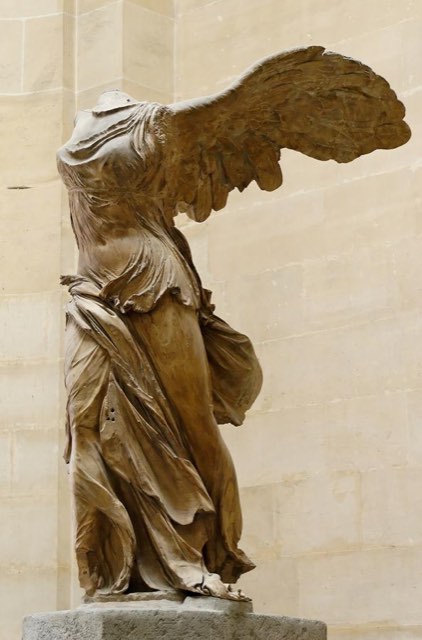
In the mid-4th century BCE, the kingdom of Macedonia emerged as the most powerful state in the Eastern Mediterranean. Under the leadership of Philip II, Macedonian forces conquered numerous city-states in northern mainland Greece and established Macedon as the hegemonic power in Greece. Following Philip’s assassination in 336 BCE, his young son Alexander assumed the Macedonian throne and reasserted Macedonian control over mainland Greece. Once Alexander had secured control of the Greek city-states through political and military coercion, he turned his attention to the Persian Empire. In a series of decisive battles, Alexander’s forces defeated the Persians and extended Macedonian rule to central Asia and modern day Pakistan. By the time of his death in 323 BCE, Alexander the Great had created the largest empire in human history. Following Alexander’s death, his military commanders waged war against one another over control of his empire. Alexander’s successors eventually broke up this empire into smaller kingdoms, which were each ruled by dynasties descended from some of Alexander’s commanders – Antigonus (Macedon and Greece), Ptolemy (Egypt), and Seleucus (Western and Central Asia). These successor states continued to exert Greek influence over Western Asia and the Eastern Mediterranean through the end of the 1st century BCE. Egypt was the last of these kingdoms to fall under Roman rule in 31 BCE. In this unit, you will learn how Philip and Alexander expanded Macedonian rule and seized control over a vast empire, examine the successor kingdoms that emerged following Alexander’s death, and evaluate the interaction and cross fertilization of Greek culture and the ancient civilizations of Egypt and Western Asia in the Hellenistic period.

Philip II and the Rise of Macedonia
- Chapter 10: Philip II and the Rise of MacedonOxford University Press · Dr. Sarah B. Pomeroy, et al.’s A Brief History of Ancient Greece · Politics, Society, and Culture · read · 30 min
- Philip II of MacedoniaJona Lendering’s Livius.org · read · 1 h · archived copy
- Lecture 24: Twilight of the Polis (cont.)YouTube · Yale University · Professor Donald Kagan’s CLCV 205 · Introduction to Ancient Greek History · watch · 1 h
Alexander the Great
- Chapter 11: Alexander the GreatOxford University Press · Dr. Sarah B. Pomeroy, et al.’s A Brief History of Ancient Greece · Politics, Society, and Culture · read · 30 min
- Alexander the Great, Part 1: YouthJona Lendering’s Livius.org · read · 30 min · archived copy
Consolidating Power
- Alexander the Great, Part 2: Restoring Order in GreeceJona Lendering’s Livius.org · read · 30 min · archived copy
The Conquest of the Eastern Mediterranean
- Alexander the Great, Part 3: Beginning of the Persian Campaign, Alexander the Great, Part 4: From Caria to Pamphylia, Alexander the Great, Part 5: The Anatolian Highland, Alexander the Great, Part 6: Issus, Alexander the Great, Part 7: The Conquest of the Levant, and Alexander the Great, Part 8: Son of AmmonJona Lendering’s Livius.org · read · 1 h · archived copy
The Conquest of the Persian Empire
- Alexander the Great, Part 9: Assyria and Babylonia and Alexander the Great, Part 10: The End of PersiaJona Lendering’s Livius.org · read · 1 h · archived copy
The Conquest of Central Asia
- Alexander the Great, Part 11: King of AsiaJona Lendering’s Livius.org · read · 1 h · archived copy
The Indian Expedition
- Alexander the Great, Part 12: The Way to Dusty Death and Alexander the Great, Part 13: The PunjabJona Lendering’s Livius.org · read · 1 h · archived copy
The Return to the West
- Alexander the Great, Part 14: The Return and Alexander the Great, Part 15: Lord of AllJona Lendering’s Livius.org · read · 1 h · archived copy
The Death of Alexander
- Alexander the Great, Part 16: Death in BabylonJona Lendering’s Livius.org · read · 30 min · archived copy
- AlexanderMassachusetts Institute of Technology · Daniel C. Stevenson’s Internet Classics Archive · John Dryden’s translation of Plutarch · read · 2 h
Succession Struggles and Civil War in the Hellenistic World (325–150 BCE)
- Chapter 12: The New World of the Hellenistic PeriodOxford University Press · Dr. Sarah B. Pomeroy, et al.’s A Brief History of Ancient Greece · Politics, Society, and Culture · read · 30 min
- Alexander the Great, Part 17: Civil WarJona Lendering’s Livius.org · read · 1 h · archived copy
The Ptolemaic Kingdom in Egypt
- Ptolemy I Soter, Part 1: Early Career, Ptolemy I Soter, Part 2: Rise to Power, Ptolemy I Soter, Part 3: King of Egypt and Ptolemy I Soter, Part 4: HistorianJona Lendering’s Livius.org · read · 1 h · archived copy
The Seleucid Dynasty in Western Asia
- Alexander’s Successors: Lysimachus and Seleucus, Alexander’s Successors: Stabilization and The Seleucid Empire (Syria)Jona Lendering’s Livius.org · read · 1 h · archived copy
The Antigonid Dynasty in Macedonia
- Antigonid Macedonia, Antigonas II Gonatas, Demetrius II and Antigonas III Doson and Philip V and Perseus: The Twilight of Antigonid MacedoniaThe Saylor Foundation · read · 30 min
The Achaean League versus the Aetolian League in Greece
- Achaean LeagueUniversity of Chicago · Bill Thayer’s version of the Encyclopaedia Britannica’s · read · 30 min
Early Conflicts between Greeks and Romans
- The War with Pyrrhus, 280–279 B.C.University of Arizona · N. Lewis and M. Reinhold’s Roman Civilization Sourcebook I · The Republic · read · 15 min · archived copy
Hellenistic Art and Architecture
- Art of the Hellenistic Age and the Hellenistic TraditionThe Metropolitan Museum of Art’s Heilbrunn Timeline of Art History · Collette Hemingway and Seán Hemingway · read · 30 min · archived copy
Hellenistic Philosophical Schools: The Epicureans and Stoics
- Am I Bothered?: Epicurean EthicsKing’s College London · History of Philosophy without Any Gaps · Professor Peter Adamson · watch · 30 min
- On AngerBen R. Schneider, Jr.’s The Stoic Legacy to the Renaissance · John W. Basore’s translation of Lucius Annasus Seneca’s Moral Essays · read · 2 h
- Units 4–5 AssessmentThe Saylor Foundation · write · 1 h
Chapter VI
Italy and the Roman Republic (509–287 BCE)
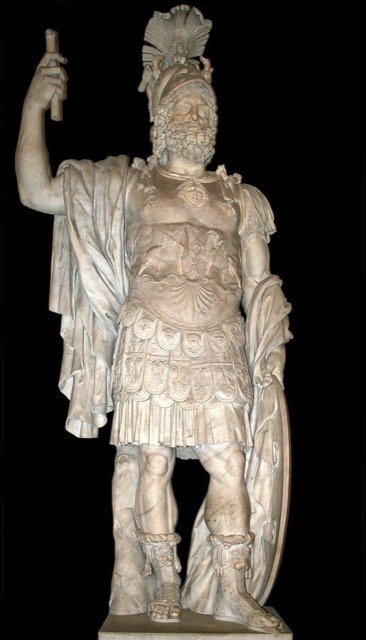
Like the Greeks, the people of the Italian peninsula were influenced by sustained social, political, and economic interactions between various regional cultures. Greek settlers had colonized parts of coastal Italy in the 8th and 7th centuries BCE. By the mid-7th century BCE, the Etruscan people had established control over the central-western portion of the Italian peninsula, and the Latin and Sabine tribes had also established city-states in the same area. Archaeological evidence indicates that the community of Rome was established by the Latins around the 8th century BCE and was later conquered by the Etruscans when the Etruscans established their control over the region in the 7th century BCE. Near the end of the 6th century BCE, the Latin people successfully challenged Etruscan rule and reorganized the Roman city-state as a republic. In the centuries that followed its foundation, this republic’s political system evolved under pressure from constant tension between an entrenched aristocratic elite (the Patricians) and the common people (the Plebeians), an historical development known to historians as the Struggle of the Orders. This struggle only ended in 287 BCE when the Plebeians won the right to make laws binding upon the entire Roman state. By this time, Rome was dominated by nobility, comprised of Patricians and a select number of Plebeian families whose members had held the highest executive office (Consul) and entered into the Roman Senate. In this unit, you will examine the various cultures that inhabited the Italian peninsula before the formation of the Roman Republic, the foundation of the Roman Republic, and the development of the Roman political system during the Struggle of the Orders (509–287 BCE).

Greek Colonization
- Magna GraeciaThe 1911 Classic Encyclopedia · read · 30 min · archived copy
Etruscan Civilization
- Etruscan CivilizationUniversity of Colorado · Department of History · read · 30 min · archived copy
- Reports of the Etruscans, c. 430 BCE–10 CEFordham University’s Ancient History Sourcebook · Paul Halsall’s version of · read · 15 min
Etruscan Political and Economic Power
- R. A. Guisepi’s “Etruscan OrganizationThe International World History Project · read · 15 min · archived copy
Etruscan Gender Roles and Social Mores
- A Greek Historian’s Account of the Behavior of Etruscan WomenThe Stoa Consortium · Mary R. Lefkowitz and Maureen B. Fant’s Women’s Life in Greece & Rome · Theopompus · read · 30 min · archived copy
Regional Conflicts
- Etruscans: Expansion and DominionThe International World History Project · R. A. Guisepi · read · 15 min · archived copy
Declining Fortunes in the 6th Century BCE
- Etruscans: Crisis and DeclineThe International World History Project · R. A. Guisepi · read · 15 min · archived copy
The Founding of Rome
- The Origin of RomeTaylor & Francis Books · Antony Kamm · read · 30 min · archived copy
- RomulusTufts University’s Perseus Project · Bernadotte Perrin’s translation of Plutarch · read · 1 h
- HIST301 Discussion ForumThe Saylor Foundation · do · 30 min · archived copy
Rome’s Neighbors in Italy
- The Ancient People of ItalyThe Saylor Foundation · read · 30 min
The Roman Republic
- The Roman RepublicThe Saylor Foundation · read · 15 min
The Birth of the Roman Republic
- The History of Rome: Book 1: Chapters 49–60Tufts University’s Perseus Project · Benjamin Oliver Foster’s translation of Titus Livius’ (Livy) · read · 45 min
- HIST301 Discussion ForumThe Saylor Foundation · do · 30 min · archived copy
The Struggle of the Orders
- The Early Roman Republic: The Struggle of the OrdersUniversity of Notre Dame’s OpenCourseWare · Professor Elizabeth Mazurek · read · 15 min · archived copy
- The History of Rome, Book 2Tufts University’s Perseus Project · D. Spillan’s translation of Titus Livius’ (Livy) · read · 3 h
The Roman Constitution
- Book 6Tufts University’s Perseus Project · Evelyn S. Shuckburgh’s translation of Polybius’s Histories · read · 2 h
- HIST301 Discussion ForumThe Saylor Foundation · do · 30 min · archived copy
Chapter VII
The Expansion of the Roman Republic (c. 509–133 BCE)
After the Latin people established Rome as a republic in 509 BCE, they began expanding their control over central and southern Italy in the 5th and 4th centuries BCE. They subdued the Etruscans and Samnites and eventually seized control over the remaining independent Greek city-states in southern Italy at the beginning of the 3rd century BCE. One of the unresolved questions for historians concerns the motives behind Roman expansion. Were the Romans aggressively seeking to dominate their neighbors, or were their conquests preemptive strikes to prevent their neighbors from attacking them? When Rome extended her influence to Sicily in 264 BCE, the republic started a long, prolonged series of conflicts with Carthage, a Phoenician colony in North Africa (modern Tunisia), which had its own interests in Sicily. In three Punic (Phoenician) Wars, the Romans ultimately defeated the Carthaginians and established Roman dominance over the Western Mediterranean by 146 BCE. During the second of these Punic Wars (218–202 BCE) the Antigonid king of Macedon, Philip V, allied his kingdom with Carthage to counter Roman advances into the Adriatic Sea, thus instigating a series of four wars between Rome and Macedon, which resulted in the annexation of Macedon into the Roman Empire by 146 BCE. In 190 BCE a Roman army crushed the forces of the Seleucid king Antiochus III in Asia Minor (modern Turkey) at the battle of Magnesia in 190 BCE after this king had advanced his forces into Greece. Thus, in the 2nd century BCE, Rome had defeated the Antigonid and Seleucid kingdoms and established itself as the hegemonic power in the entire Mediterranean basin. In this unit, you will examine the history of Rome’s wars of conquest and analyze how Rome was able to achieve these victories.
Unifying the Italian Peninsula in the 5th and 4th Centuries BCE
- The Roman Conquest of ItalyThe Saylor Foundation · read · 30 min
The Punic Wars against Carthage
- The Punic WarsBoise State University · Professor E.L. Skip Knox · read · 1 h · archived copy
- Book 1Tufts University’s Perseus Project · Evelyn S. Shuckburgh’s translation of Polybius’s Histories · read · 3 h
- HannibalJona Lendering’s Livius.org · read · 1 h · archived copy
- HIST301 Discussion ForumThe Saylor Foundation · do · 30 min · archived copy
- Book 3Tufts University’s Perseus Project · Evelyn S. Shuckburgh’s translation of Polybius’s Histories · read · 3 h
- The History of Rome, Book 30: Chapters 29–45Tufts University’s Perseus Project · Cyrus Edmonds’s translation of Titus Livius’ (Livy) · read · 30 min
Wars in the Eastern Mediterranean
- World History/The Roman EmpireWikibooks · read · 15 min
- Book 7, Chapter 9: Treaty Between Hannibal and King Philip V. of MacedonTufts University’s Perseus Project · Evelyn S. Shuckburgh’s translation of Polybius’s Histories · read · 15 min
- HIST301 Discussion ForumThe Saylor Foundation · do · 30 min · archived copy
- Book 18Tufts University’s Perseus Project · Evelyn S. Shuckburgh’s translation of Polybius’s Histories · read · 2 h
- Chapters 1–7Tufts University’s Perseus Project · Horace White’s translation of Appian’s Syrian Wars · read · 2 h
- HIST301 Discussion ForumThe Saylor Foundation · do · 30 min · archived copy
- Aemilius PaulusTufts University’s Perseus Project · Bernadotte Perrin’s translation of Plutarch · read · 2 h
- Book 29Tufts University’s Perseus Project · Evelyn S. Shuckburgh’s translation of Polybius’s Histories · read · 2 h
- HIST301 Discussion ForumThe Saylor Foundation · read · 30 min · archived copy
Chapter VIII
The Fall of the Roman Republic (c. 133–31 BCE)
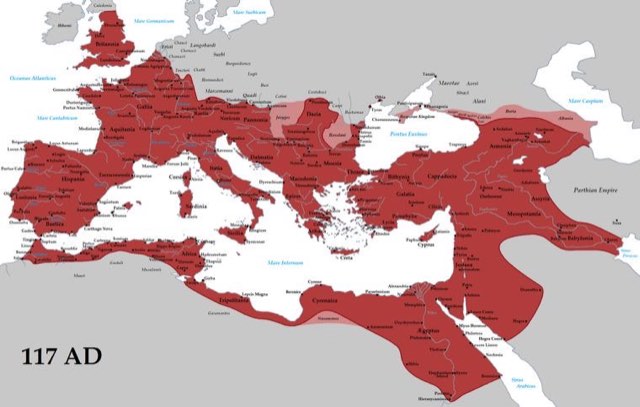
Roman military expansion in the 2nd century BCE upset the Roman political system and the status and control of the Roman senatorial nobility, resulting in the collapse of the Republic and its replacement by a military dictatorship, a historical development known to ancient historians as the Roman Revolution. During the 2nd century BCE, long periods of military service overseas impoverished small Roman landowners. The population of the city of Rome consequently swelled with landless workers, the proletariat, drawn to the city from the countryside by the inflow of wealth into the city from Rome’s conquests. Overseas conquests and annexations also provided opportunities for Romans to acquire fortunes as merchants, bankers, and tax farmers. These wealthy Romans, or Equestrians, soon became dissatisfied with the monopoly of political power exercised by the traditional Senatorial nobility. Beginning in 133 BCE two politicians, the brothers Tiberius and Gaius Gracchus, reached out to these alienated constituencies – impoverished farmers, the landless proletariat, and wealthy Equestrians. The assassination of these two brothers by the Senatorial nobility initiated a century of political violence and civil war. The murder of the two brothers divided Rome politically into two camps, the Optimates – conservatives who supported the traditional Senatorial nobility – and Populares – revolutionaries who claimed to champion the common people. In 107 BCE, one of the prominent leaders of the Populares, Gaius Marius, as Consul, for the first time recruited landless proletariat into his armies because Rome lacked sufficient numbers of landowners to wage war against King Jugurtha of Numida in North Africa and later against invading Germanic barbarians, the Cimbri and Teutones. The effect of this policy was to make Roman soldiers dependent on their generals to provide them with pay and land in exchange for military service. Consequently, loyalty to the commanding general came to replace loyalty to the Roman state in the Roman army. In 88 BCE and again in 83 BCE, the leader of the Optimates, Lucius Cornelius Sulla, marched on Rome at the command of a loyal army to impose his political will on Rome. Sulla restored the Republic, but a dangerous precedent had been set. In 49 BCE, the leader of the Populares, Julius Caesar, marched on Rome, defeated rival generals, and assumed the dictatorship. His assassination in 44 BCE by Optimatesplunged Rome into another civil war, which ended in 31 BCE with the final victory of Octavian Caesar, Julius Caesar’s adopted son, over his rivals for military dictatorship. In this unit we will examine the social and economic crisis of the 2nd century BCE, the rise of the Optimatesand Populares, and the civil wars that destroyed the republic and spawned a military dictatorship.

The Gracchi
- The Fall of the Republic, Part 1: The Reforms of Tiberius and Gaius GracchusUniversity of Notre Dame’s OpenCourseWare · Professor Elizabeth Mazurek · read · 15 min · archived copy
- Tiberius Gracchus and Caius GracchusTufts University’s Perseus Project · Bernadotte Perrin’s translation of Plutarch · read · 2 h
- HIST301 Discussion ForumThe Saylor Foundation · do · 30 min · archived copy
Marius and the Populares
- Marius vs. Sulla: Rome’s Social WarsUniversity of Notre Dame’s OpenCourseWare · Professor Elizabeth Mazurek · read · 30 min · archived copy
- Caius Marius and SullaTufts University’s Perseus Project · Bernadotte Perrin’s translation of Plutarch · read · 4 h
- HIST301 Discussion ForumThe Saylor Foundation · do · 30 min · archived copy
The First Triumvirate
- The Rise of Pompey: Cicero’s ConsulshipUniversity of Notre Dame’s OpenCourseWare · Professor Elizabeth Mazurek · read · 30 min · archived copy
- PompeyTufts University’s Perseus Project · Bernadotte Perrin’s translation of Plutarch · read · 4 h
- HIST301 Discussion ForumThe Saylor Foundation · do · 30 min · archived copy
- TriumvirJona Lendering’s Livius.org · read · 15 min · archived copy
- Gaius Julius CaesarJona Lendering’s Livius.org · read · 3 h · archived copy
The Second Triumvirate
- TriumvirJona Lendering’s Livius.org · read · 15 min · archived copy
- The Timeline of the Life of Octavian, Caesar AugustusSan Jose State University · Professor Thayer Watkins · read · 30 min · archived copy
- The Last Days of the Republic: Octavian, Antony, and CleopatraUniversity of Notre Dame’s OpenCourseWare · Professor Elizabeth Mazurek · read · 30 min · archived copy
- AntonyTufts University’s Perseus Project · Bernadotte Perrin’s translation of Plutarch · read · 3 h
- HIST301 Discussion ForumThe Saylor Foundation · do · 30 min · archived copy
Chapter IX
Augustus (31 BCE–14 CE) and the Roman Empire (c. 31 BCE–235 CE)
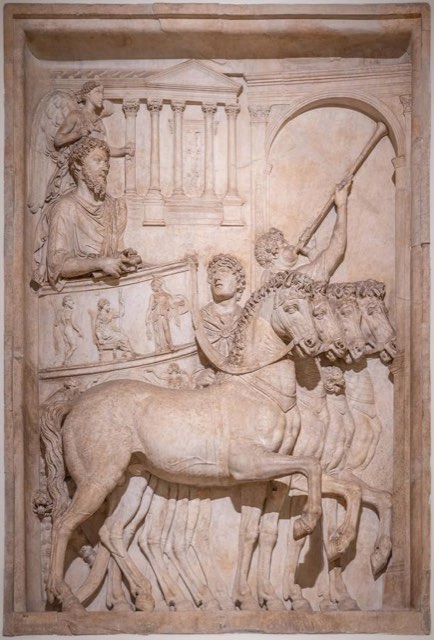
In the years that followed his victory over his rival Marc Antony in 31 BCE, Octavian Caesar instituted a series of political reforms that allowed him to hold a number of key republican offices and powers simultaneously. Octavian, thus, ostensibly restored the Roman Republic while retaining enough political power through his control of the army to possess monarchal authority. Through this ruse, Octavian appeased the traditional Senatorial nobility who bestowed upon Octavian the title of Augustus. Historians refer to the political system that Octavian (Augustus) created as the Principate from the title Princeps Senatusor “leader of the Senate,” which was one of the traditional republican positions that Augustus possessed. Another traditional republican position, Imperator, or “victorious general,” was also reserved for Augustus as the commander of Rome’s armies and is the origin of the word emperor. Augustus also stabilized the Roman Empire’s frontiers; distributed land to the proletariat and war veterans through the establishment of new colonies in Italy, Spain, and Gaul (France); and created thousands of jobs for the proletariat through an ambitious building program in Rome. The Principate as a political system and the policy precedents that Augustus set for future emperors helped promote a period of internal peace and prosperity in the Roman Empire for two hundred years, the Pax Romana or “Roman Peace.” The Principate was not without its flaws, however. Augustus set the precedent of designating a family member to be his successor by insuring that the Senate granted his heir the same powers as himself. In this way, there would be a smooth transition upon Augustus’s death. However, hereditary succession did not always provide a suitable ruler. During the Principate, there were a number of mentally unfit emperors – Caligula, Nero, Commodus, Elagabulus – whose actions created political instability. Also, under the Principate the unexpected death of an emperor without designating a successor resulted in civil wars as rival military commanders did battle with one another to win the empire for themselves, as was the case following the death of Nero in 68 CE and Pertinax in 192 CE. The assassination of Alexander Severus in 235 CE resulted in a 50-year period of civil war between rival armies that ended the Principate and the Pax Romana. In this unit, you will examine the political reforms and policies of Augustus, the social and economic conditions of the Roman Empire in this era, and the weaknesses of the Principate as a political system, which would be its undoing.

Augustus Caesar and the Julio-Claudian Dynasty
- The Julio-Claudians: Rome’s First Imperial DynastyThe Saylor Foundation · read · 15 min
- The Emperor Augustus (27 BCE–14 CE)avid W. Koeller’s Web Chronology Project · Meredith L. Oliver, Darren J. Hekhuis, and David A. Nelson · read · 15 min
- The Age of Augustus I and Age of Augustus IIUniversity of Notre Dame’s OpenCourseWare · Professor Elizabeth Mazurek · read · 30 min · archived copy
- The Deeds of the Divine AugustusMassachusetts Institute of Technology · Daniel C. Stevenson’s Internet Classics Archive · Thomas Bushnell’s Translation of Augustus · read · 1 h
- The First CaesarsBoise State University · Professor E.L. Skip Knox’s The Roman Empire · read · 1 h · archived copy
- Books 13–16Tufts University’s Perseus Project · Alfred John Church, William Jackson Brodribb, and Sara Bryant’s version of Cornelius Tacitus’s The Annals · read · 5 h
- HIST301 Discussion ForumThe Saylor Foundation · do · 30 min · archived copy
The Flavian Dynasty
- The Flavian Dynasty, Vespasian (70–79 CE): The Founder of a New Dynasty, Titus (79–81 CE): Great Promise Cut Short and Domitian (81–96 CE): The Last of the FlaviansThe Saylor Foundation · read · 30 min
- The Flavian DynastyUniversity of Notre Dame’s OpenCourseWare · Professor Elizabeth Mazurek · read · 30 min · archived copy
- ColosseumYouTube · Khan Academy’s Smarthistory · watch · 15 min
- Divus VespasianusTufts University’s Perseus Project · J. Eugene Reed and Alexander Thomson’s version of C. Suetonius Tranquillus’ · read · 1 h
- HIST301 Discussion ForumThe Saylor Foundation · do · 30 min · archived copy
The Nerva-Antonine Dynasty: “The Five Good Emperors”
- Trajan (98–117 CE): The Height of EmpireThe Saylor Foundation · read · 15 min
- Pliny the Elder (23/4-79 CE): The Grandeur of Rome, c. 75 CE from Natural HistoryFordham University · Paul Halsall’s Internet Ancient History Sourcebook · From Readings in Ancient History · Illustrative Extracts from the Sources, William Stearns Davis, ed. · read · 30 min
- The Five Good Emperors (96–180)David W. Koeller’s Web Chronology Project · Meridith L. Berg, Jelani N. G. Greenidge, and Donita R. McWilliams · read · 30 min
- Roman HistoryUniversity of Chicago · LacusCurtius · Bill Thayer’s version of Cassius Dio · read · 2 h
- HIST301 Discussion ForumThe Saylor Foundation · do · 30 min · archived copy
The Severan Dynasty
- Septimius Severus (193–211 CE): Founder of the Severan Dynasty, Caracalla (211–217 CE): A Reign of Violence, Elagabalus (218–222 CE): East Meets West and Severus Alexander (222–235 CE): The Calm before the StormThe Saylor Foundation · read · 30 min
- The SeveriBoise State University · Professor E. L. Skip Knox · read · 30 min · archived copy
- Roman HistoryUniversity of Chicago · LacusCurtius · Bill Thayer’s version of Cassius Dio · read · 6 h
- HIST301 Discussion ForumThe Saylor Foundation · do · 30 min · archived copy
- Units 6–9 AssessmentThe Saylor Foundation · write · 1 h
About this course
This course is Saylor Academy's HIST301, Greece, the Roman Republic, and the Roman Empire, one of the complete university courses the Saylor Foundation made free from 2008 and retired in 2015. Saylor licensed its course text under CC BY 3.0; the original is on GitHub. Here it is laid out as chapters, links that have died go to an archived copy from the Internet Archive where one exists, assessments that needed a Saylor login are left out, and people and works are linked to Kulturbase. The readings and lectures belong to their publishers and are linked, not copied. Pictures: Wikimedia Commons, credited under each picture.
All Saylor courses · Free culture courses · The Chautauqua Reading Course