History · Saylor HIST302
Medieval Europe
This course will introduce you to the history of the European Middle Ages and Renaissance. You will learn about the major political, economic, and social changes that took place between the fourth century and 1500.
More about this course
The course is structured chronologically. Each unit includes representative primary-source documents that illustrate important overarching political, economic, and social themes, such as the collapse of the Roman Empire, the rise of the Christian Church, the emergence of the feudal system, the advent of the Renaissance in Italy and northern Europe, and the significance of the European Age of Exploration. By the end of the course, you will understand how Europe transformed from a collection of barbarian kingdoms into a continent with a sophisticated cultural and economic life that would later come to dominate the globe.
Upon successful completion of this course, the student will be able to:
In order to take this course, you must:
Chapter I
The End of the Roman Empire
The Roman Empire reached its zenith during the second century. However, the problems of administering such a vast territory and its diverse peoples, the lack of a coherent means of imperial succession, and a succession of weak emperors resulted in a series of crises. In order to better manage the sprawling territory in the Mediterranean, Emperor Diocletian split the Roman Empire into eastern and western halves in 285. Forty-five years later, this division was further entrenched when Emperor Constantine founded a new capital city—Constantinople—in the eastern empire. During the next several centuries, the western Roman Empire was plagued by financial problems, a shrinking army, and barbarian invasions. In 410, Rome was invaded by the Visigoths—a Germanic tribe in Spain—and in 476 Emperor Romulus Augustulus was deposed by the Germanic leader Odoacer. While Justinian I, emperor of the eastern Roman Empire, was able to regain power over many territories in the West, the western Roman Empire continued effectively ceased to exist.
Unity of the Classical World
- The Grandeur of Rome and The ORB: Online Reference Book for Medieval Studies: Lynn Nelson’s Lectures for a Medieval Survey: The Roman Empire at Its HeightFordham University’s Internet Ancient History Sourcebook · Professor Paul Halsall’s version of Pliny the Elder · read
- The Roman Empire at Its Greatest ExtentCosmoLearning · watch
Germanic Invasions
- Romans and Barbarians and The ORB: Online Reference Book for Medieval Studies: Lynn Nelson’s Lectures for a Medieval Survey: The Germanic InvasionsFordham University’s Internet Medieval Sourcebook · Professor Paul Halsall’s version of Salvian · read
Fall of Rome
- Alaric’s Sack of Rome (410)Fordham University’s Internet Ancient History Sourcebook · Professor Paul Halsall’s version of Procopius of Caesarea · read
- Germanic Invasions Map, 378-439Mappery.com · watch · archived copy
Constantine I
- The Conversion of Constantine and The ORB: Online Reference Book for Medieval Studies: Lynn Nelson’s Lectures for a Medieval Survey: The Later Roman EmpireFordham University’s Internet Medieval Sourcebook · Professor Paul Halsall’s version of Eusebius’ · read
The Development of Christianity
- The Nicene CreedFordham University’s Internet Medieval Sourcebook · Professor Paul Halsall’s version of · read
- The Development of ChristianityThe Saylor Foundation · read
Eastern Roman Empire
- Eastern Roman EmpireThe Saylor Foundation · read
Constantinople
- Constantine Founds ConstantinopleFordham University’s Internet Ancient History Sourcebook · Professor Paul Halsall’s version of Sozomen · read
The Christian Church
- The Codex Theodosianus: On ReligionFordham University’s Internet Ancient History Sourcebook · Professor Paul Halsall’s version of · read
Emperor Justinian
- Justinian’s Code and The ORB: Online Reference Book for Medieval Studies: Lynn Nelson’s Lectures for a Medieval Survey: The Reign of JustinianFordham University’s Internet Medieval Sourcebook · Professor Paul Halsall’s version of · read
Art and Architecture
- De AedificisFordham University’s Internet Medieval Sourcebook · Professor Paul Halsall’s version of Procopius’ · read
Invasions and the End of Justinian’s Rule
- The Sack of Jerusalem (614)Fordham University’s Internet Medieval Sourcebook · Professor Paul Halsall’s version of Anctiochus Strategos’ · read
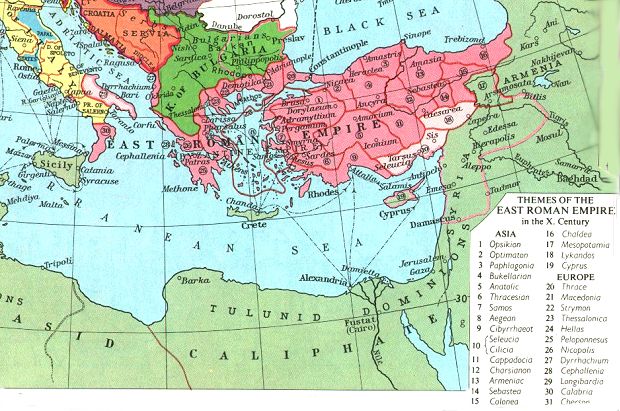
Heraclius and the Byzantine Theme System
- Heraclius and the Byzantine Theme SystemThe Saylor Foundation · read
- Map of Byzantine ThemesFordham University’s Internet Medieval Sourcebook · Muir’s Historical Atlas · watch
Arab Invasions and the Attack of Constantinople
- Accounts of the Arab Conquest of Egypt, 642Fordham University’s Internet Medieval Sourcebook · Professor Paul Halsall’s version of · read
- The Spread of Islam 622-750 CEwatch · no longer online
Dark Ages
- The Dark AgesThe Saylor Foundation · read · 30 min
Iconoclasm
- In Defense of IconsFordham University’s Internet Medieval Sourcebook · Professor Paul Halsall’s version of John of Damascus’ · read
The Macedonians
- The MacedoniansThe Saylor Foundation · read · 30 min
Byzantine Collapse
- Byzantine CollapseThe Saylor Foundation · read
- The Byzantine Empire (1265)CosmoLearning · Perry-Castaneda Library, Map Collection at the University of Texas at Austin · watch
Chapter II
Formation of Latin Christendom
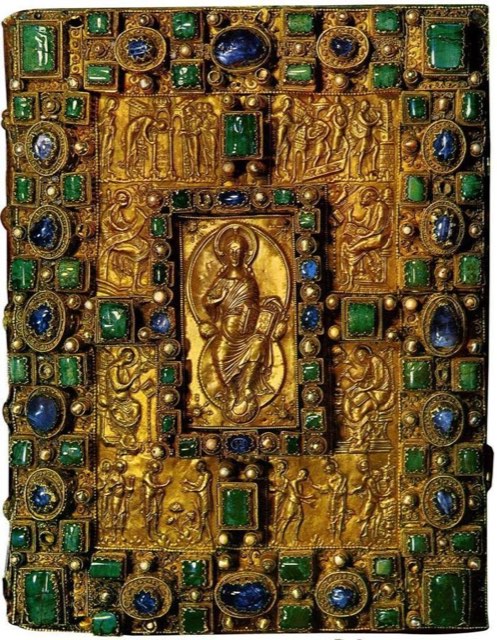
After the fall of the Roman Empire, a number of diffuse Germanic kingdoms—the Visigoths, Ostrogoths, Burgundians, and Lombards—filled the power vacuum left by the bureaucratic Roman regime. Christianity, too, filled the void left by the Roman Empire as the Germanic kings began to convert from paganism. But it was the Frankish Empire that emerged as the dominant state in medieval Western Christendom. Beginning in the ninth century, Charlemagne formed the Carolingian Empire by uniting much of modern-day France and also extended his holdings into western Germany and northern Italy. Scholarship and learning flourished under Charlemagne’s rule and ushered in the period known as the “Carolingian Renaissance.” However, the empire collapsed in the 840s as a result of Viking and Magyar invasions. One of the lasting impacts of the Carolingian world was manoralism—the system wherein peasants held land from the lord of an estate in exchange for money or agricultural goods—which was an important component in the development of feudalism.

Origins
- Germania ExcerptsFordham University’s Internet Medieval Sourcebook · Professor Paul Halsall’s version of Tacitus’ · read
Visigoths, Ostrogoths, and Lombards
- LettersFordham University’s Internet Medieval Sourcebook · Professor Paul Halsall’s version of Theodoric · read
The Franks and Gaul
- The Conversion of Clovis: Two Accounts (496)Fordham University’s Internet Medieval Sourcebook · Professor Paul Halsall’s version of · read
Anglo-Saxons
- The InvadersThe ORB · Online Reference Book for Medieval Studies · Steven Muhlberger’s Medieval England · read · archived copy
Slavs and Magyars
Effect on Western Europe
- Effect on Western EuropeThe Saylor Foundation · read · 15 min
Christianity in the West
- The Book of Pastoral RuleFordham University’s Internet Medieval Sourcebook · Professor Paul Halsall’s version of Gregory the Great · read
The Papacy
- The Petrine Doctrine and The ORB: Online Reference Book for Medieval Studies: Yuri Koszarycz’ Ecclesiology: The Growing Authority of the Roman BishopsFordham University’s Internet Medieval Sourcebook · Professor Paul Halsall’s version of Leo I · read
Theology
- Creed of the Council of ToledoFordham University’s Internet Medieval Sourcebook · Professor Paul Halsall’s version of · read
Monasticism
- The Growth and Influence of Western MonasticismThe ORB · Online Reference Book for Medieval Studies · Yuri Koszarycz’ Ecclesiology · read · archived copy
St. Benedict
- The Rule of St. BenedictFordham University’s Internet Medieval Sourcebook · Professor Paul Halsall’s version of · read
- Women as Leaders in the Medieval Church: Saint ScholasticaYouTube · Jone442 · watch
Frankish Kingdoms
- The Rise of the FranksThe ORB · Online Reference Book for Medieval Studies · Lynn Nelson’s Lectures for a Medieval Survey · read · archived copy
- The Growth of Frankish Power (481–814)CosmoLearning · Perry-Castañeda Library Map Collection, University of Texas at Austin · watch
Early Feudalism
- Feudal CapitulariesFordham University’s Internet Medieval Sourcebook · Professor Paul Halsall’s version of · read
Pepin the Short
- The Annals of LorschFordham University’s Internet Medieval Sourcebook · Professor Paul Halsall’s version of · read
Charlemagne and the Carolingian Empire
- Life of Charlemagne and The ORB: Online Reference Book for Medieval Studies: Lynn Nelson’s Lectures for a Medieval Survey: The Carolingian EmpireFordham University’s Internet Medieval Sourcebook · Professor Paul Halsall’s version of Einhard · read
Carolingian Government and Culture
- General Capitulary of the Missi and Charlemagne’s Capitulary of 802Fordham University’s Internet Medieval Sourcebook · Professor Paul Halsall’s version of Charlemagne · read
Division of Charlemagne’s Empire
- Map of the Partitions of Verdun (843) and Mersen (870)Fordham University’s Internet Medieval Sourcebook · Muir’s Historical Atlas · watch

Viking, Muslim, and Magyar Invasions
- Three Sources on the Ravages of the Northmen in FranklandFordham University’s Internet Medieval Sourcebook · Professor Paul Halsall’s version of · read
Effects of Invasions
- Gesta Normannorum: Rollo of NormandyDudo of St. Quentin · read · archived copy
Chapter III
Resurgence of Latin West
By the tenth century, medieval empire-building had reached new heights and Germanic and Frankish monarchs held considerable power and prestige. The Catholic Church also extended its power during this period; church reforms and the threat of Islamic expansion renewed the Church’s authority in European politics and society. The Crusades—a series of religious wars launched to restore Christian control of the Holy Land—which began in 1096, were the most conspicuous sign of the rise and expansion of Christian Europe.
Year 1000
- On the First MilleniumFordham University’s Internet Medieval Sourcebook · Professor Paul Halsall’s version of Ralph Glaber · read
Medieval Warm Period
- The Middle Ages, 500–1500Environmental History Resources’ · read
Feudal Origins of Medieval States
- The Rise of Feudalism and Fordham University: Internet Medieval Sourcebook: Feudalism?The ORB · Online Reference Book for Medieval Studies · Lynn Nelson’s Lectures for a Medieval Survey · read · archived copy
- Central Europe (919-1125)CosmoLearning · Map · watch
Ottonian Germany
- Embassy to Constantinople, 963Fordham University’s Internet Medieval Sourcebook · Professor Paul Halsall’s version of Liudprand of Cremona · read
- Central Europe (919–1125)CosmoLearning · Perry-Castaneda Library, Map Collection at the University of Texas at Austin · watch
England: the Norman Conquest
- The Domesday BookFordham University’s Internet Medieval Sourcebook · Professor Paul Halsall’s version of · read
- England: the Norman ConquestThe Saylor Foundation · read · 30 min
Italy: City-States
- The Chronicles of Venice: How the Doges Were ChosenFordham University’s Internet Medieval Sourcebook · Professor Paul Halsall’s version of · read
Medieval Economy
- The Development of Towns and Fordham University’s Internet Medieval Sourcebook: Professor Paul Halsall’s version of Tables on Population in Medieval EuropeThe ORB · Online Reference Book for Medieval Studies · Lynn Nelson’s Lectures for a Medieval Survey · read · archived copy
Agriculture
- The PeasantsThe ORB · Online Reference Book for Medieval Studies · Lynn Nelson’s Lectures for a Medieval Survey · read · archived copy
Rise of Commerce
- A Promissory Note Secured by Collateral, An Order to Purchase, and Thomas Aquinas’ On UsuryFordham University’s Internet Medieval Sourcebook · Professor Paul Halsall’s version of · read
Trading Hubs
- License to Venice to Trade with the SaracensFordham University’s Internet Medieval Sourcebook · Professor Paul Halsall’s version of Innocent III · read
Urbanization
- The Arte della Lana & the Government of Florence, 1224Fordham University’s Internet Medieval Sourcebook · Professor Paul Halsall’s version of · read
Problems and Issues
- The Feudalization of the ChurchThe ORB · Online Reference Book for Medieval Studies · Lynn Nelson’s Lectures for a Medieval Survey · read · archived copy
Monastic Reforms
- Foundation Charter of ClunyFordham University’s Internet Medieval Sourcebook · Professor Paul Halsall’s version of · read
Gregorian Reforms
- Decree of 1059: On Papal Elections and The ORB: Online Reference Book for Medieval Studies: Lynn Nelson’s Lectures for a Medieval Survey: The Owl, the Cat, and the Investiture ControversyFordham University’s Internet Medieval Sourcebook · Professor Paul Halsall’s version of · read
Church and Empire
- Lay Investitures Forbidden, Henry IV’s Letter to Gregory VII, Gregory VII’s Deposition of Henry IV, and The Concordat of WormsFordham University’s Internet Medieval Sourcebook · Professor Paul Halsall’s version of Gregory VII · read
Papal Government and Canon Law
- The Pontificate of Innocent III and the Tragedy of the Great Schism and Fordham University’s Internet Medieval Sourcebook: Professor Paul Halsall’s version of Fourth Lateran CouncilThe ORB · Online Reference Book for Medieval Studies · Yuri Koszarycz’ Ecclesiology · read · archived copy
Origins of the Crusades
- Origins of the CrusadesThe Saylor Foundation · read · 30 min
Christianity and Islam
- The Great German Pilgrimage of 1064–65Fordham University’s Internet Medieval Sourcebook · Professor Paul Halsall’s version of · read
Call for Crusade
- Speech at Clermont: Five VersionsFordham University’s Internet Medieval Sourcebook · Professor Paul Halsall’s version of Urban II · read
Early Crusades
- The Capture of Jerusalem and The ORB: Online Reference Book for Medieval Studies: Lynn Nelson’s Lectures for a Medieval Survey: The First CrusadeFordham University’s Internet Medieval Sourcebook · Professor Paul Halsall’s version of Fulk of Chartres’ · read
Later Crusades
- The Fourth CrusadeThe ORB · Online Reference Book for Medieval Studies · E. L. Knox’ The Crusades · read · archived copy
- Unit 3 AssessmentThe Saylor Foundations · write
Chapter IV
The High Middle Ages
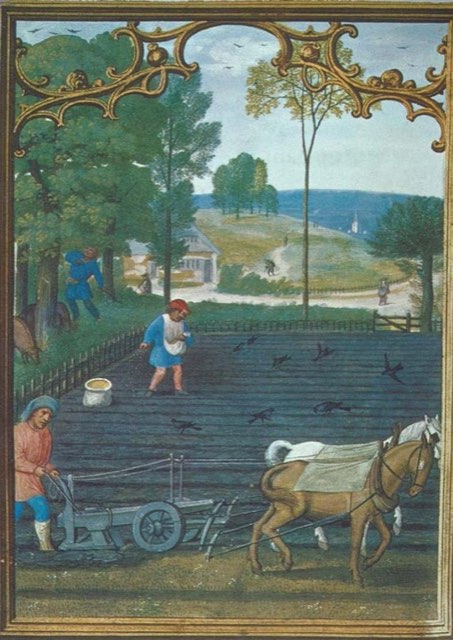
Between the eleventh and thirteenth century, Europe entered a period known as the High Middle Ages. The absence of the bubonic plague and the rise of commerce created an environment for many changes in politics and society. Many European kingdoms became more stable polities after the period of “barbarian invasions;” kings centralized and Christianized their territories. This unit presents a geographic overview of Europe from Spain to the Urals during this crucial period of the 1200s and early 1300s.

Magna Carta
- Annotated Excerpts of Magna Charta, 1215U.S. Naval Academy · Professor Richard Abels’ · read · archived copy
Manner of Holding Parliament
- Manner of Holding ParliamentYale University’s The Avalon Project · read
Royal Power in France
- Suppression of Etampes Commune, 1199–1200Fordham University’s Internet Medieval Sourcebook · Professor Paul Halsall’s version of · read
Kingship in Medieval France
- Louis IX: Advice to His SonFordham University’s Internet Medieval Sourcebook · Professor Paul Halsall’s version of · read
Peasants
- On LaborersFordham University’s Internet Medieval Sourcebook · read
Women
- Letter to Queen EleanorFordham University’s Internet Medieval Sourcebook · Peter of Blois’ · read
Barbarossa
- The Gelnhausen Charter (April 13, 1180)Yale University’s The Avalon Project · read
The Idealized Emperor
- The Idealized EmperorThe Saylor Foundation · read
Flanders
- FlandersThe Saylor Foundation · read
The Golden Age of Kiev
- Selections from the Primary ChronicleEastern New Mexico University · Dr. Shirley J. Rollinson · read
The Mongol Invasions
- The Mongol InvasionsThe Saylor Foundation · read
Great Novgorod
- Great NovgorodThe Saylor Foundation · read · 15 min
Poland under Casimir the Great
- From Wood to StoneJohn Radzilowski · read
Iberia
- IberiaThe Saylor Foundation · read
Ireland
- The Norman Conquest of Ireland (12th Century)Fordham University’s Internet Medieval Sourcebook · Professor Paul Halsall’s version of Gerald of Wales’ · read
Scandinavia
- ScandinaviaThe Saylor Foundaton · read
Chapter V
Medieval Science, Technology, and Culture
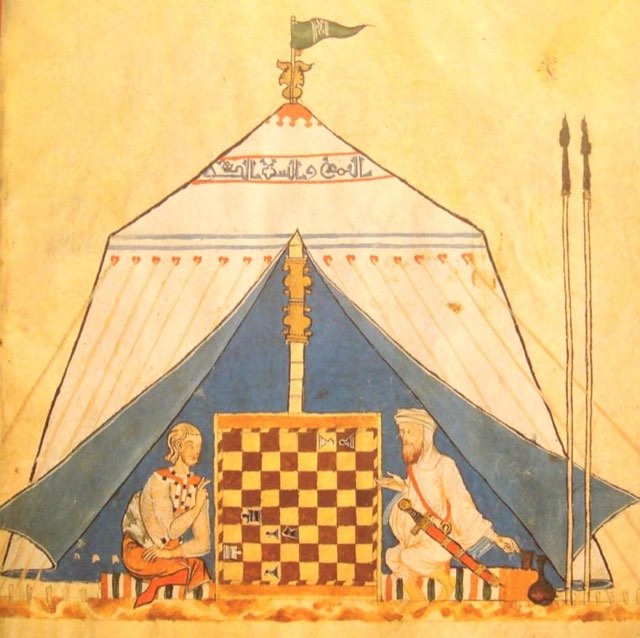
The Middle Ages were once termed the “dark ages,” but in recent decades, scholars have increasingly challenged this popular belief as outdated. We now know that the Middle Ages was a period of brilliant cultural and intellectual achievement that laid the foundation for the Renaissance and the rise of Western Civilization. Supported by the Church and the universities it founded, medieval scholars pioneered the scientific method of offering rational proofs to explain natural phenomenon. Cistercian monks developed and spread new methods of agriculture including selective breeding of plants and animals. The great Gothic cathedrals of Europe illustrate this era’s achievements in engineering and architecture. Monks and nuns copied and spread the works of their Greek and Roman predecessors as well as countless religious texts. In the visual arts, music, theater, and literature medieval men and women expressed themselves and their vibrant, passionate lives.

Elite Culture
- Elite CultureReading · The Saylor Foundation · read · 30 min
Intellectual Life
- Sic et NonFordham University’s Internet Medieval Sourcebook · Professor Paul Halsall’s version of Peter Abelard · read · archived copy
Universities
- UniversitiesReading · The Saylor Foundation · read · 20 min
Science
- Science and PhilosophyReading · The Saylor Foundation · read
Overview of Technology
- Timeline of Medieval TechnologyNew York University · Professor Paul Gans’ · watch · archived copy
The Development of Agriculture
- The Heavy Plow and The Great Harness ControversyNew York University · Paul Gans’ · read · archived copy
- The Development of AgricultureThe Saylor Foundation · read
The Stirrup Controversy
- The Great Stirrup Controversy and Fordham University’s Internet Medieval Sourcebook: Professor Paul Halsall’s version of John Sloan’s The Stirrup ControversyNew York University · Paul Gans’ · read · archived copy
Origins of Industry
- Iron Working and The Horizontal LoomNew York University · Paul Gans’ · read · archived copy
Military Technology
- Military TechnologyThe Saylor Foundation · read · 15 min
Overview of Medieval Architecture
- Overview of Medieval ArchitectureThe Saylor Foundation · read
Gothic Cathedrals
- Gothic CathedralsThe Saylor Foundation · read
Visual Arts
- Visual ArtsThe Saylor Foundation · read · 20 min
Illuminated Manuscripts
- Illuminated ManuscriptsThe Saylor Foundation · read · 20 min
Chant
- ChantThe Saylor Foundation · read · 15 min
Sacred Music
- Anonymous 4, Miracles of Compostela, Plainchant from the Codex Calixitus and St. Hildegarde von Bingen: Spiritus Sanctus (Holy Spirit)YouTube · watch
Popular Religious Music
Secular Music
- Medieval Danse Royale (Thirteenth Century, French) and Lumina Vocal Ensemble: Sumer is Icumen in (Thirteenth Century, English)You Tube · NicolasBreezeWood · watch
Sagas
- George W. DaSent’s (trans.) Brennu-Njal’s Saga: Chapters 41–45 and Project Gutenberg’s version of Beowulf: Chapters III and IVReadings · Icelandic Saga Database · read
Medieval Mystery Plays
- Medieval Mystery PlaysThe Saylor Foundation · read
Chivalric Romances
- Song of RolandFordham University’s Internet Medieval Sourcebook · Paul Halsall’s version of · read
Popular Stories
- Knight’s Tale and Wife of Bath’s TaleCUNY Brooklyn · Chaucer’s Canterbury Tales · read · archived copy
- Medieval Europe Reading Questions Part IThe Saylor Foundation · write
Chapter VI
Medieval Society
Medieval society was characterized by three “estates:” the nobles, the clergy, and the commoners. As one author of the time put it: “some pray, others fight, still others work.”[1] This ideal often masked deep inequities, but medieval estates were not social classes in the modern sense. They represented status and rights rather than wealth so that there were wealthy commoners and poor nobles, rich clergy, and poor clergy. Social mobility was limited by modern standards, but estates were not fixed and many people of high ability were able to better themselves and their families through luck and hard work.
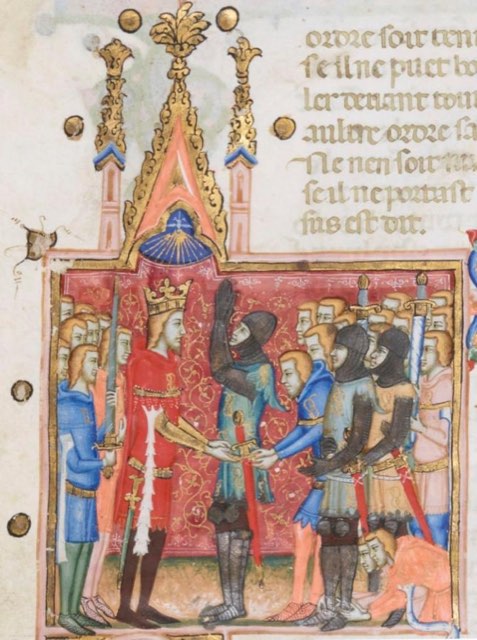

Medieval Society
- European Society in the High Middle AgesThe Saylor Foundation · read
The Medieval Manor
- Medieval ManorThe Saylor Foundation · read
Peasants
- PeasantsThe Saylor Foundation · read
Knighthood
- Steps to KnighthoodMiddle-Ages.org · read · archived copy
Chivalry
- On the Art of Courtly LoveFordham University’s Internet Medieval Sourcebook · Professor Paul Halsall’s version of Andreas Capellanus · read
Women
- Letter to Queen EleanorFordham University’s Internet Medieval Sourcebook · Professor Paul Halsall’s version of Peter of Blois · read
Popular Piety
- Tales of the Virgin and Tales of RelicsFordham University’s Internet Medieval Sourcebook · Professor Paul Halsall’s version of Jacques de Vitry, Étienne de Bourbon, and Caesar of Heisterbach · read
Sacramentalism
- The Seven SacramentsFordham University’s Internet Medieval Sourcebook · Professor Paul Halsall’s version of · read
Philosophy and Faith
- Medieval Philosophy and Fordham University’s Internet Medieval Sourcebook: Professor Paul Halsall’s version of Thomas Aquinas’ Reasons in Proof of the Existence of GodThe ORB · Online Reference Book for Medieval Studies · Lynn Nelson’s Lectures for a Medieval Survey · read · archived copy
Universities
- Statutes for the University of ParisFordham University’s Internet Medieval Sourcebook · Professor Paul Halsall’s version of Robert de Courçon · read
- Centers of Learning in the Middle AgesThe Mapping History Project · watch
Emergence of Heresy
- Medieval HeresiesFordham University’s Internet Medieval Sourcebook · Professor Paul Halsall’s version of Caesarius of Heisterbach · read
Intellectual and Popular Heresy
- The Fourth Lateran Council: Canon 3 on Heresy (1215)Fordham University’s Internet Medieval Sourcebook · Professor Paul Halsall’s version of · read
The Cathars and Waldensians
- The Conversion of Peter Waldo and Bernard Gui’s Manual of the Inquisitor: On the CatharsFordham University’s Internet Medieval Sourcebook · Professor Paul Halsall’s version of · read
- Lamentation for ChristMark Harden’s Artchive · Albrecht Dürer · watch

Friars: Dominicans and Franciscans
- Testament and The ORB: Online Reference Book for Medieval Studies: Lynn Nelson’s Lectures for a Medieval Survey: The Mendicant FriarsFordham University’s Internet Medieval Sourcebook · Professor Paul Halsall’s version of St. Francis of Assisi · read
The Inquisition
- Inquisitorial TechniqueFordham University’s Internet Medieval Sourcebook · Professor Paul Halsall’s version of Bernard Gui · read
- Unit 6 AssessmentThe Saylor Foundations · write
Chapter VII
The Late Middle Ages
While historians usually characterize the High Middle Ages as a period of prosperity and social advancement, the Late Middle Ages, by contrast, was a marked by pandemic disease, famine, death, and recurrent warfare. The Great Famine of 1315-1317 wreaked havoc over Europe but the arrival of the Black Death unleashed unparalleled devastation. Perhaps as much as half the European population succumbed to the pandemic by 1420. While the disease was originally thought to be a bacterium transmitted by fleas and rats from Asia, new research suggests that “The Great Plague” might instead have been a viral hemorrhagic fever. The late medieval period was also witness to problems within the Catholic Church. During the Great Schism, from 1378 to 1417, two men—one in Rome and one in Avignon, France—simultaneously claimed to be the true Pope. The schism divided Europe and undermined the authority of the papacy. And the Hundred Years’ War broke out when France attempted to confiscate English lands in the duchy of Aquitaine; the conflict dragged on for 116 years, ending only when France finally expelled England from the continent.
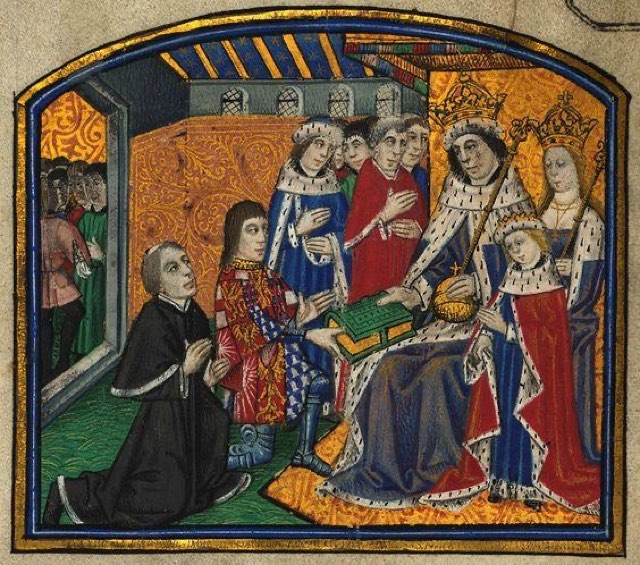

Origins
- The Great Famine and the Black Death and Fordham University’s Internet Medieval Sourcebook: Professor Paul Halsall’s version of Johannes of Trowkelowe’s On the Famine of 1315The ORB · Online Reference Book for Medieval Studies · Lynn Nelson’s Lectures for a Medieval Survey · read · archived copy
The Disease Cycle
- Information on PlagueThe Centers for Disease Control · read · archived copy
Pandemic
- The DecameronFordham University’s Internet Medieval Sourcebook · Professor Paul Halsall’s version of Giovanni Boccaccio · read
Economic and Cultural Effects
- On the Jacquerie and Niccolo Machiavelli’s History of Florence: The Ciompi RevoltFordham University’s Internet Medieval Sourcebook · Professor Paul Halsall’s version of Jean Froissart · read
Rising Power of European States
- The Outrage at AnagniFordham University’s Internet Medieval Sourcebook · Professor Paul Halsall’s version of William of Hundlehy · read
The Avignon Papacy
- Letter Criticizing the Avignon Papacy and The ORB: Online References Book for Medieval Studies: Lynn Nelson’s Lectures for a Medieval Survey: The Avignon PapacyFordham University’s Internet Medieval Sourcebook · Professor Paul Halsall’s version of Petrarch · read
The Great Schism and Conciliarism
- Manifesto of the Revolting Cardinals and The ORB: Online References Book for Medieval Studies: Lynn Nelson’s Lectures for a Medieval Survey: The Great SchismFordham University’s Internet Medieval Sourcebook · Professor Paul Halsall’s version of · read
Popular Religion
- Christian Materiality: Miracles in the Later Middle AgesYouTube · Stanford University · Caroline Walker Bynum · watch
Hundred Years’ War
- The Hundred Years’ WarThe ORB · Online References Book for Medieval Studies · Lynn Nelson’s Lectures for a Medieval Survey · read · archived copy
Holy Roman Empire
- Golden BullFordham University’s Internet Medieval Sourcebook · Professor Paul Halsall’s version of Charles IV · read
Impact of Widespread Conflict
- The National MonarchiesThe ORB · Online References Book for Medieval Studies · Lynn Nelson’s Lectures for a Medieval Survey · read · archived copy
The Rise of the Ottoman Empire
- Rise of the Turks and the Ottoman EmpireSam Houston State University · Professor Nicholas J. Pappas’s version of Paul Pittman’s Turkey · A Country Survey · read · archived copy
The Defeat of Teutonic Order
- The Grunwald CampaignUniversity of Alaska · John Radzilowski · read
Chapter VIII
Origins of the Renaissance
In Italy during the late Middle Ages, the contours of a new cultural movement—the Renaissance—began to emerge in urban centers such as Rome, Venice, Florence, and Milan. Meaning “rebirth” in French, “the Renaissance” refers to a growing interest in classical Greek and Roman sources, an emphasis on realism in art, and educational reform. Renaissance thinkers emphasized humanism—a moral philosophy that considers humans to be of primary importance—in art, philosophy, politics, science, and religion. This new interest in humanism represented a gradual shift away from the focus on theology and philosophy that had dominated European thought for centuries. By the sixteenth century, Renaissance culture had spread to other regions of Europe.
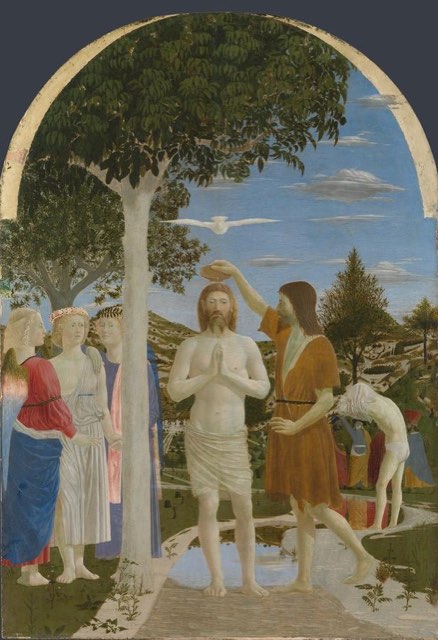

Northern Italian Cities
- Italy (1490)CosmoLearning · Perry-Castaneda Library, Map Collection at the University of Texas at Austin · watch
- The Renaissance in Western HistoryUniversity of California, Berkeley · Thomas Laqueur · watch · archived copy
Commercial Exchange
- Commercial ExchangeThe Saylor Foundation · read
Communes and Republics
- Treatise on City GovernmentFordham University’s Internet Medieval Sourcebook · Professor Paul Halsall’s version of Bartolo of Sassoferrato · read
City-States
- The Discourses: Republics and Monarchies and The PrinceFordham University’s Internet Medieval Sourcebook · Professor Paul Halsall’s version of Niccolo Machiavelli · read
Response to Middle Ages?
- Responses to the Middle AgesThe Saylor Foundation · read · 15 min
Fall of Byzantium
- Fall of ByzantiumThe Saylor Foundation · read · 15 min
New Emphasis on Latin and Greek Texts
- Letter to HomerFordham University’s Internet Medieval Sourcebook · Professor Paul Halsall’s version of Francesco Petrarch · read
Unique Political and Social Climate in Italy
- The State as a Work of ArtUniversity of California, Berkeley · Thomas Laqueur · watch · archived copy
Black Death
- Black DeathThe Saylor Foundation · read · 15 min
French and English Exploration
- Sir Francis Drake’s Famous Voyage Round the WorldFordham University’s Internet Modern History Sourcebook · Francis Petty · read
The Northern Renaissance
- Northern RenaissanceThe Saylor Foundation · read · 20 min
Christian Humanism
- Julius Excluded from HeavenState University of New York, Suffolk, HS 101 Readings · Desiderius Erasmus’ · read · archived copy
Art and Architecture
- Art and ArchitectureThe Saylor Foundation · read · 20 min
- Lamentation for ChristMark Harden’s Artchive · Albrecht Dürer · watch
Politics and State-building
- Politics and State-buildingThe Saylor Foundation · read · 20 min
Chapter IX
Renaissance Ideas
The advent of the Renaissance marked the end of the medieval period and the beginning of the early modern world. Evidence of this transition could be seen in the fields of philosophy, art, architecture, and science. Many thinkers looked to classical sources as a reference point: they wanted to both emulate and improve upon the ideas of the classical world.
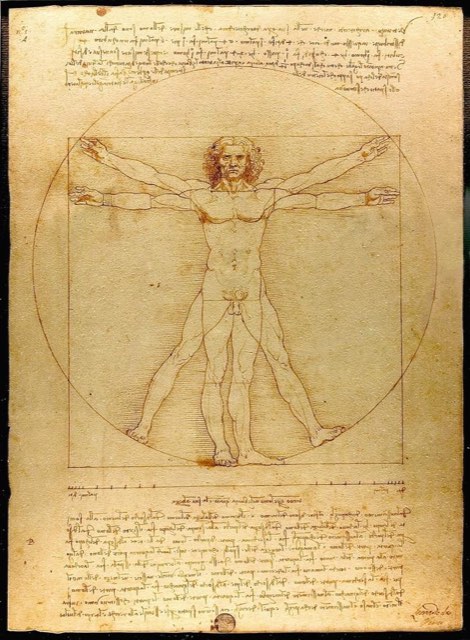

Emphasis on Classical Sources
- Letter to Cicero, Part 1 and Letter to Cicero Part 2Fordham University’s Internet Medieval Sourcebook · Professor Paul Halsall’s version of Petrarch · read
Secular or Religious Renaissance?
- Ascent of Mount VentouxFordham University’s Internet Medieval Sourcebook · Professor Paul Halsall’s version of Petrarch · read
Civic Humanism
- Civic HumanismThe Saylor Foundation · read · 20 min
Neoplatonism
- Oration on the Dignity of Man Link Fordham University’s Internet Medieval Sourcebook: Professor Richard Hooker’s translation of Giovanni Pico della Mirandola’s Oration on the Dignity of ManFordham University’s Internet Medieval Sourcebook · Professor Richard Hooker’s translation of Giovanni Pico della Mirandola · read
Education
- The New EducationFordham University’s Internet Medieval Sourcebook · Professor Paul Halsall’s version of Petrus Paulus Vergerius’ · read
Changes in Artistic Method
- Changes in Artistic MethodThe Saylor Foundation · read · 15 min
Realism
- RealismThe Saylor Foundation · read · 15 min
Beauty of Nature
- PrimaveraMark Harden’s Artchive · Sandro Botticelli · watch

Italian and Dutch Artists
- Italian and Dutch ArtistsThe Saylor Foundation · read
Political Effects in Germany
- The Religious Division of EuropeFordham University’s Internet Modern History Sourcebook · watch

Improvement and Emulation of Classical Forms
- Improvement and Emulation of Classical FormsThe Saylor Foundation · read · 15 min
Brunelleschi and the Dome of the Florentine Cathedral
- Brunelleschi and the Dome of the Florentine CathedralThe Saylor Foundation · read
Rebuilding St. Peter’s Basilica
- Rebuilding St. Peter’s BasilicaSaylor Foundation · read · 15 min
Anatomy
- On the Motion of the Heart and Blood in AnimalsFordham University’s Internet Modern History Sourcebook · Professor Paul Halsall’s version of William Harvey · read
Astronomy and Physics
- The Revolutions of Heavenly BodiesFordham University’s Internet Modern History Sourcebook · Professor Paul Halsall’s version of Nicolas Copernicus’ · read
Mathematics
- MathematicsThe Saylor Foundation · read · 15 min
Geography
- A Treatise on the AstrolabeFordham University’s Internet Medieval Sourcebook · Professor Paul Halsall’s version of Geoffrey Chaucer · read
- Medieval Europe Reading Questions Part IIThe Saylor Foundation · write
- Unit 9 AssessmentThe Saylor Foundations · write
About this course
This course is Saylor Academy's HIST302, Medieval Europe, one of the complete university courses the Saylor Foundation made free from 2008 and retired in 2015. Saylor licensed its course text under CC BY 3.0; the original is on GitHub. Here it is laid out as chapters, links that have died go to an archived copy from the Internet Archive where one exists, assessments that needed a Saylor login are left out, and people and works are linked to Kulturbase. The readings and lectures belong to their publishers and are linked, not copied. Pictures: Wikimedia Commons, credited under each picture.
All Saylor courses · Free culture courses · The Chautauqua Reading Course