History · Saylor HIST303
The Age of Revolutions in the Atlantic World, 1776–1848
This course will introduce you to the history of the Age of Revolutions in the Atlantic World from 1776 to 1848. You will learn about the revolutionary upheavals that took place in the Americas and Europe during this period.
More about this course
Each unit will include representative primary-source documents that illustrate important overarching political, economic, and social themes, such as the secession of the American colonies from the British Empire, the outbreak of the French Revolution, the dissolution of the Spanish and Portuguese Empires in the Americas, and the spread of revolutionary ideals throughout the Atlantic World. Running alongside and extending beyond these political revolutions is the First Industrial Revolution. By the end of the course, you will understand how an Atlantic World, dominated by European empires in 1776, was transformed through revolution into a series of independent states by 1848 and of the profound changes that Europe would experience, and continue to experience, through the development and consolidation of capitalism.
Upon successful completion of this course, the student will be able to:
In order to take this course, you must:
Chapter I
The Enlightenment and the Origins of the Revolutionary Age
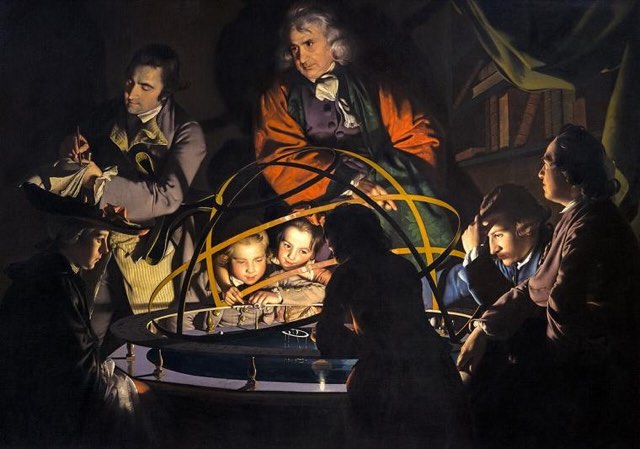
In the mid-18th century, the Atlantic world was dominated by European empires and their colonies. Europe was ruled by monarchies, many of them absolute. Beginning in 1776, a series of revolutions shook Europe and the Atlantic World. European countries and colonies, formerly ruled by aristocratic regimes, embraced new and radical principles of self-governance and equality. Absolute monarchies were dismantled in Europe and independent republics emerged in the Americas. Although revolutionary fervor swept across Europe and the Americas between 1776 and 1840, each revolution—whether in British America, Haiti, France, or South America—had its own distinct character. In this unit, you will examine how the European Enlightenment and the crisis of monarchy paved the way for the revolutionary age. You will also consider how the idea of equality took on increasing importance in the Atlantic world during this time.

What is a Revolution?
- The Psychology of RevolutionVirginia Tech · Gustave Le Bon · read · 4 h · archived copy
- Evolution and RevolutionVirginia Tech · Karl Kautsky · read · 1 h · archived copy
The Enlightenment
- The EnlightenmentWashington State University · Professor Paul Brian · read · 1 h · archived copy
- What Is Enlightenment?Fordham University’s Internet Modern History Sourcebook · Immanuel Kant · read · 45 min
The Social Contract
- The Social Contract, 1763Fordham University’s Internet Modern History Sourcebook · Jean Jacques Rousseau · read · 45 min
Absolute Monarchy and the Divine Right of Kings
- On Social Order and Absolute MonarchyFordham University’s Internet Modern History Sourcebook · Jean Domat · read · 30 min
- Lecture 2: Absolutism and the StateYouTube · Yale University · Professor John Merriman’s European Civilization, 1648–1945 · watch · 2 h
- Political TreatiseUniversity of Hanover · Jacques Benigne Bossuet · read · 30 min
World Trade and Its Discontents
- The Social RevolutionVirginia Tech · Karl Kautsky · read · 1 h · archived copy
Monarchy
- On Restoration and RevolutionFordham University’s Internet Modern History Sourcebook · John Evelyn · read · 30 min
Aristocracy
- The Customs of Louis XIV and The CourtiersThe Saylor Foundation · read · 30 min
Democracy
- Democracy in the Age of RevolutionsThe Saylor Foundation · read · 30 min
Slavery
- European and Colonial Resistance (PDF) and The Abolition of the Slave TradeThe Saylor Foundation · read · 45 min
Jews and the Emancipation
- Jewish EmancipationThe Museum of Family History · read · 15 min
Equality
- Anne Robert Jacques Turgot’s Reflections on the Formation and Distribution of Wealthread · 3.5 h · archived copy
- Unit 1 AssessmentThe Saylor Foundation · write
Chapter II
The American Revolution
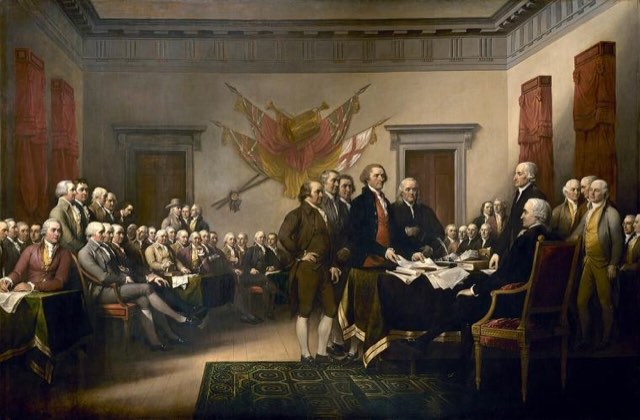
The American Revolution was the first of the Atlantic Revolutions. The roots of the American Revolution can be traced back to both the Enlightenment and British concepts of Law and Representation. The tensions between Britain and her American colonies were exacerbated by the French and Indian War, the subsequent taxes imposed on the colonies, and British mercantile policies. These tensions led to violence in

Taxation and Mercantilist Policies
- Of Colonies (HTML) and The Cost of EmpireAdam Smith’s The Wealth of Nations (1776) · read · 30 min · archived copy
- The Objections to the Taxation Consider’d, 1765Soame Jenyns’ · read · 15 min · archived copy
The French and Indian War
- The Seven Years’ WarThe Saylor Foundation · read · 15 min
The Estrangement of the Colonies
- The American RevolutionThe Saylor Foundation · read · 45 min
- Lecture 3: Being a British AmericanYouTube · Yale University · Professor Joanne B. Freeman’s The American Revolution · watch · 1 h
Protest and Solidarity
- Lecture 5: Outraged Colonials: The Stamp Act Crisis and Lecture 6: Resistance or Rebellion? (Or, What the Heck Is Happening in Boston?)YouTube · Yale University · Professor Joanne B. Freeman’s The American Revolution · watch · 3 h
The Declaration of Independence
- The Declaration of IndependenceArchives.gov · read · 30 min · archived copy
- Lecture 11: IndependenceYouTube · Yale University · Professor Joanne B. Freeman’s The American Revolution · watch · 1 h
War and Victory
- Lecture 18: Fighting the Revolution: The Big PictureYouTube · Yale University · Professor Joanne B. Freeman’s The American Revolution · watch · 1 h
Independence
- Lecture 10: Common SenseYouTube · Yale University · Professor Joanne B. Freeman’s The American Revolution · watch · 1 h
Equal Rights
- Goals of the RevolutionThe Saylor Foundation · read · 15 min
What Kind of Government?
- Challenges of the RevolutionThe Saylor Foundation · read · 15 min
The Articles of the Confederation
- Lecture 20: ConfederationYouTube · Yale University · Professor Joanne B. Freeman’s The American Revolution · watch · 1 h
Threats to the New Nation
- Lecture 21: A Union without PowerYouTube · Yale University · Professor Joanne B. Freeman’s The American Revolution · watch · 1 h
The Constitution
- Lecture 23: Creating a ConstitutionYouTube · Yale University · Professor Joanne B. Freeman’s The American Revolution · watch · 1 h
Revolutionary Change
- How Revolutionary Was the American Revolution?The Saylor Foundation · read · 15 min
Impact of the American Revolution
- Lecture 25: Being an American: The Legacy of the RevolutionYouTube · Yale University · Professor Joanne B. Freeman’s The American Revolution · watch · 1 h
- Unit 2 AssessmentThe Saylor Foundation · write
Chapter III
The French Revolution
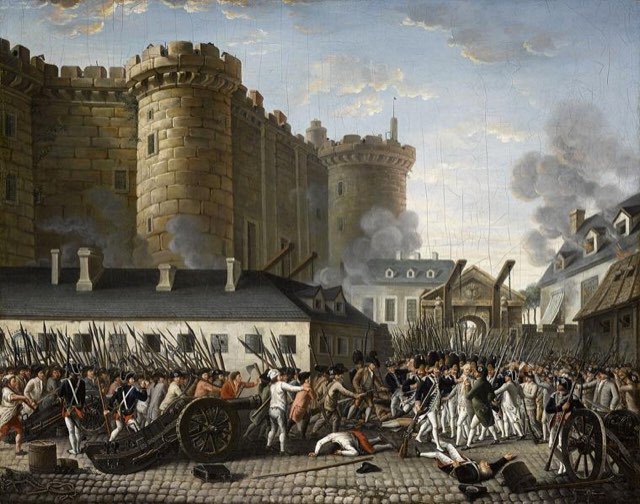
The French Revolution was the primary catalyst for spreading revolutionary ideas throughout Europe. The Ancient Regime had divided the society into three estates: the clergy (first estate), the nobility (second estate), and the townspeople and peasantry (third estate). The Revolution broke out when the third estate rebelled against the king as well as the first two estates and proclaimed themselves the true representative of the French people. The French Revolution overthrew the monarchy as well as the estate system and introduced new radical ideas of government and what the nation meant. In this unit, you will examine the causes of the French Revolution: famine, poverty, the Enlightenment, and the outdated and oppressive nature of the Ancient Regime. You will also study the different phases of the Revolution and the spread of revolutionary ideas.

Society and Government
- The People before the RevolutionPeter Kropotkin’s The Great French Revolution · read · 30 min
- French Revolution – Part 1Khan Academy · watch · 45 min
The Estates General
- The Opening of the Estates General (1789)Ashland University · Professor J. Moser · read · 15 min · archived copy
- The EstatesThinkQuest · read · 15 min · archived copy
The National Assembly
- Excerpts from an Address of the National Assembly to the French People (1790)Ashland University · Professor J. Moser · read · 45 min · archived copy
- The French Revolution – Part 2Khan Academy · watch · 30 min
The Storming of the Bastille
- Chapter XII: The Taking of the BastillePeter Kropotkin’s The Great French Revolution · read · 1 h
Declaration of Rights of Man and Citizen
- Chapter XIX: The Declaration of the Rights of ManPeter Kropotkin’s The Great French Revolution · read · 30 min
- Declaration of the Rights of Man – 1789Yale Law School, Lillian Goldman Law Library’s The Avalon Project · read · 30 min
The Flight to Varennes
- Narrative of the Journey to VarennesMadame Royale, Duchess of Angouleme · read · 1 h
The Constitution
- Financial Difficulties – Sale of Church PropertyPeter Kropotkin’s The Great French Revolution · read · 45 min
Jewish Emancipation
- Address on the Granting of Civil Rights to JewsVirginia Tech · Mitchell Abidor’s Translation of · read · 30 min · no longer online
Declaration of Rights of Women
- Declaration of the Rights of Women, 1791Fordham University’s Internet Modern History Sourcebook · Olympia de Gouge · read · 30 min
The Jacobin Republic and the Terror
- French Revolution – Part 3: Reign of TerrorKhan Academy · watch · 1 h
The Execution of the King and Queen
- The Death of Marie AntoinetteFordham University’s Internet Modern History Sourcebook · Edmund Burke · read · 15 min
The Terror
- Justification of the Use of TerrorFordham University · Internet Modern History Sourcebook · Maximilien Robespierre · read · 30 min
Thermidorian Reaction
- Lecture 6: Maximillian Robespierre and the French RevolutionYale University · Professor John Merriman · watch · 2 h
The Directory
- French Revolution – Part 4: The Rise of Napoleon BonaparteKhan Academy · watch · 45 min
The Radical Phase
- Abolition of Existing InstitutionsThe Saylor Foundation · read · 30 min
European War and the Levee en Masse
- The Levee en MasseFordham University’s Internet Modern History Sourcebook · read · 15 min
The Rise of Napolean
- Lecture 7: NapoleonYouTube · Yale University · Professor John Merriman · watch · 1 h
The Spread of the Revolution
- Radicalism and Dangerhe Saylor Foundation · read · 15 min
France after Napoleon
- Chapter II: The Restoration of EuropeSir Augustus Oakes’ The Great European Treaties of the 19th Century · read · 1 h · archived copy
- Unit 3 AssessmentThe Saylor Foundation · write · 30 min
Chapter IV
Latin America and Caribbean Revolutions
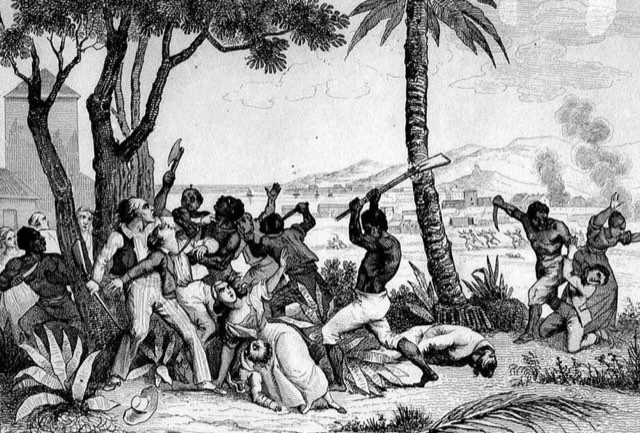
Beginning in the early 19th century, a spate of revolutions swept through the European territories in the Americas. The independence movements that proliferated in Americas in the early 19th century were a direct result of the American and French Revolutions, as well as the Peninsular War, a conflict over the Iberian Peninsula during the Napoleonic Wars. The slave revolt in Haiti was the only truly successful slave revolt, as well as the first of the new Independence movements. Napoleon Bonaparte dismantled the Spanish Bourbon monarchy, allowing for the establishment of several junta governments in Spanish America that advocated independence from Spain. While Napoleon’s forces occupied Portugal, the monarchy fled to Brazil, its South American colony. When the Portuguese king returned to Portugal in 1821, his brother, the prince regent, declared Brazil independent of Portugal. The wars for independence that ensued in Central and South America during this time resulted in protracted and bloody conflicts, the adoption of free trade policies, the rise of many unstable regimes, and the expansion of representative government.

The Haitian Revolution
- The Haitian RevolutionThe Saylor Foundation · read · 30 min
Slave Society in Haiti
- Haitian Revolution – Part 1Khan Academy · watch · 1 h
The Revolt of 1791
- Civil Rights for Les Gens de CouleurThe Saylor Foundation · read · 15 min
The French Response
- Haitian Revolution – Part 2Khan Academy · watch · 45 min
Discontent in Colonial Society
- Period of Imperial Crisis (PDF) and Causation of Spanish American IndependenceThe Saylor Foundation · read · 45 min
The American and French Revolutions
- A Tale of Two RevolutionsFlorida International University · Robert A. Peterson · read · 1 h · archived copy
The Napoleonic Wars
- Spain: The Napoleonic EraUS Library of Congress’s Country Studies · read · 15 min
Mexico
- The Road to Independence, Wars of Independence, 1810–21 and Empire and Early Republic, 1821–55US Library of Congress’s Country Studies · read · 45 min · archived copy
Simón Bolívar and South America
- Simón Bolívar and José de San MartinThe Saylor Foundation · read · 30 min
Colonial Brazil
- Brazil: The Transformation to Kingdom StatusUS Library of Congress’s Country Studies · read · 15 min · archived copy
Impact of European Wars
- Brazil: Emperor Dom Pedro IUS Library of Congress’s Country Studies · read · 30 min · archived copy
Brazilian Independence
- Brazil: The Kingdom of Portugal and Brazil, 1815–21US Library of Congress’s Country Studies · read · 15 min · archived copy
The New Nations
- Excerpts from America in DangerFordham University’s Internet Modern History Sourcebook · Francisco Bilbao · read · 15 min
Monroe Doctrines and the Americas
- The Monroe DoctrineYale Law School, Lillian Goldman Law Library’s The Avalon Project · read · 30 min
- Unit 4 AssessmentThe Saylor Foundation · write
Chapter V
The Industrial Revolution
The Industrial Revolution is not a revolution in the same sense as the previous units, but a series of long-term changes that reshaped first Europe and then the world. The Industrial Revolution does not have a start or end date, and there is much disagreement on what constitutes a ‘revolution’ when referring to these changes. The Industrial Revolution involved new technologies and ideas, as well as long-term changes in the social and economic relationships within Britain, Europe, and the wider world. The Industrial Revolution made countries that adapted to these changes much more powerful economically, both overall and per capita, than countries that did not. These changes came at a price for many people who saw their way of life and standard of living destroyed by the new modes of production. The revolutions of 1848 were in a large part brought about by the changes the Industrial Revolution brought to European society.
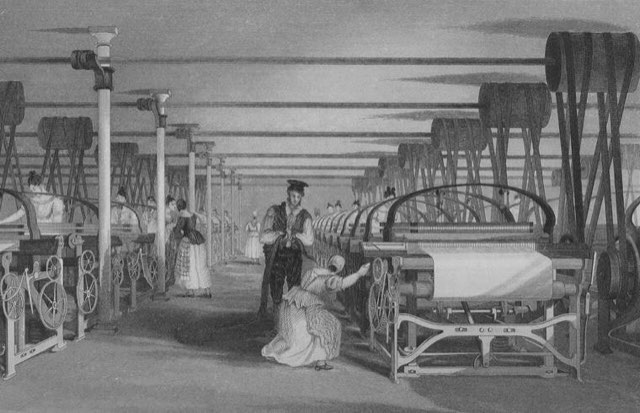

What is the Industrial Revolution?
- Industrial RevolutionsYouTube · Yale University · Professor John Merriman · watch · 2 h
Economic Preconditions and Incentives for Technological Development
- Lectures on the Industrial Revolution in EnglandArnold Toynbee · read · 2 h · archived copy
The Steam Engine and Technology
- Dionysis Lardner’s The Steam Engine Explained and Illustratedread · 3 h · archived copy
The Factory System
- The Life of the Industrial Worker in 19th-Century EnglandLaura Del Col · read · 30 min
The Rise of Industrial Countries
- Big Era SevenSan Diego State University · World History for Us All Project · read · 1 h · archived copy
Adam Smith and Laissez Faire
- Adam Smith’s Excerpt from An Inquiry into the Nature and Causes of the Wealth of Nationsread · 30 min · archived copy
Karl Marx and Socialism
- Karl MarxFrederick Engels’ · read · 30 min
Revolutions in France
- The French Revolution of 1848Fordham University’s Internet Modern History Sourcebook · Percy B. St. John · read · 45 min
Discontent in Cities
- History of the Revolution of 1848 in FranceFordham University’s Internet Modern History Sourcebook · Alphonse de Lamartine · read · 30 min
Nationalism and Counter-Revolution
- Hungary under the Habsburgs (HTML) and Dual MonarchyUS Library of Congress’s Country Studies · read · 2 h · archived copy
- Unit 5 AssessmentThe Saylor Foundation · write
Chapter VI
The Effects of Revolution
The Atlantic world of 1776 looked very different from the Atlantic world that emerged in 1848. France was no longer an absolutist monarchy. America was no longer a collection of British colonies, but an independent nation whose economy was becoming one of the largest in the world. Saint-Domingue had been transformed from a French colony in the Caribbean into the free republic of Haiti. New Spain had been dismantled, and new republics and federations in Central and South America had risen in its place. The Industrial Revolution had transformed Western Europe 1848 had seen an explosion of revolutionary discontent throughout Europe. But revolutions did not guarantee the implementation of democratic principles and the end of oppressive regimes. In fact, in many regions, tyranny either returned or persisted; freedom of the people was never assured. In this unit, you will consider the Atlantic world in the wake of the revolutionary age and compare and contrast the revolutions in Europe and the Americas. You will also consider how revolutionaries ended their respective revolutions as well as how they remembered them.
The World Economic System after Industrialization
- Summary of Wallerstein on World System TheoryFordham University’s Internet Modern History Sourcebook · read · 30 min
- The Principle of the Mercantile SystemFordham University’s Internet Modern History Sourcebook · Adam Smith · read · 30 min
- Pamphlet: In Defence of Laissez-FaireFordham University’s Internet Modern History Sourcebook · read · 45 min
The Americas in 1848
- The United States and the 1848 RevolutionsThe Saylor Foundation · read · 30 min
Europe in 1848
- A Look Back at 1848Fordham University’s Internet Modern History Sourcebook · Carl Schurz · read · 15 min
Revolution and the Modern World
- Revolutions and the Modern WorldThe Saylor Foundation · read · 30 min
About this course
This course is Saylor Academy's HIST303, The Age of Revolutions in the Atlantic World, 1776–1848, one of the complete university courses the Saylor Foundation made free from 2008 and retired in 2015. Saylor licensed its course text under CC BY 3.0; the original is on GitHub. Here it is laid out as chapters, links that have died go to an archived copy from the Internet Archive where one exists, assessments that needed a Saylor login are left out, and people and works are linked to Kulturbase. The readings and lectures belong to their publishers and are linked, not copied. Pictures: Wikimedia Commons, credited under each picture.
All Saylor courses · Free culture courses · The Chautauqua Reading Course