History · Saylor HIST311
The Age of the Atlantic Slave Trade, 1500-1900
This course will introduce you to the history of the Atlantic slave trade from 1500 to 1900. You will learn about the slave trade, its causes, and its effects on Africa, Europe, and the Americas.
More about this course
The course will be structured chronologically and geographically; each unit with focus on a particular aspect of the Atlantic slave trade. Each unit will include representative primary-source documents that illustrate important overarching political, economic, and social themes, such as slavery and the slave trade within African societies, the growth of plantation societies in the New World, the advent of European slave dealing in western Africa, the simultaneous growth of European empires and the Atlantic slave trade, the nature of slave trading and the Middle Passage, and the abolition of the Atlantic slave trade in the nineteenth century. By the end of the course, you will understand how the Atlantic slave trade began as a fledgling enterprise of the English, Portuguese, and Spanish in the 1500s and why, by the mid-18th century, the trade dominated Atlantic societies and economies.
Upon successful completion of this course, you will be able to:
In order to take this course, you must:
Chapter I
Origins of The Atlantic Slave Trade
Slavery existed in Africa long before European contact. In fact, slavery within African societies and slave trade routes across the Sahara Desert, Red Sea, and Indian Ocean had been in place for centuries. However, the beginning of the European-dominated Atlantic slave trade in the 16th century had a new and profound impact on African peoples. In all, historians estimate that approximately 12 million Africans were transported to the New World through the Atlantic slave trade. That the Atlantic World and the Atlantic slave trade both emerged in the 1500s was not a coincidence. European empires that sought to explore and colonize territories in the New World also attempted to forge lucrative commercial networks in the Atlantic littoral (the regions that touched the Atlantic Ocean). Gradually, a triangular trade came to define the Atlantic World; ships departed from Europe, sailed to western Africa to trade, embarked to the Caribbean and South America to sell slaves, and then returned to Europe laden with New World produce. Although the trade routes often varied, western Africa remained an important destination for European traders who bought and sold gold, ivory, cloth, and African slaves.* In this unit, we will study European exploration and colonization as impetuses for the development of the Atlantic slave trade. We will also examine the development of the Atlantic economy, of which the trade in Africans became a critical component.
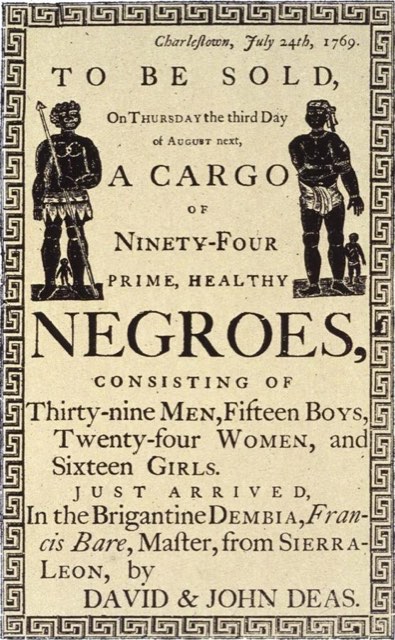

Europeans in Western Africa
- The Slave Trade, Part 1iTunes U · Arizona State University History Department · watch · 1 h · no longer online
- The European Voyages of Exploration: AfricaThe University of Calgary · read · 20 min · archived copy
- Atlantic Slave TradeWikipedia · read · 30 min
- History of SlaveryWikipedia · read · 15 min
- The Voyage and Acts of Dom Francisco, 1505Fordham University’s Internet Modern History Sourcebook · Hans Mayr · read · 1 h
São Tomé and the Slave Trade
- São Tomé and PríncipeWikipedia · read · 15 min
New World Exploration
- European History/Exploration and DiscoveryWikiBooks’ · read · 30 min
- Extracts from JournalFordham University’s Internet Modern History Sourcebook · Christopher Columbus’ · read · 2 h
- Discourse of Western Planting 1584American History · Richard Hakluyt · read · 15 min · archived copy
A Maritime World
- Web of Connections and Narrative Accounts, 1680-1806Smithsonian Institution · On the Water · Living in the Atlantic World, 1450–1800 · read · 1 h
Trade and Consumption Patterns
- New Tastes, New TradesThe Smithsonian Institute · On the Water · Living in the Atlantic World, 1450–1800 · read · 30 min
Chapter II
The Enslavement of Africans
Beginning in the 16th century, Africans were brought to the Americas to serve as enslaved laborers on plantations and in mines. However, Africans were not the first laborers to be used in the New World for that purpose. Portuguese and Spanish colonizers had utilized indentured servitude and enslaved local Amerindian peoples. However, when disease depleted the Amerindian slaves and indentured European servants, African laborers became a viable alternative. Africans were accustomed to a tropical climate, were familiar with agricultural production, and seemed resistant to disease. Gradually, specific African ethnic groups were brought to the English, Danish, Dutch, or French West Indies, or to Spanish or Portuguese America as captive slaves.* In this unit, we will examine why European colonizers turned to imported Africans as their main source of labor on plantations and in gold and silver mines. We will also study which African ethnic groups were imported into particular New World colonies.
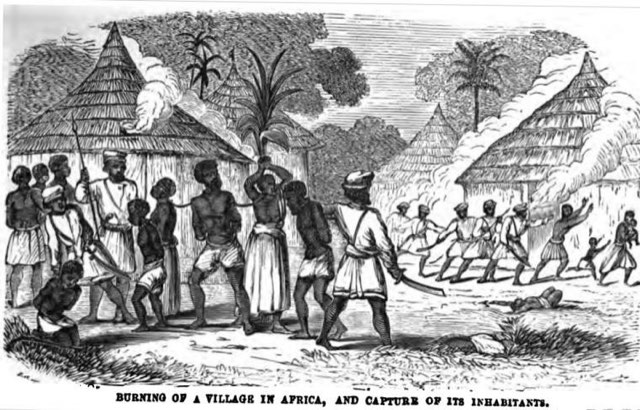

Death and Enslavement of Amerindian Laborers
- The Columbian ExchangeThe Saylor Foundation · Concepcion Saenz-Cambra’s The Atlantic World, 1492–1600 · read · 30 min
- Juan Ginés de SepúlvedaWikipedia · read · 15 min
- Juan Ginés de Sepúlveda’s Excerpt from The Second Democrates (1547)read · 15 min · archived copy
From Amerindian Slavery to African Slavery
- Las Casas: The Devastation of the Indies: A Brief Account (1542)Vimeo · watch · 30 min
- PrefaceInternet Archive · Bartolome de Las Casas’ A Short Account of the Destruction of the Indies (1542) · read · 15 min · archived copy
- Chapter 4: Slavery and Empire (1441–1770)Connexions · Dr. James Ross-Nazzal and David White · read · 15 min · archived copy
From Indentured Servitude to African Slavery
- Introduction to American Colonial HistorySage American History · Henry J. Sage · read · 1 h
- On the Misfortune Indentured ServantsAmerican History · Gottlieb Mittelberger · read · 15 min · archived copy
Why Africans?
- Chapter 4: Slavery and Empire (1441–1770)Connexions · Dr. James Ross-Nazzal and David White · read · 15 min · archived copy
The Advent of Race-Based Slavery
- Chapter 4: Slavery and Empire (1441–1770)Connexions · Dr. James Ross-Nazzal and David White · read · 15 min · archived copy
- Virginia Slave LawsSage American History · Henry J. Sage · read · 15 min
Africans in the Americas
- Atlantic Slave TradeWikipedia · read · 15 min
- Atlantic Slave Trade: Carriers and Destinations of Enslaved PeopleFordham University’s Internet Modern History Sourcebook · watch · 15 min

Specific Ethnic Groups
- Where in Africa Did African Americans Originate?Internet Archive · read · 15 min · archived copy
The Creation of the African Diaspora
- Creation of the African DiasporaThe Saylor Foundation · read · 15 min
Chapter III
Early Slaving Voyages
The earliest European slaving voyages began in the first part of the 16th century. Spanish and Portuguese traders purchased slaves from Upper Guinea, the Cape Verde Islands, and the Bight of Biafra, before embarking to New World destinations. During this time, most African slaves were sold in the Spanish Caribbean, with the gold mines on Hispaniola serving as a major buyer. A few decades later, Cartagena emerged as a major slave trading port on the Spanish American mainland. In the latter 1500s, the slave trade increased markedly because of the expansion of sugar production in Brazil; slaves bound for Brazil accounted for 40 percent of the slave traffic and Brazil supplied nearly all of the sugar consumed in Europe. The English and Dutch also became involved in the slave trade in the 1560s. John Hawkins, an English privateer, hijacked a Portuguese slave ship and sold the slaves on Hispaniola in 1563. Later, Hawkins made other voyages to Africa and the West Indies supplied with Queen Elizabeth I’s ships and funded by wealthy English investors.

The Portuguese and Spanish
- Romanus PontifexNativeweb · Pope Nicholas V · read · 30 min
Iberian Roots of the Slave Trade
- The Making of the Atlantic WorldThe Saylor Foundation · read · 15 min
Early Slaving Routes
- Spain and PortugalAnti-Slavery International’s Breaking the Silence · Slave Routes · read · 30 min
Iberian Critiques of the Slave Trade
- A Critique of the Slave TradeHistoryScoop · Fray Tomas de Mercado · read · 15 min
The Dutch West India Company
- Slave Routes: The NetherlandsAnti-Slavery International’s Breaking the Silence · read · 30 min
- Going Dutch: The Netherlands’ Slave TradeYouTube · Perry Leenhouts · watch · 30 min
Early Involvement in the Trade
- Britain and the Trade and Adventurers and SlaversThe National Archives · read · 1 h
Slaving and Empire
- Slave Routes: United KingdomAnti-Slavery International’s Breaking the Silence · read · 45 min
- Slavery and EmpireBBC Radio 4 · watch · 45 min
Chapter IV
Empires and Slaving
In the latter 18th century, proponents of the Atlantic slave trade defended the commerce by arguing that slavery and the slave trade had existed in Africa for centuries. This was correct. Many African societies included slaves, but slavery was often akin to domestic or indentured servitude. Slaves were not enslaved for life or treated as chattel, as in New World societies.
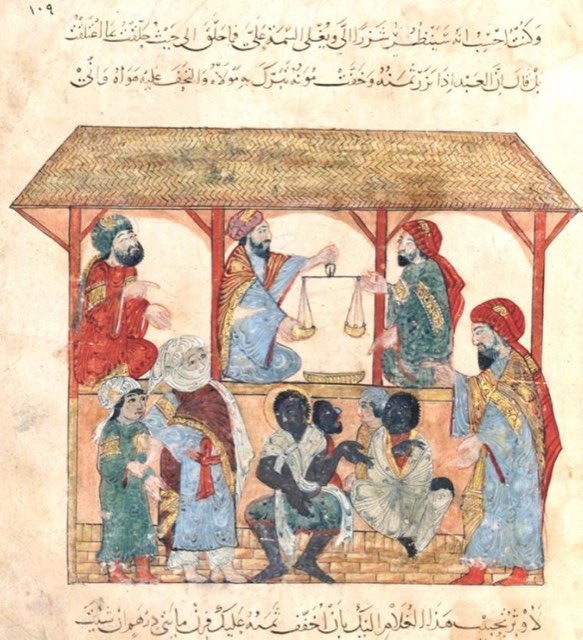

Slavery in Africa
- History of SlaveryWikipedia · read · 15 min
- He Was No Common SlaveAyuba Suleiman Diallo · read · 30 min
- Thoughts upon Slavery 1774United Methodist Women · John Wesley · read · 1 h
Slaving Practices
- The Men Negroes…Are…Fastened Together…by HandcuffsAlexander Falconbridge · read · 1 h
The Islamic World and African Slavery
- Chapter 1: SlaveryFordham University’s Internet Modern History Sourcebook · Bernard Lewis’s Race and Slavery in the Middle East · read · 2 h
Obtaining Black Africans
- Prepossessed of the Opinion…That Europeans Are Fond of Their FleshJohn Barbot · read · 1 h
Capture and Enslavement
- Life of Gustavus VassaFordham University’s Internet Modern History Sourcebook · Olaudah Equiano · read · 45 min
Warring States
- Atlantic Slave TradeWikipedia · read · 15 min
Kidnapping
- I Then Had a Rope Put about My NeckVenture Smith · read · 1 h
- Chapter IIHanover Historical Text Project · Olaudah Equiano’s The Interesting Narrative of the Life of Olaudah Equiano, or Gustavus Vassa, the African · read · 3 h
Traders on the Coast
- ‘Carried Thence for Trafficke of the West Indies Five Hundred Negroes’: Job Hortop and the British Enter the Slave Trade, 1567George Mason University’s History Matters · read · 45 min · no longer online
Chapter V
New World Slave Societies
New World slave societies were highly varied colonial outposts of powerful European empires. Many of these colonies turned to African slave labor after two other sources of labor – native Amerindians and European indentured servants – succumbed to death and disease. Although African laborers were used throughout the Caribbean, mainland North America and Central and South America, the nature of enslavement and the role of African laborers in each society varied widely. There were many reasons for this. First, the nature of slavery depended upon the goods being produced; slavery on sugar plantations in Barbados, for example, was far different than slavery in the gold mines of Peru. Second, New World societies often perceived slavery (and slaves) differently. In some colonies, for example, manumission (release from slavery) was more common and accepted than in others. And third, many New World societies were shaped by their importation of slaves from specific regions in Africa. Rice planters in the Carolinas, for example, wanted to import African ethnic groups who had experience growing rice in Africa.
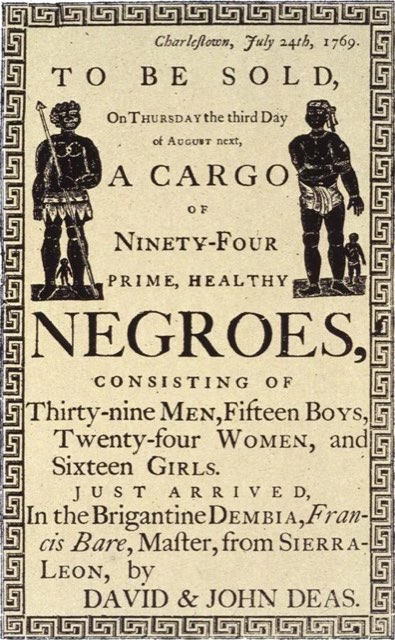
Growth of the Slave Labor System in British America
- ‘They That Are Born There Talk Good English’: Hugh Jones Describes Virginia’s Slave Society, 1724’George Mason University’s History Matters · read · 15 min
- First Hand Views of SlaverySage American History · Henry J. Sage · read · 3 h · no longer online
Freedom and Slavery in British America
- Colonial Life: Faith, Family, WorkSage American History · Henry J. Sage · read · 30 min · archived copy
French America
- Africans in French AmericaNational Park Service’s African American Heritage and Ethnography · read · 45 min · archived copy
The West Indies
- Various Deceptions Are Used in the Disposal of Sick SlavesAlexander Falconbridge · read · 30 min
The Sugar Revolution
- The Sugar Revolutions and SlaverySandra W. Meditz and Dennis M. Hanratty (eds.)’s Caribbean Islands · A Country Study · read · 15 min
Slavery and Slave Labor
- A Brief Overview of the Trans-Atlantic Slave TradeEmory University · David Eltis · read · 1 h
- Seasonality in the Trans-Atlantic Slave TradeEmory University · Stephen D. Behrendt · read · 1 h
- The Life of Plantation Field Hands, 1857Fordham University’s Internet Modern History Sourcebook · James Stirling · read · 30 min
Perceptions of Slavery
- African Slavery in AmericaC. Ingersoll · read · 4 h · archived copy
Africans in Spanish America
- Africans in Spanish AmericaNational Park Service’s African American Heritage and Ethnography · read · 15 min · archived copy
Slavery in New Spain
- Enslaved Africans in MexicoNational Humanities Center · read · 15 min
Slavery in Hispaniola
- Slave Routes: Dominican RepublicAnti-Slavery International’s Breaking the Silence Project · read · 15 min · archived copy
Gold and Sugarcane
- Gold Mining Displaces Cane FarmingCountry Studies US · Rex A. Hudson’s (ed.) Brazil · A Country Study · read · 30 min
Slavery in Brazil
- Brazil in the South Atlantic, 1550–1850Mediations · Dr. Luiz Felipe de Alencastro · read · 2 h
Chapter VI
The Middle Passage
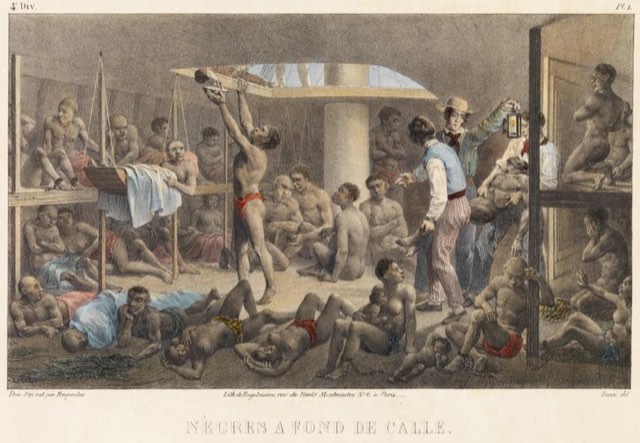
Over 30,000 slaving voyages brought Africans to the Americas. These captive Africans reached the New World through what is called the Middle Passage. During the Middle Passage, a transatlantic crossing that frequently lasted between one and three months, it is estimated that nearly 20 percent of Africans on board perished. According to regulations, approximately 350 captives were allowed to be transported, but some slavers packed upwards of 800 slaves below deck. Men, women, and children were stripped naked and branded before being forced to lie down, in their own filth, and chained to one another. Crewmembers beat, raped, or otherwise tortured their captives during the journey. In addition, many Africans died of disease, dehydration, or suicide. Some Africans were able to resist their captors; many rebellions were incited on board slave ships. When the slaving vessels finally moored in New World ports, Africans were quarantined (for disease) and then sold at auction to merchants and planters.
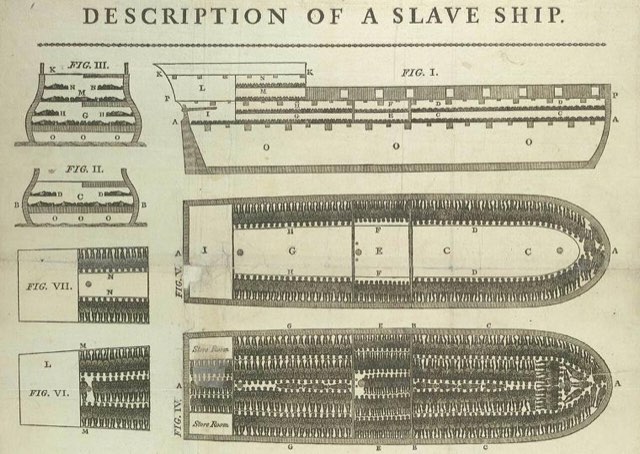

Disease and Death
- The Middle PassageAcademic American · Olaudah Equiano’s Voyages from Africa · read · 30 min · archived copy
Duration of Passage
- A Multitude of Black People…Chained TogetherOlaudah Equiano · read · 45 min
Routes and Destinations
- Introductory MapsEmory University, Digital Library Research Initiative · The Trans-Atlantic Slave Trade Database Voyages · watch · 15 min
- The Blind African Slave, or Memoirs of Boyrereau Brinch, Nick-named Jeffrey BraceUniversity of North Carolina Library’s Documenting the American South · Boyrereau Brinch’s and Benjamin F. Prentiss’s (Benjamin Franklin’s) · read · 3 h
Types of Slave Ships
- Images of VesselsEmory University · The Trans-Atlantic Slave Trade Database · watch · 15 min
Life on Board Slavers
- Account of the Slave Trade on the Coast of AfricaAlexander Falconbridge · read · 1 h · archived copy
Resistance on Slave Ships
- Premeditated a RevoltJames Barbot, Jr. · read · 45 min
Labor Systems on Dutch, Danish, French, British Islands
- Slavery and Negotiating FreedomThe National Archives · read · 15 min · archived copy
- Chapter 3: British Colonial America (1588–1701)Connexions · Dr. James Ross-Nazzal · read · 15 min
- JamaicaWorld History Archives · Veront Satchell · read · 30 min · archived copy
Ports and Auctions
- Account of the Slave Trade on the Coast of AfricaAlexander Falconbridge · read · 45 min · archived copy
Perceptions of Slave Marts
- Perceptions of Slave MartsThe Saylor Foundation · read · 15 min
Encomienda and Repartimento
- EncomiendaCountry Studies US · Rex A. Hudson (ed.) · read · 15 min
- The New Laws of the Indies, 1542Fordham University’s Internet Modern History Sourcebook · read · 30 min
Chapter VII
Abolition
That the Atlantic slave trade would end was never a given. However, a number of forces in the late 1700s and early 1800s paved the way for the enactment of legislation prohibiting the slave trade. Religious groups (namely Quakers and evangelical Protestants) advocated for an end to the slave trade, a system of commerce that they believed to be regressive and morally evil. Enlightenment ideas, particularly notions of the progress and liberty of mankind, buttressed arguments in favor of abolition. The rise of free trade ideology put mercantilist policies – of which the slave trade was one – on the defensive. In addition, the dissolution of European empires during the Age of Revolutions contributed to rising opposition to what had been an imperially sanctioned commerce. While the movement to end the slave trade gathered steam, especially in Britain, America, and France, the abolition movement also encountered a number of impediments. The continued profitability of the Atlantic slave trade and sugar production stalled abolition on several fronts. However, when countries began to view the Atlantic slave trade as an act of piracy and an illegitimate form of commerce, abolition was accepted and enacted. Denmark was the first nation to abolish its Atlantic slave trade, in 1803, and Cuba was the last, in 1866. In the interim, however, slave trading in the Atlantic persisted and, in some cases, even escalated.
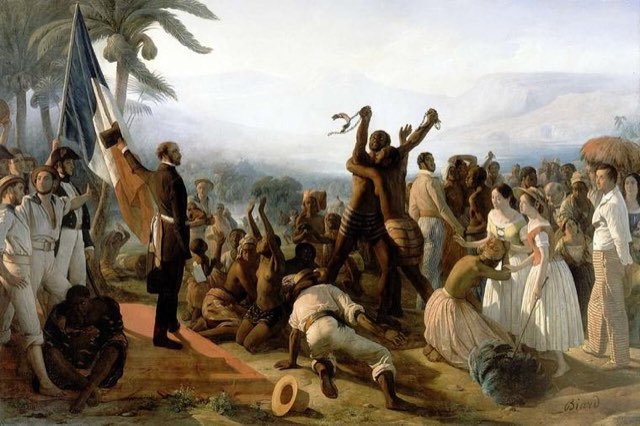

Resistance and Abolition
- Resistance and AbolitionThe Saylor Foundation · read · 15 min
Africans’ Resistance
- TestimonyUniversity of Groningen’s American History · Edward Hicks’ · read · 30 min · archived copy
- Slavery, Resistance, and Rebellion across the AmericasConnexions · Cory Ledoux · read · 30 min
Abolitionism
- On SlaveryUniversity of Groningen · Thomas Jefferson · read · 30 min
- Slaves’ Appeal to Thomas Gage, Royal Governor of Massachusetts, May 25, 1774Fordham University’s Internet Modern History Sourcebook · read · 15 min
- Atlantic Slave TradeWikipedia · read · 15 min
- An Act to Prohibit the Importation of Slaves into any Port or Place Within the Jurisdiction of the United States, From and After the First Day of January, in the Year of our Lord One Thousand Eight Hundred and EightYale Law School · Lillian Goldman Law Library’s Avalon Project · read · 30 min
- Declaration of Sentiments of the American Anti-Slavery ConventionWilliam Lloyd Garrison’s Selections from · read · 45 min · no longer online
Commemorating 1808
- Commemorating 1808The Saylor Foundation · read · 10 min
Illegal Slave Trade
- Illegal Slave TradeThe Saylor Foundation · read · 15 min
Revival of the Slave Trade
- The Hypocrisy of American Slavery, July 4, 1852Fordham University’s Internet Modern History Sourcebook · Frederick Douglass’ · read · 30 min
- The Southern Address, 1849John C. Calhoun · read · 1 h · archived copy
- Fugitive Slave Act 1850Yale University · Lillian Goldman Law Library’s Avalon Project · read · 30 min
Suppression
- Suppression of the Atlantic Slave TradeThe Saylor Foundation · read · 15 min
Impact of the Slave Trade
- Atlantic Slave TradeWikipedia · read · 15 min
Demography
- Atlantic Slave TradeWikipedia · read · 15 min
Economics
- The Economics of the African Slave TradeInternet Archive · Anika Francis · read · 30 min · archived copy
Culture
- An Introduction to the Church in the Southern Black CommunityThe University of North Carolina, Chapel Hill · Laurie F. Maffly-Kipp · read · 30 min
- I Assisted…to Inter the InfantCharles Ball · read · 15 min
- The Slave Assemble in the SwampsPeter Randolph · read · 30 min
- Many Believe…in What They Call ConjurationHenry Bibb · read · 30 min
Legacy of the Slave Trade
- Unit One: Emancipation: Giving Meaning to FreedomAfter Slavery’s Race, Labor, and Politics in the Post-Emancipation Carolinas · read · 3 h · archived copy
Consequences
- The Transition from the Slave Trade to ‘Legitimate’ CommerceInternet Archive · Robin Law · read · 1 h · archived copy
Reparations
- Special Report: ‘Reparations for Slavery’ DebateCarnegie Council · read · 30 min
- Slavery ReparationsMount Holyoke College · History Department · read · archived copy
About this course
This course is Saylor Academy's HIST311, The Age of the Atlantic Slave Trade, 1500-1900, one of the complete university courses the Saylor Foundation made free from 2008 and retired in 2015. Saylor licensed its course text under CC BY 3.0; the original is on GitHub. Here it is laid out as chapters, links that have died go to an archived copy from the Internet Archive where one exists, assessments that needed a Saylor login are left out, and people and works are linked to Kulturbase. The readings and lectures belong to their publishers and are linked, not copied. Pictures: Wikimedia Commons, credited under each picture.
All Saylor courses · Free culture courses · The Chautauqua Reading Course