History · Saylor HIST312
Capitalism and Democracy in America
The purpose of this course is to trace the twin paths of capitalism and democracy through American history. This course is premised on the idea that capitalism and democracy are intertwined, though they have often conflicted with one another.
More about this course
One reason that democracy and capitalism often conflict is because capitalism has the capacity for both enormous construction and enormous destruction; these contradictory impulses often appear in tandem. This course is structured to provide students with a brief introduction to the history of capitalism and democracy in Europe and then to explore how they evolved in North America between 1600 and the present. Throughout the course, students will be exposed to primary and secondary readings as well as video and audio lectures that will explore the connections between America’s economic and political development This course assumes a basic working knowledge of U.S. history. A good resource for review is http://en.wikibooks.org/wiki/US_History. Also available in: PDF
Upon successful completion of this course, students will be able to:
In order to take this course you must: √ Have access to a computer. √ Have continuous broadband Internet access. √ Have the ability/permission to install plug-ins or software (e.g., Adobe Reader or Flash). √ Have the ability to download and save files and documents to a computer. √ Have the ability to open Microsoft files and documents (.doc, .ppt, .xls, etc.). √ Be competent in the English language. Table of Contents: You can find the course’s units at the links below.
Chapter I
Origins of Capitalism and Democracy in Europe to 1500
This chapter will introduce you to European economic and political developments up to 1500, focusing specifically on Europe during the so-called “Dark Ages” (medieval period). We will place particular emphasis on the close relationship between political and economic status, particularly under the feudal system; this is one of the course’s themes, so it is important to understand how European precedents shaped developments in America with regard to the eventual emergence of capitalism and democracy.
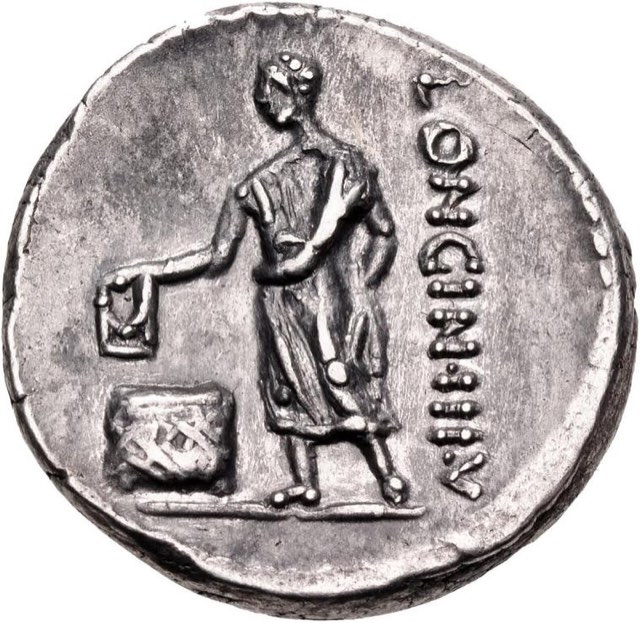

European Society Circa 1500 - The Feudal System
- Feudal OrderWGBH Boston, Eugen Weber, The Western Tradition, Lecture 20 · watch · archived copy
European Society Circa 1500 - Government and Religion
- Cities and Cathedrals of the Middle AgesWGBH Boston, Eugen Weber, The Western Tradition, Lecture 22 · watch · archived copy
Chapter II
Exploration & Expansion: Europe, 1500-1700
Between 1500 and 1700, Europe reasserted its global dominance after almost a millennium of cultural, military, political, and economic submission to the Arab Middle East and North Africa. Europe’s newfound power was buttressed by economic growth that was in turn made possible by changes in the political scene, specifically the death of feudalism and the rise of the European middle class. In addition, European economic growth was aided by the enslavement of millions of Africans whose labor allowed the European colonies in the New World (the Americas) to enrich the mother countries. In this unit, students will explore the roots of European political and economic change between 1500 and 1700, specifically the Protestant Reformation (which weakened the bond between governments and the Church and, over time, eroded monarchs’ political power) and the rise of Enlightenment philosophy, which provided the intellectualframework for more democratic governments. Finally, students will learn how these two developments pushed Europeans to explore first Africa and then the Americas; these explorations led to vast new natural resources and slave labor that enriched Europe and eventually made Great Britain the dominant world power by the beginning of the eighteenth-century.
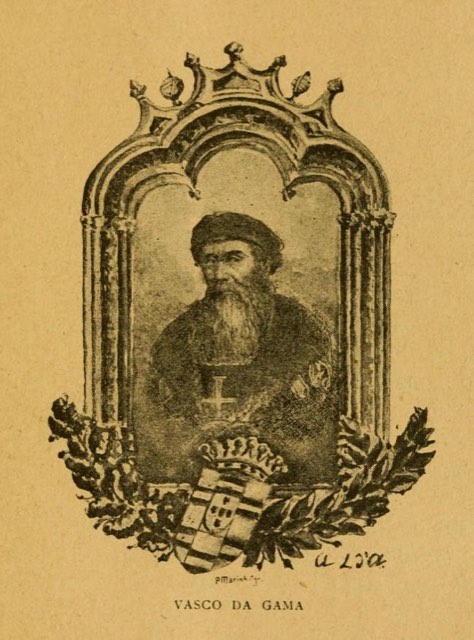

The Protestant Reformation
- European History/Challenges to Spiritual AuthorityWikibooks’ European History · read
The Enlightenment
- Scientific Revolution and EnlightenmentWikibooks’ European History · read
Enlightenment Philosophy
- The Enlightenment and the Public SphereYale Open CourseWare · Yale University, Professor John Merriman, European Civilization, 1648-1945, Lecture 5 · watch
- The Modern PhilosophersWGBH Boston, Eugen Weber, The Western Tradition, Lecture 36, and · watch · archived copy
Explorations and Conquest
- The Renaissance and the Age of DiscoveryWGBH Boston, Eugen Weber, The Western Tradition, Lecture 25 · watch · archived copy
Slave Labor and Pre-Capitalist Economic Development in Europe
- The Slave Trade, Part IiTunesU · Arizona State University, Department of History, College of Liberal Arts, The Birth of the Modern · Europe and Its Others, Lecture 8 · watch · archived copy
- The Slave Trade, Part IIiTunesU · Arizona State University, Department of History, College of Liberal Arts, The Birth of the Modern · Europe and Its Others, Lecture 9 · watch · archived copy
Natural Resources, Slave Labor and European Expansion into the Americas
- The Renaissance and the New WorldWGBH Boston, Eugen Weber, The Western Tradition, Lecture 26 · watch · archived copy
Chapter III
Colonial Governance and Economics in North America
This unit asks why Great Britain became the dominant European power in North American continent, examining various political and economic factors that contributed to her rise to power. This unit also sets the stage for the American Revolution by exploring the ways in which economic growth exacerbated the tension between the fundamentally incompatible understandings of political participation that Britain and her colonies held.
Britain’s North American Colonies
- English ColoniesWikibooks’ US History · read
- The Godly CommonwealthiTunesU · Stanford University, Jack Rakove, Colonial and Revolutionary America, Lecture 4 · watch
- America as a Post-Reformation SocietyiTunesU · Stanford University, Jack Rakove, Colonial and Revolutionary America, Lecture 9 · watch
Religious Reasons for Britain’s Colonial Expansion into North America
- A Model of Christian Charity (1630)John Winthrop · read · archived copy
Economic Reasons for Britain’s Colonial Expansion into North America
- Jamestown Founded in 1607History Channel · watch · archived copy
Political Reasons for Britain’s Colonial Expansion into North America: The Glorious Revolution in Great Britain
- English Civil WarsHistory.com · read
Mercantilism
- Bacon’s RebellionWikipedia · read
Bacon’s Rebellion
- Mercantilism and the British Colonies in AmericaAssociated Content/N.K. · read · archived copy
The Seven Years War/French & Indian War
- Crucible of War: The Seven Years’ WarC-SPAN/Tattered Cover Bookstore · watch
Chapter IV
The American Revolution, 1750-1800
This unit examines the reasons why Britain’s American colonies rebelled and investigates the consequences of that decision. We will pay particular attention to the role that America’s pre-capitalist economy played in pushing the colonies to rebel and the ways in which economic growth created conditions favorable to increased political participation.
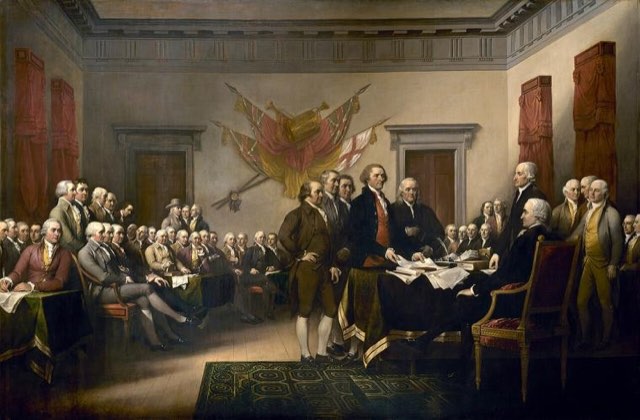

Consequences of the Seven Years War/French & Indian War
- The View from LondoniTunesU · Stanford University, Jack Rakove, Colonial and Revolutionary America, Lecture 14 · watch
Economics, Society, and Government in the North
- Commerce and CultureiTunesU · Stanford University, Jack Rakove, Colonial and Revolutionary America, Lecture 12 · watch
Economics, Society, and Government in the South
- Southern PlantationsiTunesU · Stanford University, Jack Rakove, Colonial and Revolutionary America, Lecture 5 · watch
- Slavery and the Plantation ComplexiTunesU · Stanford University, Jack Rakove, Colonial and Revolutionary America, Lecture 6 · watch
The American Revolution
- American RevolutionWikibooks’ US History · read
- The American RevolutionWGBH Boston, Eugen Weber, The Western Tradition, Lecture 34 · watch · archived copy
- Crisis of IndependenceiTunesU · Stanford University, Jack Rakove, Colonial and Revolutionary America, Lecture 15 · watch
The American Constitution
- Constitution Early YearsWikibooks’ US History · read
- U.S. ConstitutionNational Archives and Records Administration · read
- James Madison and the ConstitutionC-SPAN/The New York Historical Society · watch
Balance of Powers
- Federalist 51Yale University’s e-copy of James Madison · read
The U.S. Constitution and Property Rights: Did the Founders sacrifice democracy to protect property rights?
- Chapter I: Historical Interpretation of the United States & Chapter VI: The Constitution as an Economic DocumentCharles Beard, An Economic Interpretation of the Constitution of the United States · read
Chapter V
Federalism and Republicanism in America, 1790-1815
This unit explores the period of American history best symbolized by two men who are often depicted as the embodiments of capitalism and democracy: Alexander Hamilton and Thomas Jefferson. We will study the tension between Americans who advocated for an economy based on manufacturing and aided by a strong central government (Hamilton) and those who argued for an agricultural economy unfettered by government regulation (Jefferson). We will also discuss the mounting importance of the issue of slavery, which many Northerners had begun to consider undemocratic and therefore contradictory to the American constitution. Southern slaveholders, by contrast, argued that their democracy was predicated upon owning slaves, a tension that could only be resolved by the American Civil War.
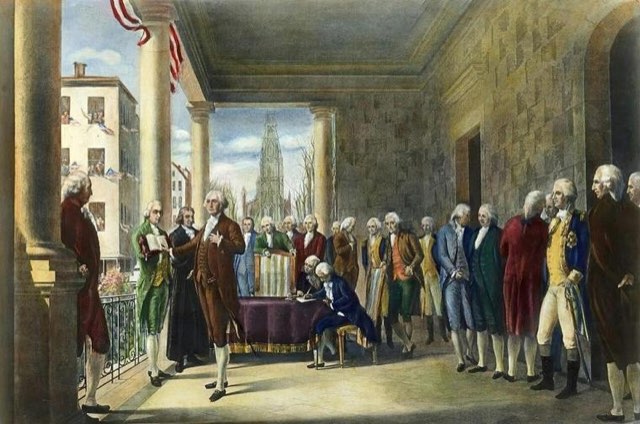

Alexander Hamilton’s Vision: America as a World Industrial Power
- Alexander Hamilton, Report on Manufacturesread
- Alexander Hamilton and LibertyC-SPAN/The New York Historical Society · watch
Thomas Jefferson’s Vision: America as an Agrarian Paradise
- Yale University’s e-copy of Thomas Jefferson’s Jefferson’s Opinion on the Constitutionality of a National Bank, 1791read
- Jefferson, Adams and Their LegacyC-SPAN/The Massachusetts Historical Society · watch
Compromise: Capitol for Capital
- First Bank of the United StatesWikipedia · read
The War of 1812
- War, Nationalism, and DivisionWikibooks’ US History · read
Andrew Jackson and the Rise of American Democracy
- Life Portrait of Andrew JacksonC-SPAN · watch · no longer online
- American Lion: Andrew Jackson in the White HouseC-SPAN/Jimmy Carter Library and Museum · watch
Chapter VI
The Market Revolution and Antebellum America
This unit explores the explosive economic growth unleashed by the conclusion of the War of 1812 and the concomitant expansion of political participation, a process known as democratization. Often called the “Era of the Common Man,” the period between 1820 and 1850 came to be symbolized by Andrew Jackson, a man who saw himself as heir to the agrarian republicanism promoted by Jefferson. Ironically, it was Hamilton’s vision of industrial economic growth that created the conditions that made the expansion of the electorate possible, which in turn allowed Jackson to be elected president.
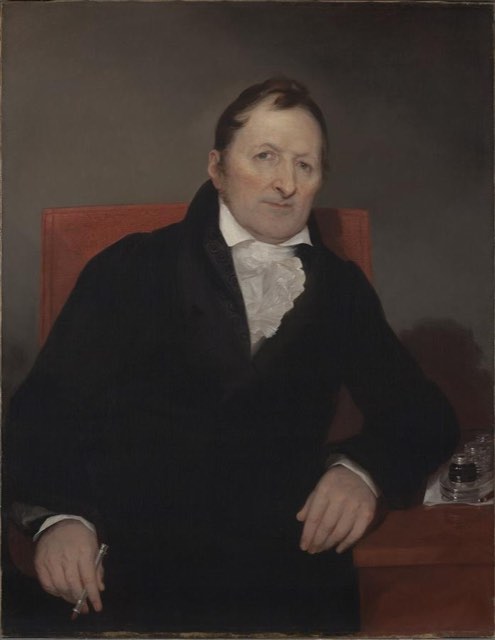

The American Industrial Revolution
- The Industrial RevolutionHistory Channel · watch · archived copy
American Politics: From Jeffersonian Republicans to Jacksonian Democrats
- The John Quincy Adams Years and the American Economy, JOHN MARSHALL: The ‘Man Who Made the Court Supreme,’ and Jacksonian DemocracyReading · Sage American History: Henry J. Sage · read
Chapter VII
Westward Expansion
Part of America’s continued economic success is due to the availability of land; the West functioned not just as a place, but also as an idea of what the ideal American society would look like. In theory, it was a place where the fluidity of society allowed anyone to reinvent himself or herself and rise from pauperism to prosperity. To most Americans, this rags-to-riches tale represented true democracy. Reality often diverged from the ideal, however, and the West was violent, dangerous, and often as undemocratic as any city in the East.
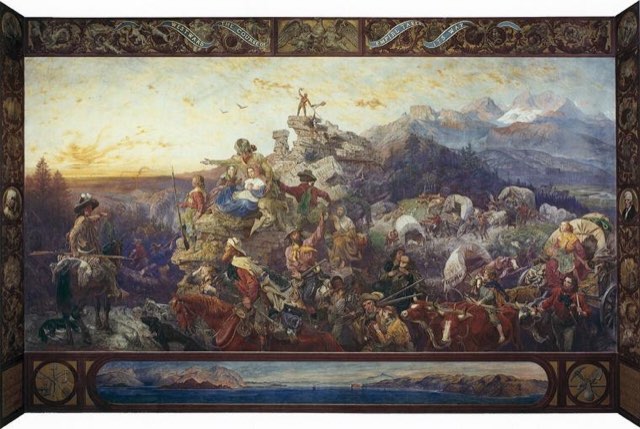

Overview of Westward Expansion, 1840-1860
- Westward Expansion and Manifest DestinyWikibooks’ US History · read
Mexican/American War
- The US-Mexican WarPBS · read · archived copy
The Gold Rush
- The Age of GoldC-SPAN/Kepler’s Books, H.W. Brands · watch
Chapter VIII
The American Civil War
One of the defining events in American history, the Civil War was a contest between the divergent strands of American political and economic thinking – the Hamiltonian vision, which argued for industrial growth and supported widespread enfranchisement, and the Jeffersonian vision, which proposed a racially stratified agrarian society where white men’s democratic rights came at the expense of African slavery.
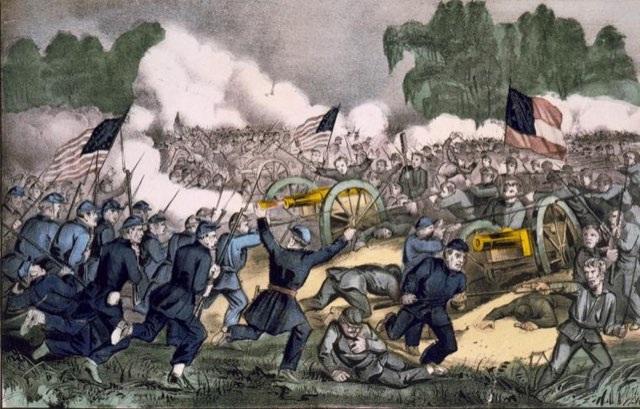

Slavery
- Southern Society: Slavery, King Cotton, and Antebellum America’s ‘Peculiar’ RegioniTunesU · Yale University, David Blight, The Civil War and Reconstruction Era, 1845-1877, Lecture 2 · watch
Divergent Understandings of the Constitution
- A Northern World View: Yankee Society, Antislavery Ideology, and the Abolition MovementiTunesU · Yale University, David Blight, The Civil War and Reconstruction Era, 1845-1877, Lecture 4 · watch
The Economics of Modern Warfare
- Home fronts and Battlefronts: ‘Hard War’ and the Social Impact of the Civil WariTunesU · Yale University, David Blight, The Civil War and Reconstruction Era, 1845-1877, Lecture 17 · watch
Reconstruction
- ReconstructionWikibooks’ US History · read
- Retreat From ReconstructioniTunesU · Yale University, David Blight, The Civil War and Reconstruction Era, 1845-1877, Lecture 24 · watch
Chapter IX
Post Civil War America: The Gilded Age (1870-1897)
The federal government’s victory in the American Civil War was followed by nearly seventy years of Republican dominance of the national government. During this period, the tension between democracy and capitalism, which had been growing since at least the 1820s, increased, and a series of presidential administrations shifted the balance decisively toward capital. This led to a reaction from organized labor, which based its appeal on (among other things) democracy.

Transcontinental Railroad
- Nothing Like it in the WorldC-SPAN/National Press Club, Stephen Ambrose · watch
Industrialization and Economic Growth
- Industrialization and Economic GrowthThe Saylor Foundation · read
Republican Domination of Post-Civil War Politics
- Republican Domination of Post-Civil War PoliticsThe Saylor Foundation · read
Organized Labor and the Homestead Strike
- Andrew Carnegie and the Homestead StrikeHistory Channel · watch · archived copy
Populism
- The Gilded Age, and Politics in the Gilded AgeReading · Sage American History · Dr. Henry Sage · read
Chapter X
Progressivism and World War I
Some view Progressivism (1890-1914) as an approach to reducing the tension between capital and democracy by regulating corporations and alleviating the worst sufferings of poor Americans. Progressivism is best understood as a reaction against the excesses of the Gilded Age, specifically the corrupt political influence of men like Andrew Carnegie and the violent and repeated clashes between labor and capital. In many ways, many Progressives saw themselves as trying to “split the difference” between Hamilton’s vision for America and Jefferson’s, though the movement itself was really an inchoate collection of smaller, sometimes antagonistic movements bound together mostly by their shared antipathy toward the status quo; because of this, Progressives often spent as much energy fighting each other as they did fighting their enemies on the right and the left.
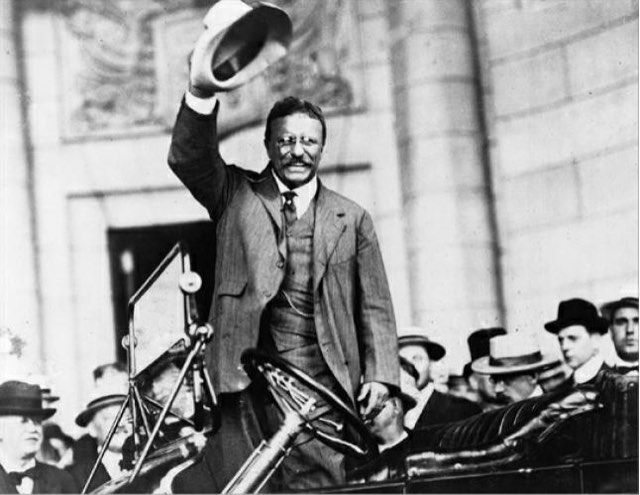

Costs of Industrialization - Economic Instability
- Depression and Panics, 1840-1933iTunesU · UC Berkeley, Professor J. Bradford Delong, Economics 113, Lecture 10 · watch
- 20th Century Capitalism and Regulation in the United StatesKhan Academy · watch
Panic of 1873
- 1873-1876: The Panic of 1873Drew VandeCreek · read · archived copy
The Panic of 1893
- Panic of 1893Wikipedia · read
Progressivism
- Progressive EraWikibooks’ US History · read
Theodore Roosevelt
- Theodore RexC-SPAN, Edmund Morris · watch
“Trust-busting”
- “Context of ‘August 23, 1902: Roosevelt Advocates Federal Regulation, Oversight of Corporations’“History Commons · read
1902 Coal Miners’ Strike
- J.P. Morgan Battles Coal Minters in 1902History Channel · watch · archived copy
Taft and the Bull Moose Party
- Roosevelt Forms Bull Moose PartyHistory Channel · watch · archived copy
World War I
- World War IWikibooks’ US History · read
- The First World War and the Rise of FascismWGBH Boston, Eugen Weber, The Western Tradition, Lecture 47 · watch · archived copy
The Nye Committee
Chapter XI
The “Roaring” 1920s, Great Depression and World War II
The Great Depression was a turning point in the relationship between democracy and capitalism. The Roosevelt administration’s response to the Great Depression was a series of programs known as The New Deal that were aimed at curbing the business excesses that had characterized the 1920s and ensuring that all Americans had some basic level of social security. Roosevelt’s successful prosecution of World War II burnished his reputation as a great president, which consequently cemented the New Deal’s place at the center of American economic and political ideology for the next quarter century.
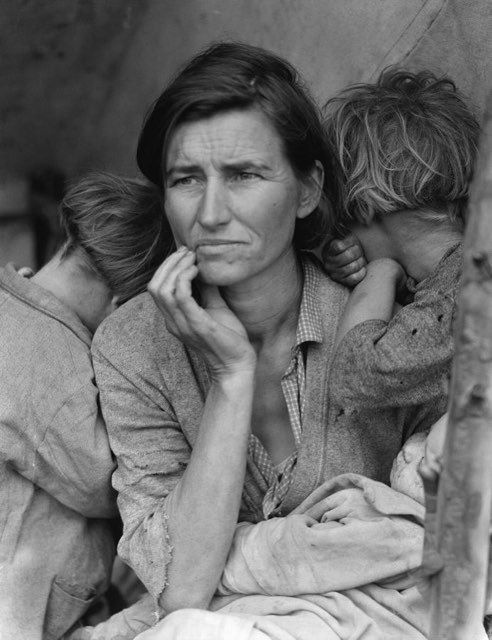

The “Roaring Twenties”
- Roaring Twenties and ProhibitionWikibooks’ US History · read
Industrial Growth
- Mass Production, 1910-1980iTunesU · UC Berkeley, Professor J. Bradford Delong, Economics 113, Lecture 13 · watch
A “Consumer’s Paradise”
- A Consumer’s ParadiseThe Saylor Foundation · read
The Great Gatsby
- The Great GatsbySparknotes · read
The Great Depression
- Great Depression and New DealWikibooks’ US History · read
Americans’ Changing Relationship with Federal Government
- The New Deal, 1933-1941iTunesU · UC Berkeley, Professor J. Bradford Delong, Economics 113, Lecture 11 · watch
- Economic Lessons of the Great DepressionC-SPAN, Christina Romer · watch
World War II and “The Arsenal of Democracy”
- World War II and Rise of Atomic AgeWikibooks’ US History · read
- Politics of National SecurityC-SPAN, Julian Zelizer · watch
Chapter XII
Post-War America in 1970
Following World War II, the United States rose to global dominance of what Timepublisher Henry Luce called “The American Century.” Though locked in an ideological struggle with the Soviet Union, the United States exercised an unprecedented amount of global power fueled by its economic and military strength. Because of America’s almost unrivaled position as the factory and breadbasket of the world, the U.S. economy grew exponentially, expanding the middle class and shrinking the distance between the “haves” and “have-nots.” One consequence was what many scholars view as the high-water mark of American political participation in the 20th century.
The Cold War
- World War II and the Cold War, 1941-1956iTunesU · UC Berkeley, Professor J. Bradford Delong, Economics 113, Lecture 12 · watch
Democracy and Capitalism in Post-War U.S. Foreign Policy
- What Would William Appleman Williams Say Now?History News Network/Thomas McCormick · read
American Society
- Eisenhower Civil Rights FiftiesWikibooks’ US History · read
- Kennedy and JohnsonWikibooks’ US History · read
Chapter XIII
America Since 1970
Since 1970, capital and democracy have slowly returned to the antagonistic positions they occupied for much of the late 19th century; by the 1990s, many observers began referring to American society was mired in a “Second Gilded Age.” As the American economy shifted from manufacturing to “knowledge-based” fields or service industries, the class differences between those with college degrees and those without increased while, at the same time, political participation in national elections steadily declined.
The End of the American System
- The Breakdown of the New Deal OrderiTunesU · UC Berkeley, Professor J. Bradford Delong, Economics 113, Lecture 24 · watch
Nixon Administration and the Bretton Woods System
Attack on the New Deal - Reaganomics
- The Age of Reagan, 1974-2008C-SPAN/The Aspen Institute · watch
Political Participation in American elections, 1970-2000
- Why has there been so little Social Democracy in the United States?iTunesU · UC Berkeley, Professor J. Bradford Delong, Economics 113, Lecture 21 · watch
Capitalism’s Pros and Cons
- When Capitalism is Great and Not So GreatKhan Academy · watch
About this course
This course is Saylor Academy's HIST312, Capitalism and Democracy in America, one of the complete university courses the Saylor Foundation made free from 2008 and retired in 2015. Saylor licensed its course text under CC BY 3.0; the original is on GitHub. Here it is laid out as chapters, links that have died go to an archived copy from the Internet Archive where one exists, assessments that needed a Saylor login are left out, and people and works are linked to Kulturbase. The readings and lectures belong to their publishers and are linked, not copied. Pictures: Wikimedia Commons, credited under each picture.
All Saylor courses · Free culture courses · The Chautauqua Reading Course