History · Saylor HIST321
Comparative New Worlds, 1400-1750
This course will introduce you to a comparative history of New World societies from 1400 to 1750. You will learn about European exploration and colonization as well as the cultures of native peoples of the Americas.
More about this course
The course will be structured geographically; each unit will focus on a particular New World society during a specific time period. Each unit will include representative primary-source documents that illustrate important overarching political, economic, and social themes, such as the fifteenth-century conceptualization of the “New World” and colonization, the indigenous peoples living in the Americas at the time of European contact, and the effect of New World societies on native peoples and Africans. By the end of the course, you will understand how the new communities in the New World evolved from fledgling settlements into profitable European colonies and how New World societies—whether French, Spanish, Portuguese, English, or indigenous—were highly varied polities.
Upon successful completion of this course, you will be able to:
In order to take this course, you must: √ Have access to a computer.
Chapter I
What Was the “New World”?
In the fifteenth century, the “New World” referred to the Americas. When Columbus returned to Spain after his journey across the Atlantic Ocean, he was widely heralded as the discoverer of the “New World.” Of course, the western hemisphere was only “new” to the Europeans. Indigenous peoples had lived in North and South America for centuries, developing unique and varied cultures, societies, and civilizations there. In this unit, we will examine how people defined the “New World” and why they considered it different from the “Old World.” We will also consider the many different peoples who populated and exploited the Americas: merchants, native peoples, settlers, and slaves.
De Orbo Novo
- De Orbe Novo, the Eight Decades of Peter Martyr d’AnghieraArchive.org · read
Verrazano’s New World
- The Written Record of the Voyage of 1524 of Giovanni da Verrazano as Recorded in a Letter to Francis I, King of France, July 8th, 1524Barnard University · Lisa Gordis’ version of · read
Geography
Chapter II
Native Peoples of the Americas
When Christopher Columbus landed in the New World in 1492, he mistakenly referred to the native inhabitants as “Indians,” thus implying that all peoples in the Americas shared a common identity. Of course, this was not the case. Between the fifteenth and eighteenth century, “civilization” in the Americas was comprised of many diverse societies that developed in isolation from the rest of the world. Two major centralized cultures emerged during this period: the Aztecan Empire and the Incan Empire. However, hundreds of other sophisticated, albeit diffuse, tribes lived in North America, South America, Central America, and the Caribbean at this time. The arrival of Europeans in the 1400s disrupted these indigenous cultures through disease, enslavement, and displacement.* In this unit, we will study the many major native peoples who populated the Americas at the time of European contact. We will also study the impact of European cultures and policies on these tribes.
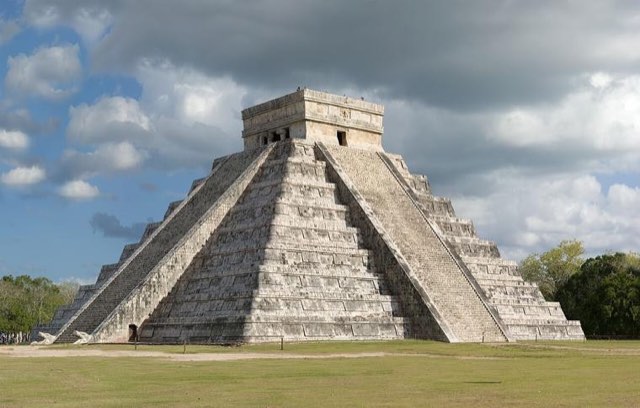

Native Peoples’ Perceptions of Europeans
- Native Peoples’ Perceptions of EuropeansThe Saylor Foundation · read
Indigenous Societies and Cultures of North America
- Pre-Columbian Era and Fordham University: Modern History Sourcebook: Thomas Morton’s Manners and Customs of the Indians (of New England), 1637Connexions · James Ross-Nazzal’s U.S. History Since 1877 · read
The Aztecs/Mexica
- Amerindian CivilizationsThe Saylor Foundation · read
Aztec/Mexica Civilization in Central America
- Mexico, Central America, and the CaribbeanJack E. Maxfield’s A Comprehensive Outline of World History, America · A.D. 1401 to 1500 · read
Caribs
- Map of the Islands of Hispaniola and Puerto Rico, Medieval Sourcebook: Columbus’ Letter to the King and Queen of Spain, 1494, and the Saylor Foundation’s Study Questions for Christopher ColumbusAmerican History Online · read
Arawaks
- ArawaksThe Saylor Foundation · read · 15 min
Inca Society and Religion
- A Comprehensive Outline of World History, America: A.D. 1401 to 1500 – Northern and Western South AmericaConnexions · Jack E. Maxfield · read
The Incas and European Explorers
- Pedro de Cieza de Léon’s Chronicles of the Incas, 1540Fordham University’s Internet Modern History Sourcebook · Paul Halsall · read
Conquerors and Colonization
- Chapter 2: When Cultures Collide (1492-1600), and Fordham University: Modern History Sourcebook: Matthew Smith and James Gibson’s Remonstrance of the Pennsylvania Frontiersmen: On the Indians, 1764Connexions · Dr. James Ross-Nazzal’s U.S. History Since 1877 · read
Disease
- The Columbian Exchange.Concepcion Saenz-Camba’s The Atlantic World, 1492-1600 · read
Chapter III
The European Age of Discovery
In the fifteenth century, powerful European monarchs launched the first stage of global imperialism. New developments in maritime technology and a desire to expand the influence of Christianity motivated European rulers to sponsor exploration and conquest in the New World. In this unit, we will see how the creation of new commercial and political networks caused profound change: they introduced new peoples, ideas, labor systems and cultures to Europeans while also wreaking havoc on indigenous cultures of the New World.

The Explorers’ Motives
- The European Voyages of Exploration: Introduction, Florida History’s America’s early European Explorers, Richard Hakluyt’s Discourse of western planting 1584, and Samuel de Champlain’s Voyages 1604.The Saylor Foundation · read
- The Age of DiscoveryThe Saylor Foundation · read
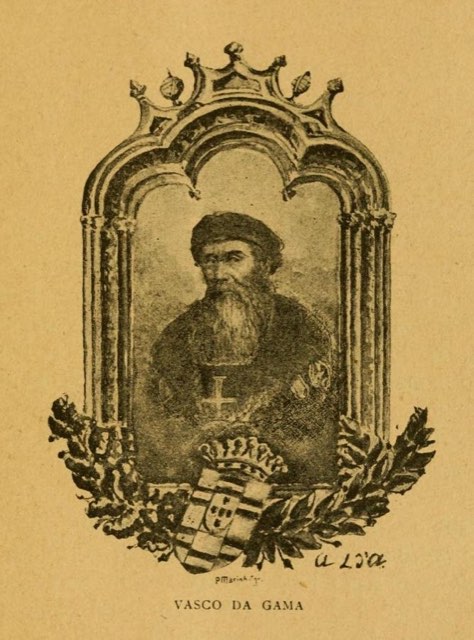
Vasco da Gama
- Round Africa to India, 1497-1498Vasco da Gama · read
Ferdinand Magellan
- Voyage Round the World, 1519-1522 CE.Ferdinand Magellan · read
Jacques Cartier
- Jacques Cartier’s Explorations and AchievementsTracy Barnes’ · read
John Cabot
- Voyage to North America, 1497John Cabot’s (c.1450-1499) · read
Chapter IV
Spain and Portugal in America
Spain and Portugal were the first European powers to explore and settle the New World. The Treaty of Tordesillas in 1494 split the Americas into Spanish (western) and Portuguese (eastern) zones.
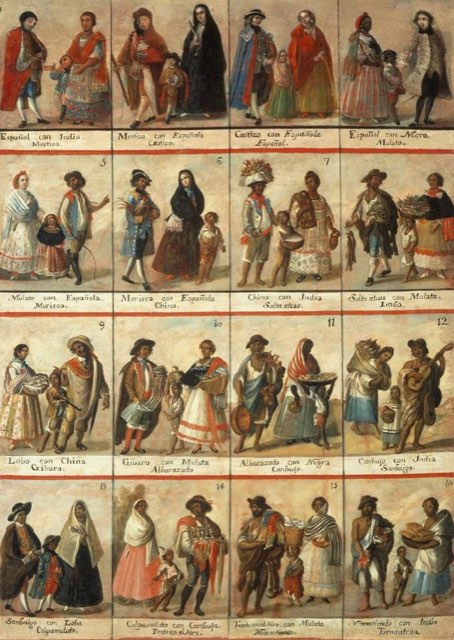

Early Spanish Colonization Efforts
- Second Letter to Charles V, 1520Hernan Cortés’ · read
Imperial Spain and the Conquistadors
- A Short Account of the Destruction of the Indies [1542] and Phillip II’s Two Documents from the Reign of Philip II.Bartolome de las Casas’ · read
- Imperial Spain: Castile and AragonUniversity of Calgary · The Applied History Research Group’s The European Voyages of Exploration · read · archived copy
Christopher Columbus
- European Voyages of Exploration: Christopher Columbus and the Spanish Empire, and Christopher Columbus’ Extracts from Journal.The Saylor Foundation · read
Exploits in the Caribbean
- The European Voyages of Exploration: The Caribbean: First Contact, and King Ferdinand’s Letter to the Taino-Arawak Indians.The Saylor Foundation · read
The Conquest of Mexico
- Aztec Account of the Conquest of MexicoModern History Sourcebook · read
- Bernal Diaz del Castillo’s True History of the Conquest of MexicoCanadian Libraries Internet Archive · read
Pizarro and Peru
- Pizarro and the ConquistadorsU.S. Library of Congress’s Country Studies · Rex A. Hudson, ed.’s Peru · A Country Study · read
Early Portuguese Colonization Efforts: The Portuguese Empire
- Early ColonizationLibrary of Congress Country Studies · Rex A Hudson’s (ed.) Brazil · A Country Study · read
- The European Voyages of Exploration: PortugalThe Saylor Foundation · read
Chapter V
England and France in North America
French and English adventurers arrived in the New World in the mid- to late-1500s seeking wealth and new lands. French exploration in the New World began under the aegis of the French monarchy in the 1520s; the monarch dispatched explorers to chart North America and the Caribbean and to promote French interests there. A number of short-lived French settlements were founded in North and South America: Cap Rouge along the St. Lawrence River, Fort Caroline in Florida, Fort Saint Louis in Texas, and a Huguenot settlement in Brazil. More permanent settlements did not emerge in the Caribbean and along the St. Lawrence River until the 1600s.* The English began settling the Americas in the early 1600s; Queen Elizabeth I was keen to claim land for England and to assert a Protestant presence in the New World. However, many of the early settlements—Roanoke Colony (North Carolina) and Popham Colony (Maine)—failed after a short time. Competing with other European powers, the English established permanent settlements along the North American coast and in the Caribbean in the 1630s and 1640s. In this unit, we will consider the many factors that imperiled early French and English New World settlements: conflicts with local peoples, disease, starvation, and internal strife. We will also consider the transition from trading posts and forts to permanent French and English settlements.
Fort Caroline
- History of Fort CarolineNational Park Service · read
Cap Rouge
- Early French Exploration of North America pp. 10-14Concepcion Saenz-Camba’s The Atlantic World, 1492-1600 · read
Fort Saint Louis
- Main, The Visionary la Salle, and Life…and Death in the French SettlementTexas Beyond History · Fort St. Louis · read
Huguenots in Brazil
- HuguenotsHarper’s Encyclopedia of US History · read
Early English Settlements in the Americas
- The English in North America (PDF) pp. 14-23Concepcion Saenz-Camba’s The Atlantic World, 1492-1600 · read
Early Adventurers and Colonizers
- The English in North America, pp. 14-18, and American History’s Charter to Sir Walter Raleigh March 25 1584Concepcion Saenz-Camba’s The Atlantic World, 1492-1600 · read
Fledgling Settlements
- The Fledgling Settlements pp. 18-20Concepcion Saenz-Camba’s The Atlantic World, 1492-1600 · read
- John Smith’s A Description of New EnglandThe Berkeley Electronic Press · Professor Paul Royster · read · archived copy
Jamestown
- Virginia: The London Company and Connexions: Dr. James Ross-Nazzal’s Ch. 3 British Colonial America (1588-1701), JamestownSage American History · Henry J. Sage · read
Chapter VI
European Empires, New World Colonies
By the mid-1600s, the New World had become critically important to many European nations. Portuguese, Spanish, English, and French powers had founded permanent colonial settlements and established plantation economies. Inter-European political conflicts, religious wars between Protestants and Catholics, European population pressures, and the emergence of new “enlightened” ideas had fueled Europe’s new emphasis on imperial aspirations.* In this unit, we will consider how pressures and conflicts in Europe spurred European colonization of the New World in the 1600s and early 1700s. We will also study how agricultural and industrial innovations and new “enlightened” ideas undergirded Europe’s expansionist ideology.
European Imperial Competition
- Discourse of western planting 1584 and Governor Glen’s The Role of the Indians in the Rivalry Between France, Spain, and England 1761Richard Hakluyt · read
The Creation of an Atlantic Economy
Religious Conflicts and Wars
- Map: Religious Division of Europe, and The Saylor Foundation’s World History Relevant Chapter – VII, 69: The Religious WarsModern History Sourcebook · read
Absolutism
- Lecture 2: Absolutism and the StateYale University · Professor John Merriman · watch
- The Court of Louis XIV and Jean-Baptiste Colbert’s Memorandum on Trade, 1664.Jacques Benigne Bossuet’s Political Treatise, Duc de Saint-Simon · read
Constitutionalism
- Lecture 3: Dutch and British ExceptionalismYale University · Professor John Merriman · watch
A Rising European Population
- Demographic Transition in Europe; Mortality DeclineYale University · Professor Robert Wyman’s Lecture 7 · watch
The Early Enlightenment
- Lecture 5: The Enlightenment and the Public SphereYale University · Professor John Merriman · watch
- The Social Contract, 1762, and Modern History Sourcebook: Immanuel Kant’s What is Enlightenment?, 1784Modern History Sourcebook · Jean Jacques Rousseau · read
Chapter VII
French New World Colonies
The French colonies in the New World were highly varied outposts. The North American holdings—called New France—were shaped mostly by the lucrative fur trade. New France was not populous, but it was profitable, and fur trading became the center of the French North American economy. In addition, sugar plantations were established in French Louisiana and African slaves were imported to work in the cane fields or to be sold in ports along the Mississippi River. Jesuit missionaries had a prominent role in New France; they provided religious services to French men and women and converted native peoples to Catholicism. The most valuable French holdings in the Americas, however, were in the Caribbean. Saint-Domingue, nicknamed the “Pearl of the Antilles,” became the most profitable plantation colony in the New World. France also claimed a number of other islands in the Caribbean, including Guadeloupe and Martinique, and French Guiana in South America. Sugar and coffee drove the economies of these colonies, and, after decimating the indigenous Arawak and Carib populations, French settlers imported African slaves to labor on plantations.
The French in the Great Lakes
- The Foundation of Quebec, 1608, and University of Groningen‘s Memoir for the Marquis de Seignelay Regarding Canada January 1687Modern History Sourcebook · Samuel de Champlain · read
Religion in New France
- The Jesuit Relations and Allied Documents: Travels and Explorations of the Jesuit Missionaries in New France, 1610-1791,Volume X ‘Preface and Part First, Chapter One’Creighton University · Reuben Gold Thwaites · read
The Fur Trade
- The Fur TradeThe Saylor Foundation · read · 15 min
- The Vérendryes and Their Successors, 1727-1760The Manitoba Historical Society · Father Antoine Champagne · read
The Huron
- The Jesuit Relations and Allied Documents: Travels and Explorations of the Jesuit Missionaries in New France, 1610-1791,Volume X [85] Part Second, ‘On the Beliefs, Manners, and Customs of the Hurons’ Chapter First.Creighton University · Reuben Gold Thwaites · read
Colonial Louisiana
- Louisiana as a French Colony: Difficult Early Years of the ColonyThe Library of Congress’ · read
The Mississippi River Valley
- A Map of Louisiana and of the River Mississippi, and Connexions: Jack E. Maxfield’s America: A.D. 1601 to 1700.The Library of Congress’ · read
Origins of the French West Indies
- General Whyte’s Proclamation to the People of Saint-Domingue (1794), and The L’Ouverture Project’s Toussaint L’Ouverture’s ‘Dictatorial Proclamation’ (1801)The L’Ouverture Project · read
Saint Domingue
- General Whyte’s Proclamation to the People of Saint-Domingue (1794) and Toussaint L’Ouverture’s ‘Dictatorial Proclamation’ (1801)The L’Ouverture Project · read
- Haitian Revolution Part 1 and Haitian Revolution Part 2Khan Academy · watch
Chapter VIII
British America
Although Britain was the last European power to establish a firm presence in the New World, it exerted wide-ranging influence by the eighteenth century. First, British North American colonies were the most populous. Second, British traders imported more African slaves than any other European nation. And third, Britain maintained extensive landholdings in North, Central, and South America as well as in the Caribbean. British New World colonies were diverse. North American colonies supplied lumber, naval stores, and agricultural produce to the mother country while the Caribbean colonies exported sugar and coffee. After devastating native peoples and deeming indentured servitude inadequate, many Britons turned to African slaves as their main labor source. And unlike France, British colonies were not directly under the aegis of the monarch; semi-autonomous legislative bodies governed British provinces. In this unit, we will study the economies, labor systems, and cultures of British North America, the British Caribbean, and British Central and South America.
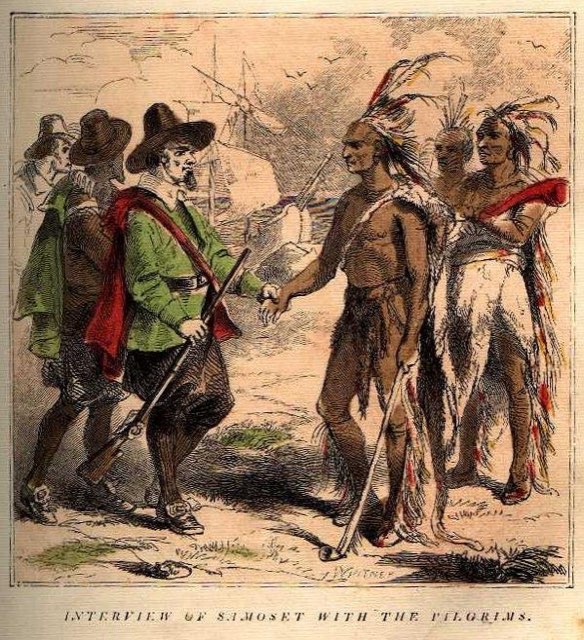

New England Colonies
- Ch. 3 British Colonial America (1588-1701), and Modern History Sourcebook: William Bradford’s from History of Plymouth Plantation, c. 1650Connexions · Dr. James Ross-Nazzal · read
Middle Colonies
- Chapter 3: British Colonial America (1588-1701)Connexions · James Ross-Nazzal · read
Lower Colonies
- Chapter Two: The Southern ColoniesThe University of Groningen · From Revolution to Reconstruction Project · read · archived copy
The Caribbean
- Caribbean Histories Revealed Introduction, Movement of People, Caribbean Identities, and Slavery and Negotiating FreedomNational Archives’ · read · archived copy
Barbados
- Ch. 3 British Colonial America (1588-1701)Connexions · Dr. James Ross-Nazzal · read
Jamaica
- Jamaica - Country Economic Memorandum: Unlocking GrowthOpen Knowledge Repository · World Bank · read
Sugar and Coffee
- The Sugar Revolutions and SlaveryU.S. Library of Congress · Sandra W. Meditz’s and Dennis M. Hanratty’s (eds.) Caribbean Islands · A Country Study · read
British Honduras
- The Emergence of the British Settlement, Beginnings of Self-Government and the Plantocracy, Slavery in the Settlement, 1794-1838, and Emigration of the GarifunaU.S. Library of Congress · Tim Merrill’s (ed.) Belize · A Country Study · read
British Guyana
- The Early Years, The Dutch Settle in Guyana, British Take Over, The Shortage of Labor, and History of the EconomyU.S. Library of Congress · Tim Merrill’s (ed.) Guyana · A Country Study · read
Chapter IX
The Spanish and Portuguese Americas
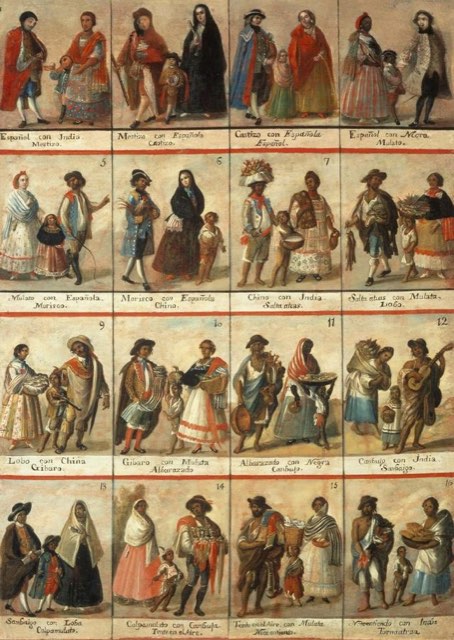
Spanish and Portuguese colonial forces dominated the New World during much of the eighteenth century. Portuguese Brazil produced gold, and, by the mid-1700s, supplied 40 percent of Europe’s sugar. And under the Bourbon reforms of the eighteenth century, Spanish Central and South America as well as Spanish territories in the Caribbean became more efficient and centralized colonial outposts. Both Spanish and Portuguese New World colonies owed much of their success to the streamlining of colonial administration and economy during the 1700s. Colonial authorities in most cases reported directly to authorities in Europe; they had little or no autonomous rule. Their expansionist and exploitative mining and plantation regimes resulted in the high production of gold, silver, sugar, and other products. Of course, the result was devastating for African slaves and indigenous peoples, many of whom succumbed to disease or were enslaved or killed during conflicts with Spanish and Portuguese forces. In this unit, we will consider the hegemony of the Spanish and Portuguese in the New World during the eighteenth century. We will also study how this dominance came at a cost—the millions of Africans enslaved in the New World and the countless deaths of native peoples demonstrated the high price of colonization.
New Spain
- True History of the Conquest of MexicoCanadian Libraries Internet Archive’s version of Bernal Diaz del Castillo · read
- The Spanish Conquest, Encomiendas, Colonial Administration, The Road to Independence, and Criollos and ClergyU.S. Library of Congress · Tim L. Merrill’s and Ramón Miró’s (eds.) Mexico · A Country Study · read
Colonial Peru
- The Colonial Period, The Colonial Economy, Colonial Administration, The Colonial Church, and Indigenous RebellionsU.S. Library of Congress · Rex A. Hudson’s (ed.) Peru · A Country Study · read
Spanish Florida
- Spanish FloridaThe Saylor Foundation · read · 15 min
- The Founding of St. AugustineFordham University’s Internet Modern History Sourcebook · Paul Halsall’s version of Francisco Lopez de Mendoza Grajales’ · read
Portuguese South America
- The Colonial Era, 1500-1815, Early Colonization, and Gold Mining Displaces Cane FarmingU.S. Library of Congress · Rex A. Hudson’s (ed.) Brazil · A Country Study · read
Chapter X
Africans in the New World
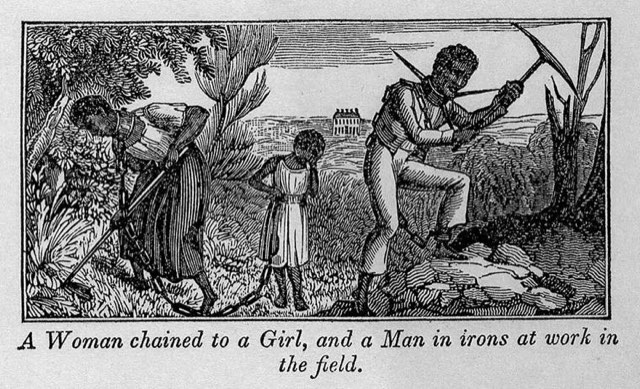
Beginning in the Sixteenth century, Africans were brought to the Americans to serve as enslaved laborers on plantations and in mines. However, Africans were not the first laborers to be used in the New World for that purpose. Portuguese and Spanish colonizers had utilized indentured servitude and enslaved local Amerindian peoples. However, when disease depleted the Amerindian slaves and indentured European servants, African laborers became a viable alternative. Africans were accustomed to a tropical climate, were familiar with agricultural production, and seemed resistant to French West Indies, or to Spanish or Portuguese America as captive slaves.
Amerindian Slavery in the Americas
- Amerindian Slavery in the AmericasThe Saylor Foundation · read · 15 min
Amerindian Slavery in the Caribbean
- Amerindian Slavery in the CaribbeanThe Saylor Foundation · read · 15 min
Encomienda
- Encomiendas, and Modern History Sourcebook: Henry Stevens’s ‘The New Laws of the Indies, 1542The Library of Congress · Rex A. Hudson · read
- No More Negotiation: Slavery and Destabilization of Colonial Hispaniola’s Encomienda SystemJay I. Kislak Foundation · Dr. Lynne Guitar · read
From Indentured Servitude to Race-based Slavery
- From Indentured Servitude to Racial SlaveryPBS’s Africans in America · read · archived copy
- Colonial America (1607-1763), The Lives of Indentured Servants, Fordham University’s Internet Modern History Sourcebook: Paul Halsall’s version of Atlantic Slave Trade: Carriers and Destinations, and Antislavery.org’s Trade Routes: Americas and the CaribbeanSage American History: Henry J. Sage · read · 30 min
Slavery and Race in the Sixteenth Century
- Chapter 4: Slavery and Empire (1441-1770), and Academic American History: Gustavus Vasa’s Middle PassageConnexions · Dr. James Ross-Nazzal · read
Africans in Spanish America
- African American Heritage and Ethnography: Africans in Spanish AmericaNational Park Service · read
- The Making of the Atlantic WorldThe Saylor Foundation · read
Africans in Portuguese America
- Brazil in the South Atlantic, 1550-1850Mediations · Emilio Sauri’s translation of Dr. Luiz Felipe de Alencastro · read
Africans in French America
- African American Heritage and Ethnography: Africans in French AmericaNational Park Service · read
Africans in British America
- Life in Colonial America, and Virginia Slave LawsSage American History: Henry J. Sage · read
Chapter XI
New World Conflicts
Between the first voyages of the 1400s and the height of European colonization in the eighteenth century, the New World was plagued by war between European nations or between European forces and native peoples. European conflicts in the Americas were usually an extension of conflicts centered in Europe. The War of the Spanish Succession (1701-1714), for example, embroiled European powers in a contest over the issue of the inheritance of the Spanish crown and kingdom; it resulted in raids and conflicts in the Caribbean, South America, and North America. On the other hand, violence between native peoples and European colonizers usually erupted when colonists infringed on tribal lands or disrupted local economies. King Philip’s War (1675), one of the bloodiest New World conflicts, pitted the Wampanoag Indians and their allies against English colonists, resulting in thousands of deaths.
Conflicts between the Portuguese, Dutch, and French in Brazil
- French and Dutch IncursionsU.S. Library of Congress · Rex A. Hudson’s (ed.) Brazil · A Country Study · read
Anglo-Dutch Wars
- Anglo-Dutch WarsThe Saylor Foundation · read · 15 min
King William’s War
- King William’s WarUSA History · Kathy Leigh’s transcription of Henry William Elson’s History of the United States of America · read · archived copy
Queen Anne’s War
- Queen Anne’s WarUSA History · Kathy Leigh’s transcription of Henry William Elson’s History of the United States of America · read · archived copy
War of Jenkins’ Ear
- The War of Jenkin’s EarNew Georgia Encyclopedia Online · read · archived copy
King George’s War
- King George’s WarUSA History · Kathy Leigh’s transcription of Henry William Elson’s History of the United States of America · read · archived copy
The French and Indian War
- The Seven Year’s War: 1754-1763Boundless Learning, Inc · read
King Philip’s War
- King Phillip’s WarUSA History · Kathy Leigh’s transcription of Henry William Elson’s History of the United States of America · read · archived copy
Powhatan Wars
- Chapter 3: British Colonial America (1588-1701)Connexions · Dr. James Ross-Nazzal · read
Guarani War
- Brief History of the Guarani LanguageRenaud and Margaret Olgiati’s translation of Manuel F. Fernández · read · archived copy
About this course
This course is Saylor Academy's HIST321, Comparative New Worlds, 1400-1750, one of the complete university courses the Saylor Foundation made free from 2008 and retired in 2015. Saylor licensed its course text under CC BY 3.0; the original is on GitHub. Here it is laid out as chapters, links that have died go to an archived copy from the Internet Archive where one exists, assessments that needed a Saylor login are left out, and people and works are linked to Kulturbase. The readings and lectures belong to their publishers and are linked, not copied. Pictures: Wikimedia Commons, credited under each picture.
All Saylor courses · Free culture courses · The Chautauqua Reading Course