History · Saylor HIST341
The Silk Road and Central Eurasia
This course will introduce you to the history of Central Eurasia and the Silk Road from 4500 B.C.E to the nineteenth century. You will learn about the culture of the nomadic peoples of Central Eurasia as well as the development of the Silk Road.
More about this course
The course will be structured chronologically; each unit will focus on one aspect of the Silk Road during a specific time period. Each unit will include representative primary- and secondary-source documents that illustrate important overarching political, economic, and social themes, such as the discovery and production of silk in China, diplomatic relations between Han China and nomadic peoples of the Eurasian steppe, the international scope of the Silk Road trade routes, European interest in finding a “new silk route” to China, and the “Great Game” between China, Russia, and Great Britain in Central Eurasia in the nineteenth century. By the end of the course, you will understand how the Silk Road influenced the development of nomadic societies in Central Eurasia as well as powerful empires in China, the Middle East, and Europe.
Upon successful completion of this course, the student will be able to:
In order to take this course, you must:
Chapter I
World Systems and Civilizations: The Significance of Central Eurasia
Central Eurasia encompasses a vast swath of arid land that is ill-suited for farming and far removed from coastal ports. As a result, the earliest communities to emerge in Central Eurasia—around 4500 B.C.E.—were nomadic. These migrant tribes were primarily herders, although a few tribes did engage in agricultural practices. Nomads’ lives centered on the horse—used for both meat and transportation—and were shaped by frequent military campaigns. When the Chinese opened the Silk Road in the second century, many nomadic tribes, particularly the Sogdians of the Fergana Valley, benefited by trading with silk merchants and raiding caravans. In short, the opening of the Silk Road transformed the lives of the nomadic steppe peoples by introducing a new commercial system and by forging a link between Eurasia and the Mediterranean world.
Early Nomadic Communities
- NomadsSilk Road House · Alma Kunanbaeva · read · archived copy
- Traditional Cultures in Central AsiaUniversity of Washington · Professor Daniel C. Waugh and Elmira Köçümkulkïzï · read
Agriculture and Herding
- Nomadic Challenges and Civilized ResponsesThe International World History Project · R. A. Guisepi · read · archived copy
Horses
- A Chronology of Horse, Camel, and WheelUniversity of Washington · Professor Daniel C. Waugh · read
- Art of the Silk Road Exhibit: Horses and CamelsUniversity of Washington · read
Technological, Military, and Political Developments
- Harnessing HorsepowerHartwick College · David W. Anthony and Dorcas R. Brown · read · archived copy
Discovery of Silk
- History of SilkThe Silkroad Foundation · read
Yangshao Culture in China
- The Neolithic Period in ChinaThe Metropolitan Museum of Art · Department of Asian Art · read · archived copy
Domestic Silkworms and Chinese Monopoly
- SilkUniversity of Washington · Professor Daniel C. Waugh · read
Chapter II
Defining the Silk Road
The Silk Road was a series of interconnected trade routes linking all parts of Eurasia with China, the Middle East, and the Mediterranean World. The route first emerged during the Han Dynasty in China, when merchants expanded the lucrative Chinese silk trade westward. The Silk Road, however, was comprised of a number of routes. A first, the Northern Route, began in the Chinese city of Chang’an and pushed westward through central Eurasia and Persia. A second, the Southern Route, ran through India and ended in the Levant. And a maritime route originated at the mouth of the Red River (present-day Hanoi), looped around southeast Eurasia and the Indian subcontinent, and ended at the Red Sea and Persian Gulf. Luxury goods such as silk brocade, porcelain, frankincense, sandalwood, and glass were traded along these routes.
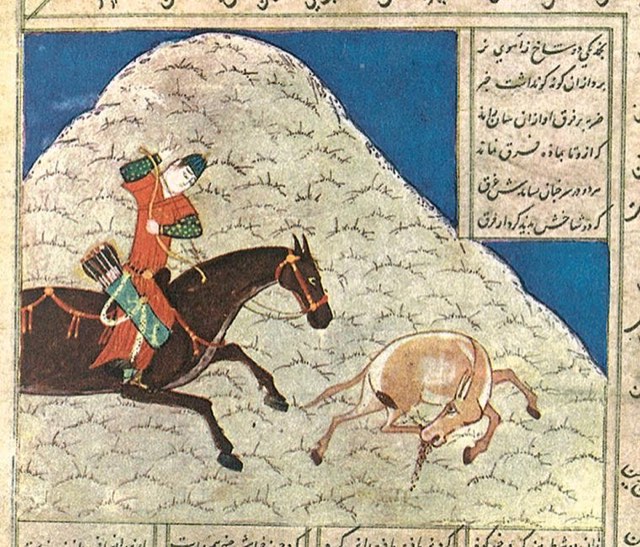

Maritime Silk Routes
- Maritime Silk RoadChina Daily · Ministry of Culture, P.R. China · read · archived copy
Chapter III
Early Developments and the Silk Trade
There were several conditions that made the opening of the Silk Road possible. First, the domestication of pack animals—camels, horses, and yaks—allowed for extended overland transportation. Second, the nomadic nature of the peoples of Central Eurasia allowed silk merchants to travel across the continent without infringing upon borders or settlements. Third, the consumption of silk in the Middle East and the Mediterranean spurred the expansion of the lucrative silk trade beyond China. Moreover, the efforts by the Han Chinese to develop trade contacts with nomadic peoples to the west also opened the door to commercial exchange in Central Eurasia. In this unit, we will study the environmental, cultural and political conditions in Central Eurasia that laid the framework for the silk trade. In particular, we will consider the early trade networks created by the Han Chinese and the Xiongnu, a nomadic confederation of Central Eurasian tribes.
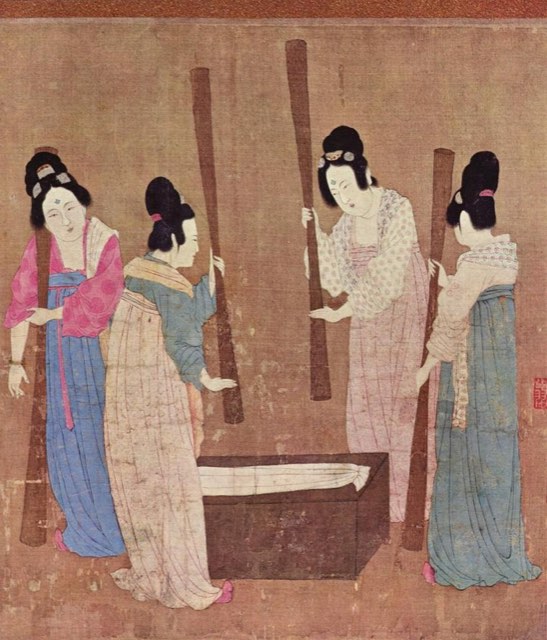

Domestication of Pack Animals
- AnimalsUniversity of Washington · Professor Daniel C. Waugh and Elmira Köçümkulkïzï · read
Expansion of Trade
- Hubs of the Medieval TradePragati · Ullattil Manmadhan · read · archived copy
Early Central Eurasian-Chinese Contact
- ArchAtlas: East-West Contacts in EurasiaUniversity of Sheffield · Professor Andrew Sherratt · read
Mining and the Jade Trade
- KhotanArchnet’s Digital Library · read · archived copy
Introduction of Gold and Bronze
- Silkroad: The Han Dynasty Part 2San Jose State University · Dr. Kathleen Cohen · read · archived copy
Introduction to Han China
- State and Society in Western and Eastern HanHarvard University · Professor Peter Bol · watch · archived copy
- Art of the Silk Road Exhibit: The Han EmpireUniversity of Washington · read
Han China and Its Policies toward Nomadic Groups
- The Nomad’s Choice: The First Encounter between Northern Nomads and Imperial ChinaAcademia Sinica Institute of History of Philology · Ming-Ke Wang · read · archived copy
- Selection from the Han Narrative HistoriesUniversity of Washington · Professor Daniel C. Waugh · read
Xiongnu
- Art of the Silk Road Exhibit: The XiongnuUniversity of Washington · read
Scythian Culture
- Scythians/SacaeReading · Livius Onderwijs · Jona Lendering · read · archived copy
Contemporary Developments on the Indian Subcontinent
- Art of the Silk Road Exhibit: Jason Neelis’s The Mauryan EmpireUniversity of Washington · read
Chapter IV
Opening the Silk Road Between East and West
The opening of the Silk Road between China and the Mediterranean was driven by two major factors. First, Han China sought to expand—and profit from—its lucrative silk trade. Second, both the Hellenistic and Roman worlds created an enormous demand for silk. The expansion of Alexander the Great’s empire into Central Eurasia allowed the Greeks to engage in the silk trade; many of the newly conquered lands had important trade nodes along the Silk Road. During the Han Dynasty, Chinese emperor Wu Di established commercial relationships with Ferghana, Bactria, and the Parthian Empire—all nomadic peoples who played central roles in the rise of the Silk Road. This new trade spurred a “silk craze” throughout the Roman Empire as well as the dispatch of Roman envoys to China.
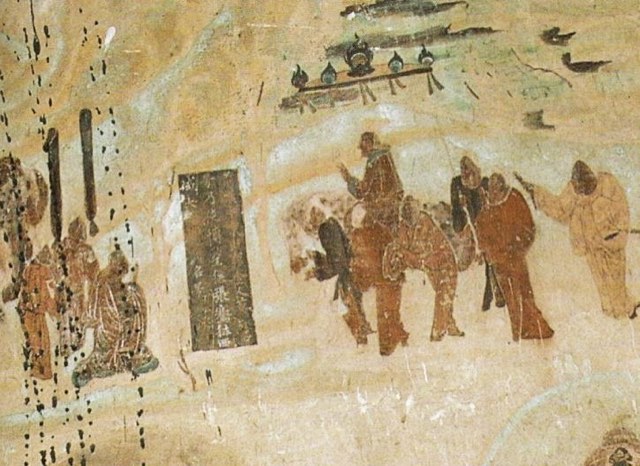

Alexander the Great’s Empire
- Arrian: Speech of Alexander the Great, from Campaigns of AlexanderFordham University’s Ancient History Sourcebook · Paul Halsall’s version of · read
- Art of the Silk Road Exhibit: Carol G. Thomas’s Alexander and the Silk RoadUniversity of Washington · read
Alexander and Asia: An Archaeological View of Cultural Exchange
- Alexander the Great and the Emergence of the Silk RoadThe Silkroad Foundation’s The Silk Road Journal · Professor Yang Juping of Nankai University · read · archived copy
The Ptolemaic Dynasty
- History of EgyptHistory World · Bamber Gascione · read
The Seleucid Empire and the Greco-Bactrian Kingdom
- Art of the Silk Road Exhibit: The Seleucid EmpireUniversity of Washington · read
The Romans and their Commercial Relations with Asia
- Art of the Silk Road Exhibit: Daniel C. Waugh’s Rome’s Eastern TradeUniversity of Washington · read
Conquest of Egypt and New Eastern Contact
- Heilbrunn Timeline of Art History: The Department of Egyptian Art and The Department of Greek and Roman Art’s Roman EgyptThe Metropolitan Museum of Art · read · archived copy
Problems with Parthia
- Art of the Silk Road Exhibit: The Parthian EmpireUniversity of Washington · read
The Roman Silk Craze
- International Relations: Relations during Imperial China: Chinese Relations with the Roman Empire.ibiblio · Richard R. Wertz · read
Roman Expansion and the Rise of a Maritime Trade Route
- The Silk Road and Arab Sea RoutesHofstra University · Dr. Jean-Paul Rodriguez · read · archived copy
Chapter V
The Silk Road During the Tang Dynasty
Under the Tang Dynasty in China, the Silk Road reached a pinnacle of sophistication and profitability. The relative peace and internal division in China during Tang rule helped facilitate the Silk Road trade. Moreover, the rise of new powers in Central Eurasia (such as the Uyghur Empire) encouraged the proliferation of commerce along the silk routes. The Sogdians dominated the East-West trade along the Silk Road between the fourth and eighth centuries; they supplied many powerful empires, including the Sassanids, Byzantium, and Tang China, with luxury goods. During this period, the Silk Road created an international web of trade that increased political and cultural interaction and transformed the nomadic cultures of Central Eurasia.
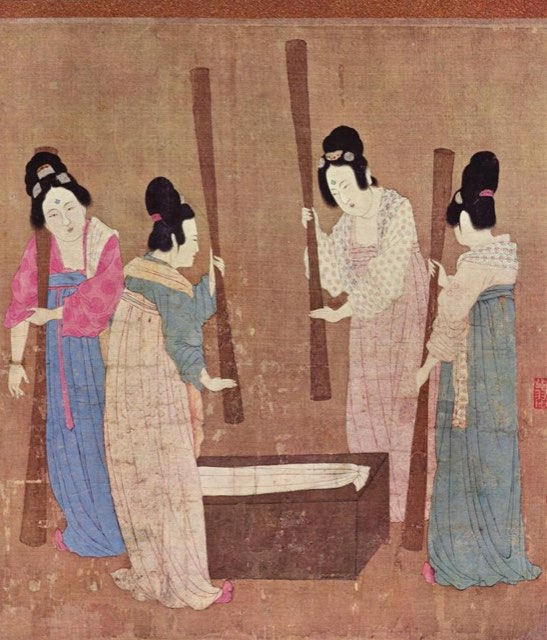
Outline of Tang History
- Art of the Silk Road Exhibit: The Tang DynastyUniversity of Washington · John D. Szostak · read
Tang Interactions with the Outside World
- The Exoticism in Tang (618-907)The Silkroad Foundation · read
Cultural and Administrative Innovations in a Cosmopolitan Empire
- The Universal Empire: Cosmopolitan TangHarvard University · Professor Peter Bol · watch · archived copy
The Sogdian Traders
- Art of the Silk Road Exhibit: SogdianaUniversity of Washington · read
Unification of Central Eurasia and Northern India
- Heilbrunn Timeline of Art History: The Department of Asian Art’s Kushan Empire (ca. 2nd century B.C.-3rd century A.D.)The Metropolitan Museum of Art · read · archived copy
Roles in the Silk Road Trade
- The Silk Road: The Greatest YearsUniversity of California Irvine · Professor Oliver Wild · read · archived copy
The Sogdians
- The Sogdian Ancient LettersUniversity of Washington · Professor Nicholas Sims-Williams’ translation of · read
Bactria
- Art and Culture of the Silk Road Exhibit: Frank Harold’s Balkh & Mazar-e-SharifUniversity of Washington · read
Göktürks
- GöktürksNew World Encyclopedia · read
Uyghur Empire
- Art of the Silk Road Exhibit: Daniel C. Waugh’s The UighursUniversity of Washington · read
- The ‘New T’ang History’ (Hsin T’ang-shu) on the History of the UighursGriffith University · Professor Colin Mackerras’ translation of · read
The Khazar Empire
- Assessing KhazariaInternational Institute for Asian Studies’ Newsletter 34, July 2004 · P. Meerts · read · archived copy
The Samanids
- History of Iran: Samanid DynastyIran Chamber Society · Cyrus Shahmiri · read
Byzantium
- Byzantium and the EastUniversity of Washington · Professor Daniel C. Waugh · read
Sassanid Empire
- Art of the Silk Road Exhibit: The Sassanian EmpireUniversity of Washington · read
Islamic Caliphate
- The Islamic World to 1600: The Caliphate and the First Islamic DynastyUniversity of Calgary · The Applied History Research Group · read · archived copy
Chapter VI
Cultural Exchange: Religion, Technology, and Art Along the Silk Road
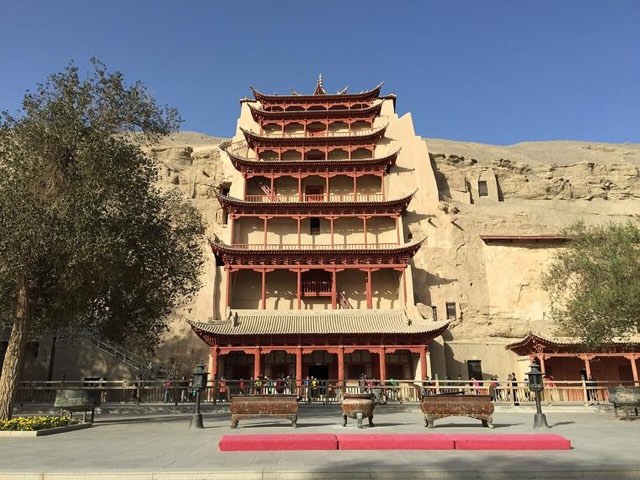
Although the Silk Road was mainly a vehicle for the exchange of silk and other luxury goods, it also served as a venue for cultural transmission, enabling the circulation of art, new technologies, and religious beliefs. For example, missionaries traveling from India along the silk routes first introduced Buddhism to China. Other missionaries brought Manichaeism and Nestorian Christianity eastward; these religions flourished in China and in the nomadic states of the Silk Road. However, the rise of Islam had a significant impact on these religions. In fact, the expansion of Islam influenced culture and trade across Central Eurasia. Islamic beliefs spread to the nomads of Central Eurasia as Islamic merchants came to dominate the Silk Routes all the way into China. Major Islamic commercial settlements were located in the Tang capital, Chang’an, and in the ports of Southeast China. Over time, Silk Road cities that had been dominated by Buddhism and faiths such as Manichaeism and Nestorian Christianity were increasingly centered around Islam.

Arrival of Buddhism in China
- Xuanzang and the Buddhist ‘Conquest of China’University of Washington · Professor Daniel C. Waugh · read
- Art of the Silk Road Exhibit: Dr. Jason Neelis’s Buddhism and TradeUniversity of Washington · read
- The Journey of Faxian to IndiaUniversity of Washington · Daniel C. Waugh’s version of James Legge’s translation of · read
Nestorian Christianity
- Art of the Silk Road Exhibit: Lance Jenott’s The Eastern (Nestorian) ChurchUniversity of Washington · read
- Nestorian Tablet: Eulogizing the Propagation of the Illustrious Religion in China, with a Preface, Composed by a Priest of the Syriac Church (781 A.D.)Fordham University’s Internet East Asia History Sourcebook · Paul Halsall’s version of Ch’ing-Tsing · read
Manichaeism
- Art of the Silk Road Exhibit: Lance Jenott’s ManichaeismUniversity of Washington · read
Islam
- Art of the Silk Road Exhibit: John D. Szostak’s The Spread of Islam along the Silk RouteUniversity of Washington · read
Scythian Art
- Prehistoric Art: Early Nomads of the Altaic RegionState Hermitage Museum · read · archived copy
- The Scythians: An IntroductionThe Circle of Ancient Iranian Studies · Shapour Suren-Pahlav · read
Hellenistic Art
- Sculpture from the Kushan PeriodAsia Society’s The Collection in Context · read
Buddha Iconography
- Buddhism and Its Spread along the Silk RoadThe Silkroad Foundation · read
Cave Paintings and Sculpture
- Dunhugan Mogao GrottoesChina’s Museum · read · archived copy
- Roderick Whitfield Discusses Buddhist Cave ArtAmerican Museum of Natural History · read · archived copy
Technologies
- Silk Road: Spreading Ideas and InnovationsAsia Society · John Major · read
Moveable-Type Printing
- Printing & Movable TypeColumbia University · Asia for Educators’ · read · archived copy
Gunpowder
- Gun and GunpowderThe Silkroad Foundation · read
- Technological Advances During the Song: GunpowderColumbia University · Asia for Educators’ · read · archived copy
Astrolabe
- Astrolabe HistoryAstrolabe.org · James E. Morrison · read · archived copy
Compass
- CompassCultural China · read · archived copy
Mapmaking
- Story of the MapMacau Government Cultural Center · Eric Choi Chi Hong · read · archived copy
Shipbuilding
- Technological Advances During the Song: Shipbuilding and the CompassColumbia University · Asia for Educators’ · read · archived copy
- Watery Kingdom: China’s Mariners from Antiquity to the Ming DynastyVancouver Maritime Museum · read
Chapter VII
The Silk Road in the Age of the Mongols
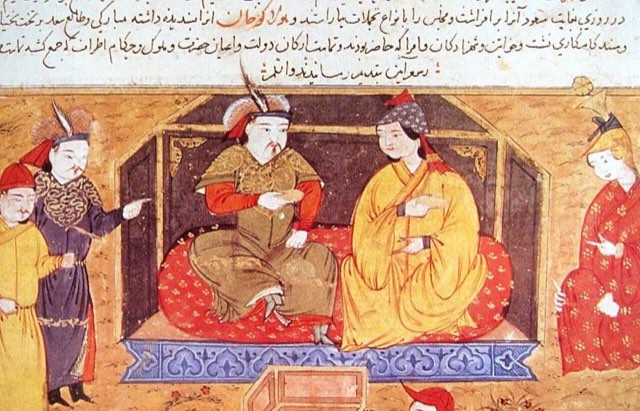
The Mongols—nomads of central Eurasia—dominated world history during the thirteenth century. The Mongols invaded many postclassical empires and built an extensive cultural and commercial network. Led by Chinggis Khan and his successors, the Mongols brought China, Persia, Tibet, Eurasia Minor, and southern Russia under their control. The Mongol empire also opened trade routes—primarily along the Silk Road—as well as lines of communication between different regions in Eurasia.

The Empire of Genghis Khan
- The World Empire of the MongolsHarvard University · Professor Peter Bol · watch · archived copy
- Chinggis Khan, Tribal Group vs Mongol Identity, Chinggis’s Mastery of Organization and Military Tactics, Three Invasions Led by Chinggis, Monghol Unity under Chinggis Khan, Chinggis Khan’s Four Great Legacies, The Death of Chinggis Khan, Chinggis’s Successor and Further Expansion of the Empire, and The Myth of Chinggis KhanColumbia University · Asia for Educators’ · read
Invasion of Russia
- The Shifting Present and Written Images of the MongolsUniversity of Pennsylvania’s Department of Slavic Languages and Literature · Professor Donald Ostrowski · read · archived copy
Eurasia Minor
- Turkish OriginsLibrary of Congress Country Studies · Helen Chapin Metz’s (ed.) Turkey · A Country Study · read
The Mongols in China
- Mongolian InterludeLibrary of Congress Country Studies · Robert L. Worden, Andrea Matles Savada, and Ronald E. Dolan’s (ed.) China · A Country Study · read
Global Connections
- Support for Foreign Contact and Exchange, Mongols Support Trade, Facilitating East-West Contacts, The Status of Merchants Improved Under Mongol Rule, and Merchants Associations Alleviate the Perils of Caravan TradeColumbia University · Professor Morris Rossabi · read
The Rise of Timur
- TimurEncyclopaedia Britannica · read · archived copy
Impact of the Mongols on the Silk Road
- The Mongols and the Silk RoadUniversity of Washington · Professor Daniel C. Waugh · read
East-West Relations
- Account of the MongolsUniversity of Washington · William Rubruck · read
The Pax Mongolica: A Contested History?
- The Pax MongolicaUniversity of Washington · Professor Daniel C. Waugh · read
Chapter VIII
The Timurids, Mughals, and the Ming
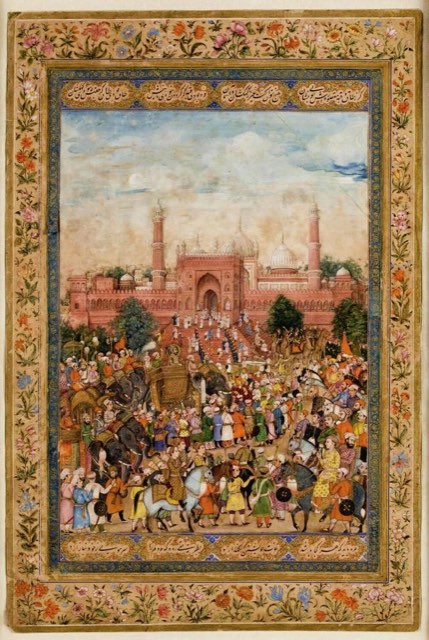
After the collapse of the Mongol Empire, the Timurids rose to power in the latter part of the fourteenth century. Led by Tamerlane, the Timurids established their capital at Samarakand, one of the great cities of the Silk Road. Through Silk Road commerce, Tamerlane and his successors established diplomatic relations with Ming China. By the sixteenth century, the Mughal Empire, one of the great empires to occupy Central Eurasia, had assumed control of much of the Silk Road. While some scholars have suggested that the Silk Road commercial system collapsed with the disintegration of the Mongol Empire and the rise of European maritime trade in the 1400s, overland trade continued to flourish.

Timur and the Mongols
- The Mongols and The TimuridsUniversity of Washington · Professor Daniel C. Waugh · read
Campaigns in India
- The MughalsLibrary of Congress Country Studies · James Heitzman and Robert L. Worden’s (ed.) India · A Country Study · read
The Ottomans and Mamluks
- MamluksJewish Virtual Library · read
- Islam and Islamic History in Arabia and The Middle East: The Mongols and the MamluksIslamiCity · read · archived copy
Relations with Ming China
- Art of the Silk Road exhibit: The Ming DynastyUniversity of Washington · read
Samarkand
- Clavijo’s Embassy to TamerlaneUniversity of Washington · Professor Daniel C. Waugh · read
- Samarkand, Samarkand and the Silk Road in the Time of the Timurids and Their Heirs, and The Shah-i-Zinde in SamarkandUniversity of Washington · Professor Daniel C. Waugh · read
Rise of Muslim Civilization in India
- The Coming of IslamLibrary of Congress Country Studies · James Heitzman and Robert L. Worden’s (ed.) India · A Country Study · read
Akbar and the Founding of the Mughal Empire
- The Mughal EmpireUniversity of Calgary’s The Applied History Research Group · read · archived copy
Mughal Splendor and European Contacts
- Letter to Monsieur Chapelain (1667)George Mason University’s version of François Bernier · read
The Mughal Era Contributions to India’s Cultural History
- Art of the Silk Road Exhibit: Mughal India’s Timurid HeritageUniversity of Washington’s Daniel C. Waugh · read
Chapter IX
European Traders and Explorers
Although the overland silk routes were lucrative trade networks, Europeans, as avid consumers of silk and other Eurasian luxury goods, were keen to establish a new silk route to the East. In fact, when Christopher Columbus sailed across the Atlantic in 1492, he was looking not for the Americas but for a new silk route to the Far East. As a result, Portuguese, Dutch, and English merchants sought to build an Asia trading empire between the fifteenth and seventeenth centuries. Meanwhile, European missionaries, particularly the Jesuits, attempted travel to China along the original silk routes. The Russians, too, sought to extend their influence in China; the “Siberian Road” linked Siberia, China, and European Russia.
A New Silk Route?
- Lecture 2: The Age of DiscoveryDr. Steven Kreis’s The History Guide · Lectures on Early Modern European History · read · archived copy
Marco Polo
- Marco Polo and His Impact on Perceptions of the EastUniversity of Washington · Professor Daniel C. Waugh · read
Vasco de Gama
- The Sea-Route to India & Vasco Da GamaUniversity of Calgary · The Applied History Research Group · read · archived copy
- Vasco da Gama: Round Africa to India, 1497-1498 CEFordham University’s Internet Modern History Sourcebook · Paul Halsall’s version of · read
Christopher Columbus
- Christopher Columbus and the Spanish EmpireUniversity of Calgary · The Applied History Research Group · read · archived copy
Portuguese Merchants
- Portugal’s Eastern Trade: AD 1508-1595History World · Bamber Gascoigne · read
East India Company
- Indian History Sourcebook: England, India, and The East Indies, 1617 CEFordham University · Paul Halsall · read
Dutch VOC
- The Geography of Transport Systems: Dutch East India Company, Trade Network, 17th CenturyHofstra University · read · archived copy
Missionaries
- Reflections on the Jesuit Mission to ChinaSocial Science Research Network · Harvard University · Kenneth Wilson and Mary Jo Bane · read · archived copy
- Letter on the Missions, to St. Ignatius de Loyola (1549)Fordham University’s Internet Modern History Sourcebook · Paul Halsall’s version of St. Francis Xavier · read
Rise of Tsarist Russia
- MuscovyLibrary of Congress Country Studies · Glenn E. Curtis’ (ed.) Russia · A Country Study · read
Treaty of Nerchinsk
- Treaty of Nerchinsk – The First Treaty Between Russia and ChinaCultural China · read · archived copy
Creation of the “Siberian Route”
- The Road Which Has Created RussiaGubernskaya Academy · Enrico Sartori’s translation of Roman Fedorov · read · archived copy
Chapter X
The Silk Road and the “Great Game”
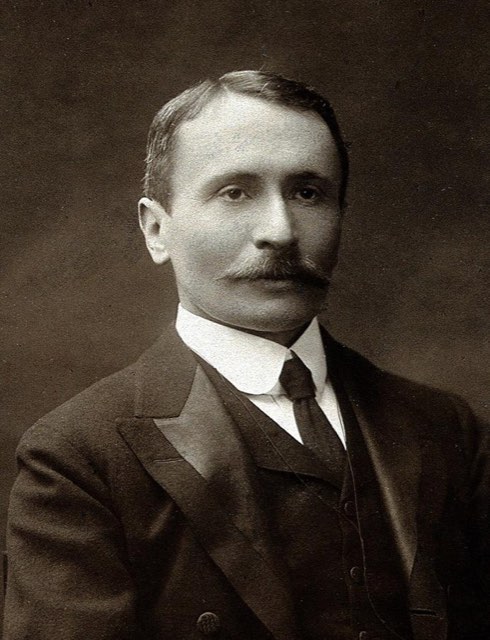
During the nineteenth century, European powers, particularly Britain and Russia, began to vie for control of Central Eurasia. In the seventeenth and eighteenth centuries, many European traders had established commercial outposts in China, India and the East Indies with the intent of opening a new silk route. But in the 1800s, European nations began to use military and economic force to ply their way into Central Eurasian markets and territories. Both Russia and Britain exploited the weaknesses and turmoil of Qing China and the nomadic states to gain access to territories and trade in Central Eurasia. As Russia began to expand southward, Britain feared that it might encroach on its imperial holdings in India. A century-long conflict ensued for power over Central Eurasia—this Anglo-Russian conflict was known as the “Great Game.”

Muscovite Expansion
- The Great Game: Imperial Rivalry Between Britain and Russia in the 19th CenturyThe East-West Review · Professor Kathleen Burk · read · no longer online
British India
- The Coming of the Europeans and The British Empire in IndiaLibrary of Congress Country Studies · James Heitzman and Robert L. Worden’s (ed.) India · A Country Study · read
Qing China and Manchu Control
- Chinese History – Qing Dynasty (1644-1911): The Foundation of the Manchu DynastyChina Knowledge · Professor Ulrich Theobald · read
Zunghars, Mongols, Tibetans
- DzungarsNew World Encyclopedia · read
First Anglo-Afghan War
- The First Anglo-Afghan WarLibrary of Congress Country Studies · Peter R. Blood’s (ed.) Afghanistan · A Country Study · read
Second Anglo-Afghan War
- The Second Anglo-Afghan WarLibrary of Congress Country Studies · Peter R. Blood’s (ed.) Afghanistan · A Country Study · read
India Mutiny
- Sepoy Rebellion, 1857-1859Library of Congress Country Studies · James Heitzman and Robert L. Worden’s (ed.) India · A Country Study · read
Great Eastern Crisis
- Eastern Question: Great Eastern CrisisServing History · read
Anglo-Russian Entente
- Anglo-Russian EntenteMuseum of Learning · read
European Explorers on the Silk Road
- History: The Silk Route: The Route RediscoveredChannel 4 · read
Xinjiang and the “New” Silk Road
- Xinjiang: China’s Pre-and Post-Modern Crossroad.University of Hawaii · Professor Dru Gladney · read
About this course
This course is Saylor Academy's HIST341, The Silk Road and Central Eurasia, one of the complete university courses the Saylor Foundation made free from 2008 and retired in 2015. Saylor licensed its course text under CC BY 3.0; the original is on GitHub. Here it is laid out as chapters, links that have died go to an archived copy from the Internet Archive where one exists, assessments that needed a Saylor login are left out, and people and works are linked to Kulturbase. The readings and lectures belong to their publishers and are linked, not copied. Pictures: Wikimedia Commons, credited under each picture.
All Saylor courses · Free culture courses · The Chautauqua Reading Course