History · Saylor HIST361
Ancient and Modern Cities
This course will trace the development of cities and urban centers from the Ancient Period through the present era. We will examine how political, economic, and social institutions influenced the structure of urban centers and shaped the built environment in cities across the world.
More about this course
In turn, we will analyze how the structure and design of cities influenced the development of civic institutions.
The course will be structured chronologically. Each unit will include representative primary-source documents that illustrate important overarching themes, such as the origins of cities in the Near and Far East, the development of complex urban environments in ancient Greece and Rome, the influence of religion and trade on city growth in the Medieval Period, the impact of the Industrial Revolution on urban centers in Western Europe and the United States, and the changing face of the city in the Post-Industrial Era. By the end of the course, you will understand how cities have developed over the past six millennia and better appreciate the dynamic relationship between geography, political and social institutions, and the built environment.
Chapter I
Ancient Cities of the East and West
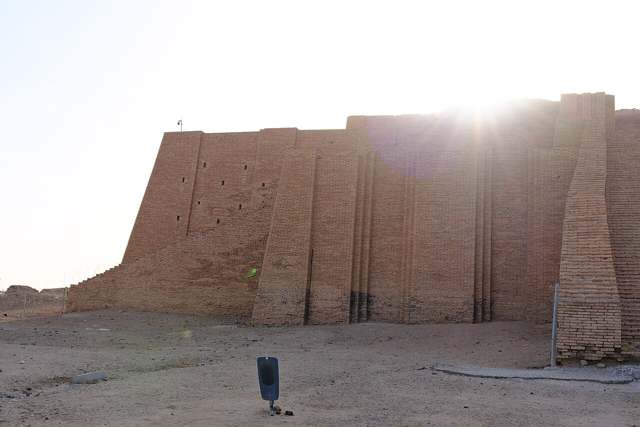
Inhabitants of the Middle East founded the first cities between 6000-4000 BCE. Small villages situated along navigable rivers and overland trade routes gradually evolved into larger urban centers as commercial markets and religious institutions attracted permanent populations. Residents constructed walls to defend their communities against marauders and ruling classes eventually began to construct monumental religious and civil structures in the new cities. Most ancient cities show little evidence of planning. Narrow streets and open sewers were common urban features. Poor sanitation led to periodic disease outbreaks; many cities were dangerous and unhealthy places to live. Nevertheless, cities provided economic, political, and social opportunities that were absent from rural life. In this unit, we will examine the origins of ancient cities in the Middle East and Asia. We will compare and contrast the development of these urban communities and consider the place of these cities in their respective civilizations.

Before you start
- History of Cities and City PlanningArt.net · Cliff Ellis’ · read
- World Cities in History: An OverviewUniversity of Washington · George Modelski · read · archived copy
Origins and Development of Ancient Cities (6000-4000 BCE)
- Ancient CitiesArizona State University · Michael E. Smith, The Encyclopedia of Urban Studies · read
- The Origins of CitiesiTunesU · Seattle Pacific University, Ron Boyce, Nature of Cities, Lecture 5 · watch · archived copy
- Form and Meaning in the Earliest Cities: A New Approach to Ancient Urban PlanningArizona State University · Michael E. Smith, Journal of Planning History, Vol. 6, no. 1 (February, 2007) · read
- The archeological study of neighborhoods and districts in ancient citiesArizona State University · Michael E. Smith, Journal of Anthropological Archeology · read
Mesopotamia (ca. 4000 BCE)
- Ancient History/Ancient Near East/Mesopotamia/SumerWikibooks’ Ancient History · read
- MesopotamiaAbleOne Education Network Classics Technology Center · read · archived copy
- MesopotamiaWGBH Boston · Eugen Weber’s The Western Tradition, Lecture 3 · watch · archived copy
Monumental Buildings—Ziggurats
- ZigguratsWikipedia · read
Egypt (ca. 3300 BCE)
- The Ancient EgyptiansWGBH Boston · Eugen Weber’s The Western Tradition, Lecture 2 · watch · archived copy
- Built of Memory and Hope: The Sacred City of Abydos, EgyptPenn Museum of Archeology and Anthropology · Dr. Joseph Wegner · watch
Central Asia (ca. 2500 BCE)
- HarappaWikipedia · read
Far East (ca. 2000-1500 BCE)
- The Far East: 3000 to 1500 B.C.Connexions · Jack E. Maxfield · read
Chapter II
Greek City States - The Polis
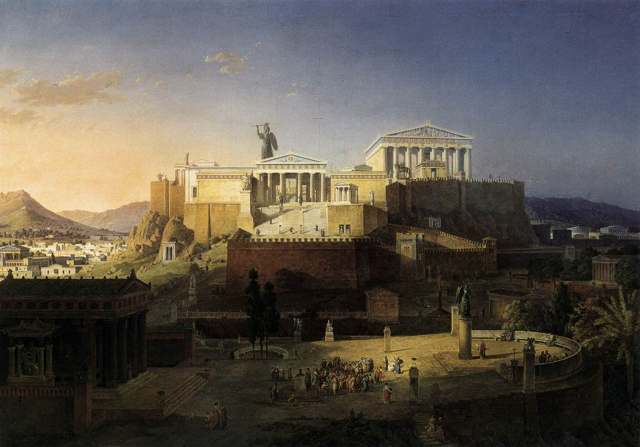
Between 2000 and 1100 BCE, planned cities began to appear in the Mediterranean Basin. On the island of Crete, the Minoan Civilization built sophisticated cities with sewer and water systems and radial street layouts. These cities also possessed monumental temples and civic structures for the ruling classes. During the Archaic Period (around 800 BCE), mainland Greeks began to develop what became known as the Polis, or city-state. Urban residents overthrew royal families and established self-governing, democratic communities. Greek city-states were organized functionally. They typically possessed a central public space known as the agora, which was used for both commercial and civic activities. Outside the agora, temples and shrines occupied sites of religious importance. The Greeks also included spaces for recreational activities in their cities. During the Classical Epoch (around 400 BCE), Greek city planning reached it zenith under Hippodamius of Miletos. Hippodamius, a Greek architect, developed a gridiron street plan for new cities that incorporated wide city streets, an open city center, and clearly defined zones for public, private, and sacred activities. Hippodamius was responsible for designing numerous Greek colonies around the Eastern Mediterranean Basin. In this unit, we will examine the origins of the Greek Polis and look at how urban design and planning evolved from the Archaic Period to the Classical Epoch. We will also look at Greek approaches to urban architecture and examine how their communities reflected their economic, social, and cultural institutions and values.

Minoan and Mycenaean Cities (ca. 2000-1100 BCE)
- Ancient History/Greece/Minoan Civilization and Ancient History/Greece/Mycenaean CivilizationWikibooks’ Ancient History · read
- The Cities of Greece During Their Golden AgeiTunesU · Seattle Pacific University, Ron Boyce, Nature of Cities, Lecture 6 · watch · archived copy
- The Theater at the Asklepieion at EpidaurusFoundation of the Hellenic World · read
Evolution of the Polis in the Archaic Period (ca. 800 BCE)
- Archaic GreeceWikipedia · read
The Acropolis-Center for Public Religious Activities
The Polis in the Classical Epoch (ca. 400 BCE)
- The Rise of the Polis and The Rise of the Polis (cont.).iTunesU · Yale University · Professor Donald Kagan, Ancient Greek History, Lectures 4 and 5 · watch
- Lecture 4 - The Rise of the PolisOpen Yale Courses · Donald Kagan · watch
Chapter III
Roman Cities - The Urbs
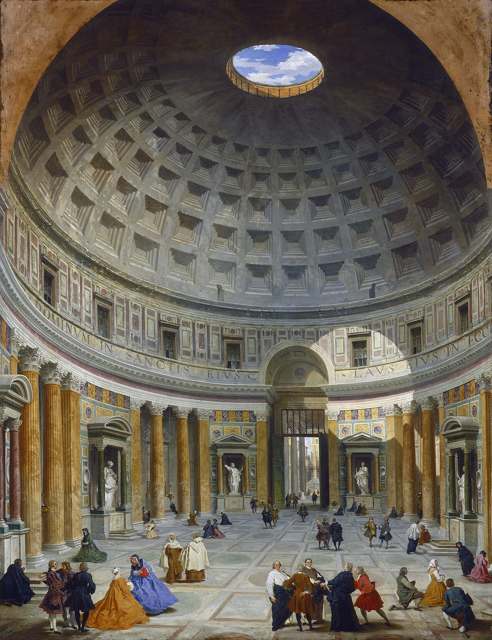
Roman cities were the backbone of the Roman Empire. Between 400 BCE and 400 CE, Romans perfected the art of city planning and construction. While early Roman communities such as Rome evolved organically, later Roman cities located throughout the Mediterranean Basin and Europe reflected uniform planning principles. The Roman Urbs, or city, was based on a gridiron street plan with regular city blocks. Romans designed their cities to promote common defense and emphasize civic unity. Like the Greek agora, the Roman forum was a location for political and economic life in the center of every Roman community. Several important buildings bordered the forum, including the capitol, which functioned as the principal temple of the city, and the basilica, which was the center of local and national legislation. Other important sites in Roman cities included public baths, the theatre, the amphitheatre (the site of gladiatorial contests), and the stadium (the arena for horse and chariot racing). In this unit, we will study the urban planning techniques of the Romans, examine the changing nature of Roman cities under the Roman Republic and Empire, and consider the impact that Roman urban planning has had on other cultures.

City Planning in Ancient Rome (ca. 400 BCE-400 CE)
- It Takes a City: The Founding of Rome and the Beginnings of Urbanism in ItalyiTunesU · Yale University · Professor Diana E.E. Kleiner, Roman Architecture, Lectures 2 · watch
Forum—Central Location for Public Political and Economic Activities
- The Corinth Computer ProjectUniversity of Pennsylvania · David Gilman Romano · read
Recreational Spaces
- Roman BathsPBSVideo · Empires · Secrets of the Lost Empire · watch
The City of Rome Under the Republic and Empire
- The Rise of RomeWGBH Boston · Eugen Weber’s The Western Tradition, Lecture 10 · watch · archived copy
- From Brick to Marble: Augustus Assembles RomeYale University · Professor Diana E.E. Kleiner, Roman Architecture, Lectures 9 · watch
- HerculaneumWikipedia · read
- Herculaneum UncoveredPBSVideo beta · Secrets of the Dead · watch · archived copy
Roman Colonization of Mediterranean Basin and Northwest Europe
- Lecture 21 - Making Mini Romes on the Western FrontierOpen Yale Courses · Diana E. E. Kleiner · read
Chapter IV
Africa, the Middle East, Asia, and the Americas
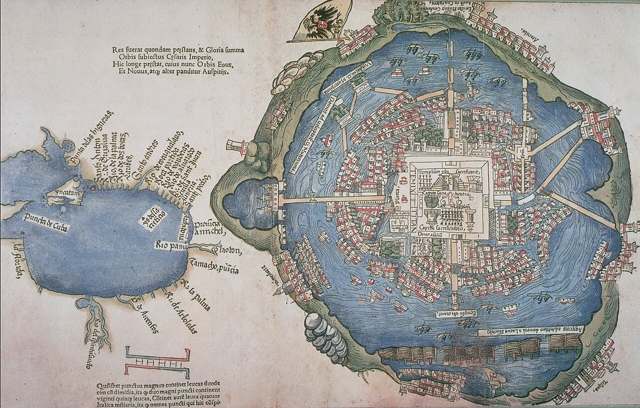
Cities formed the focal points of the civilizations that emerged in Asia, Africa, the Middle East, and the Americas, though their respective urban centers were quite different from one another. In the Middle East and in parts of Africa, Islam often shaped the evolution of cities: urban communities were centered on the mosque, and all elements of the Islamic city were influenced by religious principles. Domes and large courtyards conveyed the power of Islam; concealed gardens and courtyards displayed inner beauty and art. In Asia, city-building was primarily linked to state-building. Under the Ming dynasty and in postclassical Japan, the development of urban centers—many of them walled—was consonant with an increasingly powerful bureaucratic state. And as the Silk Road opened commerce between the West and the Far East, urban centers emerged along these important trade routes and became points of intersection for peoples of myriad cultures. In the Americas, the Aztec Empire was defined by its great cities. The Aztec capital, Tenochtitlan, was a wellspring of Aztec culture. Built upon a symmetrical layout, the city was divided into four parts (or campans) that surrounded the Great Pyramid of Tenochtitlan, which lay at the city’s center. Advanced urban planning techniques proved to be a hallmark of the Aztec civilization. In this unit, we will study the centrality of Islam in Muslim cities, the role of the state in the construction of Chinese and Japanese cities, and the urban centers created by the Aztecs in the Americas.

Islamic City Planning in Africa and the Middle East (ca. 800-1400 CE)
- The AwakeningPBS, Islam · Empire of Faith · watch
Sharia Law and City Planning
- Sharia Law and City Planningread · no longer online
Cities in Asia
- Forbidden CityWikipedia · read
The Aztecs and Tenochtitlan (ca. 1300-1500 CE)
- Aztec City PlanningArizona State University · Michael E. Smith, Encyclopedia of the History of Science, Technology, and Medicine in Non-Western Cultures, 2nd ed. · read
- Aztec MassacrePBSVideo beta · Secrets of the Dead · watch
- The Archeology of Aztec City-State Capitals: Four View of Aztec UrbanismArizona State University · Michael E. Smith, El urbanismo en Mesoamerica/Urbanism in Mesoamerica · read
Chapter V
Medieval European Cities
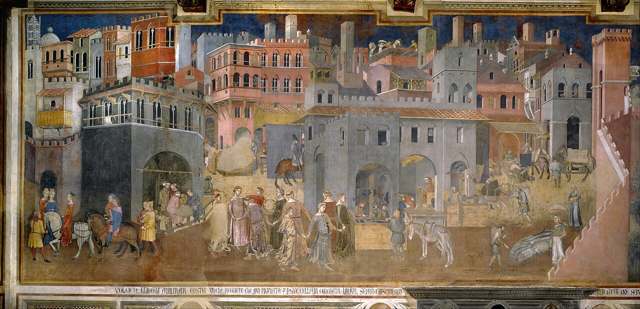
Medieval European cities had both indigenous and Roman roots. The Romans had constructed many urban centers across Europe, and these cities continued to thrive even after the fall of Rome. Medieval cities such as Arles, France and Verona, Italy were characterized by Roman street patterns and classic Roman structures (like stone walls, gates, and buildings). In many medieval towns, Roman stone structures were repurposed; many basilicas and temples became churches, for example. Other medieval cities, by contrast, had no Roman origins whatsoever. These new urban areas were trading centers and markets that connected far-flung European regions in a vast commercial network. Most European urban centers originated in the eleventh century for three reasons: an increased food supply, a growth in population, and an expansion in trade. The growth of cities created a merchant and artisan class that remained separate from the feudal system. Merchant and craft guilds emerged and were governed by the market, not by feudal lords. Religious and intellectual life thrived in medieval cities, allowing for a degree of autonomy and self-government that was absent from rural areas. In this unit, we will first consider the origins of the medieval European city. We will then study the creation of local religious orders, craft guilds, and merchant associations within these cities. Finally, we will examine the political, legal, religious, and social elements of medieval urban culture.

Introduction
- The Crises of the Middle AgesWikibooks’ European History · read
- Cities and Cathedrals of the Middle AgesWGBH Boston · Eugen Weber’s The Western Tradition, Lecture 22 · watch · archived copy
- Medieval SocietyBoise State University · E.L. Skip Knox’s Western Civilization · read · archived copy
The Medieval Commune
- The Medieval Communeread · no longer online
Disease and Disaster
- The Black DeathEyewitnesstohistory.com · read · archived copy
Chapter VI
The City in the Early - Modern Period
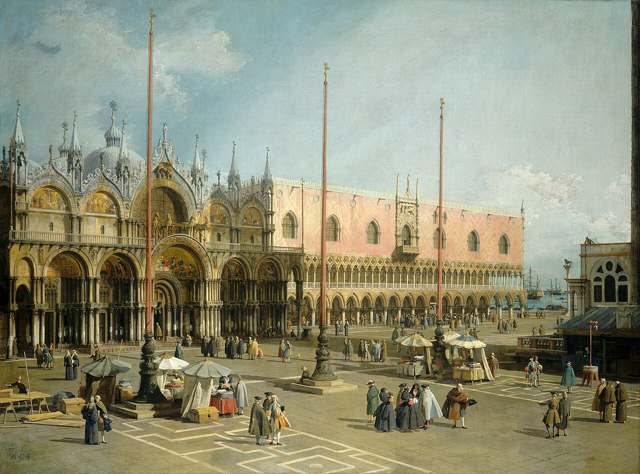
By the sixteenth century, the influence of the Renaissance was apparent in cities across Europe. In contrast to medieval urban planning, many Renaissance cities were designed according to classical Greek and Roman models. The urban “grid” was re-introduced, and many medieval cities were replaced by a new star-shaped city model that stressed uniformity and improved street layout. Meanwhile, the Baroque city emerged in Europe at the same time that the power and influence of monarchs was on the rise. In fact, the Church’s central role in urban layouts was superseded by the new centrality of commercial and government areas. The rise of the European state and its commerce during the Renaissance period also directly influenced the construction of European colonial cities in the Americas, India, and Asia in the sixteenth and seventeenth centuries. However, these colonial cities boasted highly varied urban designs—some were organic, while others were grid-oriented. In this unit, we will examine the differences between medieval and Renaissance urban centers. We will then study the elements of the Baroque city before taking a close look at the colonial cities that were constructed as European outposts in the early modern period.

The Renaissance and City Planning (ca. 1500s CE)
- Renaissance EuropeWikibooks’ European History · read
- The Rise of the Middle ClassWGBH Boston · Eugen Weber’s The Western Tradition, Lecture 28 · watch · archived copy
- The Birth of a DynastyPBS, Medici · Godfathers of the Renaissance · watch
The Baroque City
- Architecture in RomeBoundless · read · no longer online
The Colonial City
- The Rise of Trading CitiesWGBH Boston · Eugen Weber’s The Western Tradition, Lecture 30 · watch · archived copy
Construction of European Colonial Cities in Americas, India, and Asia in 16 and 17th centuries
- On Laying Out Plans of TownsCornell University · T.J. Maslen, The Friend of Australia · Or, a Plan for Exploring the Interior, and Carrying On a Survey of the Whole Continent of Australia · By a Retired Officer of the Hon. East India Company’s Service · read
Chapter VII
The Industrial City
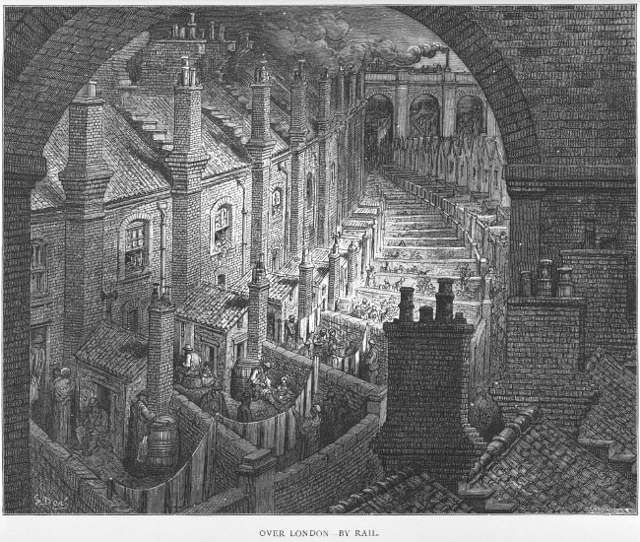
The Industrial Revolution had a decisive impact upon European cities. Indeed, the rise of the factory system was largely responsible for the creation of the modern city. Vast numbers of workers emigrated from rural areas to cities in search of work in these new factories. This mass migration was termed “urbanization.” As a result of urbanization, the need for cheap housing near new factories skyrocketed, creating industrial slums that were often poorly ventilated and plagued by deadly diseases such as cholera. Urbanization also changed the nature of the family unit and reinforced class divides. However, in the nineteenth century, many lawmakers responded to the growing crises of urbanization with a variety of solutions. Often, the solution took the form of the increased involvement of the state: in many cities, the government created sanitation systems, running water, and police forces and worked to improve the overall quality of city life. However, the success of these reforms was often limited. Many urban inhabitants abandoned the unsanitary and crowded conditions of cities for new planned developments in outlying areas: the su *In this unit, we will begin by defining the Industrial Revolution and its impact upon European cities. We will then examine city planning and administration during the 1800s, as well as the rise of technology and urban expansion. Finally, we will turn our attention to various proposed solutions to city problems, including urban reforms and the development of suburbs.

Introduction
- Nineteenth-Century CitiesiTunesU · Yale University · Professor John Merriman, European Civilization, 1648-1945, Lecture 12 · watch
The Industrial Revolution (ca. 1700s-1800s CE)
- The Industrial Revolution and lecture 42 The Industrial World.WGBH Boston · Eugen Weber’s The Western Tradition, Lecture 41 · watch · archived copy
City Administration and Planning
- The New PublicWGBH Boston · Eugen Weber’s The Western Tradition, Lecture 45 · watch · archived copy
- Fin de SiècleWGBH Boston · Eugen Weber’s The Western Tradition, Lecture 46 · watch · archived copy
Urban Problems and Solutions
- How the Other Half LivesWikipedia · read
Pollution and Sanitation
- Modern Sanitary Science – A City of HealthCornell University · Dr. Benjamin W. Richardson, F.R.S., Van Nostrand’s Eclectic engineering Magazine · read
The City Beautiful Movement
- Frederick Law OlmsteadWikipedia · read
Progressive Era Urban Reforms
- Progressive EraWikibooks’ US History · read
Urban Recreation
- Urban Recreationread · no longer online
The Suburbs
- Study on Unity of Design in Planning New Towns and New SuburbsCornell University · Captain J. Keily, Victorian Institute of Surveyors · Transactions and Proceedings · read
The Automobile
- The Automobileread · no longer online
Chapter VIII
The Post-Industrial City
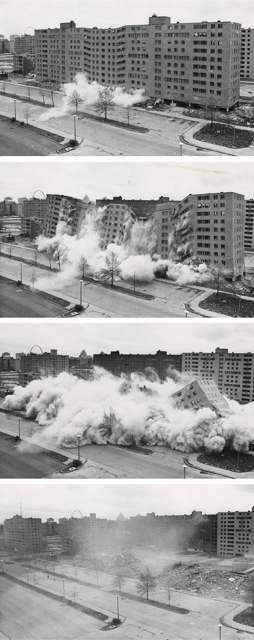
By the early twentieth century, urban centers were usually comprised of two parts: an inner zone that was mapped onto an old industrial area and an outer zone comprised of suburban developments. The central business districts were no longer characterized by manufacturing centers. Instead, administration, finance and information processing had become the focal point of post-industrial cities. De-industrialization had a variety of impacts upon cities. The first was that as manufacturing disappeared from city centers, so too did jobs for the working poor. As a result, urban slums emerged and the tax base declined, leaving city governments cash-strapped and inadequate. A crisis emerged in urban centers in the 1970s—crime and unemployment skyrocketed while public and city services failed or declined sharply. This social and fiscal crisis caused many policymakers to rethink urban development. Urban planners took on a larger role in city administration and began to discuss ideas for mixed use spaces and sustainable redevelopment in the hopes of meeting the needs of urban residents. In this unit, we will examine the origins of the post-industrial city of the twentieth century. We will focus on how deindustrialization affected the urban environment, both economically and socially. We will then examine how city officials and urban planners attempted to solve the problem of urban decline.

Introduction
- Urban Colossus: Why is New York America’s Largest City?Columbia University School of International and Public Affairs (SIPA) · Professor Edward Glaeser · watch
Modernism and Urban Redevelopment (ca. 1950s)
- Robert MosesWikipedia · read
- Jane JacobsWikipedia · read
Rethinking Urban Development
- Developing a People-Centred Approach to Green BuildingThis Big City · Martin Wright · read · archived copy
Chapter IX
Urban Renaissance
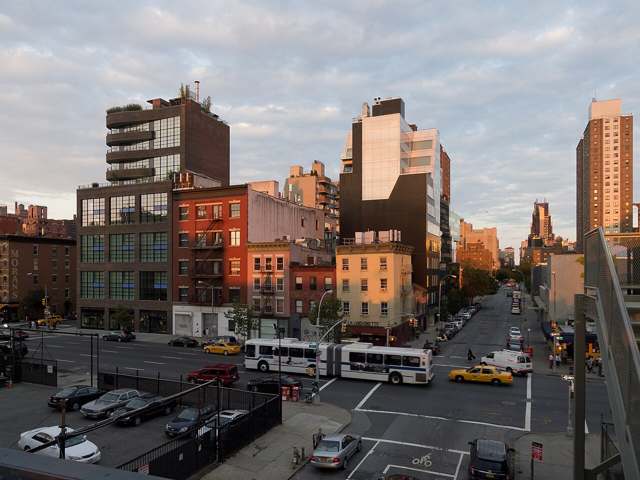
In the last few decades, many post-industrial cities have enjoyed an “urban renaissance”—repopulation and regeneration after a trend of urban decay and suburban flight in the mid-1900s. To entice residents and businesses back to urban centers, city governments implemented a number of plans. The first was to create or better showcase “green” urban spaces, such as public parks. The second was to institute more environmentally friendly designs in city spaces. And lastly, urban planners took a more conspicuous role in how cities were to be regenerated or developed. As a result, many businesses and residents moved back “downtown.” There, they enjoyed economic benefits—lower transportation costs and tax breaks—as well as social benefits—neighborhood regeneration and community formation. However, throughout this period of urban renewal, challenges persisted. Guaranteeing security and city services to new urban residents proved a difficult task, while promoting sustainable growth and development through public-private partnerships was not always successful or positive. In this unit, we will study the origins of the “urban renaissance,” its short- and long-term effects, and the obstacles that the movement faced.

Introduction
- Transforming Mexico City – Creating a City for the 21st CenturyColumbia University School of International and Public Affairs (SIPA) · Mayor Marcelo Ebrard · read
About this course
This course is Saylor Academy's HIST361, Ancient and Modern Cities, one of the complete university courses the Saylor Foundation made free from 2008 and retired in 2015. Saylor licensed its course text under CC BY 3.0; the original is on GitHub. Here it is laid out as chapters, links that have died go to an archived copy from the Internet Archive where one exists, assessments that needed a Saylor login are left out, and people and works are linked to Kulturbase. The readings and lectures belong to their publishers and are linked, not copied. Pictures: Wikimedia Commons, credited under each picture.
All Saylor courses · Free culture courses · The Chautauqua Reading Course