History · Saylor HIST364
Environmental History
This course will focus on the history of humankind’s relationship with the environment. We use the word “environment” to refer to the nonhuman components of the natural world.
More about this course
We will examine how environmental factors have shaped the development and growth of civilizations around the world and analyze how these civilizations have altered their environments in positive and negative ways. The course will be structured chronologically. Each unit will include representative primary-source documents that illustrate important overarching themes, such as how early humans adapted natural resources for new purposes, how the expansion of civilizations led to environmental changes, how the interaction between European explorers and Native Americans led to significant and unexpected environmental consequences, and how modern societies have responded to environmental problems that threaten the well-being of humans and the environment. By the end of the course, you will better understand the reciprocal relationship between human beings and the environment and how this relationship has evolved throughout human history. Notes:
Upon successful completion of this course, the student will be able to:
In order to take this course, you must:
Chapter I
Human Beings and Their Environment
One of the defining characteristics of humanity is the ability to make and use tools. From the earliest uses to provide shelter, safety, and food to organized and cooperative efforts that are hallmarks of human society – horticulture, husbandry, domestication, and agriculture – humans shape the physical world they live in. Differing and changing environments have always shaped human society in complex and subtle ways. Environmental historian Timothy Silver claims that environmental history is history “with the animals left in,” but it is a great deal more than that. Environmental history is the story of humans as biological creatures who interact with ecosystems on the planet.
The Environment and Human History
- Environmental History TimelineProfessor Bill Kovarik · read · 1 h
What Is Environmental History?
- What Is Environmental History?Environmental History Resources · K.J.W. Oosthoek · read · 15 min
- What Is Environmental History?iTunes U · K.J.W. Oosthoek · watch · 30 min · archived copy
- Themes in Environmental HistoryiTunes U · K.J.W. Oosthoek · watch · 30 min · archived copy
The Human-Environment Relationship
- Evolution of the Human-Environment RelationshipEncyclopedia of the Earth · Schimel et al. · read · 1 h · archived copy
Malthusian Population Theory
- T. Robert Malthus’ Social TheoryRogers State University · Dr. Frank W. Elwell · read · 1 h · archived copy
- Thomas Malthus and Population GrowthKhan Academy · watch · 15 min
How Do Humans Shape Environmental History?
- An Environmentalist on a Different Path: A Fresh View of the Supposed ‘Wilderness’ and even the Indians’ Place in ItWilliam Cronon · read · 15 min
Ways of Studying the Interaction between Humans and the Environment
- Can Creation Be Saved? Knowledge Finds Fulfillment in CompassionVimeo · Michael Soulé · watch · 1 h
Changing Perspectives on the Environment and Human History
- Environmental History: Between Science and PhilosophyEnvironmental History Resources · K.J.W. Oosthoek · read · 1 h
Preindustrial Uses of Fire
- References of the American Indian Use of Fire in Ecosystems and Primitive Ways: Norm Kidder’s Some Uses of FireWildandfire.com · Dr. Gerald W. Williams’ · read · 30 min
The First Firestarters
- The Discovery of FireDichotomistic · John McCrone · read · 45 min · archived copy
The Bronze Age
- Chapter 4: The Bronze AgeUniversity of California, Davis · Richard Cowen’s Essays on Geology, History, and People · read · 1 h · archived copy
Polynesian Exploration and Colonization
- A Pacific OdysseyPBS’ Wayfinders · read · 1 h · archived copy
North American Water Transportation
- Building a Birchbark CanoeMuseum of Underwater Archaeology · Francois Rothan · watch · 15 min · archived copy
Importance of Water in Human Civilization
- EpilogueWiser Earth · Steve Solomon’s Water · The Epic Struggle for Wealth, Power, and Civilization · read · 1 h · no longer online
Development of Agriculture
- Story of FarmingHistoryLink101 · read
- Mayans Converted Wetlands to FarmlandNature News · Amanda Mascarelli · read · 15 min
Horticulture and Domestication of Wild Animals
- From Hunter/Gatherer to Horticulturist to Agriculturist and DomesticationOhio State University · Department of Horticulture and Crop Science · read · 30 min · archived copy
Impact of Human Activities on the Environment
- Paleoindians and the Great Pleistocene Die-OffNational Humanities Center · Nature Transformed · Shepard Krech III · read · 1 h
Impact of the Environment on Human Activities
- Dig Solidifies Evidence that First Americans Were Here 15,000 Years Ago and About.com: K. Kris Hirst’s Pre-Clovis in Texas: the Debra L. Friedkin SiteThe Washington Post · David Brown · read · 30 min
Drought
- Drought and the Collapse of the Mayan CivilizationClimate History · read · 30 min
Volcanoes and Floods
- Volcanic Eruptions and European HistoryEnvironmental History Resources · K.J.W. Oosthoek · read · 30 min
- The Truth Behind Noah’s FloodPBS · Jacqueline S. Mitchell · read · 30 min · archived copy
Recovery
- Catastrophes of Progress: Disaster and Innovation in AmericaiTunes U · Duke University · Kevin Rosario · watch · 1 h · no longer online
Long-term Environmental Reasons for Civilization Collapse
- Neo-environmental Determinism and Agrarian ‘Collapse’ in Andean PrehistoryCBS · Clark L. Erickson · read · 1 h · archived copy
- The Demise of Utopia: Contexts of Civilizational Collapse in the Bronze Age Indus ValleyArcheoscience International · Chris J. D. Kostman · read · 1 h
Chapter II
Ancient Civilizations and their Environments
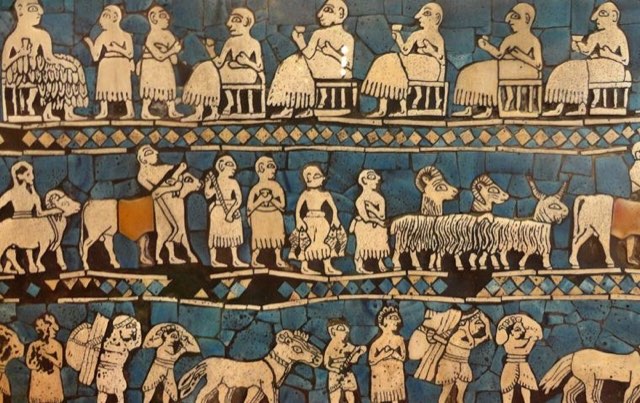
About 10,000 years ago, former hunting and gathering human populations developed large-scale agriculture from horticulture and husbandry in an area that archaeologists call “the fertile crescent” or Mesopotamia, the area between the Tigris and Euphrates rivers, which is now south eastern Turkey and Iraq. Agriculture created food abundance, which allowed leisure time, the predicate of a stratified culture. Because not every member of an agricultural society needs to be engaged in the active production of food, classes of scholars, priests, and law emerged, which require the invention of writing. Agriculture begat cities like ancient Babylon, as well as the somewhat later Nile and East Asian societies. Although each human society is unique, some of these first civilizations have similarities, especially in regards to the commodification of resources and resulting trade, resource depletion, and religion. In this unit, you will examine the ways in which early (and later) ancient civilizations, having harnessed the potential benefits of agriculture, shaped and were shaped by their environments.

Deforestation
- The Role of Wood in World HistoryEnvironmental History Resources · K.J.W. Oosthoek · read · 30 min
Manipulation of Fire
- History with Fire in its Eye: an Introduction to Fire in AmericaNational Humanities Center · Stephen J. Pyne · read · 1 h
Attitudes towards Water
- Attitudes toward WaterUniversity of Kansas · Donald Worster · read · 1 h
- Reading Quiz for Donald Worster’s ‘Attitudes toward Water’ and Guided Response to Reading QuizThe Saylor Foundation · read
Ancient Irrigation
- Ancient IrrigationUniversity of California, Davis · Richard Cowen · read · 30 min · archived copy
Overgrazing
- OvergrazingEncyclopedia of the Earth · C. Michael Hogan · read · 15 min · archived copy
Environmental Degradation and Societal Collapse
- Excerpt from Derrick Jensen’s EndgameCommon Dreams · read · 15 min
- Mayan MysteriesEarth Observatory · Michon Scott · read · 45 min
Ancient Urbanization and Environmental Change
- UrbanizationAncient History Encyclopedia · Joshua J. Mark · read · 15 min · archived copy
Sewers
- The Early ‘Roots’ Timelinesewerhistory.org · Jon Schladweiler’s Tracking Down the Roots of our Sanitary Sewers · read · 30 min · archived copy
- Sewerage in Ancient and Medieval Timessewerhistory.org · Harold Farnsworth Gray · read · 45 min · archived copy
- Cloacina: Goddess of the Sewerssewerhistory.org · Jon C. Schladweiler · read · 15 min · archived copy
Air Pollution
- Air Pollution in a Historical PerspectiveEnvironmental History Resources · K.J.W. Oosthoek · read · 15 min
Public Infrastructure
- Irrigation Systems, AncientWater Encyclopedia · Science and Issues · Larry W. Mays’ · read · 15 min
Environmental Causes of Urban Decline
- Review of J. Donald Hughes’ Pan’s Travail: Environmental Problems of the Ancient Greeks and RomansBryn Mawr Classical Review · John McMahon · read · 30 min
Understanding the Natural World
- The SevenCarnegie Mellon University · Qatar’s version of The Seven Evil Spirits, or Descriptions of · read · 15 min · archived copy
- Maureen Gallery Kovacs’ The Epic of Gilgamesh, Tablet 1Ancient Texts · Timothy R. (Wolf) Carnahan · read · 1 h
Responding to the Environment
- Religion of EgyptUniversity of Nevada, Las Vegas · read · 15 min
Moderating Human Interactions with the Natural World
- Chapter VII: ShamanismInternet Sacred Texts Archive · M. A. Czaplicka’s Shamanism in Siberia · read
- Part 1 and Part 2YouTube · Marguerite E. Garner’s Inner Mongolian Shaman’s Group Possession Ceremony · watch · 15 min
Shaped By Environmental Conditions
- Ancient EcologyYouTube · University of Texas, Austin · Bruce Albert · watch
- Trans-Saharan Trade and the West African Discovery of the Mediterranean WorldCenter for Middle Eastern and Islamic Studies, Norway · Pekka Masonen · read · 1 h · archived copy
The Commodification of Natural Resources
- Terms Used by Marxism: CommodityPurdue University · Dino Felluga’s Introductory Guide to Critical Theory · read · archived copy
Early World Trade and Commodities
- The Ancient Spice Trade, Part III: Greece and RomeUniversity of Waterloo · Labyrinth, Issue 84 · Chris Mundigler · read · 20 min
Natural Resources as Commodities
- Chemical Element: TinEnglish Word Information · read
- Phoenician Wine and Phoenician MiningPhoenicia.org · read · 1 h
- The Ancient Maya – A Commercial EmpireMexconnect · David Conrad · read · 45 min
Chapter III
The Middle Ages
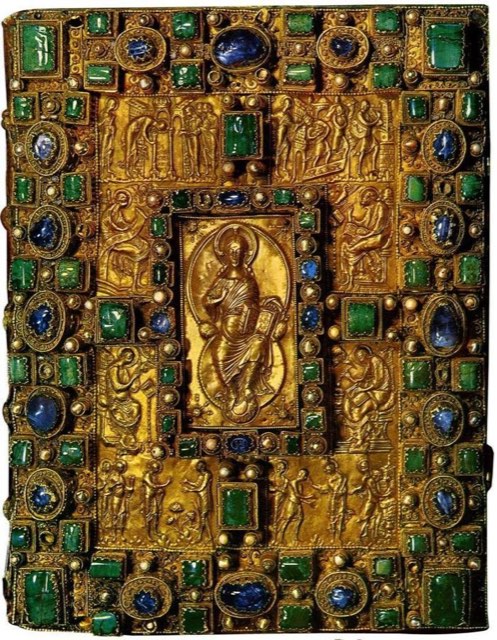
Following the fall of the Roman Empire, c. 462 CE, European civilization felt a power vacuum. The Celtic tribes of Europe had hastened the death of Rome, which had been Christianized in the fourth century CE by Roman Emperor Constantine the Great. Constantine had also moved his capital from Rome to the former Bosphorus city of Byzantium, renaming the city Constantinople, and he started his reign in post-Roman Europe. Following Rome’s sacking in 462 CE by the Visigoth Theodoric II, Rome’s influence over European politics waned, which led to the ascendance of both the Catholic Church and local monarchies across Europe.

Feudalism
- Lecture 23: Medieval Society: The Three OrdersDr. Steven Kreis’ The History Guide · Lectures on Ancient and Medieval European History · read · 30 min · archived copy
Forests
- The Disappearance of Wolves in the British IslesWolfsong of Alaska · Ivy Stanmore · read · 30 min
- Delights of Life in Fifteenth-Century EnglandRichard III Society · A. Compton Reeves’ · read · 1 h · archived copy
Land Use
- Dialogue between Master and Disciple on Laborers, c. 1000Fordham University’s Internet Medieval History Sourcebook · Paul Halsall’s version of · read · 15 min
- On Husbandry, c. 350Fordham University’s Internet Medieval History Sourcebook · Paul Halsall’s version of Palladius’ · read · 15 min
Human Interactions and Disease Transmission
- Plague (I): Pestilence as a DiseaseiTunes U · Yale University · Frank Snowden · watch · 1 h
Social and Political Consequences
- The Plague of FlorenceUniversity of California, Irvine · Dr. Barbara J. Becker’s version of Giovanni Boccaccio · read · 1 h · archived copy
- Lecture 29: Satan Triumphant: The Black DeathDr. Steven Kreis’ The History Guide · Lectures on Ancient and Medieval European History · read · 1 h · archived copy
Long-Term Impact on European Society
- Lecture 30: In the Wake of the Black DeathDr. Steven Kreis’ The History Guide · Lectures on Ancient and Medieval European History · read · 30 min · archived copy
Global Environment
- The Origin of the European ‘Medieval Warm Period’Medievalists.net · H. Goosse, et al. · read · 45 min
Medieval Warfare
- Burning Down the House: Scorched Earth Tactics Suggested by Wace and Bayeux TapestryMedievalists.net · Collin Davey and Monica L. Wright · read · 30 min
- Rotting Ships and Razed Harbors: The Naval Policy of the MamluksThe University of Chicago · Mamluk Studies Resources · Albrecht Fuess’ · read · 1 h
Medieval Industries and the Environment
- Environmental History of the Middle AgesEnvironmental History Resources · K.J.W. Oosthoek · watch · 30 min · archived copy
- Medieval Industry: Industrial Developments in Medieval DartfordDartford Town Archive · read · 15 min · archived copy
Water-Powered Mills
- Review on John Langdon’s Mills in the Medieval Economy: England 1300-1540The Medieval Review · Richard Hoffman · read · 45 min · archived copy
Mining
- Chapter 11: CoalUniversity of California, Davis · Richard Cowen’s Essays on Geology, History, and People · read · 1 h · archived copy
Agriculture
- The Agricultural Revolution in Medieval EuropeThe Flow of History · Chris Butler · read · 1 h · archived copy
- The Medieval Agricultural YearStrange Horizons · Rachel Hartman · read · 15 min
Land Reclamation
- Reclamation and Regional Economies of Medieval Marshland in BritainMedievalists.net · Stephen Rippon · read · 1 h
Enclosures
- ‘The Bull Is Half the Herd’: Property Rights and Enclosures in England, 1750–1850Oxford University’s Department of Economics · Elaine S. Tan · read · 1 h
Social Changes and Environmental Change
- Lecture 22: European Agrarian Society: ManorialismDr. Steven Kreis’ The History Guide · Lectures on Ancient and Medieval European History · read · 30 min · archived copy
Science and the Natural World
- Lecture 24: The Medieval World ViewDr. Steven Kreis’ The History Guide · Lectures on Ancient and Medieval European History · read · 30 min · archived copy
- The Studies of Exact and Natural Sciences in the History of the Dubrovnik DominicansMedievalists.net · Sanjek Franjo · read · 1 h
Chapter IV
The Columbian Exchange
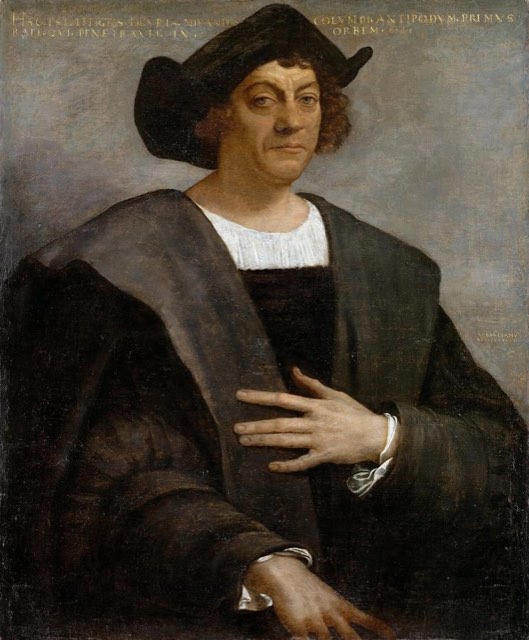
European exploration of the Americas began in the 10th century CE with the voyages of Viking Leif Eriksson. Although the settlement of what is now Newfoundland failed after about sixty years, the Norse, as well as the Portuguese, fished the area around the Grand Banks for the next 800 years. Permanent settlement of South America and the Caribbean came in the late 15th and early 16th centuries, following the voyages of Christopher Columbus under the flag of Spain. Portuguese, French, and English colonization followed, and a triangle Atlantic trade quickly grew. Europeans shipped manufactured goods to Africa and the Americas, slaves from Africa, and natural resources from the Americas. Historian Alfred Crosby named the international footprint of this resource trade, “The Columbian Exchange.” The Columbian Exchange dramatically affected populations and environments on all three sides of the Triangle Trade. Europeans imported new species, resources, wealth, and slaves, while Africa and the Americas were hugely depopulated by slavery and disease, respectively, while Europeans imposed cultural assumptions about the environment on the new landscapes, dramatically altering them in the process. This unit will explore the environmental, cultural, demographic, and technological changes wrought by the Columbian Exchange.

The Atlantic World
- On the Water: Living in the Atlantic World, 1450–1800Smithsonian National Museum of American History · The Kenneth E. Behring Center · read · 2 h · archived copy
Resource Exchange
- Reading Quiz for Resource Exchange in the Columbian Exchange and Guide to Responding to the Reading QuizThe Saylor Foundation · write · 1 h
- The Columbian Exchange: Plants, Animals, and Disease between the Old and New WorldsNational Humanities Center · Alfred Crosby · read · 30 min
- The Columbian Exchange and the Reversal of FortuneCATO Institute · Thomas Grennes’ · read · 45 min
- The Columbian ExchangeSlideshare · Dan McDowell · watch · 15 min
- Our Vegetable TravelersTexas A&M; · Victor R. Boswell · read · 30 min
European Species in the Americas
- The Surprising History of Horses in North AmericaLive Science · Jay F. Kirkpatrick and Patricia M. Fazio · read · 15 min
American Species in Europe
- Review of Mark Kurlansky’s Cod: A Biography of the Fish that Changed the WorldSmithsonian Magazine · Richard Wolkomir · read · 30 min · archived copy
- Tobacco Timeline: The Sixteenth Century – Sailors Spread the SeedsTobacco.org · Gene Borio · read · 30 min · archived copy
Impact of Columbian Exchange on the Environment of the Atlantic World
- Three Worlds, Three Views: Culture and Environmental Change in the Colonial SouthNational Humanities Center · Timothy Silver · read · 1 h
The Slave Trade
- Slavery in the United StatesEH.net Encyclopedia · Jenny B. Wahl · read · 45 min · archived copy
- The Triangular TradeNational Maritime Museum, United Kingdom · Understanding Slavery Initiative · watch · archived copy
- The Atlantic Slave Trade and Life in the Americas: A Visual RecordUniversity of Virginia and the Virginia Foundation for the Humanities · Jerome S. Handler and Michael L. Tuite Jr. · read · archived copy
Disease Transmission
- The Atlantic World, 1492-1600The Saylor Foundation · read
New Food Crops
- The Natural History of MaizeGale Encyclopedia of Food and Culture · Ruben G. Mendoza · read · 45 min · archived copy
- PotatoesCambridge World History of Food · Ellen Messer · read · 1 h · archived copy
Impact on Africa
- Slave Traders and Colonialism in Equatorial Africa iTunes U: Yale University: Robert Harms’ Slave Traders and Colonialism in Equatorial Africa (iTunes U)iTunes U · Yale University · Robert Harms’ · watch · 30 min
- The Impact of the Columbian Exchange on West AfricaHofstra University · Alan J. Singer · read · 30 min · archived copy
Impact on Europe
- The Impact of Potatoes on Old World Population and UrbanizationYale University · Nathan Nunn and Nancy Qian · read · 30 min · archived copy
- Thanks for the Miracle of CornCNN · Edythe Preet · read · 30 min
Impact on the Americas
- Jeffrey Amherst and the Smallpox BlanketsUniversity of Massachusetts, Amherst · Peter d’Errico · read · 45 min
- Were American Indians the Victims of Genocide?George Mason University’s History News Network · Guenter Lewy · read · 1 h
- On J. R. McNeill, Mosquito Empires: Ecology and War in the Greater Caribbean, 1620-1914H-Environment Roundtable Reviews, Vol.1, No. 1 (2011) · read · 1 h
European Technologies Introduced to Americas
- Technological Introductions and Social Change: European Technology on the Great PlainsUniversity of Nebraska · Andrew LaBounty · read · 30 min
Technologies Adapted by Europeans
- The Taíno CulturePowhatan Museum of Indigenous Arts and Culture · Auld/Powhatan · read · 15 min · archived copy
- Rice and Culture TradeGale Encyclopedia of U.S. History · read · 15 min
African Cultural Exchanges
- Chapter 1: ‘All We Knowed Was Go and Come by de Bells and Horns’Beacon Press · Shane White and Graham White’s The Sounds of Slavery · read · 1 h · archived copy
- Study Questions for Shane White and Graham White’s The Sounds of Slavery: Chapter 1 and Guide to Responding to Study QuestionsThe Saylor Foundation · write · 2 h
- African-American Food’s History and SoulWBUR’s OnPoint · Tom Ashbrook’s Interview with Jessica Harris · watch · 1 h · archived copy
European Efforts to Reshape American Landscape
- The Trouble with Wilderness, or, Getting Back to the Wrong NatureWilliam Cronon · read · 1 h
Impact of American Environment on European Colonizers
- Teaching Module: Early America 1630–1812Environmental Literacy Council · John Opie · read · 1 h · archived copy
Settlement Patterns and the Built Environment
- Empire and Environmental AnxietyiTunes U Podcast · K.J.W. Oosthoek · watch · 30 min · archived copy
- Jamestown RediscoveryPreservation Virginia · watch · 1 h · archived copy
Chapter V
Industrialization
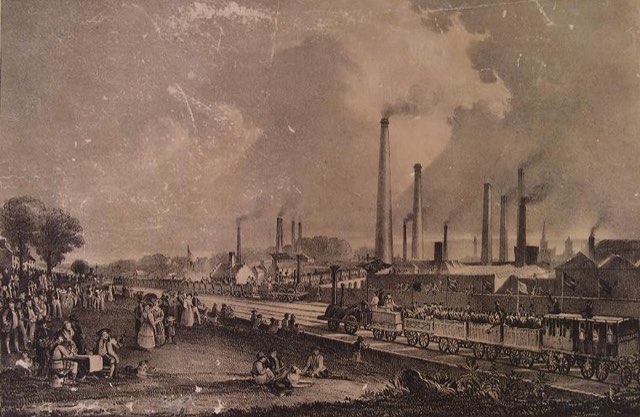
World industrialization began in England in the eighteenth century and spread to other countries and regions in Europe and the America. Marked especially by the burning of fossil fuels for energy, intensive agriculture, the industrial revolutions fundamentally reorganized society, hugely increased pollution, contributed to massive deforestation (especially in the United States), and launched a wave of internal migration to urban areas, international immigration to the Americas, and forced transportation to Australia. Industrialization also contributed to secularization and the rise of experimental science, social science, scientism, professionalization, colonization, modern urbanization, formation of both a middle class and a working class, and political reaction to degraded and immiserating conditions. Industrialization fundamentally reorders societies and dramatically impacts environments and economies. Industrialization as a process continues at various speeds around the world. This unit will explore how industrialization was burgeoning with the rapid growth in scientific knowledge and technological inventions. You will analyze the social, economic, political, and environmental significance of industrialization.

The Industrial Revolution in the U.K.
- The Industrial RevolutionYale-New Haven Teachers Institute · Joseph A. Montagna · read · 1 h · archived copy
- The British Industrial RevolutionClemson University · Pamela E. Mack · read · 15 min
Greater Dependence on Commercial Agriculture
- Lecture 17: Origins of the Industrial Revolution in EnglandDr. Steven Kreis’ The History Guide · Lectures on Modern European Intellectual History · read · 45 min · archived copy
- ‘Where There’s Muck There’s Brass’: The Market for Manure in the Industrial RevolutionOxford University’s Department of Economics · Liam Brunt · read · 1 h
New and Artificial Means of Energy Production
- Opening Pandora’s Box: A New Look at the Industrial RevolutionVox · Professor Tony Wrigley · read · 45 min · archived copy
Health Impact
- On the Expectoration of Black Matter from the LungsScottish Mining’s version of George Steele, Esq. · read · 45 min
Environmental Impact
- Observations on the Filth of the Thames: A Letter to the Editor of the Times of LondonUniversity of California, Irvine · Dr. Barbara J. Becker’s version of Michael Faraday · read · 15 min · archived copy
Malthusian Population Pressures
- The Industrial Revolution as the Escape from the Malthusian TrapiTunes U Booklet · Lüdwig-Maximilians-Universität München · John Komlos’ · read · 1 h
European Migration
- Chapter 4: What Drove European Emigration?Casa Historia · J. Williams’ World Mass Migration · read · 1 h · archived copy
Industrial Revolution in the United States
- Guided Readings: The Making of Modern AmericaUniversity of Houston’s Digital History · read · 1 h
Machine Versus the Garden
- PastoralismUniversity of Virginia Crossroad Project · Kathryn Peltier · read · 15 min · archived copy
- Re-viewing Nature; Machines and Industry; Greek Revival ArchitectureUniversity of Virginia Crossroads Project · read · 30 min · archived copy
Human Impact of New Technologies
- Chapter 8: The Radium GirlsRadford University · Mark Neuzil and Bill Kovarik’s Mass Media & Environmental Conflict · read · 1 h · archived copy
Ideology and the 1930s U.S.
- Agrarianism and NatureKansas State University · Donald Worster · read · 1 h
- Reading Quiz for Donald Worster’s ‘Agrarianism and Nature’ and Guide to Responding to Reading QuizThe Saylor Foundation · write · 1 h
- Broken Land: The Dust Bowl as Moral FailingKate Sampsell · read · 30 min · archived copy
- Farming in the 1930sWessel’s Living History Farm, York, Nebraska · watch · archived copy
Balancing Technological and Environmental Change
- The Half Century of Crisis: 1900–1950 CESan Diego State University’s World History for Us All · read · 1 h · archived copy
Progressive-Era Environmental Reform
- The Progressive Era Environmental ValuesH-Net · Gregory J. Dehler · read · 30 min
Forests and Public Land
- John Muir: An AppreciationThe Sierra Club’s version of Theodore Roosevelt · read · 15 min
- The Greatest Good, Part I and The Greatest Good, Part IIYouTube · National Forest Service · watch · 30 min · no longer online
Conservation and the Gospel of Efficiency
- Conservation and the Gospel of EfficiencyFordham University · Rucha Desai · read · 1 h
Rapid Growth of Industrial Cities
- The Great TownsProject Gutenberg’s version of Frederick Engels’ The Condition of the Working Class in England · read · 1 h
- The Genesis of the TenementBartleby’s version of Jacob Riis’ How the Other Half Lives · Studies Among the Tenements of New York · read · 30 min · archived copy
Environment and Social Impact
- Growth and Entrenchment of Slavery: The Cotton GinPBS · Africans in America · read · 15 min · archived copy
- Industrial Revolutions and the Standard of LivingLibrary of Economics and Liberty · Clark Nardinelli · read · 15 min
Response to Ecological and Environmental Problems
- Landscape Artist: A Conversation with Witold RybczynskiThe Atlantic · Sage Stossel · read · 30 min · archived copy
- Philosophical Underpinnings of the National Park IdeaNational Park Service · Dwight T. Pitcaithley · read · 30 min · archived copy
Regulation and Planning Versus Laissez Faire Development
- How the Case Stands NowBartleby’s version of Jacob Riis’ How the Other Half Lives · Studies Among the Tenements of New York · read · 1 h · archived copy
- Suburban Despair: Is Urban Sprawl Really an American Menace?Slate · Witold Rybczynski · read · 45 min
Harnessing the Power of Nature
- Tennessee Valley Authority: Nature’s Power HarnessedThe History Channel · watch · archived copy
- Illustrated History of Wind Power Developments: Part 2, 20th-Century DevelopmentsTelosnet · Darrell M. Dodge · read · 30 min · archived copy
- Alternative Energy PioneersBicycle City · read · 15 min · archived copy
Modifying the Environment
- Environmental EthicsThe Open University · watch · 30 min · no longer online
Studying the Environment
- Conservation, Preservation, and Environmental Activism: A Survey of the Historical LiteratureNational Park Service · Adam Rome · read · 1 h · archived copy
- The 1978 Water Conservation StudyArmy Corps of Engineers · Institute for Water Resources’ · read · no longer online
Chapter VI
Reshaping the Modern Environment
Industrialization led to the institutionalization of market-powered economic capitalism. Economies were no longer designed to be self-sustaining. Industrial economies could only grow if markets were continually generated so that production could be continually expanded. This process of market expansion and production shaped modern environments. Market expansion took place in non-industrial societies, which introduced industrialization in order to make profits and extract raw materials. Once materials were exhausted, new sources had to be found, often at the expense of pre-industrial societies. The very system of exploitation, production, and consumption came to be the ruling idea that cannot be challenged. Technology became the new god and capitalism the new religion.
Technology as Religion
- The Virgin and the DynamoBartleby’s version of Henry Adams’ The Education of Henry Adams · read · 1 h · archived copy
- Guide to Responding to Henry Adams’ The Education of Henry Adams: ‘The Virgin and the Dynamo’The Saylor Foundation · read · 1 h
Industrialization and Economic Ethics
- Capitalism and Its CriticsiTunes U · University of California, Berkeley · watch · 1 h · archived copy
Transportation
- President Dwight D. Eisenhower and America’s Interstate Highway SystemAmerican History · Logan Thomas Snyder · read · 30 min
- Roads Without Cars: The HAFRABA Association and the Autobahn Project 1933-1943 in GermanyUniversity of Kassel · Richard Vahrenkamp · read · archived copy
Industry
- Shaping the Earth: European Theme Route Industrial LandscapesEuropean Route of Industrial Heritage · read · 15 min · archived copy
- Time, Dereliction, and Beauty: An Argument for ‘Landscapes of Contempt’Australian Landscape Architects Association · Helen Armstrong · read · 30 min · archived copy
Population Growth
- Human and Environmental ImpactsAcademic Earth · Yale University · Robert Wyman · read · 1 h · archived copy
Government Regulation
- Looking Backward: A Historical Perspective on Environmental RegulationsU.S. Environmental Protection Agency · Jack Lewis’ · read · 15 min · archived copy
- Path to JohannesburgWorld Watch Institute · read · 30 min · archived copy
- Declaration of the United Nations Conference on the Human EnvironmentUnited Nations Environment Programme · read · 30 min · archived copy
War and the Environment
- War and the EnvironmentWorld History Connected · Richard P. Tucker · read · 1 h · archived copy
- Environmental Effects of War Lenntech: S.M. Enzler’s Environmental Effects of WarLenntech · S.M. Enzler · read · 1 h
- The American Civil War: An Environmental ViewNational Humanities Center · Dr. Jack Temple Kirby · read · 1 h
“Big Technology” and Environmental Change: Dams, Canals, and Rivers
- Columbia RiverCenter for Columbia River History · Bill Lang · read · 15 min · archived copy
- Quagmire: Nation-Building and Nature In The Mekong DeltaYouTube · University of Washington Press · David Biggs’ · watch · 15 min
Energy Production and Air and Water Pollution
- The Environmental Issues of Electricity Production and Electricity Generating Technologies: Where Does our Electricity Come From?Pace University’s Power Scorecard · read · 2 h · archived copy
Globalizing Technologies
- Gas Flaring Disrupts Life in Oil-Producing Niger DeltaNational Public Radio · Ofeibea Quist-Arcton · read · 15 min
Food and Food Policy
- A Discussion with Michael PollaniTunes U · Yale University · The Rudd Report · read · 1 h
Green Revolutions
- Green to Gold: The Current Environmental RevolutionsiTunes U · Yale University · Economics and the Environment · Michael Esty · watch · 1 h · no longer online
Genetically Modified Foods
- Genetically Modified Foods: Monsters or Miracles?iTunes U · Santa Fe Institute · On Plants · From Genes to Genomes to Genetically Modified Foods · Nina Federof · watch · 1 h
Intensive Versus Extensive Land Use
- Traditional Land Use and Nature Conservation in Rural EuropeEncyclopedia of the Earth · Tobias Plieninger · read · 45 min · archived copy
Agriculture in the Developing World
- World in Transition: Managing ResourcesThe Open University · watch · 30 min · no longer online
World Commodities
- Inside the Oldest Commodities ExchangePBS · The Market Maker · watch · 15 min
Trade Networks
- Fair Trade for All: How Trade Can Promote DevelopmentiTunes U · Globalization Video, Carnegie Council for Ethics in International Affairs · Joseph Stiglitz’ · watch · 1 h
Commerce in the Developing World
- International Development: Microcredit and MigrationiTunes U · Open University · watch · 1 h
International Politics and the Environment in the Developing World
- Earth in Crisis: Environmental Policy in an International ContextiTunes U · The Open University · watch · 30 min
Chapter VII
Threatened Environments – Threatened Societies
At the end of the twentieth century, over one hundred years of unrestrained industrial growth and unlimited consumption of fossil fuels took such a toll on the global environment that failure to notice became no longer possible and no longer politically or economically viable. Overuse of natural resources and non-regulation of market economies had pushed many species to extinction, had made many environments unlivable, and had impacted human societies. Large industry impacted large ecosystems, and despite their technology, humans are still a part of ecosystems. Ecosystem threats will eventually become social threats. Ultimately, large scale manufacture has had a profound effect on the global environment. Industrial pollutions inflict communities; public health is under severe threat. While an expansive population exerts huge pressure on the planet, not only natural resources exhaust, but also the entire climatic system undergoes changes. Climate change in turn affects the human society by way of abnormal weather patterns that lead to catastrophes. This unit will explore how a global economy has had a global environmental impact.
Water Diversion
- Water and Political ConflictsUnited Nations Environment Programme (UNEP) · watch · 30 min · archived copy
- The Aral SeaYouTube · LiveEarthDotOrg · watch · 15 min
Over Fishing and Ocean Health
- Ecological Consequences of OverfishingUniversity of Rhode Island’s Graduate School of Oceanography · read · 45 min · archived copy
Timber Harvesting and Forest Health
- Forest Health in the United StatesIdaho Forest Products Commission · R. Neil Sampson and Lester A. DeCoster · read · archived copy
Industrial Chemicals and the Environment
- Background StatementBasel Convention on the Control of Transboundary Movements of Hazardous Wastes and their Disposal · United Nations’ Safe Planet · read · 1 h · archived copy
- Superfund: Cleaning up the Nation’s Hazardous Wastes SitesU.S. Environmental Protection Agency · read · 15 min
Invasive Species
- Integrating Invasive Species Prevention and Control PoliciesU.S. Department of Agriculture · Michael Livingston and Craig Osteen · read · 30 min · archived copy
- Quagga (Dreissena rostriformis bugensis) & Zebra (Dreissena polymorpha) MusselsUniversity of California, Riverside’s Center for Invasive Species Research · Mark S. Hoddle · read · 30 min
- Feral European Rabbit (Oryctolagus Cuniculus)Australian Government · Department of Sustainability, Environment, Water, Population and Communities’ · read · 15 min · archived copy
- KudzuU.S. Department of Agriculture · watch · 15 min · archived copy
Mining and Mineral Production
- Death of a Mountain: Radical Strip Mining and the Leveling of AppalachiaWesJones.com · Erik Reece · read · 1 h
- Leetso, the Yellow Monster: Uranium Mining on the Colorado PlateauNorthern Arizona University · Marylynn Quartaroli · read · 15 min · archived copy
- 10 Most Incredible Earth ScarsEnvironmental Graffiti · Karl Fabricius’ · watch
The “Population Bomb”
- Return of the Population BombEnvironmental Health News · Paul R. Ehrlich and Anne H. Ehrlich · read · 30 min · archived copy
Population, Overpopulation, and Resource Scarcity
- Part 1: Overview and Part 2: AtlasAmerican Association for the Advancement of Science’s Atlas of Population and Environment · read · archived copy
- Living with Smoke: Global Health Impact of Air Pollution from Household Cooking FiresiTunes U · University of California, San Francisco (UCTV) · Lisa M. Thompson · watch · 1 h · no longer online
Pollution and Disease
- Water, Air, and Soil Pollution Causes 40 Percent of Deaths Worldwide, Cornell Research Survey FindsCornell University’s Chronicle Online · Susan Lang · read · 15 min
- Health Impacts of Water PollutionEduGreen · read · 15 min · archived copy
Environmental Degradation
- Environmental Degradation Begets Epidemics: Cholera in BangladeshiTunes U · Stanford University · read · 45 min
Industrial Pollution
- The Love Canal TragedyU.S. Environmental Protection Agency · Eckardt C. Beck · read · 15 min · archived copy
Climate Change
- Climate Change Impacts and Adapting to ChangeU.S. Environmental Protection Agency · read · 1 h · archived copy
Unintended Consequences of Technologies
- The Unanticipated Consequences of TechnologySanta Clara University · Tim Healy · read · 1 h · archived copy
Chapter VIII
Environmentalism: New Perspectives on Mankind’s Relationship with the Natural World
Scientific awareness coupled with intense environmental degradation inspired a backlash against total resource consumption and environmental waste. Beginning with the industrial revolutions, the modern environmental movement has grown to offer sustainability as an alternate paradigm for unrestricted resource consumption and waste generation. Nations that experienced industrialization from the eighteenth to twentieth centuries are now considered to be post-industrial. Concern for protecting the environment is a feature of having moved into more knowledge-based economies. Yet, consumption has not lessened, so manufacturing continues in nations currently in the midst of their own industrialization. Although the paradigm shift has been dramatic, challenges remain. This unit will explore the origins and outlines of modern environmentalism and will explore some key issues for the twenty-first century.
Conservation and Preservation
- The National Parks: America’s Best IdeaPBS · Ken Burns’ · read · 1 h
Origins of Conservation and Preservation Movements
- Environmentalism: From the Control of Nature to PartnershipYouTube · The Graduate Council Lectures, University of California, Berkeley (UCTV) · Carolyn Merchant · read · 1 h
- Evolution of the Conservation Movement in America, 1850-1920Library of Congress · read · 45 min · archived copy
Social and Environmental Consequences: Conservation of Habitat and Fire Hazard
- Radio Expeditions, Yellowstone FiresNational Geographic · Alex Chadwick · read · 30 min · archived copy
- Re-examine ‘Let It Burn’Pushback.com · Dr. Bill Wattenburg · read · 30 min
Origins in the U.S.
- The Roots of Preservation: Emerson, Thoreau, and the Hudson River SchoolNational Humanities Center · Max Oelschlaeger · read · 45 min
The Soil Conservation Movement
- Conserving the Plains: the Soil Conservation Service in the Great PlainsU.S. Department of Agriculture · Douglas Helms’ · read · 30 min · archived copy
- PublicResourceOrg’s Post of Pare Lorentz’s The Plow That Broke the PlainsYouTube · watch · 30 min
Science, Advocacy, and Public Policy
- Rachel Carson’s Silent Spring and the Beginning of the Environmental Movement in the United StatesUniversity of Indiana · Professor Randall Baker · read · 45 min · archived copy
Impact on Global Society
- New Thoughts on a Hot, Flat, and Crowded WorldiTunes U · Stanford University · Global Climate and Energy Project · Thomas Friedman · read · 1 h
National and International Regulatory Efforts
- Kyoto Accords Take EffectNPR’s Morning Edition · Rob Gifford, Lawrence Sheets, and Sylvia Poggioli · watch
- Appendix C: Selected International Environmental AgreementsU.S. Central Intelligence Agency’s World Factbook · read
Successes and Failures
- Mining and the EnvironmentGreenspirit · Dr. Patrick Moore · read · 1 h · archived copy
- 9 of Humanity’s Greatest Environmental Successes and Man’s Greatest Crimes against the Earth, in PicturesDiscover Magazine · Rachel Cernansky · read · 15 min · archived copy
The Politics of Climate Change
- The Politics and Science of Climate Change DenialismiTunes U · La Trobe University · Clive Hamilton and Andrew Glikson · watch · 1 h · archived copy
Religion
- Overview of World Religions and EcologyYale University’s Forum on Religion and Ecology · Mary Evelyn Tucker and John Grim · read
Rethinking the Relationship between Humans and the Environment
- A Storied Wilderness: Rewilding the Apostle IslandsYouTube · University of Washington Press · James Feldman · read · 15 min
- North Face Founder Saves, Fights Nature as Chile Volcano EruptsBloomberg · Joshua Goodman · read · 15 min · no longer online
Commerce and the Environment: Cap and Trade
- Climate 101 Series: Cap and TradePew Center on Global Climate Change · read · 30 min · archived copy
- Carbon OffsetsYouTube · Ohio University · Ohioweb · read · 15 min
Science and the Search for Solutions
- Science Solutions for a Planet in Peril: Global Earth Science and SustainabilityYouTube · Perspectives on Ocean Science · University of California, San Diego (UCTV) · Charles Kennel · read · 1 h
Thinking Globally/Acting Locally
- Beyond Understanding the Problem: Citizen Action for Global Warming SolutionsYouTube · UCTV, University of California, Santa Barbara · Bill McKibbens’ · read · 1 h
What Is “Environmental Justice?”
- Environmental Justice Program and Civil RightsEPA · read · 15 min · archived copy
Environmental Justice and Policy Making
- Racial/Ethnic Inequality in Environmental-Hazard Exposure in Metropolitan Los AngelesUniversity of California, Santa Cruz’s California Policy Research Center · Manuel Pastor, Jr. · read · 1 h · archived copy
About this course
This course is Saylor Academy's HIST364, Environmental History, one of the complete university courses the Saylor Foundation made free from 2008 and retired in 2015. Saylor licensed its course text under CC BY 3.0; the original is on GitHub. Here it is laid out as chapters, links that have died go to an archived copy from the Internet Archive where one exists, assessments that needed a Saylor login are left out, and people and works are linked to Kulturbase. The readings and lectures belong to their publishers and are linked, not copied. Pictures: Wikimedia Commons, credited under each picture.
All Saylor courses · Free culture courses · The Chautauqua Reading Course