History · Saylor HIST365
History of Technology
This course provides an introduction to the history of technology for the Science, Technology, and Society (STS) major. The course surveys major technological developments from ancient to modern times with particular attention to social, political, and cultural contexts in Europe and the United States.
More about this course
You will also think critically about the theory of technological determinism, the ways in which technology has defined “progress” and “civilization”, and the major ethical considerations surrounding today’s technological decisions. This course begins with discussions of the promotion of technology in centralized states of the ancient and medieval worlds: the Roman Empire, Song and Ming China, and the Islamic Abbasid Empire. After a period of relative decline, the states of Western Europe centralized and flourished once again, having benefited from the westward transmission of key ideas and technologies from the East. The focus of the course then shifts to the West, to the technologies of the Renaissance in Italy, industrialization, imperialism, and World War I. Unbounded faith in technology, which was characteristic of the 19th century, suffered a severe blow after two industrial world wars. Today, many nations that are interested in technological solutions to social, medical, and military problems also value a healthy environment and respect human and civil rights.
Upon successful completion of this course, the student will be able to:
In order to take this course, you must:
Chapter I
The Ancient World
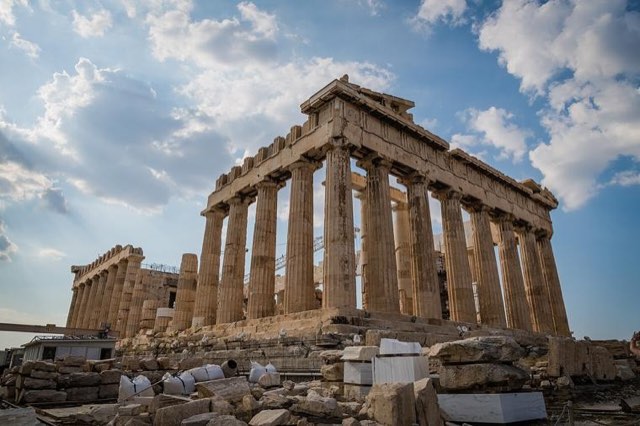
The popular statement “all roads lead to Rome” recalls a time when Rome controlled vast lands and peoples surrounding the entire Mediterranean. During that period, the Romans had the engineering wherewithal and slave labor to pave an enormous road system around the capital city. If the ancient Greeks were most famous for their science and philosophy, then the Romans were masters of technology. Remnants of their feats – the road system, irrigation systems, and large structures like the Pantheon – are still visible today. Most of these relate back to the imperial centuries, approximately between 27BC at the end of the Republic and 476AD when the first Germanic king of Rome became ruler. Roman history exemplifies how massive centralized states promoted technological advancement in the pre-modern world yet separated theoretical and scientific studies from technology and craft knowledge. This split between science and technology endured until the applied sciences of the 19th century (Unit 7), although some argue it continued to the present day (Unit 9). In this unit, you will learn how Greek philosophers distinguished theory (episteme) from hands-on craft knowledge (techne), a social and intellectual distinction with long-term implications in Western history. You will then study the Roman Empire through its material forms including water engineering, mining, and construction. Much of this engineering legacy was lost to the West after the decline of the Empire but recovered during the Renaissance Movement (Unit 4) and Scientific Revolution (Unit 5).

Greek Philosophy: Episteme and Techne
- Episteme and TechneStanford Encyclopedia of Philosophy · Richard Parry · read · 1 h
Hydraulic Systems and Aqueducts
- Roman Building Technology and ArchitectureUniversity of California, Santa Barbara · Professor Fikret Yegul · read · 3 h · archived copy
Concrete and Roads
- Roman RoadsHistoryToday · Logan Thompson · read · 2 h · archived copy
The Pantheon
- The Pantheon TempleThe Open University Podcasts · Imperial Rome and Ostia · watch · 30 min
Mining
- Roman Deep-Vein MiningUniversity of North Carolina, Chapel Hill · Lynn Cohen Duncan · read · 1 h · archived copy
- Archimedes ScrewNew York University · Chris Rorres · read · 30 min
Chapter II
Eastern Transmissions
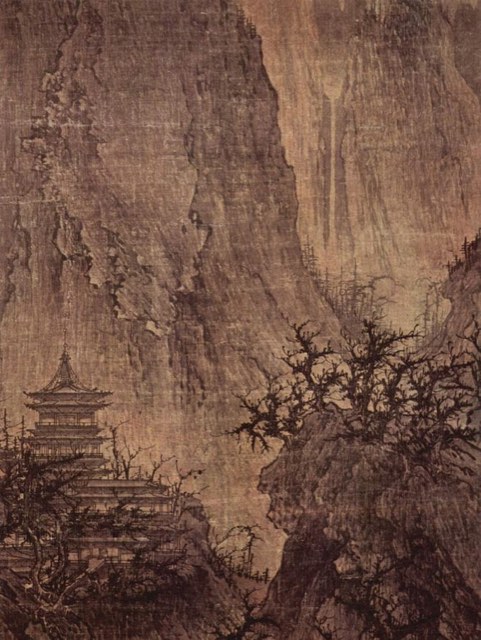
The Chinese printed with movable type well before Gutenberg’s press

China and the West
- China’s Gifts to the WestColumbia University · Asia for Educators’ China and Europe · read · 1 h
Exploration and Trade
- Shipbuilding and the CompassColumbia University · Asia for Educators’ The Song Dynasty in China · read · archived copy
- Chinese Trade in the Indian OceanAsia Society · Jean Johnson · read · 1 h
Mongol Technology
- A New Look at Mongol Contributions, All the Khan’s Horses, Mongol Support of Artisans, and Beginnings of Mongol Collapse: Public Works FailuresColumbia University · Asia for Educators’ The Mongols in World History · watch · 1 h
Translation Movement
- Lecture 16: The Splendor of the Abbasid PeriodYouTube · Yale University’s Open Yale Courses · Paul Freedman · watch · 1 h
The Astrolabe
- Tom Wujec Demos the 13th-century AstrolabeTED Talks · watch · 30 min
Alchemy
- Part III: Technology Transfer in the Chemical IndustriesAhmad Y. al-Hassan’s History of Science and Technology in Islam · read · 1 h
Chapter III
The Not-So-Dark Ages
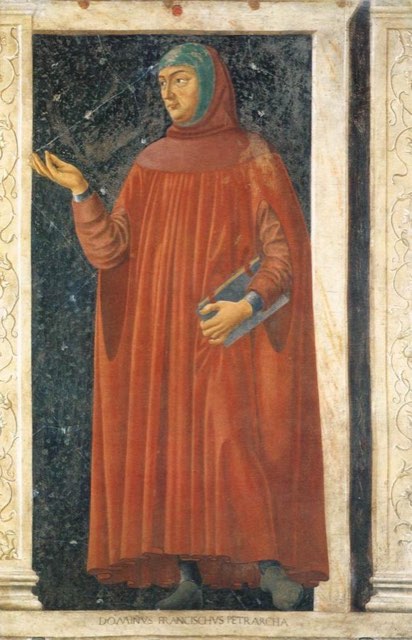
Scholars of the Renaissance Movement were the first to describe their medieval predecessors as living in a “dark age” of cultural impoverishment. These humanists believed that Christian theologians had neglected much Greco-Roman (pagan) learning and privileged impractical disciplines like theology and logic. But this was a harsh judgment, considering their interest in Roman law, the technological interests of monks, and innovative Cathedral building of the late medieval period. Indeed, a veritable agricultural revolution was underway in the North. Horses and plows boosted production, and the population boom that ensued was only checked by the onset of the Great Plague in 1348. In this unit, you will see that the medieval period was anything but dark – what defined the gothic Cathedral better than light? This unit will challenge the popular conception that the medieval West was a “dark” age. You will explore the agricultural innovations behind the feudal social structure, women’s work, Cathedral building, and the general rebound in Western Civilization, which occurred during the height of Roman Catholic power in Europe.

Manorialism
- Lecture 22: European Agrarian Society: ManorialismDr. Steven Kreis’s The History Guide · Lectures on Ancient and Medieval European History · read · 1 h · archived copy
Plowing and Weaving
- Part 2: Medieval TechnologySan Jose State University · Patricia Backer’s Technology in the Middle Ages · read · 1 h · archived copy
The Stirrup Controversy
- StirrupsEngines of Our Ingenuity · John H. Lienhard · read
- Significance of the Stirrup in Medieval WarfareCLIO Journal · John Hood · read · 2 h · archived copy
The Guild
- Medieval Guilds and Craft ProductionSUNY Oneonta · Art History Department · read · 3 h
Women’s Work
- Working Women in the Middle AgesMary Czarnecki · read · 15 min · archived copy
The Gothic Style
- Gothic ArtMetropolitan Museum of Art · Heilbrunn Timeline of Art History · Julien Chapuis · read · 2 h · archived copy
Romanesque versus Gothic
- Romanesque versus Gothic ArchitectureYouTube · mrborup · watch · 15 min
Chapter IV
Renaissance Technology
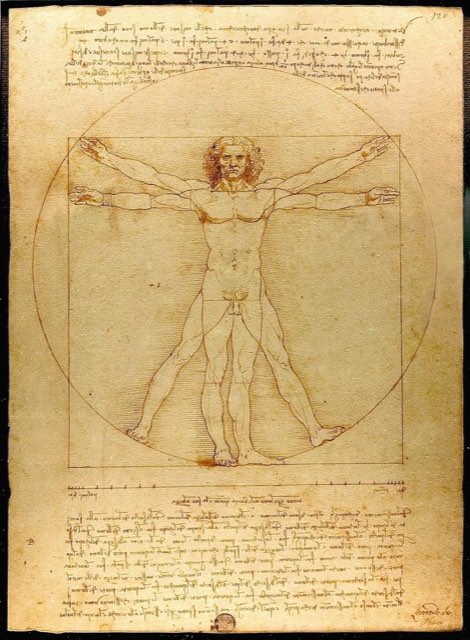
The Renaissance artist Leonardo da Vinci once designed movable barricades to help protect the city of Venice and planned to literally move the Arno River. Da Vinci was one of the greatest engineers of all time. It was the Renaissance that made a fine art out of lowly crafts such as painting and machine building, which were previously confined to the workshop and pursued by anonymous craftsmen. Prior to Da Vinci’s day, few scholars would have dirtied their hands with painting, mining, masonry, and applied mathematics like machine building or surveying. However, as northern Italian princes consolidated power and larger states across Europe – Spain, France, England – centralized, scholars at the service of the state increasingly offered technological solutions to their patrons’ military and natural resource problems. This unit studies the Renaissance period (roughly the 15th-16th centuries) because of its significance in the history of technology. You will be introduced to the Gutenberg press and its role in spreading technological knowledge, as well as the impressive engineering feats of the leading architects who recovered Greco-Roman traditions. Even more, this unit discusses early gunpowder technologies in the West, such as the use of muskets and cannons. Only the largest, most centralized states could adopt these new technologies on a grand scale, whether on the battlefield or on voyages of discovery. While completing this unit, think critically about the extent to which print and gunpowder technologies determined cultural and political developments and also about the ways cultural and political conditions, by contrast, steered technological developments.

Art versus Craft
- The Renaissance and the Rise of the Artist and Renaissance Art and ‘Grazia’Inter Archive · Sweet Briar College’s Department of Art History · Professor Christopher L.C.E. Witcombe · read · 1 h · archived copy
Da Vinci
- Leonardo Da VinciYouTube · Khan Academy’s Smart History · Dr. David Drogin · watch · 30 min · no longer online
Renaissance Style
- Architecture in Renaissance ItalyMetropolitan Museum of Art · Heilbrunn Timeline of Art History · The Department of European Paintings’ · read · 1 h · archived copy
Florence Cathedral
- Brunelleschi and Florence CathedralYouTube · Kenney Mencher · watch · 30 min · no longer online
Print and the Renaissance
- The Printing PressDr. Steven Kreis’s The History Guide · Lectures on Modern European Intellectual History · read · 30 min · archived copy
Gutenberg
- What Did Gutenberg Invent?The Open University · The Renaissance Secrets Team · read · 15 min · archived copy
Shipbuilding
- The Arsenale of VeniceAluismodi Cultural Association’s Dialogue between Cultures · Arturo Faraone · read · 2 h · archived copy
- Caravel HistoryTexas A&M; University · George R. Schwartz · read · 1 h · archived copy
The Voyages
- Lecture 2: The Age of DiscoveryDr. Steven Kreis’s The History Guide · Lectures on Early Modern European History · read · 2 h · archived copy
The Columbian Exchange
- The Columbian ExchangeNational Humanities Center · Alfred Crosby · read
The Theory
- The Military RevolutionUniversity of Wisconsin, Madison · J.P. Sommerville · read · 3 h · archived copy
Revisions
- The Military Revolution in Early EuropeHistory Today, Volume 42, Issue 12 · David Parrot · read · 2 h · archived copy
Chapter V
New Science and Industrialization
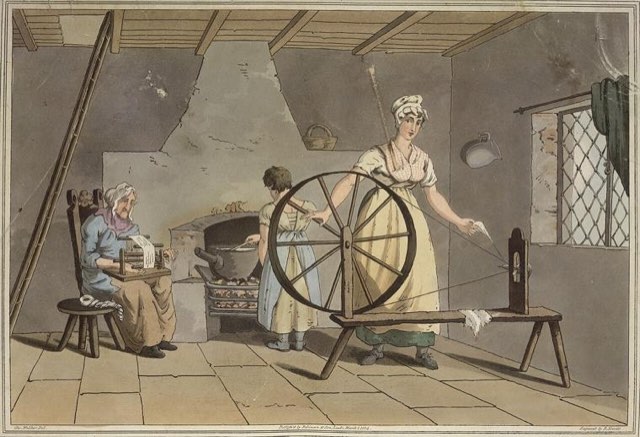
Historians typically present the Scientific Revolution (sixteenth through seventeenth centuries) as a major theoretical achievement, and present the Industrial Revolution (late 18th and early 19th centuries) as primarily a technological accomplishment. In actuality, contributors to the Scientific Revolution like Galileo and Robert Boyle worked hard to spread interest in craft knowledge; leaders of the Industrial Revolution, such as James Watt, were served well by their knowledge of mechanical theory. This unit continues our analysis of craft knowledge by showing how Galileo, a mathematician and instrument-maker, struggled to find higher status for these ‘hands-on’ activities. Others of the Scientific Revolution also sought to undermine the ancient distinction between scholars and craftsmen. You will then turn to the Industrial Revolution in England, focusing on the replacement of muscle power with machines in the cotton industry, the spread of steam power, and the spike in iron production. This complex of technological change would impact mainland Europe and beyond, promoting an industrial society that became characteristic of the 19th century Western world and beyond. The United States provides a useful case of the adoption of industrial methods and appropriation into new forms. One example was a new system of production in the U.S.: interchangeable parts.

New Science and Mathematics
- Lecture 10: The Scientific Revolution, 1543-1600, Lecture 11: The Scientific Revolution, 1600-1642, and Lecture 12: The Scientific Revolution, 1642-1730Dr. Steven Kreis’s The History Guide · Lectures on Early Modern European History · read · 4 h · archived copy
Jesuit Mathematicians
- Collegio RomanoThe Galileo Project · Albert van Helden · read · 30 min
- Teaching Science to the Manchu Emperor, c.1680Fordham University’s Internet Modern History Sourcebook · Paul Halsall’s version of Père du Halde · read · 2 h
The Pump
- The PumpThe Galileo Project · Albert van Helden · read · 30 min
The Pendulum
- Pendulum ClockThe Galileo Project · Albert van Helden · read · 30 min
The Telescope
- The TelescopeThe Galileo Project · Albert van Helden · read · 1 h
The Laws of Motion
- Robert Boyle and Isaac NewtonUniversity of Oxford · Peter Millican · watch · 1 h
Defining the Revolution
- Lecture 17: The Origins of the Industrial Revolution in EnglandDr. Steven Kreis’s The History Guide · Lectures on Modern European Intellectual History · read · 2 h · archived copy
Steam Engine
- Brief History of the Steam EngineMichigan State University · Carl Lira · read · 30 min · archived copy
The Stream Press
- The Expansion of PrintingThe Magazinist · Peter Hutchinson · read · archived copy
Iron and Steel
- The Industrial Revolution and the Development of SteelThe Open University · Dr. Mike Fitzpatrick · read · 1 h · archived copy
Industrial Society
- The Industrial RevolutionLarry E. Gates’ Advanced Placement World History · read · 3 h · archived copy
Critics of Industrialization
- The Moral and Physical Condition of the Working Classes Employed in the Cotton Manufacture in ManchesterInternet Archive · James Phillip Kay-Shuttleworth · read · 2 h
- Karl Marx and Fredrick Engels on Industrial CapitalismNew Learning · Mary Kalantzis and Bill Cope · read · 30 min · archived copy
Early Industrialization
- Roots of American Economic GrowthUniversity of Houston’s Digital History · read · 3 h
Interchangeable Parts – the American System
- Interchangeable PartsHistory.com · read · 30 min
Chapter VI
Technology and Imperialism
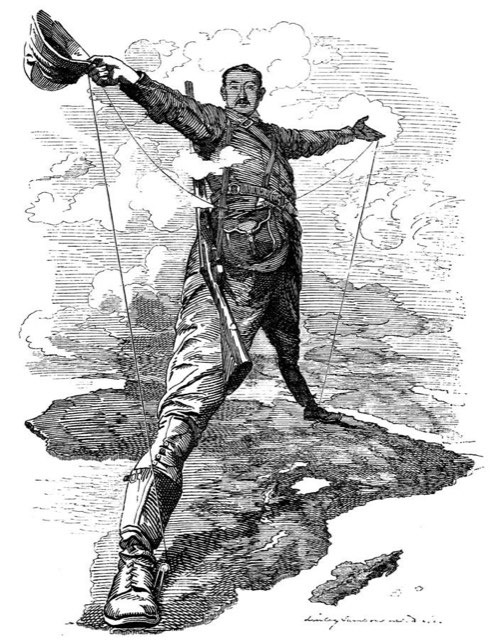
The 19th century is often referred to as the Age of Progress because of the many benefits derived from industrial production. However, it is necessary to think more critically about the notion of progress as being intimately tied to imperialism and contemporary theories of civilization. During the 19th and early 20th centuries, industrializing nations competed for natural resources and labor across the globe. Sentiments of nationalism, social Darwinism, and racial science drove the competition. Technology was at the center of this civilizing mission, both as the means through which imperial nations pacified subject populations and how they measured civilization itself. They ranked civilizations according to relative levels of science and technology on an imagined hierarchy of development, in which white Europeans usually appeared on top. This unit will complicate your understanding of progress and civilization in Western history. It will illustrate how cutting-edge industrial technologies like telegraphy, steamboats, trains, and machine guns served imperial interests. We will focus especially on Britain in India and Africa, and American expansion westward and into the Pacific.

Anthropological Theories
- Social EvolutionismUniversity of Alabama’s Department of Anthropology · Heather Long and Kelly Chakov · read · 1 h · archived copy
The “White Man’s Burden”
- The White Man’s BurdenAnnenberg Foundation’s America’s History in the Making · do · 30 min · archived copy
Industrialization and Imperialism
- Industrial Rivalries and the Partition of the World, 1870-1914History World International · Stuart B. Schwartz · read · 2 h · archived copy
The Tools of Empire
- Railways and TelegraphyThe British Empire · Stephen Luscombe · read · 1 h · archived copy
- Transport Organization and Colonial OrderThe Transport Research Institute · Margaret Grieco · read · 1 h · archived copy
John Gast’s Painting, American Progress (1872)
- John Gast – American Progress (1872)California State University at Bakersfield · Gonzalo Santos · do · 15 min
The Transcontinental Railroad
- The Impact of the Transcontinental Railroad and Native AmericansPBS’s American Experience · read · 1 h · archived copy
The Panama Canal
- History of Panama Canal Construction, 1934YouTube · nnickoo · watch · 15 min
- Interview: Walter LaFeber, HistorianPBS · read · 1 h
Gunboat Diplomacy in Japan
- Black Ships and SamuraiMIT · John W. Dower · read · 1 h · archived copy
Chapter VII
Second Industrial Revolution
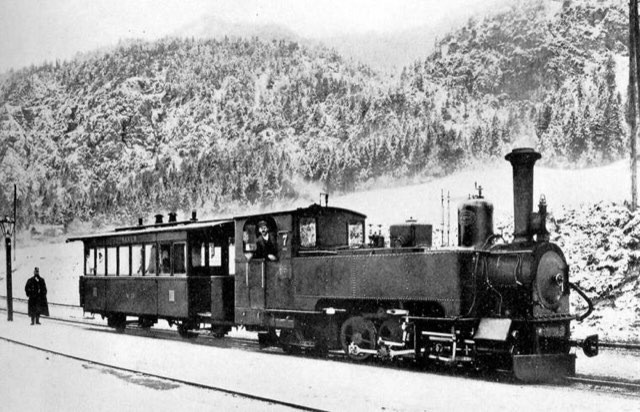
The first Industrial Revolution in Britain centered on cotton, steam, and iron production (Unit 5). Nations that were turning to industrialization in the 19th century, such as Germany, the United States, Japan, and Russia, followed the British example. However, by the turn of the 20th century, a new model of technological development eventually rendered the British model obsolete. This new model was the so-called Second Industrial Revolution, which was driven by steel, petroleum, electricity, and chemical production. In this unit, you will learn about the defining features of the Second Industrial Revolution, the industrial application of scientific research, the first socio-technical systems – a handy way to refer to networks of humans, machines, and institutions such as the telephone or car industries – and the electrification of the household, which was a revolution that particularly affected women. Rather than isolating one or another invention from this period – for example, the light bulb or internal combustion engine – you will look at the rich social and cultural contexts of industry innovations.

Defining the Second Industrial Revolution
- The Second Industrial Revolution, 1870-1914Northwestern University · Joel Mokyr · read · 2 h
- Tables Illustrating the Spread of IndustrializationFordham University’s Internet Modern History Sourcebook · read · 30 min
Petroleum
- Oil IndustryHistory.com · read · 2 h
The Case of Germany
- The German Economy in the Second Half of the Nineteenth CenturyOhio State University’s Open Access Initiative · Wilfried Feldenkirchen · read · 2 h · archived copy
Applied Science
- Mysterious Heat; Purdue University: Jules Janick’s The Origins of Horticulture Technology and Science; and IEEE Global History Network’s Early Application of ElectricityUniversity of Houston · John H. Lienhard · read · 1 h
Defining Socio-Technical Systems
- Why a Socio-Technical System?ComputingCases.org · read · 30 min
The Telephone System
- The Evolution of the Telephone SystemFrederique Krupa · read · 45 min · archived copy
The Automotive System
- Theory and Practice in the Study of Technological SystemsVirginia Tech · William Shields’ · read · 4 h
Electrification of the Household
- Promises, Promises: The Allure of Household Appliances in the 1920sLoretta Lorence · read · 1 h
Scientific Management
- Frederick W. Taylor: The Principles of Scientific Management, 1911Fordham University’s Internet Modern History Sourcebook · Paul Halsall’s version of · read · 3 h
- Scientific Management in RetrospectThe Ohio State University’s Open Access Initiative · Daniel Nelson · read · no longer online
Chapter VIII
World War and Superpowers
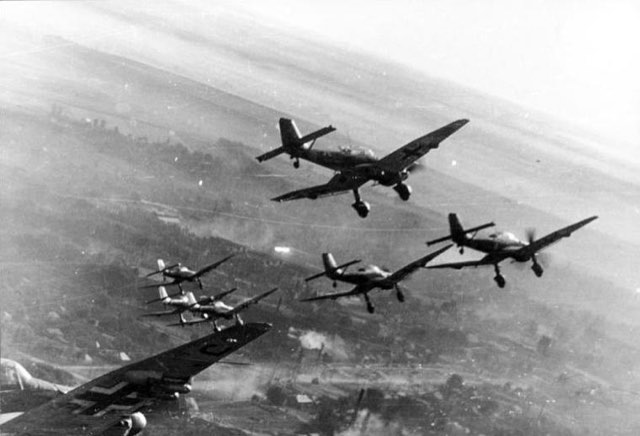
Since your introduction to the Scientific Revolution (Unit 5), you have witnessed a powerful synthesis of industrialization, nationalism, social Darwinism, and imperialism. In this unit, you will learn about the two world wars that marked the end of unbounded faith in these developments and the beginning of a more critical approach to technological progress. This unit presents World War I as a showcase of cutting-edge technologies and applied sciences of the period – metallurgical, chemical, and medical. It explains the profound cultural consequences of this war and how disenchantment in technological progress fueled anti-Western sentiment in Russia, which contributed to the Soviet takeover. In addition, you will learn about the dangerous competition between the United States and the Soviet Union that followed World War

Lesson Lost: Monitor vs. Virginia
- Action between USS Monitor and CSS Virginia, 9 March 1862U.S. Navy’s Naval History and Heritage Command · read · 30 min · archived copy
Industry, Technology, and War
- The Western Front and the Birth of Total WarBBC History · Dr. Stephen Badsey · read · 30 min
- Chemical Warfare and Medical Response during World War INational Center for Biotechnology Information · American Journal of Public Health · Gerald J. Fitzgerald · read · 2 h · no longer online
Heroism Dead: Shell Shock
- Shell Shock during World War OneBBC · Professor Joanna Bourke · read · 45 min
Soviet Industrialization
- Joseph Stalin: Industrialization of the Country, 1928Fordham University’s Internet Modern History Sourcebook · read · 30 min
- The Sharashka PhenomenonRussian History Blog · Asif Siddiqi · read · 1 h · archived copy
The Military-Industrial-University Complex
- Farewell Address, 1961President Dwight D. Eisenhower · read · 1 h
The Manhattan Project
- The Moment in Time: The Manhattan ProjectYouTube · University of California Television · watch · 1 h
- Albert Einstein’s Letters to Franklin Delano RooseveltE-World · Glenn Elert’s version of · read · 30 min
Aeronautics and the Space Race
- Aerospace Power and the Cold WarWings over Kansas/Chance Communications · Pamela Feltus’ · read · 45 min · archived copy
The Nuclear Stockpile
- Weapons of Mass Destruction: the U.S. ExperienceFederation of American Scientists · Lawrence Korb · read · 45 min · archived copy
The “Kitchen Debate” (Khrushchev/Nixon)
- The Kitchen Debate, Part IIYouTube · AmpexDataSystems’ · watch · 15 min
Chapter IX
Challenges and Reflections
As industrialization continues to spread throughout the Middle East and Asia, our terminology may shift to refer to the North/South hemispheric split rather than the East/West division. The most important technological developments today have global reach; consider computers and the Internet. The more tentative union of science and technology that emerged in the 19th century is now a tighter amalgam that some call technoscience. Technoscience refers to experimentation that requires massive technological infrastructure, such as scientific research conducted in space. Notwithstanding these advancements, criticism of technological progress has become more organized and professional, especially in the fields of biotech, nuclear power, energy, and environmental studies. This unit provides a snapshot of technology in the present day, paying particular attention to energy, medicine, and computers. Complex socio-technical systems (networks of humans, machines, and institutions) are quite obvious in these fields. These topics also underscore how certain technologies have become global matters today that raise ethical and philosophical questions concerning the environment, human and civil rights, and humanity in general. Science and Technology Studies (STS) offers new perspectives on technology, such as feminist approaches and Actor-Network Theory.
The Historical Context
- Environmental Change: The Great Acceleration, 1900-1950San Diego State University’s World History for Us All · read · 1 h · archived copy
Fossil Fuels and Greenhouse Gasses
- Let’s Transform Energy – with Natural GasTED Talks · T. Boone Pickens · watch · 30 min
Nuclear Energy
- Debate: Does the World Need Nuclear Energy?TED Talks · watch · 45 min
- Three Mile Island Accident and ChernobylWorld Nuclear Association · read · 3 h · archived copy
Medical Technology in Context
- Medical Technology Teaching PrimerColorado State University · Michael A. De Miranda · read · 3 h · archived copy
Biomedical Engineering
- Paul Root Wolpe: It’s Time to Question BioengineeringTED Talks · watch · 30 min
Particle Accelerators
- Brian Cox on CERN’s SupercolliderYouTube · TED Talks · watch · 30 min
Jet Propulsion Lab
- Charles Elachi on the Mars RoverTED Talks · watch · 45 min
Space Shuttle Disaster
- Challenger DisasterYouTube · CNN · watch · 15 min
- NASA’s “Report of the Presidential Committee on the Space Shuttle Challenger Accidentread · 2 h · archived copy
History of Computing
- The Birth of Modern ComputingThe Open University · Mike Richard · read · 30 min · archived copy
- Brief History of the InternetInternet Society · Leiner et al. · read · 2 h
Social Media and Politics
- Clay Shirky: How Social Media Can Make HistoryTED Talks · watch · 30 min
Cyber Threats and National Security
- Confronting the Cyber ThreatCouncil on Foreign Relations · Jonathan Masters’ · read · 1 h · archived copy
Cybercrime and Privacy
- Mikko Hypponen: Three Types of Online AttackTED Talks · watch
Feminist Technology Studies
- Feminist or Merely Critical? In Search of Gender Perspectives in InformaticsUniversity of Oslo · Technology and Democracy · Comparative Perspectives · Gender, Technology, and Politics in Transition · Tone Bratteteig and Guri Verne · read · 2 h · archived copy
Actor-Network Theory
- Using Actor Network Theory (ANT) Doing ResearchRitske Dankert · read · 1 h · archived copy
Technological Futurism
- Innovation Everywhere: How the Acceleration of ‘GNR’ (Genetics, Nanotechnology, Robotics) will Create a Flat and Equitable WorldMIT · Ray Kurzweil · watch · 45 min
About this course
This course is Saylor Academy's HIST365, History of Technology, one of the complete university courses the Saylor Foundation made free from 2008 and retired in 2015. Saylor licensed its course text under CC BY 3.0; the original is on GitHub. Here it is laid out as chapters, links that have died go to an archived copy from the Internet Archive where one exists, assessments that needed a Saylor login are left out, and people and works are linked to Kulturbase. The readings and lectures belong to their publishers and are linked, not copied. Pictures: Wikimedia Commons, credited under each picture.
All Saylor courses · Free culture courses · The Chautauqua Reading Course