Philosophy · Saylor PHIL102
Logic and Critical Thinking
This course provides an introduction to critical thinking, informal logic, and a small amount of formal logic. Its purpose is to provide you with the basic tools of analytical reasoning, which will give you a distinctive edge in a wide variety of careers and courses of study.
More about this course
While many university courses focus on the presentation of content knowledge, the emphasis here is on learning how to think effectively. Although the techniques and concepts covered here are classified as philosophical, they are essential to the practice of nearly every major discipline, from the physical sciences and medicine to politics, law, and the humanities. The course touches upon a wide range of reasoning skills, from verbal argument analysis to formal logic, visual and statistical reasoning, scientific methodology, and creative thinking. Mastering these skills will help you become a more perceptive reader and listener, a more persuasive writer and presenter, and a more effective researcher and scientist. The first unit introduces the terrain of critical thinking and covers the basics of meaning analysis, while the second unit provides a primer in analyzing arguments. All of the material in these first units will be built upon in subsequent units, which cover informal and formal logic, Venn diagrams, scientific reasoning, as well as strategic and creative thinking.
Upon successful completion of this course, students will be able to:
In order to take this course you must: √ have access to a computer; √ have continuous broadband Internet access; √ have the ability/permission to install plug-ins or software (e.g., Adobe Reader or Flash); √ have the ability to download and save files and documents to a computer; √ have the ability to open Microsoft files and documents (.doc, .ppt, .xls, etc.); √ be competent in the English language; and √ have read the Saylor Student Handbook.
Chapter I
Introduction and Meaning Analysis
Critical thinking is a broad classification for a diverse array of reasoning techniques. In general, critical thinking works by breaking arguments and claims down to their basic underlying structure, so we can see them clearly and determine whether they are rational. The idea is to help us do a better job of understanding and evaluating what we read, what we hear, and what we ourselves write and say.
Basic Overview of Critical Thinking
- Critical ThinkingUniversity of British Columbia’s Learning Commons · watch · 15 min
The Nature and Value of Critical Thinking
- Tutorials C01–C04University of Hong Kong’s Critical Thinking Web · Joe Lau and Jonathan Chan’s Thinking Skills · read · 30 min · no longer online
Review of Introduction to Critical Thinking
- PHIL102 Discussion ForumThe Saylor Foundation · do · 30 min · archived copy
The Elements of Meaning
- Introduction–Tutorial M05University of Hong Kong’s Critical Thinking Web · Joe Lau and Jonathan Chan’s Meaning Analysis: · read · 2 h · no longer online
- PHIL102 Discussion ForumThe Saylor Foundation · do · 30 min · archived copy
Necessary and Sufficient Conditions
- Tutorial M06University of Hong Kong’s Critical Thinking Web · Joe Lau and Jonathan Chan’s Meaning Analysis · read · 30 min · no longer online
Thinking Critically about Ordinary Language
- Tutorials M08–M10University of Hong Kong’s Critical Thinking Web · Joe Lau and Jonathan Chan’s Meaning Analysis · read · 2 h · no longer online
General Strategies for Assessing Sources
- Information Skills TutorialEmpire State College Online Library · read · 2 h · archived copy
Checklists for Assessing Sources
- Evaluating Information Sources: Basic Principles and Evaluating Web PagesDuke University Libraries · read · 2 h · archived copy
Assessing Internet Sources
- Evaluating Internet MaterialBoundless · read · 1 h · no longer online
Review of Assessing Sources
- PHIL102 Discussion ForumThe Saylor Foundation · do · 30 min · archived copy
Chapter II
Argument Analysis
Arguments are the fundamental components of all rational discourse. Nearly everything we read and write—scientific reports, newspaper columns, personal letters, and most of our verbal conversations as well—contains arguments. Picking them out from the rest of our (often messy) discourse can be difficult though. Once we have identified an argument, we still need to determine whether or not it is sound. Luckily, arguments obey a set of formal rules, which we can use to determine whether they are good or bad. In this unit, we will learn how to identify arguments, what makes an argument sound (as opposed to unsound or merely valid), the difference between deductive and inductive reasoning, and how to map arguments to reveal their structure.

What Arguments Are
- The Nature of ArgumentsiTunes U · University of Oxford · Professor Marianne Talbot’s Critical Reasoning for Beginners: · watch · 1 h
How to Tell an Argument from a Non-Argument
- Tutorials A01 and A02University of Hong Kong’s Critical Thinking Web · Joe Lau and Jonathan Chan’s Argument Analysis · read · 1 h · no longer online
Validity and Soundness
- Tutorials A03–A05University of Hong Kong’s Critical Thinking Web · Joe Lau and Jonathan Chan’s Argument Analysis: · read · 2 h · no longer online
- Introduction to Logic Quiz: Truth, Validity, and SoundnessLander University · Lee C. Archie · write · 30 min
More about Good Argument Form
- Tutorials A06–A08University of Hong Kong’s Critical Thinking Web · Joe Lau and Jonathan Chan’s Argument Analysis · read · 1 h · no longer online
- Different Types of ArgumentsiTunes U · University of Oxford · Marianne Talbot’s Critical Reasoning for Beginners: · watch · 1 h
Visualizing How Arguments Work
- Tutorial A09University of Hong Kong’s Critical Thinking Web · Joe Lau and Jonathan Chan’s Argument Analysis: · read · 1 h · no longer online
Analogical Arguments
- Tutorial A10University of Hong Kong’s Critical Thinking Web · Joe Lau and Jonathan Chan’s Argument Analysis · read · 1 h · no longer online
Valid Argument Patterns
- Tutorial A11University of Hong Kong’s Critical Thinking Web · Joe Lau and Jonathan Chan’s Argument Analysis: · read · 1 h · no longer online
Review of Argument Analysis
- PHIL102 Discussion ForumThe Saylor Foundation · do · 30 min · archived copy
Chapter III
Fallacies
Now that we have an understanding of the structure that good arguments need to have and can represent their structure visually, we might think it would be a simple matter to pick out the bad ones. However, identifying bad arguments can be very tricky in practice. Very often what at first appears to be ironclad reasoning turns out to contain one or more subtle errors. Fortunately, there are a large number of easily identifiable “fallacies”—mistakes of reasoning that we can learn to recognize by their structure or content. In this unit, we will learn about the nature of fallacies, look at a couple of different ways of classifying them, and spend some time dealing with the most common fallacies in detail.

Introduction to Fallacies
- Tutorial F01University of Hong Kong’s Critical Thinking Web · Joe Lau and Jonathan Chan’s Fallacies and Biases: · read · 30 min
Naming Fallacies
- Logical Fallacies HandlistCarson-Newman College · Dr. L. Kip Wheeler · read · 1 h · archived copy
- Tutorial F06University of Hong Kong’s Critical Thinking Web · Joe Lau and Jonathan Chan’s Fallacies and Biases: · read · 2 h · archived copy
A Basic Typology of Fallacies
- Tutorials F02–F05University of Hong Kong’s Critical Thinking Web · Joe Lau and Jonathan Chan’s Fallacies and Biases · read · 1 h · archived copy
Straw Man Fallacy
- Critical Thinking Part 3: The Man Who Was Made of StrawYouTube · TechNyou · watch · 15 min
Gambler’s Fallacy
- Critical Thinking Part 5: The Gambler’s FallacyYouTube · TechNyou · watch · 15 min
Begging the Question
- Begging the QuestionAlternapedia · read · 30 min · no longer online
Red Herring
- Red HerringAlternapedia · read · 30 min · no longer online
Ad Hominem (Against the Person)
- Ad HominemAlternapedia · * · read · 30 min · no longer online
Ad Ignorantium (Appeal to Ignorance)
- Argument from IgnoranceAlternapedia · read · 30 min · no longer online
Ad Populum (Appeal to People)
- Argumentum ad PopulumAlternapedia · * · read · 30 min · archived copy
Complex Question (Double-Barreled Question)
- Double-Barreled QuestionAlternapedia · read · 30 min · no longer online
Loaded Question
- Loaded QuestionAlternapedia · read · 30 min · no longer online
Non Sequitur (It Does Not Follow)
- Non SequiturAlternapedia · * · read · 30 min · no longer online
Review of Fallacies in Detail
- PHIL102 Discussion ForumThe Saylor Foundation · do · 30 min · archived copy
Cognitive Biases
- Tutorial F08University of Hong Kong’s Critical Thinking Web · Joe Lau and Jonathan Chan’s Fallacies and Biases: · read · 30 min
- Lecture 3: Cognitive Biases 1, Lecture 4: Cognitive Biases 2, and Lecture 5: Cognitive Biases 3YouTube · UC Berkeley · Robb Willer’s Sociology 150A · Social Psychology · Self and Society: · read · 4 h
Chapter IV
Basic Sentential Logic
This unit introduces a topic that many students find intimidating: formal logic. Although it sounds difficult and complicated, formal or “symbolic logic” is actually a fairly straightforward way of revealing the structure of reasoning. By translating arguments into symbols, we can more readily see what is right and what is wrong with them, and we can learn how to formulate better arguments.

What Logic Is (And What It Is Not)
- Tutorial L01University of Hong Kong’s Critical Thinking Web · Joe Lau and Jonathan Chan’s Basic Logic: · read · 30 min
Logical Statements, Connectives, and Relations
- Tutorial L02: Statements and Tutorial L03: Basic ConceptsUniversity of Hong Kong’s Critical Thinking Web · Professor Joe Lau’s and Professor Jonathan Chan · read · 1.5 h
Logic is Fun!
- Tutorial L05 and Tutorial L06University of Hong Kong’s Critical Thinking Web · Professors Joe Lau and Jonathan Chan’s Basic Logic: · read · 1 h
Review of Logics Basics
- Logical EquivalenceUniversity of Hong Kong’s Critical Thinking Web · Joe Lau and Jonathan Chan’s Critical Thinking Exercises: · write · 30 min
About Formal Logic Systems and How to Write Sentences in SL
- Tutorial SL01 and Tutorial SL02University of Hong Kong’s Critical Thinking Web · Joe Lau and Jonathan Chan’s Sentential Logic: · read · 1 h
Connectives and Truth Tables
- Tutorial SL03University of Hong Kong’s Critical Thinking Web · Joe Lau and Jonathan Chan’s Sentential Logic: · read · 2 h
How to Draw Truth-Tables for More Complicated Statements
- Tutorial SL04University of Hong Kong’s Critical Thinking Web · Joe Lau and Jonathan Chan’s Sentential Logic: · read · 1 h
Properties of Individual Well-Formed Formulas and Relations between Them
- Tutorial SL05University of Hong Kong’s Critical Thinking Web · Joe Lau and Jonathan Chan’s Sentential Logic: · read · 1 h
Understanding Truth-Tables
- Chapter 3, Section 2: Truth TablesButte College · Wu Wei-Ming’s iLogic: · read · 2 h · archived copy
How to Translate Ordinary Statements into Symbolic Formulae
- Tutorial SL06University of Hong Kong’s Critical Thinking Web · Joe Lau and Jonathan Chan’s Sentential Logic: · read · 1 h
Formalization Practice
- Chapter 3: Introduction and Chapter 3, Section 1: SymbolizationButte College · Wu Wei-Ming’s iLogic: · read · 3 h · archived copy
Two Methods for Determining the Validity of an Argument
- Tutorial SL07 and Tutorial SL08University of Hong Kong’s Critical Thinking Web · Joe Lau and Jonathan Chan’s Sentential Logic: · read · 2 h
Why Sentential Logic Is Not Enough
- Tutorial SL10University of Hong Kong’s Critical Thinking Web · Joe Lau and Jonathan Chan’s Sentential Logic: · read · 30 min
Review of Formal Logic
- Review of Formal LogicPurdue University · Charles A. Bouman · read · no longer online
Chapter V
Venn Diagrams
In addition to using predicate logic, the limitations of sentential logic can also be overcome by using Venn diagrams to illustrate statements and arguments. Statements that include general words like “some,” or “few,” as well as absolute words like “every,” “all,” and so on, lend themselves to being represented on paper as circles that may or may not overlap. Venn diagrams are especially helpful when dealing with the logical arguments called syllogisms. Syllogisms are a special type of three-step argument with two premises and a conclusion, which involve “quantifying” terms. In this unit we will learn the basic principles of Venn diagrams, how to use them to represent statements, and how to use them to evaluate arguments.

Venn Diagrams as Illustrations of Sets or Classes
- Introduction and Tutorial V01University of Hong Kong’s Critical Thinking Web · Joe Lau and Jonathan Chan’s Venn Diagrams: · read · 1 h
More Complicated Venn Diagrams
- Tutorial V03University of Hong Kong’s Critical Thinking Web · Joe Lau and Jonathan Chan’s Venn Diagrams: · read · 30 min
Illustrating Existence with Venn Diagrams
- Tutorial V04University of Hong Kong’s Critical Thinking Web · Joe Lau and Jonathan Chan’s Venn Diagrams: · read · 1 h · archived copy
Review of Introduction to Venn Diagrams
- Exercises V01.6University of Hong Kong’s Critical Thinking Web · Joe Lau and Jonathan Chan’s Venn Diagrams: · write · 30 min · no longer online
Using Venn Diagrams to Evaluate Syllogisms
- Tutorial V06University of Hong Kong’s Critical Thinking Web · Joe Lau and Jonathan Chan’s Venn Diagrams: · read · 30 min
Understanding the Logic of Venn Diagrams
- Chapter 2, Section 5: Venn DiagramsButte College · Wu Wei-Ming’s iLogic: · read · 1 h · archived copy
The Limitations of Venn Diagrams
- Tutorial V08University of Hong Kong’s Critical Thinking Web · Joe Lau and Jonathan Chan’s Venn Diagrams: · read · 30 min
Review of Venn Diagrams and Arguments
- Tutorial V07University of Hong Kong’s Critical Thinking Web · Joe Lau and Jonathan Chan’s Venn Diagrams: · write · 30 min
- PHIL102 Discussion ForumThe Saylor Foundation · do · 30 min · archived copy
Chapter VI
Scientific Reasoning
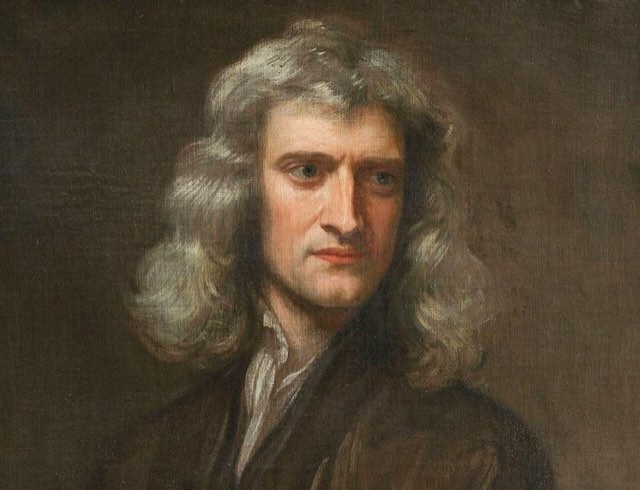
Unlike the syllogistic arguments we discussed in the last unit, which are a form of deductive argument, scientific reasoning is empirical. This means that it depends on observation and evidence, not logical principles. Although some principles of deductive reasoning do apply in science, such as the principle of contradiction, scientific arguments are almost always inductive. Instead of truth and falsity, science deals in confirmation and disconfirmation. Nonetheless, there are very specific rules about what constitutes good scientific reasoning, and scientists are trained to be critical of their own inferences as well as those of others in the scientific community. In this unit, we will investigate the standard method of scientific reasoning, the characteristics of good and bad scientific explanations, the principles of confirmation and disconfirmation, and the challenges of reasoning about one of the most important scientific concepts, namely causality.

The Method of Scientific Reasoning
- Tutorial S01 and Tutorial S02University of Hong Kong’s Critical Thinking Web · Joe Lau and Jonathan Chan’s Scientific Methodology: · read · 30 min · no longer online
The Scientific Method, Explained by a Scientist
- Episode 8, Part 1 – The Scientific Method and Episode 8, Part 2 – The Scientific MethodYouTube · Ask a Physicist · watch · 30 min
What Makes One Scientific Theory Better than Another
- Tutorial S03University of Hong Kong’s Critical Thinking Web · Joe Lau and Jonathan Chan’s Scientific Methodology: · read · 15 min · archived copy
Review of Basic Principles of Scientific Reasoning
- PHIL102 Discussion ForumThe Saylor Foundation · read · 30 min · archived copy
Causality Basics
- Tutorial S04University of Hong Kong’s Critical Thinking Web · Joe Lau and Jonathan Chan’s Scientific Methodology: · read · 30 min
Five Ways to Identify a Cause
- Tutorial S05University of Hong Kong’s Critical Thinking Web · Joe Lau and Jonathan Chan’s Scientific Methodology: · read · 1 h
Causality is More Than Just Cause and Effect
- Tutorial S06University of Hong Kong’s Critical Thinking Web · Joe Lau and Jonathan Chan’s Scientific Methodology: · read · 30 min · no longer online
The Difference between Causation and Correlation
- Correlation and CausationCarson-Newman College · Dr. L. Kip Wheeler · read · 30 min · archived copy
Ways of Representing Cause and Effect
- Tutorial S07University of Hong Kong’s Critical Thinking Web · Joe Lau and Jonathan Chan’s Scientific Methodology: · read · 30 min
Fallacies about Causation
- Tutorial S08University of Hong Kong’s Critical Thinking Web · Joe Lau and Jonathan Chan’s Scientific Methodology: · read · 30 min · archived copy
Review of Causation
- PHIL102 Discussion ForumThe Saylor Foundation · do · 30 min · archived copy
Chapter VII
Strategic Reasoning and Creativity
While the majority of this course has focused on the types of reasoning that are necessary to critique and evaluate existing knowledge, or to extend our knowledge in accordance with correct procedures and rules, there remains an enormous branch of our reasoning practice that runs “in the opposite direction,” as it were. Strategic reasoning, problem solving, and creative thinking all rely on an ineffable component of novelty supplied by the thinker. Despite the seemingly mystical nature of such activity, however, problem solving and creative thinking are best approached by following a set of tried and tested procedures, which prompt our cognitive faculties to produce new ideas and solutions by extending our existing knowledge. In this unit, we will investigate techniques for problem solving, representing complex problems visually, making decisions in risky and uncertain scenarios, and creative thinking in general.
Problem Solving Begins with Understanding the Problem
- Tutorial G01University of Hong Kong’s Critical Thinking Web · Joe Lau and Jonathan Chan’s Strategic Thinking: · read · 30 min
A Technique for Problem Solving
- Tutorial G02University of Hong Kong’s Critical Thinking Web · Joe Lau and Jonathan Chan’s Strategic Thinking: · read · 15 min
Working with Complex Problems
- Tutorial G03University of Hong Kong’s Critical Thinking Web · Joe Lau and Jonathan Chan’s Strategic Thinking: · read · 15 min
Visual Tools for Strategic Reasoning
- Tutorial G04University of Hong Kong’s Critical Thinking Web · Joe Lau and Jonathan Chan’s Strategic Thinking: · read · 30 min
- Decision Tree: Part 1 and Decision Tree: Part 2YouTube · Dr. Farrokh Alemi · watch
Basic Decision Theory
- Tutorial G05University of Hong Kong’s Critical Thinking Web · Joe Lau and Jonathan Chan’s Strategic Thinking: · read · 30 min · archived copy
- Decision Theory TutorialRichland Community College · Professor James Jones’ · read · archived copy
Three Principles of Creative Thinking
- Tutorial R01University of Hong Kong’s Critical Thinking Web · Joe Lau and Jonathan Chan’s Creativity: · read · 30 min · archived copy
A Four Step Cycle for Creative Thinking
- Tutorial R02University of Hong Kong’s Critical Thinking Web · Joe Lau and Jonathan Chan’s Creativity: · read · 15 min · archived copy
Heuristics for Creative Thinking and Some Quotations
- Tutorial R03 and Tutorial R04University of Hong Kong’s Critical Thinking Web · Joe Lau and Jonathan Chan’s Creativity: · read · 30 min · archived copy
Review of Creative Thinking
- PHIL102 Discussion ForumThe Saylor Foundation · do · 30 min · archived copy
About this course
This course is Saylor Academy's PHIL102, Logic and Critical Thinking, one of the complete university courses the Saylor Foundation made free from 2008 and retired in 2015. Saylor licensed its course text under CC BY 3.0; the original is on GitHub. Here it is laid out as chapters, links that have died go to an archived copy from the Internet Archive where one exists, assessments that needed a Saylor login are left out, and people and works are linked to Kulturbase. The readings and lectures belong to their publishers and are linked, not copied. Pictures: Wikimedia Commons, credited under each picture.
All Saylor courses · Free culture courses · The Chautauqua Reading Course