Philosophy · Saylor PHIL103
Moral and Political Philosophy
This course will introduce you to the basic concepts and methods of moral and political philosophy. Its primary focus is on the development of moral reasoning skills and the application of those skills to contemporary social and political issues.
More about this course
Although the course is organized around the central concept of justice, it uses this notion as a point of departure for discussing a wide range of philosophical topics and perspectives. Topics range from the value of human life, the moral standing of the free market, and the notion of fundamental human rights, to equality of opportunity, the legality of same-sex marriage, and the conditions for a moral community. In order to investigate these topics, this course makes extensive use of Professor Michael Sandel’s video lecture course on justice, delivered at Harvard University in 2009. In addition to these lectures, you will study a number of important moral and political philosophers, including Plato, Aristotle, John Locke, Thomas Hobbes, Jeremy Bentham, John Stuart Mill, Immanuel Kant, Jean-Paul Sartre, Friedrich Nietzsche, and John Rawls. Supplementary readings will include texts from contemporary philosophers, such as Robert Nozick, John Finnis, Alasdair MacIntyre, and others, as well as news articles and primary source texts regarding important legal decisions. By the end of the course, you will have gained a detailed understanding of the philosophical issues involved in many contemporary debates in the public sphere, as well as a refined sense of your own moral and political positions and intuitions.
Upon successful completion of this course, the student will be able to:
In order to take this course you must: √ Have access to a computer. √ Have continuous broadband Internet access. √ Have the ability/permission to install plug-ins or software (e.g., Adobe Reader or Flash). √ Have the ability to download and save files and documents to a computer. √ Have the ability to open Microsoft files and documents (.doc, .ppt, .xls, etc.). √ Be competent in the English language. √ Have read the Saylor Student Handbook.
Chapter I
Murder, Morality, and the Value of Human Life
Everyone – whether they realize it or not – has some beliefs about the differences between right and wrong, or good and bad. We use these beliefs to guide our behavior, judge the behavior of others, and decide on laws and punishments in our society. Sometimes, however, situations arise that force us to call our moral beliefs into question and to debate the truth about moral behavior with our peers. It is usually the really difficult cases, in which the right thing to do is difficult to decide, and cases which divide people against one another in their opinions, that bring the differences in our moral intuitions into focus and force us to clarify our moral principles.
In the Great Books lists Utilitarianism
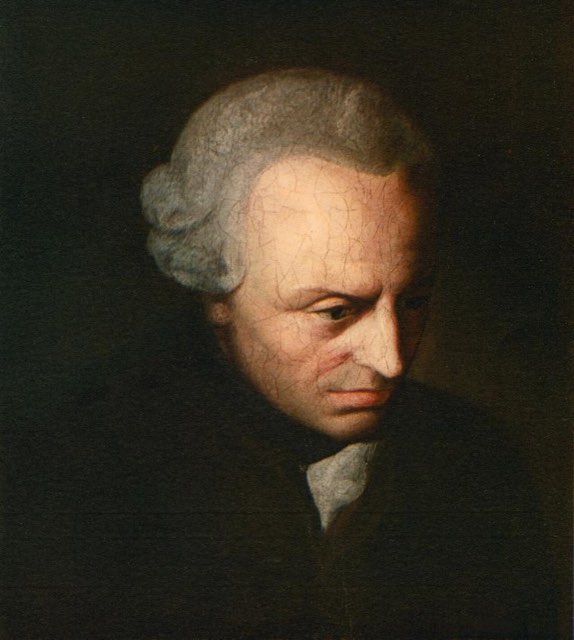

What Is Ethics/Moral Philosophy?
- What Is Ethics?Santa Clara University · The Markkula Center for Applied Ethics’ · read · 15 min · archived copy
The Differences between Metaethics, Normative Ethics, and Applied Ethics
- EthicsInternet Encyclopedia of Philosophy · James Fieser · read · 1.5 h
Investigating Our Moral Intuitions
- Justice: What’s the Right Thing to Do? Episode 1: The Moral Side of MurderYouTube · WGBH Educational Foundation and Harvard University · Professor Michael Sandel · watch · 45 min
From Moral Intuitions to Moral Principles and Back Again
- Tutorial U06: Reflective EquilibriumUniversity of Hong Kong’s Critical Thinking Web · Professor Jonathan Chan · read · 15 min
Consequentialist Ethics and Jeremy Bentham’s Utilitarianism
- Justice: What’s the Right Thing to Do? Episode 1: The Case for CannibalismWGBH Educational Foundation and Harvard University · Professor Michael Sandel · watch · 45 min
The Lifeboat Case: A Moral Dilemma Drawn from Life
- The Queen v. Dudley and StephensWGBH Educational Foundation and Harvard University · read · 1 h · archived copy
Overview of Jeremy Bentham’s Utilitarianism
- Jeremy Bentham (1748-1832)Stanford Encyclopedia of Philosophy · Professor William Sweet · read · 1 h
- Jeremy Bentham’s Principles of Morals and LegislationWGBH Educational Foundation and Harvard University · read · 1 h · archived copy
Criticisms of the Utilitarian Approach
- Justice: What’s the Right Thing to Do? Episode 2: Putting a Price Tag on LifeYouTube · WGBH Educational Foundation and Harvard University · Professor Michael Sandel · watch · 45 min
Utilitarian Calculus Run Amok? The Case of the Ford Pinto
- Pinto MadnessMother Jones · Mark Dowie · read · 30 min
A Revised Version of Utilitarianism
- Justice: What’s the Right Thing to Do? Episode 2: How to Measure PleasureYouTube · WGBH Educational Foundation and Harvard University · Professor Michael Sandel · watch · 45 min
A Revised Version of Utilitarianism
- The History of UtilitarianismInternet Encyclopedia of Philosophy · Professor Julia Driver · read · 30 min
Overview of Mill’s Utilitarianism
- John Stuart Mill (1806-1873)Internet Encyclopedia of Philosophy · Professor Colin Heydt · read · 1 h
Mill’s Utilitarianism and Individual Rights
- Chapters 1–3John Stuart Mill’s Utilitarianism · read · 2 h
Mill’s Utilitarianism: Proof and Justice
- Chapters 4 and 5John Stuart Mill’s Utilitarianism · read · 2 h
- PHIL103: Unit 1 Discussion QuestionsThe Saylor Foundation · do · 5 h · archived copy
Chapter II
Rights, the State, and the Free Market
So far, we have only considered theories of just action that base their criteria for justice on an action’s consequences. Utilitarianism, as we have seen, provides a convincing justification for many of our moral intuitions, but even its more refined versions, such as the theory advanced by John Stuart Mill, start to seem unsatisfying once we realize that they reduce moral decisions to detached, rational calculations. If we want a completely adequate theory of just action, we need to consider an alternative approach to justice and morality, one that promises to succeed in precisely the ways that utilitarianism fails. This approach is captured by the political and economic position of libertarianism, which understands morality and justice as rooted in the natural rights of individual human beings. Consequences matter, of course, but they are always secondary to considerations of natural rights.
In the Great Books lists The Republic · Crito · Two Treatises of Government
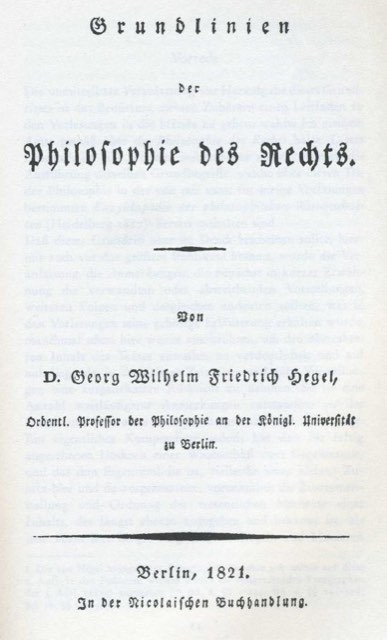

Individual and the State: Plato’s Crito Dialogue
- Lecture 3: Socratic Citizenship: Plato, CritoYale University · Dr. Stephen Smith’s Introduction to Political Philosophy · watch · 1 h
Understanding Plato’s Theory of Philosopher Kings
- Book VI and Book VIICliffsNotes · The Republic by Plato – Summary and Analysis · read · 30 min · archived copy
Plato as Totalitarian? The Criticisms of Karl Popper
- Plato’s Ethics and Politics in The Republic: 4. Politics, Part One: The Ideal ConstitutionStanford Encyclopedia of Philosophy · Dr. Eric Brown · read · 30 min
- Book VI and Book VIIPlato’s The Republic · read · 3 h
Libertarianism as an Alternative Approach to the Question of Rights
- Justice: What’s the Right Thing to Do? Episode 3: Free to ChooseYouTube · WGBH Educational Foundation and Harvard University · Professor Michael Sandel · watch · 1 h
Milton Friedman and Individual Freedom
- Milton FriedmanWikipedia · read · 45 min
- Philosophy of Economics: Section 3.2: Friedman and the Defense of ‘Unrealistic Assumptions’Stanford Encyclopedia of Philosophy · Professor Daniel M. Hausman · read · 30 min
Rights, Taxes, and the Redistribution of Wealth
- Justice: What’s the Right Thing to Do? Episode 3: Who Owns Me?WGBH Educational Foundation and Harvard University · Professor Michael Sandel · watch · 1 h · archived copy
From Economic to Philosophical Arguments for Libertarianism: Robert Nozick
- Robert Nozick (1938-2002)Internet Encyclopedia of Philosophy · Professor Edward Feser · read · 30 min
- Robert Nozick’s Anarchy, State, and Utopia (excerpts)Iowa State University · read · 30 min · archived copy
John Locke and Fundamental Individual Rights
- Justice: What’s the Right Thing to Do? Episode 4: This Land Is My LandYouTube · WGBH Educational Foundation and Harvard University · Professor Michael Sandel · read · 1 h
The “Right to Property” Challenged: Pharmaceutical Patents and the AIDS Crisis
- The Global Distribution of AIDS PharmaceuticalsSanta Clara University · The Markkula Center for Applied Ethics · Dr. David Perry · read · 1 h · archived copy
Overview of John Locke’s Political Philosophy
- Political Philosophy of John LockeInternet Encyclopedia of Philosophy · Dr. Alexander Moseley · read · 1 h
Locke on the State of Nature, Rights, Property, and Labor
- Chapters II and VJohn Locke’s Second Treatise of Government · read · 1 h
The Consent of the Governed
- Justice: What’s the Right Thing to Do? Episode 4: Consenting AdultsWGBH Educational Foundation and Harvard University · Professor Michael Sandel · watch · 1 h
Locke on the Origin of Society, the State, and Property Rights
- Chapters VII-XIJohn Locke’s Second Treatise of Government · read · 1 h
Locke on the Just Conditions of Government and When It May Be Disobeyed
- Chapters XVIII and XIXJohn Locke’s Second Treatise of Government · read · 1 h
- PHIL103: Unit 2 Discussion QuestionsThe Saylor Foundation · do · 5 h · archived copy
Chapter III
Morality, Markets, and Immanuel Kant
John Locke and the libertarian philosophers he inspired hold that justice and morality are a matter of respecting the fundamental rights that all individuals hold in common – life, liberty, and property (including the property of one’s self). Libertarians like Milton Friedman argue that these principles are incompatible with the government placing restrictions on the free market. But what happens when the market itself brings our rights into conflict with one another?
In the Great Books lists Groundwork of the Metaphysic of Morals
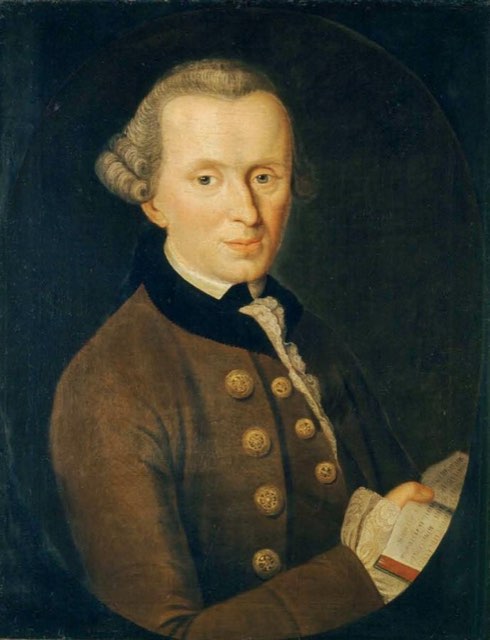

The Morality of the Market
- Justice: What’s the Right Thing to Do? Episode 5: Hired Guns?YouTube · WGBH Educational Foundation and Harvard University · Professor Michael Sandel · watch · 1 h
The Morality of Surrogate Motherhood: The Case of Baby M
- Justice: What’s the Right Thing to Do? Episode 5: Motherhood: For SaleYouTube · WGBH Educational Foundation and Harvard University · Professor Michael Sandel · watch · 1 h
- In the Matter of Baby ‘M’WGBH Educational Foundation and Harvard University · The Supreme Court of New Jersey’s Opinion · read · 1.5 h · archived copy
Overview of Feminist Perspectives on Reproductive Rights and the Family
- Feminist Perspectives on Reproduction and the FamilyStanford Encyclopedia of Philosophy · Debra Satz · read · 1 h
Human Organs as Commodities
- Kidneys for SaleSanta Clara University · The Markkula Center for Applied Ethics · Professor Claire Andre and Professor Manuel Velasquez · read · 1 h · archived copy
Grounding Moral Action in Rational Principles: Immanuel Kant
- Justice: What’s the Right Thing to Do? Episode 6: Mind Your MotiveYouTube · WGBH Educational Foundation and Harvard University · Professor Michael Sandel · watch · 1 h
Overview of Kant’s Moral Theory
- DeontologyYale University · Dr. Tamar Szabó Gendler’s Philosophy and the Science of Human Nature · watch · 1 h
Kant’s Motive of Duty
- Preface and First SectionImmanuel Kant’s Groundwork for the Metaphysics of Morals · read · 1 h
How a Kantian Decides on the Right Thing to
- Justice: What’s the Right Thing to Do? Episode 6: The Supreme Principle of MoralityYouTube · WGBH Educational Foundation and Harvard University · Professor Michael Sandel · watch · 1 h
Kant’s Metaphysics of Morals
- Second SectionImmanuel Kant’s Groundwork for the Metaphysics of Morals · read · 1 h
Kant’s Theory of Freedom
- Third SectionImmanuel Kant’s Groundwork for the Metaphysics of Morals · read · 1 h
A Kantian Analysis of Lying
- Justice: What’s the Right Thing to Do? Episode 7: A Lesson in LyingYouTube · WGBH Educational Foundation and Harvard University · Professor Michael Sandel · watch · 1 h
The Ethics of Lying
- LyingSanta Clara University · The Markkula Center for Applied Ethics · Tim C. Mazur · read · 1 h · archived copy
- PHIL103: Unit 3 Discussion QuestionsThe Saylor Foundation · do · 5 h · archived copy
Chapter IV
John Rawls’s Theory of Justice
In the 1970s, the late philosopher John Rawls put forward what is widely considered to be the most important contemporary theory of justice. Rawls’s theory is a clever update of the traditional social contract approach, but its starting point, rather than the natural rights of individuals, is the deceptively simple idea of fairness. Who would disagree with the proposal that a just society should be a fair one?
In the Great Books lists Leviathan


Social Contract Theory in Historical Focus: Thomas Hobbes
- The Sovereign State: Hobbes, LeviathanYale University · Dr. Stephen Smith’s Introduction to Political Philosophy · watch · 1 h
- Contract & Commonwealth: Thomas HobbesYale University · Dr. Tamar Szabó Gendler’s Philosophy and the Science of Human Nature · watch · 1 h
Social Contract Theory without the Contract: John Rawls
- Justice: What’s the Right Thing to Do? Episode 7: A Deal Is a DealYouTube · WGBH Educational Foundation and Harvard University · Professor Michael Sandel · watch · 1 h
Overview of Rawls’s Theory of Justice
- John Rawls (1921-2002)Internet Encyclopedia of Philosophy · Professor Henry S. Richardson · read · 1 h
Rawls’s Idea of the Original Position
- John Rawls’s A Theory of Justice (excerpts)Iowa State University · read · 1 h · archived copy
Rawls’s Difference Principle: Leveling the Playing Field
- Justice: What’s the Right Thing to Do? Episode 8: What’s a Fair Start?YouTube · WGBH Educational Foundation and Harvard University · Professor Michael Sandel · watch · 1 h
Rawls’s Two Principles of Justice
- John Rawls’s A Theory of Justice (excerpts)Iowa State University · read · 1 h · archived copy
The Question of Distributive Justice
- Justice: What’s the Right Thing to Do? Episode 8: What Do We Deserve?YouTube · WGBH Educational Foundation and Harvard University · Professor Michael Sandel · watch · 1 h
Different Approaches to Justice: Retributive and Restorative
- Restorative JusticeWikipedia · read · 30 min
- Toolkit on Diversion and Alternatives to DetentionUNICEF · read · 30 min · archived copy
Income Inequality in the US
- Wealth, Income, and PowerUniversity of California at Santa Cruz · Professor G. William Domhoff · read · 1 h · archived copy
Affirmative Action as Distributive Justice
- Justice: What’s the Right Thing to Do? Episode 9: Arguing Affirmative ActionYouTube · WGBH Educational Foundation and Harvard University · Professor Michael Sandel · watch · 1 h
Affirmative Action Opposed: The Case of Cheryl Hopwood
- United States Court of Appeals for the Fifth Circuit’s Ruling in Cheryl J. Hopwood v. State of TexasWGBH Educational Foundation and Harvard University · read · 1 h
- The Supreme Court of the United States’ Opinion in Grutter v. BollingerCornell University Law School · read · 1 h
Affirmative Action and Racial Profiling
- Proxy WarSlate Magazine · Michael Brus · read · 1 h
- PHIL103: Unit 4 Discussion QuestionsThe Saylor Foundation · do · 5 h · archived copy
Chapter V
Ethics and Politics of Virtue
Prior to any of the theories we have considered so far, most accounts of what it is for a person to be moral, or for a society to be just, centered on some conception of virtue. The most famous proponent of virtue as the basis for living a good human life and creating a good state is Aristotle. Although recently, a growing number of philosophers, as well as moral and political theorists, have been returning to the concept of virtue as an antidote to what they interpret as an over-emphasis on individual rights and freedoms and a neglect of community and tradition in political thought since the Enlightenment. But can we as a society come to agree about what living virtuously means?
In the Great Books lists Politics
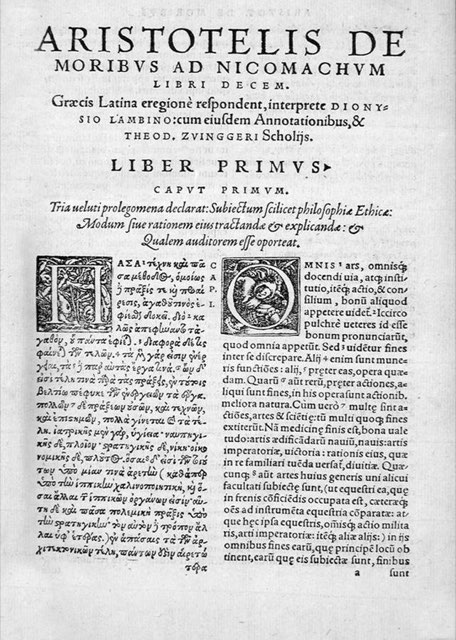

Aristotle as a Champion of Merit-Based Justice
- Justice: What’s the Right Thing to Do? Episode 9: What’s the Purpose?YouTube · WGBH Educational Foundation and Harvard University · Professor Michael Sandel · watch · 1 h
Overview of Aristotle’s Political Theory
- Aristotle: PoliticsInternet Encyclopedia of Philosophy · Professor Edward Clayton · read · 1 h
Aristotle: A Social Order Based on Virtue
Justice Is Respect for Virtue
- Justice: What’s the Right Thing to Do? Episode 10: The Good CitizenYouTube · WGBH Educational Foundation and Harvard University · Professor Michael Sandel · watch · 1 h
Virtue vs. Disability: The Case of Casey Martin
- The United States Supreme Court’s Opinion in PGA Tour, Inc. v. Casey MartinCornell University Law School · read · 1 h
Does Respect for Virtue Mean Sacrificing Freedom?
- Justice: What’s the Right Thing to Do? Episode 10: Freedom vs. FitYouTube · WGBH Educational Foundation and Harvard University · Professor Michael Sandel · watch · 1 h
Aristotle on Citizenship, Justice, and the State
Aristotle on Virtue, Pleasure, and Pain
- Book IIW.D. Ross’s Translation of Aristotle’s Nicomachean Ethics · read · 1 h
Constrained Freedom: Justice within the Bounds of a Community
- Justice: What’s the Right Thing to Do? Episode 11: The Claims of CommunityYouTube · WGBH Educational Foundation and Harvard University · Professor Michael Sandel · watch · 1 h
Alasdair MacIntyre and the Virtuous Community
- Political Philosophy of Alasdair MacIntyreInternet Encyclopedia of Philosophy · Professor Edward Clayton · read · 1 h
Patriotism: Virtue of Loyalty or Collective Selfishness?
- Justice: What’s the Right Thing to Do? Episode 11: Where Our Loyalty LiesYouTube · WGBH Educational Foundation and Harvard University · Professor Michael Sandel · read · 1 h
Ethical Issues surrounding Patriotism
- PatriotismThe Stanford Encyclopedia of Philosophy · Professor Igor Primoratz · read · 1 h
Justice, the Good, and the Problem of Agreement
- Justice: What’s the Right Thing to Do? Episode 12: Debating Same-Sex MarriageYouTube · WGBH Educational Foundation and Harvard University · Professor Michael Sandel · watch · 1 h
The Moral and Legal Status of Sodomy
- The Supreme Court of the United States’ Opinion in Lawrence v. TexasCornell University Law School · read · 1 h
A Solution to the Same-Sex Marriage Question: Ending the Institution of Marriage
- Abolish MarriageSlate Magazine · Michael Kinsley · read · 1 h
A Contemporary Natural Law Argument against Same-Sex Marriage
- Law, Morality, and ‘Sexual Orientation’MIT Anscombe Society · Professor John Finnis · read · 1 h · archived copy
The Right to Marriage
- The Massachusetts Supreme Judicial Court’s Ruling in Goodridge v. Department of Public HealthWGBH Educational Foundation and Harvard University · read · 1 h
Cultural Relativism
- The Challenge of Cultural RelativismUniversity of Central Arkansas · James Rachels’ · read · 1 h · archived copy
Friedrich Nietzsche
- Nietzsche’s Beyond Good and Evil: ‘Why Insist on the Truth?’Richmond Journal of Philosophy 4 (Summer 2003) · Clare Carlisle · read · 30 min
- Nietzsche on Power, Knowledge, and MoralityYale University · Dr. Iván Szelényi’s Foundations of Modern Social Theory · watch · 1 h
Jean-Paul Sartre
- The Ethics of Absolute FreedomSaint Anselm College · David Banach · read · 1 h · archived copyJean-Paul Sartre on Kulturbase
- Jean-Paul SartreStanford Encyclopedia of Philosophy · Dr. Thomas Flynn · read · 1 hJean-Paul Sartre on Kulturbase
The Relation between Morality and the Law
- Justice: What’s the Right Thing to Do? Episode 12: The Good LifeYouTube · WGBH Educational Foundation and Harvard University · Professor Michael Sandel · watch · 1 h
- PHIL103: Unit 5 Discussion QuestionsThe Saylor Foundation · do · 5 h · archived copy
About this course
This course is Saylor Academy's PHIL103, Moral and Political Philosophy, one of the complete university courses the Saylor Foundation made free from 2008 and retired in 2015. Saylor licensed its course text under CC BY 3.0; the original is on GitHub. Here it is laid out as chapters, links that have died go to an archived copy from the Internet Archive where one exists, assessments that needed a Saylor login are left out, and people and works are linked to Kulturbase. The readings and lectures belong to their publishers and are linked, not copied. Pictures: Wikimedia Commons, credited under each picture.
All Saylor courses · Free culture courses · The Chautauqua Reading Course