Philosophy · Saylor PHIL201
The Philosophy of Death
This class provides an in-depth introduction to the philosophical problems surrounding death. It takes its starting point in the fact that everyone, eventually, will die.
More about this course
This is one of the few facts that human beings can be absolutely sure about. Given this certainty, however, death still presents us with many difficult and pressing questions. What does it mean to die in the first place? Who or what is the “person” that dies? Is it merely a physical body, or is it also something like a soul, and, if so, does the existence of a soul indicate that there is some hope of immortality? Moreover, what should our attitude toward death be? Should we think of it as a good thing or a bad thing? And what effect should it have on the way we live our lives? At some point in our lives, we all grapple with these questions. This course uses the doctrines and arguments of a number of prominent philosophers concerning death as a means to investigate these and other questions. The course is organized around the lectures of Shelly Kagan, Professor of Philosophy at Yale University, who develops his own philosophy of death over the length of the course. Its major purpose, aside from familiarizing you with the writings of major philosophers on the subject of death, is to teach you how to think about death philosophically—to decide for yourself what you believe about death and to provide careful and convincing arguments for those beliefs. This course is divided into three long units. The first unit covers metaphysical questions about death, i.e., questions about what death is, what persons are, and the existence of the soul. This unit includes material about the positions of dualism and physicalism, various arguments for the existence of the soul, as well as a close reading of Plato’s Phaedo, one of the most influential arguments for immortality. The second unit deals with questions about how we ought to value death. We will address the views that personal identity is rooted in the soul, in the body, and in the “personality” (understood as a cluster of psychological properties). We will also consider the possibility that death has little or nothing to do with the death of the “person,” but can be accounted for in purely physical terms. We will conclude the unit with a look at Leo Tolstoy’s novella The Death of Ivan Ilyich. In the third unit, we cover topics such as the (alleged) badness of death, how the fact that we will die should influence the way we live, and whether it is ever appropriate to bring about our own death prematurely. We will consult with several important contemporary philosophers, as well as with the great Renaissance essayist Michel de Montaigne, the Enlightenment philosopher David Hume, and the late existentialist Walter Kaufmann.
Upon successful completion of this course, the student will be able to:
In order to take this course, you must:
Chapter I
The Metaphysics of Death
There are two ways we can begin to think about the nature of death. One way is to suppose that human beings are composed of a body and a soul. This is known as a dualist view. If we possess a soul, then we can imagine that while the body dies, the soul may continue to exist in some fashion. Of course, having a soul is no guarantee that this is true, but it does appear to be a necessary condition for surviving the death of the body. The other way we can think about death is to start out with the assumption that there is no such thing as the soul. This view, known as physicalism, asserts that human beings are entirely physical or that they depend so completely on their physical bodies that, once the body dies, there is nothing to sustain our consciousnesses (or our “selves”). In this unit, we will attempt to determine which of these views is the most plausible. We will consider a wide range of arguments for and against the existence of the soul, as well as arguments for and against the idea that the soul is immortal. In order to answer these questions, we will consider a number of related topics, such as whether we can really imagine existing without a body, the nature of near-death experiences, and whether computers can have free will. We will also become intimately acquainted with Plato’s arguments for the immorality of the soul in his dialogue, Phaedo.


Introducing the Questions
- Course Introduction Lecture YouTube:YouTube · Yale University · Professor Shelly Kagan · watch
What Is a Person? The Dualist View
- Dualism and MindInternet Encyclopedia of Philosophy · Professor Scott Calef · read
What is a Person? The Physicalist View
- PhysicalismThe Stanford Encyclopedia of Philosophy · Professor Daniel Stoljar · read
- The Nature of Persons: Dualism vs. PhysicalismYouTube · Yale University · Professor Shelly Kagan · watch
Many Versions of the Soul
- SoulNew Advent’s The Catholic Encyclopedia · Kevin Knight · read
The Soul as “The Best Explanation”
- Arguments for the Existence of the Soul, Part IYouTube · Yale University · Professor Shelly Kagan · watch
What is Free Will?
- Free WillUniversity of Tennessee, Martin’s Internet Encyclopedia of Philosophy · Kevin Timpe · read
The Soul as the Source of Free Will
- Arguments for the Existence of the Soul, Part IIYouTube · Yale University · Professor Shelly Kagan · watch
Near-Death Experiences as Evidence of the Soul?
- AfterlifeThe Stanford Encyclopedia of Philosophy · Professor William Hasker · read
How Should Near-Death Experiences be Explained?
- Arguments for the Existence of the Soul, Part III: Free Will and Near-Death ExperiencesYale University · Professor Shelly Kagan · watch
Descartes’ Argument for Dualism
- René Descartes (1596-1650): OverviewInternet Encyclopedia of Philosophy · Professor Justin Skirry · read
Evaluating Descartes’ Argument for Dualism and Introducing Plato
- Arguments for the Existence of the Soul, Part IV; Plato, Part IYouTube · Yale University · Professor Shelly Kagan · watch
The Soul and the Forms
- Plato, Part II: Arguments for the Immortality of the SoulYouTube · Yale University · Professor Shelly Kagan · watch
- Theory of FormsWikipedia · read
Some Background on Plato’s Idea of the Soul
- Ancient Theories of the SoulThe Stanford Encyclopedia of Philosophy · Professor Hendrik Lorenz’ · read
The Soul’s Simplicity
- Plato, Part III: Arguments for the Immortality of the Soul (cont.)Yale University · Professor Shelly Kagan · watch
Being Alive as an Essential Property of the Soul
- Plato, Part IV: Arguments for the Immortality of the Soul (cont.)Yale University · Professor Shelly Kagan · watch
Chapter II
Personal Identity and the Nature of Death
What is death, exactly? Many would say that death occurs when a person ceases to exist. If this is true, then in order to understand death we first need to understand what a person is. In this unit, we will consider three theories of personal identity—that is, three theories about what makes a person “the same person” from one day to the next. Specifically, we will address the views that personal identity is rooted in the soul, in the body, and in the “personality” (understood as a cluster of psychological properties). We will also consider the possibility that death has little or nothing to do with the death of the “person,” but can be accounted for in purely physical terms. We will conclude the unit with a look at Leo Tolstoy’s novella The Death of Ivan Ilyich. Tolstoy’s book raises a number of questions about death that are usually identified with “existentialist” schools of thought, e.g., How do people ordinarily think about death? Do people really believe they are going to die? Is it true that everybody dies alone? How do our attitudes toward the fact of death affect the meaningfulness of our lives?

Personal Identity and the Possibility of Immortality
- Professor Dave Beisecker’s Summary of John Perry’s A Dialogue on Personal Identity and Immortalityread · archived copy
Personal Identity: The Soul Theory
- Personal Identity Part I: Identity across Space and Time and the Soul TheoryYouTube · Yale University · Professor Shelly Kagan · watch
Overview of the Problem of Personal Identity
- Personal IdentityThe Stanford Encyclopedia of Philosophy · Professor Eric T. Olson · read
Personal Identity: The Body Theory and the Personality Theory
- Personal Identity, Part II: The Body Theory and the Personality TheoryYouTube · Yale University · Professor Shelly Kagan · watch
John Locke’s Theory of Personal Identity
- Of Identity and DiversityJohn Locke’s Essay Concerning Human Understanding · Book II, Chapter XXVII · read
Understanding Locke’s Personality Theory of Identity
- Supplement to John Locke: Immateriality of the Soul and Personal IdentityThe Stanford Encyclopedia of Philosophy · Professor William Uzgalis’ · read
Personal Identity: The Personality Theory
- Personal Identity, Part III: Objections to the Personality TheoryYale University · Professor Shelly Kagan · watch
Surviving Death: It Is All about Personality
- Personal Identity, Part IV: What Matters?Yale University · Professor Shelly Kagan · watch
What Is Death?
- Definition of DeathThe Stanford Encyclopedia of Philosophy · Professor David DeGrazia · read
What Matters about Death and What Death Is
- What matters (cont.); The Nature of Death, Part IYouTube · Yale University · Professor Shelly Kagan · watch
Living without Believing We Will Die: Tolsoy’s Ivan Ilyich
A Physicalist Definition of Death
- The Nature of Death (cont.); Believing You Will DieYouTube · Yale University · Professor Shelly Kagan · watch
Overview of Existentialism
- ExistentialismThe Stanford Encyclopedia of Philosophy · Professor Stephen Crowell · read
The Ordinary Attitude toward Death
- Dying Alone; The Badness of Death, Part IYouTube · Yale University · Professor Shelly Kagan · watch
Chapter III
The Value of Death
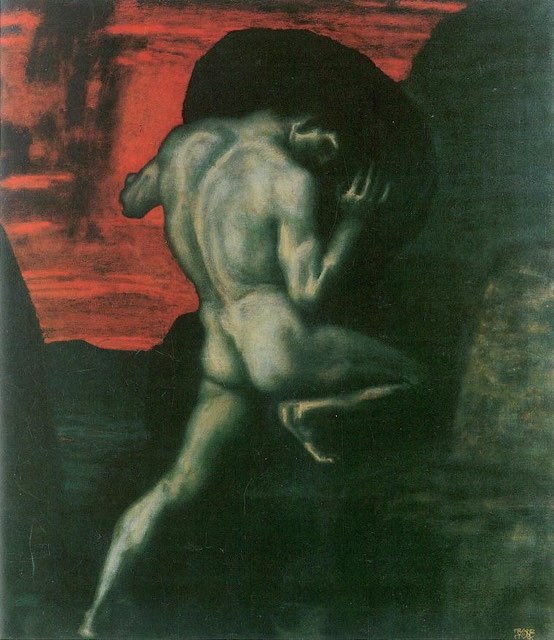
Whether or not we really understand what death is, there remains the question of what our attitude toward it should be. Most people tend to regard death as a bad thing, and their emotional attitude toward it is usually sadness, anxiety or fear. But do we really have good reasons for thinking that death, in and of itself, is bad? Perhaps it is only the aspects of life leading up to death that are dreadful. Would we be better off if we never died, but just went on living forever? In this unit, we will cover three closely related topics: the (alleged) badness of death, how the fact that we will die should influence the way we live, and whether it is ever appropriate to bring about our own death prematurely, by committing suicide. We will consult with several important contemporary philosophers, as well as with the great Renaissance essayist Michel de Montaigne, the Enlightenment philosopher David Hume, and the late existentialist Walter Kaufmann.

Death Is Bad Because Life Is Good
- DeathProfessor David Banach’s version of Professor Thomas Nagel · read
Death Cannot Be Bad Because Only Things in Life Can Be Bad
- Brueckner and Fischer on the Evil of DeathUniversity of Massachusetts, Amherst · Professor Fred Feldman · read · archived copy
The Badness of Death: The Deprivation Account
- The Badness of Death, Part II: The Deprivation AccountYouTube · Yale University · Professor Shelly Kagan · watch
Michel de Montaigne Against the Badness of Death
- That To Study Philosophy is to Learn to Die EssayMichel de Montaigne · read
The Badness of Death and the Badness of Eternal Life
- The Badness of Death, Part III; Immortality, Part IYouTube · Yale University · Professor Shelly Kagan · watch
Jonathan Swift on the Badness of Immorality
The Badness of Eternal Life Reconsidered
- Immortality, Part II; The Value of Life, Part IYouTube · Yale University · Professor Shelly Kagan · watch
Death as the Source of Value in Life
- Walter Kaufmann’s The Faith of a Heretic (excerpt)Taimar Khan’s Alifbébé · read · archived copy
The Value of Life as Dependent on its Shape and Contents
- The Value of Life, Part II; Other Bad Aspects of Death, Part IYouTube · Yale University · Professor Shelly Kagan · watch
More Reasons Why Death Is Bad and Thoughts on Whether It Should Change Our Behavior
- Other Bad Aspects of Death, Part IIYouTube · Yale University · Professor Shelly Kagan · watch
Some Existentialist Approaches to Death
- Death without Dread EssayTaimar Khan’s Alifbébé · Walter Kaufmann · read · archived copy
An Epicurean Argument Against Fearing Death
- Folly of the Fear of DeathLucretius’ On the Nature of Things · read
Is Fear an Appropriate Attitude Toward Death?
- Fear of DeathYouTube · Yale University · Professor Shelly Kagan · watch
Death as Motivation… But for What?
- How to Live Given the Certainty of DeathYouTube · Yale University · Professor Shelly Kagan · watch
David Hume on the Permissibility of Suicide
- On Suicide EssayDavid Hume · read
Is Suicide Rational?
- Suicide, Part I: The Rationality of SuicideYouTube · Yale University · Professor Shelly Kagan · watch
Overview of the Philosophical Problems Related to Suicide
- SuicideThe Stanford Encyclopedia of Philosophy · Professor Michael Cholbi · read
More About the Rationality of Suicide
- Suicide, Part II: Deciding under UncertaintyYale University · Professor Shelly Kagan · watch
The Morality of Voluntary Euthanasia
- Voluntary EuthanasiaThe Stanford Encyclopedia of Philosophy · Professor Robert Young · read
Is Suicide Moral?
- Suicide, Part III: The Morality of Suicide and Course ConclusionYale University · Professor Shelly Kagan · watch
About this course
This course is Saylor Academy's PHIL201, The Philosophy of Death, one of the complete university courses the Saylor Foundation made free from 2008 and retired in 2015. Saylor licensed its course text under CC BY 3.0; the original is on GitHub. Here it is laid out as chapters, links that have died go to an archived copy from the Internet Archive where one exists, assessments that needed a Saylor login are left out, and people and works are linked to Kulturbase. The readings and lectures belong to their publishers and are linked, not copied. Pictures: Wikimedia Commons, credited under each picture.
All Saylor courses · Free culture courses · The Chautauqua Reading Course