Philosophy · Saylor PHIL202
Philosophy of Science
This course is a survey of philosophical issues surrounding the concepts and practices of modern science. The course covers the major areas of contemporary philosophy of science, including scientific reasoning, scientific progress, interpretations of scientific knowledge, and the social organization of scientific practice.
More about this course
Its aim is not only to familiarize you with philosophical issues about science but also to equip you to critically interpret popular reports about contemporary scientific research. Unit 1 introduces philosophy of science as a discipline distinct from psychology of science, history of science, and sociology of science. Unit 2 examines the nature and objectivity of observational evidence, and Unit 3 examines methods of reasoning relevant to induction, confirmation, and explanation. Unit 4 examines accounts of theory change and scientific progress, and Unit 5 addresses the interpretation of scientific knowledge. Finally, Unit 6 explores various topics concerning science in a social context. Throughout this course, you will become acquainted with the views of a number of influential philosophers of science, including David Hume, Pierre Duhem, Carl Hempel, Karl Popper, Thomas Kuhn, Imre Lakatos, Bas van Fraassen, Philip Kitcher, and Helen Longino. You will read some selections from scientific research too, by way of news articles and case studies, in order to connect philosophical views about science to actual scientific practice. You should approach the content of this course with an attitude that is neither hostile toward nor naïve about science, but is instead critically engaged in trying to understand science as a human activity.
Upon successful completion of this course, you will be able to:
In order to take this course, you must:
Chapter I
What Is Philosophy of Science?
“Philosophy of science is about as useful to scientists as ornithology is to birds.” [1][](file:///D:/Documents/Saylor/Google%20Drive/Course%20Development/Philosophy/PHIL202/PHIL202-FLC-FINAL-LINKS-FINAL.doc#_ftn1)
Scientists on Science
- Feynman on Scientific MethodYouTube · watch · 1 h
- A New Way to Explain ExplanationTED Talks · David Deutsch · watch · 1 h
Is Philosophy Relevant to Science?
- Newton’s Flaming Laser SwordPhilosophy Now · Mike Adler · read · 1 h
- A Little Philosophy is a Dangerous ThingNPR · Alva Noë · read · 1 h
What Is Philosophy of Science?
- Lecture 1 – IntroductionIowa State University · Lyle Zynda · read · 1 h · archived copy
- Assessment 1The Saylor Foundation · write · 2 h
Chapter II
Observation, Theory-Ladenness, and Objectivity
“[U]nless we make default assumptions, the world would simply make no sense. It would be as useless to perceive how things ‘actually look’ as it would be to watch the random dots on untuned television screens. What really matters is being able to see what things look like.” [1][](file:///D:/Documents/Saylor/Google%20Drive/Course%20Development/Philosophy/PHIL202/PHIL202-FLC-FINAL-LINKS-FINAL.doc#_ftn1)


The Nature of Observation
- What Do Observation Reports Describe?Stanford Encyclopedia of Philosophy · Jim Bogen · read · 1 h
The Philosophical Case for Theory-Ladenness
- Chapter 1: ObservationNorwood Russell Hanson’s Patterns of Discovery · read · 2 h · no longer online
- The Theory-Ladenness of ObservationLoyola University New Orleans · Henry Folse · read · 1 h · archived copy
Psychological Evidence for Theory-Ladenness
- The Theory-Ladenness of Observation and the Theory-Ladenness of the Rest of the Scientific ProcessUniversity of Illinois at Chicago · William Brewer and Bruce Lambert · read · 1 h · no longer online
The Ideal of Objectivity and the Threat of Theory-Ladenness
- Objectivity Under AttackIsrael Scheffler · read · 1 h · archived copy
The Compatibility of Theory-Laden Observation and Objectivity
- Facts Are Paradigm-LadenDigital Text International · Eugene Lashchyk · read · 1 h
Review of Observation, Theory-Ladenness, and Objectivity
- Assessment 2The Saylor Foundation · write · 1 h
- When Theory FailsWayne State University · M. Nissani and D.M. Hoefler-Nissani · read · 1 h · archived copy
Chapter III
Scientific Reasoning
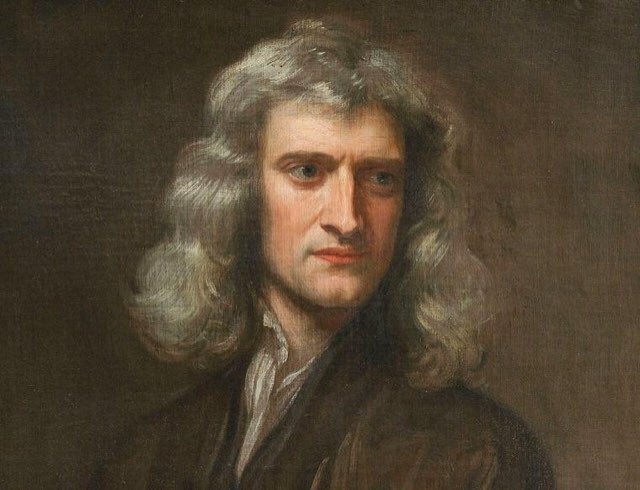
“When playing Russian roulette, the fact that the first shot got off safely is little comfort for the next.” [1]

Enumerative Induction
- Section 1 – Enumerative InductionJohn Norton’s A Survey of Inductive Generalization · read · 1 h
Mill’s Methods
- Section 3 – Inferring to Causes: Bacon’s Tables and Mill’s Methods; and Critical Thinking Web: Mill’s MethodsJohn Norton’s A Survey of Inductive Generalization · read · 1 h
Colligation
- The Whewell-Mill Debate in a NutshellUniversity of Wisconsin-Madison · Malcolm R. Forster and Ann Wolfe · read · 1 h
- Of Certain Characteristics of Scientific InductionUniversity of Pittsburgh Digital Research Library · William Whewell · read · 1 h
The Problem of Induction
- Section 4 – Sceptical Doubts about the Operations of the Understanding; and Gideon Rosen’s The Problem of InductionEarly Modern Texts · David Hume’s An Enquiry Concerning Human Understanding · read · 1 h
Review of Induction
- Assessment 3The Saylor Foundation · read · 2 h
Falsificationism
- Comments on Popperian FalsificationismLoyola University New Orleans · Henry Folse · read · 1 h · archived copy
- Karl PopperThe Stanford Encyclopedia of Philosophy · read · 1 h
The Duhem Problem / The Quine-Duhem Thesis
- Duhemian Problems of Falsification; and Loyola University New Orleans: Henry Folse’s HolismError Statistics Philosophy Blog · Deborah Mayo · read · 1 h · archived copy
Bayesianism
- An Introduction to Bayes’ Theorem and the University of Hong Kong’s Critical Thinking Web: Bayesian ConfirmationTrinity University · Curtis Brown · read · 1 h · archived copy
Error Statistics
- Models of Error and the Limits of Experimental Testing; and Cosma Shalizi’s We Have Ways of Making You Talk, or, Long Live Peircism-Popperism-Neyman-Pearson Thought!University of Pittsburgh Digital Research Library · Deborah Mayo · read · 2 h
Bootstrapping
- Section 7 – Glymour’s BootstrapJohn Norton’s A Survey of Inductive Generalization · read · 1 h
The Raven’s Paradox
- Paradoxes of ConfirmationUniversity of Notre Dame OpenCourseWare · read · 30 min · archived copy
- Raven ParadoxThe Encyclopedia of Science · David Darling · read · 15 min
- Hempel’s Ravens ParadoxMath Academy Online · read · 15 min · archived copy
Review of Confirmation
- Assessment 4The Saylor Foundation · read · 2 h
Deductive-Nomological Account
- Studies in the Logic of ExplanationCalifornia Polytechnic State University · Carl G. Hempel · read · 1.5 h · archived copy
- Lecture 2 – The Inferential View of Scientific ExplanationIowa State University · Lyle Zynda · read · 30 min · archived copy
- The Logical Structure of Scientific Explanation and Prediction: Planetary Orbits in a Sun’s Gravitational FieldOhio State University · Neil Tennant · read · 1 h · archived copy
Causal Account
- Lecture 3 – The Causal Theory of Explanation, Part I; Lecture 4 – The Causal Theory of Explanation, Part II; Lecture 5 – The Causal Theory of Explanation, Part III; and Lecture 6 – Problems with the Causal Theory of ExplanationIowa State University · Lyle Zynda · read · 2 h · archived copy
- CausalityThe Information Philosopher · read
Unification Account
- A Unificationist Account of ExplanationStanford Encyclopedia of Philosophy · James Woodward · read · 1 h
Pragmatic Account
- Lecture 7 – Van Fraassen’s Pragmatic View of ExplanationIowa State University · Lyle Zynda · read · 30 min · archived copy
Mechanistic Account
- Thinking about Mechanisms (Part 1): An Introduction to Mechanisms; Thinking about Mechanisms (Part 2): The Depolarisation Mechanism; and Thinking about Mechanisms (Part 3): Hierarchies, Schemata, and IntelligibilityPhilosophical Disquisitions Blog · John Danaher · read · 1 h
Review of Explanation
- Assessment 5The Saylor Foundation · write · 2 h
- Do Bubbles in Guinness Go Down?University of Edinburgh School of Chemistry · Andy Alexander and Dick Zare · read · archived copy
Chapter IV
Theory Change and Scientific Progress
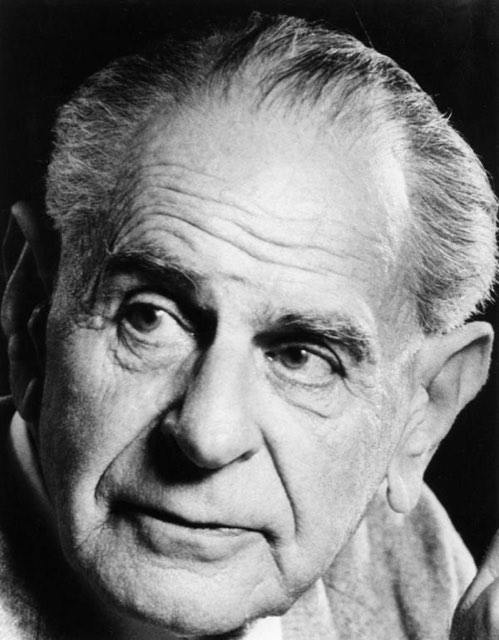
“In general we look for a new law by the following process. First we guess it. Then we compute the consequences of the guess to see what would be implied if this law that we guessed is right. Then we compare the result of the computation to nature, with experiment or experience, compare it directly with observation, to see if it works. If it disagrees with experiment it is wrong. In that simple statement is the key to science.” [1] *Feynman’s remark reflects the classical view of theory change, according to which science progresses through a steady stream of conjecture and refutation. This is a view popularized by Karl Popper, and it continues to influence popular conceptions of the scientific method. However, the view conflicts with another popular view, first developed by Thomas Kuhn, according to which science changes in discontinuous leaps and bounds, with humdrum periods of normal science punctuated by radical paradigm changes. Popper’s and Kuhn’s views represent two of the more popular views of scientific progress. But more nuanced accounts, which aim to better attend to the actualities of scientific inquiry, suggest that these popular views are oversimplified.

The Classical View: Conjectures and Refutations
- A Realist View of Logic, Physics, and HistoryMarxists Internet Archive · Karl Popper · read · 2 h
Paradigms and Revolutions
- The Nature and Necessity of Scientific Revolutions; The Richmond Journal of Philosophy: Alexander Bird’s What Is in a Paradigm?; and Curtis Brown’s Some Notes on Thomas Kuhn’s Structure of Scientific RevolutionsMarxists Internet Archive · Thomas Kuhn · read · 3 h
Research Programs
- The Methodology of Scientific Research; University of Wisconsin: Malcolm R. Forster’s Lakatos’s Methodology of Scientific Research Programs; and Loyola University New Orleans: Henry Folse’s Lakatos’s Methodology of Scientific Research ProgrammesTufts University · Richard Harter · read · 2 h · archived copy
Research Traditions
- Problematic Progress: A Review of Laudan’s Progress and Its Problems and Science and ValuesUnited States National Library of Medicine · Journal of the Experimental Analysis of Behavior · Bruce Batts and Lawrence L. Crawford · read · 1 h · no longer online
- Problematic Progress: A Review of Laudan’s Progress and Its Problems and Science and ValuesUnited States National Library of Medicine · Journal of the Experimental Analysis of Behavior · Bruce Batts and Lawrence L. Crawford · read · 1 h · no longer online
- Laudan’s Reticulated Model of Scientific Rationality; and Iowa State University: Lyle Zynda’s Lecture 14 - Laudan on the Hierarchical Model of JustificationLoyola University New Orleans · Henry Folse · read · 30 min · archived copy
Review of Theory Change and Scientific Progress
- A Sense of Crisis: Physics in the Fin-de-siecle EraCornell University Library · Helge Kragh · read · 1 h
- Assessment 6The Saylor Foundation · write · 2 h
Chapter V
Interpretations of Scientific Knowledge
“Physics is like sex: sure, it may give some practical results, but that’s not why we do it.” [1] *Science seems to be our best guide to determining the way the world is. But does the real world actually contain atoms or genes, for example, or is a literal interpretation of our scientific theories unwarranted? Instrumentalism about science is the view that science aims only to develop effective instruments for prediction and control of nature. Scientific realism, in contrast, is the view that science aims to discover the truth about the world and that we have good reason to believe that our current theories are at least approximately true. If realism is correct, a literal interpretation of our best available theories is warranted. However, the underdetermination of theory by evidence, and science’s historical track record of failure, suggest that realism is overly optimistic. Alternative interpretations of scientific knowledge diverge on the extent to which we ought to believe that the world is the way our scientific theories represent it as being.
What Scientific Realism Is
- What Is Scientific Realism?; and University of Michigan-Dearborn: Daniel Little’s What Is Scientific Realism?Stanford Encyclopedia of Philosophy · Anjan Chakravartty · read · 1 h
The “Miracle” Argument
- The ‘Miracle Argument’ for Scientific Realism; and Stanford Encyclopedia of Philosophy: Anjan Chakravartty’s The Miracle ArgumentThe Rutherford Journal · Alan Musgrave · read · 1 h
Corroboration
- How was Avogadro’s Number Determined?; and Stanford Encyclopedia of Philosophy: Anjan Chakravartty’s CorroborationScientific American · George Bodner · read · 1 h
The Underdetermination Problem
- Underdetermination; and Stanford Encyclopedia of Philosophy: Anjan Chakravartty’s The Underdetermination of Theory by DataThe Galilean Library · Paul Newall · read · 1 h · archived copy
The Pessimistic Induction
- The Argument for Realism from the Success of Science and Laudan’s Criticism of It; and Stanford Encyclopedia of Philosophy: Anjan Chakravartty’s The Pessimistic InductionLoyola University New Orleans · Henry Folse · read · 1 h · archived copy
Stubborn Realism
- On Scientific RealismThe Richmond Journal of Philosophy · Pierre Cruse · read · 30 min
Entity Realism
- Lecture 19 – Entity Realism (Hacking & Cartwright)Iowa State University · Lyle Zynda · read · 1 h · archived copy
Structural Realism
- Structural RealismStanford Encyclopedia of Philosophy · James Ladyman · read · 1 h
Instrumentalism
- Introduction; Humanists of Utah: Eric Palmer’s Copernicus’ Astronomy and Scientific Argument in the Renaissance; and Iqbal Review: Ibrahim Kalin’s Scientific and Religious Instrumentalism: Some Considerations on Science-Religion ControversyCentral Connecticut State University · Nicolas Copernicus’ On the Revolutions of the Heavenly Spheres:Osiander · read · 1 h
Constructive Empiricism
- Constructive Empiricism; and Tim Thornton’s Remarks on Constructive EmpiricismStanford Encyclopedia of Philosophy · Bradley Monton and Chad Mohler · read · 1 h
Social Constructivism
- Social Constructivism; Carnegie Mellon University: David Bloor’s The Strong Programme in the Sociology of Knowledge; and Virginia Tech Digital Library and Archives: Society for Philosophy and Technology: Adelaida Ambrogi Alvarez’s Sociological Studies and Philosophical Studies: Twenty Years of ControversyStanford Encyclopedia of Philosophy · Anjan Chakravartty · read · 2 h
Review of Interpretations of Scientific Knowledge
- Assessment 7The Saylor Foundation · write · 2 h
- Neutrino OscillationsAmerican Scientist · Kenji Kaneyuki and Kate Scholberg · read · 1 h · archived copy
Chapter VI
Social Dimensions of Scientific Practice
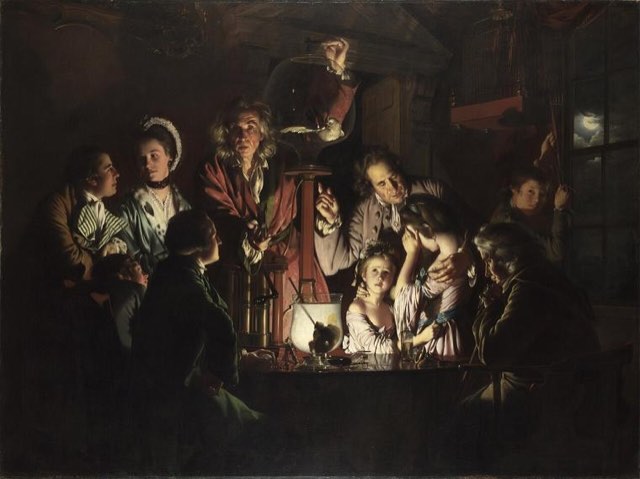
“Science is the belief in the ignorance of experts.” [1]

Intellectual and Social Organization of Science
- The Intellectual and Social Organization of the Sciences (Book Review)whatprogress Blog · read · 1 h · archived copy
Physics (Conceptually Integrated Bureaucracy)
- When Authorship Isn’t Enough: Lessons from CERN on the Implications of Formal and Informal Credit Attribution Mechanisms in Collaborative ResearchUniversity of Michigan · The Journal of Electronic Publishing · Jeremy Birnholtz · read · 1 h · archived copy
Bio-Medicine (Professional Adhocracy)
- Clinical Trials and the Reorganization of Medical Research in Post-Second World War BritainUnited States National Library of Medicine · Medical History · Helen Valier and Carsten Timmermann · read · 1 h · no longer online
Economics (Partitioned Bureaucracy)
- The Social and Intellectual Organization and Construction of EconomicsPost-Autistic Economics Review · Kyle Siler · read · 30 min
Sociology (Fragmented Adhocracy)
- The Intellectual and Social Organization of ASA 1990-1997Rutgers University · Phaedra Daipha · read · 1 h · archived copy
The Role of Gender in Science
- The Entanglement of Gender and Physics: Human Actors, Work Place Cultures, and Knowledge ProductionScience and Technology Studies · Helene Götschel · read · 1 h · no longer online
Feminist Equity Critiques
- Feminist Equity Critiques; and Who Will Do Science? Educating the Next Generation: Henry Etzkowitz, Carol Kemelgor, Michael Neuschatz, and Brian Uzzi’s Barriers to Women in Academic Science and EngineeringStanford Encyclopedia of Philosophy · Alison Wylie, Elizabeth Potter, and Wenda K. Bauchspies’ · read · 2 h
Social Implications of the Genderization of Science
- Fulfilling the Potential of Women in Academic Science and Engineering; and Seattle Woman Magazine: Ashley Griffin’s Re-Genderizing ScienceNational Academies Press · Committee on Maximizing the Potential of Women in Academic Science and Engineering, and Committee on Science, Engineering, and Public Policy · read · 2 h
The Rise of Scientific Authority
- Develop a theoretical explanation for the historical rise in the epistemic authority of modern scienceFreie Universität Berlin · Lars Frers’ · read · 15 min
Scientific Authority and Politics
- Authority, Responsibility, and DemocracyYouTube · Rotman Institute · Philip Kitcher · watch · 1 h
- Science’s Uncertain Authority in Policy; and Science: Philip Kitcher’s The Climate Change DebatesIssues in Science and Technology · John Marburger · read · 1 h
Underdetermination and Objectivity
- How Values Can Be Good for ScienceUniversity of Pittsburgh Digital Research Library · Science, Values, and Objectivity · Helen Longino · read · 1 h
Science and Public Policy
- Border Skirmishes between Science and Policy: Autonomy, Responsibility, and ValuesUniversity of Pittsburgh Digital Research Library · Science, Values, and Objectivity · Heather Douglas’ · read · 1 h
Science and Politics
- Between Science and Values; and Issues in Science and Technology: Daniel Yankelovich’s Winning Greater Influence for ScienceUniversity of Pittsburgh Digital Research Library · Science, Values, and Objectivity · Peter Weingart · read · 2 h
Review of Social Dimensions of Scientific Practice
- What Science Can DoIssues in Science and Technology · Barack Obama · read · 1 h
- Assessment 8The Saylor Foundation · write · 2 h
About this course
This course is Saylor Academy's PHIL202, Philosophy of Science, one of the complete university courses the Saylor Foundation made free from 2008 and retired in 2015. Saylor licensed its course text under CC BY 3.0; the original is on GitHub. Here it is laid out as chapters, links that have died go to an archived copy from the Internet Archive where one exists, assessments that needed a Saylor login are left out, and people and works are linked to Kulturbase. The readings and lectures belong to their publishers and are linked, not copied. Pictures: Wikimedia Commons, credited under each picture.
All Saylor courses · Free culture courses · The Chautauqua Reading Course