Philosophy · Saylor PHIL304
Existentialism
Existentialism is a philosophical and literary movement that first was popularized in France soon after World War II by figures such as Jean-Paul Sartre and Albert Camus. The roots of this movement can be traced back to the religious writings of Blaise Pascal in the seventeenth century and those of Søren Kierkegaard in the nineteenth century.
More about this course
The common thread that unites existentialists is a focus on existence, particularly the concrete existence of individual human beings. Unlike rationalist thinkers such as René Descartes and G.W. F. Hegel, existentialists reject the premise that human beings are primarily rational creatures who live in an ordered, well-designed universe. They also do not believe that the answers to life’s challenges can be solved through thoughtful consideration and reasoned deliberation. Instead, existentialists view human beings as creatures whose reason is subordinate to human passions and anxieties, and who exist in an irrational, absurd, and insignificant universe. In such a universe, existentialists argue, one struggles to become the best person one can be given one’s religious, historical, cultural, economic, and personal circumstances. Existentialists emphasize the human being’s place in a complex set of circumstances in order to highlight the uniqueness and individuality within each of us. They stress the role of the human body in all of our acts and decisions, arguing that the mind cannot exist without the body (in contrast to the majority of rationalists, who assert that the mind is separate from the body). In addition, existentialists consider whether absolute individual freedom is possible; and if so, what the consequences of such freedom might be for our sense of responsibility to ourselves, to others, and to God. They also consider the consequences of the existence or nonexistence of God, and what either possibility means for our sense of freedom and responsibility. More than anything, existentialists reflect on human beings’ anxiety over and dread of death, and consider the consequences to our individual lives of coming to terms with the inevitability of death. In this course, you will explore the major figures and works of the existentialist movement from a historical perspective. You will study, in sequence, the works of Blaise Pascal, Søren Kierkegaard, Fyodor Dostoevsky, Friedrich Nietzsche, Martin Heidegger, Jean-Paul Sartre, Simone de Beauvoir, and Albert Camus. Successful completion of the course means that you will be able to identify, analyze, and distinguish among the major themes and figures in the history of existentialism. Most importantly, you will be able to recognize the contributions existentialist thinkers have made to our contemporary understanding of human existence and humanity’s place in the cosmos.
Upon successful completion of this course, you will be able to:
In order to take this course you must: √ Have access to a computer.
Chapter I
Blaise Pascal
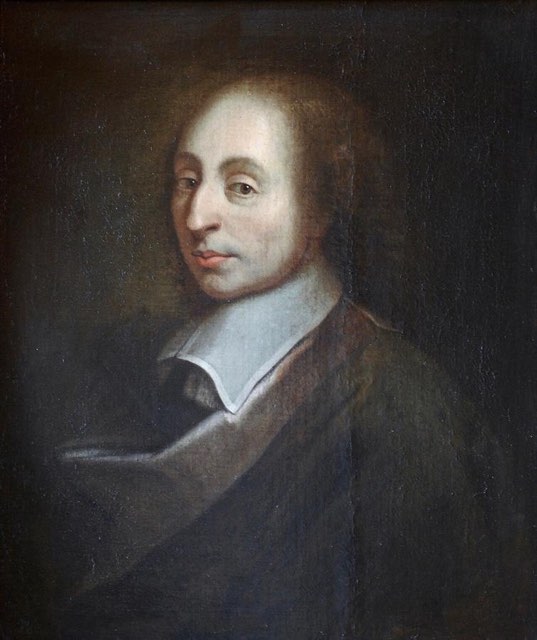
Since the term existentialism was not used to describe a philosophical movement until the twentieth century, it is anachronistic to call Blaise Pascal (1623–1662) an existentialist. However, his concern with the limitations of human existence (or finitude, in philosophical terms); the presence of constant change, uncertainty, and suffering in the progress of human life; and the irrationality of human beings’ actions has persuaded many philosophers that he is, at the very least, a precursor to the existentialist movement. Pascal was a mathematical genius whose father counted among his friends the French rationalist philosopher and “father” of modern philosophy, René Descartes. In 1654, after a severe bout with depression, Pascal had a religious experience. He entered a monastery and dedicated the rest of his life to defending the Christian faith against its critics. Pascal’s most famous work, written as a defense, or apology, of Christianity that included meditations on suffering, sin, and faith, was published posthumously as the Pensées (translated as “thoughts”). This unit will introduce you to Pascal and the Pensées and give you an overview of Pascal’s “proto-existentialism,” which provided a foundation for philosophical themes – including contingency (or the uncertainty of future events), anti-rationalism, and individual existence – with which many existentialists would grapple a few hundred years later.
In the Great Books lists Pensées

What Is Existentialism?
- ExistentialismStanford University, Center for the Study of Language and Information · The Stanford Encyclopedia of Philosophy · Dr. Steven Crowell · read · 1 h
As a Mathematician
- Blaise PascalStanford University, Center for the Study of Language and Information · The Stanford Encyclopedia of Philosophy · Dr. Desmond Clarke · read · 1 h
Pascal’s Idea of the Contingency of Human Life
- Ben Rogers on Pascal’s PenséesPhilosophy Bites · David Edmonds and Nigel Warburton · watch · 2 h · archived copy
The First Choice of the Wager: To Believe in God and Risk Heaven
- Bill Uzgalis’ version of Pascal’s PenséesOregon State University · read · 1 h · archived copy
Chapter II
Søren Kierkegaard
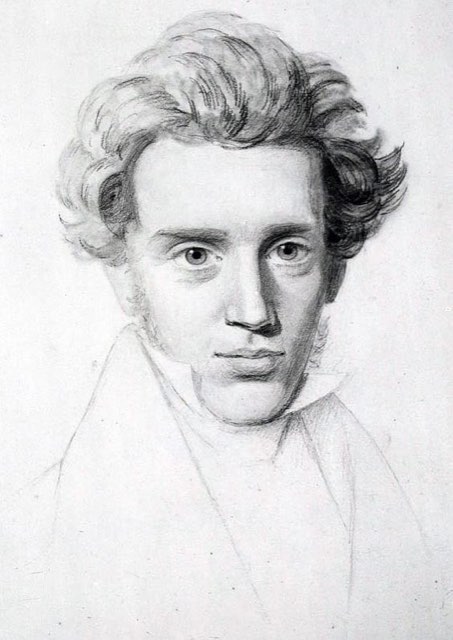
Søren Aabye Kierkegaard (1813–1855) was a Danish Christian philosopher, theologian, and social critic, widely considered a founding figure in existentialism. Convinced that the Christian faith, as it was generally practiced, had lost its way, Kierkegaard was a fierce critic of religious dogma. Kierkegaard believed that a human being’s relationship with God must be hard-won, a matter of devotion and suffering. According to Kierkegaard, a person becomes a committed, responsible human being by making difficult decisions and sacrifices. The force of Kierkegaard’s philosophy rests in the notion that human life is paradoxical and absurd and that to confront this absurdity is to become truly human (a theme that is taken up again by Albert Camus, as discussed in Unit 8 of this course). This unit will introduce you to Kierkegaard’s life and religious philosophy, as well as provide you with an overview of themes in Kierkegaard’s writings that serve as cornerstones for what would be called existentialism by later philosophers discussed in this course – particularly Jean-Paul Sartre and Simone de Beauvoir. These key existentialist themes include the notions of commitment and responsibility, absurdity, anxiety, and authenticity.
In the Great Books lists Fear and Trembling · Philosophical Fragments

Who Was Kierkegaard?
- Kierkegaard and the Crisis in ReligionInternet Archive · Dr. Walter Kaufmann · watch · 1 hSøren Kierkegaard on Kulturbase
The Concept of Hard Faith
- Søren Kierkegaard’s Fear and TremblingClaremont School of Theology · Religion-Online.org · read · 3 h · archived copySøren Kierkegaard on Kulturbase
Against Systems: Hegel and Descartes
- Episode 29: Kierkegaard on the SelfThe Partially Examined Life · Mark Linsenmayer et al. · watch · 2 hSøren Kierkegaard on Kulturbase
The Stages of Life’s Way
- Søren KierkegaardStanford University, Center for the Study of Language and Information · The Stanford Encyclopedia of Philosophy · Dr. William McDonald · read · 1 hSøren Kierkegaard on Kulturbase
The Crowd Is Untruth
- The Crowd Is ‘Untruth’PhilosophicalSociety.com’s version of Søren Kierkegaard · read · 30 min · archived copySøren Kierkegaard on Kulturbase
Chapter III
Fyodor Dostoevsky
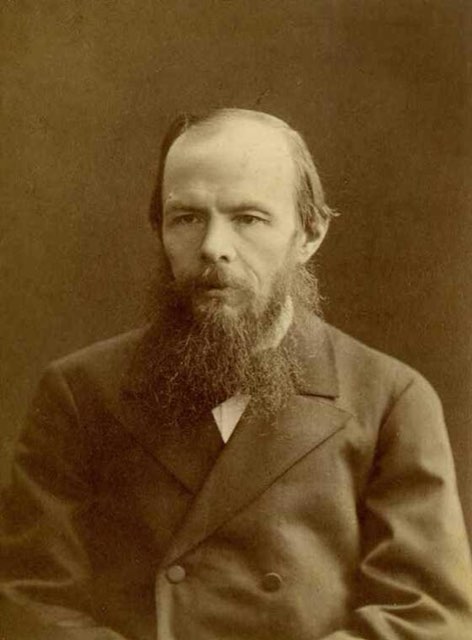
Fyodor Mikhailovich Dostoevsky (1821–1881) was a Russian novelist, journalist, and essayist whose literary works are foundational texts in the history of existentialism. Dostoevsky (sometimes spelled Dostoyevsky) explored the loneliness and desperation of the human condition. He viewed the human condition as constrained by social, political, and economic institutions and limited by God, whose existence, Dostoevsky argued, imposes limits on human existence. This unit will guide you in an exploration of the main existentialist themes in Dostoevsky’s literary works, paying special attention to the concepts of human freedom and moral responsibility in Notes from the Underground (1864) and “The Grand Inquisitor” (1880).
In the Great Books lists The Brothers Karamazov · Crime and Punishment

What Is Permitted vs. What Is Not Permitted
- Prominent Russians: Fyodor DostoevskyRussiapedia · Aleksandr Bondarenko · read · 30 min · archived copy
- Freedom by NecessityLapham’s Quarterly · Dr. Terry Eagleton · read · 1 h · archived copy
Human Limitations
- Dostoevsky in the Twentieth CenturyDostoevsky Studies · Dr. Robert-Louis Jackson · read · 1 h · archived copy
Refusing Our Limitations
- Revolutionary Self-Fulfillment? Nihilism, Terrorism and Self-Destruction in Fyodor Dostoyevsky’s The DevilsAcademia.edu · Marco Ceccarelli · read · 1 h · archived copy
Underground Man Is Totally Free
- Fyodor Dostoevsky’s Notes from the Underground (PDF)Fyodor Dostoevsky’s Notes from the Underground Link to text · FyodorDostoevsky.com · read · 4 h
There is No Rational Organization for Human Happiness
- Fyodor Dostoevsky on the Problem of EvilFyodor Dostoevsky’s The Brothers Karamazov · read · 1 h
There Is No Reason; There Are Only “Reasoners”
- Dostoevsky’s Crime and PunishmentVancouver Island University · Dr. Russell McNeil · read · 1 h · archived copy
Difficult Freedom(s)
- The Grand InquisitorFyodor Dostoevsky’s The Brothers Karamazov · read · 1 h
- Existentialism: Fyodor Dostoevsky’s ‘The Grand Inquisitor’YouTube · Gregory B. Sadler · watch · 1 h
Chapter IV
Friedrich Nietzsche
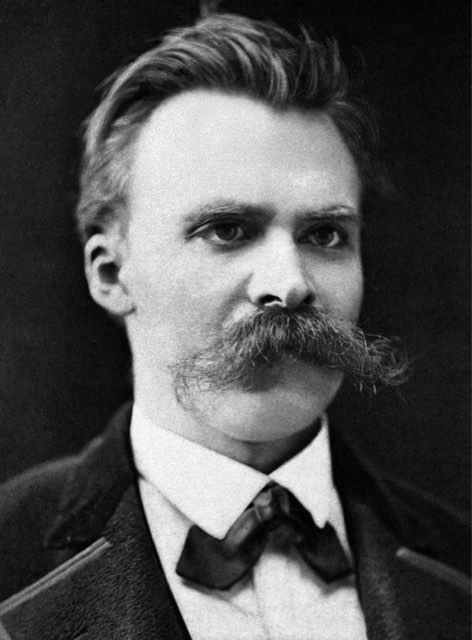
An unapologetic critic of culture, society, religion, and philosophical dogma (philosophical beliefs that his predecessors and contemporaries accepted without question), Friedrich Nietzsche (1844–1900) is arguably one of the most important thinkers of the past two centuries. Like all existentialists, Nietzsche denounced the universalistic tendencies displayed throughout the history of Western philosophy; that is, the tendencies of philosophers to assert that what they knew or believed or discovered should be considered true for everyone and for all time. According to Nietzsche, there is no such thing as a universal truth that is true for everyone and for all time. Instead, Nietzsche argued that what was true from one person’s perspective might not be true from another person’s perspective (a philosophical idea known as perspectivism). For Nietzsche, all human perspectives are valid in the quest for truth. This emphasis on the significance of individual points of view underscores Nietzsche’s belief in the priority of individuality, the value of suspicion and skepticism, and a rejection of rationalism in the quest for truth. These values are existentialist themes shared by Nietzsche’s predecessors and successors alike. In this unit, you will explore Nietzsche’s version of existentialism and analyze his theory of values and morality*.
In the Great Books lists Beyond Good and Evil · Thus Spoke Zarathustra · On the Genealogy of Morality

Deconstructing the History of Philosophy
- Nietzsche and the Crisis in PhilosophyInternet Archive · Dr. Walter Kaufmann · watch · 1 h
Nietzsche’s Perspectivism
- What Kind of Perspectivist is Nietzsche?3 Quarks Daily · Dave Maier · read · 1 h
Absolute Knowledge Is Impossible
- Perspectivism and Truth in Nietzsche’s Philosophy: A Critical Look at the Apparent ContradictionSt. Olaf College · Nate Olson · read · 1 h · archived copy
Nietzsche’s Critique of Socrates
- Philosophizing against Philosophy: Nietzsche’s Provocation of the Philosophical TraditionThe Journal of Nietzsche Studies · Dr. Volker Gerhardt · read · 1 h · archived copy
The Death of God
- Parable of the MadmanFriedrich Nietzsche’s The Gay Science · read · 1 h
Nietzsche’s Liberal Nihilism
- Nietzsche Lecture 1983Internet Archive · Dr. Allan Bloom · watch · 2 h
The Social Construction of Morality
- Christopher Janaway on Nietzsche on MoralityPhilosophy Bites · David Edmonds and Nigel Warburton · watch · 1 h · archived copy
The Social Construction of Values
- On Truth and Lies in a Nonmoral SenseDave McKay’s The Philosophy Pages · Friedrich Nietzsche · read · 2 h · archived copy
On Power
- Brian Leiter on Nietzsche MythsPhilosophy Bites · David Edmonds and Nigel Warburton · watch · 30 min · archived copy
Resentment as the Ground for Morality
- Friedrich Nietzsche’s On the Genealogy of Moralsread · 3 h
- Episode 11: Nietzsche’s Immoralism: What Is Ethics, Anyway?The Partially Examined Life · Mark Linsenmayer et al. · watch · 2 h
Those Who Cower and Those Who Affirm
- Friedrich Nietzsche’s The Gay ScienceThe University of Washington · Constantin Behler · read · 30 min · archived copy
Chapter V
Martin Heidegger
Martin Heidegger’s (1889-1976) extensive and illuminating meditations on what he described as the ontological “question of being” established his reputation as one of the most original and important philosophers of the twentieth century. Like other philosophers commonly referred to as existentialists today, Heidegger refused to associate his own thinking with the term existentialism. However, his focus on human existence, anxiety, death, and authenticity – themes shared by both his predecessors (Kierkegaard, Dostoevsky, and Nietzsche) and his contemporaries (Sartre and Camus) – place him at the center of this movement. In this unit, you will explore Heidegger’s thought, especially the philosophy of existence that he introduced in his most famous work, Being and Time (1927).
In the Great Books lists Introduction to Metaphysics


Heidegger’s Seminary Years
- Martin Heidegger – BiographyThe European Graduate School · read · 30 min · archived copy
Phenomenology
- The Great Philosophers - Hubert Dreyfus on Husserl and HeideggerYouTube · Bryan Magee · watch · 1 h · archived copy
Dasein and the Ontological Question
- Glossary of Terms in Being and TimeDr. Roderick Munday · read · 1 h
- Overview of Being and Time as a WholeCarnegie Mellon University · Dr. Robert Cavalier · read · 1 h · archived copy
- Episode 32: Heidegger: What is Being?The Partially Examined Life · Mark Linsenmayer et al. · watch · 2 h
The Worldhood of the World
- Philosophy 185 – Heidegger: Lectures 5 and 6Internet Archive · The University of California, Berkeley · Dr. Hubert Dreyfus’ · watch · 2 h
Heidegger’s Critique of Descartes
- Philosophy 185 – Heidegger: Lectures 7 and 8Internet Archive · The University of California, Berkeley · Hubert Dreyfus’ · watch · 2 h
Understanding
- Philosophy 185 – Heidegger: Lecture 15Internet Archive · The University of California, Berkeley · Dr. Hubert Dreyfus’ · watch · 1 h
Care
- Philosophy 185 – Heidegger: Lectures 20 and 21Internet Archive · The University of California, Berkeley · Dr. Hubert Dreyfus’ · watch · 2 h
Truth
- Philosophy 185 – Heidegger: Lecture 24The University of California, Berkeley · Dr. Hubert Dreyfus’ · watch · 1 h
Death
- Martin Heidegger: DeathStanford University, Center for the Study of Language and Information · The Stanford Encyclopedia of Philosophy · Dr. Michael Wheeler · read · 1 h
Chapter VI
Jean-Paul Sartre
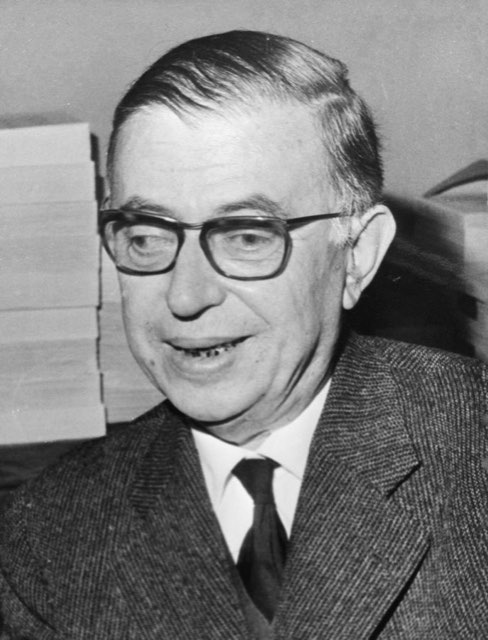
Jean-Paul Sartre (1905–1980) is the public face of existentialism. His works, both fictional and philosophical, resoundingly affirm the existentialist priority of concrete, situated, and historical human existence. He stresses the value of choice, responsibility, and authenticity in human self-fashioning. Sartre was awarded the Nobel Prize in Literature in 1964 – an honor he refused because he maintained that it conflicted with his professional, personal, and political commitments. This unit will introduce you to Sartre’s contributions to existentialist philosophy while simultaneously highlighting Sartre’s place in the movement’s history. In particular, you will explore how Sartre expanded on existentialist themes dealt with by his predecessors – for example, the notions of authenticity, anxiety, and freedom.

The Value of Edmund Husserl’s Theory of Intentionality
- Episode 47: Sartre on Consciousness and the SelfThe Partially Examined Life · Mark Linsenmayer et al. · watch · 2 hJean-Paul Sartre on Kulturbase
Being and Nothingness
- Final Lecture on SartreThe University at Albany, State University of New York · Dr. Ron McClamrock · read · 2 h · archived copyJean-Paul Sartre on Kulturbase
“Existentialism Is a Humanism” (1945)
- Existentialism Is a HumanismMarxists Internet Archive’s version of Jean-Paul Sartre · read · 3 hJean-Paul Sartre on Kulturbase
Themes in Sartre’s Existentialism
- Jean-Paul SartreStanford University, Center for the Study of Language and Information · The Stanford Encyclopedia of Philosophy · Dr. Thomas Flynn · read · 1 hJean-Paul Sartre on Kulturbase
Despair
- The WallRhode Island School of Design · Donald Keefer’s version of Jean Paul Sartre · read · 2 h · archived copyJean-Paul Sartre on Kulturbase
God Does Not Exist
- Mary Warnock on Sartre’s ExistentialismPhilosophy Bites · David Edmonds and Nigel Warburton · watch · 30 minJean-Paul Sartre on Kulturbase
There Is No Human Nature
- Sartre and the Crisis in MoralityInternet Archive · Dr. Walter Kaufmann · watch · 1 hJean-Paul Sartre on Kulturbase
The Burden of Freedom
- Condemned To Be FreeZenwatt · Rob Harle · read · 1 hJean-Paul Sartre on Kulturbase
Sartre’s Critique of Mass Society: “Hell Is Other People”
- No ExitInternet Archive · Jean-Paul Sartre · read · 2 hJean-Paul Sartre on Kulturbase
Chapter VII
Simone de Beauvoir
A novelist, social critic, and philosopher, Simone de Beauvoir (1908–1986) extended Sartre’s existentialism to the realm of the social and the political, developing an existentialist ethics and a feminist philosophy that would have a lasting influence on the feminist political movement of the 1960s and 1970s. Like existentialists before her, de Beauvoir emphasized the centrality of individual freedom to human existence. But unlike existentialists before her, she argued that individual freedom was possible only on the condition that others were free. In other words, equitable social relations are necessary for a meaningful freedom, according to de Beauvoir. In this unit, you will learn about de Beauvoir’s existentialist ethics and her existential feminism.
In the Great Books lists The Second Sex


The Influence of Sartre’s Existentialism
- Tete-A-Tete: Simone de Beauvoir and Jean-Paul SartreLearnOutLoud.com and WBGH Forum Network · Dr. Hazel Rowley · watch · 1 hJean-Paul Sartre on Kulturbase
de Beauvoir as a Feminist
- Reading Beauvoir in the 21st CenturyiTunes U · Duke University’s Center for Philosophy, Arts, and Literature · Dr. Linda Zerilli · watch · 1 h · archived copy
The Importance of the Social Sphere
- Simone de BeauvoirStanford University, Center for the Study of Language and Information · The Stanford Encyclopedia of Philosophy · Dr. Debra Bergoffen · read · 1 h
- Living with the Other’s Pain: The Problem of Empathy in Simone de Beauvoir’s Le sang des autresiTunes U · Duke University’s Center for Philosophy, Arts, and Literature · Ashley King · watch · 1 h · archived copy
The Ethics of Ambiguity
- Chapter 1: Ambiguity and FreedomNorthampton Community College · Harold Weiss’ version of Simone de Beauvoir’s The Ethics of Ambiguity · read · 2 h
de Beauvoir as a Feminist Pioneer
- Simone de Beauvoir Today Symposium: Dr. Stella Sandford’s What Is a Woman? The Second Sex and the RepublicLecture · Duke University’s Center for Philosophy, Art, and Literature · read · 1 h · archived copy
The Second Sex
- Introduction: Woman as OtherMarxists Internet Archive’s version of Simone de Beauvoir’s The Second Sex · read · 2 h
The “Feminine” Is a Social Construction
- ‘Sex’ and ‘Gender’: Philosophical UntranslatablesiTunes U · Duke University’s Center for Philosophy, Arts, and Literature · Dr. Emily Apter · watch · 1 h · archived copy
de Beauvoir’s Applied Existentialism
- Silencing Simone: Between Frantz Fanon and the Second SexDuke University’s Center for Philosophy, Arts, and Literature · Amy Atkins’ · watch · 1 h · archived copy
Chapter VIII
Albert Camus
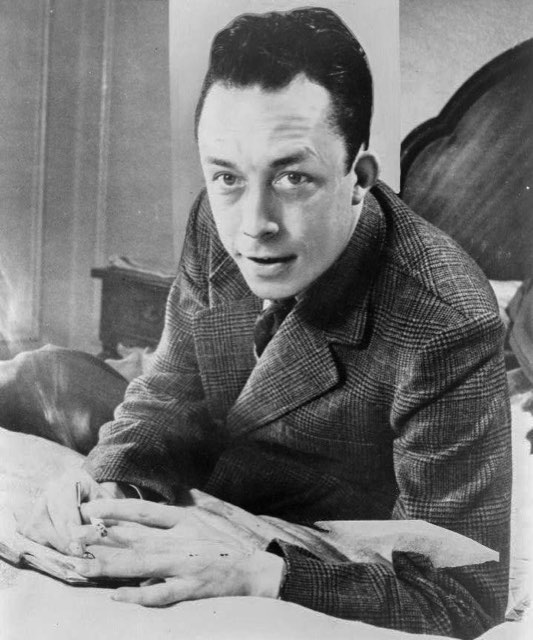
Albert Camus (1913–1960) was an Algerian writer and intellectual who refused to be called a philosopher because he did not believe that human reason was capable of systematizing human experience in all of its nuances. He was a friend and, later, a critic of Sartre, and his works manifest concerns similar to those of Sartre. Camus was awarded the Nobel Prize in Literature in 1957. In this unit, you will explore Camus’ existentialism through an examination of his book The Stranger and his essay “The Myth of Sisyphus” (both published in 1942), which highlight the absurdities of human existence and, interestingly enough, the absurdity of existentialism itself if the philosophy is taken to an extreme. You also will develop an appreciation of the manner in which Camus represents the synthesis of existentialist thinking since Pascal.
In the Great Books lists The Stranger · The Plague

Camus’s Suspicion of Philosophical Systems
- 1957 Nobel Prize in Literature Acceptance SpeechNobelprize.org · Albert Camus’ · read · 1 hAlbert Camus on Kulturbase
- Albert CamusStanford University, Center for the Study of Language and Information · The Stanford Encyclopedia of Philosophy · Dr. Ronald Aronson · read · 1 hAlbert Camus on Kulturbase
Life Is Absurd
- The Myth of SisyphusNew York University · Julia Keefer’s version of Albert Camus’ · read · 1 hAlbert Camus on Kulturbase
- Episode 4: Camus and the AbsurdThe Partially Examined Life · Mark Linsenmayer et al. · watch · 2 hAlbert Camus on Kulturbase
- Albert Camus & ‘The Myth of Sisyphus’, Clip 1 and Albert Camus & ‘The Myth of Sisyphus’, Clip 2YouTube · The Center for Ethics and Entrepreneurship · Dr. Stephen Hicks’ · watch · 30 minAlbert Camus on Kulturbase
Themes
- Study Notes: Camus, The StrangerWashington State University · Dr. Michael Delahoyde · read · 1 h · archived copyAlbert Camus on Kulturbase
- Luchino Visconti’s The StrangerYouTube · watch · 2 hAlbert Camus on Kulturbase
- Albert Camus’ The Stranger, Part I and Albert Camus’ The Stranger, Part IIYouTube · Dr. Robert Solomon · watch · no longer onlineAlbert Camus on Kulturbase
A Philosophy of the Absurd
- Albert Camus - A Conversation with Jean-Marie ApostolidèsiTunes U · Dr. Robert Harrison’s Entitled Opinions (about Life and Literature) · watch · 1 h · archived copyAlbert Camus on Kulturbase
About this course
This course is Saylor Academy's PHIL304, Existentialism, one of the complete university courses the Saylor Foundation made free from 2008 and retired in 2015. Saylor licensed its course text under CC BY 3.0; the original is on GitHub. Here it is laid out as chapters, links that have died go to an archived copy from the Internet Archive where one exists, assessments that needed a Saylor login are left out, and people and works are linked to Kulturbase. The readings and lectures belong to their publishers and are linked, not copied. Pictures: Wikimedia Commons, credited under each picture.
All Saylor courses · Free culture courses · The Chautauqua Reading Course