Philosophy · Saylor POLSC201
Introduction to Western Political Thought
Political thought, or political philosophy, is the study of questions concerning power, justice, rights, law, and other issues pertaining to governance. Whereas political science assumes that these concepts are what they are, political thought asks how they have come about and to what effect.
More about this course
Just as Socrates’s simple question “How should we be governed?” led to his execution, the question “What makes a government legitimate?” leads to political turmoil when posed at critical times. Political thought asks what form government should take and why; what duties citizens owe to a legitimate government, if any; and when it may be legitimately overthrown, if ever. Generally speaking, political thought, political philosophy, and political theory are terms often used interchangeably to mean the study of philosophical texts related to politics. This course examines major texts in the history of political thought. Many of these texts pose difficult questions concerning the political community, social order, and human nature. This course asks how different views on human nature and the uses of history inform the design of government. It also considers the ways in which thinkers like Plato, Machiavelli, and Rousseau have responded to the political problems of their times, and the ways in which they contribute to a broader conversation about human goods and needs, justice, democracy, and the ever-changing relationship between the citizen and the state. One of our central aims in this course will be to gain a critical perspective on our times by evaluating the strengths and weaknesses of various regimes and philosophical approaches. We will also work to better understand those assumptions and basic concepts that define the field of political science. Each of the three units that comprise this course is devoted to a broad theme central to understanding politics. The first unit, centered upon the texts of Plato and Aristotle, will address the polis, or political community. The second unit, featuring the work of John Locke, Niccolò Machiavelli, and Thomas Hobbes, will explore the modern state and constitutional government. The third unit, introducing the texts of Jean-Jacques Rousseau, Alexis de Tocqueville, Karl Marx, and Friedrich Engels, will focus on democracy and the critique of liberal ideology. You will find that these political philosophies have shaped various forms of government, from tyranny to republican democracy and welfare states. It should be noted that the terms politics, political theory, and political science are used throughout the course, but not interchangeably so. While they all relate to each other, each has a different meaning. Politics is the use of power and the distribution of resources. Political theory, on the other hand, is the study of the concepts and principles that people use to describe, explain, and evaluate political events and institutions. Traditionally, the discipline of political theory has approached this study from three different perspectives: classic, modern, and contemporary political theory – all will be covered in this course. Finally, political science is an academic discipline concerned with the study of the state, government, and politics. Aristotle defined political science as “the study of the state.” If you’re interested in reading philosophy or thinking about life purpose and social organization, this might be a good course for you to take. Additionally, if you like to debate, consider alternative viewpoints, or talk about politics this course will likely interest you. Also, Western political thought has served, in one form or another, as the philosophical and ideological basis for governments around the world for centuries, including the United States. Hopefully, this course will allow you to put yourself within an historical, social, and cultural setting so you may relate to contemporary political society. This course provides students the opportunity to earn actual college credit. It has been reviewed and recommended for 3 credit hours by The National College Credit Recommendation Service (NCCRS). While credit is not guaranteed at all schools, we have partnered with a number of schools who have expressed their willingness to accept transfer of credits earned through Saylor. You can read more about our NCCRS program here.
Upon successful completion of this course, you will be able to:
In order to take this course, you must:
Chapter I
The Polis
This first unit deals with the origins of Western thinking on the polis, which is the Greek word for city-state. We will read Plato’s famous work, the Republic, which presents an extended argument in dramatic form for what might constitute the ideal polis, encompassing consideration of all aspects of governance, citizenship, social order, and personal virtue. Speaking through the character of his teacher Socrates, Plato’s model of the ideal city-state mirrors the order of nature as based in his metaphysical Theory of Forms, famously articulated here in the Republic through the Allegory of The Cave.
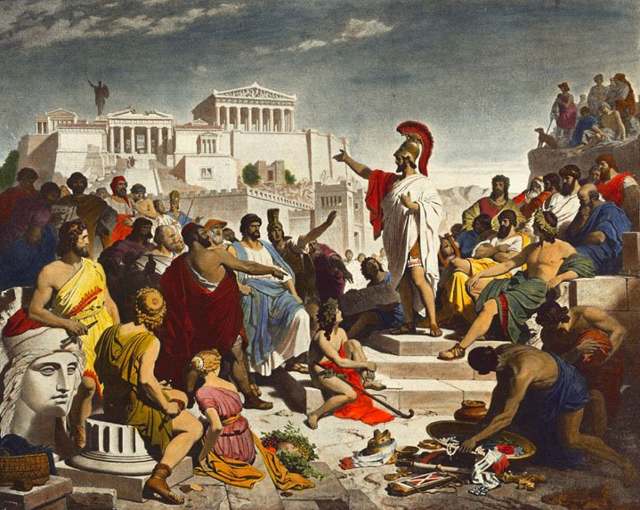

The Just and the Unjust
- Books I and IIBenjamin Jowett’s translation of Plato’s Republic · read · 2 h
- Philosophers and Kings: Plato’s Republic, I-IIYouTube · Yale University · Professor Steven Smith · watch · 1 h
The Ideal City
- Books III and IVBenjamin Jowett’s translation of Plato’s Republic · read · 2 h
- Philosophers and Kings: Plato’s Republic, III-IVYouTube · Yale University · Professor Steven Smith · watch · 1 h
- Discussion Forum for POLSC201The Saylor Foundation · do · archived copy
The Philosopher-King
- Book VBenjamin Jowett’s translation of Plato’s Republic · read · 1 h
- Philosophers and Kings: Plato’s Republic, VYouTube · Yale University · Professor Steven Smith · watch · 1 h
- Quickfire Reading Quiz: The RepublicThe Saylor Foundation · do
The Socratic Method
Socrates Asks to Be Judged on the Truth
- Socratic Citizenship: Plato’s ApologyYouTube · Yale University · Professor Steven Smith · watch · 1 h
Poetry and Philosophy
- Book XBenjamin Jowett’s translation of Plato’s Republic · read · 1 h
- Poetry and PhilosophyThe Saylor Foundation · read · 30 min
The Ideal Citizen and the Ideal State
Crito’s Appeal for Socrates to Confess to False Crimes
- Socratic Citizenship: Plato’s CritoYouTube · Yale University · Professor Steven Smith · watch · 1 h
The Antagonism between Personal and Public Virtue
- The Antagonism between Personal and Public VirtueThe Saylor Foundation · read · 30 min
- Quickfire Reading Quiz: CritoThe Saylor Foundation · do · 15 min
The Good Life: Virtue and Happiness
- Book IW. D. Ross’s translation of Aristotle’s Nicomachean Ethics · read · 1 h
- The Good Life: Virtue and Well-BeingThe Saylor Foundation · read · 30 min
The Doctrine of the Mean
- Book IIW. D. Ross’s translation of Aristotle’s Nicomachean Ethics · read · 1 h
- The Doctrine of the MeanThe Saylor Foundation · read · 30 min
The Preconditions of Virtue: Voluntary vs. Involuntary Action
- Book IIIW. D. Ross’s translation of Aristotle’s Nicomachean Ethics · read · 1 h
- The Preconditions of Virtue: Voluntary vs. Involuntary ActionThe Saylor Foundation · read · 30 min
Justice as a Virtue
- Books IV-VW. D. Ross’s translation of Aristotle’s Nicomachean Ethics · read · 2 h
- Justice as a VirtueThe Saylor Foundation · read · 30 min
The Importance of Contemplation
- Book VI and Book XW. D. Ross’s translation of Aristotle’s Nicomachean Ethics · read · 2 h
- Practical Reason and PoliticsThe Saylor Foundation · read · 30 min
- Discussion Forum for POLSC201The Saylor Foundation · do · archived copy
- Quickfire Reading Quiz: Nicomachean EthicsThe Saylor Foundation · do · 15 min
Rule of Law
Man as a Political Animal
- The Mixed Regime and the Rule of Law, Aristotle’s Politics I, IIIYouTube · Yale University · Professor Steven Smith · watch · 1 h
The Importance of Public Service
- The Mixed Regime and the Rule of Law: Aristotle, Politics IVYouTube · Yale University · Professor Steven Smith · watch · 1 h
Distributive Justice as the Task of the Polis
- Distributive Justice as the Task of the PolisThe Saylor Foundation · read · 1 h
The Primacy of the Law
- The Primacy of LawThe Saylor Foundation · read · 30 min
- Discussion Forum for POLSC201The Saylor Foundation · do · 30 min · archived copy
Chapter II
Modern Political Thought
The Greek polis served as an influential model of citizenship and governance for centuries. Modern political philosophers, however, found that they needed to rethink politics according to a new, more realistic understanding of the way humans actually behave. As a result, modern government requires both a keen historical sense and the pragmatic use of power. This unit will begin with the Italian political philosopher and civil servant Niccolò Machiavelli. Machiavelli is credited with the distinctly modern notion of an artificial (rather than natural) state in which the leader should rule swiftly, effectively, and in a calculated manner. Many associate his theories with the use of deceit and cunning in politics; after Machiavelli, politics was conceived of as an art in which the best rulers governed shrewdly, carefully calculating about enemies, populations, and the timing of certain actions. Thomas Hobbes adapted this Machiavellian approach on a much larger scale. For Hobbes, the state should be sovereign and secular; the citizens should give up both their allegiance to the Church and their rights in exchange for physical security. However, while modern political thought has been built upon the Machiavellian notion of the artificiality of the state, the moderns disagreed on how people behaved and on the degree of a government’s strength and pervasiveness necessary to properly govern citizens. John Locke responded to a strict concept of sovereignty with the idea of constitutional government. Like Hobbes, Locke imagined a civil society capable of resolving conflicts in a civil way, with help from government. However, Locke also advocated the separation of powers and believed that revolution is not only a right but, at times, an obligation of citizenship. These three thinkers represent the foundation of modern state theory.
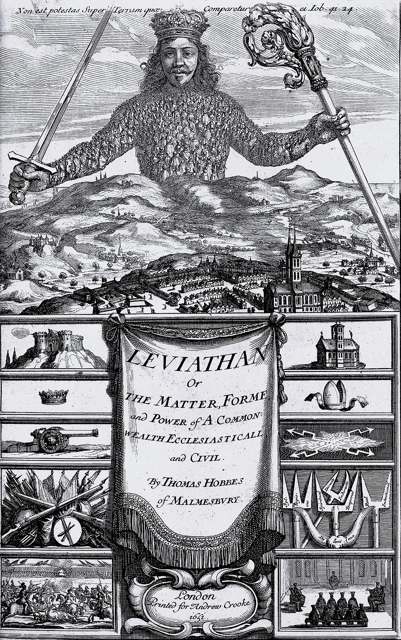

Timing and Cunning in Politics
- W.K. Marriott’s translation of Nicolò Machiavelli’s The PrinceConstitution.org · read · 4 h
Hereditary and Conquered Principalities (States)
- New Modes and Orders: Machiavelli’s The Prince, Chapters 1-12YouTube · Yale University · Professor Steven Smith · watch · 45 min
- Discussion Forum for POLSC201The Saylor Foundation · do · archived copy
Volunteer Armies and Mercenaries
- The Significance of MercenariesThe Saylor Foundation · read · 2 h
- Quickfire Reading Quiz: The PrinceThe Saylor Foundation · do · 15 min
Sovereignty
- Thomas Hobbes’s Leviathanread · 14 h · archived copy
The State of Nature: A World of All against All
- The Sovereign State: Hobbes’ Leviathan, Part IYouTube · Yale University · Professor Steven Smith · watch · 1 h
The Social Contract: Freedom Exchanged for Security
- The Sovereign State: Hobbes’ Leviathan, Part II and Part IIIYouTube · Yale University · Professor Steven Smith · watch · 2 h
- Quickfire True/False Quiz: LeviathanThe Saylor Foundation · write
Constitutional Government
- John Locke’s Second Treatise of Governmentread · 10 h
State of Nature: Anarchy without Legitimate Government
- Constitutional Government: Locke’s Second Treatise (1-5)YouTube · Yale University · Professor Steven Smith · watch · 1 h
Slavery and Private Property
- Constitutional Government: Locke’s Second Treatise (7-12)YouTube · Yale University · Professor Steven Smith · watch · 1 h
Representative Government and Revolution
- Constitutional Government: Locke’s Second Treatise (13-19)YouTube · Yale University · Professor Steven Smith · watch · 1 h
- Discussion Forum for POLSC201The Saylor Foundation · do · archived copy
- Quickfire Matching Exercise: Second Treatise of Civil GovernmentThe Saylor Foundation · do
- Essay: Perspectives on the Modern StateThe Saylor Foundation · write · 1 h
Chapter III
Liberal Democracy and Its Critics
We will conclude this course by discussing various conceptualizations of political and social equality and addressing ways that political thought shifted away from a belief in the primacy of the sovereign state and the legitimacy of elites. We will also discuss how Jean-Jacques Rousseau developed the notion of participatory democracy, the egalitarian view that constituents should be directly involved in the direction and operation of political systems. This concept would be used in both Alexis de Tocqueville’s examination of government in young America and Karl Marx and Friedrich Engels’s critique of political liberalism as the ideology of the rich. This unit will serve as both a historical study and a platform for discussing today’s competing political theories about the role of the state in the redistribution of resources, the government’s role in the economy, and the differences between what we do and what we believe.
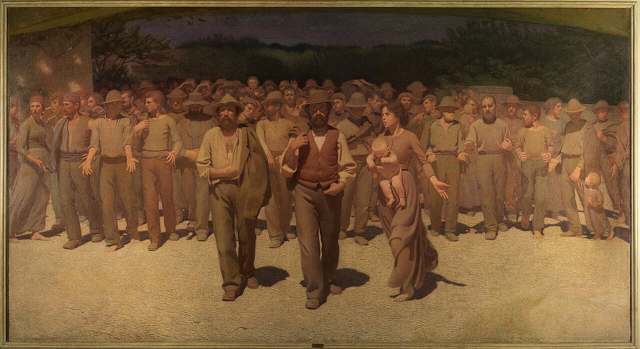

Democratic Participation
Human Nature: Free, Self-Interested, Perfectible
- Democracy and Participation: Rousseau’s Discourse (Part I)YouTube · Yale University · Professor Steven Smith · watch · 1 h
Dependence, Property, and Inequality
- Democracy and Participation: Rousseau’s Discourse (Part II)YouTube · Yale University · Professor Steven Smith · watch · 1 h
- Discussion Forum for POLSC201The Saylor Foundation · read · archived copy
- Quickfire Reading Quiz: Discourse on InequalityThe Saylor Foundation · do
Democratic Participation
- G. D. Cole’s translation of Jean-Jacques Rousseau’s The Social Contract or Principles of Political Rightread · 4 h
- The Founding Fathers and Enlightenment ThoughtThe Saylor Foundation · write · 3 h
- Democracy and Participation: Rousseau’s Social Contract, I-IIYouTube · Yale University · Professor Steven Smith · watch · 1 h
- Quickfire Reading Quiz: The Social ContractThe Saylor Foundation · write
Democratic Statecraft
- Henry Reeve’s translation of Alexis de Tocqueville’s Democracy in AmericaUniversity of Virginia · read · 7 h · archived copy
Equal Rights and Popular Sovereignty
- Democratic Statecraft: Tocqueville’s Democracy in America, Part IYouTube · Yale University · Professor Steven Smith · watch · 1 h
The Importance of Civic Associations
- Democratic Statecraft: Tocqueville’s Democracy in America, Part IIYouTube · Yale University · Professor Steven Smith · watch · 45 min
- Quickfire Reading Quiz: Democracy in AmericaThe Saylor Foundation · write
Karl Marx as an Enlightenment Thinker
- Lecture on Karl Marx (1818-1883)Alan MacFarlane · watch · 1 h · archived copy
- Chapter IIDavid Riazanov’s Karl Marx and Frederick Engels · An Introduction to Their Lives and Work · read · 30 min
Alienation and Secular Governance
The Marxian Challenge
- PrefaceKarl Marx’s A Contribution to the Critique of Political Economy · read · 15 min · archived copy
- Marx and the EnlightenmentYouTube · Yale University Courses · Ian Shapiro’s Moral Foundations of Politics · watch · 45 min
Marx’s Theory of Capitalism
- Chapter One: The CommodityKarl Marx’s Contribution to the Critique of Political Economy · read · 1 h · archived copy
From Capitalism to Socialism to Communism
- Chapter 14: Counteracting Influences and Critique of the Gotha ProgramKarl Marx’s Capital · read · 1 h · archived copy
- Marxian Exploitation and Distributive JusticeYouTube · Yale University Courses · Ian Shapiro’s Moral Foundations of Politics · watch · 1 h
Alienation: Separating Workers from the Results of Their Work
- The Marxian Failure and LegacyYouTube · Yale University Courses · Ian Shapiro’s Moral Foundations of Politics · watch · 1 h
- Analytical Marxism: Self-Ownership and Distributive JusticeThe Saylor Foundation · read · 20 min
Understanding Modes of Production (Materialism)
- Discussion Forum for POLSC201The Saylor Foundation · do · archived copy
The Boundaries of Civil Liberties
- John Stuart Mill’s On Libertyread · 4 h
- John Stuart Mill’s Utilitarianismread · 3 h
- Mill’s Moral and Political PhilosophyStanford Encyclopedia of Philosophy · David Brink · read · 3 h
- Quickfire Reading Quiz: Utilitarianism and On LibertyThe Saylor Foundation · write
Mill on Rights and Utility
- The Neoclassical Synthesis of Rights and UtilityYouTube · Yale University · Professor Ian Shapiro · watch · 1 h
Problems with Neoclassical Utilitarianism
- Limits of the Neoclassical SynthesisYouTube · Yale University · Professor Ian Shapiro · watch · 1 h
Perfectionism in Mill’s On Liberty
- Perfectionism in Mill’s On LibertyThe Saylor Foundation · read · 30 min
About this course
This course is Saylor Academy's POLSC201, Introduction to Western Political Thought, one of the complete university courses the Saylor Foundation made free from 2008 and retired in 2015. Saylor licensed its course text under CC BY 3.0; the original is on GitHub. Here it is laid out as chapters, links that have died go to an archived copy from the Internet Archive where one exists, assessments that needed a Saylor login are left out, and people and works are linked to Kulturbase. The readings and lectures belong to their publishers and are linked, not copied. Pictures: Wikimedia Commons, credited under each picture.
All Saylor courses · Free culture courses · The Chautauqua Reading Course